
• About Us
  • Submit Project
  • Advertise
  • NewsLetter
PA
Subscribe
  • Articles
    • Archipreneurs
    • Technology
    • Bim / Aec
    • 3D Printing
    • Architects
    • Artificial Intelligence
    • Robotics
    • Sustainability
    • Tools
    • Case Study
    • City Guide
    • Opinions
    • Interviews
    • Architecture & Design
      • Urbanism
      • Metaverse
      • Space Architecture
      • Geography
  • Projects
    • Architecture
    • Interior
    • Design
      • Fashion
      • Pavilion
      • Installation
      • Digital Art
      • Landscape Design
    • Products
  • News
  • Workshops
  • PA Talks
  • Videos
  • Books
  • More
    • PA+ Membership
    • Courses
    • Competitions
    • Events
    • Jobs
    • About Us
    • Contact Us
Font ResizerAa
PAPA
Search
  • Articles
    • Archipreneurs
    • Technology
    • Bim / Aec
    • 3D Printing
    • Architects
    • Artificial Intelligence
    • Robotics
    • Sustainability
    • Tools
    • Case Study
    • City Guide
    • Opinions
    • Interviews
    • Architecture & Design
  • Projects
    • Architecture
    • Interior
    • Design
    • Products
  • News
  • Workshops
  • PA Talks
  • Videos
  • Books
  • More
    • PA+ Membership
    • Courses
    • Competitions
    • Events
    • Jobs
    • About Us
    • Contact Us
Follow US
PA > Blog > Articles > Architecture & Design > Alhambra: A Living Tapestry of Power, Poetry, and Geometry in Islamic Spain
Architecture & Design

Alhambra: A Living Tapestry of Power, Poetry, and Geometry in Islamic Spain

Last updated: September 22, 2025 3:19 pm
Faiza Ansari
Faiza Ansari
ByFaiza Ansari
I am an architect and urban planner from India with a passion for writing and storytelling. I completed my Master’s in Urban Planning in 2024 and...
Share
Alhambra: Palaces, Gardens, and Geometry of Islamic Spain
Courtesy of Alhambra Granada
Alhambra: Palaces, Gardens, and Geometry of Islamic Spain
Wall detail. Courtesy of Alexandre Buisse
Alhambra: Palaces, Gardens, and Geometry of Islamic Spain
Palace of Charles V. Courtesy of Jebulon
Alhambra: Palaces, Gardens, and Geometry of Islamic Spain
Palace of Charles V. Courtesy of Ra-smit
List of Images 1/9
Alhambra: Palaces, Gardens, and Geometry of Islamic Spain
SHARE

To enter Granada is to feel the gaze of the Alhambra, a citadel that has watched over the city for centuries. More than a monument, it is a living record of the Nasrid dynasty, the last Muslim rulers of Spain, who between the 13th and 15th centuries shaped this hilltop palace into both fortress and sanctuary. Declared a UNESCO World Heritage Site, the Alhambra endures as a treasure of Islamic architecture in Spain.

Contents
  • Historical Context: The Nasrid Dynasty in Decline
  • The Fortress: Alcazaba
  • The Palaces
  • Gardens of Alhambra
  • Geometry
  • Poetry in Walls
  • After the Reconquista
Alhambra: Palaces, Gardens, and Geometry of Islamic Spain
Courtesy of Alhambra Granada

Historical Context: The Nasrid Dynasty in Decline

The Alhambra was constructed during a pivotal period in history. By the 1200s, Islamic rule in Spain, which had once spread across almost the entire Iberian Peninsula, had shrunk to a single kingdom: Granada. Surrounded by Christian powers, the Nasrid rulers knew their dynasty was fragile. The Alhambra became their answer. Its hilltop position allowed them to watch over Granada like guardians, while its dazzling palaces showed the world that their culture was still strong. The Alhambra was a shield and stage, built to protect but also to impress.

The Fortress: Alcazaba

Alhambra: Palaces, Gardens, and Geometry of Islamic Spain
Alcazaba. Courtesy of Alhambra Granada

The oldest part of the Alhambra is the Alcazaba, a massive fortress with thick walls and watchtowers. From here, soldiers could guard the city and spot enemies from miles away. Even today, the Torre de la Vela, the main watchtower, dominates the Granada skyline. The fortress shows that the Alhambra was first and foremost a place of defense. Its walls gave security, but they also symbolized the power of the Nasrid dynasty to hold its ground against stronger neighbors.

The Palaces

The patio and fountain of The Court of Lions. Courtesy of Barceló Hotel Group.

Over time, the rulers added palaces inside the walls of the fortress. These palaces turned the Alhambra into a royal city. Each new ruler added rooms, courtyards, and gardens, shaping the Alhambra into a living complex that grew with time.

The Palace of Comares, built under Muhammad V, was the center of political life. Its Court of the Myrtles, with a long rectangular pool, created a space of calmness. Water mirrored the walls and arches, making the palace appear twice as tall and twice as grand. 

The Palace of the Lions, built around the same time, became the symbol of Nasrid architecture. At its heart lies the famous fountain supported by twelve carved marble lions. Around it, airy halls and galleries open toward the courtyard, promoting openness. These palaces reveal that the Nasrids ruled not through brute force alone but also through the language of beauty.

Gardens of Alhambra

Alhambra: Palaces, Gardens, and Geometry of Islamic Spain
Courtesy of Berthold Werner

Alhambra is known for its use of water. In Islamic culture, flowing water and greenery symbolized paradise, and the architects of the Alhambra used this idea to bring life into stone. Pools, fountains, and channels were placed to cool the air, create gentle sounds, and reflect light. The Court of the Myrtles shows how still water could transform architecture, while the Court of the Lions demonstrates how moving water could organize an entire space, with four channels flowing outward like rivers of paradise.

Beyond the palaces lies the Generalife, the summer retreat of the Nasrid rulers. Its terraced gardens, orchards, and fountains provided a peaceful escape from courtly duties. Walking through shaded paths with the sound of water everywhere, one can understand how deeply the Nasrids connected architecture with nature.

Geometry

Alhambra: Palaces, Gardens, and Geometry of Islamic Spain
Courtesy of Mikelle Hembree

If the Alhambra is famous for one thing, it is for its patterns. Geometry is everywhere—on walls, floors, ceilings, and even in the way spaces are planned. Islamic architects and artisans used mathematics to create repeating stars, polygons, and arabesques. These designs reflected a belief that the universe itself is built on order and harmony and that geometry is a way to glimpse the infinite.

When sunlight moves through arches or across muqarnas ceilings, these patterns come alive. They shift, sparkle, and change with every moment of the day. Even though the materials were simple, such as stucco, wood, and tile, the designs turned them into something magical. 

Poetry in Walls

Alhambra: Palaces, Gardens, and Geometry of Islamic Spain
Wall detail. Courtesy of Alexandre Buisse

Alhambra’s walls are covered with more than 10,000 inscriptions in Arabic. Some are verses from the Qur’an, reminding visitors of faith. Others are poems written by court poets, praising the ruler, describing the beauty of the palace, or reflecting on the nature of life. The Nasrid motto, “There is no victor but God,” is repeated throughout, like a heartbeat running through the complex. 

After the Reconquista

Alhambra: Palaces, Gardens, and Geometry of Islamic Spain
Palace of Charles V. Courtesy of Jebulon

The Alhambra’s story did not end with the Nasrids. In 1492, Granada was captured by Ferdinand and Isabella, ending Muslim rule in Spain. The Christian rulers kept most of the Alhambra but also added their own touches. The most dramatic change came with the Palace of Charles V, a Renaissance building with a circular courtyard built right inside the Islamic complex. Over time, some areas fell into ruin, but restoration efforts in later centuries saved the Alhambra from being forgotten.

Alhambra: Palaces, Gardens, and Geometry of Islamic Spain
Palace of Charles V. Courtesy of Ra-smit

Alhambra in Granada remains not only one of Spain’s most visited landmarks but also one of the most influential works of architecture in the world. Declared a UNESCO World Heritage Site in 1984, it continues to embody the dialogue between Islamic and Christian traditions.

Its courtyards, fountains, and palaces reveal how architecture can act as both a symbol of political power and a canvas for poetry, geometry, and spiritual reflection. For contemporary architects and designers, the Alhambra offers more than historical beauty; it provides a framework for rethinking how built space can merge with nature, water, and light to create an immersive human experience. From digital parametric modeling to sustainable landscape design, its influence is felt across disciplines, reminding us that true architectural innovation lies not only in form and function, but in the ability to inspire across centuries

TAGGED:AlhambraPalacesspain
Share This Article
Email Copy Link Print
ByFaiza Ansari
I am an architect and urban planner from India with a passion for writing and storytelling. I completed my Master’s in Urban Planning in 2024 and have been actively exploring the intersections of design, policy and people-centric development. With hands-on experience in urban development sector, I aim to make complex urban challenges accessible and engaging for diverse audiences.
Previous Article On’s LightSpray™ Uses Robotic Nozzles to Spray Shoes Directly Onto Foot-Shaped Molds
Next Article Copenhagen Architecture Biennial 2025 First Ever Copenhagen Architecture Biennial Champions a Call to “Slow Down”

More Stories

Construction Projects

Beyond the Architect: Rethinking Power and Hierarchy in Contemporary Construction Projects

By
Mahshid Motamed
How AI Is Transforming Outdoor Living Spaces Beyond The House

How AI Is Transforming Outdoor Living Spaces Beyond The House

By
PA Editorial Team
2026 FIFA World Cup Stadiums

5 Infrastructure Lessons from FIFA World Cup 2026: What Future Host Cities Must Learn

By
Pooja Khanna Tyagi
Miami Bay Towers

Miami Bay Towers Brings Four Sculptural Forms to Biscayne Bay

By
Isha Chaudhary
Origami architecture

Top 10 Buildings Shaped by the Art of Origami Folding in Architecture

By
Arpitha S
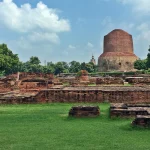
Sarnath

Sarnath Becomes India’s 45th UNESCO World Heritage Site

By
Isha Chaudhary
Korean Football Park

UNStudio Completes Korean Football Park in Cheonan

By
Isha Chaudhary
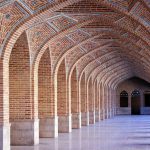
Iranian Architecture

A Legacy Built in Brick and Geometry: Arches in Iranian Architecture

By
Mahshid Motamed
Tianmeng Tower

Woods Bagot Shapes the IGG Tianmeng Tower Around Fuzhou’s Iconic Banyan Tree

By
Isha Chaudhary

Motion in the Shell by Melike Altinisik Architects

By
Hamid Hassanzadeh
Previous Next

Subscribe Newsletter

- Upcoming Workshop-
Ad image

You Might Also Like

ArticlesArchitecture & Design

Decoding the architecture and design of Christopher Nolan’s Oppenheimer

May 16, 2024
Glenn Murcutt’s House Designs in Australia
Architecture & Design

The Best of Glenn Murcutt’s Australian Houses

September 3, 2025
ArticlesArchitecture & Design

Unravelling the Global Impact of Islamic Architecture 

February 11, 2025
ArticlesArchitecture & Design

Posthuman Architecture: Designing for/with posthuman subject

November 28, 2024
PA

© All rights reserved. Parametric Architecture (2018-2026) - ISSN 3023-7564

Facebook Twitter Youtube Rss Medium

Get to Know Us

  • Architecture
  • Design
  • Digital Art
  • Fashion
  • Installation
  • Pavilion
  • Interior
  • Products

© 2026 ParametricArchitecture. All Rights Reserved. By utilizing this website, you are consenting to our User Agreement, Privacy Policy, and Cookie Statement. In compliance with the privacy laws of Turkey and the United States, we recognize and respect your rights. Please be aware that we may receive commissions for products bought through our affiliate links. Unauthorized reproduction, distribution, or transmission of any material from this site is strictly forbidden without prior written permission from ParametricArchitecture.

Join Us!
Subscribe to our newsletter and never miss our latest news, podcasts etc..
Please check admin setting to display form corretly.
Zero spam, Unsubscribe at any capitalpost.
Welcome Back!

Sign in to your account

Username or Email Address
Password

Lost your password?