






For centuries, the textile industry has treated color as something applied to fabric after it is made. Synthetic dyes extracted from petrochemical feedstocks are manufactured, processed, fixed onto fibers, and eventually washed back into the environment. OXMAN’s Vigils proposes an entirely different future, one in which color is not added but is biologically grown.
- How Biology Is Rewriting the Rules of Textile Color
- Pattern Begins at the Cellular Scale
- How Vigils Grows Color on Fabric
- Engineered E. coli Produces Two Natural Pigment Families
- The Textile Functions as a Living Bioreactor
- Hybrid Living Textiles: The Evolution of OXMAN’s Earlier Research
- Velum: Four Capes Cultivated Through Biological Design
- Beyond Sustainable Fashion
- Designing With Living Systems Instead of Controlling Them
- Why Vigils Represent a New Direction for Textile Research
- Vigils Project Details
Developed as a research platform at OXMAN, Vigils replaces conventional dyeing with engineered microbial pigmentation, allowing bacteria to generate color directly on knitted textiles. The project treats living microorganisms as biological collaborators whose genetic instructions determine where and how color appears across cloth.
At its core, Vigils asks a radical question: What if garments were cultivated instead of manufactured?
How Biology Is Rewriting the Rules of Textile Color
Nature has long mastered the production of color without factories, toxic chemicals, or high-energy industrial processes. The stripes of a tiger, the iridescence of butterfly wings, the spiral geometry of sunflowers, and even human fingerprints emerge through cellular instructions encoded within DNA.
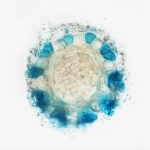
Vigils draws directly from this biological logic. Instead of designing color through industrial printing or dye baths, the project studies how cells interpret chemical signals and transform them into highly organized spatial patterns. Gene expression becomes a design language, allowing microorganisms to respond to their environment and create pigmentation with extraordinary precision.
The research therefore shifts the role of design from decorating finished materials to programming biological behavior itself.
Pattern Begins at the Cellular Scale
According to OXMAN’s research, biological pattern formation is essentially architecture at the molecular level.
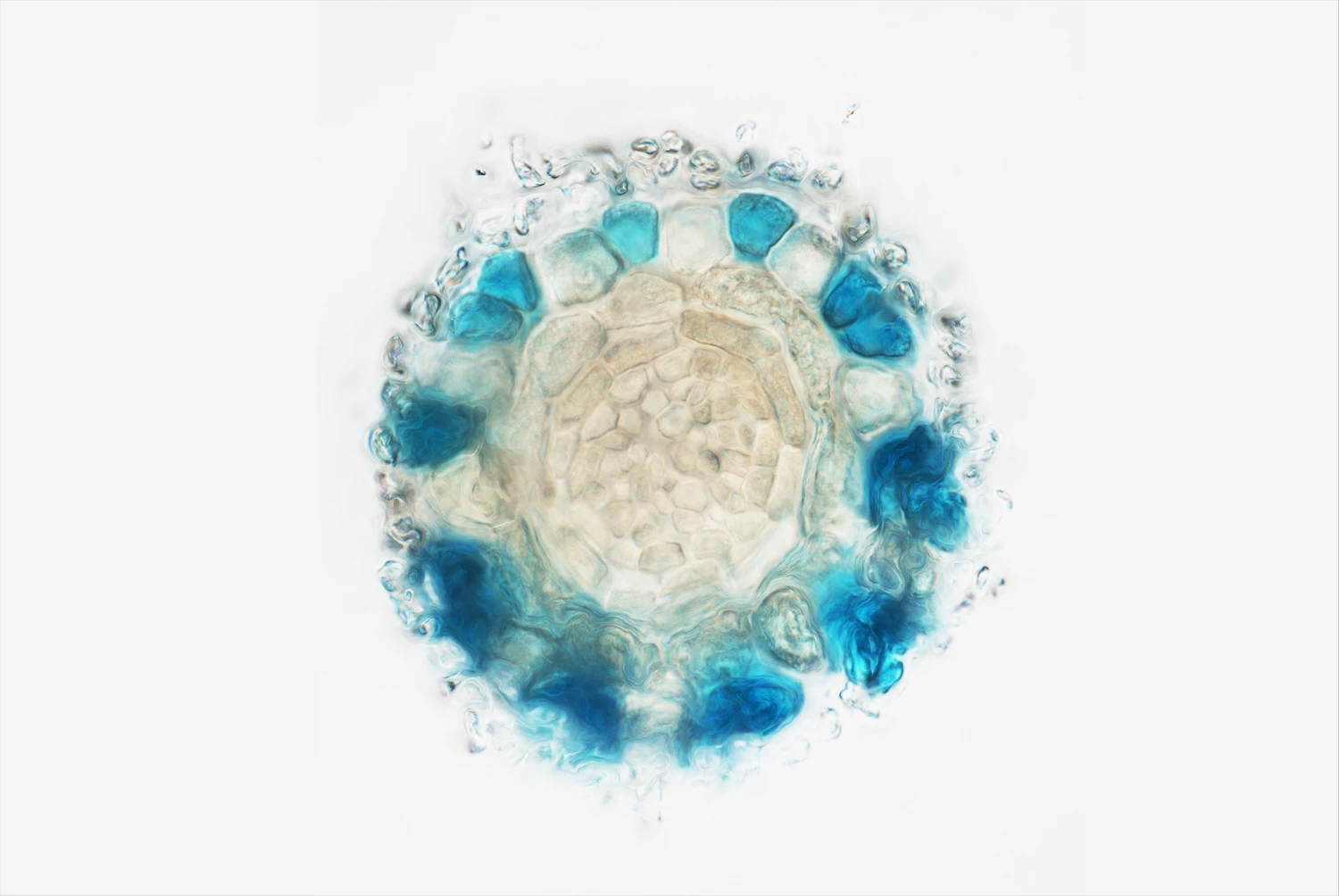
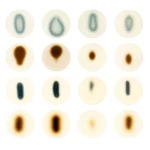
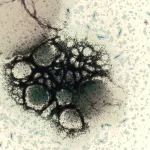
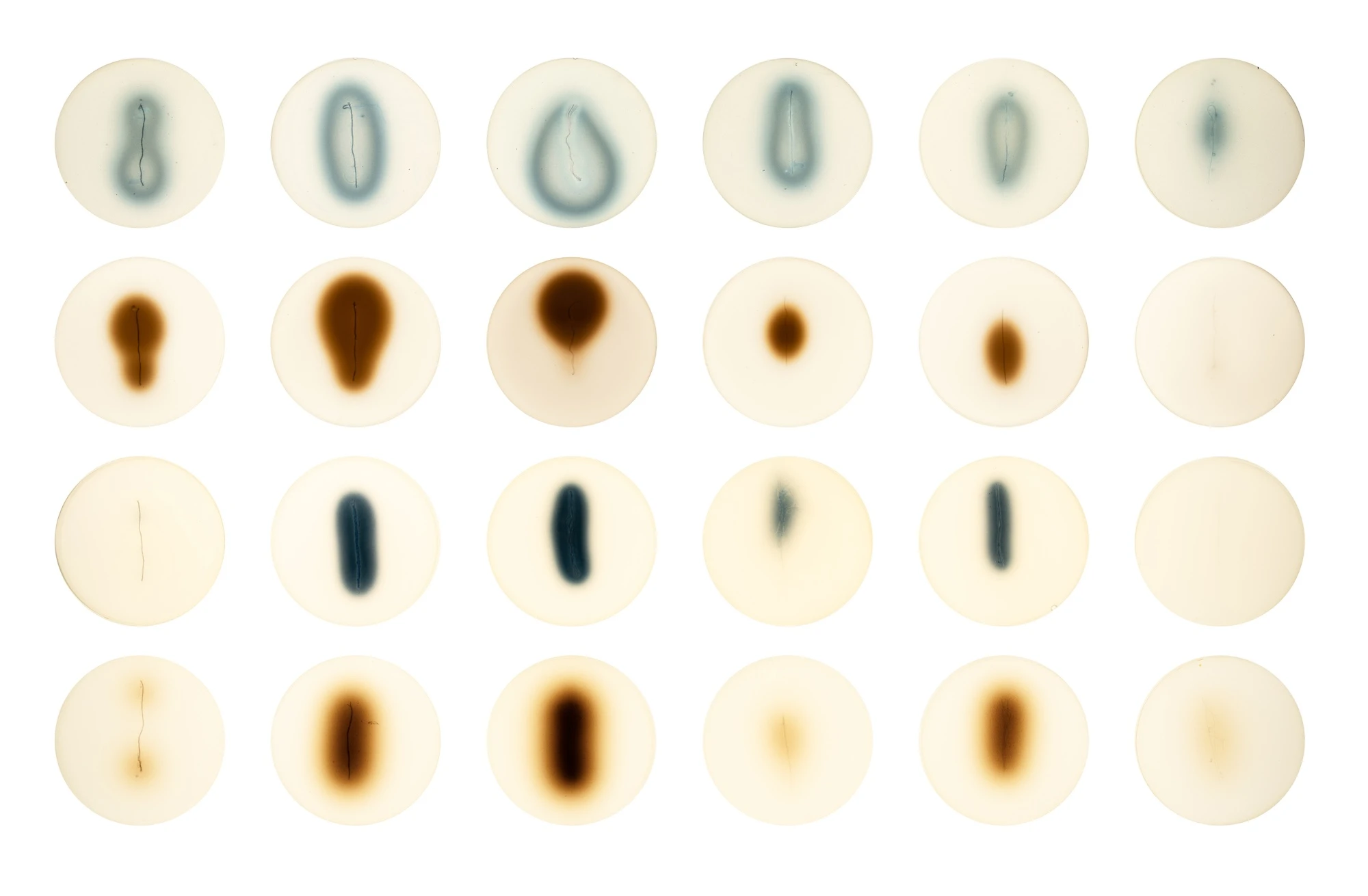
Cells continuously read chemical coordinates within their surroundings. These positional instructions simultaneously determine cellular identity, structural organization, and pigment production. Vigils considers it the first architectural act of biology.
This framework makes it possible to engineer microorganisms that produce controlled pigmentation across textile surfaces while following programmed spatial instructions. Every visible gradient, stripe, bloom, or mottled surface becomes the direct expression of biological activity.
How Vigils Grows Color on Fabric

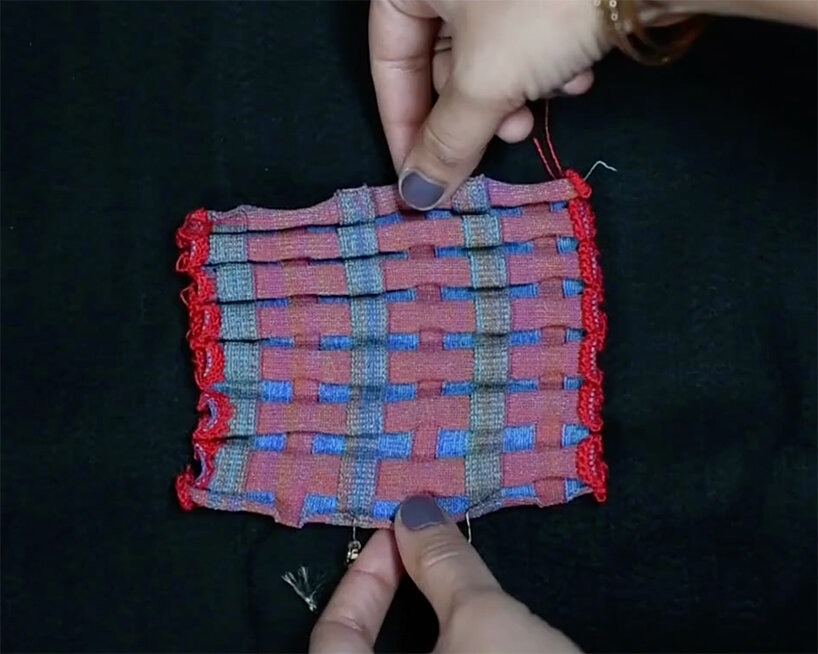
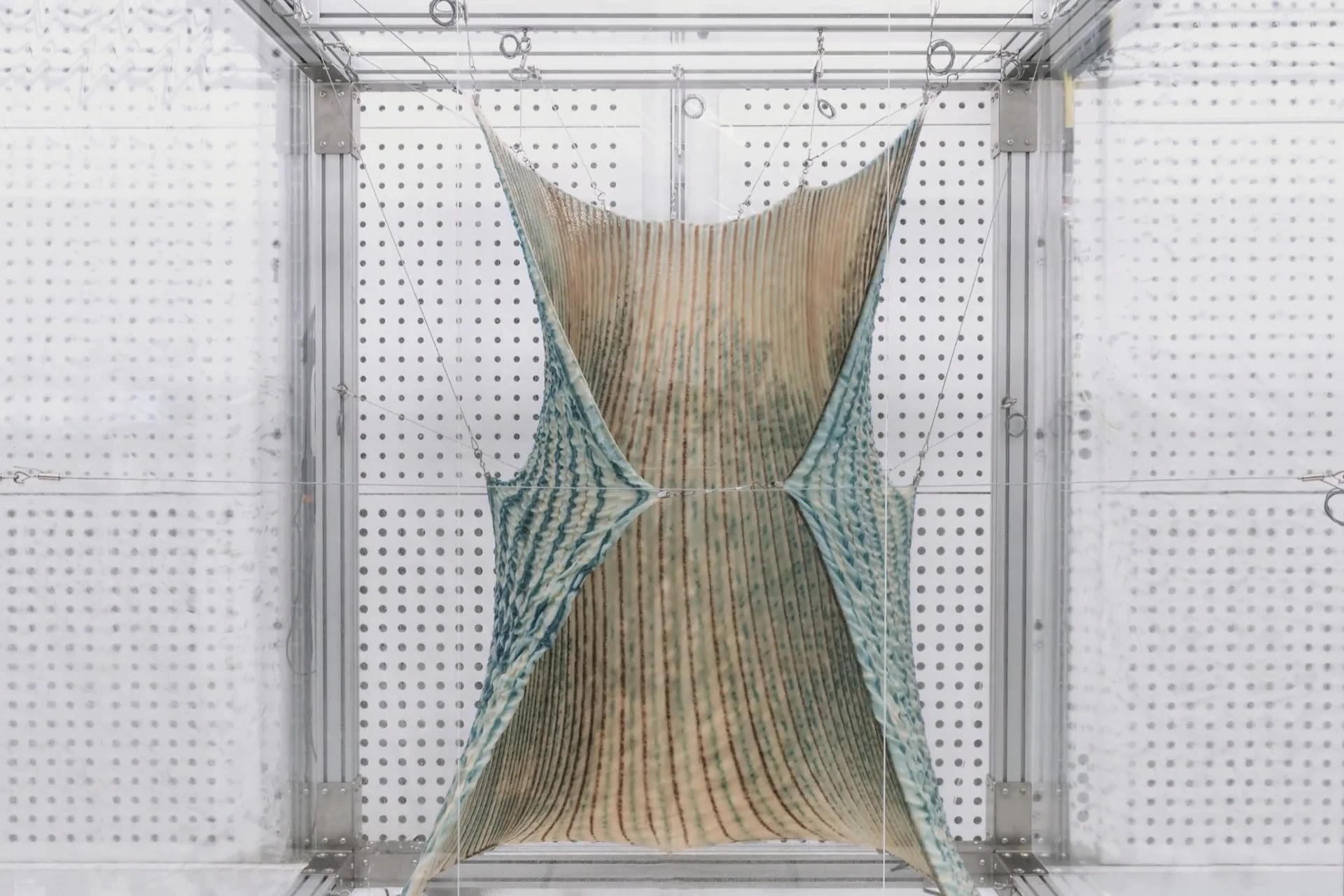
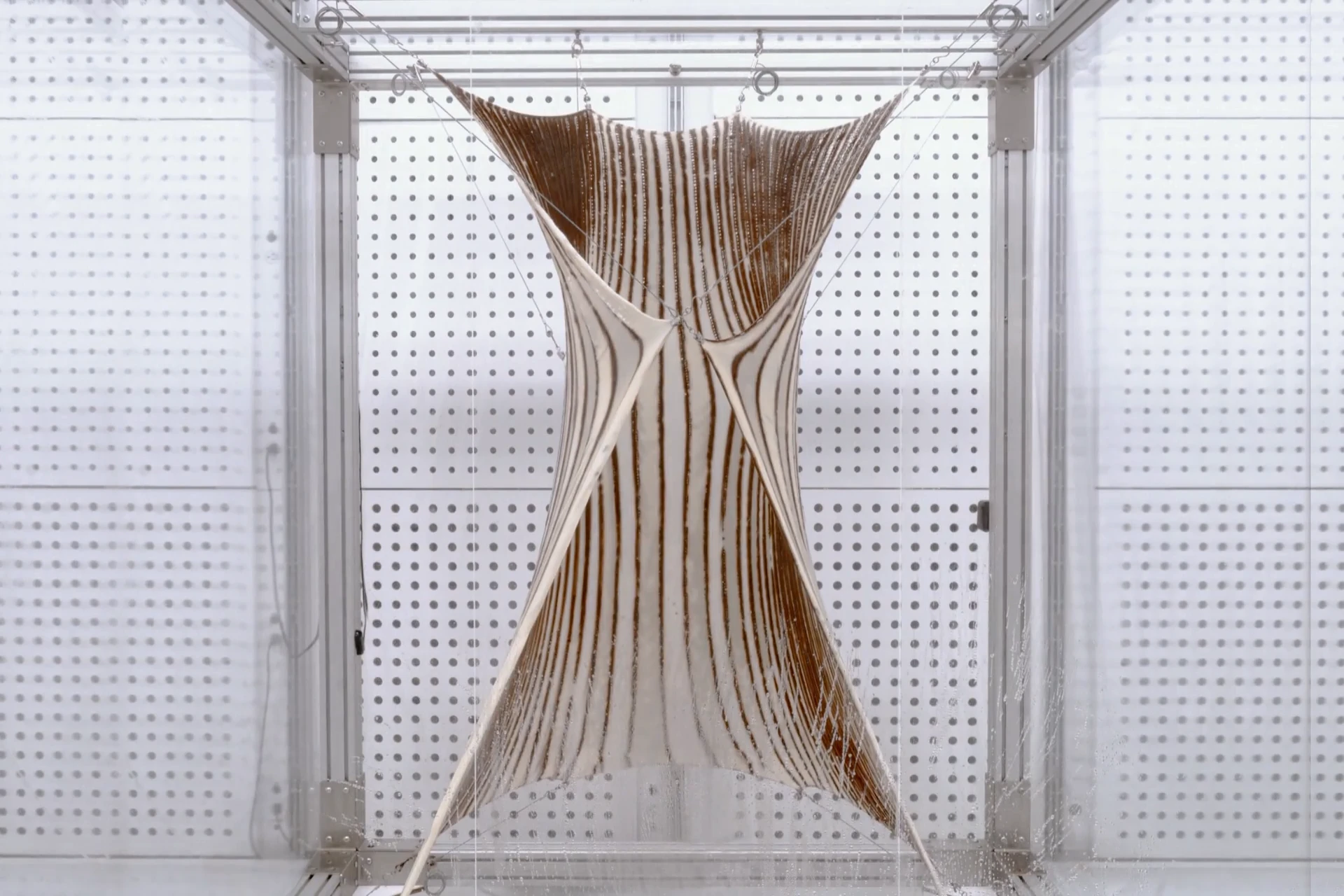
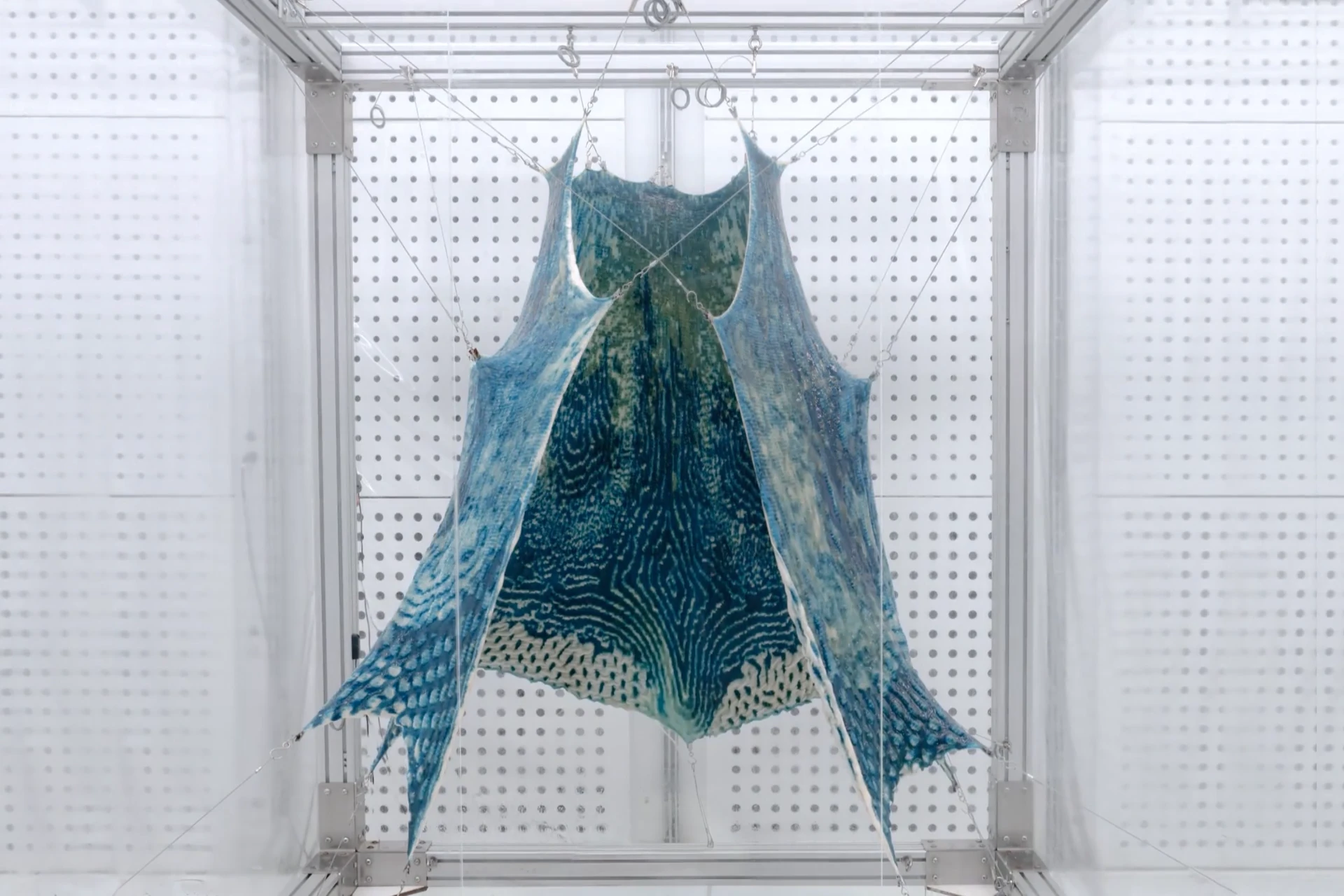
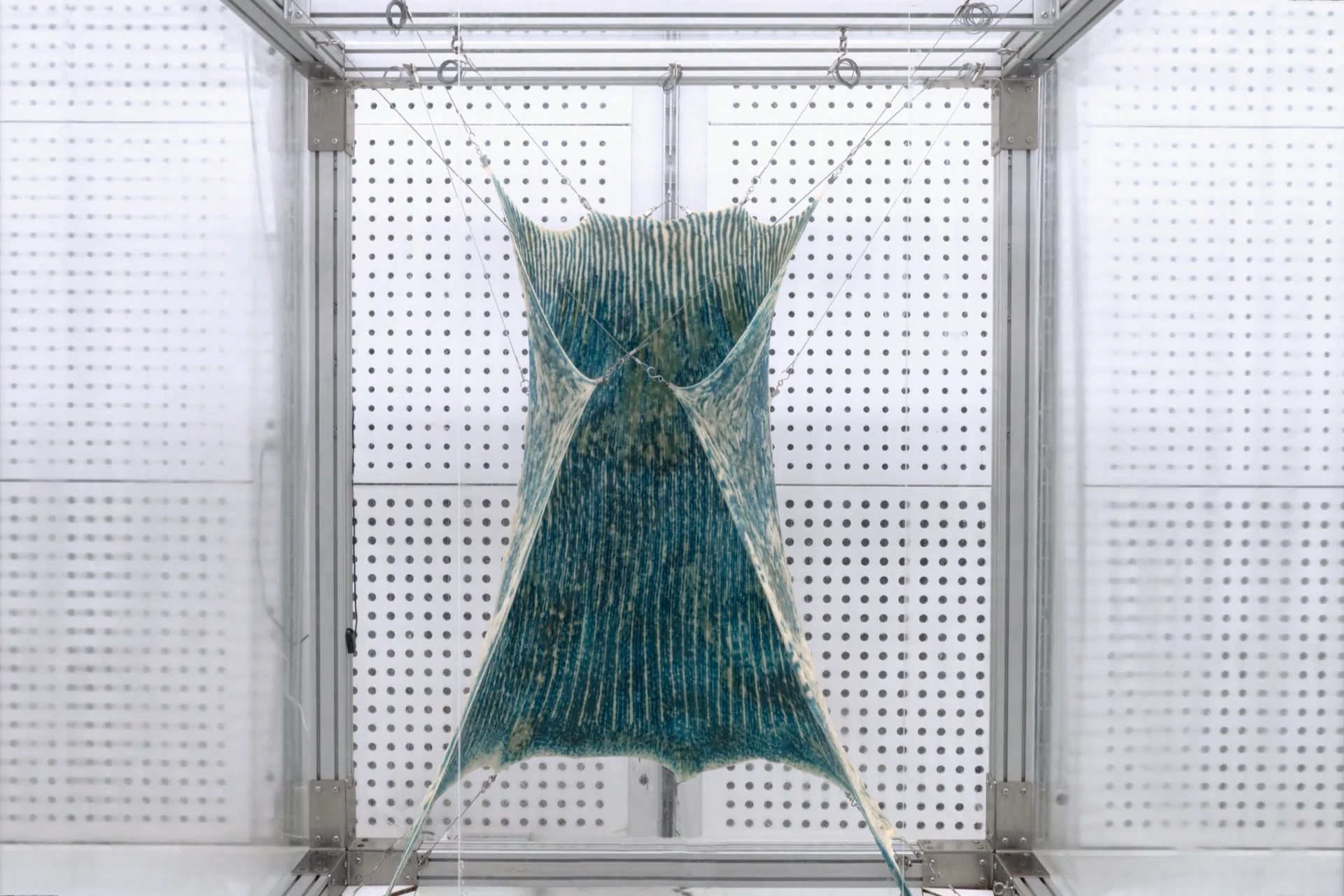
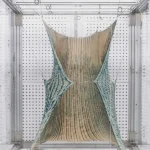
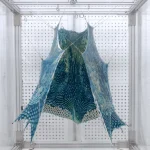
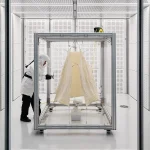
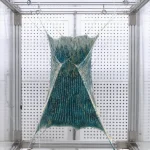
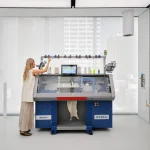
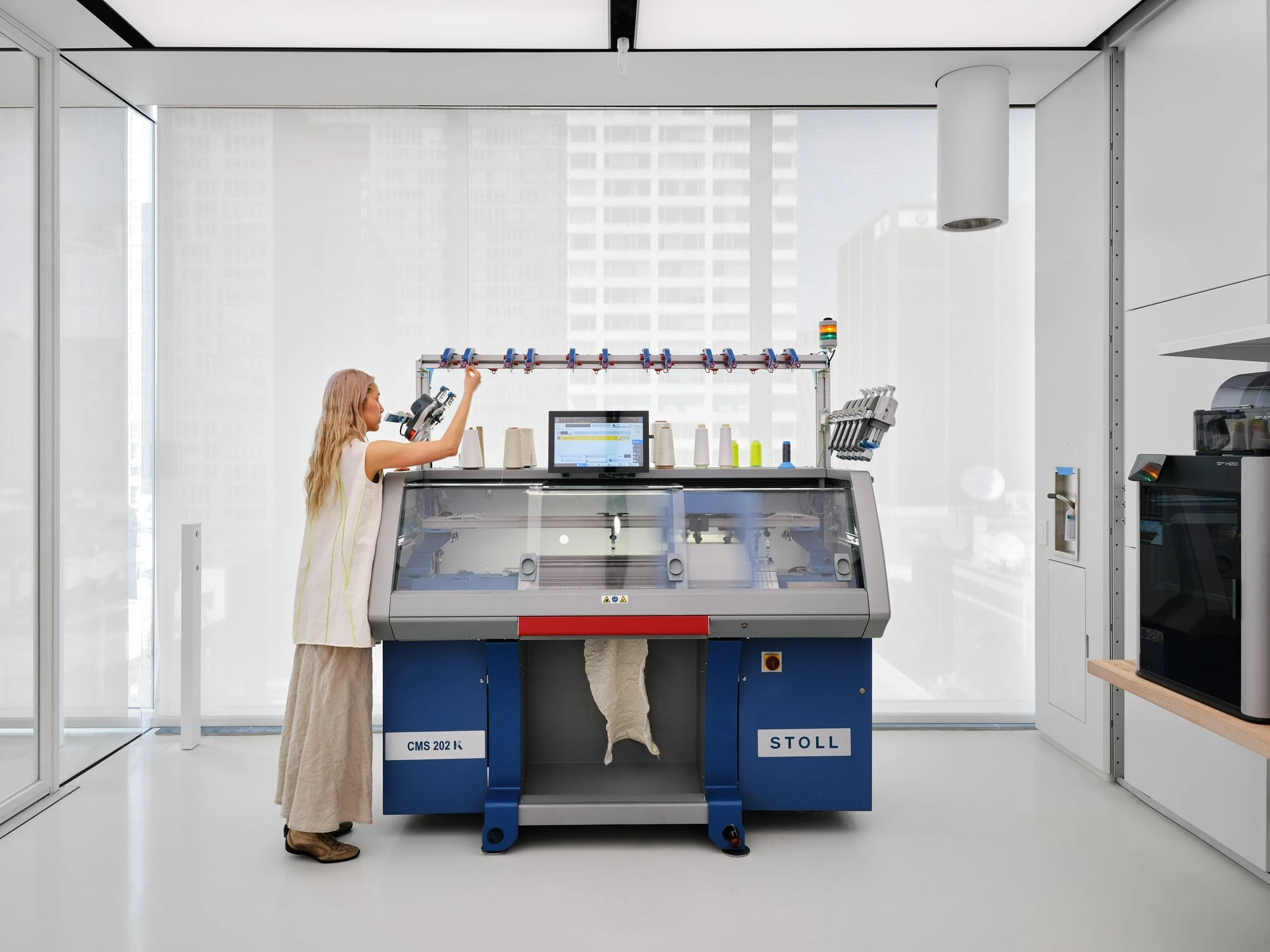
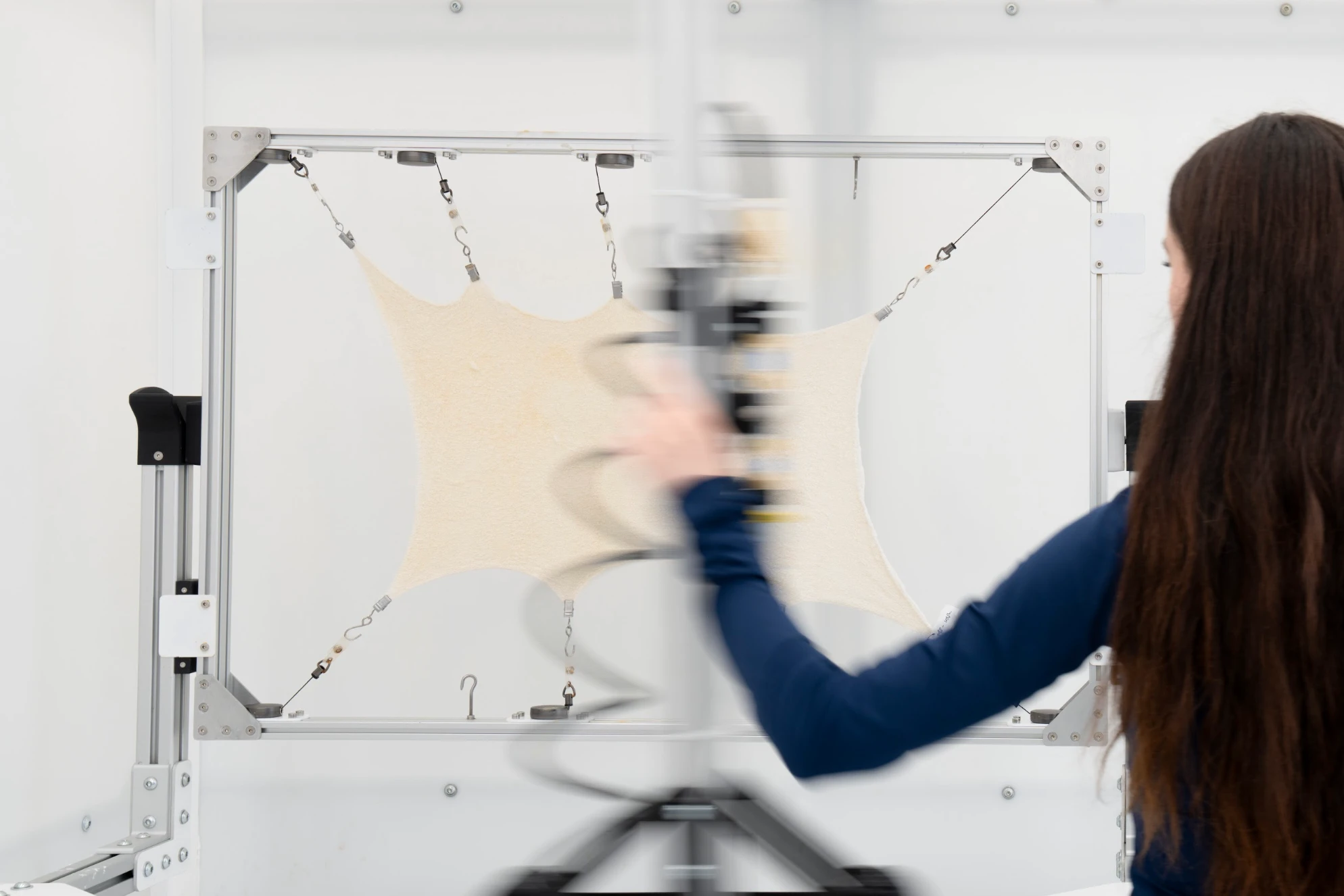
The process begins with living bacteria rather than synthetic dyes. A seamless 3D-knitted textile acts as a biological scaffold. Instead of simply supporting the final garment, the knitted structure becomes an active environment where engineered bacterial colonies can grow, respond to chemical signals, and deposit pigment directly onto fibers.
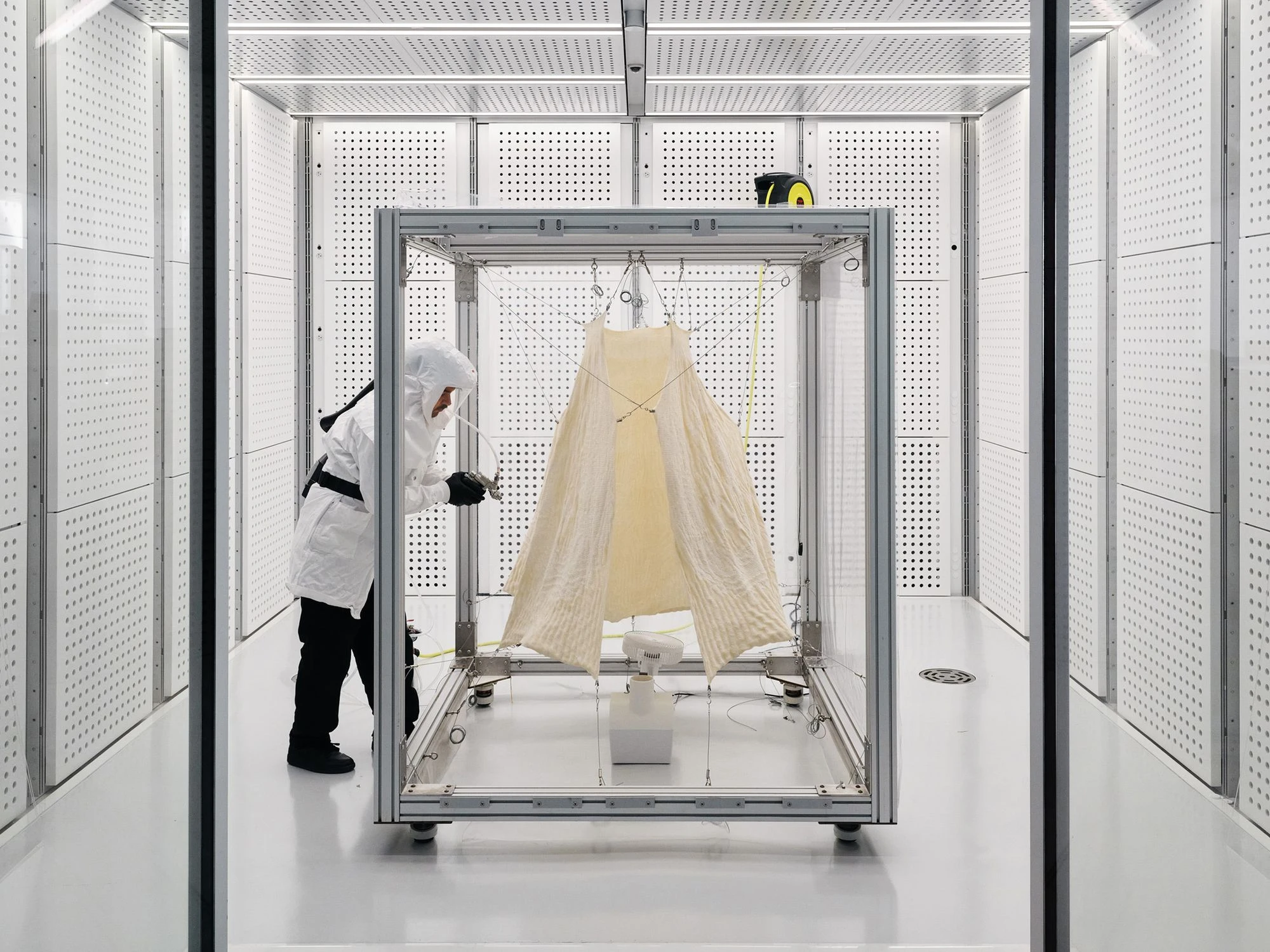
Researchers apply bacterial cultures through carefully controlled spray techniques before incubating the textile.
During approximately 24 hours, the living culture actively produces pigmentation across the fabric. OXMAN notes that nearly one billion bacterial cells per milliliter of media (1 × 10⁹ cells/mL) participate in this process, collectively embedding color into the textile.
Once pigmentation is complete, the biological activity ends, leaving behind a permanent material record of the living process.
The garment is therefore not alive when worn. Instead, it preserves the visible evidence of the microorganisms that once inhabited its surface.
Engineered E. coli Produces Two Natural Pigment Families
Central to Vigils is a genetically engineered strain of Escherichia coli (E. coli).
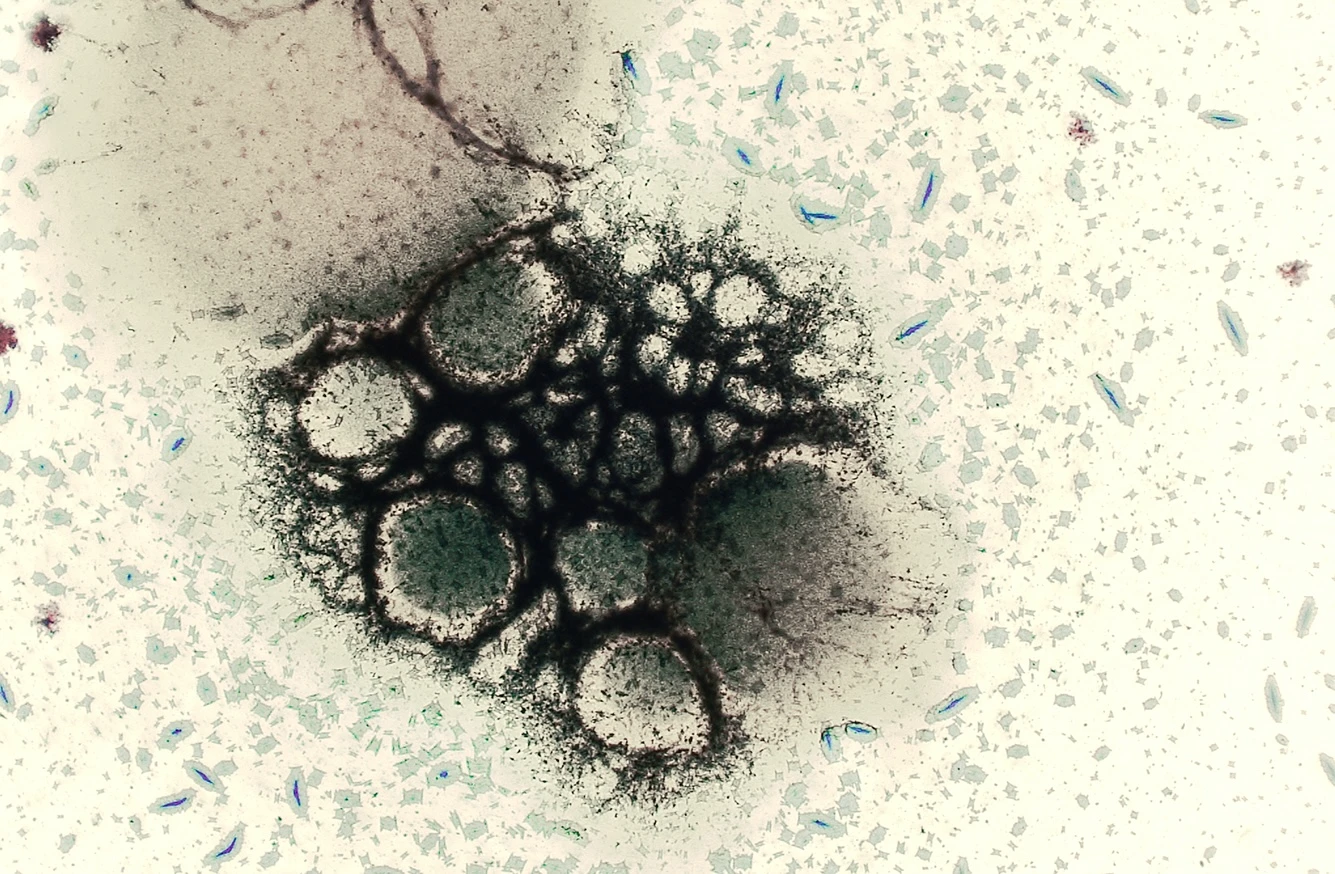
These laboratory-engineered bacteria are designed specifically to biosynthesize two naturally occurring pigment families:
- Indigos
- Melanins
These pigments develop directly within the textile instead of being externally applied. Because pigmentation emerges through microbial metabolism, every piece carries subtle biological variation that cannot be identically reproduced.
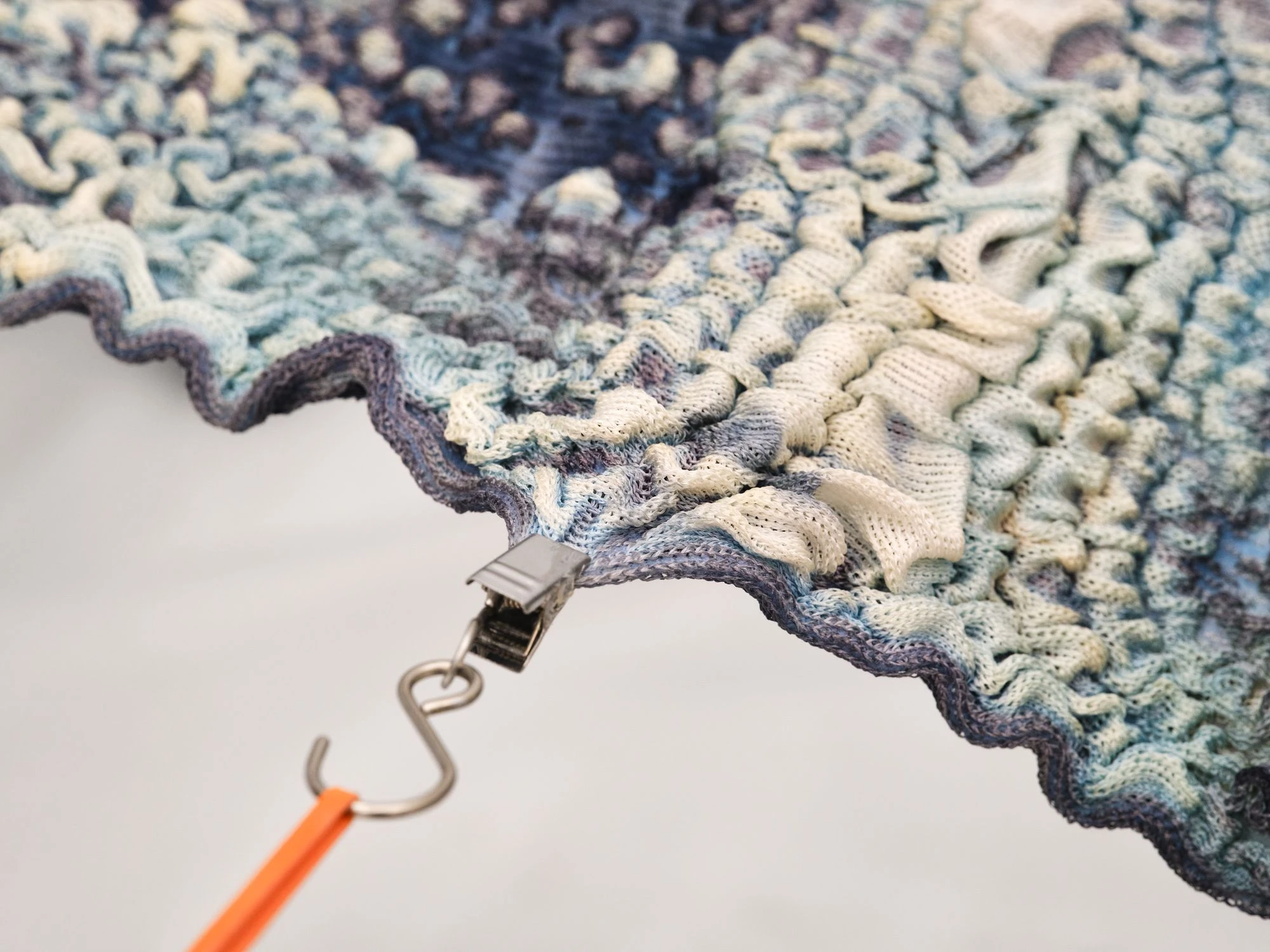
OXMAN describes this approach as prioritizing phenotype over prototype.
Industrial manufacturing seeks identical repetition, whereas microbial engineering embraces controlled variation generated by living systems.
The Textile Functions as a Living Bioreactor
Perhaps the project’s most significant innovation is redefining fabric itself. The knitted textile becomes a bioreactor, an engineered environment where microorganisms interact with fibers, detect chemical cues, and produce material exactly where biological signals instruct them.
Researchers also investigated chemical inducer compatibility across different fiber types, allowing gene expression to be coordinated with textile architecture.
The result is an integrated relationship between biology and textile engineering in which material structure influences microbial behavior, and microbial behavior shapes visual outcomes.
Hybrid Living Textiles: The Evolution of OXMAN’s Earlier Research
Vigils builds upon OXMAN’s earlier Hybrid Living Materials research, previously explored through the Vespers I, II, and III series.
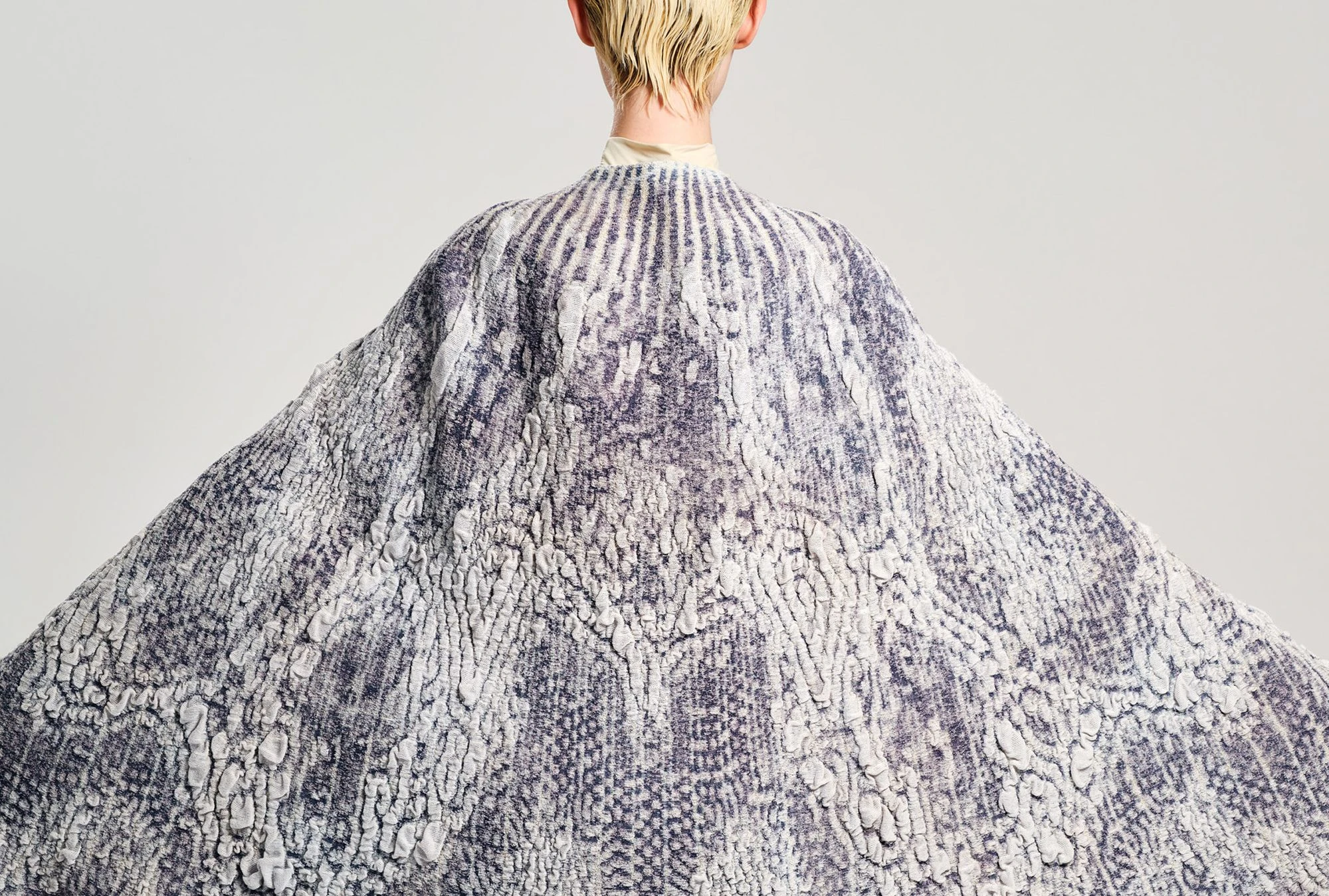
Those projects introduced engineered microorganisms onto rigid, UV-curable resin structures.
Vigils extends the same biological principles into flexible textiles. The platform demonstrates how living systems can operate across soft, draped materials suitable for garments.
OXMAN describes the relationship poetically:
“Vespers, mask. Vigils, shroud.”
Both projects preserve the visible signatures left behind by living organisms, but Vigils brings those biological expressions into wearable form.
Velum: Four Capes Cultivated Through Biological Design
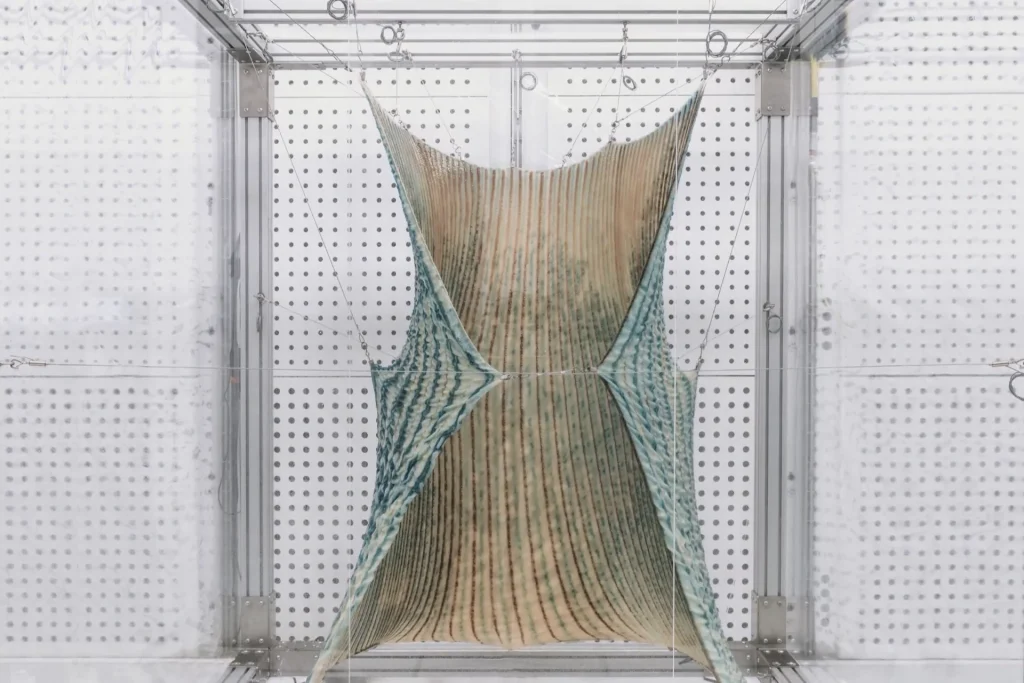
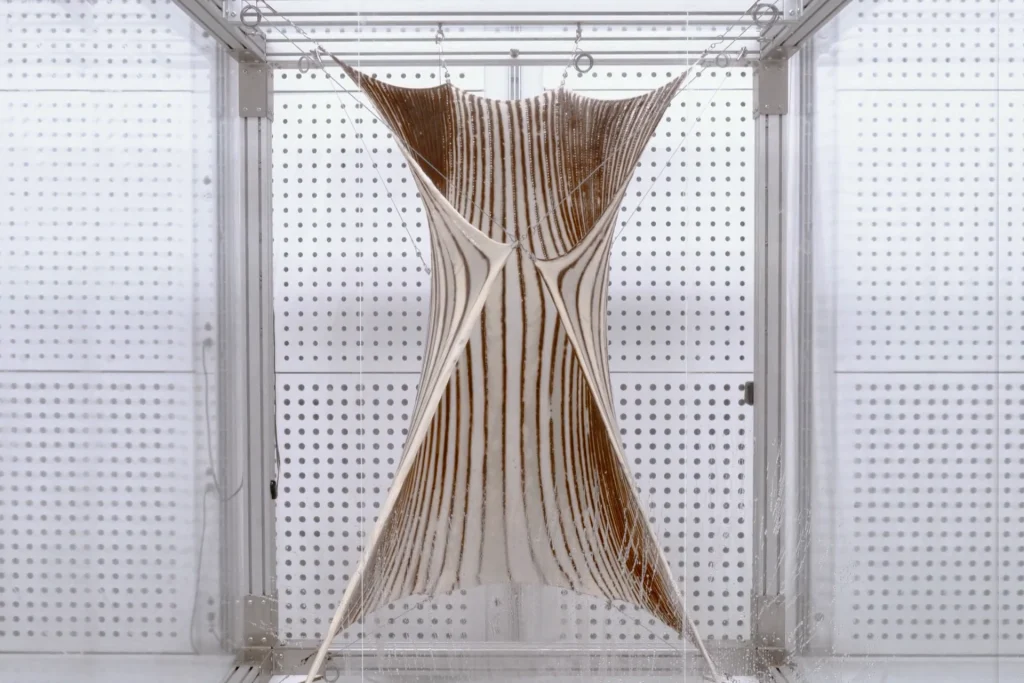
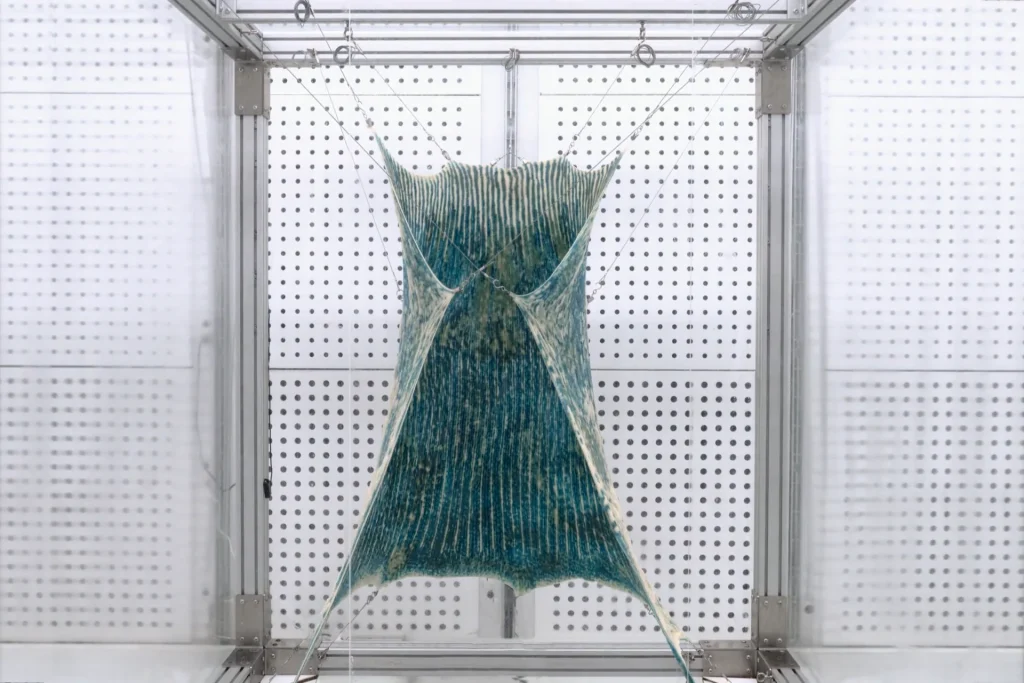
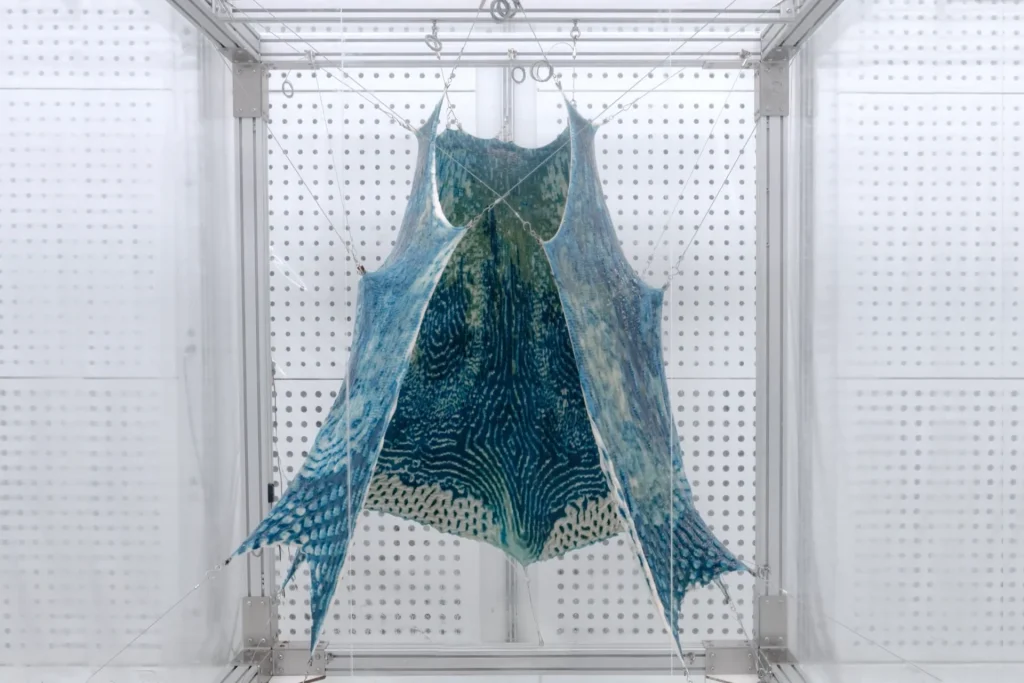
The wearable outcome of the research is presented as four experimental garments:
- Velum I
- Velum II
- Velum III
- Velum IV
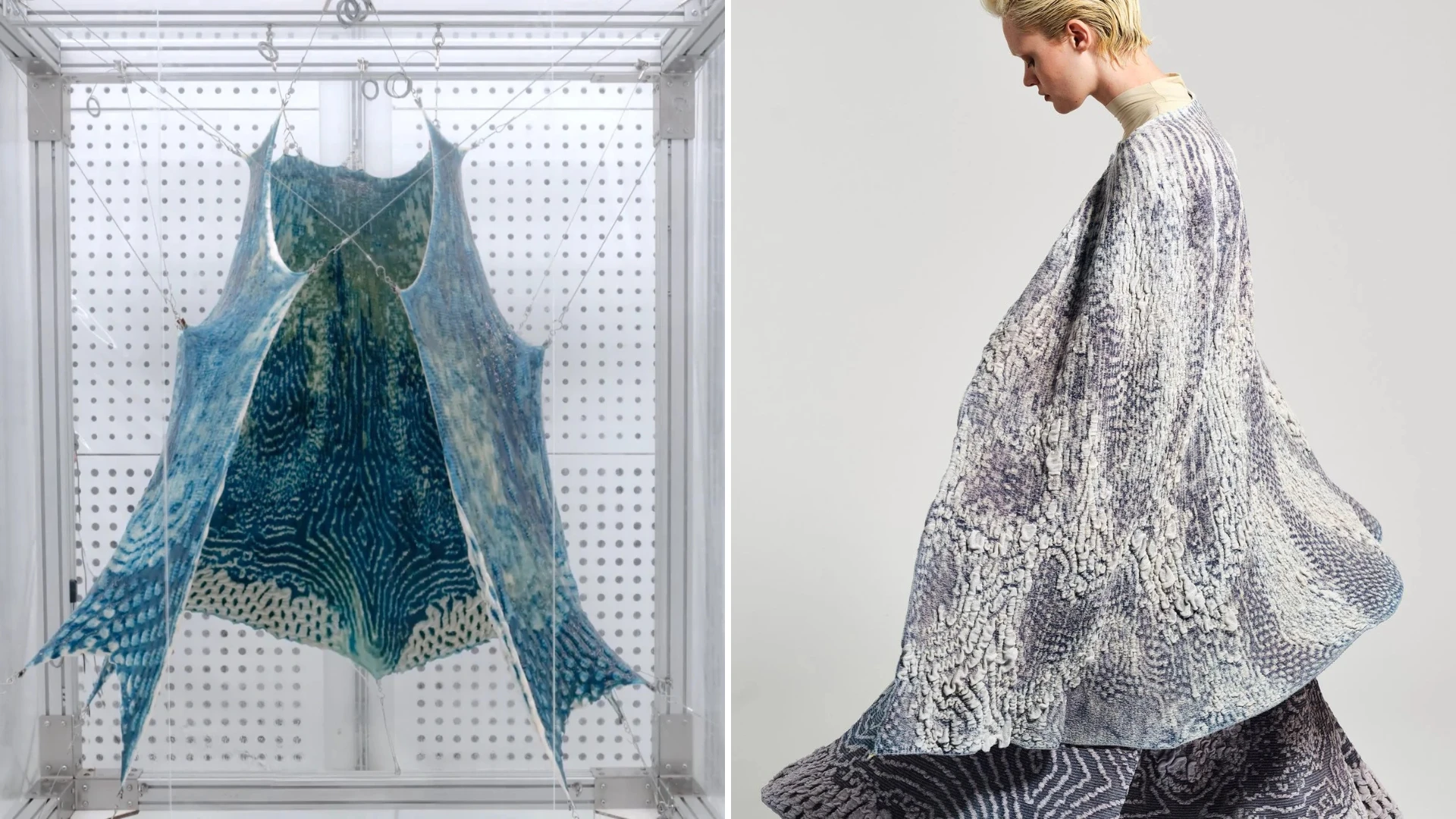
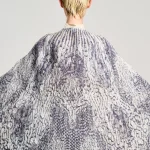
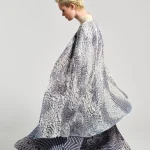
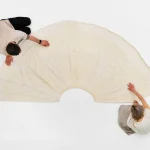
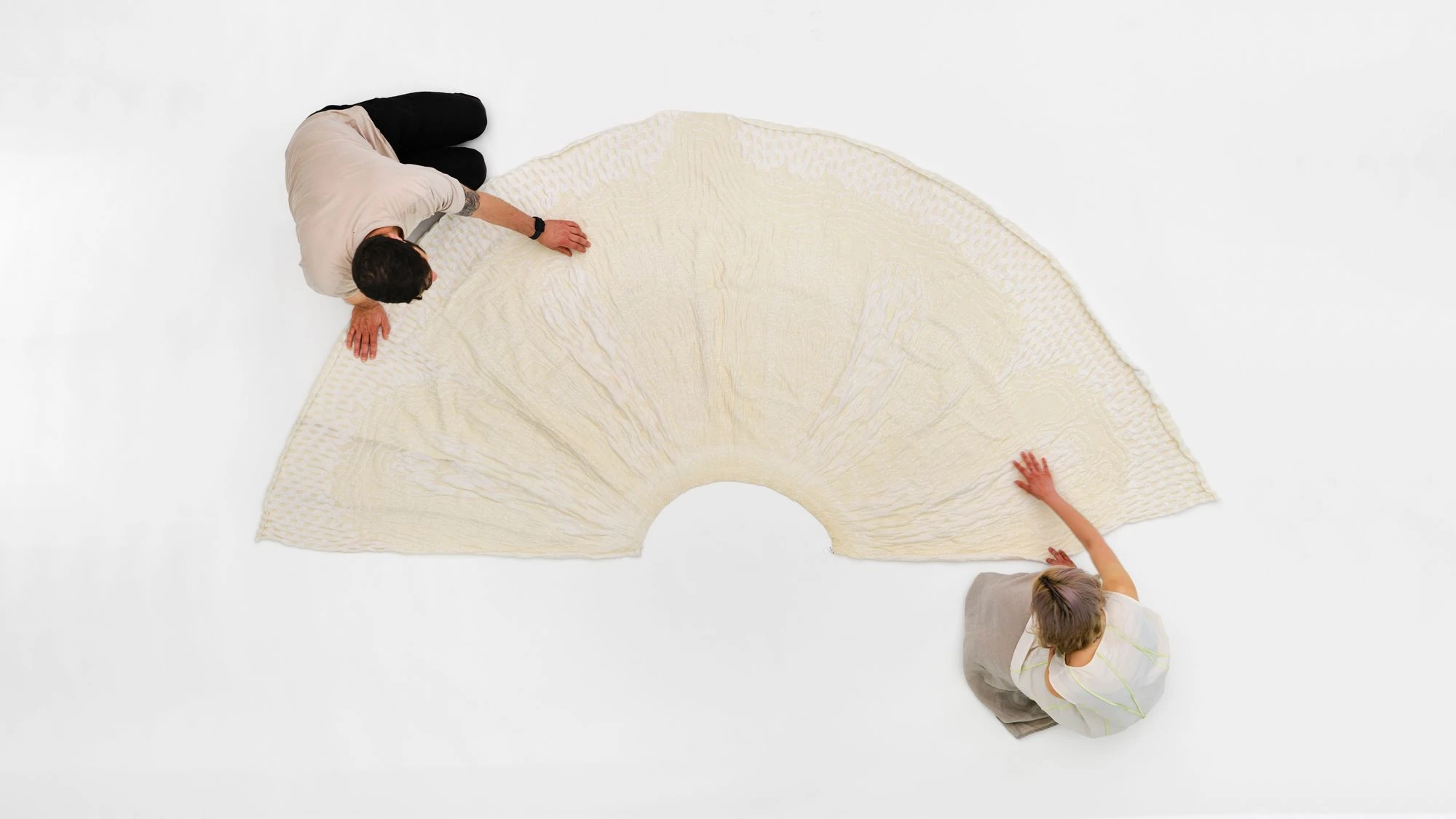
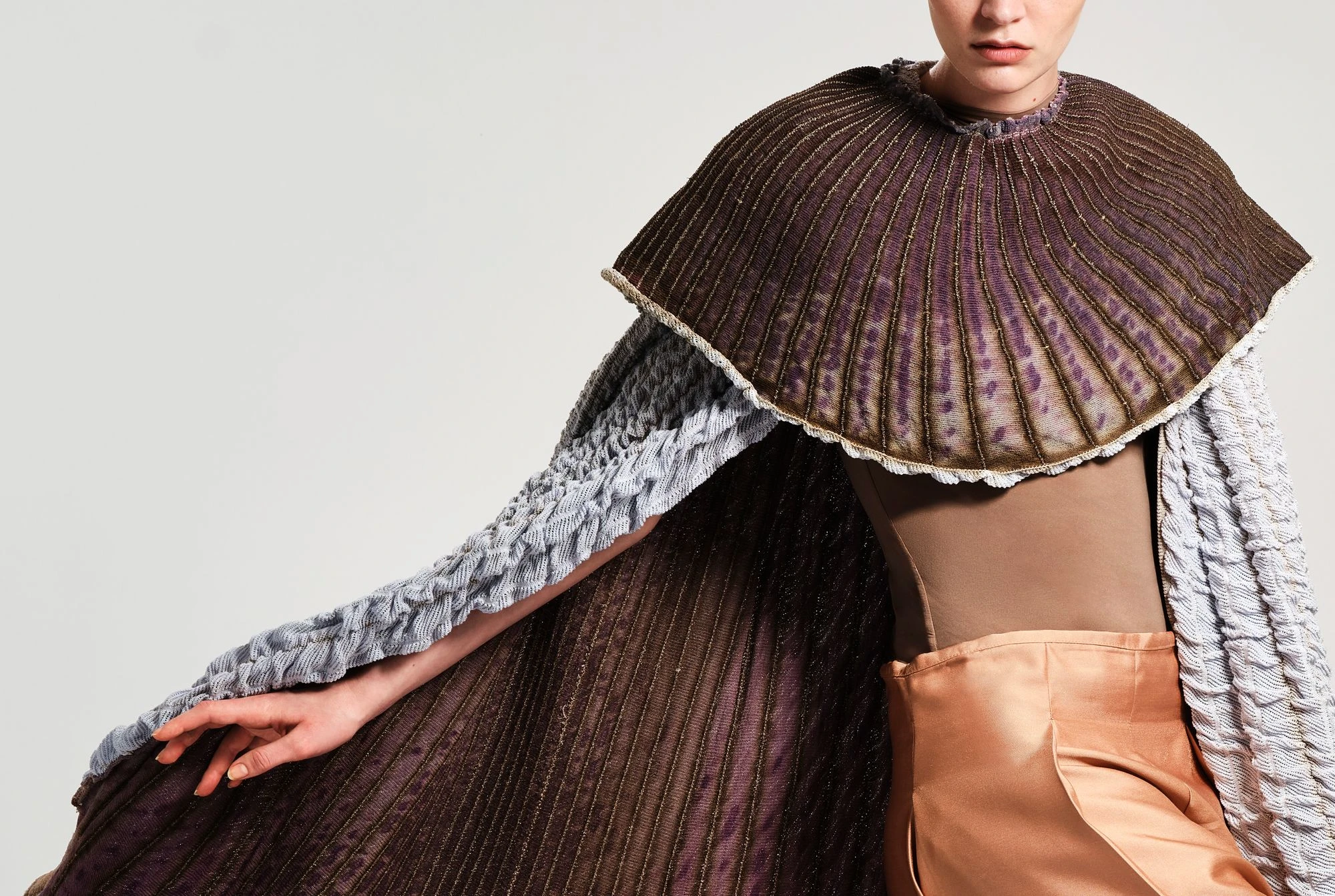
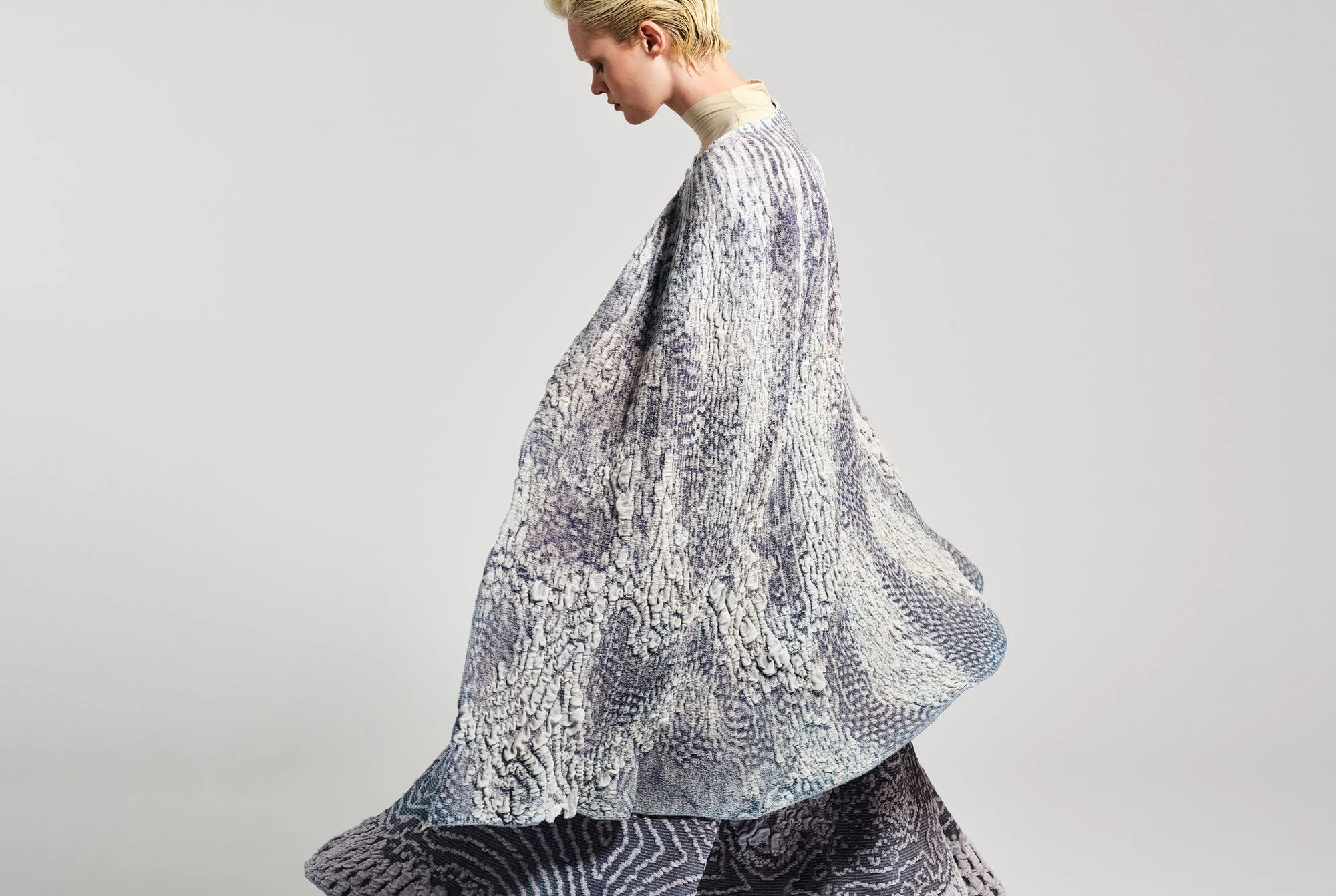
Each seamless conical cape combines textile structure, microbial pigmentation, and body movement into a single biological design process.
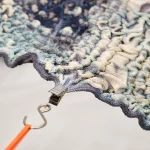
The knitted topography, with its ridges, valleys, and folds, guides where bacterial cultures accumulate and where pigments ultimately develop. Geometry itself influences biological expression. Color, structure, and form emerge together.
Beyond Sustainable Fashion
Although microbial pigmentation significantly reduces dependence on petrochemical dyes, OXMAN positions Vigils as something much larger than a sustainability project.
The research argues that biology should not merely replace conventional materials with greener alternatives.
Because biological behavior is programmable through genetics, the same framework used to produce pigment could eventually guide:
- biomineralization,
- enzymatic cross-linking,
- selective textile stiffening,
- localized softening,
- or the secretion of entirely new functional proteins.
Color is presented as only the first demonstration of a much broader biological manufacturing system.
Designing With Living Systems Instead of Controlling Them
Traditional industrial production depends upon predictability. Materials are standardized, deviations are eliminated, and manufacturing seeks perfect repetition. Vigils deliberately rejects this philosophy.
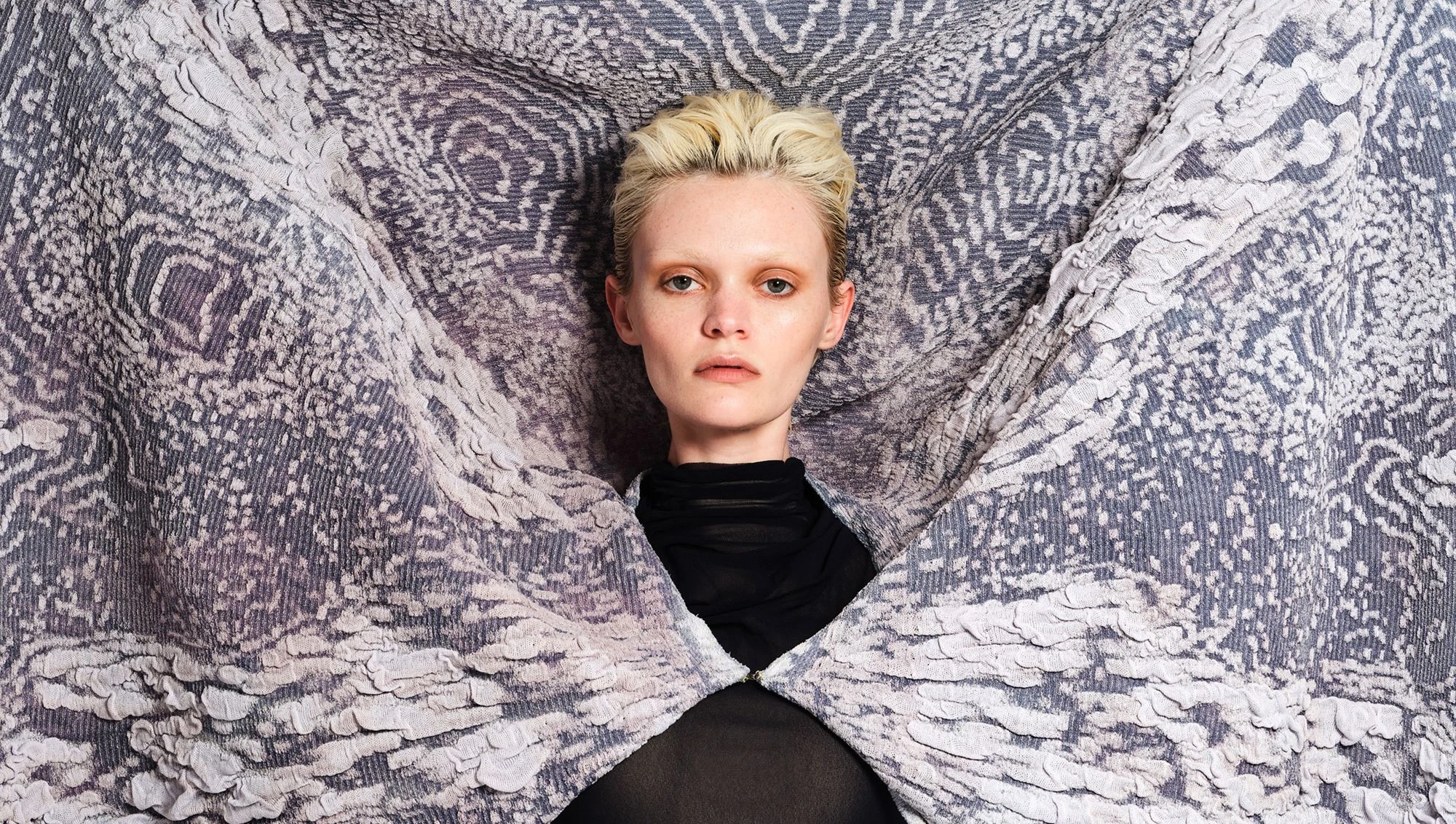
Living organisms naturally grow, evolve, metabolize, and respond to environmental conditions. The project creates what OXMAN calls a negotiated design space, one in which human designers establish biological frameworks while microorganisms contribute their own inherent variability.
The resulting garments are neither completely controlled nor entirely random. They are co-authored.
Why Vigils Represent a New Direction for Textile Research
The significance of Vigils lies beyond fashion aesthetics. It demonstrates that synthetic biology can become an active design medium capable of influencing how materials are fabricated rather than simply what materials are made from.
By integrating synthetic biology, genetic programming, computational textile fabrication, 3D knitting, and microbial engineering, the project proposes a future in which garments are cultivated through biological processes instead of assembled through conventional manufacturing.
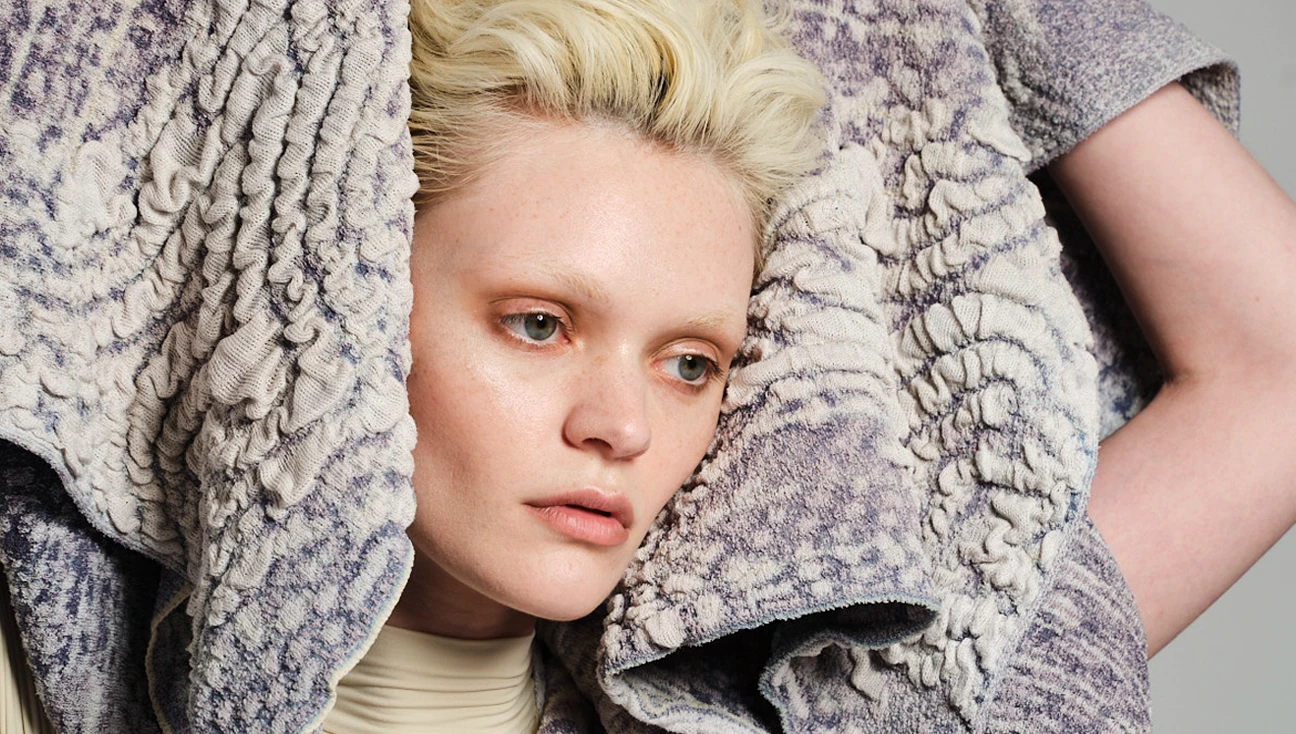
Every visible gradient becomes a biological record.
Every pigment pattern reflects gene expression.
Every textile becomes a unique material landscape rather than a mass-produced copy.
As OXMAN suggests, if manufacturing evolves into growing, entirely new material behaviors and entirely new forms of design may emerge.
Vigils Project Details
- Project: Vigils
- Studio: OXMAN
- Research Platform: Hybrid Living Textiles
- Research Focus: Synthetic biology, microbial pigmentation, textile biofabrication, engineered living materials
- Pigment-Producing Organism: Genetically engineered Escherichia coli (E. coli)
- Pigments Produced: Indigos and melanins
- Textile System: Seamless 3D-knitted textile scaffold
- Living Culture Duration: Approximately 24 hours
- Bacterial Density: 1 × 10⁹ bacterial cells per millilitre of media
- Research Team: Olivia Depies, Kaylen Hunte, Ben Light, Xavier Lopez, Jessy Lu, Julia Martinez, Neri Oxman, and Marcus Walker.
- Photography: Nicholas Calcott, Kristina Sumfleth
- Model: Gray Harris
- Make-up: Daniel Pazos
- Tailoring (Velum I and collar): Joel Diaz
All images and videos courtesy of OXMAN.






-150x150.webp)