




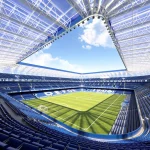
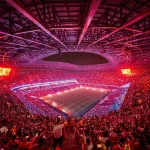

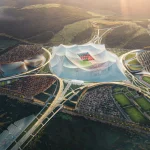
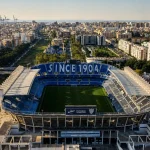




Twenty-three venues have been proposed for the 2030 FIFA World Cup, to be held across a record six countries. Spain, Portugal, and Morocco will host the main tournament, marking the first time Spain has hosted the World Cup since 1982 and the first time for Portugal and Morocco.
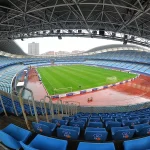
- 1. Anoeta Stadium — Donostia-San Sebastián, Spain
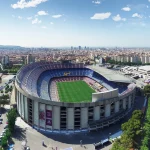
- 2. Camp Nou — Barcelona, Spain
- 3. Estadio de Gran Canaria — Las Palmas, Spain
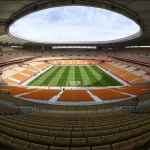
- 4. La Cartuja Stadium — Seville, Spain
- 5. Estadio La Rosaleda — Málaga, Spain
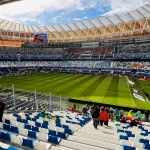
- 6. Metropolitano Stadium — Madrid, Spain
- 7. Nueva Romareda — Zaragoza, Spain
- 8. RCDE Stadium — Barcelona, Spain
- 9. Estudio de Riazor — A Coruña, Spain
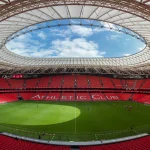
- 10. San Mamés Stadium — Bilbao, Spain
- 11. Santiago Bernabéu Stadium — Madrid, Spain
- 12. Estádio da Luz — Lisbon, Portugal
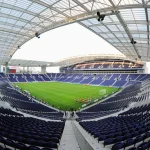
- 13. Estádio do Dragão — Porto, Portugal
- 14. Estadio José Alvalade — Lisbon, Portugal
- 15. Adrar Stadium — Agadir, Morocco
- 16. Hassan II Stadium — Casablanca, Morocco
- 17. Fez Stadium — Fez, Morocco
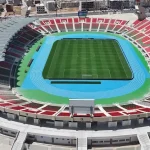
- 18. Marrakesh Stadium — Marrakesh, Morocco
- 19. Prince Moulay Abdellah Stadium — Rabat, Morocco
- 20. Ibn Batouta Stadium — Tangier, Morocco
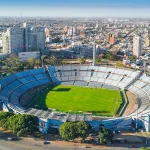
- 21. Estadio Centenario — Montevideo, Uruguay
- 22. Estadio Monumental — Buenos Aires, Argentina
- 23. Estadio Defensores del Chaco — Asunción, Paraguay
For the centenary celebrations, the first three matches of the 2030 World Cup will be held in Uruguay, Argentina, and Paraguay. This commemorates the first World Cup final in 1930, where hosts Uruguay beat Argentina 4-2 at the Estadio Centenario in Montevideo. Paraguay will host a match because it is home to CONMEBOL, the South American football confederation.
The rest of the tournament will be played across the three main host nations, with the final scheduled for July 21, 2030. FIFA and its member associations confirmed the 23-stadium list at the Extraordinary FIFA Congress on December 11, 2024.
1. Anoeta Stadium — Donostia-San Sebastián, Spain
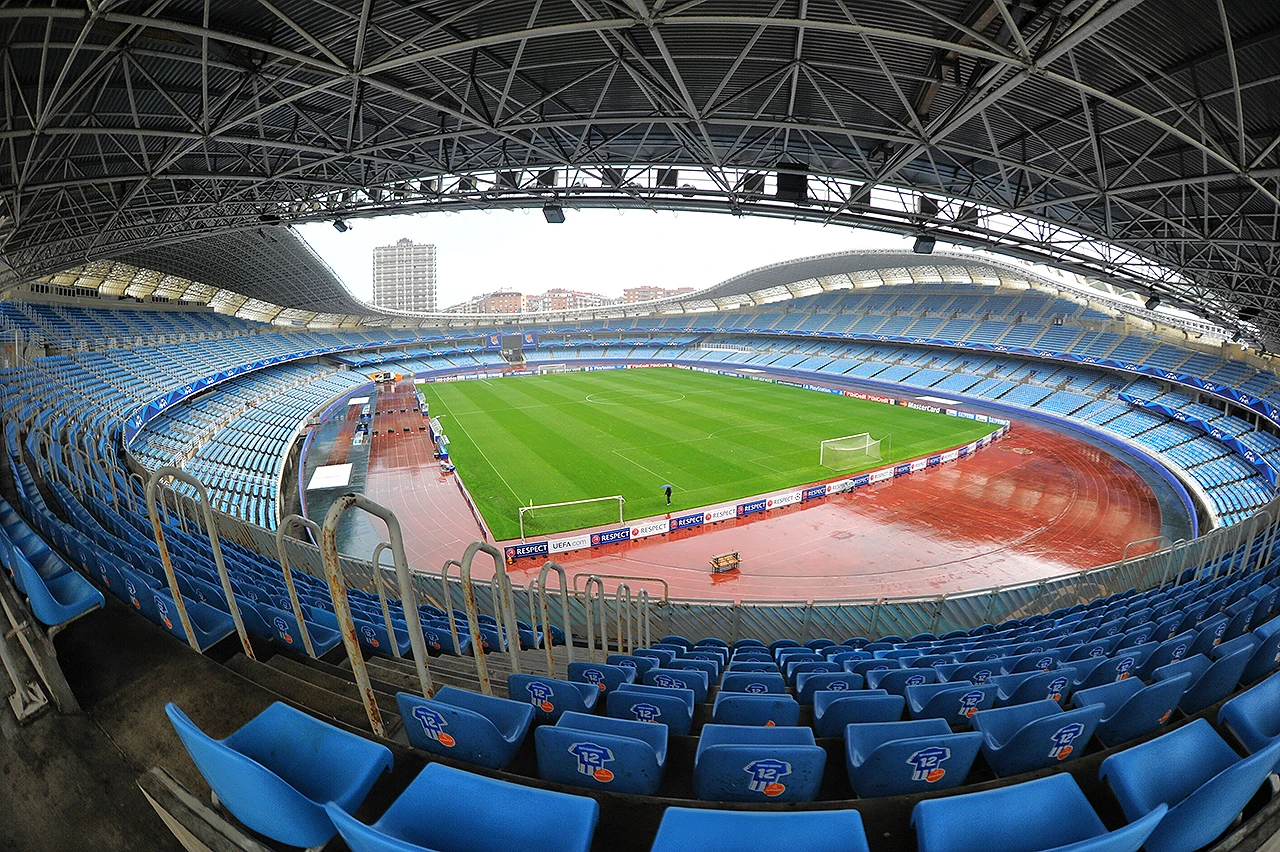
Santiago Pérez designed Real Sociedad’s home for its original 1993 construction, with the athletics track later removed and the stands rebuilt in a football-specific configuration by architect Izaskun Larzabal between 2017 and 2019. The renovation replaced the old cantilevered roof with self-sustaining steel trusses supporting a translucent inner canopy, built in phases so the stadium stayed in use throughout construction. The lower tier was reconfigured and moved closer to the pitch, and both end stands were rebuilt in rectangular form for the first time in the stadium’s history. Capacity now sits at roughly 39,500. The current renovation cost around €47 million, split between the club, the Basque Government, and the Gipuzkoa Provincial Council.
2. Camp Nou — Barcelona, Spain
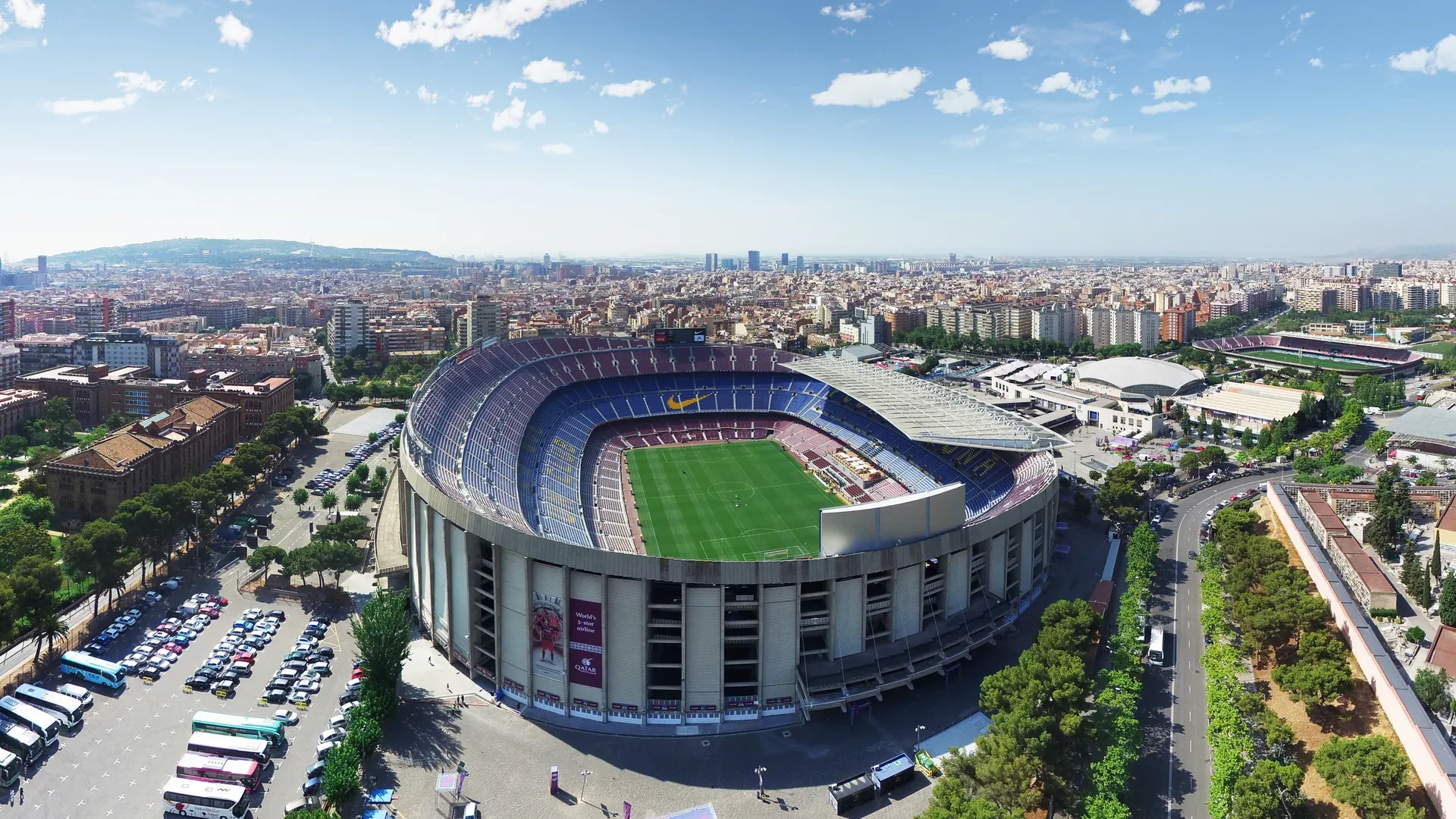
Commissioned in 1953, FC Barcelona’s stadium was designed by architect Francesc Mitjans, with García Barbón and Soteras Mauri, and opened in 1957. The ongoing Espai Barça renovation, led by Japanese firm Nikken Sekkei and Catalan practice b720 Fermín Vázquez, will raise capacity to nearly 105,000, making it the largest stadium in Europe. The project fully covers the stands with a new roof and adds expanded VIP and hospitality areas while preserving the original bowl’s character. FC Barcelona returned to a partially reopened stadium in November 2025, with full completion targeted for mid-2026. The renovation budget is estimated at €1.5 billion.
3. Estadio de Gran Canaria — Las Palmas, Spain
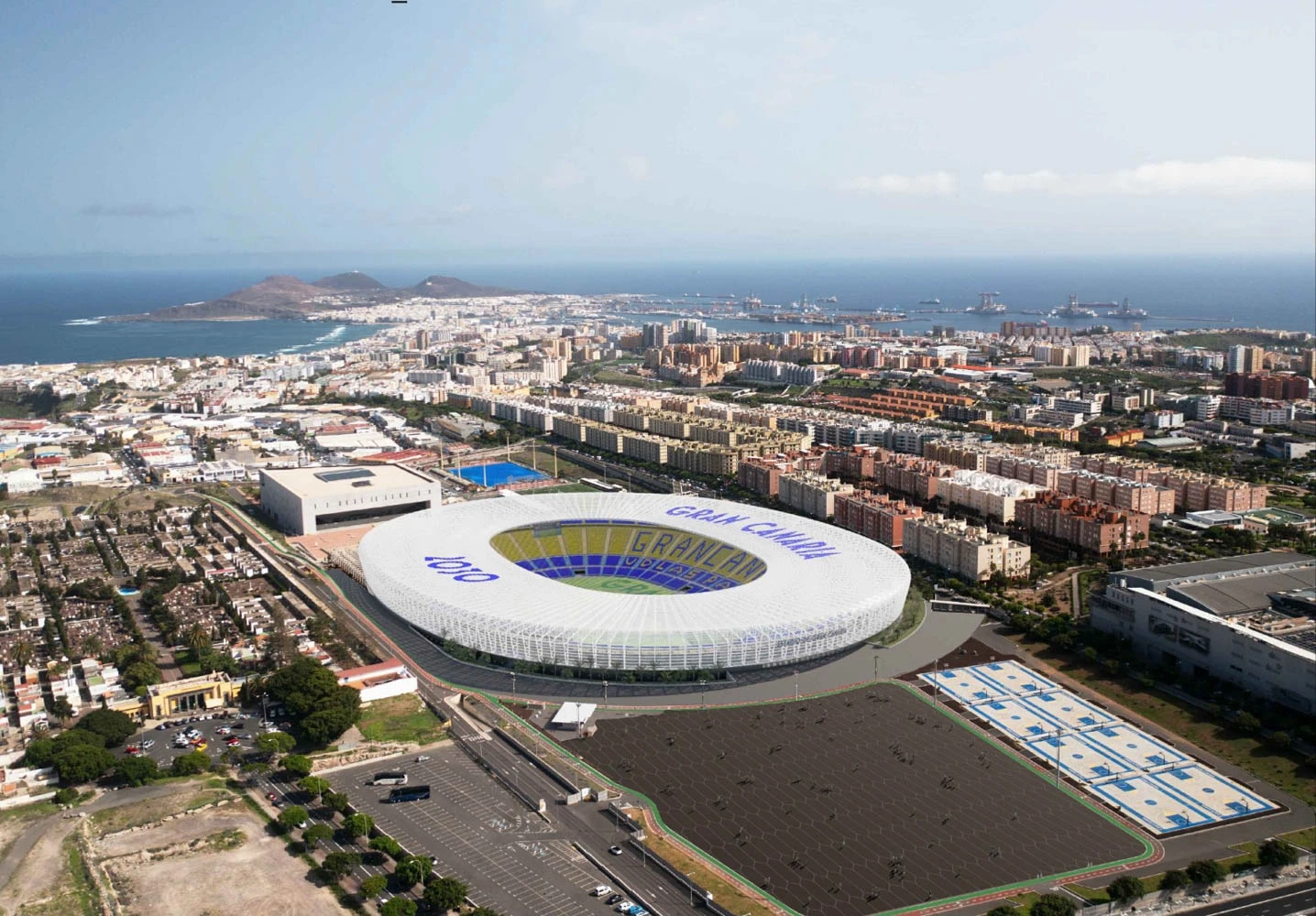
Home to UD Las Palmas, the current Estadio de Gran Canaria dates to 2003, designed by Pedro Medina and Guillermo Ortego Carretero. For the World Cup, L35 Arquitectos won an international competition in February 2024 with a design called “La Nube” (The Cloud), developed with Estudio 0710. The scheme increases capacity from about 32,400 to more than 44,000 by moving the North and South stands closer to the pitch. Its defining feature is a lightweight radial roof built on a spoked-wheel tension system, allowing large column-free spans. L35 also led the recent Santiago Bernabéu remodel, and the Gran Canaria jury cited that experience directly when selecting the firm.
4. La Cartuja Stadium — Seville, Spain
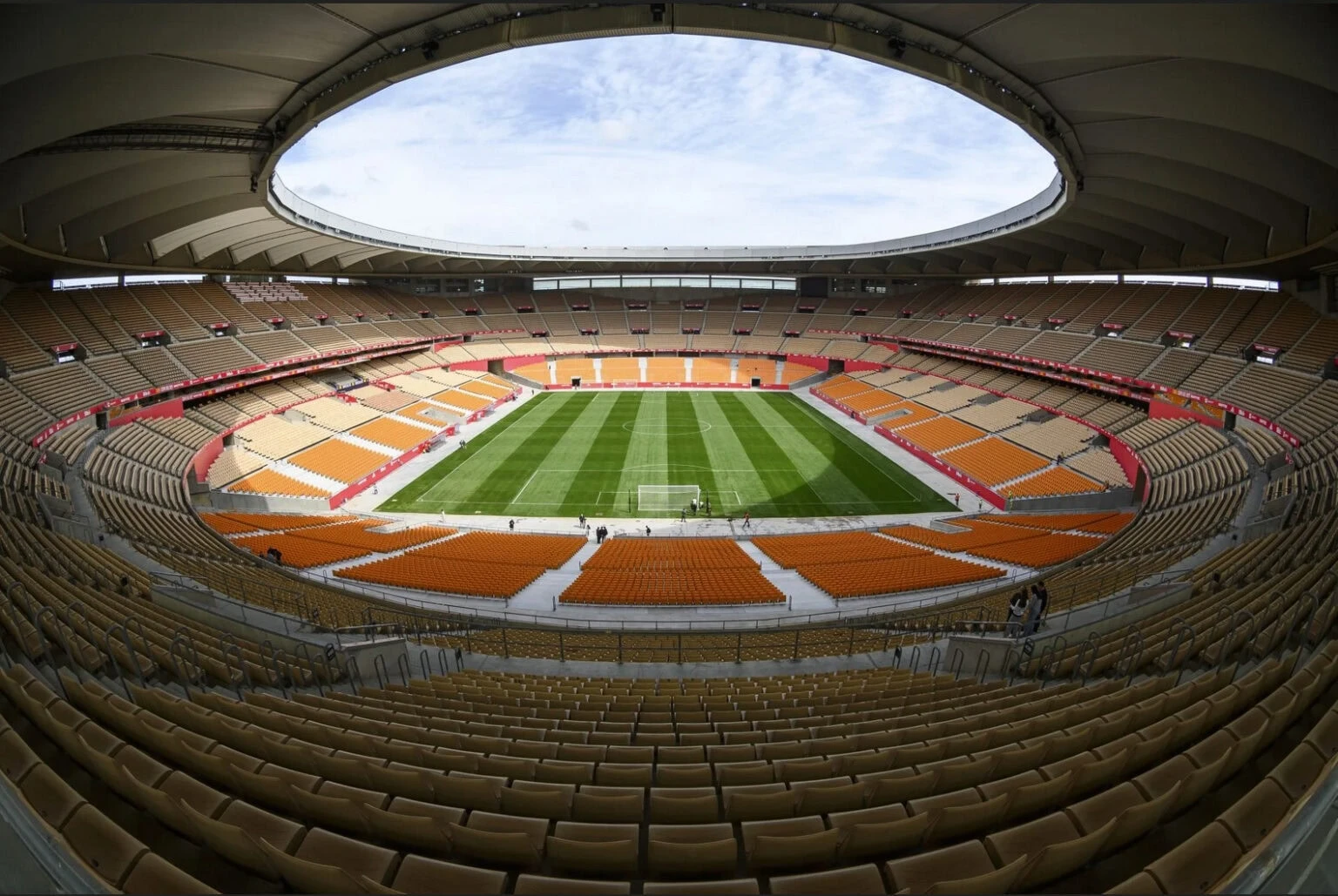
Built for the 1999 World Athletics Championships, La Cartuja was designed by Antonio Cruz and Antonio Ortiz of Cruz y Ortiz Arquitectos, with structural engineering by Schlaich Bergermann Partner. The stadium sits on Isla de la Cartuja and was part of Seville’s unsuccessful bids for the 2004 and 2008 Olympics. Cruz y Ortiz is leading the current €100-million-plus renovation, removing the athletics track, enlarging the stands, and adding a glass roof over the new seating. Capacity will grow from around 60,000 to more than 71,000, making it Spain’s third-largest stadium after Camp Nou and the Bernabéu once work concludes in 2028.
5. Estadio La Rosaleda — Málaga, Spain
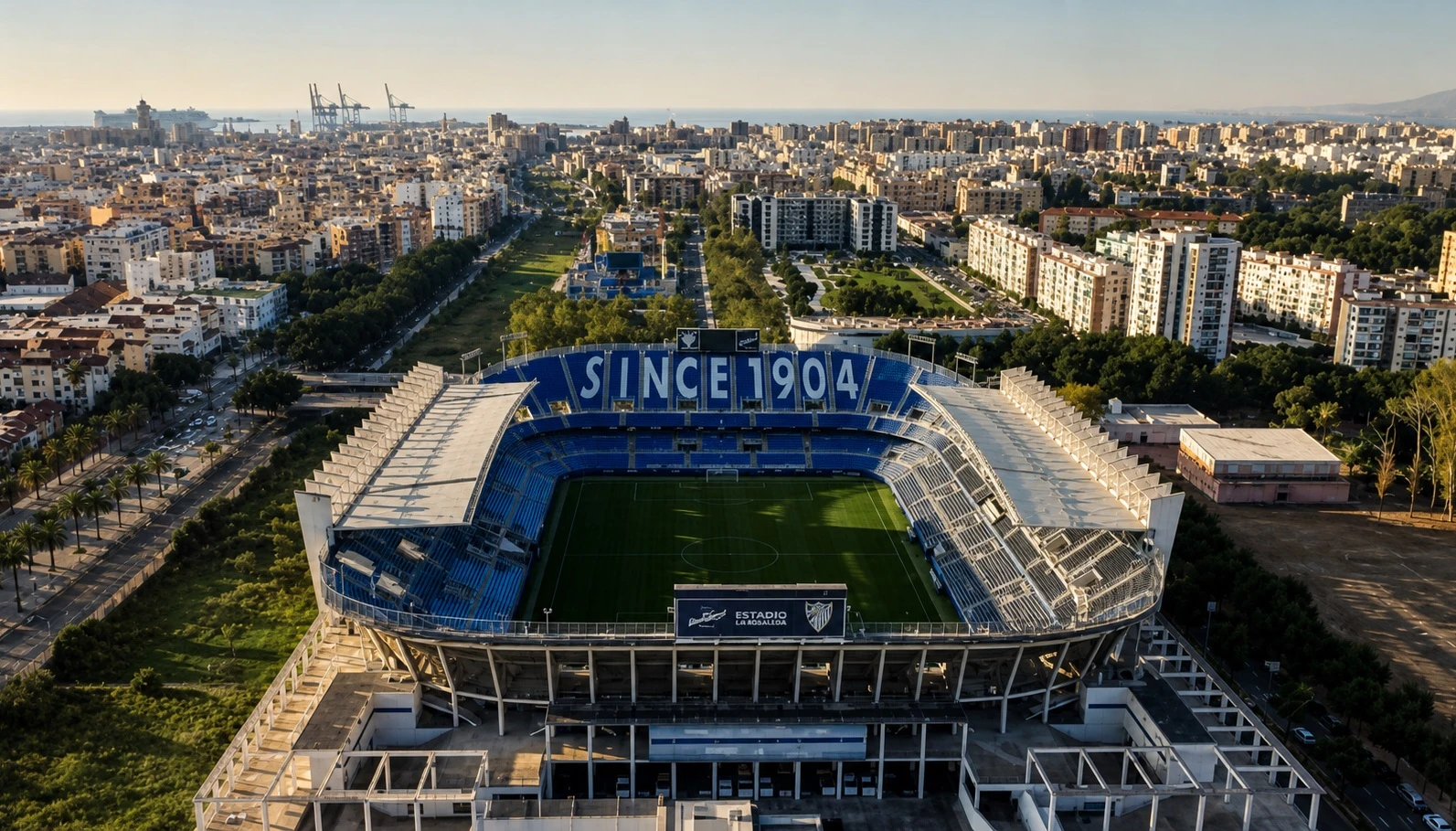
Home to Málaga CF since 1941, La Rosaleda was designed by architects Enrique Atencia and Fernando Guerrero Strachan and hosted matches at the 1982 World Cup. A six-year rebuild completed in 2006, led by architect José Seguí Pérez with the Sando-Vera joint venture, replaced the stands in four phases while the old stadium remained in use, bringing capacity to just over 30,000. In 2023, Morph Estudio presented a concept to expand the ground to 45,000 seats with a third tier and a reworked exterior. Málaga’s participation in the 2030 bid has since been complicated by disputes over whether to redevelop La Rosaleda or build a new stadium elsewhere.
6. Metropolitano Stadium — Madrid, Spain
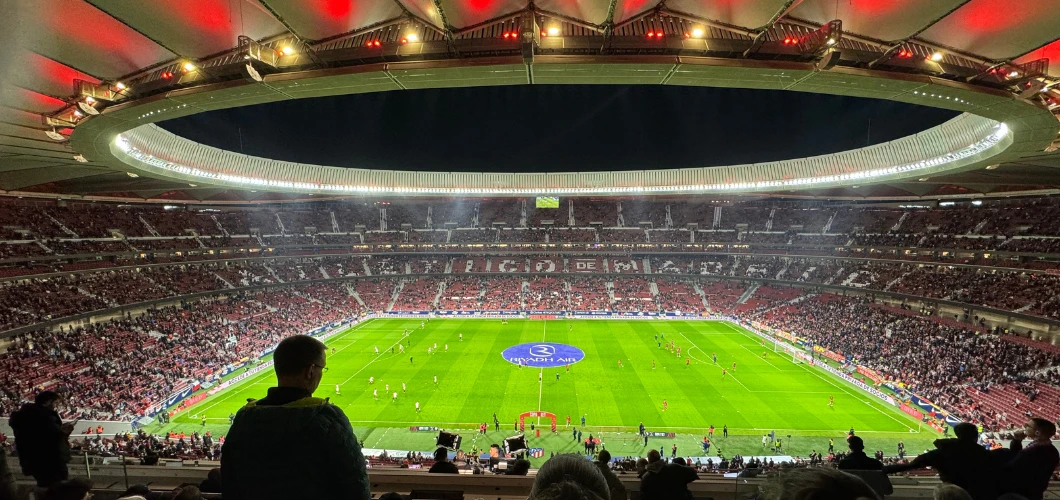
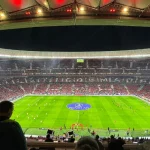
The stadium began life as La Peineta, a 1994 athletics venue designed by Antonio Cruz and Antonio Ortiz of Cruz y Ortiz Arquitectos. The same firm led its transformation into a football-only stadium for Atlético Madrid, reopened in 2017 with capacity expanded from 19,000 to around 70,000. The roof design uses a double outer compression ring and inner tension ring connected by radial cables, engineered with Schlaich Bergermann Partner. The stands preserve the narrow horizontal voids of the original structure while the new roof unifies the building’s image. It hosted the 2019 Champions League final and will host the 2027 final as well.
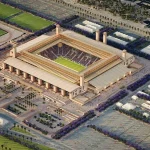
7. Nueva Romareda — Zaragoza, Spain
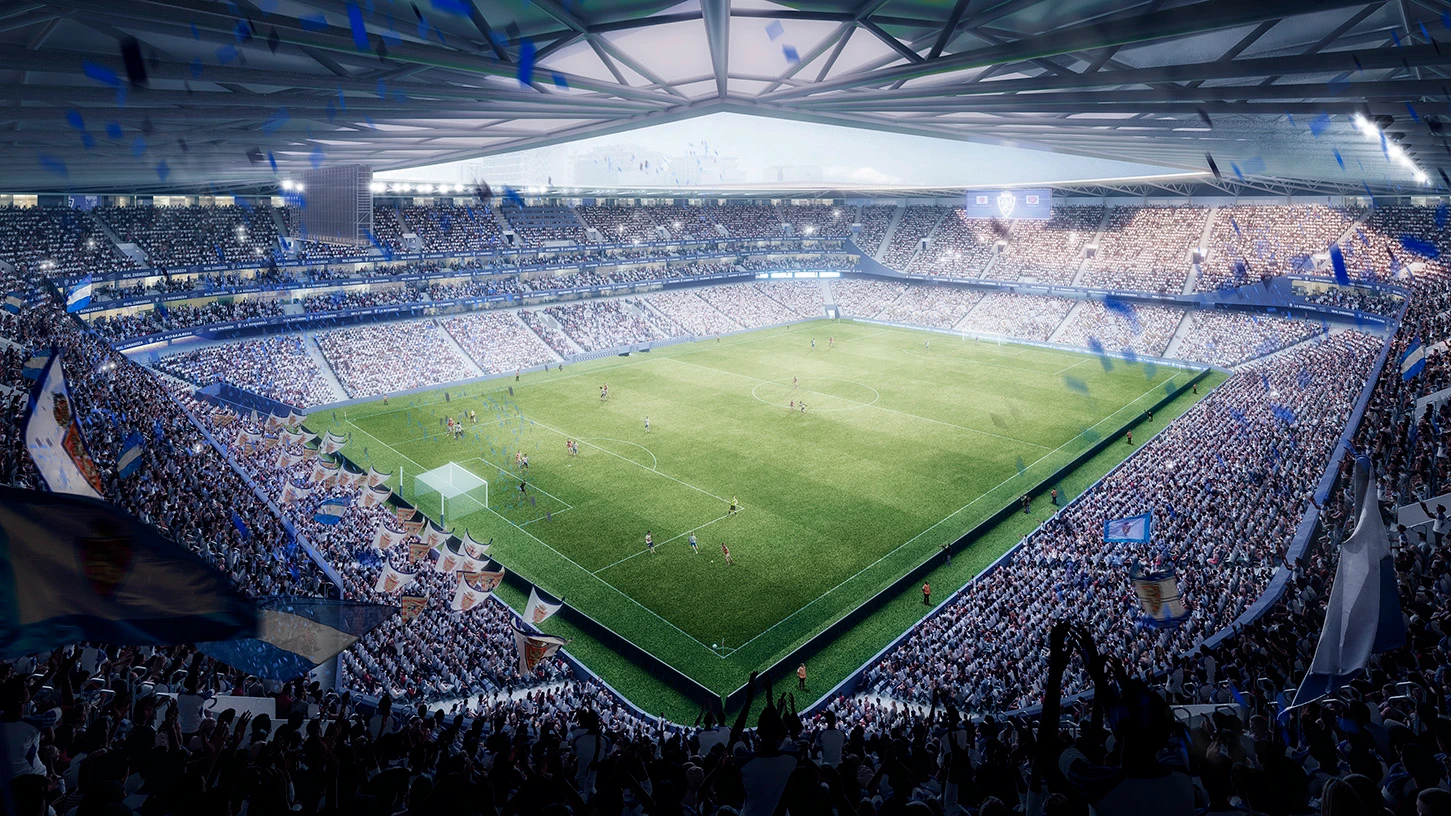
Real Zaragoza’s La Romareda opened in 1957. Spanish firm IDOM, led by architect César Azcárate, won the commission to design its full replacement, unveiled in 2023 under the working name Nueva Romareda. The design responds to the cierzo, the strong northerly wind common to the region, using subtle convexities and concavities to give the rectangular volume dynamism. The rebuild will raise capacity from about 33,000 to more than 43,000 across a five-phase construction process budgeted at roughly €148.5 million, with OHLA as the main contractor. The stadium is expected to be ready for the 2027-28 season, ahead of the World Cup.
8. RCDE Stadium — Barcelona, Spain
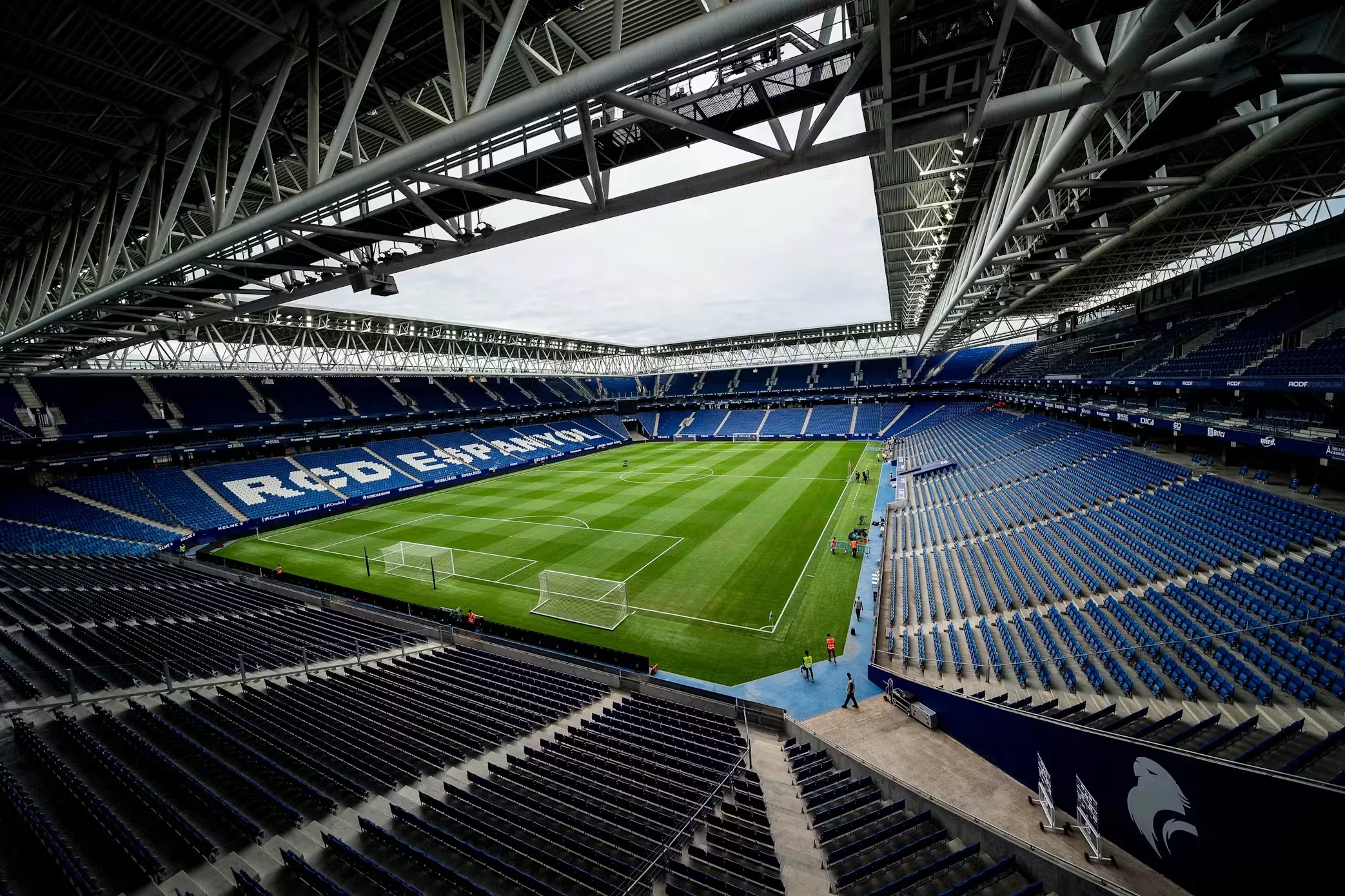
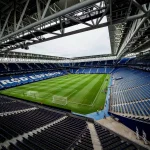
Home to RCD Espanyol since 2009, the RCDE Stadium was designed by Fenwick Iribarren Architects, with Mark Fenwick and Esteban Gasulla leading the winning entry in an international competition that beat proposals from Jean Nouvel, HOK, and Arquitectónica. The 40,500-seat bowl was designed to bring fans unusually close to the pitch, with a roof that appears to float on beams spanning up to 200 meters. The façade is conceived as a floating curtain finished in the club’s blue tones, illuminated at night. The stadium was named Venue of the Year at the 2010 Stadium Business Awards.
9. Estudio de Riazor — A Coruña, Spain
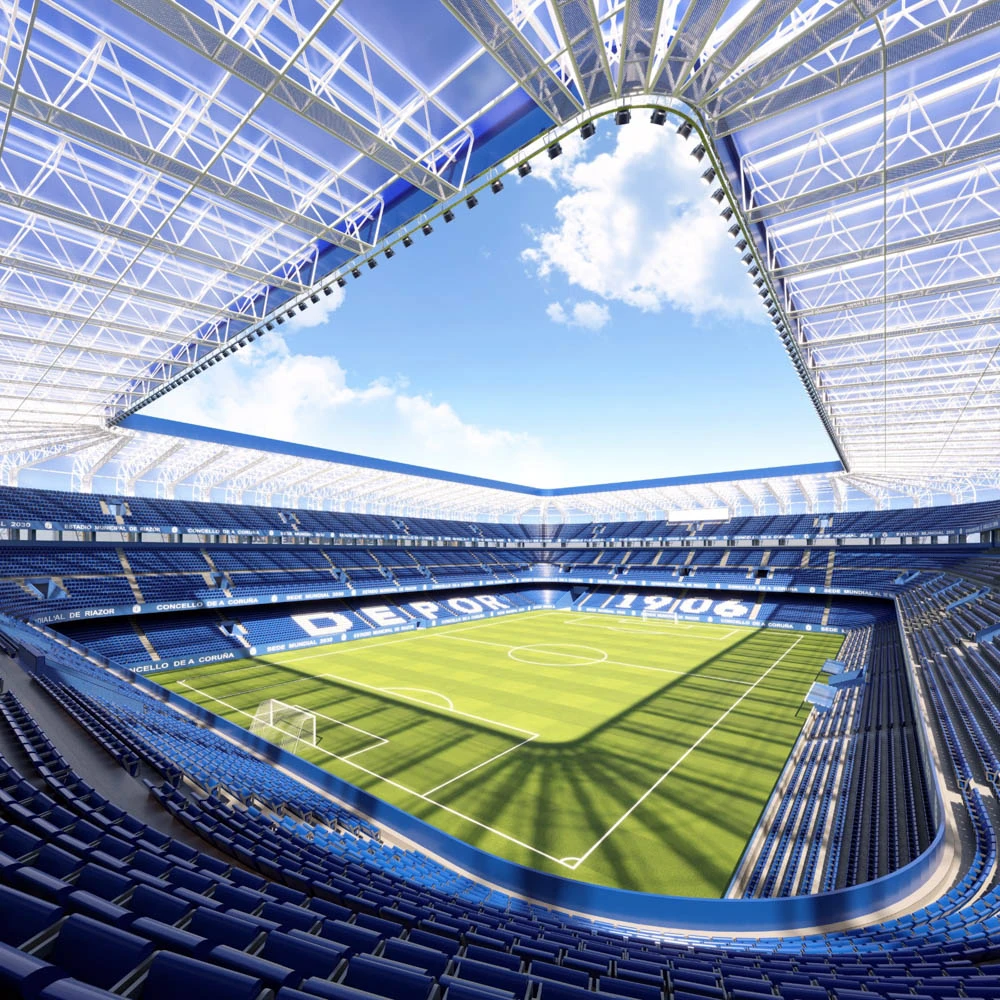
Originally completed in 1944, Deportivo de La Coruña’s Estadio Municipal de Riazor was designed by architect Santiago Rey Pedreira, drawing on German and Italian stadium designs of the 1930s. It has been renovated several times, most recently between 2015 and 2018 with a new roof and façade. In 2022, architect David Estany Garea presented renderings for a further expansion tied to the 2030 bid, lowering the pitch and extending the upper rows to a uniform height around the stadium’s perimeter. As of early 2026, the renovation design and financing for A Coruña’s bid remain unresolved, putting the city’s hosting status under pressure.
10. San Mamés Stadium — Bilbao, Spain
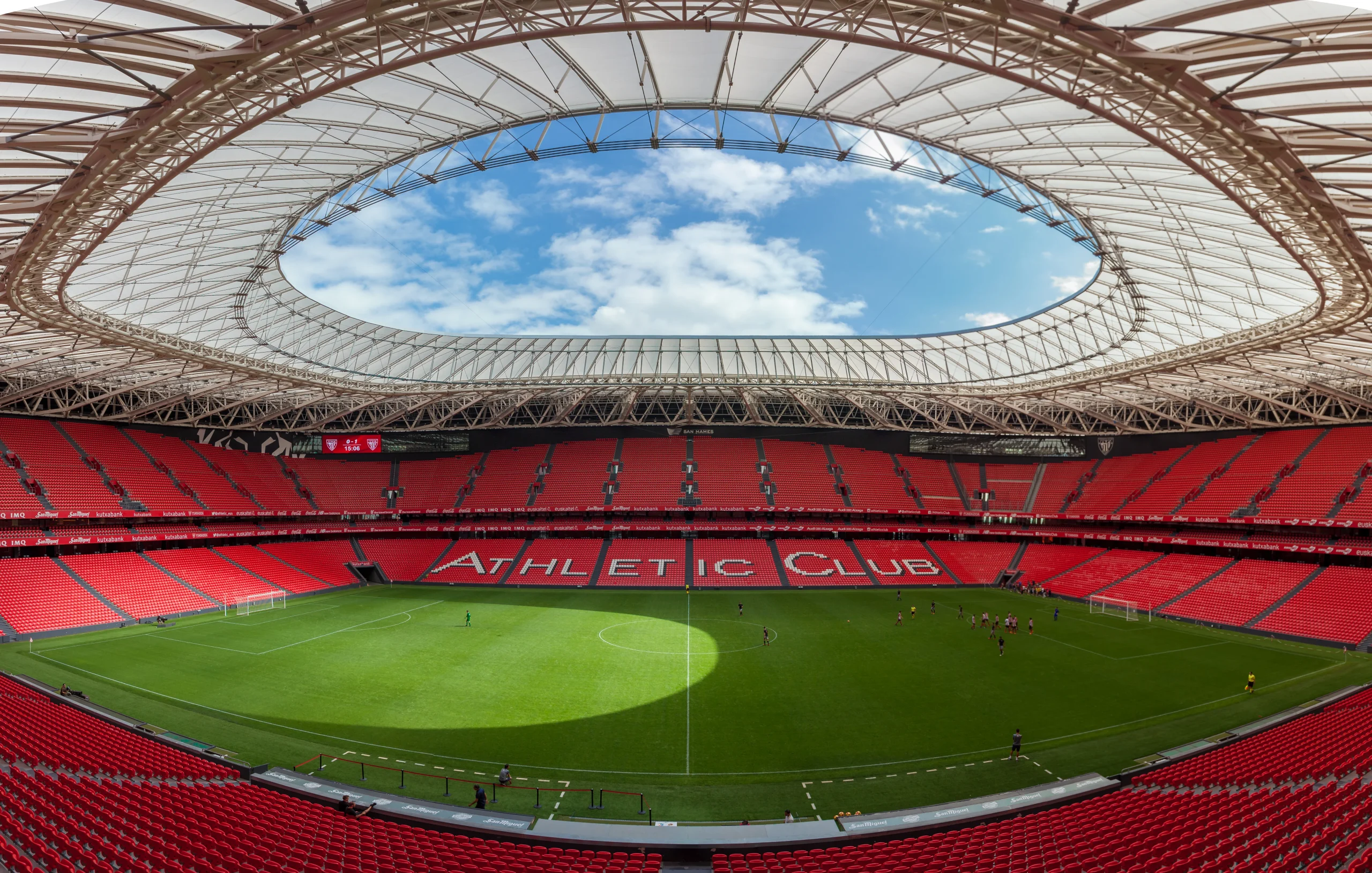
Nicknamed “the Cathedral,” Athletic Club’s original San Mamés was designed by Manuel María Smith and opened in 1913. The new San Mamés, built next to and eventually replacing the old ground, was designed by IDOM under principal architect César Azcárate and opened fully in 2014. Its roof combines composite portal frames supporting a 7-meter perimeter cantilever with a 50-meter cantilevered canopy covered in white ETFE cushions. A twisted ETFE façade element wraps the building and is illuminated at night, creating a landmark visible across the Bilbao estuary. Capacity is just over 53,000, and the stadium holds UEFA’s Elite category rating.
11. Santiago Bernabéu Stadium — Madrid, Spain
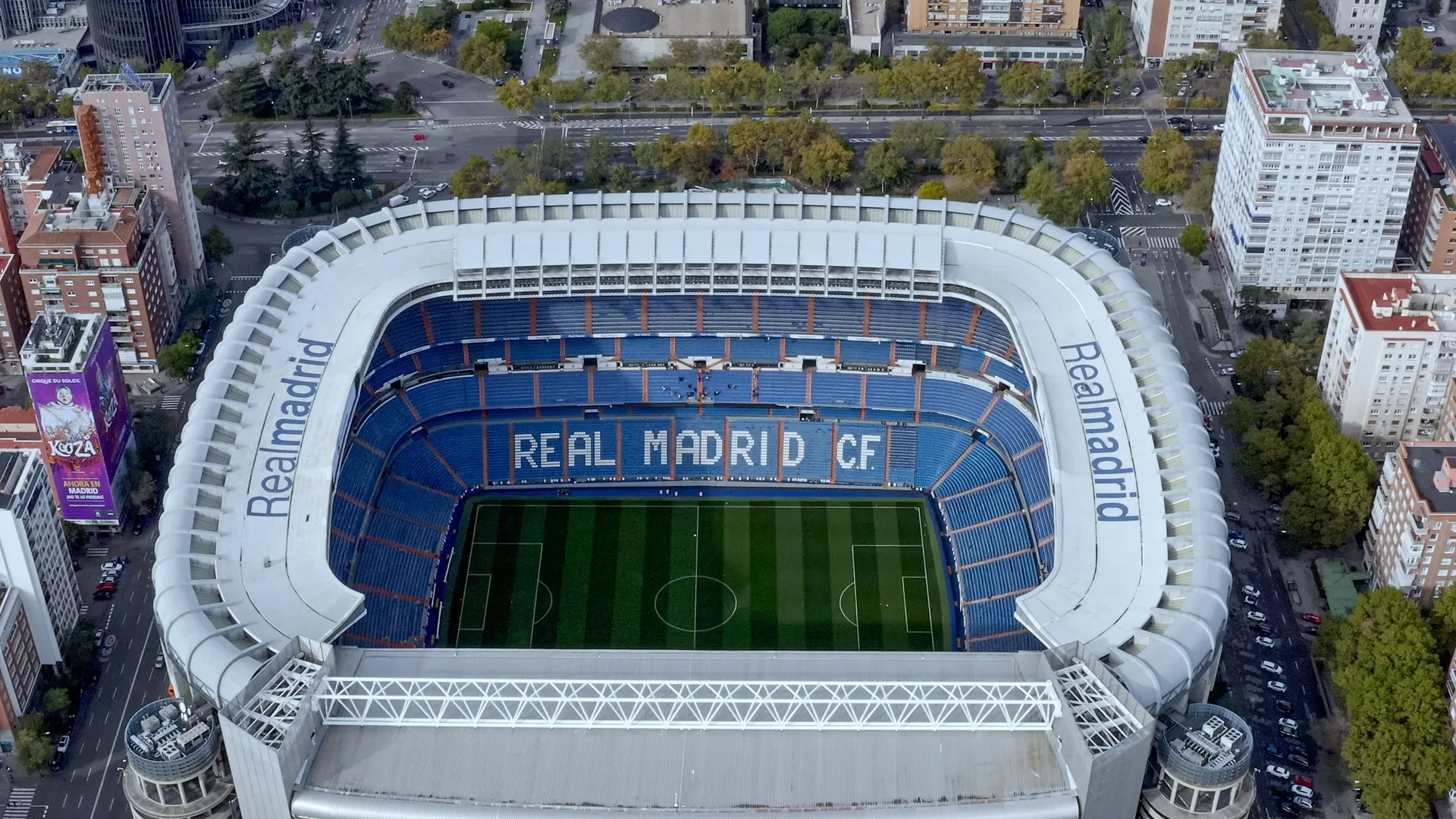
Real Madrid’s stadium opened in 1947. Its comprehensive renovation, won in a 2014 competition that beat Foster + Partners, Rafael Moneo, and Herzog & de Meuron, was designed by a team of L35 Arquitectos, the German firm gmp Architekten, and Ribas & Ribas. The project wraps the stadium in an asymmetrical stainless-steel louvered façade designed with Ernesto Klingenberg of L35, adds a retractable roof, and includes an underground retractable pitch system engineered with Arup. The curved skin reflects light differently depending on viewing angle and time of day. The stadium is set to host the 2027 Champions League final.
12. Estádio da Luz — Lisbon, Portugal
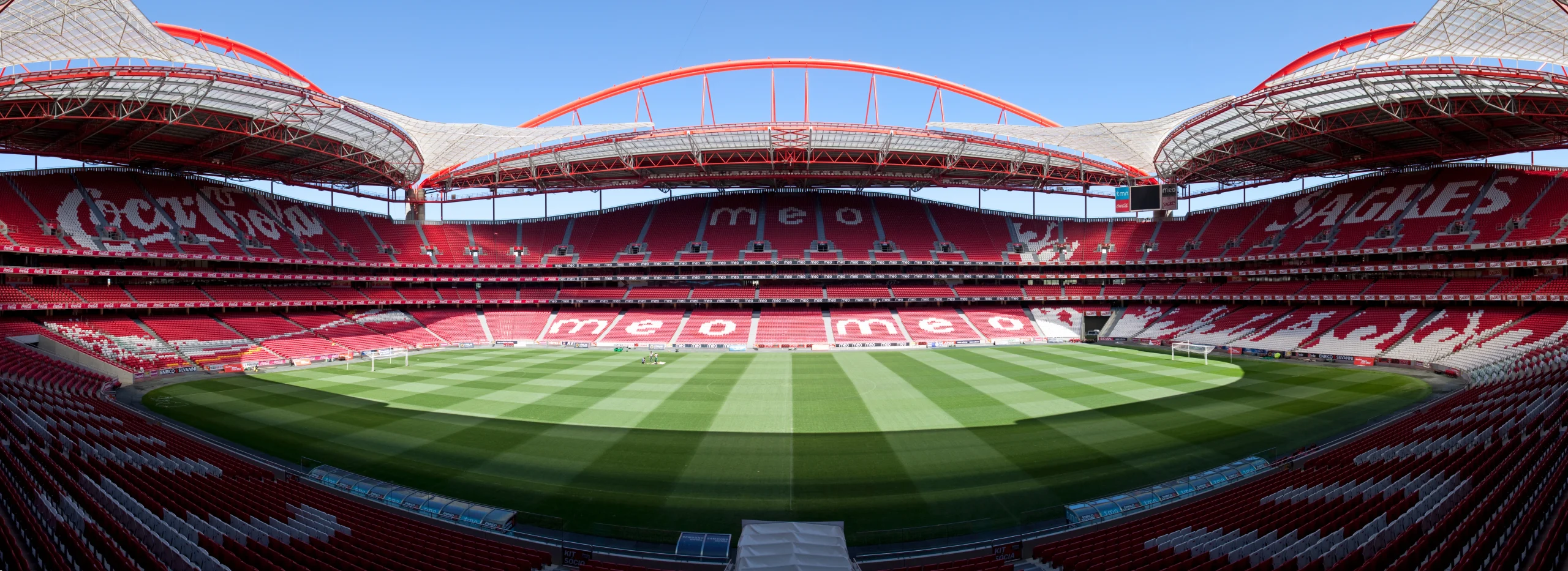
Commissioned for Euro 2004, Benfica’s stadium was designed by Damon Lavelle of HOK Sport Venue Event, now Populous, and opened in 2003. Its polycarbonate roof, supported by four 43-meter steel arches shaped to echo the wavy outline of the three-tiered stands, lets sunlight filter into the bowl. It replaced the original 1954 Estádio da Luz, designed by João Simões, which once held up to 120,000 spectators. The current ground holds around 68,100 and has hosted two Champions League finals. Benfica has since announced a modernization masterplan developed by Populous with Lisbon firm Saraiva + Associados.
13. Estádio do Dragão — Porto, Portugal
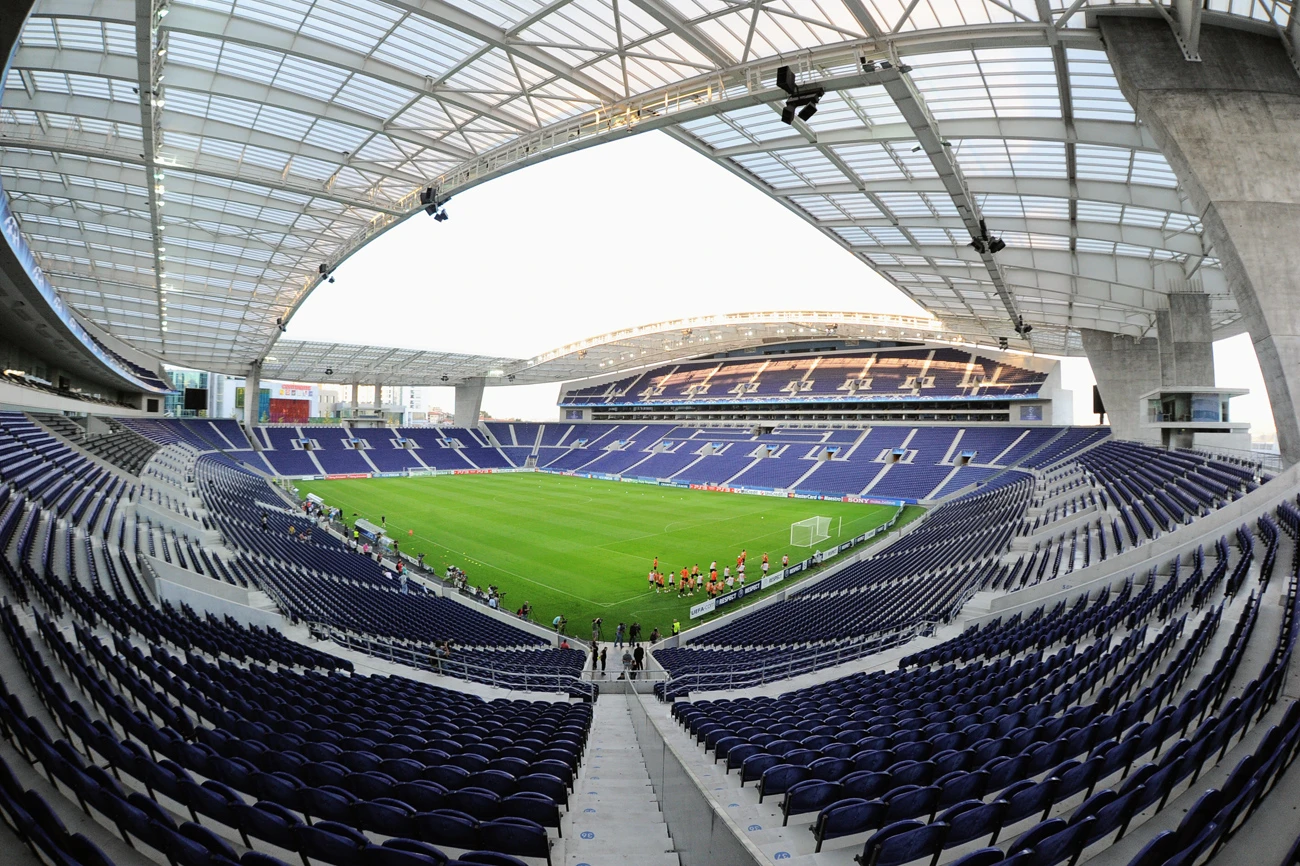
Home to FC Porto, the stadium was designed by Portuguese architect Manuel Salgado, working with Jorge Estriga and Carlos and Inês Cruz, and opened in 2003 to replace the Estádio das Antas. Its roof, made from a steel structure covered with polycarbonate sheets, was the largest of its kind in the world at completion and earned the European Metallic and Mixed Construction award in 2005. The stadium sits on an elevated plinth within Porto’s Antas district, opening city views from its northern and southern points. It hosted the opening match of Euro 2004 and the 2021 Champions League final and holds just over 50,000 spectators.
14. Estadio José Alvalade — Lisbon, Portugal
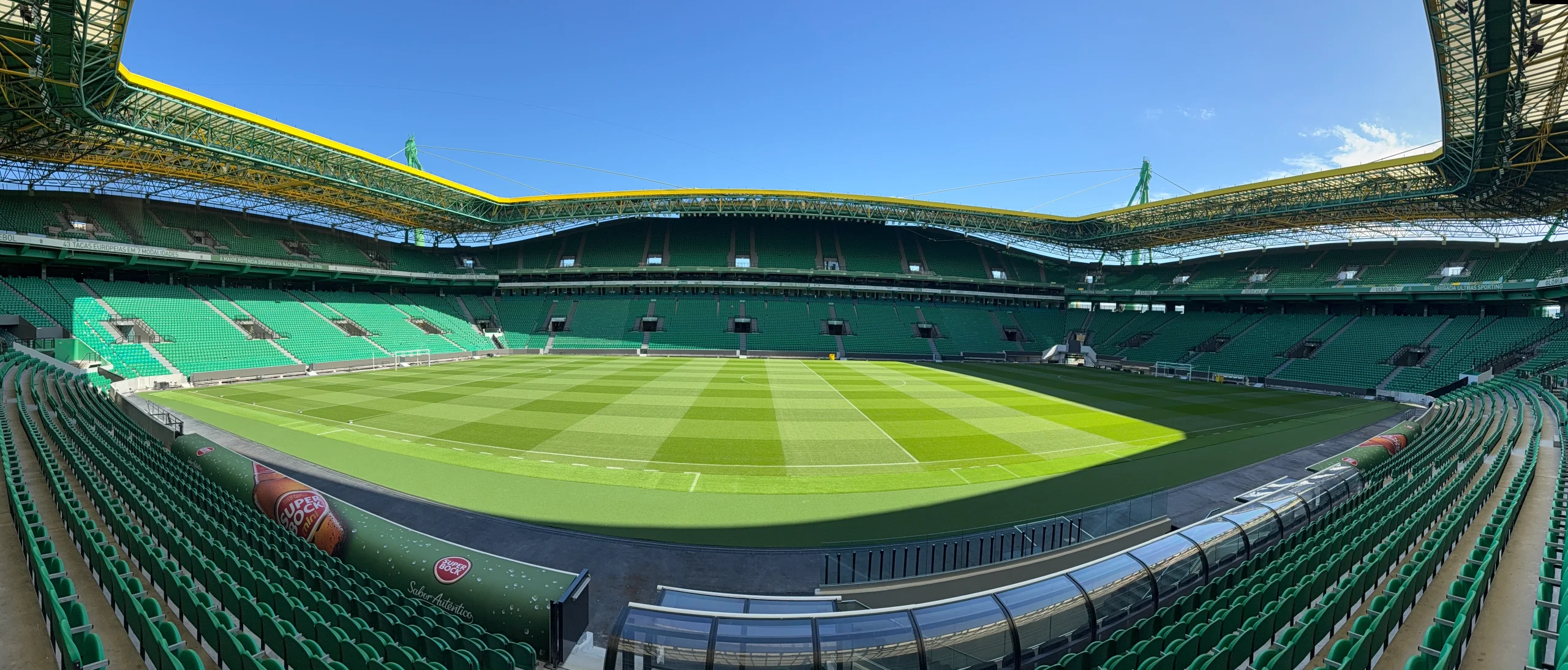
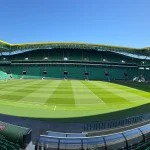
Commissioned as part of the larger Alvalade XXI development, Sporting CP’s stadium was designed by Portuguese architect Tomás Taveira and opened in 2003. Known for bold, colorful stadium design, Taveira gave the venue a curved façade and multicolored seating that became its visual signature. However, the exterior tiles were later removed, and the seats were recolored to the club’s green in 2021. The 52,000-seat stadium hosted five Euro 2004 matches, including a semifinal, and the 2005 UEFA Cup final. It replaced the original 1956 Estádio José Alvalade, designed by António Augusto Sá da Costa and Anselmo Fernandez.
15. Adrar Stadium — Agadir, Morocco
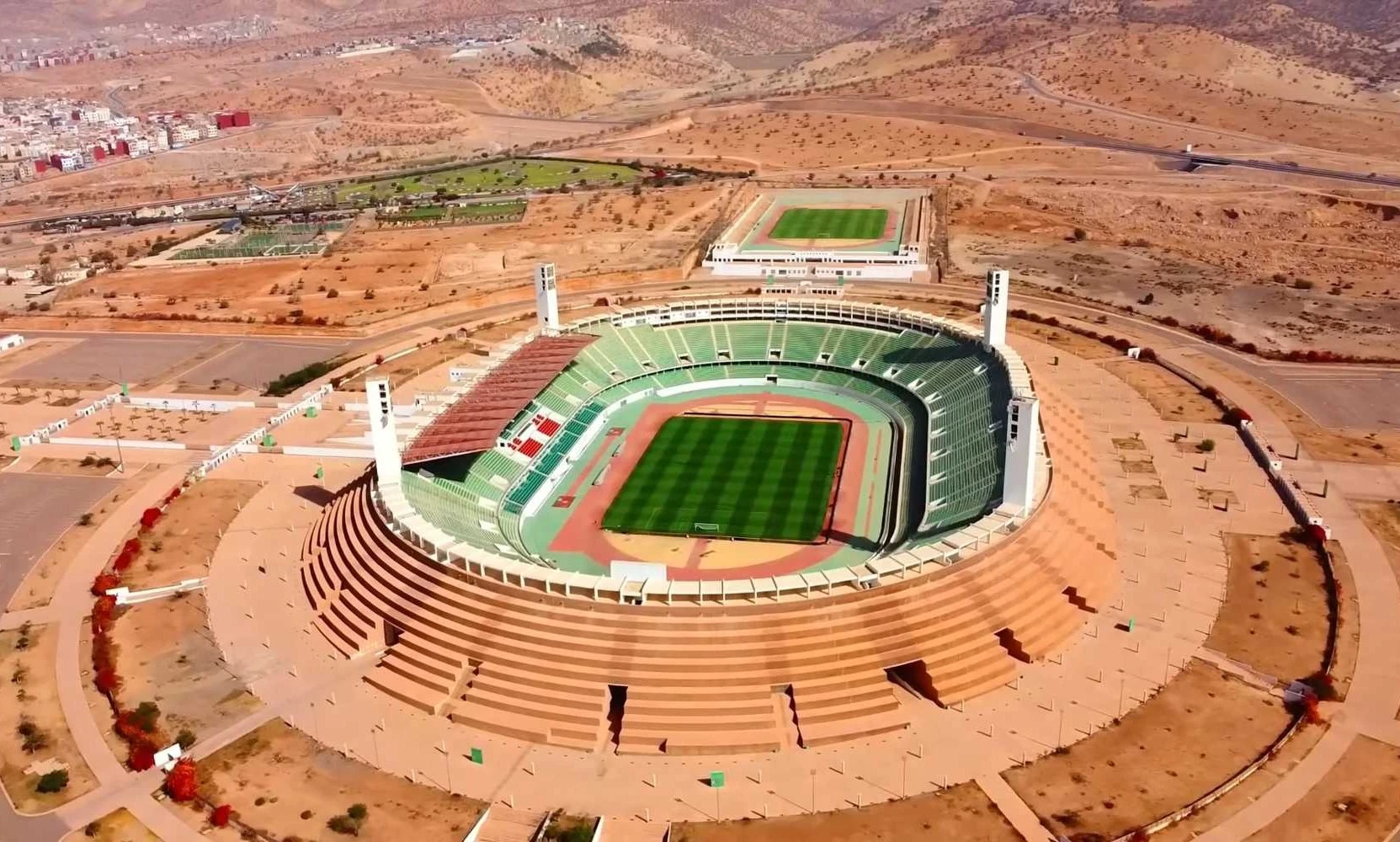
Also known as the Grand Stade d’Agadir, the stadium was designed by Italian architect Vittorio Gregotti of Gregotti Associati International, working with Moroccan architect Saïd Benkirane. It opened in 2013 after a project delayed by two failed World Cup bid cycles. A two-phase renovation is underway: the first, completed for the 2025 Africa Cup of Nations, upgraded exteriors and parking; the second, running to 2030, will expand capacity from around 41,800 to 46,000 and add a 360-degree panoramic roof. The stadium’s name means “mountains” in Amazigh, reflecting design references to the nearby Atlas range.
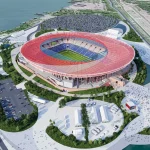
16. Hassan II Stadium — Casablanca, Morocco
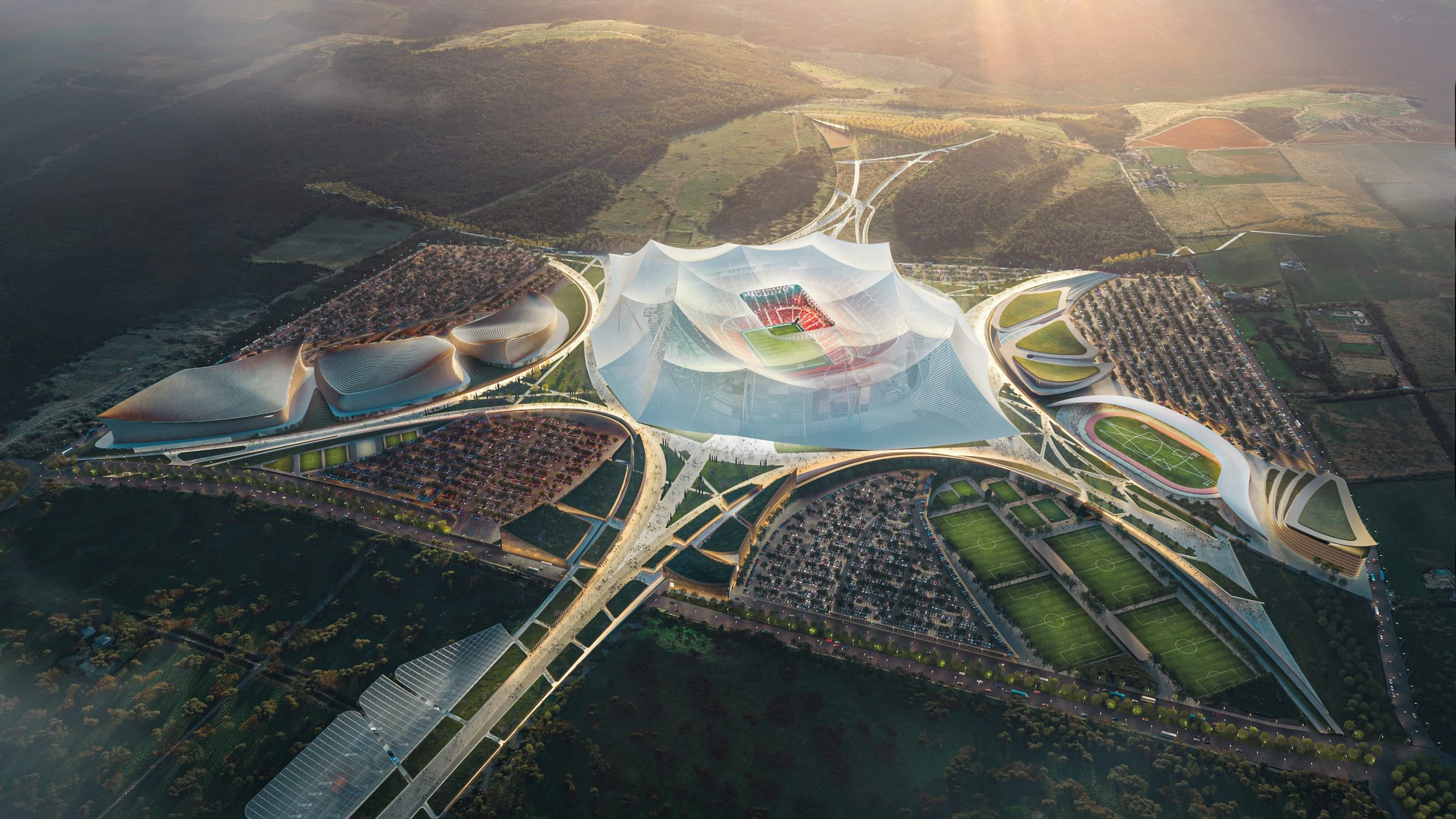
Set to be the largest football stadium in the world at 115,000 seats, the Grand Stade Hassan II is designed by Populous in collaboration with Paris-based Oualalou + Choi, with Tarik Oualalou as lead architect. The winning scheme beat entries from Cruz y Ortiz, Foster + Partners, gmp, Herzog & de Meuron, HPP Architects, and Zaha Hadid Architects. Its design references the moussem, a traditional Moroccan communal gathering held under large tents, translated into a vast aluminum lattice roof spanning the bowl and surrounding gardens. Thirty-two monumental stairways lead to elevated garden platforms 28 meters above ground. Construction is underway on a 100-hectare site in El Mansouria, with completion targeted for 2028.
17. Fez Stadium — Fez, Morocco
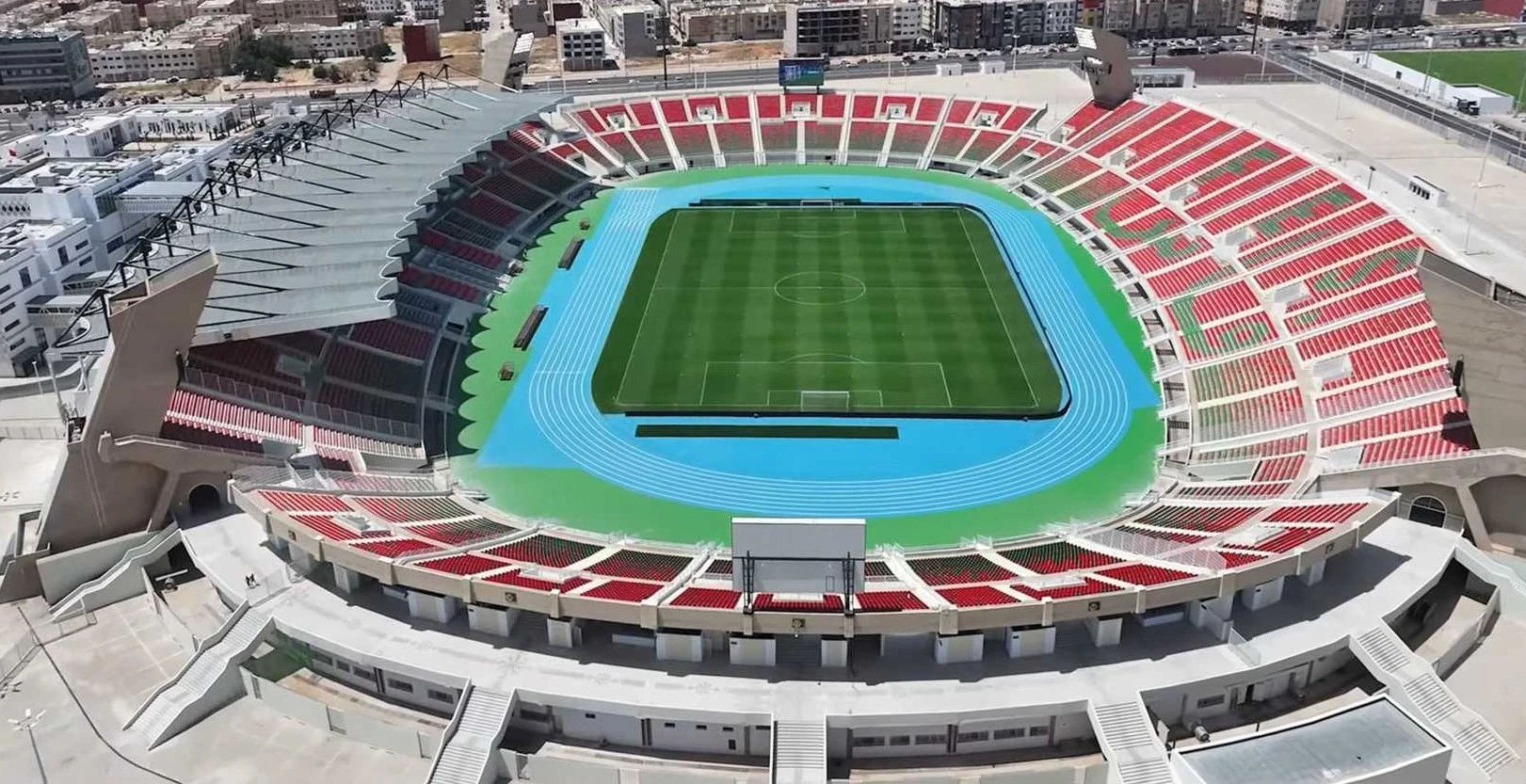
The Grand Stade de Fès was originally planned by Moroccan architects and engineers, with construction launched in 1992 and completed in 2003. A first renovation phase, finished in mid-2025 at a cost of roughly 600 million dirhams, modernized infrastructure and removed sightline obstructions ahead of the Africa Cup of Nations. A second phase, running to 2028, will remove the remaining athletics track, add a full roof, and expand capacity from 35,000 to 55,800 seats, incorporating design elements meant to reflect traditional Fassi heritage into the stands and façade.
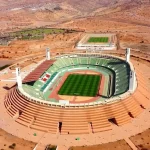
18. Marrakesh Stadium — Marrakesh, Morocco
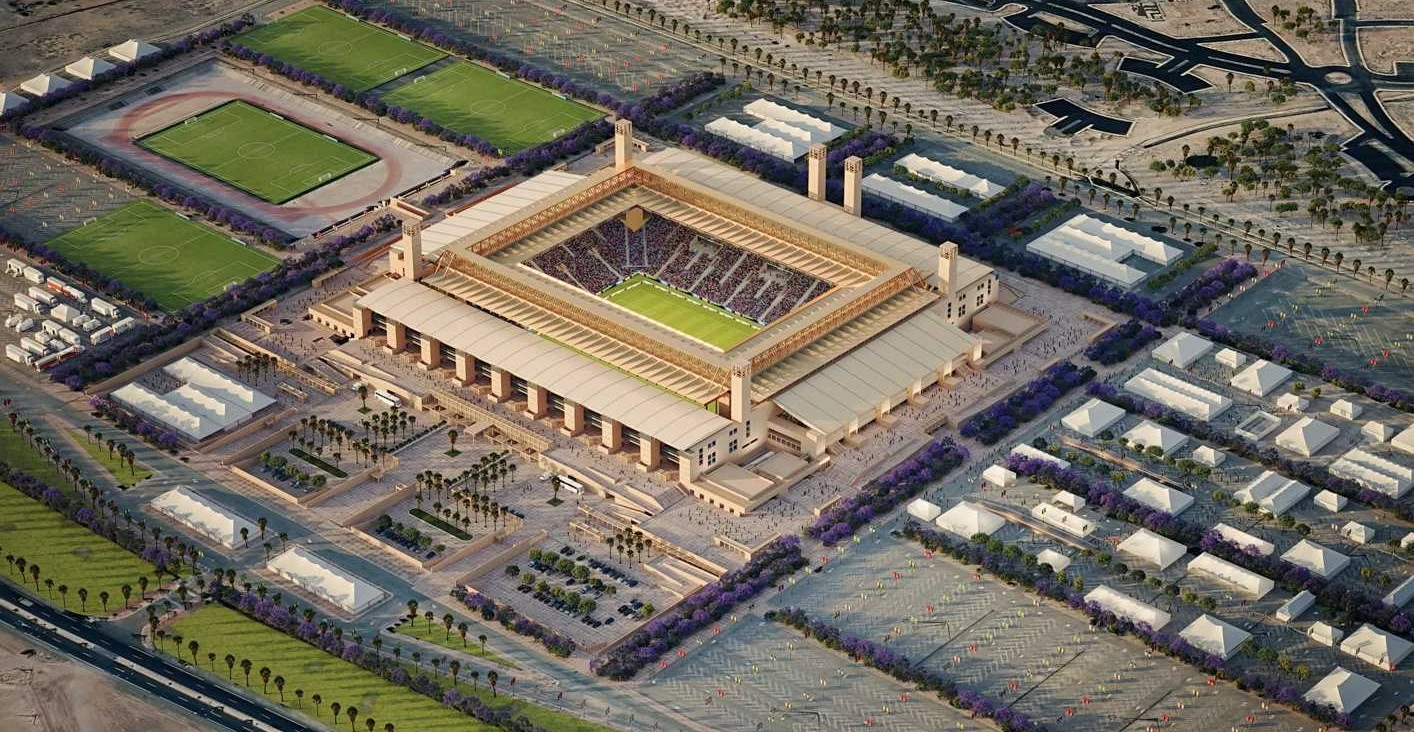
Designed by Italian architect Vittorio Gregotti with Moroccan architect Saïd Benkirane, the Grand Stade de Marrakech opened in January 2011. Its rectangular stand layout set within an oval athletics track bears a resemblance to Gregotti’s earlier Stadio Luigi Ferraris in Genoa. The exterior uses sand-colored walls, towers, and minaret-like forms, drawing on Morocco’s desert kasbah architecture. A two-phase renovation now underway, with design input from Kardham Cardete Huet Architecture, will remove the athletics track, lower the pitch by 6 meters, and add a full roof and lower tribunes, bringing capacity to around 45,860 by 2028.
19. Prince Moulay Abdellah Stadium — Rabat, Morocco
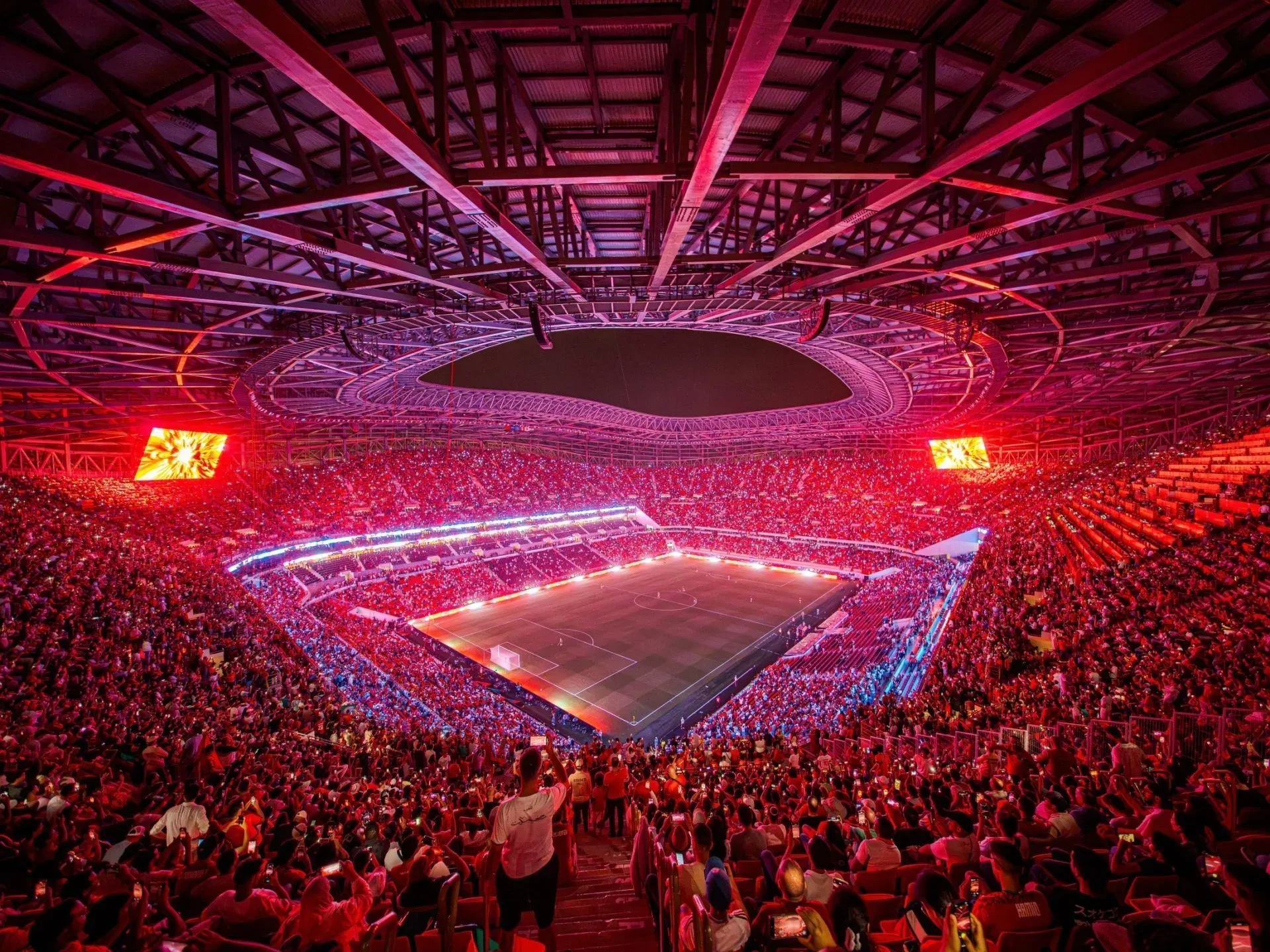
Commissioned as Morocco’s new national stadium, the venue was designed by Populous and opened in September 2025 after a 24-month design-and-build process with contractor Société Générale des Travaux du Maroc. It replaced the original 1983 stadium built for the Mediterranean Games. The 68,700-seat venue features a parametrically designed façade of 19,200 champagne-colored aluminum triangles inspired by Rabat’s palm-lined boulevards and Point de Fez embroidery patterns, with an integrated LED lighting system capable of animated displays. The seating bowl was designed to keep fans close to the pitch to concentrate crowd noise. It is cleared to host matches up to the semifinal stage in 2030.
20. Ibn Batouta Stadium — Tangier, Morocco
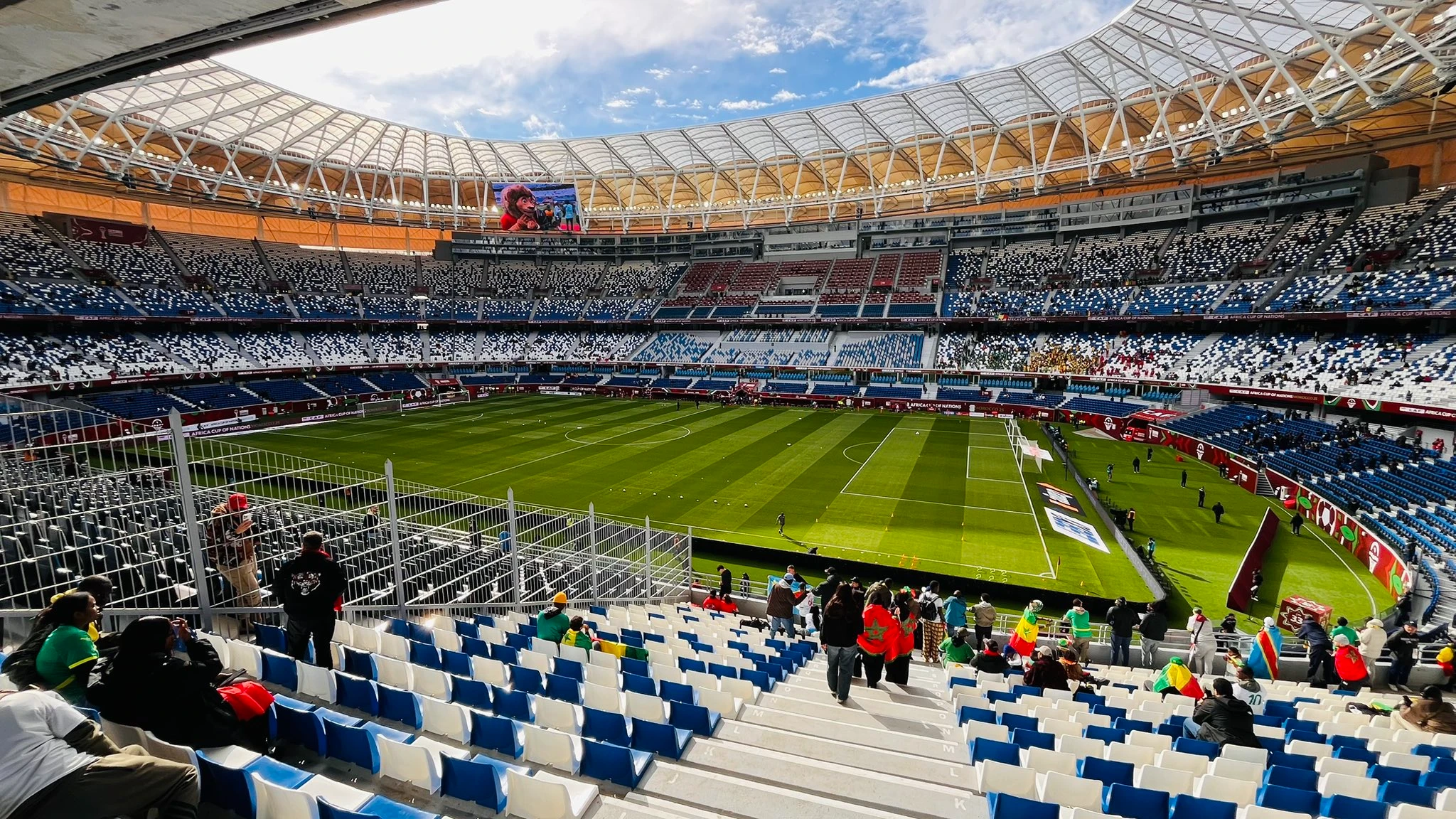
Also called the Tangier Grand Stadium, the venue was originally designed by Moroccan firm JK Architecture under chief architect Jawad Khattabi and opened in 2011 with a capacity of 45,000. A major renovation led by architect Anouar Amaoui of Cabinet Anouar Amaoui expanded the curved end stands in 2022 and 2023, then removed the athletics track entirely, lowered the pitch, and added a full unifying façade with a lightweight PTFE roof. The $360 million project brings capacity to 75,500. It is named after the 14th-century Moroccan explorer Ibn Battuta, who was born in Tangier, and is the home of IR Tanger.
21. Estadio Centenario — Montevideo, Uruguay
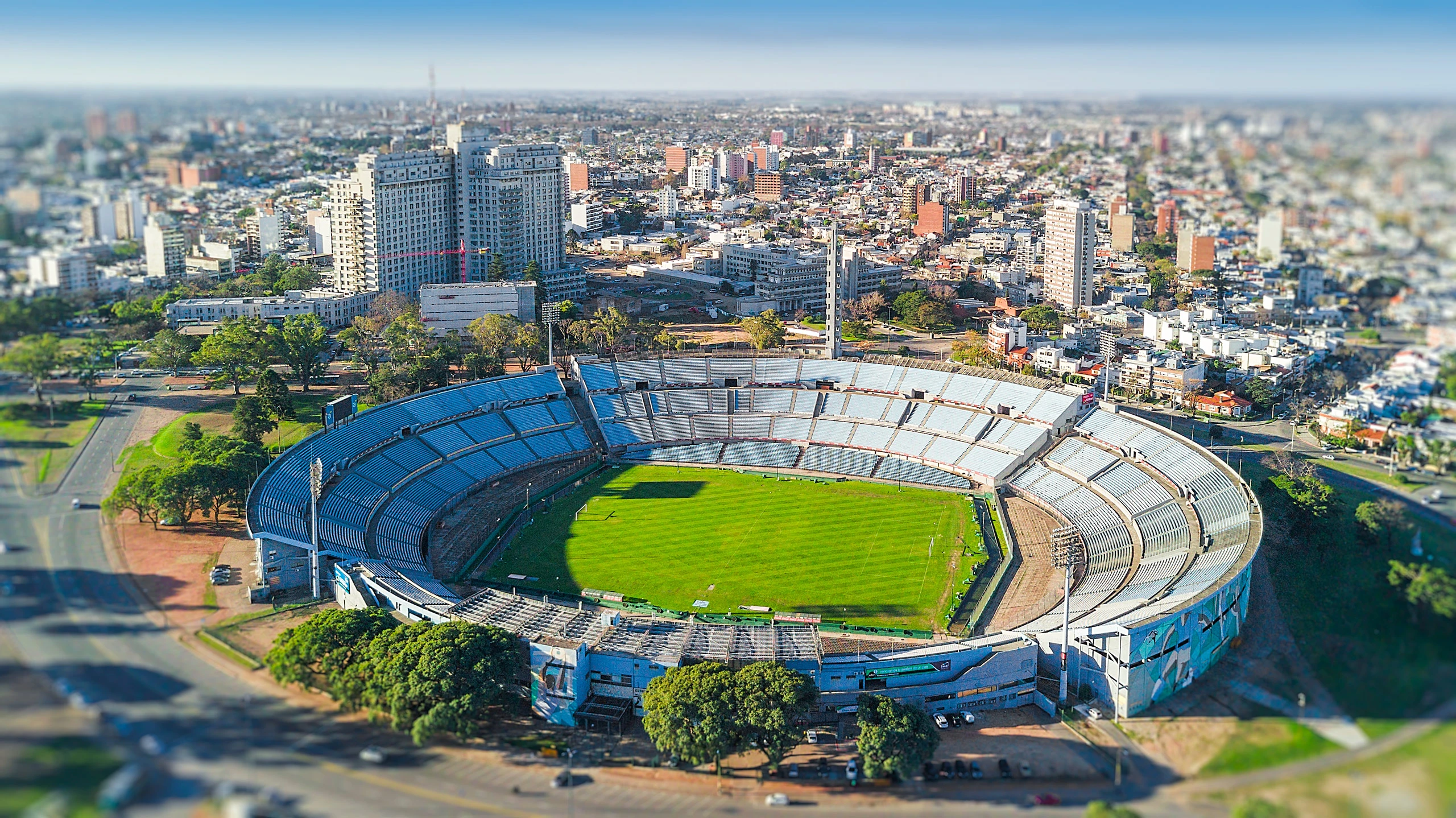
Built for the first FIFA World Cup, the Estadio Centenario was designed by Uruguayan architect Juan Antonio Scasso and completed in just six months between February and July 1930. Its Art Deco Torre de los Homenajes rises above a rationalist concrete bowl that originally held around 90,000 spectators for the 1930 final between Uruguay and Argentina. FIFA declared it a Historic Monument of World Football in 1983, one of the only stadiums to hold that designation. Renovated in 2021, it now holds about 60,235 spectators and remains the home of the Uruguayan national team a century after its construction.
22. Estadio Monumental — Buenos Aires, Argentina
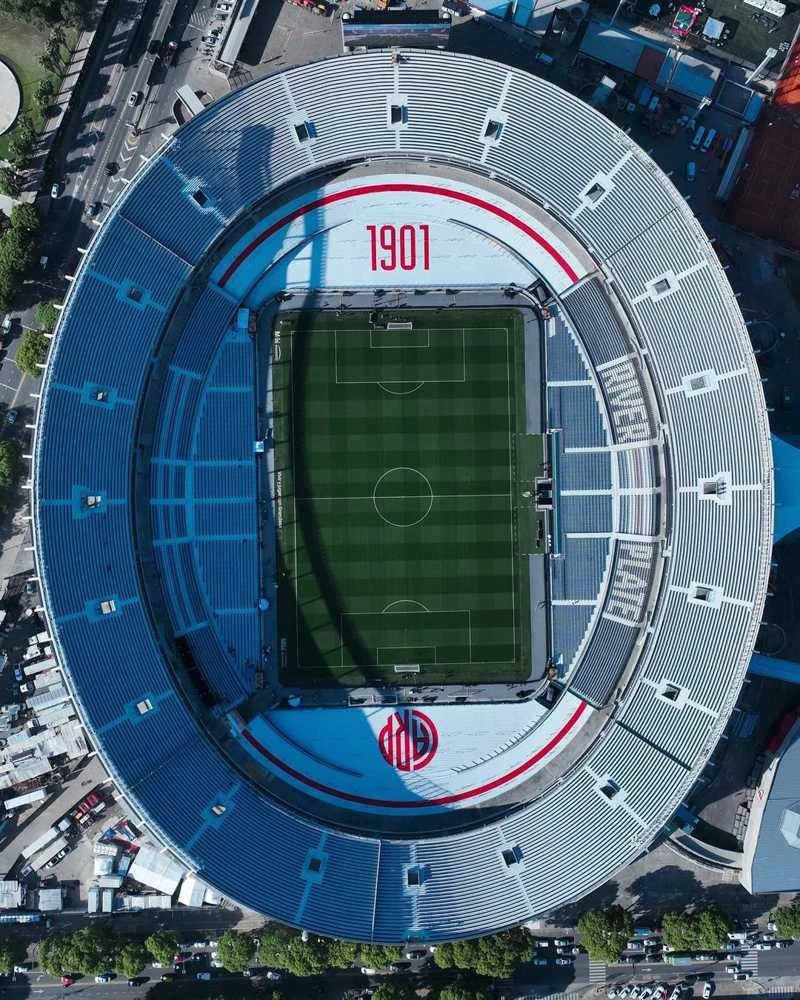
Its current form is the result of a 1934 design competition won by architects José Aslan and Héctor Ezcurra, with Fidias Calabria, for River Plate’s stadium, officially named Estadio Antonio Vespucio Liberti. Their design drew on the Roman Colosseum and on Montevideo’s Estadio Centenario, which had opened four years earlier. Built on reclaimed marshland stabilized with concrete pylons, it opened in 1938 with an open horseshoe shape that was closed off in later expansions. A current redevelopment led by Fernandes Arquitetos Associados with Schlaich Bergermann Partner is adding a freestanding 360-degree upper tier with 16,000 new seats, which will bring capacity to around 101,000 and make it the second-largest club stadium in the world.
23. Estadio Defensores del Chaco — Asunción, Paraguay
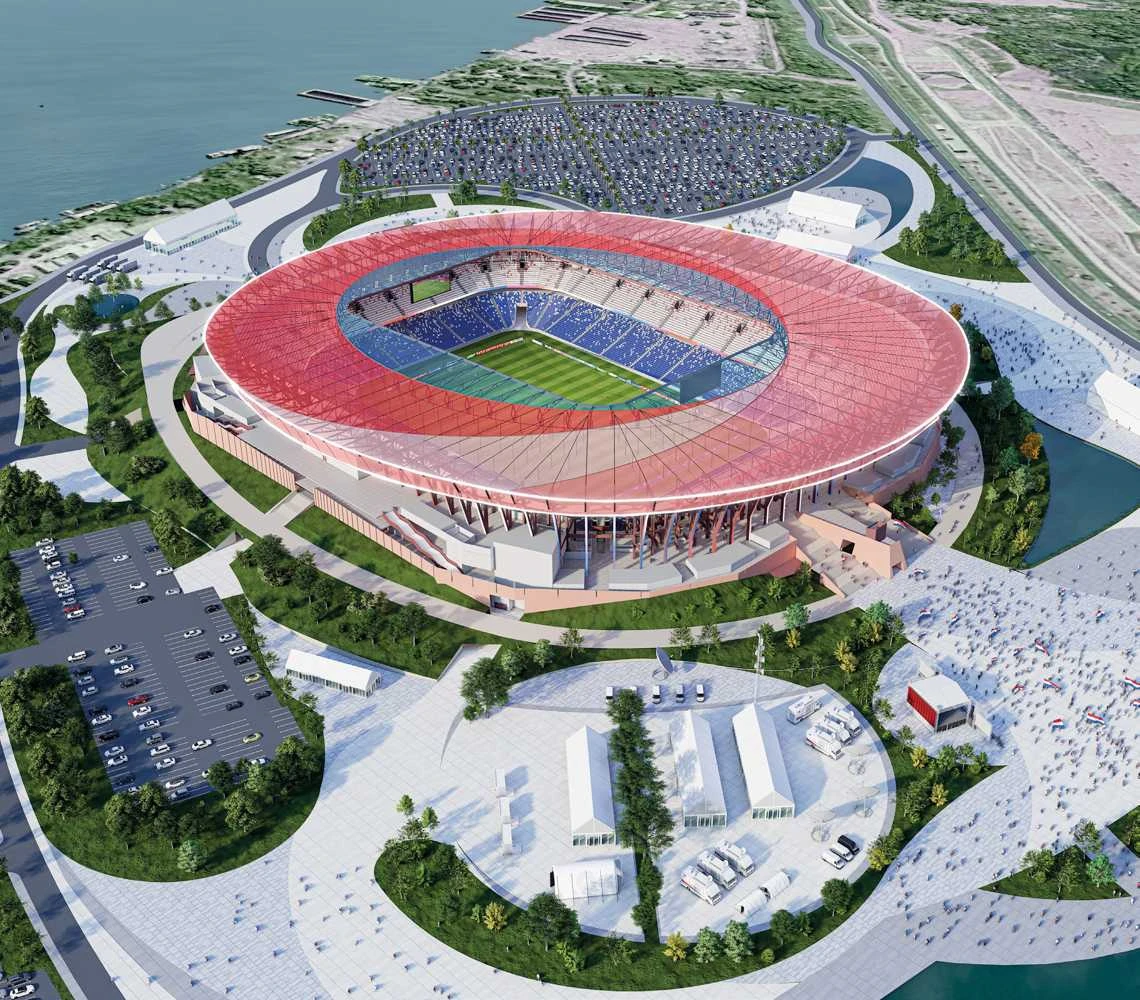
Paraguay’s World Cup match will be played at either a renovated Estadio Defensores del Chaco or an entirely new National Stadium, with the final choice still undecided. Defensores del Chaco opened in 1917 and has been remodeled repeatedly since; a renovation competition was won by veteran Paraguayan architect Javier Corvalán, working with collaborators in Chile and Spain, and proposes a five-star VIP sector, underground parking, a full roof, and new screens and lighting, raising capacity to around 41,186. The alternative new stadium, proposed for Asunción’s Costanera Norte, would seat roughly 47,000 and take its design cues from ñandutí, traditional Paraguayan lace embroidery.
The 23 venues set to host the 2030 FIFA World Cup span nearly a century of stadium design, from Juan Antonio Scasso’s 1930 Art Deco original at Estadio Centenario to Populous’s parametric aluminum lattice roof planned for the Grand Stade Hassan II. Some venues, like the Santiago Bernabéu and Camp Nou, are undergoing renovations by major international firms to meet FIFA’s modern capacity and technology requirements. Others, including several of Morocco’s grounds and Paraguay’s national stadium, are being built or rebuilt from scratch specifically for this tournament. Together, the venues reflect the continuity of football history and the scale of construction now underway across three continents ahead of 2030.



-150x150.webp)