



• About Us
  • Submit Project
  • Advertise
  • NewsLetter
PA
Subscribe
  • Articles
    • Archipreneurs
    • Technology
    • Bim / Aec
    • 3D Printing
    • Architects
    • Artificial Intelligence
    • Robotics
    • Sustainability
    • Tools
    • Case Study
    • City Guide
    • Opinions
    • Interviews
    • Architecture & Design
      • Urbanism
      • Metaverse
      • Space Architecture
      • Geography
  • Projects
    • Architecture
    • Interior
    • Design
      • Fashion
      • Pavilion
      • Installation
      • Digital Art
      • Landscape Design
    • Products
  • News
  • Workshops
  • PA Talks
  • Videos
  • Books
  • More
    • PA+ Membership
    • Courses
    • Competitions
    • Events
    • Jobs
    • About Us
    • Contact Us
Font ResizerAa
PAPA
Search
  • Articles
    • Archipreneurs
    • Technology
    • Bim / Aec
    • 3D Printing
    • Architects
    • Artificial Intelligence
    • Robotics
    • Sustainability
    • Tools
    • Case Study
    • City Guide
    • Opinions
    • Interviews
    • Architecture & Design
  • Projects
    • Architecture
    • Interior
    • Design
    • Products
  • News
  • Workshops
  • PA Talks
  • Videos
  • Books
  • More
    • PA+ Membership
    • Courses
    • Competitions
    • Events
    • Jobs
    • About Us
    • Contact Us
Follow US
PA > Blog > Projects > Design > Fashion > Harvard Unveils Shape-Shifting Knitted Fabric with Built-In Sensors
FashionTechnology

Harvard Unveils Shape-Shifting Knitted Fabric with Built-In Sensors

Last updated: July 26, 2026 4:18 am
Isha Chaudhary
Isha Chaudhary
ByIsha Chaudhary
Isha Chaudhary is an architecture writer who follows and writes about current trends and emerging discussions in architecture, with a focus on design, technology, and place-making.
Share
Harvard Unveils Shape-Shifting Knitted Fabric with Built-In Sensors
Shape-Shifting Knitted Fabric
Harvard Unveils Shape-Shifting Knitted Fabric with Built-In Sensors
List of Images 1/4
Harvard Unveils Shape-Shifting Knitted Fabric with Built-In Sensors
SHARE

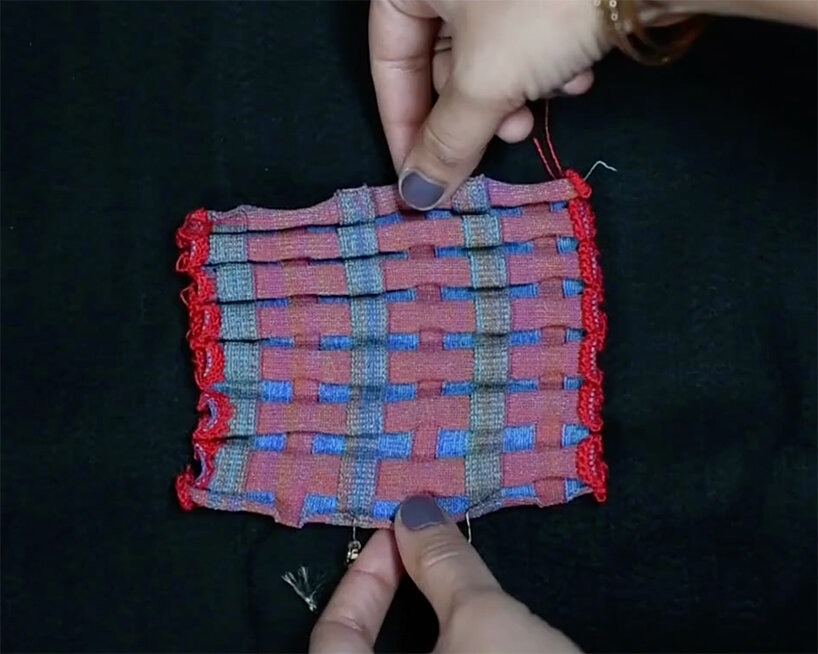
Researchers at the Harvard John A. Paulson School of Engineering and Applied Sciences (SEAS) have developed a new class of programmable knitted textiles that can switch between multiple stable three-dimensional shapes while also functioning as soft electronic sensors. Created using standard industrial knitting techniques, the material combines mechanical intelligence with embedded conductive yarns, opening new possibilities for wearable technology, responsive products, and interactive textiles.

Contents
  • Turning Conventional Knitting into Programmable Materials
  • Fabrics with Multiple Stable Shapes
  • Integrated Conductive Yarns Enable Smart Functions
  • Demonstrated Applications
  • Manufacturing with Existing Textile Infrastructure
  • Future Potential for Wearable Technology and Adaptive Design

The research was led by Kausalya Mahadevan, now a postdoctoral associate in the laboratory of Katia Bertoldi, William and Ami Kuan Danoff Professor of Applied Mechanics at Harvard SEAS. Their findings were published in Advanced Functional Materials.

Turning Conventional Knitting into Programmable Materials

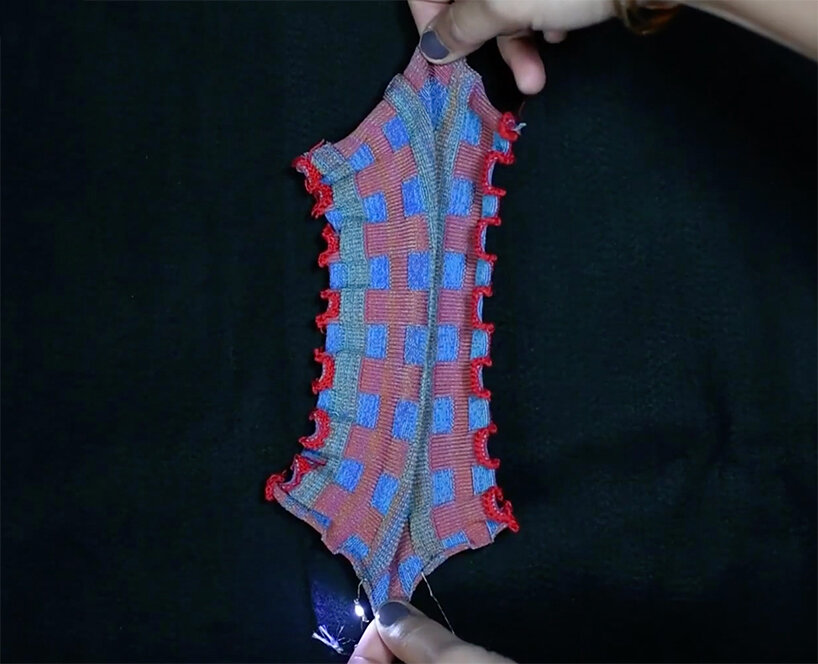
The team transformed an ordinary weft-knitting process into a manufacturing method for creating textiles with programmable mechanical behavior. Using commercially available industrial knitting machines, they produced dense elastic fabrics that naturally curve into three-dimensional forms after fabrication.
Harvard Unveils Shape-Shifting Knitted Fabric with Built-In Sensors

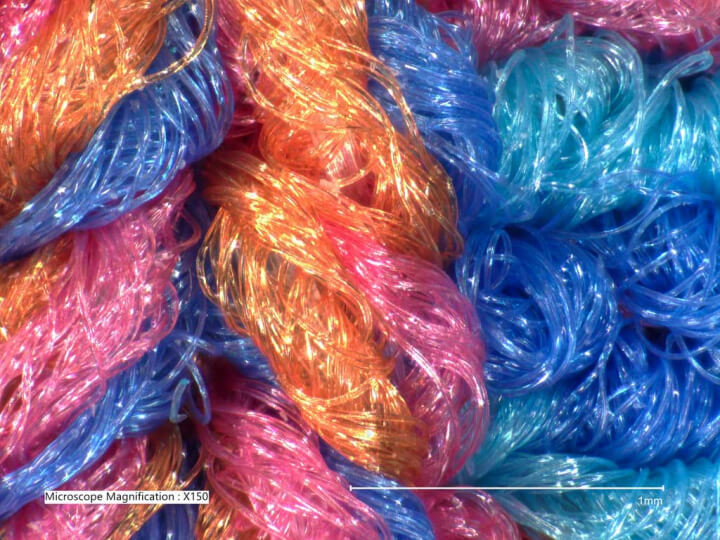
The shape transformation is driven by internal stresses created during knitting. By carefully selecting highly elastic yarns and employing a knitting technique known as plating, the researchers controlled how different yarns appear on opposite faces of the textile. This arrangement allows the fabric to develop predictable curvatures and maintain several stable configurations without continuous external force.

Fabrics with Multiple Stable Shapes

A defining feature of the new textile is multistability, the ability to remain stable in more than one shape.

When pressure is applied, the fabric rapidly snaps from one configuration to another and remains in that position until another force changes it again. This behavior is comparable to the operation of a mechanical switch, providing clear tactile feedback while requiring no motors or complex mechanical assemblies.

To understand how different patterns affect this behavior, the researchers systematically varied horizontal and vertical knitted structures and analyzed how geometry and material properties influence the snapping response. They also developed computational models capable of accurately predicting the fabric’s mechanical performance without simulating every individual yarn, making future textile design faster and more scalable.
Harvard Unveils Shape-Shifting Knitted Fabric with Built-In Sensors

Integrated Conductive Yarns Enable Smart Functions

Beyond changing shape, the textiles were engineered to perform electrical functions by incorporating fine conductive yarns directly into the knitting process.

As the fabric snaps between stable configurations, electrical circuits open or close, allowing the textile to operate as a soft switch or motion sensor. Since the sensing capability is integrated into the knitted structure itself, the system avoids bulky rigid electronic components while maintaining flexibility and comfort.

Demonstrated Applications

The Harvard team showcased several working prototypes that demonstrate the versatility of the technology.

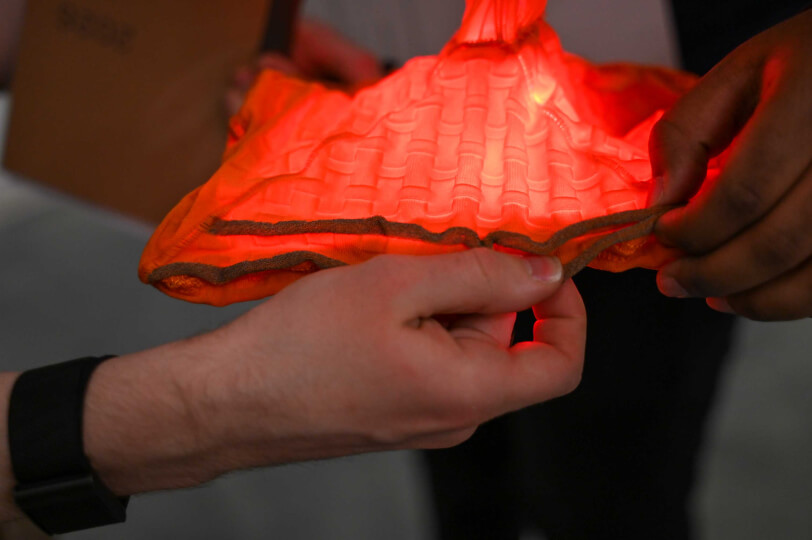
One prototype used a multistable knitted shell to switch an LED light on and off whenever the fabric changed shape. Another created a wearable textile switch positioned over the knee or elbow that detected snapping movements and transmitted signals to an Arduino microcontroller for step counting and movement tracking.

The researchers also designed a reconfigurable knitted lampshade featuring three independent textile switches, each controlling a different colored light as the fabric stretched and snapped between configurations.
Harvard Unveils Shape-Shifting Knitted Fabric with Built-In Sensors

Manufacturing with Existing Textile Infrastructure

A significant advantage of the research is its compatibility with existing textile manufacturing.

The fabrics were produced using industrial double-bed weft-knitting machines commonly used in garment production, suggesting that the technology can be scaled without requiring entirely new manufacturing systems. This compatibility could accelerate the adoption of programmable textiles across consumer products and wearable devices.

Future Potential for Wearable Technology and Adaptive Design

The researchers see broad opportunities for multistable textiles in applications that require lightweight, flexible, and interactive materials.

Potential future uses include wearable health monitoring systems, motion-sensitive clothing, tactile human-machine interfaces, adaptive furniture, responsive architectural installations, and smart interiors capable of changing configuration while remaining entirely textile-based. The work also advances the growing field of mechanical metamaterials by demonstrating how textile structures can be engineered to perform complex mechanical and sensing functions through geometry alone.

Credit: Harvard University

TAGGED:HarvardKnitted FabricWearable Technology
Share This Article
Email Copy Link Print
ByIsha Chaudhary
Isha Chaudhary is an architecture writer who follows and writes about current trends and emerging discussions in architecture, with a focus on design, technology, and place-making.
Previous Article Miami Bay Towers Miami Bay Towers Brings Four Sculptural Forms to Biscayne Bay
Next Article Grand Stade Hassan II, World’s Largest Football Stadium, Morocco, FIFA FIFA World Cup 2030 Stadium Guide

More Stories

Construction Projects

Beyond the Architect: Rethinking Power and Hierarchy in Contemporary Construction Projects

By
Mahshid Motamed
How AI Is Transforming Outdoor Living Spaces Beyond The House

How AI Is Transforming Outdoor Living Spaces Beyond The House

By
PA Editorial Team
2026 FIFA World Cup Stadiums

5 Infrastructure Lessons from FIFA World Cup 2026: What Future Host Cities Must Learn

By
Pooja Khanna Tyagi
Miami Bay Towers

Miami Bay Towers Brings Four Sculptural Forms to Biscayne Bay

By
Isha Chaudhary
Origami architecture

Top 10 Buildings Shaped by the Art of Origami Folding in Architecture

By
Arpitha S
Sarnath

Sarnath Becomes India’s 45th UNESCO World Heritage Site

By
Isha Chaudhary
Korean Football Park

UNStudio Completes Korean Football Park in Cheonan

By
Isha Chaudhary
Iranian Architecture

A Legacy Built in Brick and Geometry: Arches in Iranian Architecture

By
Mahshid Motamed
Tianmeng Tower

Woods Bagot Shapes the IGG Tianmeng Tower Around Fuzhou’s Iconic Banyan Tree

By
Isha Chaudhary

Motion in the Shell by Melike Altinisik Architects

By
Hamid Hassanzadeh
Previous Next

Subscribe Newsletter

- Upcoming Workshop-
Ad image

You Might Also Like

TechnologyArticles

GIS and AI: What is Location Intelligence?

July 31, 2023
The Role of Drones in Architecture
Technology

The Role of Drones in Architecture

October 29, 2024
Fashion

Translate a Brand into Architectural Space: Discover Yacademy’s Architecture for Fashion Course

October 8, 2025
ArticlesTechnology

Exploring new-age design technologies with Computational Design: NEXT 11

August 18, 2023
PA

© All rights reserved. Parametric Architecture (2018-2026) - ISSN 3023-7564

Facebook Twitter Youtube Rss Medium

Get to Know Us

  • Architecture
  • Design
  • Digital Art
  • Fashion
  • Installation
  • Pavilion
  • Interior
  • Products

© 2026 ParametricArchitecture. All Rights Reserved. By utilizing this website, you are consenting to our User Agreement, Privacy Policy, and Cookie Statement. In compliance with the privacy laws of Turkey and the United States, we recognize and respect your rights. Please be aware that we may receive commissions for products bought through our affiliate links. Unauthorized reproduction, distribution, or transmission of any material from this site is strictly forbidden without prior written permission from ParametricArchitecture.

Join Us!
Subscribe to our newsletter and never miss our latest news, podcasts etc..
Please check admin setting to display form corretly.
Zero spam, Unsubscribe at any capitalpost.
Welcome Back!

Sign in to your account

Username or Email Address
Password

Lost your password?