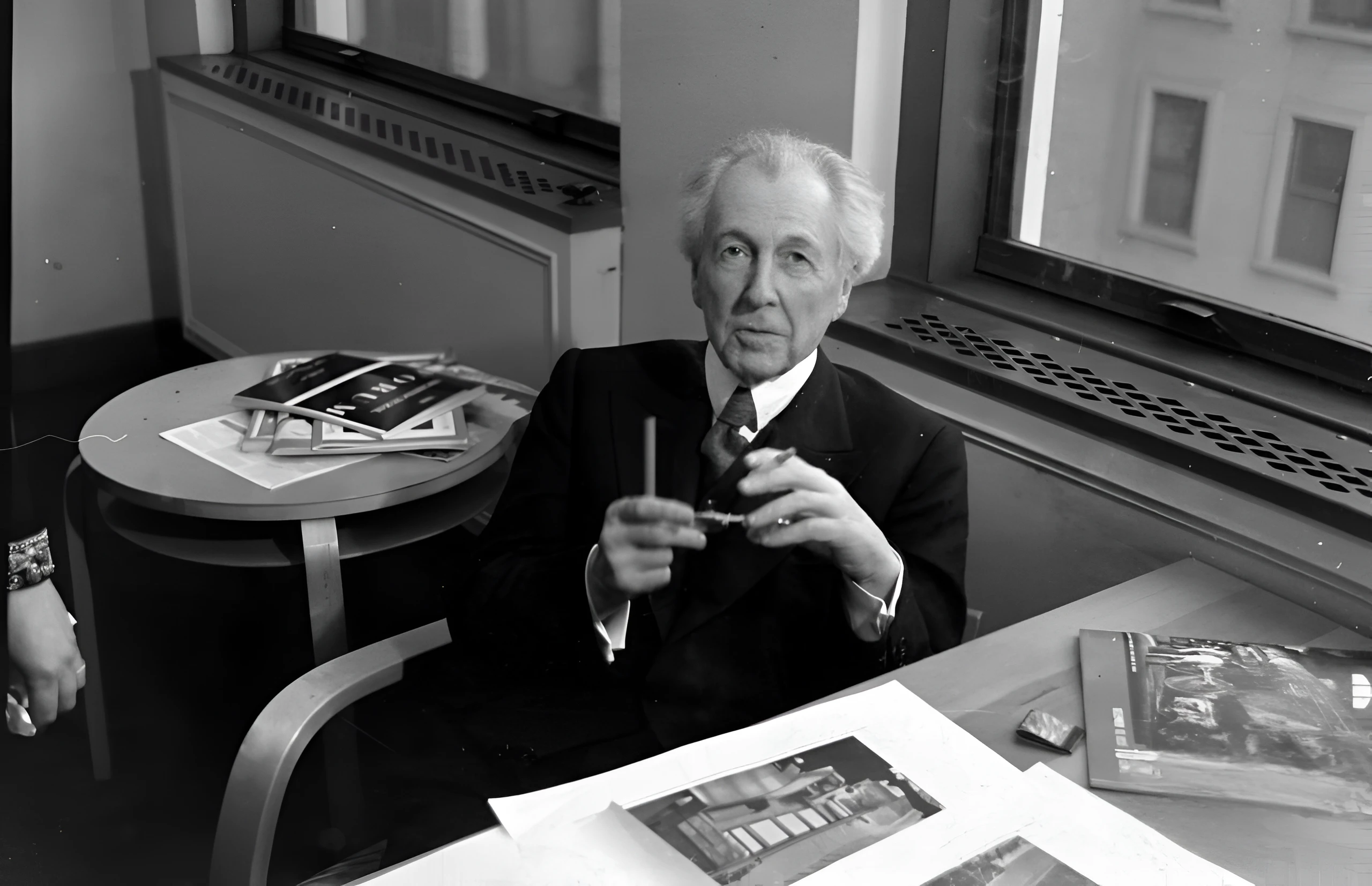



Born in 1935 in the industrial heart of Manchester, Norman Foster’s early life was grounded in modest circumstances. The son of a machine painter and a waitress, he was drawn to mechanics and the built environment long before architecture became his language. After completing national service in the Royal Air Force, a formative experience that would later echo in his affinity for precision and systems, Foster pursued architecture at the University of Manchester, where he distinguished himself early.

His academic journey continued across the Atlantic at Yale University, under the mentorship of Paul Rudolph. It was there that he encountered Richard Rogers, a fellow student with whom he would share not only a close friendship but also a kind of creative duality. Their ideas often ran parallel, both steeped in the emerging language of modernism, yet distinctly their own.
“Everything inspires me; sometimes I think I see things others don’t,” Foster once reflected, a glimpse into the lens through which he interprets the world and reshapes it through structure and space.
What followed was a career that refused to settle for a style, for a region, or even for the status. Foster’s architectural trajectory, marked by an obsession with performance, transparency, and structural clarity, has led to some of the most recognizable and technically complex works of our time.

In a career spanning over six decades, Foster has come to symbolize more than architectural success. He stands as a beacon of sustainable innovation, urban renewal, and technological finesse in design. Reflecting on the challenges of our contemporary world, Foster recently remarked: “Architecture is the expression of values—the way we build is a reflection of the way we live. And today, more than ever, it must speak to resilience, to environmental intelligence, and human dignity.” This ethos reverberates through his projects, which not only define cityscapes but reshape societal interactions with the built environment.

Foster’s legacy is extensive, but his rise can be traced back to a tireless desire for technology integration, user-centric design, and ecological foresight. He formed Foster + Partners in 1967 as an architecture practice that encouraged transparency in both glass and governance, collaborative methods, and multidisciplinary interchange.
Here are Foster’s most noteworthy works, which exemplify his architectural legacy.
1. HSBC Building, Hong Kong (1985)
The HSBC Headquarters in Hong Kong was an early success in high-tech design, defying traditions with its exposed structure, modular construction, and openness. The structure was designed to admit natural light deep into its core while also adapting with time, making it an outstanding example of mechanical articulation. It started in a new era of skyscraper design in crowded metropolitan areas, focusing on lighting, public space, and transparency.

2. Reichstag Dome, Berlin (1999)
Foster’s transformation of the German Parliament building is among his most symbolically powerful works. The glass dome above the historical Reichstag is a representation of democratic transparency.

Beyond symbolism, it also serves as a passive ventilation system, using solar energy and a mirrored cone to distribute light and airflow, combining historical veneration with 21st-century sustainability thought.

3. 30 St Mary Axe, London (2004)
“The Gherkin,” Foster’s most recognizable addition to the London skyline, is an exploration in aerodynamic efficiency and urban presence.

The cigar-shaped skyscraper employs a double-skin façade and spiral light wells to reduce the dependency on artificial climate control. It was a dramatic departure from rectangular corporate structures, offering biomimetic shapes and fresh urban vitality.

4. Millau Viaduct, France (2004)
The Millau Viaduct, which spans the Tarn Valley in southern France, is the world’s highest bridge and an architectural masterpiece of form and function. The bridge’s tapering pylons and delicate contour demonstrate Foster’s attention to technical refinement. It demonstrates the concept he refers to as “infrastructure as art,” merging with the landscape while addressing significant logistical issues.

5. Apple Park, Cupertino (2017)
Apple Park, created in partnership with Apple and finished after Steve Jobs’ death, is a continuous ring of invention. The 2.8-million-square-foot complex symbolizes biophilic design and commitment to sustainability, since it is totally supplied by renewable energy sources. With 80% of the land dedicated to green space, it challenges the concept of a commercial complex and reimagines it as a natural environment for cooperation and innovation.

6. Hearst Tower, New York City (2006)
The Hearst Tower is a captivating combination of heritage and modernity. Emerging on the restored base of the original 1928 building, the tower’s diagrid façade uses 20% less steel than traditional towers. It was the first LEED Gold-certified skyscraper in New York City, establishing a standard for sustainability in American high-rise construction.

7. Masdar City, Abu Dhabi (ongoing)
Masdar City exemplifies Foster’s finest idea for sustainable urbanization. The master plan, which envisions a zero-carbon, car-free desert metropolis, is based on renewable energy, passive cooling, and vernacular design concepts. Despite being changed from its intended scope, the project continues to serve as a proving ground for green technology and compact city life.

Across all his projects, no matter the country, climate, or type, Norman Foster has always believed that architecture can make life better.
Over the years, he’s received nearly every major award in the field, from the Pritzker Prize in 1999 to the Royal Gold Medal, the AIA Gold Medal, and even a life peerage from the Queen.


Even at 90, Foster continues to lead important work on big challenges like crowded cities and climate change. His clear vision is that architecture can help create a world that’s more connected, open, and full of life.



-150x150.webp)