


Parametric architecture has been the trending term in the 21st century. Considered as one of the sought after solutions for futurist design problems, parametric design and computational methods have created a long-lasting impact on the design industry. Society has always looked towards nature for design inspiration and has sought to take inspiration from the naturally occurring forms through basic geometric shapes. This effort has been in vain as the complexity in nature has always eluded society. Although, the contemporary style of parametric design has essentially bridged that gap.

The notion of parametric design is founded on mathematical concepts and is defined by the use of computer programmes to modify specific parameters when implementing diverse designs. Designers may create unlimited designs using parametric design approaches with just a few basic adjustments or changes in current models, which is a key strength in terms of mass manufacturing.
In the world of parametric design, all aspects of the design become changeable and mutually adaptable in response to external parameters. This allows the many systems of a building to be linked together via networks that provide continuous variations.
The Advent of ‘Parametricism’

Digital technologies have allowed computation to become a part of the design process. The reason being it can help build complex structures according to certain defined starting conditions. This form of computational design has revolutionized architectural thinking to such an extent that Patrik Schumacher, theorist and principal architect of Zaha Hadid Architects, coined the term ‘Parametricism’ as an architectural style. Schumacher believed it to be the next great epochal style, following in the footsteps of renaissance, baroque, historicism, and modernism.
Former styles thrived on straight lines, sharp corners, and acute angles. Parametricism, on the other hand, focuses on free-form architectural principles. Each structure has its personality, defined by sweeping lines, curves, and irregular forms. Such designs might appear futuristic or even extraterrestrial in nature while being alluring and almost mystical.

Prominent examples of parametric design in architecture would include buildings designed by Frank Gehry who employs computational design to elevate organic shapes to an unreal level.

Peix Olímpic in Barcelona is an example of a building whose bold design and fluid form can represent natural designs giving it the nickname ‘The fish’.

Another example is the organic form of the pavilion at SOM’s Chhatrapati Shivaji International Airport Terminal 2, which achieves contemporary aesthetic beauty without sacrificing functionality.
Merits Of Opting For Parametric Designs

A revolutionary step towards designing indeed, parametric architecture has several merits to its name. From easing out the basic design process to simplifying complex geometries, computational methods have created a niche for themselves. Let’s look at some of the merits that they have to offer.
Exposure to New Genre of Design Aesthetics
Parametric designs with unstructured and non-linear structural features have become a widespread trend in architecture, resulting in previously unseen designs.
Despite being built on rigorous principles, the architectural style’s intrinsic variety and adaptable configurations offer it more freedom than its predecessors, allowing it to construct beautiful architecture that changes over time. The free-flowing heterogeneous forms which can be created by this approach have come to represent modern aesthetics greatly as it results in a design that is hard to conceptualise without higher technologies.
Greater functionality in Design
Parametric designs are highly beneficial for finding optimum and economical solutions for simple issues like optimising floor areas, limiting heat gains, and so on, in addition to giving an aesthetically attractive geometry.
Parametric design is more than just beautiful; it’s a means of embedding information and intent into a design, making it more flexible, dependable, cheaper, and diverse to produce. Architectural sectors have historically employed parametric design due to its many advantages. As a part of the design workflow, parametric design can be a huge boost to the functionality one can achieve in their work.
This sort of approach can also be scaled up for large projects as parametricism has evolved the ability to carefully organise large metropolitan landscapes while maintaining legibility and navigability.
Incorporating Material Sciences
The digital nature of the parametric design allows for ease different conditions to be predefined while generating a final form. This allows for certain physical requirements such as the direction and amount of load a design will have to deal with to be inputted.
Based on this information, materials properties can be simulated and tested in the defined regime which allows for the user to choose between different building materials without changing any initial conditions. Additionally, By altering the parameters in 3D modelling, architects may test alternative designs before creating the final structure.
They can also estimate the size of the room, which might be helpful as a reference. The ability to define functional aspects of a design before the final shape of the space is generated allows for a unique harmony between the functional and aesthetic aspects of a project which doesn’t require compromise of either aspect.
Computational Software & Their Adaptability
- Rhino 3D
Rhinoceros is a 3D modelling software that is used for creating realistic and workable 3D models. Rhino is based on the Non-Uniform Rational Basis Splines, also known as NURBS geometry which is capable of creating mathematically precise figures. Rhino 3D is most commonly used due to its capability of creating free form curves and surfaces which facilitates the creation of complex and intricate designs in a workable aspect.
- Grasshopper 3D
Grasshopper 3D is a Rhinoceros 3D plug-in that allows users to design and modify geometry using a visual programming language interface. Grasshopper is built on graphs that trace the flow of relationships from parameters to user-defined nodes, culminating in geometry creation.
When you modify a parameter or a geometry, the changes are propagated to all functions and the geometry is recreated.
- Autodesk 3DS Max
Autodesk 3ds Max is a 3D computer graphics application that may be used to create 3D animations, models, games, and pictures. Video game makers, several TV commercial companies, and architectural visualisation firms all utilise it. It’s also employed for pre-visualization and movie effects.
- Autodesk Maya
Autodesk Maya is a 3D computer graphics programme for creating interactive 3D applications such as video games, animation films, television programmes, and visual effects. Maya’s design is based on a node graph, with each node having its own set of characteristics and customization options.
As a result, a scene’s visual representation is based on a network of interconnected nodes that rely on each other’s data.
Diverse Applications of Parametric Design
Parametric design is a highly versatile technique as it can utilise digital tools to create higher orders of aesthetic and functional appeal. This can be applied to many fields to create futuristic-looking designs.
Fashion

Fashion can exhibit parametric design’s geometric, organic, and unconventional qualities. Because of its affinity with 3D printing technologies, parametric design is gaining favour in the fashion market. Customers may view 3D models of the items they require online, pick them, and print them immediately with a printer thanks to a customizable 3D printing design.
Implementing parametric and computational design with 3D printing technology, in particular, corresponds to the quickly shifting needs of the current fashion market, as it can provide a wide range of customizable designs to consumers, increasing the potential to realise countless different designs with only one variable adjustment.
Robotics

Applying Parametric design to robotics allows for different designs with different load-bearing structures and innovative materials can be made. The generated designs can be very nuanced and can be highly specialised towards a task. For example, in the realm of robotics, it has always been the norm to deal with stiff materials that move owing to rigid articulations.
The Disney Research department went a step further by creating a computational method for creating compliant mechanisms, which can create more flexible structures than the stiff joints typically employed in robots. Many technical criteria for their robotic machines required the application of computational design, including improved motion tracking, material fracture prevention, failure resilience, and motor torque minimization, among others.
Engineering

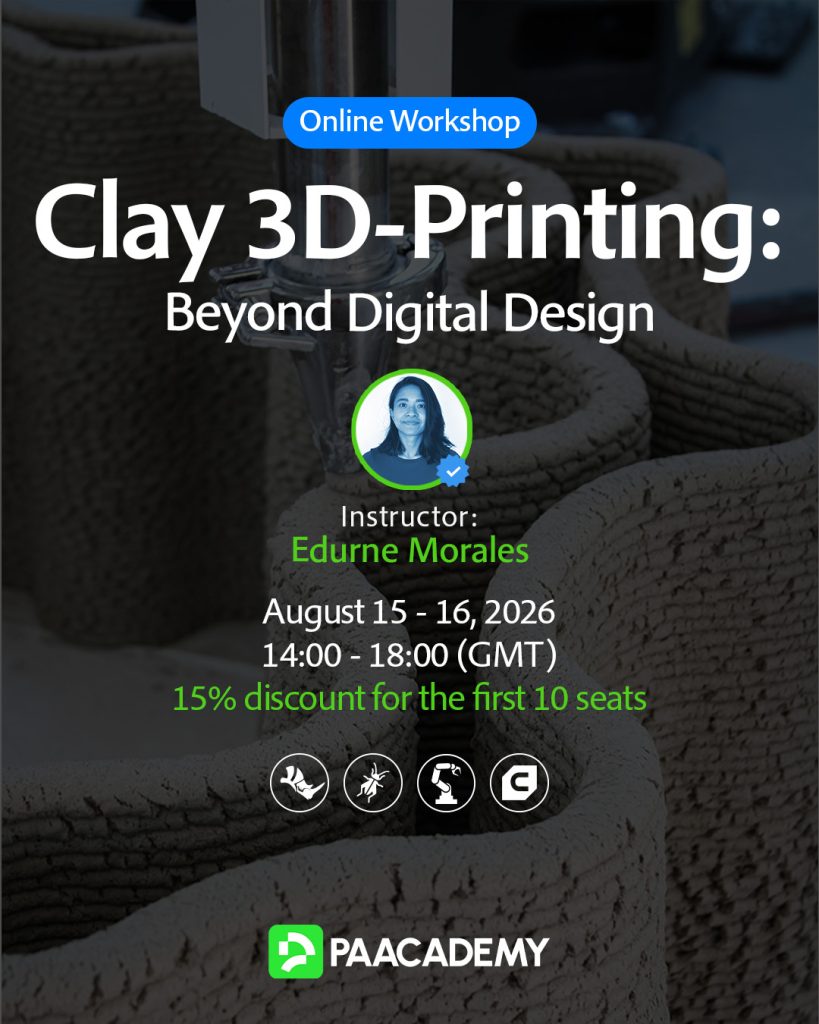
New additive manufacturing techniques such as 3D printing using concrete can allow for much more variation in design than what is traditionally allowed. Multiple 3D installations and projects apply parametric design towards building forms that are aesthetically bizarre but functionally valid.
Examples of which can be the experimental mars habitats developed by NASA which use parametric and computational design tools to optimize different living and built parameters to create structures that not only use lesser material to build but can also withstand the battering of elements much more than regular buildings
Medicine

When it comes to dealing with customisation, computational design is a fantastic tool. Computational design is most commonly employed in the medical area since it can completely tailor comfortable and functional elements to match the shape of each patient. Because it is a design tool, it enables the production of lightweight pieces that are customizable to the individual’s demands and preferences.
As a result, parametric and computational design has a wide range of applications in the production of customised prosthetic and orthotic components. It may create components that are customised to the patient’s demands, aesthetics, and budget. This technique can also be used to design better stents and pacemakers.
Why Parametric Architecture?
Parametric design undeniably defies our preconceived notions of what is capable of being conceived and fabricated. It remains to be seen if parametric design and additionally parametricism can alter future cities and our lives on a large basis. However, the capacity for anyone to credibly experiment with these parameters in digital space will continue to influence our approach towards design in the coming future.



-150x150.webp)