

• About Us
  • Submit Project
  • Advertise
  • NewsLetter
PA
Subscribe
  • Articles
    • Archipreneurs
    • Technology
    • Bim / Aec
    • 3D Printing
    • Architects
    • Artificial Intelligence
    • Robotics
    • Sustainability
    • Tools
    • Case Study
    • City Guide
    • Opinions
    • Interviews
    • Architecture & Design
      • Urbanism
      • Metaverse
      • Space Architecture
      • Geography
  • Projects
    • Architecture
    • Interior
    • Design
      • Fashion
      • Pavilion
      • Installation
      • Digital Art
      • Landscape Design
    • Products
  • News
  • Workshops
  • PA Talks
  • Videos
  • Books
  • More
    • PA+ Membership
    • Courses
    • Competitions
    • Events
    • Jobs
    • About Us
    • Contact Us
Font ResizerAa
PAPA
Search
  • Articles
    • Archipreneurs
    • Technology
    • Bim / Aec
    • 3D Printing
    • Architects
    • Artificial Intelligence
    • Robotics
    • Sustainability
    • Tools
    • Case Study
    • City Guide
    • Opinions
    • Interviews
    • Architecture & Design
  • Projects
    • Architecture
    • Interior
    • Design
    • Products
  • News
  • Workshops
  • PA Talks
  • Videos
  • Books
  • More
    • PA+ Membership
    • Courses
    • Competitions
    • Events
    • Jobs
    • About Us
    • Contact Us
Follow US
PA > Blog > Articles > 7 Anti-Slip Surface Standards Required for Stormwater Drainage Grates
Articles

7 Anti-Slip Surface Standards Required for Stormwater Drainage Grates

Last updated: July 28, 2026 6:07 am
PA Editorial Team
PA Editorial Team
ByPA Editorial Team
Editorial team behind PA
Follow:
Share
SHARE

Ensuring public safety is the primary goal when installing infrastructure in areas where people walk or commute every single day. Stormwater drainage grates are a common feature in pedestrian zones, yet they pose a hidden risk if they become slippery during wet weather. This article highlights seven key requirements that ensure drainage grates provide reliable traction in all types of conditions.

Contents
  • 1. High-Friction Surface Texturing
  • 2. Slip Resistance Testing and Certification
  • 3. Consistent Performance Across All Angles
  • 4. Durability Against Weather and Wear
  • 5. Drainage Capacity Without Compromising Grip
  • 6. Resistance to Mud and Debris Buildup
  • 7. Visibility for Pedestrian Awareness
  • Following Safety Standards For Good Drainage

1. High-Friction Surface Texturing

The surface of a drainage grate must have a texture that provides enough grip to prevent a foot from sliding even when the metal is wet. Engineers design these grates with raised patterns, studs, or cross-hatched ribs that bite into the sole of a shoe. You should always look for products that feature a distinct, non-smooth surface pattern specifically tested to maintain traction under high traffic.

2. Slip Resistance Testing and Certification

Every grate meant for public areas must undergo rigorous testing to receive certification that proves it meets national safety guidelines. These tests measure the coefficient of friction, which indicates how much resistance the surface offers to a moving object. Purchase stormwater drainage grates that provide clear documentation and test results confirming their performance under both dry and wet conditions.
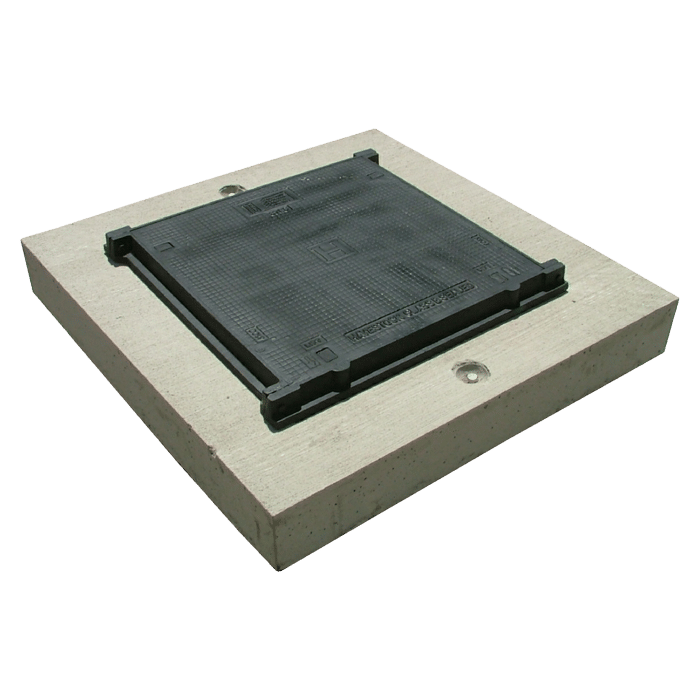
Stormwater Drainage Grates

3. Consistent Performance Across All Angles

Pedestrians do not always walk in a straight line, so a grate must provide the same level of grip from every possible direction. An effective grate design uses a multidirectional pattern so that a shoe will find traction regardless of whether the person is turning or walking straight. However, if you notice that a grate is only safe in one direction, it creates a dangerous hazard for anyone moving at an angle.

4. Durability Against Weather and Wear

Smoothness caused by friction wears down the surface, eventually turning a safe grate into a slippery one. You must select materials that resist abrasion and do not lose their texture after months of use in the rain or sun. Checking the wear ratings of a grate helps you choose a product that remains safe for many years. Quality materials ensure that your investment in safety does not fade away with time.
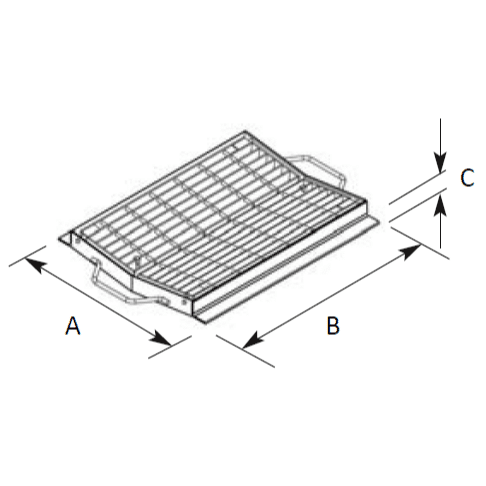
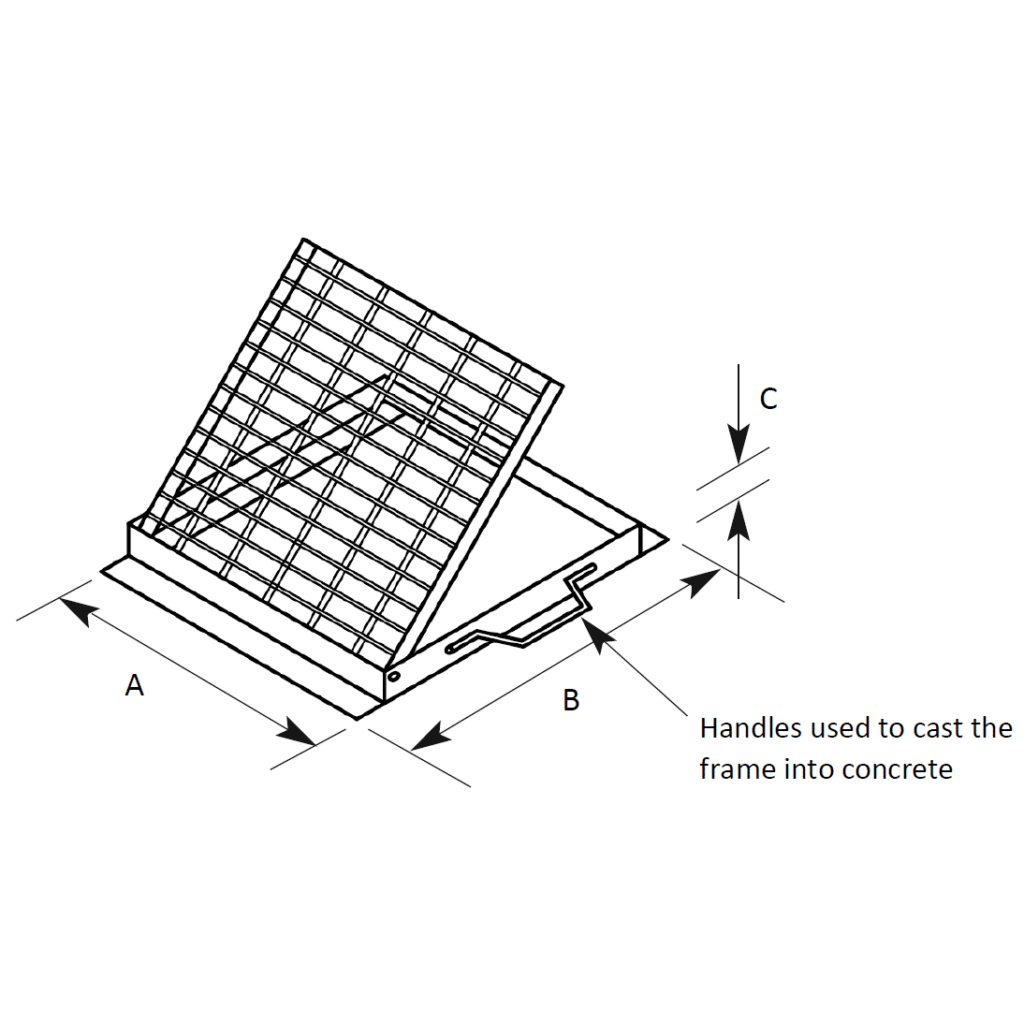
Stormwater Drainage Grates

5. Drainage Capacity Without Compromising Grip

The main purpose of a grate is to let water flow through, but the holes must be designed so they do not catch heels or create large gaps. A well-designed grate balances the need for wide enough openings to catch heavy rainfall while keeping the solid surface area wide enough to walk on. But if the gaps are too large, the surface area becomes too small to provide adequate foot contact for stability.

6. Resistance to Mud and Debris Buildup

Drainage grates can quickly become slippery if they get clogged with mud, leaves, or other small debris that fills in the textured surface. Purchasing a grate with self-cleaning characteristics allows water to wash away debris, keeping the anti-slip pattern exposed and effective. Don’t forget to regularly inspect and clean your grates to ensure that the texture remains visible and capable of providing traction.

7. Visibility for Pedestrian Awareness

Sometimes the best way to prevent a slip is to make sure pedestrians are aware of where they are walking at all times. Using grates with contrasting colors or borders can help people identify the drainage area clearly, encouraging them to step carefully. While the texture provides the physical grip, visual cues act as a reminder for people to stay alert, so consider how the grate looks in its environment.
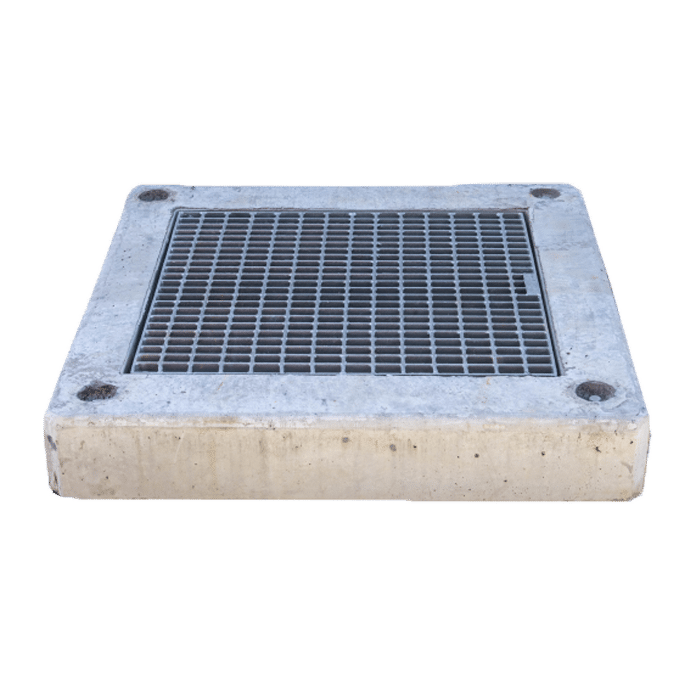
Stormwater Drainage Grates

Following Safety Standards For Good Drainage

Meeting these anti-slip standards is not just a regulatory necessity but a commitment to the safety and well-being of the individuals who use your space every day. By focusing on friction, certification, and durable design, you ensure that your drainage infrastructure serves its purpose. So make sure your choices prioritize the pedestrian experience by demanding high-quality, slip-resistant materials.


TAGGED:Slip ResistanceStormwater Drainage Grateswet weather
Share This Article
Email Copy Link Print
ByPA Editorial Team
Follow:
Editorial team behind PA
Previous Article Quebec City Guide Quebec City Guide: Fortifications and Iconic Landmarks
Next Article Stylus Architects Shape a Modern Home Around Light and Landscape Stylus Architects Shape a Modern London Home Around Light and Landscape

More Stories

Construction Projects

Beyond the Architect: Rethinking Power and Hierarchy in Contemporary Construction Projects

By
Mahshid Motamed
How AI Is Transforming Outdoor Living Spaces Beyond The House

How AI Is Transforming Outdoor Living Spaces Beyond The House

By
PA Editorial Team
2026 FIFA World Cup Stadiums

5 Infrastructure Lessons from FIFA World Cup 2026: What Future Host Cities Must Learn

By
Pooja Khanna Tyagi
Miami Bay Towers

Miami Bay Towers Brings Four Sculptural Forms to Biscayne Bay

By
Isha Chaudhary
Tianmeng Tower

Woods Bagot Shapes the IGG Tianmeng Tower Around Fuzhou’s Iconic Banyan Tree

By
Isha Chaudhary
Iranian Architecture

A Legacy Built in Brick and Geometry: Arches in Iranian Architecture

By
Mahshid Motamed

Motion in the Shell by Melike Altinisik Architects

By
Hamid Hassanzadeh
Korean Football Park

UNStudio Completes Korean Football Park in Cheonan

By
Isha Chaudhary
Sarnath

Sarnath Becomes India’s 45th UNESCO World Heritage Site

By
Isha Chaudhary
Origami architecture

Top 10 Buildings Shaped by the Art of Origami Folding in Architecture

By
Arpitha S
Previous Next

Subscribe Newsletter

- Upcoming Workshop-
Ad image

You Might Also Like

The Grand Egyptian Museum
Architecture & Design

10 Major Museums and Cultural Buildings That Opened in 2025

December 12, 2025
Architecture & Design

The Psychological Effects of Color in Architectural Design

November 13, 2025
The Empire State Building soaring above Manhattan, a timeless Art Deco masterpiece
Architecture & DesignArticles

Empire State Building vs Jeddah Tower: Icons of Innovation

November 22, 2024
Sustainability

A Genuinely Sustainable Building – Feasible or Fantasy?

June 25, 2025
PA

© All rights reserved. Parametric Architecture (2018-2026) - ISSN 3023-7564

Facebook Twitter Youtube Rss Medium

Get to Know Us

  • Architecture
  • Design
  • Digital Art
  • Fashion
  • Installation
  • Pavilion
  • Interior
  • Products

© 2026 ParametricArchitecture. All Rights Reserved. By utilizing this website, you are consenting to our User Agreement, Privacy Policy, and Cookie Statement. In compliance with the privacy laws of Turkey and the United States, we recognize and respect your rights. Please be aware that we may receive commissions for products bought through our affiliate links. Unauthorized reproduction, distribution, or transmission of any material from this site is strictly forbidden without prior written permission from ParametricArchitecture.

Join Us!
Subscribe to our newsletter and never miss our latest news, podcasts etc..
Please check admin setting to display form corretly.
Zero spam, Unsubscribe at any capitalpost.
Welcome Back!

Sign in to your account

Username or Email Address
Password

Lost your password?