


In a time shaped by rapid technological advancements, there is a climate of urgency amid growing urban pressures; hence, architecture is no longer just about form but also about how well it can adapt and endure. As climate patterns shift, designers are rethinking buildings to use less energy, improve comfort, and respond more thoughtfully to their surroundings. Across the world, a wave of projects is emerging, each rooted in its own context, yet connected by a focus on resilience and sustainability. It reveals how climate-responsive architecture is not just a trend but a necessary direction for the future of design.

Today, architecture is shifting toward climate-responsive and resilient design by creating spaces that can adapt, endure, and use resources more wisely. This change calls for a new way of thinking about architectural design, in which sustainable design is considered from the very first sketch through to the final build. Looking toward 2035, this shift is shaping a new generation of climate-responsive buildings that aim to reduce waste and respond better to their environment. It’s not just about efficiency; it’s about creating spaces that are prepared for the future, where design, technology, and sustainability work together seamlessly.
Cities Under Climatic Urgency

The impacts of climate change are intensifying, placing new pressure on how we plan and build. Understanding climate-responsive architecture is key to creating designs that adapt to local environments and use resources more wisely. The building sector accounts for a significant share of global energy use and carbon emissions, making it crucial for architects and designers to adopt climate-driven strategies. Today, thoughtful, context-based design is no longer optional; it’s essential for a more climate-sensitive and sustainable architecture for the future.
What is climate-responsive architecture?

Climate-responsive design and architecture revolve primarily around reducing environmental impact while preparing for an uncertain future. Climate uncertainty calls for architecture that uses less energy and fewer resources, yet is strong enough to handle extreme weather conditions. These climate-sensitive strategies shape architecture that is efficient but also resilient over time. By carefully designing how we build and live, we can create architecture that is more comfortable, adaptable, sustainable, and better resistant to the changing climate, making it a vital part of our future.
Strategies for Building

Some of the key strategies and measures integrated for achieving climate-responsive buildings:
- Introducing Greenery: Green roofs, green façades, and greenery help cool the surroundings, improve air quality, and support a healthy microclimate.
- Material selection: Light-colored, reflective, and permeable surfaces reduce heat absorption and help mitigate urban heat islands.
- Sustainable strategies: Sustainable design strategies like rainwater harvesting, passive and active strategies, etc., help facilitate a more sustainable architecture.
- Renewable energy: To sustainably cover the remaining energy demand, renewable energy sources are integrated into the planning process.
- Natural resource utilization: Targeted use of natural daylight also reduces reliance on artificial lighting and supports energy-efficient construction.
These kinds of strategies are quietly reshaping our cities, making them more resilient while pushing architecture in a more sustainable direction. Climate-responsive design isn’t just a concept but something that can be applied in real and practical ways through strategies. Step by step, such approaches are helping cities adapt and prepare for the growing challenges of climate change by 2035.
Climate-responsive architecture by 2035

By 2035, climate-responsive architecture will move beyond static design into a far more adaptive, intelligent, and deeply connected environment. Design strategies with technology advancements will push buildings powered by AI-driven systems that can anticipate conditions and optimize energy use by creating healthier, more comfortable environments. At the same time, construction will shift toward modular, low-impact methods, using renewable materials and integrating passive strategies like natural ventilation and shading. This approach will also extend beyond reshaping urban landscapes with greener, more resilient systems.
Examples of Climate-Responsive Architecture that Minimize Impact on the Environment
These are four iconic examples of climate-responsive architecture around the world that shape architecture by local climate and create architecture that is comfortable, efficient, and sustainable with minimal environmental impact.
1. One Central Park | Australia

Architect: Ateliers Jean Nouvel
Typology: Parks
Location: Sydney, Australia
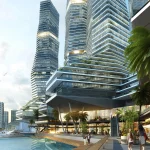
Rising above Sydney’s skyline, the One Central Park transforms urban living into a living, breathing, sustainable landmark. Designed by Ateliers Jean Nouvel, the twin towers blend residences, serviced apartments, and retail within a lush, climate-responsive framework. Covered in lush vertical gardens with over 250 plant species, the façade becomes a vibrant, sustainable canopy. More than a landmark, it offers a vision of how climate-responsive architecture can grow, adapt, and exist in harmony with the natural world, with a futuristic climate-sensitive vision in mind.

The architecture was designed as climate-responsive architecture that takes on a bold visual form, also enhancing the building’s environmental impact. Characterized by a dramatic cantilever over the residential tower, opening into common spaces with sweeping city views. Lush vertical gardens wrap the majority of the façade, created by botanist Patrick Blanc, appearing as a living skin extending the park upward, turning the building into a green landmark. Systems like heliostats (reflecting sunlight) and water recycling quietly support sustainable living, where architecture, landscape, and technology come together as one.
2. Bosco Verticale | Milan

Architect: Boeri Studio
Typology: Apartments
Location: Milan, Italy
Rising in the heart of Milan, Bosco Verticale transforms the idea of a residential tower into a living forest in the sky. Designed by Stefano Boeri, the twin towers are wrapped in over 900 trees and thousands of plants, turning architecture into a thriving ecosystem. The striking architecture improves air quality, reduces energy demand, and supports urban biodiversity. It stands as a powerful example of how cities can grow greener, where buildings don’t just occupy space but actively give back to their environment.

The sustainable architecture of the Verticale becomes a living system that actively improves its surrounding microclimate. The dense layers of vegetation help create a natural microclimate by filtering air, absorbing carbon dioxide, and releasing oxygen back into the city. This green skin also acts as a protective layer, reducing heat gain and lowering the need for artificial cooling. More than just a visual statement, the towers support urban biodiversity, offering a rare habitat for birds and insects within a dense cityscape.
3. Micro library – Warak Kayu | Indonesia

Architect: SHAU
Typology: Apartments
Location: Semarang, Indonesia
Set within its local community, Microlibrary Warak Kayu by SHAU is a small yet powerful example of climate-responsive design. Open, breathable, and built with timber, the library uses simple passive strategies to create a cool and comfortable environment while reducing energy use. More than just a building, it shows how thoughtful design can support communities while responding gently to the climate. The design brings together seamlessly passive climate strategies, thoughtful material choices, and bold typological exploration, shaped specifically for the tropical context.

The façade design is more than a visual element; it breathes, filters, and shapes the experience within. A striking timber screen softens sunlight and allows air to move freely, creating a calm, naturally lit space for the library. Raised on stilts, the structure inspired traditional rumah panggung houses, opening the ground level into a shaded and flexible area for community life. It’s a thoughtful blend of culture, material, and climate designed to feel both rooted and alive.
4. The Edge | Netherlands

Architect: PLP Architecture
Typology: Office Building
Location: Amsterdam, Netherlands
Situated in the heart of Zuidas, The Edge reimagines the architecture of a traditional workplace into one for the digital and connected world. Designed as Deloitte’s headquarters, it brings together teams into a flexible environment that encourages collaboration, focus, and choice. Widely recognized in the world as one of the most sustainable and greenest office buildings ever created, it sets a new benchmark for energy efficiency and smart design. From quiet work pods to open collaborative spaces, the building adapts to the way people work, creating an office that feels dynamic, responsive, and future-ready.

At the heart of the architecture is a soaring multi-level atrium that acts as the social core of the building, bringing people, movement, and interaction into one connected space. Bridges, visible circulation, and layered gathering areas replace traditional office layouts, encouraging civic collaboration throughout the day. Natural light, fresh air, and smart systems are seamlessly woven into the design, creating a workplace that feels both comfortable and efficient. More than just an office, it’s a dynamic environment where architecture, technology, and human experience come together seamlessly to shape a new way of working.
By 2035, climate-responsive architecture will blend smart systems, natural materials, and adaptive design, creating resilient buildings that respond to weather, reduce energy use, and enhance human comfort sustainably.



-150x150.webp)