


Victorian Gothic: Where Craft Meets Industry
Gothic Revival of the Victorian period was more than a nostalgic return to medieval construction; it was a revolution that managed to reconcile old historic design with newer technology. As Britain was speedily industrializing, advances in engineering, materials, and construction techniques allowed architects to envision new Goths. This integration of tradition and innovation resulted in characteristically iconic -and yet characteristically underestimated- buildings that defined, uniquely, a Victorian Gothic identity.
The Victorian Gothic Evolution
Whereas medieval Gothic architecture was characterized by handcrafted stone and labour-intensive techniques, the Victorian interpretation drew benefits from industrial progress. New materials such as cast iron along with innovations in prefabrication and mass production made it possible to create structures that could be great, functional, and even economical at the same time.
These architects, including George Gilbert Scott and William Butterfield, sought to reinterpret Gothic design. Their work showed how ornaments that could be used in traditional settings could be applied to modern materials, giving the style flexibility that suited an industrialized society.
St Pancras Railway Station: A Gateway into the Modern Age
Probably one of the best examples of Victorian Gothic innovation is the St Pancras Railway Station of London (1868). Designed by George Gilbert Scott, the Midland Grand Hotel inside the railway station is the epitome of Gothic revival ornamentation. The structure touts pointed arches, decorative spires, and intricate brickwork, evoking medieval grandeur.
The Victorian genius, however, is brought out more in the train shed by William Henry Barlow. Actually made of iron and glass, it was one of the largest of its kind at the time, showing how industrial materials could be integrated with Gothic aesthetics. Thus, the station along with the hotel came to symbolize Britain’s embrace of the progressive without giving up on her architectural heritage.

The Albert Memorial: Industrial Beauty in Public Art
The Albert Memorial (1872), too, exemplifies the marriage of craft and engineering in design; while its Gothic spires and sculptures are a tribute to medieval art, the use of cast iron and structural innovation reflects the Victorian interest in technological advancement. As a public monument, it embodied industrial achievement and imperial pride. This memorial’s intricate details, which are possible with new manufacturing methods, represent Victorian values that uphold progress, long set within historical aesthetics.

All Saints, Margaret Street: Colourful Brilliance in Brick
The All Saints Church in Margaret Street, London (1859) is considered a landmark example of Gothic revival architecture by William Butterfield. Its polychromatic brickwork and decorative tiles demonstrated how industrial production could faithfully reproduce or even surpass medieval craftsmanship. The use of mass-produced materials with Butterfield’s designs opened the possibility of making intricate designs affordable and highly accessible. The beautiful exterior of the church, rich in detail on the inside, marked a new measure for urban ecclesiastical architecture by showing its ability to harmonize beauty with practicality.

Oxford Museum of Natural History: A Gothic Frame for Science
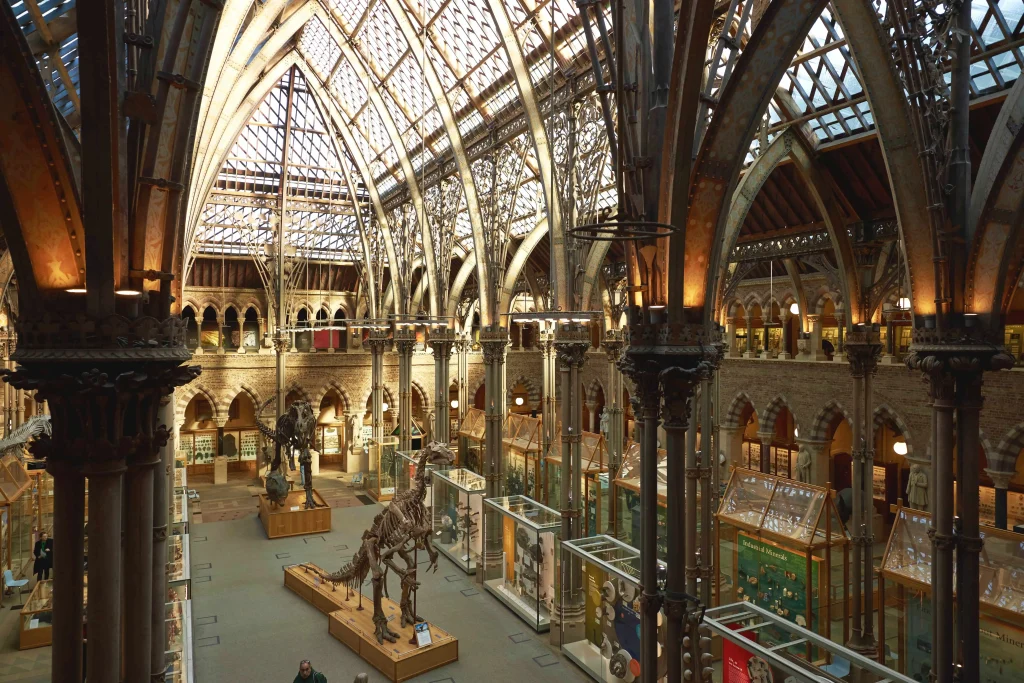
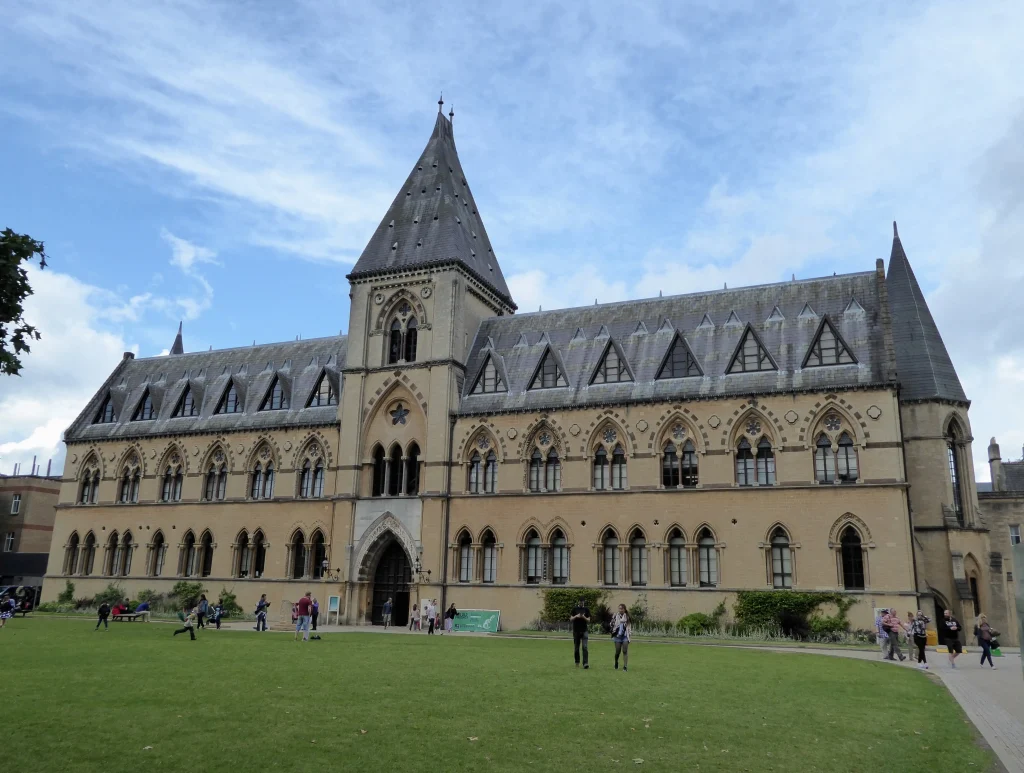
Science and tradition met in the Oxford Museum of Natural History (1860), designed by Thomas Deane and Benjamin Woodward. The museum’s Gothic-inspired nave layout, with its soaring iron columns and vaulted glass roof, created both a functional and symbolic space. Ornate ironwork, with foliage-inspired motives, further mirrored the natural themes of the exhibits that the museum offered. This beautiful integration between form and function showed how Victorian architects adapted Gothic principles to new purposes, such as education and public engagement.
Manchester Town Hall: Civic Pride in Gothic Form
Alfred Waterhouse’s Manchester Town Hall (1877) epitomises the civic application of Victorian Gothic architecture. Its decorative spires, tracery, and sculptural details evoke medieval municipal buildings, while its modern heating and ventilation systems reflect the era’s technological advancements. The building’s design catered to a growing urban population, merging industrial-era functionality with historic grandeur. It became a symbol of Manchester’s industrial prosperity, embodying Victorian ideals of progress and pride.

Industrial materials, use of, were the keys to the success of the Victorian Gothic Revival. Cast iron, which was strong yet malleable, enabled intricate designs that would have been impossible in stone alone. For example, the iron framework of the Oxford Museum allowed large, light-filled spaces to be conceived for a greater functionality of the building. Similarly, prefabrication reduced construction time and costs. Mass-produced bricks and tiles, like those used by Butterfield, brought Gothic designs to urban and rural settings alike, making the style accessible to diverse communities.
Aesthetic Innovation Through Engineering
Victorian architects continued to interpret Gothic traditions through engineering. Many pointed arches and ribbed vaults of medieval cathedrals, hitherto structural necessities, became aesthetic choices. The supports of iron and glass that assisted in such structures turned those components into decorative features at St. Pancras and the Oxford Museum.
This perspective thrust the architect to further extend boundaries, creating spaces that seem as much about utility as it does about beauty. The result was a style that was formally both timeless and modern to bridge the past with the present.
Reconciling History with Progress
It was something more than an architectural style-the Victorian Gothic Revival. It spoke for the whole of Victorian society, confirming its confidence in its technological achievements and, at the same time, paying homage to tradition, merging historical aestheticism with industrial innovation.
The Albert Memorial and Manchester Town Hall are examples of how architects, through these projects, were demonstrating that progress should not be at the expense of beauty or history. These buildings stand strongly as symbols of a society struggling with change while remaining anchored to its culture.
Legacy of the Victorian Gothic Architecture
The Victorian Gothic Revival’s innovations shape architecture even today. Its principles of fitting technology into tradition speak in terms of their contemporary design, especially regarding adaptive reuse and sustainable architecture.
By going through examples like All Saints, Margaret Street, or the Oxford Museum, one can understand how Victorian architects redesigned Gothic forms according to new visions for a modern world. They are contemporarily permanent testaments to a creative and innovative culture.
Now Stay Ahead with PAACADEMY
Check out the workshops at PAACADEMY-these are a good way to get your hands on the latest digital design tools. The industry experts leading the sessions are here to help you keep your edge sharp and inspired in this ever-changing field.
