

The use of various waste-derived, biologically inspired, technologically advanced innovative materials has been increasing in line with many concerns and goals recently. The contributions of traditional construction and manufacturing materials to both environmental and resource crises have led to the emergence of alternatives, initiating a positive future projection. In this article, attention is focused on the brick produced from waste fabrics, FabBRICK, among these innovative materials that can be diversified through various approaches, research, and products.
FabBRICK was founded by young architect Clarisse Merlet in 2019. However, the idea behind the product lies back to her school years. In 2017, while still an architecture student, she decided to explore alternative building methods after realizing that the construction industry is a polluting and energy-intensive sector. She embarked on this journey by particularly focusing on materials such as plastic bottles, cardboard, or plastic cups that turn into waste after production or use but could be considered as a resource. Through her research, the mismanagement of waste in the textile industry caught her attention, leading her to believe that textile materials could find a place in the construction sector. The fact that cotton serves as a good acoustic and thermal insulator supported the idea of ecological material design that began with this material.
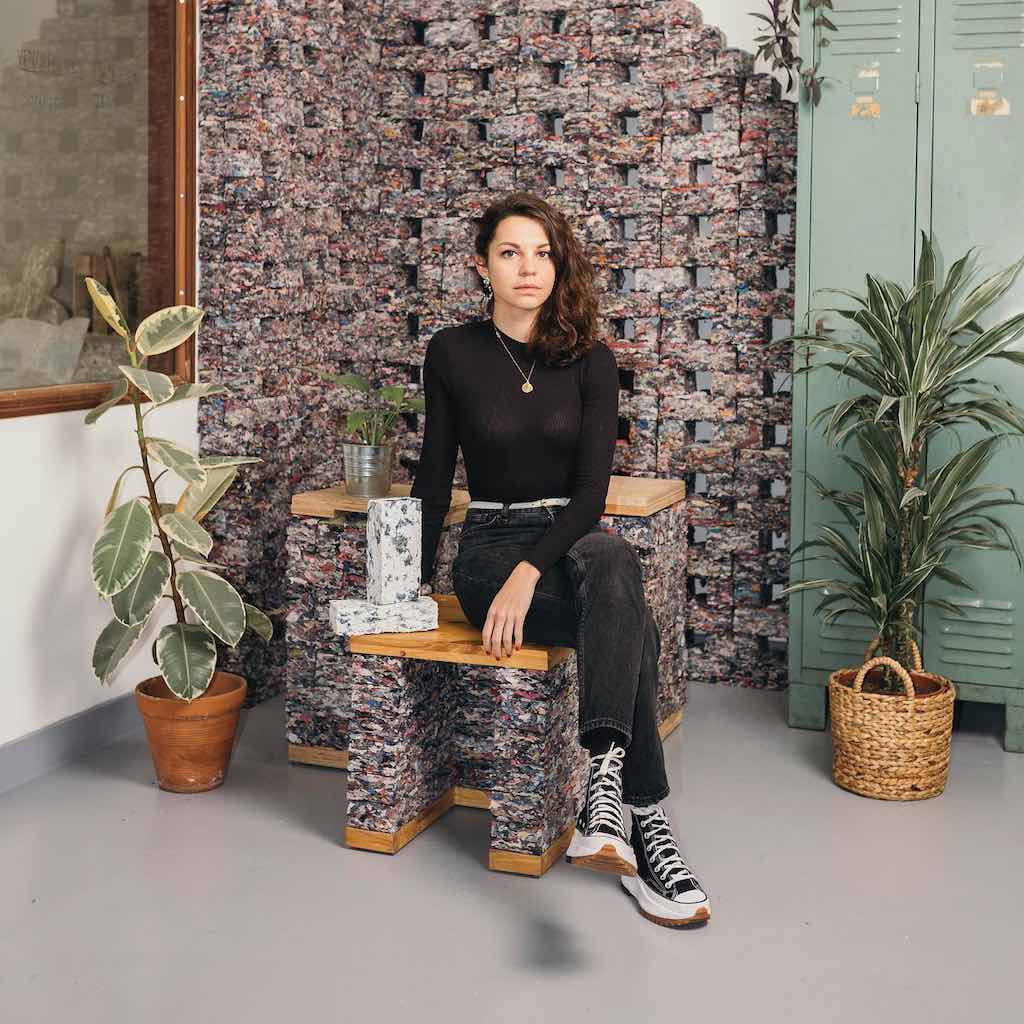
“Being an architecture student made me look for ways to build differently. So I made different prototypes with different ecological glues and tried different ways of putting the textile in the mold to compress it. Eventually, I came up with a prototype that held up well, reacted well to fire, and held up against moisture, too.”
Clarisse Merlet
FabBRICK collaborates with other businesses to transform their textile waste. Their goal is to raise awareness about the value of recycling waste and challenge companies to reduce their waste. To achieve this, FabBRICK takes textile waste from these businesses, turns it into new design products, and sends them back. This helps the companies see firsthand the amount of waste they generate each year. The goal is to make waste reduction more understandable and encourage positive changes in how companies handle their waste. With this mission, FabBRICK continues to evolve from its initial stages and has a wide collaborative team.
What is FabBRICK? How is it produced, and what are its usage areas?
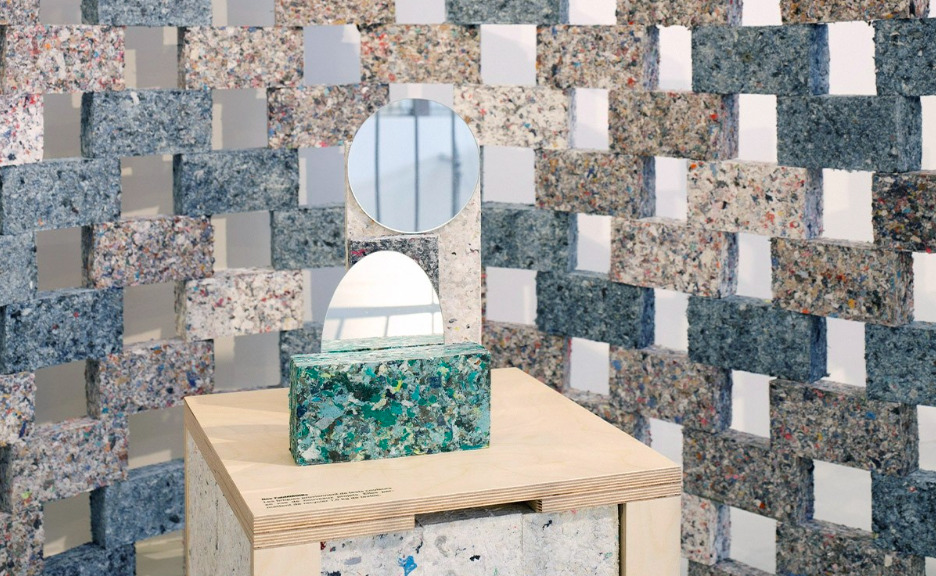
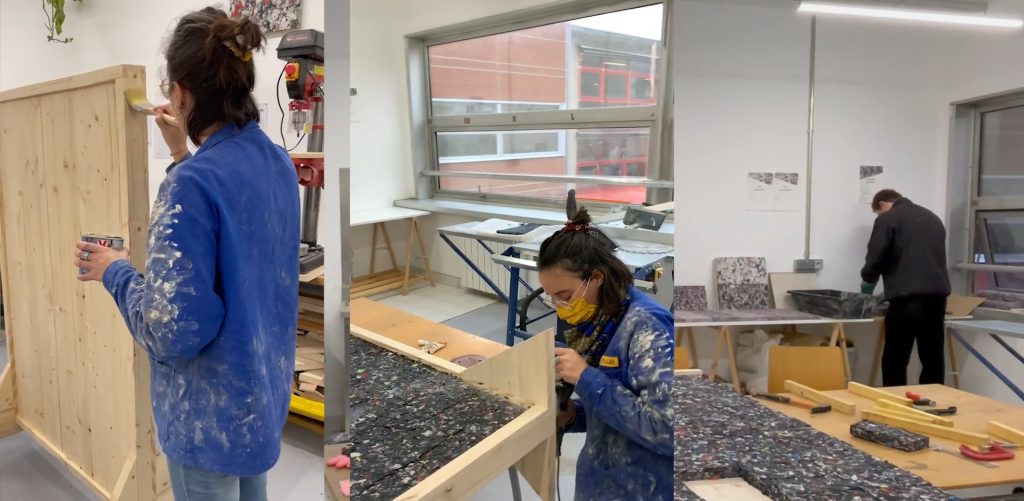
In simple words, FabBRICK is an alternative brick not only used as standalone units and partition walls but also as integrated components in various products such as chairs and tables. Although the shape of the final products varies, these bricks are produced as a result of a meticulously detailed process. The process starts with the discarded clothes coming to a Parisian studio to find a new purpose and carefully sorted by color. Each project becomes a collaborative venture with the customer, who selects from a range of approximately ten different sizes and hues. Notably, the studio abstains from conventional dyeing methods, relying on the inherent colors of the textiles themselves.
The narrative progresses as textiles undergo shredding, producing fibers in three distinct shapes – 7mm, 20mm, and 40mm – chosen based on the unique requirements of each project. A crucial phase introduces the crafting of 100% ecological glue, meticulously mixed by hand with the fibers to ensure uniform density in each resulting brick. The process continues with manually incorporating the glue-fiber mixture into a patented machine, activating a 30-minute compression process within the mold. Post-production, the bricks undergo a patient drying period of 10 to 15 days in ambient air. After drying the bricks continue to become the desired product. Currently, FabBRICK offers services in different models.
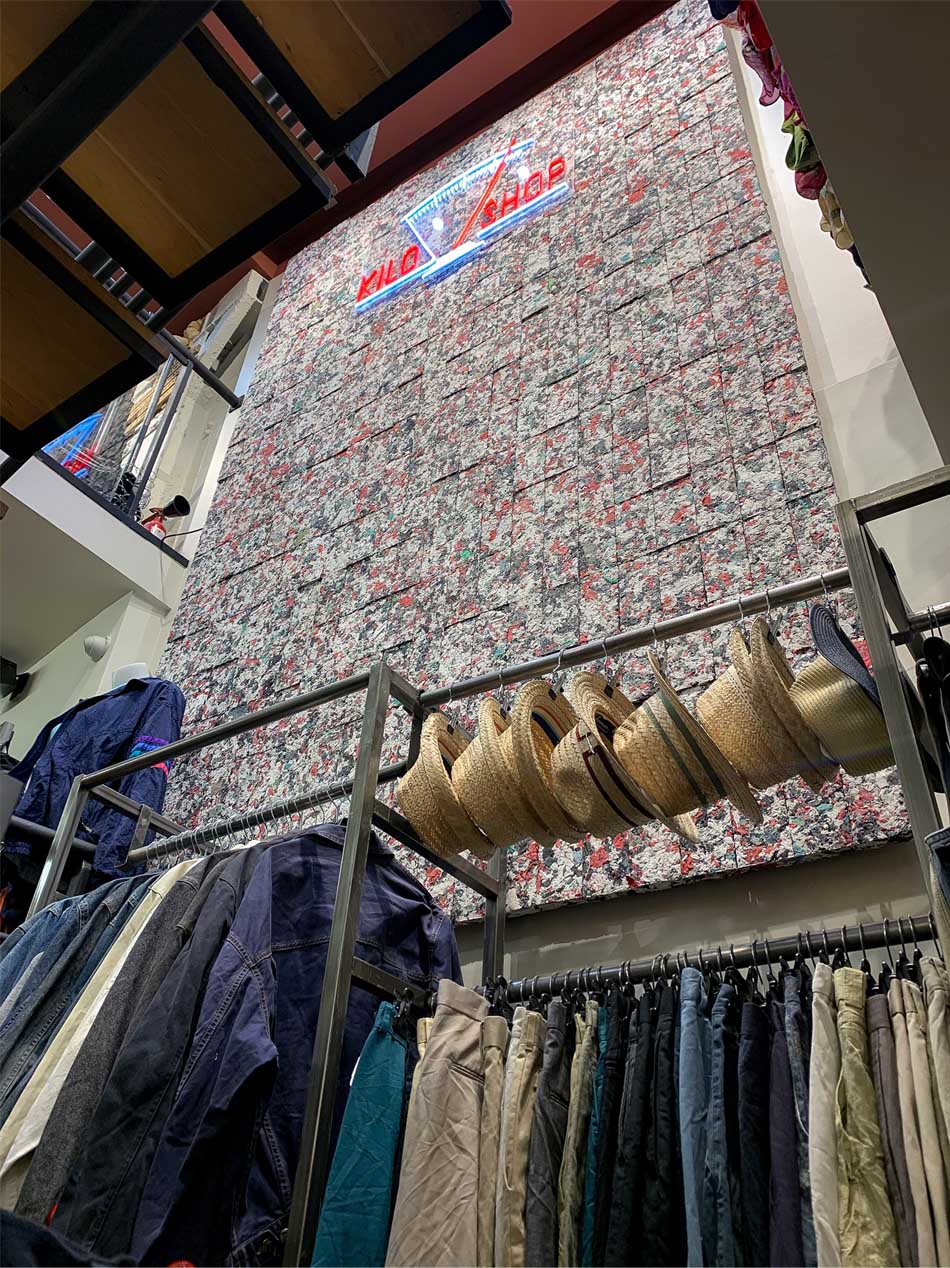
Wall covering: FabBRICK serves with handmade coating products measuring 20 x 10 x 2.5 cm. With its collaborations with various stores and brands, it not only creates a different atmosphere in the interior, but also emphasizes the utilization and potential of waste textile products.
Collaborations to utilize waste: In addition to product sales and marketing, one of the services offered by FabBRICK is also to procure the textile waste required for the product and project from the collaborating brand through collaborations. In this way, the brand shows its sensitivity in taking steps to utilize the remaining fabrics, and also benefits economically when it cooperates to use it in its projects.
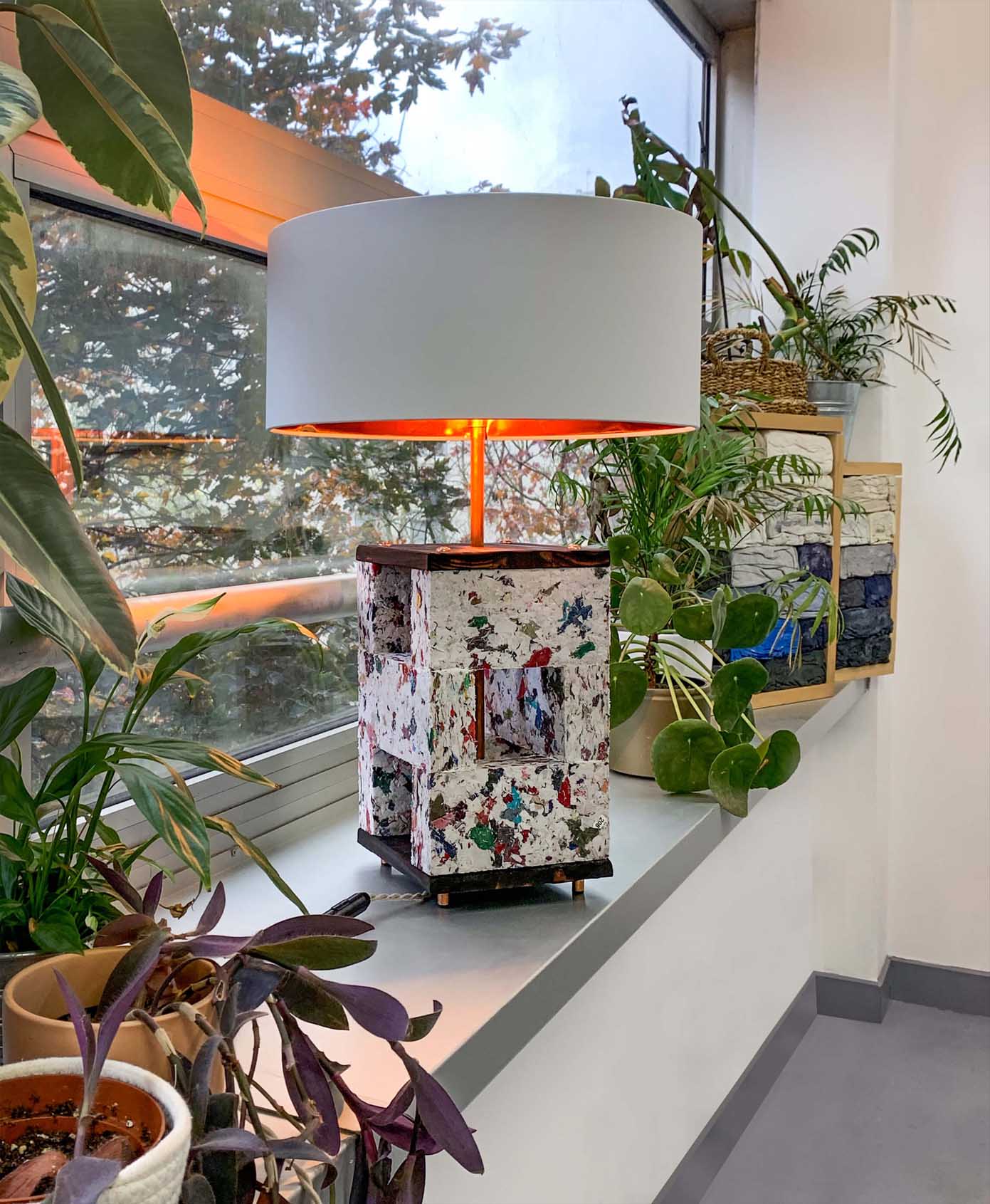
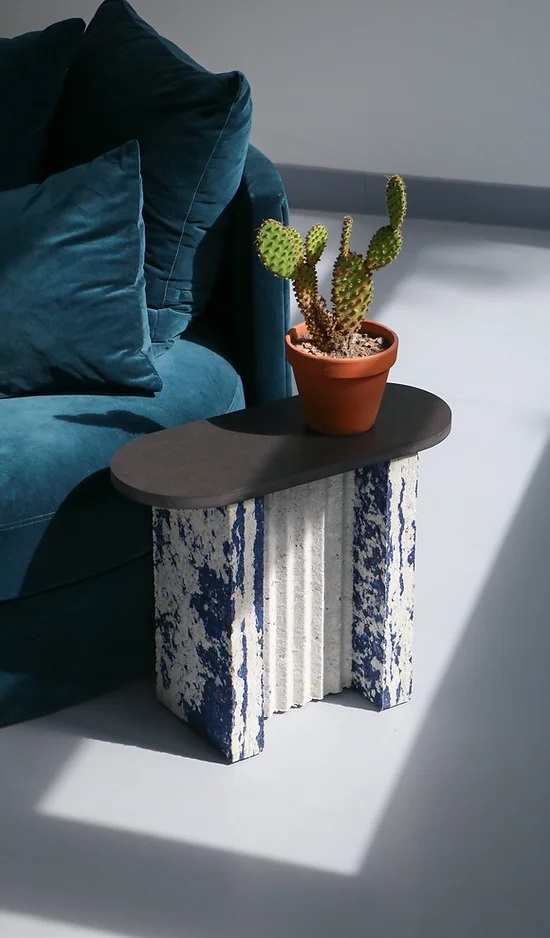
Furniture and design products: With recycled textiles, FabBRICK offers various design products for interiors. From lamps to tables, seats to decorative objects, FabBRICK has an e-shop available for individual purchases with the desired texture and design.
Due to their acoustic and thermal insulation properties, these bricks have begun to be produced with the hope of becoming an alternative building material, as well as being used as interior wall separators and wall cladding. Its use as a structural material is still in the development stage. FabBRICK, which started these missions as one of the alternative approaches that have increased as a result of waste and resource crises in many areas where the sector contributes, has the goal of expanding the area they serve without giving up regional resources and energy use by upgrading the manufacturing process. In order to do this, they have adopted the vision of establishing FabBRICK factories in different regions and disseminating their products and approaches by utilizing the textile waste that is abundant in each region.
“FabBRICK can be developed worldwide, the reason being that unfortunately, fast fashion is everywhere, so we can always be close to a source of textile waste.”
FabBRICK’s approach has garnered interest from prominent fashion industry players and globally recognized brands with strong environmental commitments. Levis, Decathlon, Galeries Lafayette, Aigle, Vinci, Printemps, Mini, and Paris Design Week are counted among its customers and suppliers of raw materials for their bricks.
Facing the problems of producing an average of 4 million tons of textile waste every year in Europe and only 32% of textile products being recycled in the French market, FabBRICK offered a solution to reintegrate these textile wastes into daily life by producing bricks with an ecological binder. With this approach, since 2018, the year they were founded, they have designed more than 40,000 bricks which represent 12 tons of recycled textiles. Aiming to spread its approaches and products, FabBRICK also offers workshop services in line with demands and needs. In this way, it is possible to follow their diversified production with increasing and diversifying customer profiles and materials.
