


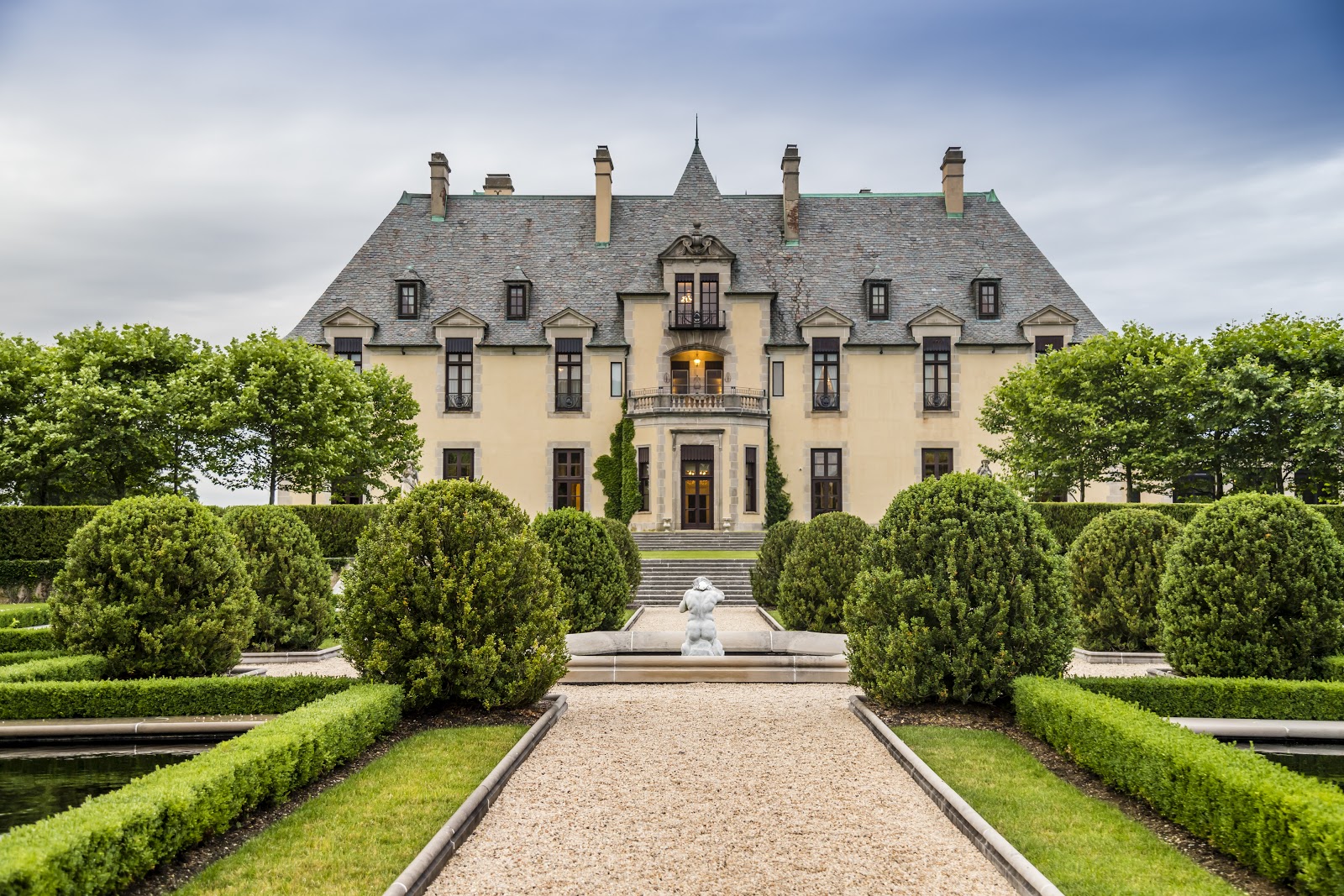
Architecture is a film’s silent narrator, subtly shaping the story and setting the mood without uttering a word – a presence that conveys emotion through its mere existence. In movies like Poor Things and Dune, architecture helps viewers connect to the fictional worlds they portray. The Great Gatsby is a timeless masterpiece that captures the obsessive and destructive patterns of the Jazz Age. Fitzgerald’s articulate description of architecture complements the novel’s themes as he sets it in the fictional towns of West Egg and East Egg, inspired by the North Shore of Long Island, New York. Baz Luhrmann’s adaptation, although controversial, visually transports viewers to the 1920s Jazz Age.
Architecture in The Great Gatsby is pivotal in establishing the mood and reflecting the characters’ social status. This article explores how the film’s architectural depictions, particularly the Art Deco style, enrich the narrative by comparing three iconic homes: Gatsby’s mansion, Buchanan’s house, and Nick’s cottage.
The Architecture of Gatsby’s Mansion
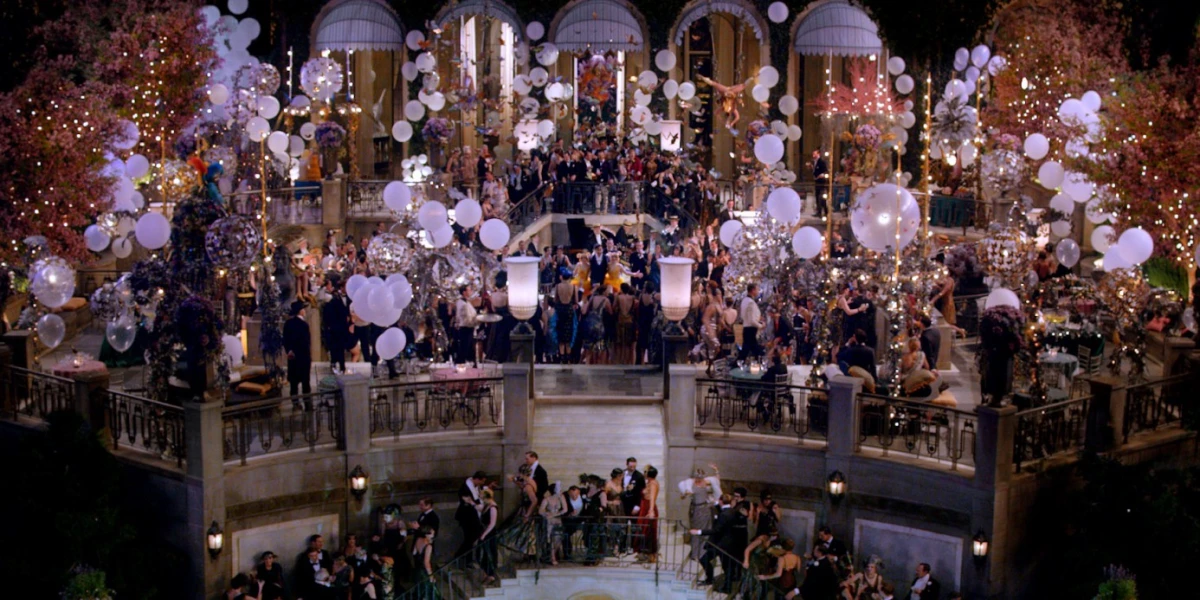
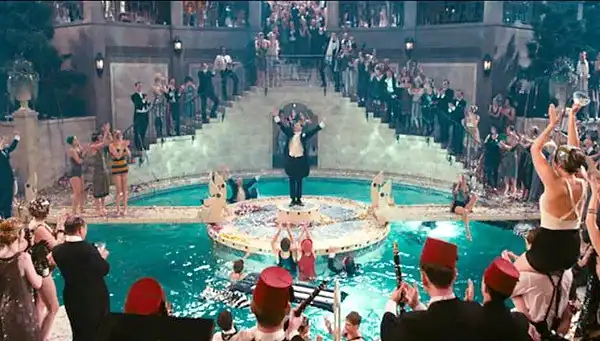
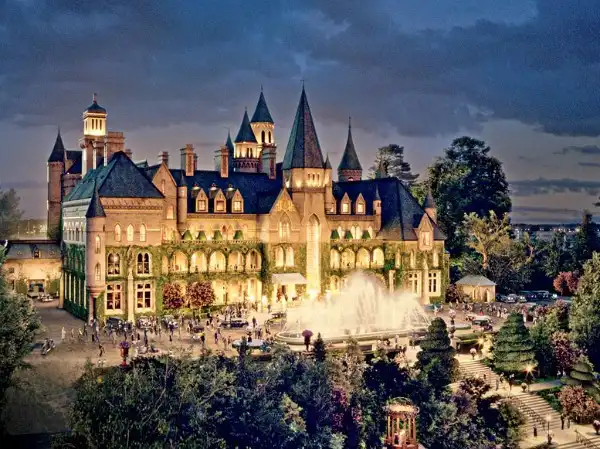
“It was a factual imitation of some Hôtel de Ville in Normandy, with a tower on one side, spanking new under a thin beard of raw ivy, and a marble swimming pool, and more than forty acres of lawn and garden.”
F. Scott Fitzgerald
Gatsby’s mansion perfectly captures his self-destructive ambition and the era’s extravagance with a blend of Gothic Revival and Art Deco styles. The turrets, ornate facade, towering structure, expansive lawns, and elaborate gardens are Gothic Revival elements that evoke the grandeur of European aristocracy. These architectural elements help in projecting Gatsby’s bigger-than-life image and burning desire to outshine the old-money elites, especially the Buchanans.
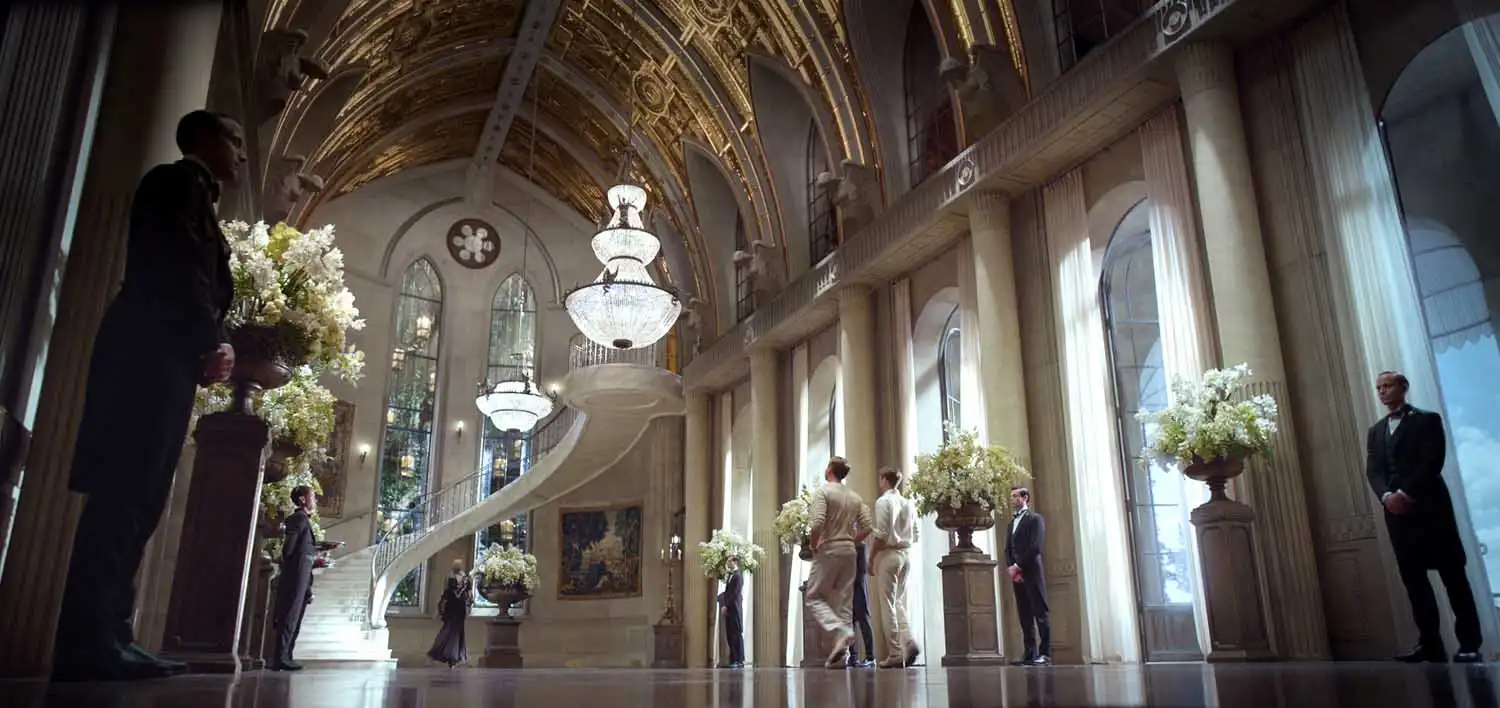
What truly transports us to the Jazz Age is the Art Deco influences that speak of the era’s obsession with grandiosity, glamor, and technological modernity. The interior of the mansion is an Art Deco fever dream with an avalanche of luxurious crystal chandeliers, intricate wood inlays, gold filigree ceilings, bold geometric patterns, rich materials, and a fantastical ballroom.
Just like the superficiality and surface beauty of Art Deco, the architecture echoes Gatsby’s internal emptiness, which he masks with opulent surroundings. The mansion, while fascinating at first glance, is a physical manifestation of his desperate aspirations. One scene that perfectly captures this is when Nick is standing on the perfectly stylized steel stairs, overlooking Gatsby’s funeral, and no one is there. All this perfect grandeur, all this perfect architectural marvel… meant nothing.
The Architecture of Buchanan’s Residence
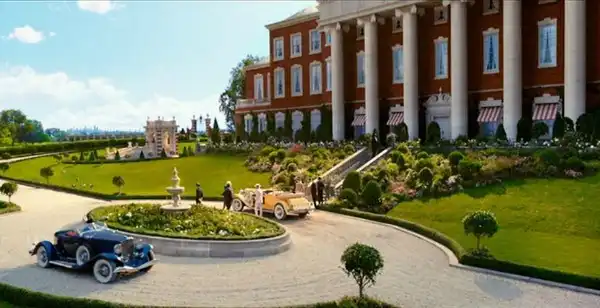
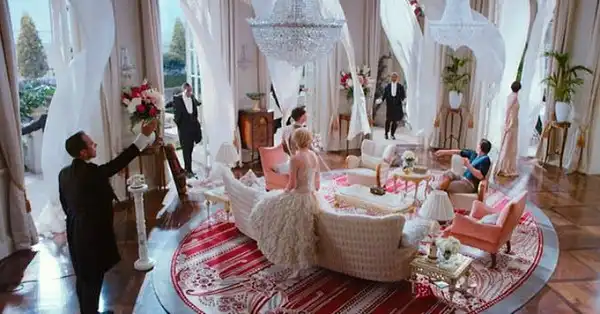
“Their house was even more elaborate than I expected, a cheerful red-and-white Georgian Colonial mansion, overlooking the bay.”
F. Scott Fitzgerald
The Buchanan’s home is a quintessential example of Georgian Colonial architecture, which was popular among the American elite in the early 20th century. This style, characterized by its symmetry, classical proportions, and understated elegance, reflects Buchanan’s status as members of the old-money class, deep-rooted wealth, and social standing. The poised red brick facade, white trim, and picturesque lawns symbolize the stability and respectability of born rich folk. The architecture here, with its overlooking stance over the bay, is not meant to dazzle or impress but to quietly assert superiority and longevity.
With classical furnishing, subdued color palette, paneled walls, grand staircases, and high ceilings the interior exudes restrained luxury – the essence of Georgian Revival style. It still reflects wealth but one that is a birth-right and timeless, rather than one that is constantly screaming for attention. The house’s architecture and decor serve to highlight Tom and Daisy’s sense of entitlement and their disdain for those they view as socially inferior, like Gatsby.
The Architecture of Nick’s Cottage
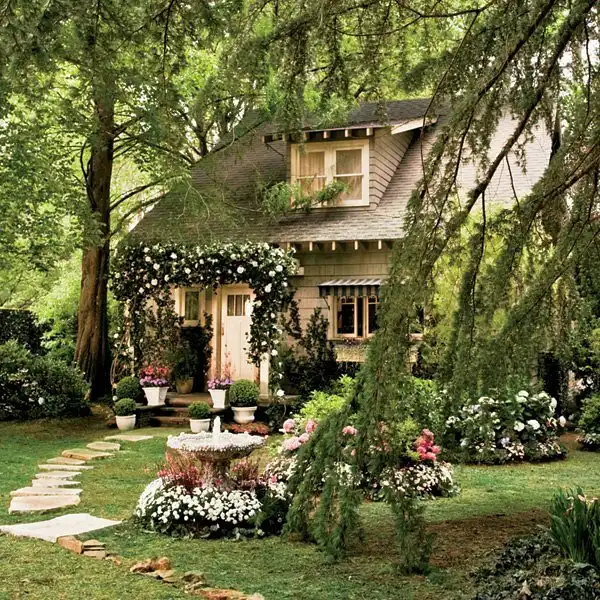
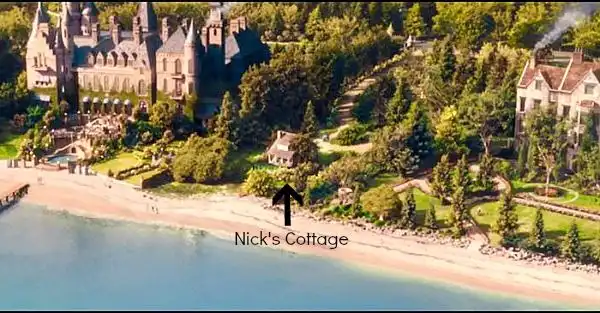
Personally, I think this is one of the most masterfully written lines in the book. By describing the context and eyesore of a house, it perfectly captures Nick as the “outsider” narrator watching from the sideline. His cottage is a modest bungalow-style home, reflecting his middle-class status and pragmatic nature. In the United States, the Bungalow architectural style gained popularity between 1900 and 1918. Influenced by the Arts and Crafts movement, it initially served as a vacation home.
“I lived at West Egg, the – well, the less fashionable of the two, though this is a most superficial tag to express the bizarre and not a little sinister contrast between them. My own house was an eyesore, but it was a small eyesore, and it had been overlooked, so I had a view of the water, a partial view of my neighbor’s lawn, and the consoling proximity of millionaires—all for eighty dollars a month.”
F. Scott Fitzgerald
Characterized by its simplicity, functionality, modest scale, and connection to nature, this architectural style is the antithesis of the opulence seen in both Gatsby and Buchanan’s residences. The cottage’s proximity to Gatsby’s mansion also emphasizes the paradoxical gap between the two characters; they live side by side but are worlds apart.
The interior design is simple, with comfortable furnishings and a few personal touches that reflect Nick’s modest lifestyle and unassuming nature. The cottage’s architecture reinforces Nick’s position as an observer rather than a participant in the extravagant world around him.
How Was the Depiction of Architecture in The Great Gatsby?
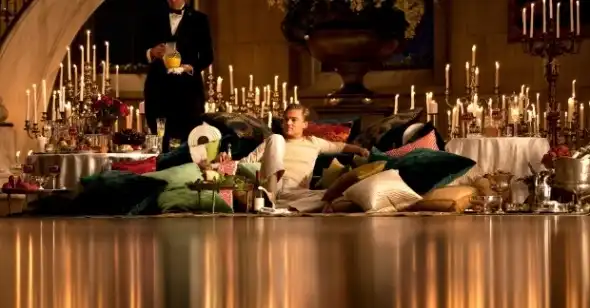
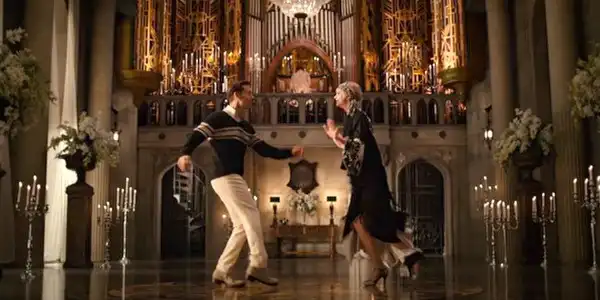
Gatsby’s mansion, the Buchanan’s house, and Nick’s cottage represent three distinct architectural styles and social classes. Gatsby’s mansion, with its blend of Gothic Revival and Art Deco, symbolizes the flashy, aspirational nature of new money. Buchanan’s Georgian Colonial home represents the understated, entrenched wealth of old money. Nick’s bungalow-style cottage is a modest, functional home that reflects his middle-class status and observant curiosity. Architecturally, these three homes symbolize the broader themes of the novel and enrich the narrative of Fiztgerald’s novel.
Baz Luhrmann’s adaptation of The Great Gatsby has polarized critics and, in so many aspects, doesn’t do justice to Fitzgerald’s original work. However, its visual and architectural aesthetics are genius. Art Deco is a style that ultimately defines the Jazz Age, and choosing it for both scene productions and marketing purposes perfectly encapsulates the narrative of The Great Gatsby. It also immerses us in that rather fantastical world, vividly exposing the hollowness of the American Dream during an era shadowed by the looming Great Depression.
