

The term Gothic was used by Italian writers in the later Renaissance Period (Late 15th to early 17th Century). The word attributed to barbarian Gothic tribes that destroyed the Roman Empire’s classical culture (5th Century AD) was used in a negative, derogatory way as a synonym of ‘barbaric.’
The Gothic Style appeared in Northern France and got involved in every aspect of art very swiftly, from architecture to paintings, sculptures, frescoes, and other areas of art; this pioneering style has started to be rapidly adopted in other European countries.
Gothic style is distributed to many areas: ornaments, sculptures, and structural elements, which contributed to the architecture with its new way of design. With this movement the traces of symbolism in the design of ornaments, in settlement elections therewithal in the sculptures with changes in design and expression was seen in Gothic Style. Also, the spiritual aspect of the Gothic style is diffused and can be seen in every aspect that we can discuss.
The belief of the Middle Ages in religion is very visible in every aspect of art; Gothic style and architecture give us an understanding of what people are thinking through their designs. If we look from the architectural context, Gothic Architecture designs an atmosphere to draw eyes to the top of the space; it gives a feeling of looking up, which quotes their thinking of ‘The sky is heavens.’
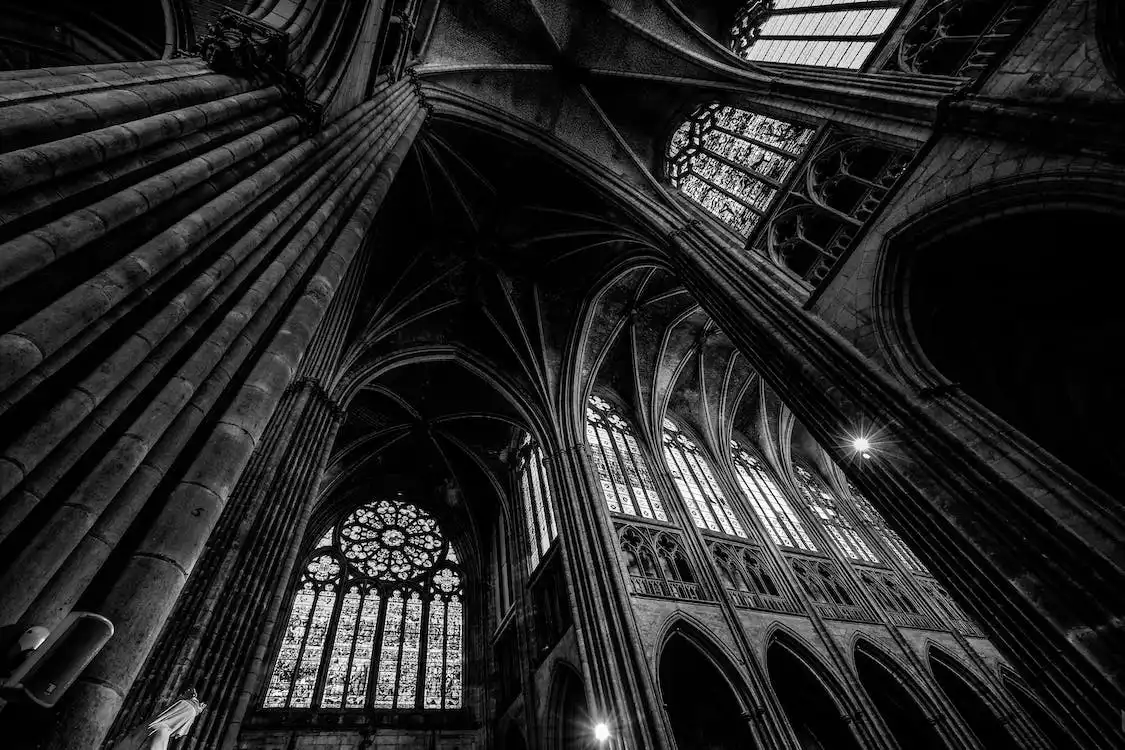
Therewithal ornaments assist this idea with their being; almost all of the design comes to life on the upper part of the space, meaning ‘sky’ for the people. Society in the medieval thinks that ‘Fall, gone away from God’ (exitus). It is now time to return to Him (reditus).
Key Elements Of Gothic Style In Architecture
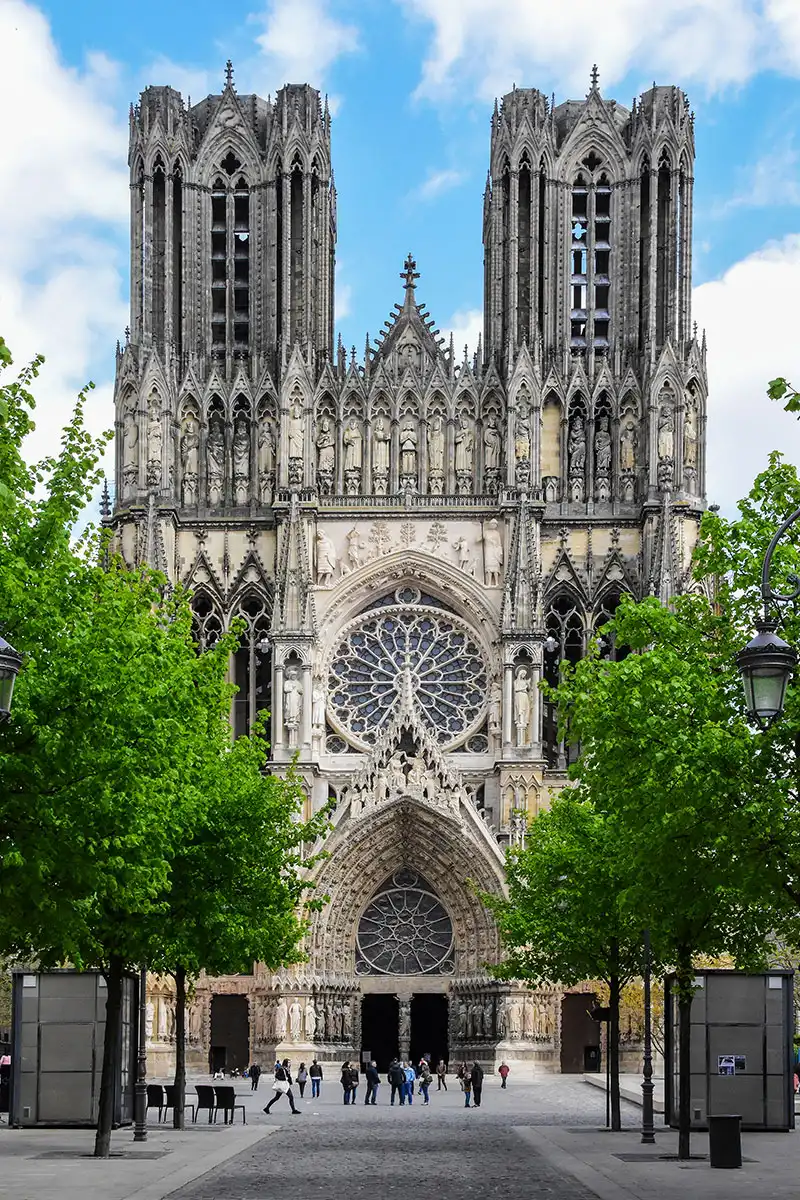
The ascent of the Gothic Style has been very important in the architectural context. Gothic Architecture originated in France and was primarily called ‘Opus Francigenum’ or ‘French Work’; with the developments in the mid-12th century, French builders were able to build by adding to this architecture. There are so many designs to talk about. However, the most featured examples of Gothic Architecture are Notre Dame de Paris (which has been restored recently, evaluated from the perspective of many ideas), Chartres Cathedral, Reims Cathedral, and Strasbourg Cathedral; Cologne Cathedral in Germany, Roskilde Cathedral in Denmark; Salisbury Cathedral in England and Milano Cathedral in Italy.
Gothic Architecture used primarily five key elements: Pointed arches, Flying Buttresses, Ribbed Vaults, Stained glass windows and highly ornate decoration.
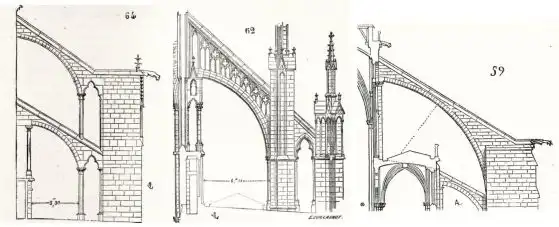
Flying buttresses have been used for carrying more load and stabilization since the 3rd century, but in the Gothic style period, they became more ornamented and played an important part. The flying buttresses here in the image, which are used in the Notre Dame de Paris Cathedral, are shown as the ornamentation level of the feature.
The usage of flying buttresses changes from one cathedral to another, but it stays as a really ornamented and significant material; this can also be seen from the the analysis in the image.
Another key material used in Gothic architecture is the Gothic ribbed vault, which utilizes pointed arches. The ceiling became the focal point of the space. The ribbed vaults were built by the Ancient Romans in the 2nd century AD, but as mentioned in Gothic Architecture, the vaults are used with pointed arches. The main idea of these ribbed vaults was structurally about reducing the weight; this feature has given the Gothic architecture higher interiors and thinner exterior walls.
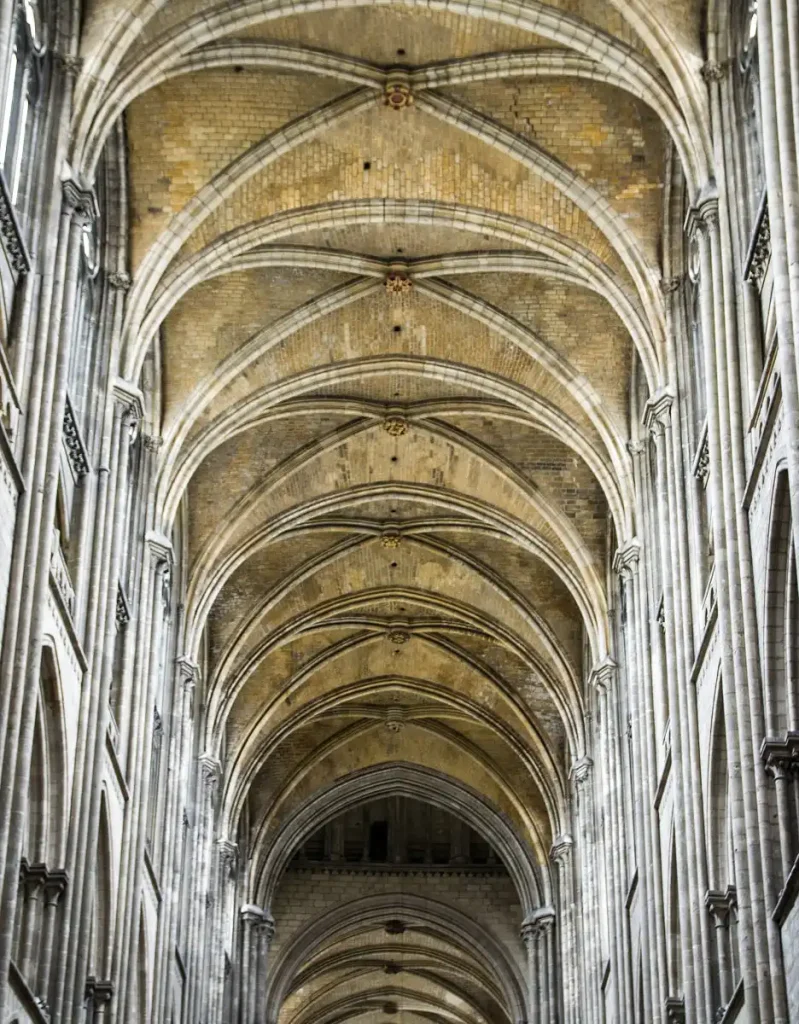
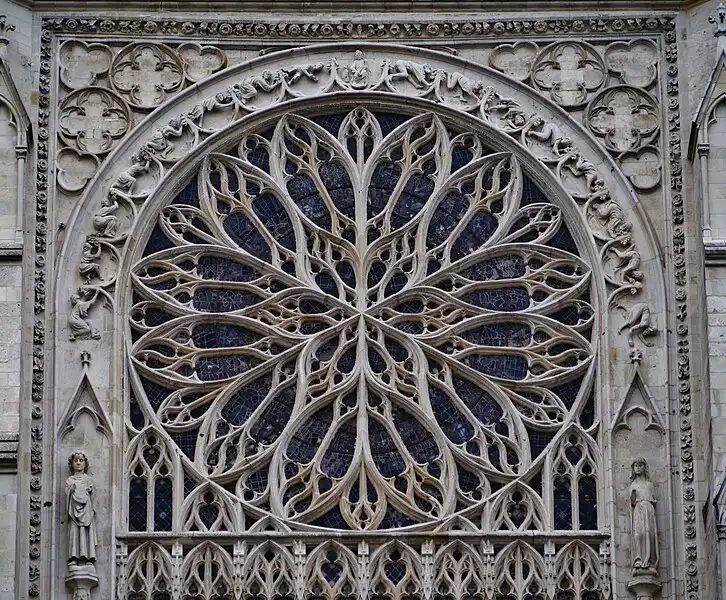
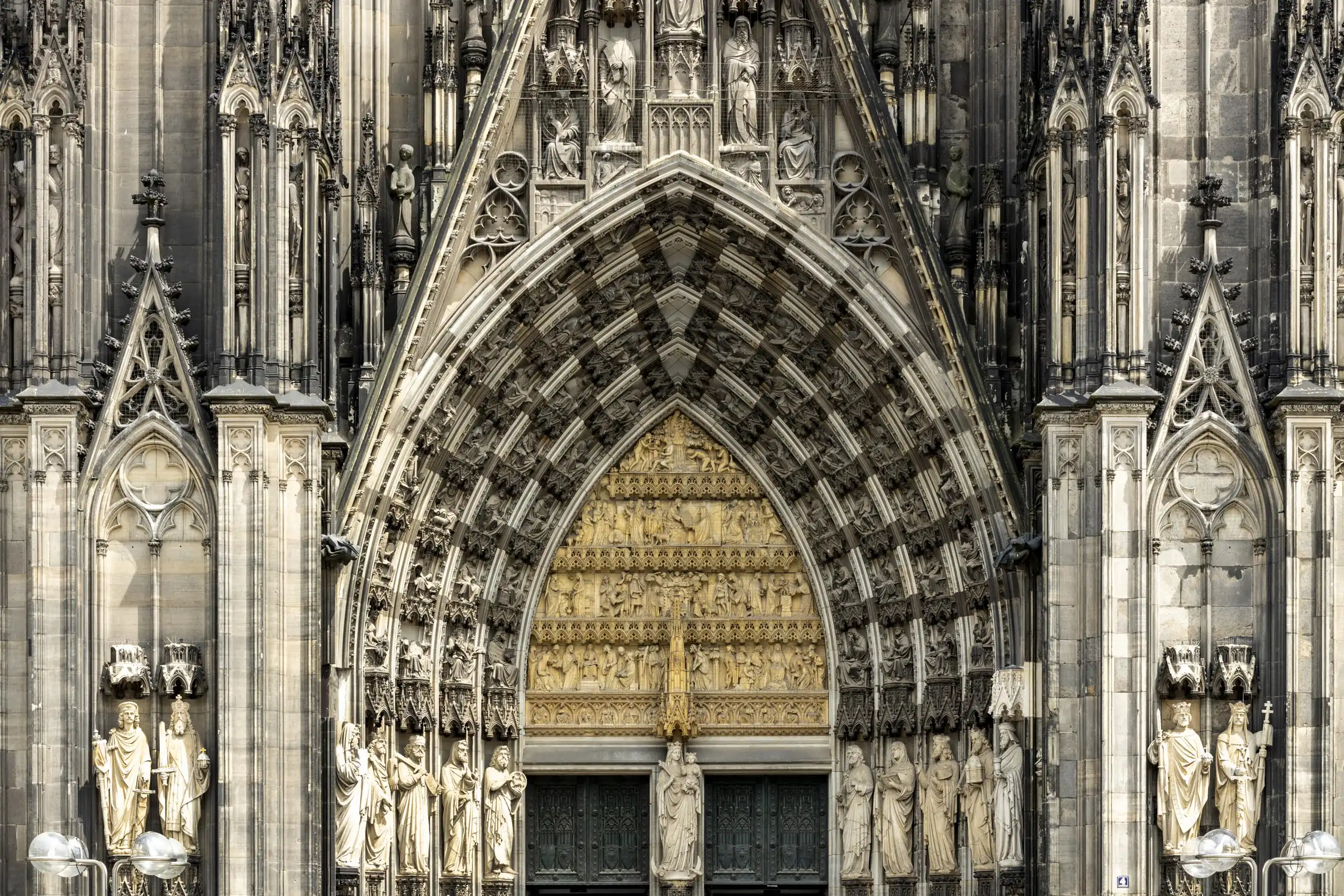
Pointed arches were really significant in Gothic Architecture, besides giving the heavenly atmosphere, they were also used to carry heavier loads; with this solution, the field height could be increased depending on the situation. These materials are structural but also mostly became the image of the Gothic style; Most of the time, pointed arches were seen surrounding the space and dividing. In addition, these materials were in windows, doors, and arcades but also in the motifs found on the Gothic designed objects which are frames for figures, sculptures, and paintings.
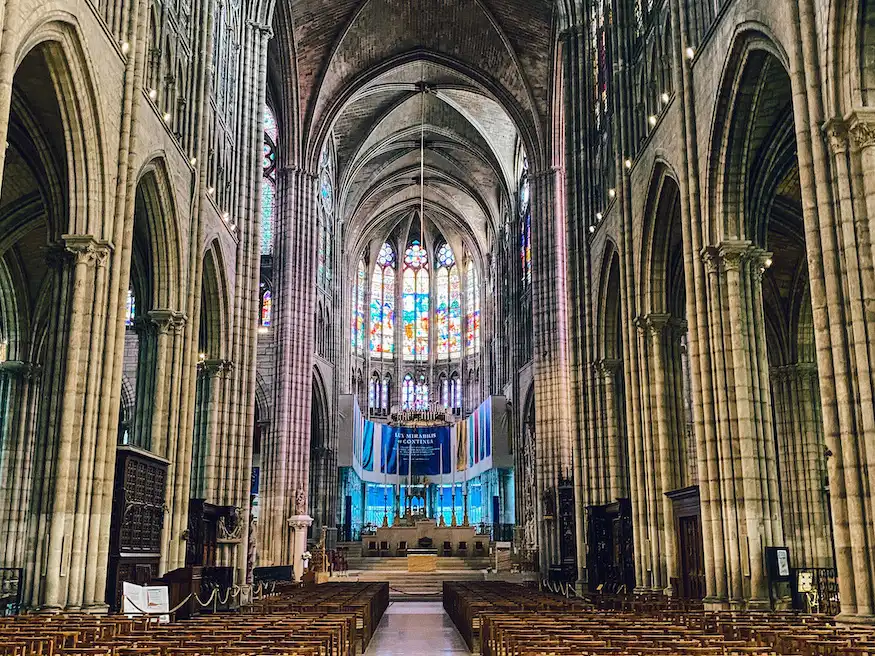
Stained glass windows are another key element of Gothic Architecture in many aspects. They were used greatly to design the interior atmosphere in an architectural sense, but at the same time, stained glass windows were there to tell stories; they may depict religious figures or create a sense of awe and wonder, making space for light to transform the space spiritually.
In the Gothic Style Period, artists wanted to influence and impress the viewer directly better than in the former eras; they designed their representations to be more visible and realistic in an emotional aspect. These artist has a mindset that if they design the art product with expressions of human emotions they could be internalized and understood truly and better.
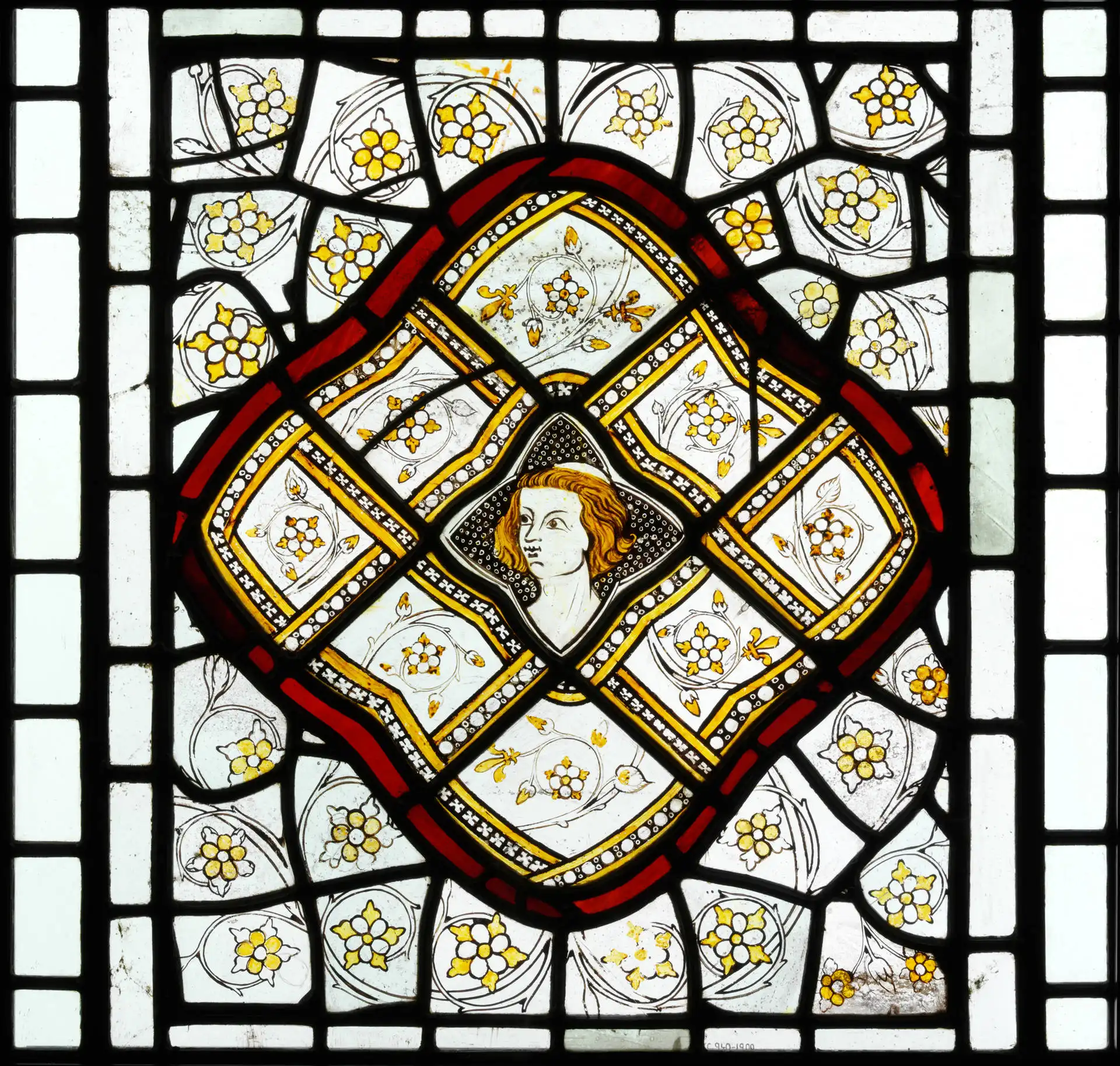
Ornamentation and Symbolism in Gothic Style
Sculptures and reliefs can add depth and meaning to a building’s facade by depicting stories, figures, or abstract concepts which in the Gothic Style has developed, the gothic figures, similar to the other design elements, have become more realistic; the sculptures are sculpted in more natural postures and gestures with a lot of emotions. These works of art in Gothic Styles mostly curve or sway in an’S’ shaped posture to give the natural posture movement; these poses are supported emotionally by the fluid appearance of the sculpture’s clothing detailing.
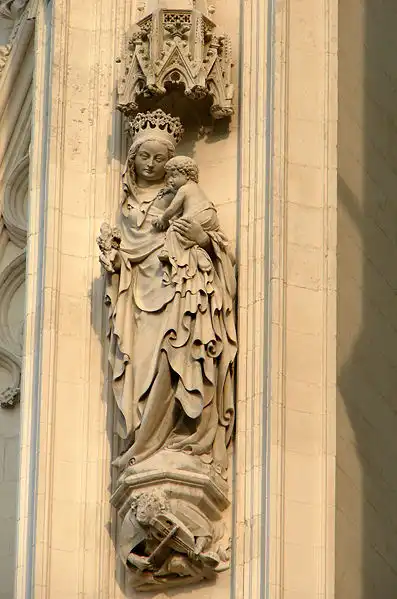
This attention to naturalness in human emotions also became associated with nature, some elements were seen from nature in designs. This form of ornamentation is used on the sculptors as a crown detail or maybe as a frame, stained glass windows, carved on most of the structural elements, furniture, and also on the exterior features. For instance, the ‘Acanthus’ flower is a type of tracery decoration used predominantly in Gothic architecture.

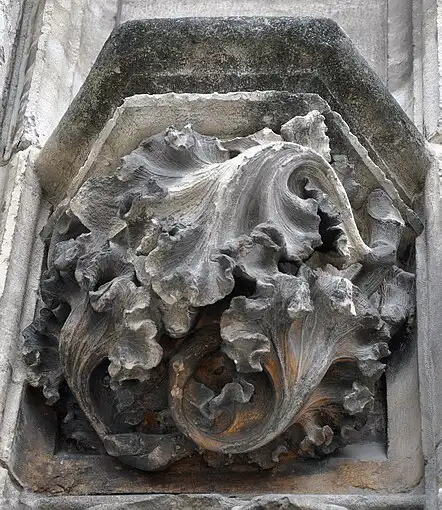
Another ornamentation used in carvings called ‘fleuron’ is a flower-formed ornament that has been styled and used severely in late Gothic decoration. This type of ornament was used in plenty of areas in the Gothic period, mostly as a four-leafed square, often in column capitals, cornices, or crockets, which also are used in Gothic Architecture.
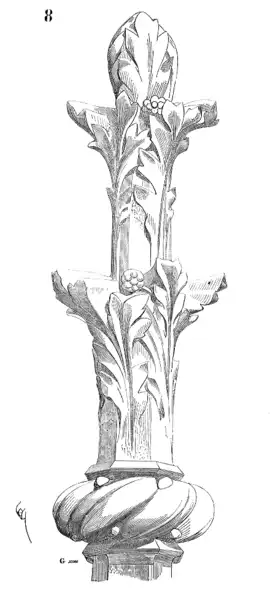
Crockets have no architectural function, but it has been used as an imitation of the bishop’s crozier in cathedrals, basilicas, etc.; they symbolize a shepherd who protects his sheep. The crockets are really detailed ornamentations: they are carvings of leaves, buds, and flowers arranged ornaments. In an unusual way, in the Gothic Period, crockets started to be made with metals also. They are mostly placed at the top of the roofs, frames, at the edge of the slopes of a cathedral.
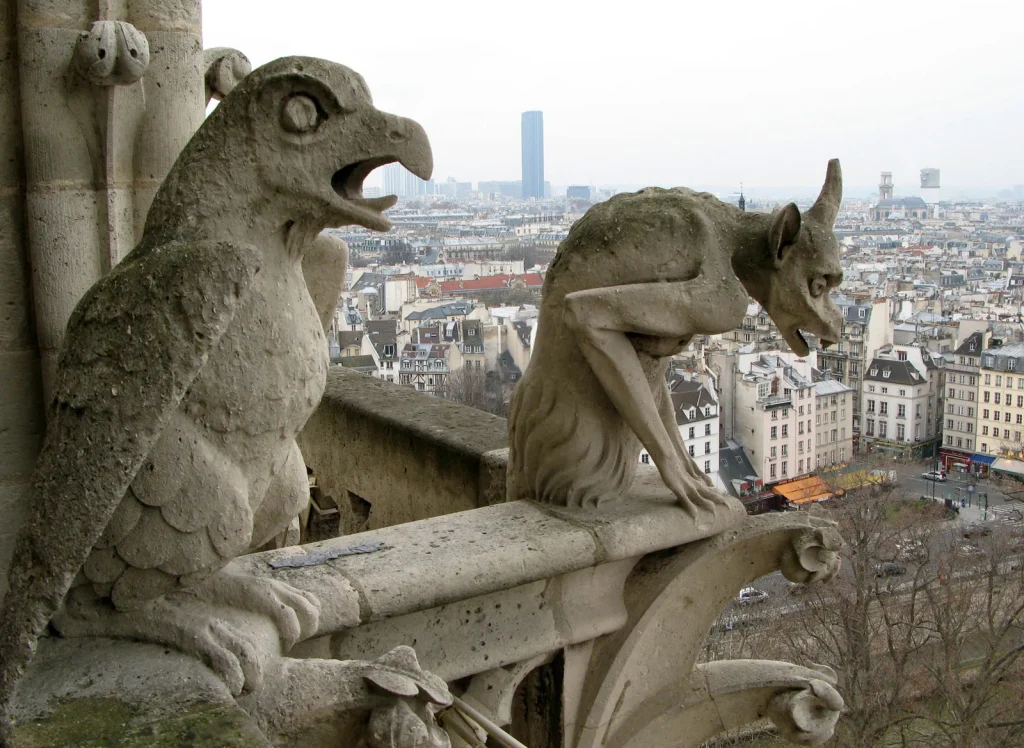
A different ornamented material is called ‘Gargoyles’ It is a grotesque that acts as a drain-spout in order to move the water as far away to protect the building and also the facade to prevent water damage. Gargoyles have also been there for centuries. In the Gothic Period, these were used severely in churches, cathedrals, etc.
The term ‘grotesque’ was used specifically for the materials that are used in these spaces, other than the technical advantages, these grotesques have a spiritual belief as other elements used in Gothic Style; they are placed at the highest parts of the mass and placed to scare and protect the cathedral or church it is on. They are mostly designed as mythical creatures, intimating animals, exotic hybrids (chimera), or even looked like humans.
Gothic Style is a very detail-oriented and aforethought style. Therewithal creating high and designing the space is important, but every aspect leads to one collective point of view, which is the spirituality of the Gothic Style.
It is important in this idea to create and express the love of god, Jesus by the materials but in an indirect way; for this reason, the symbolism overgrows in Gothic Style; the artist is creating their expression and emotions and want viewers to understand and feel better from the artworks using symbolism.
The reflection of Gothic Style in its architecture also represents these keywords: ornamentations, symbolism, and spirituality; the space is designed by thinking of the spirituality of the space and expressing it with the high ceilings connecting with pointed arches that led us to look better to the ceiling and see the ethereal atmosphere it created with the stained glass windows, sculptures, and ornaments.
