

Throughout history, material innovation has propelled architectural evolution. It determined the direction and scenarios of interplay between functionality and aesthetics that contributed to the very foundation of the design philosophy followed by architects and designers of today. And while functionality remained its fundamental element, aesthetics served as the canvas upon which the user’s experience was painted, enriching spaces with meaning and emotion.
Regrettably, such shift or development in materials and their properties has and continues to occur rather rarely. For example, it was not until the 19th century that masonry, wood, and concrete (which formed the basis for structures across the globe for centuries) were diversified by steel and mass-produced elements that resulted from Industrial Revolution, and increased the possibility of architecture to extend beyond the conventional limits, giving rise to the structures that compound urban skylines of today.
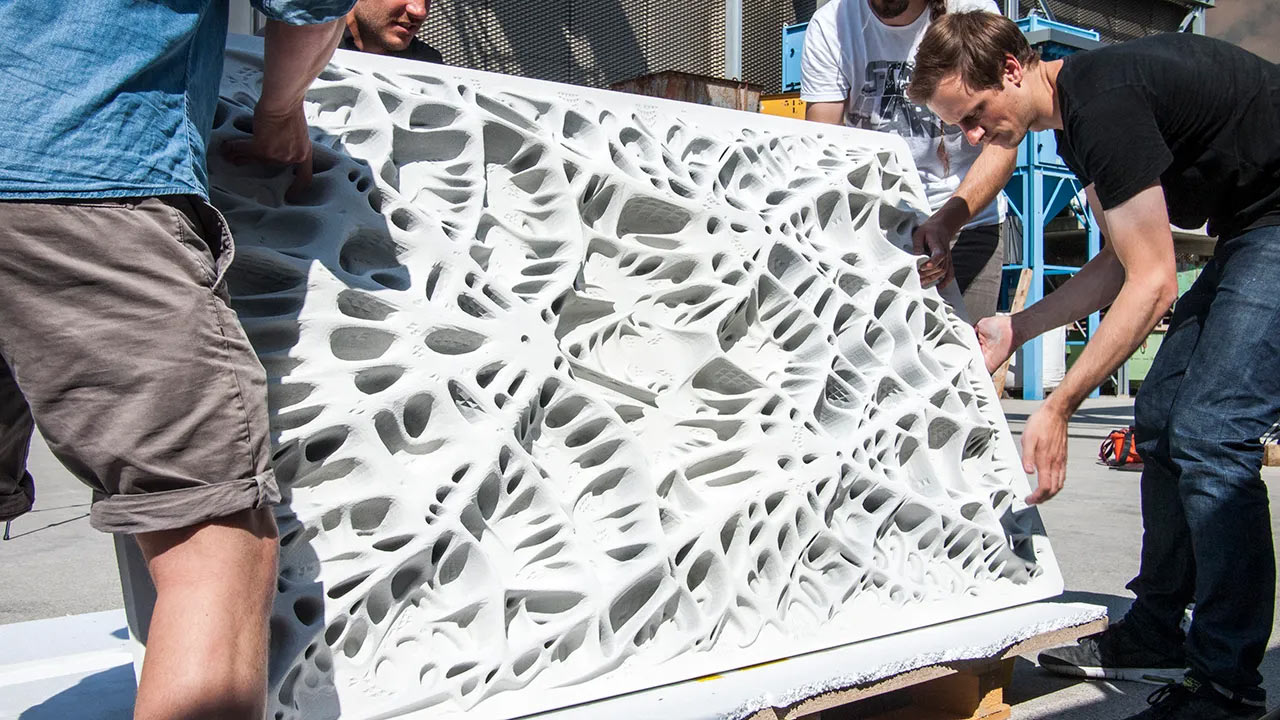
Despite such slow-paced progress in material development, the rise of a more holistic and human approach towards architecture, stimulated by a multi-disciplinary architectural movement of environment and sustainability in the early 1980s, paved the way to understanding the benefits of organic and nature-inspired forms also known as biophilic design. This curiosity resulted in a desire for exploration of smooth and flexible geometries, some of which were and are assembled with the assistance of CAD.
Nevertheless, with continuously tightening budgets and shortening project timelines, the question persists: how to visualize and realize the growing complexity of forms without sacrificing creativity or efficiency?
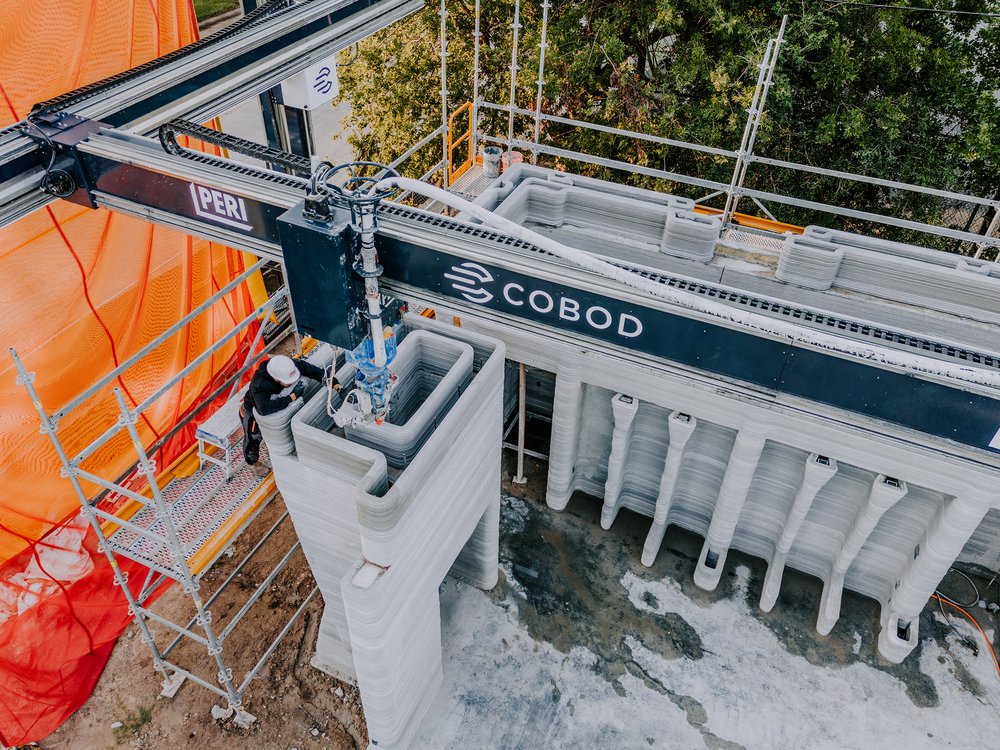
Fortunately, the development of modern computational tools unlocked the emergence of a revolutionary medium that has the potential to fulfill such requirements – 3D printed structures. Also known as additive manufacturing, this technology removes the necessity of favoring rigid, geometric shapes easily accommodated by early computer systems. Adding new depth to the expression of movement and dynamism, it enables architects to transcend conventional constraints, reducing material waste, costs, and development times while facilitating experimentation with a diversity of materials forms, all while ensuring that structural stability meets building codes.
The unparalleled precision and detail of 3D printing blurs the lines between architecture and sculpture. Through the use of additive manufacturing, instead of beams, slabs, and columns, architects are able to conceive a singular composition, with each of its layers and contours purposefully crafted to evoke a sense of fluidity and balance.
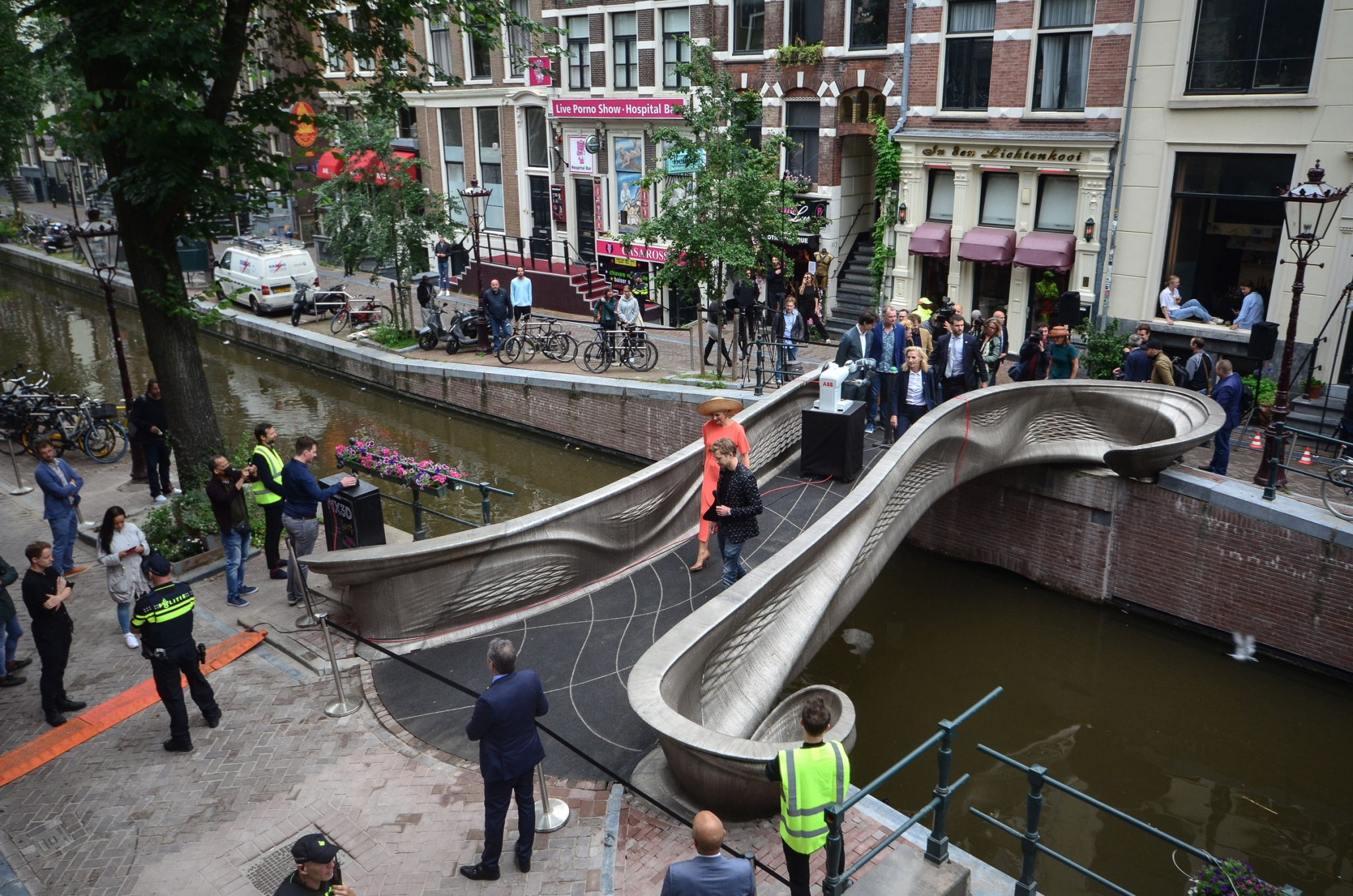
The MX3D bridge in Amsterdam, developed in collaboration with Joris Laarman Lab by a Dutch technology start-up MX3D, stands as a significant proof to such intersection. Being one of the world’s most famous 3D printed structures and the first of its kind to utilize steel, the bridge represents a paradigm shift in the field of architecture. By harnessing large-scale 3D printing technology and additive arc welding process, it showcases the potential of computational design and robotic fabrication to push the boundaries of architectural aesthetics by weaving traditional steelwork with advanced digital modeling. With its delicate lattice-like patterning and futuristic appearance, the MX3D bridge embodies the fusion of form, function, and artistic expression, offering a glimpse into the future of urban architecture.
However, additive manufacturing technique comes with its own challenges. The layering system that is characteristic of 3D printing results in the similarity of the appearance of the printed structures: “The final look of 3D printed buildings is similar to stacks of pancakes or layers of toothpaste.” And taking additional finishing steps necessary to achieve the desired visual results might lead to extra expenses.
Another challenge lies in the ongoing discussions about individual self-expression. And while some continue to question whether additive manufacturing takes away the natural process of creative self-expression, others view it as a tool augmenting human ingenuity: “Computational design is deployed in tandem with the skills of human craftsmen – showing how digital fabrication can be successfully used to create a unique design that is still distinct.”
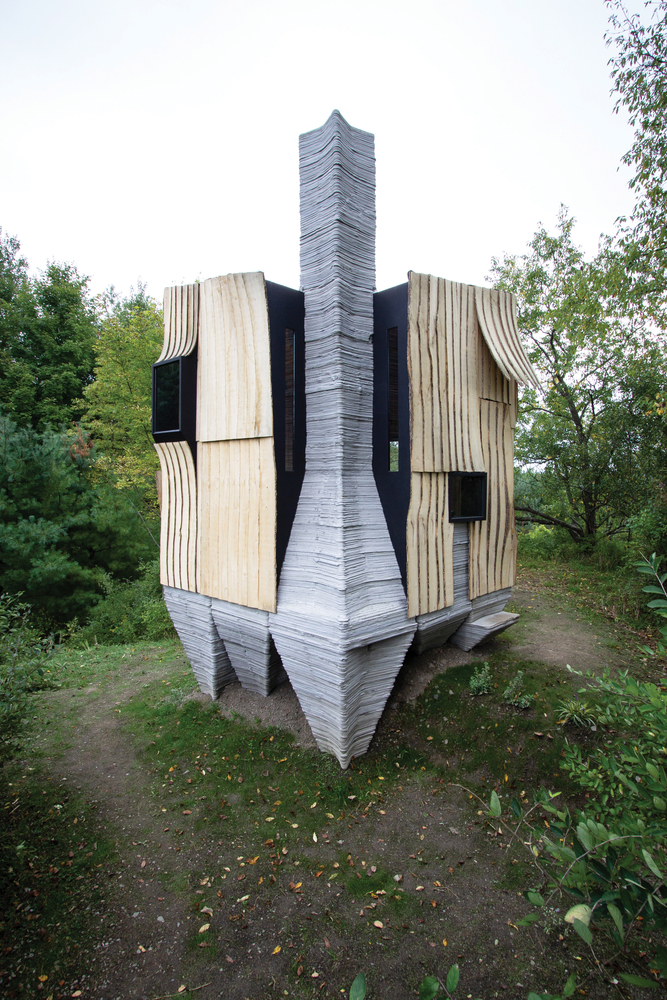
Innovative projects like the Ashen Cabin by HANNAH Office exemplify how 3D printing can act as a pragmatic solution that displays qualities of authentic tectonics, successfully merging technology and sustainability. In the project, robotic fabrication and 3D scanning were applied to be able to utilize infested ash wood, which would normally not have been impossible due to the irregularities in in its forms. By having no need to ‘standardize’ each panel, this technology allowed to retain the original state of the wood. This resulted in a visually striking yet environmentally conscious structure that showcases a playful architectural language achieved through synergy between organic nature and precise fabrication.
And because automation allows for achievement of intricate design and aesthetics without engagement of additional factors and workforce, it is able to disrupt established architectural typologies, injecting diversity into homogenous landscapes. For instance, affordable housing, which for long has been plagued by image issues, has the opportunity to be reintroduced through the ways of additive manufacturing. 3D printing enables incorporation of enhanced details and elements that would otherwise be expensive or time-consuming to achieve. Involving such approach in the construction process of such nature therefore makes a statement that aesthetics shall no longer be compromised by the reduced costs and construction speed, which will have a radical impact on promoting a positive community identity.
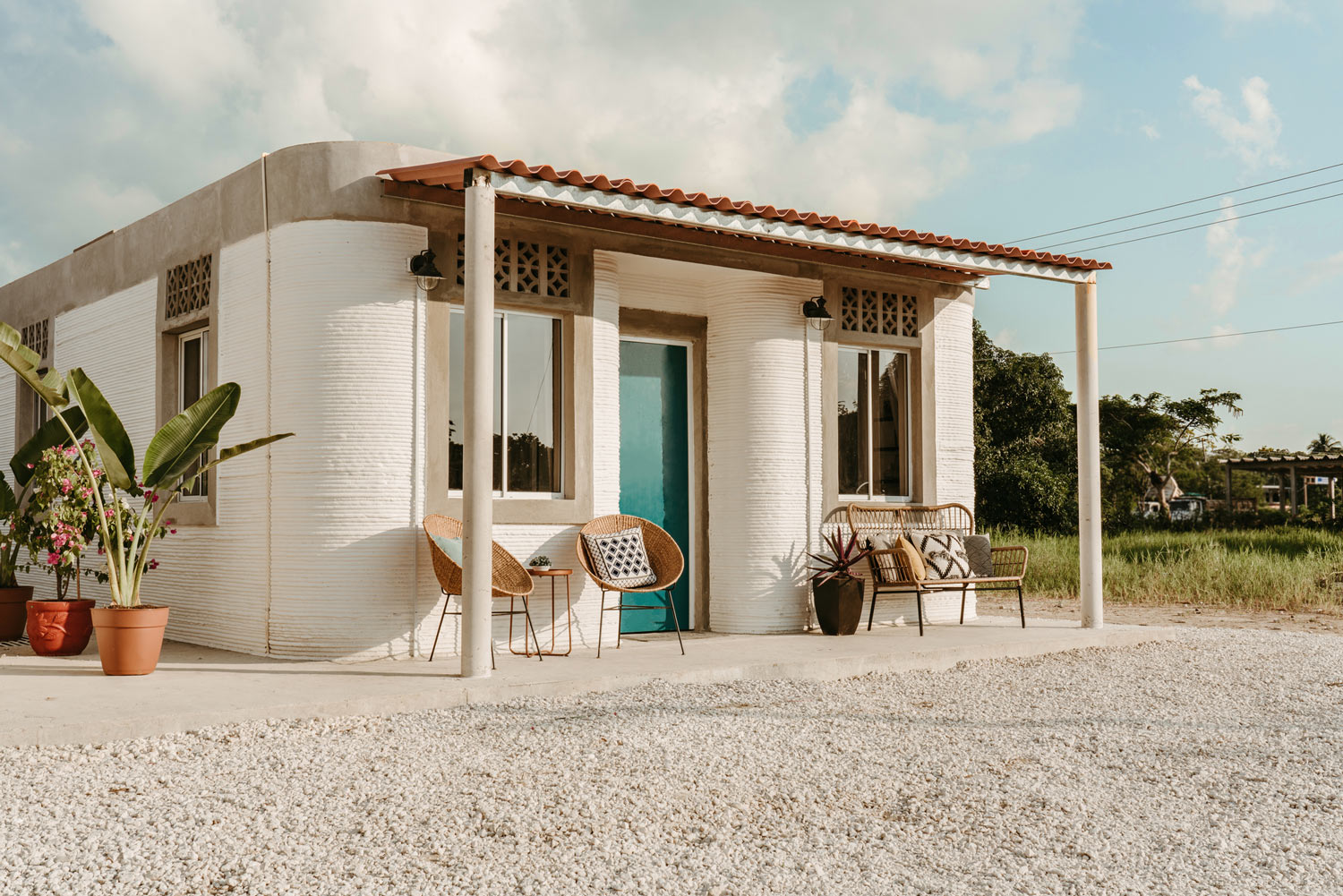
ICON’s 3D printed homes in Tabasco, Mexico, showcase a pioneering approach to social housing aesthetics, displaying the potential of 3D printing technology in redefining architectural typologies. Developed by an Austin-based start-up specializing in construction technologies, these dwellings epitomize a fusion of innovation and design. Crafted in about 24 hours with the Vulcan II printer, which was “…specifically designed for the rigors of remote, rural printing, where limited resources, unpredictable weather conditions, and unreliable power…” they challenge the conventional perceptions about low-cost housing through a unique visual appeal, featuring a textured, off-white appearance that seamlessly blends with the surroundings.
The thought-through design resulted in creation of inviting and comfortable living spaces characterized by ample natural light and strategic ventilation provided by breeze blocks, ensuring that these structures also surpass stereotypes associated with 3D printed construction. All of the applied strategies indicate that each element was carefully considered to prioritize resident satisfaction and enhance the quality of life. In addition, by allowing collaboration with nonprofit organizations and local materials leverage, additive manufacturing exhibits the potential of 3D printing to create equitable communities, unlocking inclusive accessibility to sustainable and aesthetically diverse designs.
In conclusion, throughout its history, architecture has been defined by the interplay between innovation, functionality, and aesthetics. Consequently, all three have been driving architectural evolution(s) through material advancements, from the acquaintance with steel to the emergence of biophilic design, material advancements have driven architectural evolution.
With its ability to seamlessly integrate function with unequivocal aesthetics, the foundation of 3D printing marks a significant shift in architectural practice. Blurring the lines between architecture and art more than ever, it offers unprecedented freedom to explore complex geometries and intricate details. Despite challenges such as visual monotony, the potential of 3D printing to revolutionize architectural aesthetics is undeniable.
Therefore, by embracing principles of innovation, sustainability, and inclusivity, architects can harness the full potential of additive manufacturing to create more equitable and resilient built environments, assisting architecture becoming a tool for shaping a future where it is not only functional but also inclusively enriching and inspiring.
