

Close Menu
ParametricParametric

    Subscribe to Updates

    Get the latest creative news from FooBar about art, design and business.

    What's Hot

    tetsstststtt

    July 23, 2026

    Soundscape in Architecture: Designing Through Sound

    July 23, 2026

    MVRDV Wins Shift Embassy Competition with Rotterdam ROCKS!

    July 23, 2026
    Facebook X (Twitter) Instagram
    Facebook X (Twitter) Instagram Pinterest YouTube LinkedIn TikTok
    ParametricParametric
    Courses
    • Articles
      • Archipreneurs
      • Technology
      • BIM / AEC
      • 3D Printing
      • Architects
      • Artificial Intelligence
      • Robotics
      • Sustainability
      • Tools
      • Case Study
      • City Guide
      • Opinions
      • Interviews
      • Architecture & Design
        • Urbanism
        • Metaverse
        • Space Architecture
        • Geography
    • Projects
      • Architecture
      • Interior
      • Design
        • Fashion
        • Pavilion
        • Installation
        • Digital Art
        • Landscape Design
      • Products
    • Workshops
    • Ads
    • Architecture News
    • Digital Members
    • Books
    • CDNext
    • CDNEXT Recordings
    • Competitions
    • Events
    • PA Talks
    • Jobs
    • landscape
    • Landscape Architecture
    • PA Quotes
    • PAACADEMY
    • podcasts
    • memorial
    • Studio Recordings
    • Studio Workshops
    • Uncategorized
    • Videos
    ParametricParametric
    Home»Architecture News»New Thermoelectric Material Converts Waste Heat to Electricity
    Architecture News

    New Thermoelectric Material Converts Waste Heat to Electricity

    adminparametBy adminparametJuly 23, 202604 Mins Read0 Views
    Facebook Twitter Pinterest LinkedIn Tumblr WhatsApp Reddit Email
    Share
    Facebook Twitter LinkedIn Pinterest Email

    On January 26, 2026, researchers at the Tokyo University of Science (TUS), Japan, announced a breakthrough: the discovery of a new class of mixed-dimensional semimetal, molybdenum disilicide (MoSi₂). This single material could transform waste heat into usable energy, opening new possibilities for sustainable power generation.

    The Thermodynamics of Waste Heat
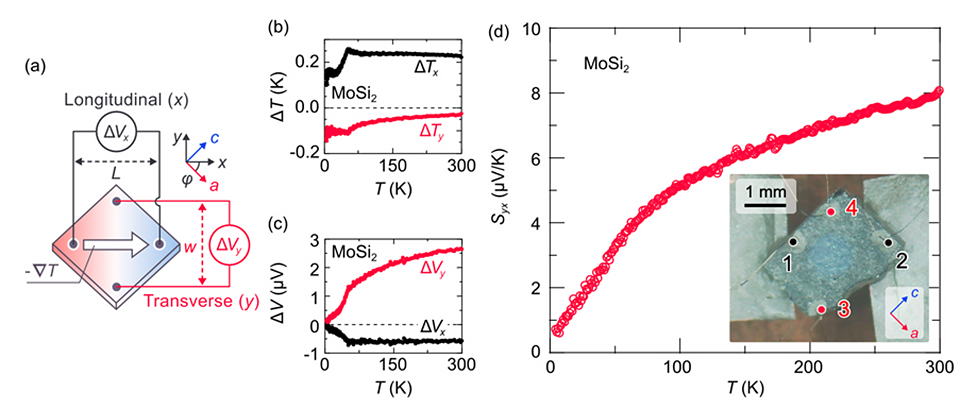
    Japan Researchers Develop New Thermoelectric Material for Energy Efficiency, Tokyo University of Science
    Transverse thermopower measurements of MoSi₂

    The art of thermoelectric conversion devices offers a unique solution by directly transforming a temperature gradient into electrical potential without the use of moving parts, working fluids, or greenhouse gas emissions, aligning with researchers’ missions. Associate Professor Ryuji Okazaki from the Tokyo University of Science team, along with Hikari Manako, Shoya Ohsumi, Shogo Yoshida, and Assistant Professor Yoshiki J. Sato from Saitama University, published their findings. Their discovery identified the mixed-dimensional semimetal molybdenum disilicide as a premier material for TTE applications.
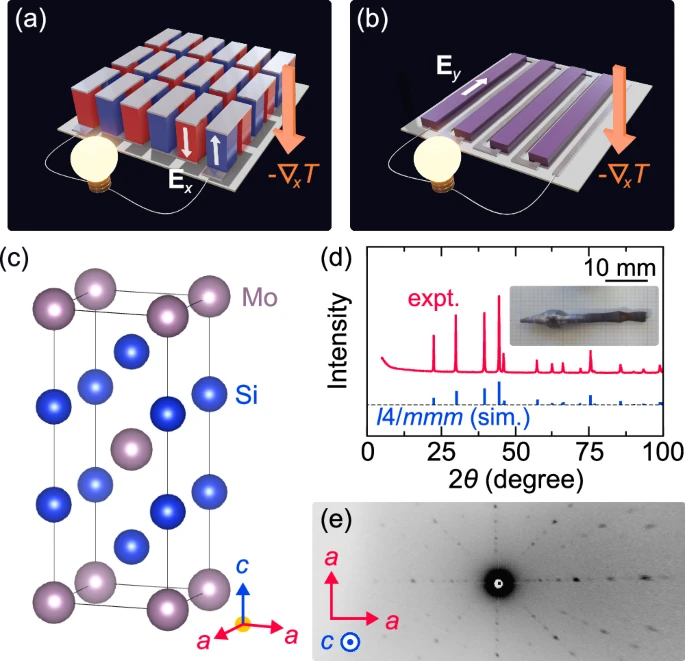
    Japan Researchers Develop New Thermoelectric Material for Energy Efficiency, Tokyo University of Science
    Concept of transverse thermoelectrics and structural properties of MoSi₂ single crystals

    Transverse thermoelectric (TTE) devices generate a voltage perpendicular to the direction of heat flow. This orthogonal relationship allows for the creation of a conversion device from a single piece of material. To produce usable power, these modules consist of alternating layers of p-type and n-type semiconductor elements connected electrically in series and thermally in parallel.

    Discovery of Molybdenum Disilicide MoSi₂
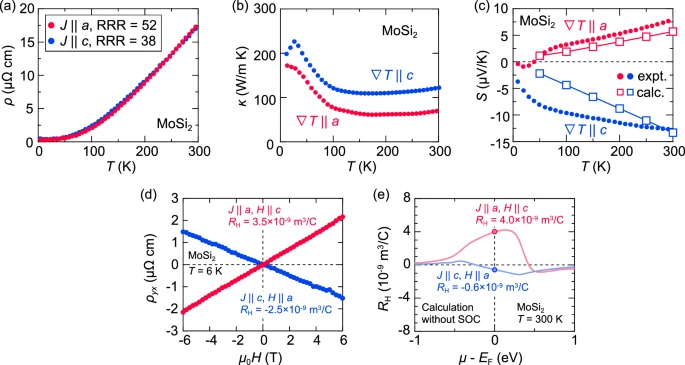
    Japan Researchers Develop New Thermoelectric Material for Energy Efficiency, Tokyo University of Science
    Anisotropic transport properties of MoSi₂ single crystals

    The Tokyo University of Science (TUS) is the largest science-specialized institute in Japan and has been home to Nobel Prize winners. The lead researcher, Dr. Ryuji Okazaki, is an expert in correlated electron systems and condensed matter physics, with over 150 published articles.

    Due to its unique electronic structure and axis-dependent conduction polarity, it emerges as a potential thermoelectric material. MoSi₂ has been used in industrial high-temperature applications as a heating element because of its refractory nature and excellent oxidation resistance. The team explored its transport properties using a combination of experimental measurements and first-principles calculations.
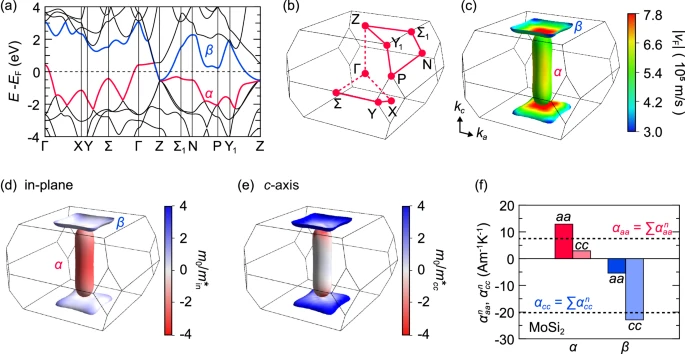
    Japan Researchers Develop New Thermoelectric Material for Energy Efficiency
    First-principles calculation results

    “Our objective was to investigate emerging transverse thermoelectric (TTE) materials,” explains Dr. Okazaki. “The recent identification of axis-dependent conduction polarity (ADCP) within certain materials has opened new possibilities, as it signals strong potential for TTE generation. Mixed-metal conductors such as MoSi₂ have long been considered promising ADCP candidates; however, their thermopower generation capabilities remain largely underexplored.”

    The Mechanism of Axis-Dependent Conduction Polarity (ADCP)
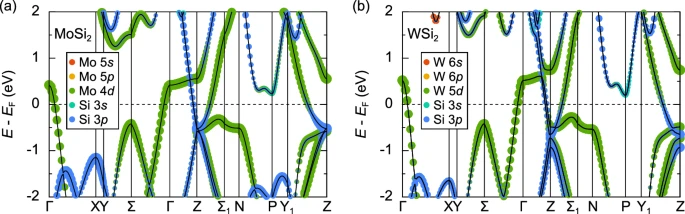
    Japan Researchers Develop New Thermoelectric Material for Energy Efficiency, Tokyo University of Science
    Comparison of the electronic band structures of MoSi₂ and WSi₂

    The key to MoSi₂’s performance is its axis-dependent conduction polarity. Known as a goniopolar material, the dominant carrier type changes depending on the crystallographic direction. The origin of ADCP in MoSi₂ lies in its complex Fermi surface. The calculations performed by the team revealed that mixed-dimensional electronic surfaces occupy different spatial dimensions:

    Quasi-One-Dimensional (1D) Electron Surfaces: These surfaces are associated with electron-like carriers that conduct primarily along the cross-plane direction.

    Quasi-Two-Dimensional (2D) Hole Surfaces: These surfaces correspond to hole-like carriers that conduct primarily within the in-plane direction.

    Stability and Longevity
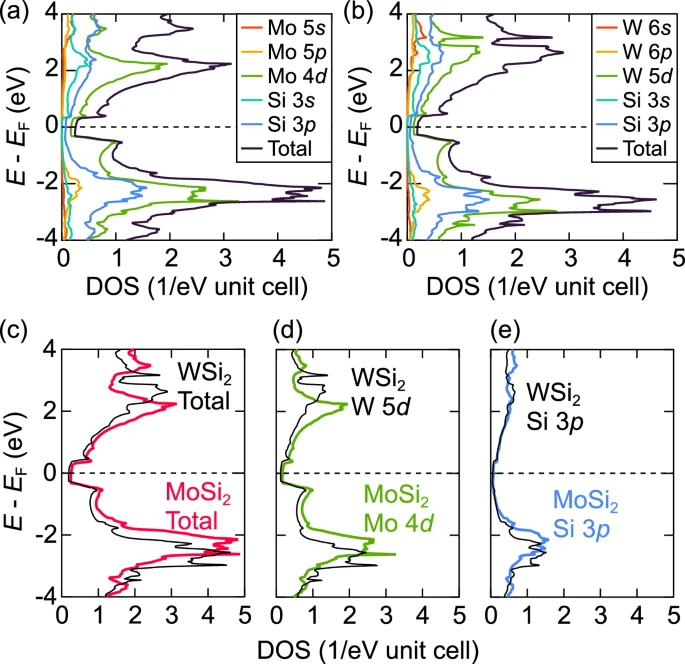
    Japan Researchers Develop New Thermoelectric Material for Energy Efficiency, Tokyo University of Science
    Comparison of the density of states (DOS) between MoSi₂ and WSi₂

    Comparison of the density of states (DOS) between MoSi₂ and WSi₂. Transverse thermoelectric (TTE) materials can be fabricated as thin or flexible sheets. They can be used for large-area coverage, such as along industrial furnace walls, converting heat into electricity continuously across the surface. Thin, flexible insulating substrates can also be used to wrap modules around exhaust pipes. This portability and structural adaptability make TTE devices ideal for power generation and remote IoT sensors.
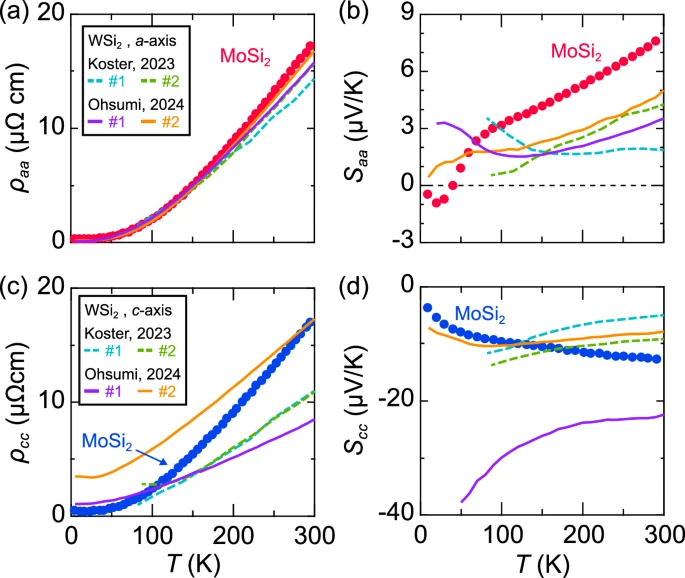
    Japan Researchers Develop New Thermoelectric Material for Energy Efficiency

    The shift toward sustainable energy is being slowed by a fundamental thermodynamic challenge: a significant amount of energy is lost as waste heat. Across industries, power plants, and transportation systems, substantial energy is dissipated. In industrial sectors, this loss creates both economic and environmental challenges, further intensifying the impacts of global warming.

    Photo Credits: © Hikari Manako, Shoya Ohsumi, Shogo Yoshida & Ryuji Okazaki

    japan Japan Researchers MoSi₂ Tokyo University of Science
    Share. Facebook Twitter Pinterest LinkedIn Tumblr Email
    adminparamet
    • Website

    Related Posts

    Morandi Bridge Collapse Ex-CEO Sentenced to 12 Years

    July 23, 2026

    MVRDV Wins Shift Embassy Competition with Rotterdam ROCKS!

    July 23, 2026

    MVRDV Designs Urban Revivo’s Beijing Flagship Store in Sanlitun

    July 23, 2026
    Add A Comment
    Leave A Reply Cancel Reply

    Demo
    Top Posts

    Design Reviews Are Moving Beyond Still Images and Animations. D5 3.1 Shows What’s Next.

    July 23, 20268 Views

    tetsstststtt

    July 23, 20264 Views

    World Architecture Festival Unveils 2026 Shortlist Featuring 416 Projects Worldwide

    July 23, 20264 Views

    15 Picturesque Neighborhoods Around the World Every Design Lover Should Visit

    July 23, 20263 Views
    Don't Miss

    tetsstststtt

    By adminparametJuly 23, 2026

    Soundscape in Architecture: Designing Through Sound

    July 23, 2026

    MVRDV Wins Shift Embassy Competition with Rotterdam ROCKS!

    July 23, 2026

    Shanghai’s Pollinator Machine Installation Brings Ancient Evolution to Life

    July 23, 2026
    Stay In Touch
    • Facebook
    • Twitter
    • Pinterest
    • Instagram
    • YouTube
    • Vimeo

    Subscribe to Updates

    Get the latest creative news from SmartMag about art & design.

    Demo
    About Us
    About Us

    Your source for the lifestyle news. This demo is crafted specifically to exhibit the use of the theme as a lifestyle site. Visit our main page for more demos.

    We're accepting new partnerships right now.

    Email Us: [email protected]
    Contact: +1-320-0123-451

    Our Picks

    tetsstststtt

    July 23, 2026

    Soundscape in Architecture: Designing Through Sound

    July 23, 2026

    MVRDV Wins Shift Embassy Competition with Rotterdam ROCKS!

    July 23, 2026
    Most Popular

    Design Reviews Are Moving Beyond Still Images and Animations. D5 3.1 Shows What’s Next.

    July 23, 20268 Views

    tetsstststtt

    July 23, 20264 Views

    World Architecture Festival Unveils 2026 Shortlist Featuring 416 Projects Worldwide

    July 23, 20264 Views
    Facebook X (Twitter) Instagram Pinterest YouTube LinkedIn TikTok
    • Home
    • Buy Now
    © 2026 ParametricArchitecture. All Rights Reserved. By utilizing this website, you are consenting to our User Agreement, Privacy Policy, and Cookie Statement. In compliance with the privacy laws of Turkey and the United States, we recognize and respect your rights. Please be aware that we may receive commissions for products bought through our affiliate links. Unauthorized reproduction, distribution, or transmission of any material from this site is strictly forbidden without prior written permission from ParametricArchitecture.

    Type above and press Enter to search. Press Esc to cancel.

    Sign In or Register

    Welcome Back!

    Login to your account below.

    Lost password?