
Close Menu
ParametricParametric

    Subscribe to Updates

    Get the latest creative news from FooBar about art, design and business.

    What's Hot

    tetsstststtt

    July 23, 2026

    Soundscape in Architecture: Designing Through Sound

    July 23, 2026

    MVRDV Wins Shift Embassy Competition with Rotterdam ROCKS!

    July 23, 2026
    Facebook X (Twitter) Instagram
    Facebook X (Twitter) Instagram Pinterest YouTube LinkedIn TikTok
    ParametricParametric
    Courses
    • Articles
      • Archipreneurs
      • Technology
      • BIM / AEC
      • 3D Printing
      • Architects
      • Artificial Intelligence
      • Robotics
      • Sustainability
      • Tools
      • Case Study
      • City Guide
      • Opinions
      • Interviews
      • Architecture & Design
        • Urbanism
        • Metaverse
        • Space Architecture
        • Geography
    • Projects
      • Architecture
      • Interior
      • Design
        • Fashion
        • Pavilion
        • Installation
        • Digital Art
        • Landscape Design
      • Products
    • Workshops
    • Ads
    • Architecture News
    • Digital Members
    • Books
    • CDNext
    • CDNEXT Recordings
    • Competitions
    • Events
    • PA Talks
    • Jobs
    • landscape
    • Landscape Architecture
    • PA Quotes
    • PAACADEMY
    • podcasts
    • memorial
    • Studio Recordings
    • Studio Workshops
    • Uncategorized
    • Videos
    ParametricParametric
    Home»Articles»3D Printing»Mid-Air Ceramic 3D Printing Breakthrough Opens New Possibilities for Complex Industrial Design
    3D Printing

    Mid-Air Ceramic 3D Printing Breakthrough Opens New Possibilities for Complex Industrial Design

    adminparametBy adminparametJuly 23, 202604 Mins Read0 Views
    Facebook Twitter Pinterest LinkedIn Tumblr WhatsApp Reddit Email
    Share
    Facebook Twitter LinkedIn Pinterest Email

    Chinese researchers have developed a new method for 3D printing ceramics without the need for support structures, enabling the direct creation of complex shapes in mid-air. This represents a significant advance in additive manufacturing for ceramics, removing a long-standing limitation of traditional 3D printing processes.

    Ceramics are hard, wear-resistant materials used in electronics, mechanical engineering, aerospace, and other high-performance sectors because they maintain strength at high temperatures and resist wear. However, their inherent brittleness and stiffness make it challenging to produce complex shapes using standard shaping methods and to prevent breakage during fabrication. With standard ceramic 3D printing, support structures are needed to hold overhanging or angled features in place until the material has hardened. Removing those supports later adds time, cost, and the risk of damaging the part.

    Mid-Air 3D Printing Changes How Ceramic Parts Are Made

    The breakthrough comes from Professor Liu Ren’s team at Jiangnan University in China, who reported the method in the peer-reviewed journal Nature Communications. Their approach is a combination of a specially formulated printing paste and a fast-curing process that activates as the material is printed, allowing unsupported shapes to hold themselves. Technology is a photosensitive ceramic slurry. This paste is not like ordinary ceramic clay; it contains particles that respond instantly to near-infrared (NIR) light during printing. When the ceramic mix is extruded from the printer nozzle, a controlled NIR light source immediately triggers solidification. This instant hardening gives the freshly laid filament mechanical strength right away, so it can support itself in space without collapsing.

    A critical technical aspect is the size range of the printed filaments between roughly 0.41 mm and 3.5 mm in diameter. Within this range, the material cures fast enough that features like cantilevered beams and torsion springs can be printed horizontally or at steep angles without sagging or dropping. This contrasts with typical ceramic printing, where unsupported overhangs will warp or break before they cure.

    The NIR curing process also penetrates deeper than ultraviolet (UV) light commonly used in photopolymer 3D printing. Tests showed that curing depth under NIR is far greater in much shorter exposure times than UV light, meaning parts gain strength quickly and reliably as they are deposited. This rapid solidification process is crucial for enabling mid-air printing.

    3D printing ceramics without supports! 🤯

    Researchers developed a method that lets you print unsupported, large-span ceramic structures

    For example things like torsion springs, cantilevers, and 3D bends, without needing support scaffolding during printing.

    That’s huge… pic.twitter.com/Q40j8Hr41R

    — Lukas Ziegler (@lukas_m_ziegler) December 28, 2025

    Another significant feature of this method is its material flexibility. By adding different ceramic additives like iron oxide (iron red), chromium green, or yttria-stabilized zirconia, the researchers were able to adjust the composition of the printing paste. These additives help unify sintering temperatures when mixing ceramics with different thermal behaviors, broadening the range of ceramic combinations and applications possible with this technique.

    Removing the need for supports yields several advantages beyond just cleaner prints. It reduces material use, cuts down on printer time, and eliminates post-processing steps such as support removal and sanding or grinding. In traditional methods, support removal can risk damaging delicate features or leaving marks that weaken the final part. In contrast, unsupported printing delivers parts closer to their finished form straight off the printer. The printed ceramic parts produced with this new technology can still go through typical sintering (a high-temperature densification step that gives ceramics their final mechanical properties). Early demonstrations included torsion springs and complex curved beams that remained stable through printing and subsequent thermal processes.
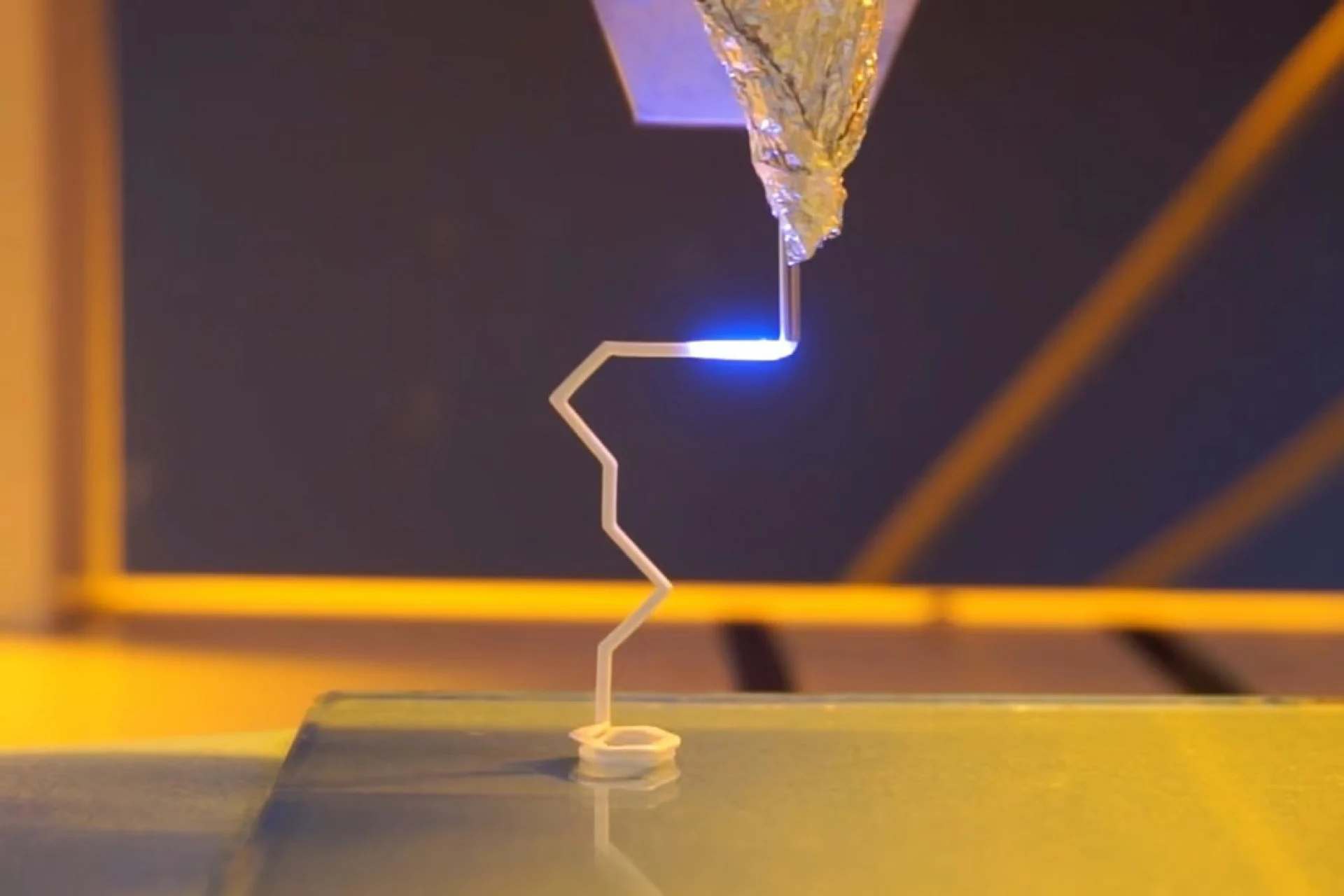
    3D Printing Ceramics Support-Free Method
    3D Printing Ceramics © Jiangnan University, via SCMP

    In practical terms, this development opens up new possibilities for industrial and engineering uses where ceramics’ strength and heat resistance allow complex geometries, such as turbine components, aerospace structures, and advanced electronic housings. By removing the support structure requirement, designers can explore shapes and internal features that were previously impractical or prohibitively expensive to manufacture.

    3d printing 3D-Printing Ceramics china Chinese researchers Mid-Air Fabrication
    Share. Facebook Twitter Pinterest LinkedIn Tumblr Email
    adminparamet
    • Website

    Related Posts

    Soundscape in Architecture: Designing Through Sound

    July 23, 2026

    15 Picturesque Neighborhoods Around the World Every Design Lover Should Visit

    July 23, 2026

    This Robotic Clothing Wraps Around You in Just 10 Seconds

    July 23, 2026
    Add A Comment
    Leave A Reply Cancel Reply

    Demo
    Top Posts

    Design Reviews Are Moving Beyond Still Images and Animations. D5 3.1 Shows What’s Next.

    July 23, 20268 Views

    tetsstststtt

    July 23, 20264 Views

    World Architecture Festival Unveils 2026 Shortlist Featuring 416 Projects Worldwide

    July 23, 20264 Views

    15 Picturesque Neighborhoods Around the World Every Design Lover Should Visit

    July 23, 20263 Views
    Don't Miss

    tetsstststtt

    By adminparametJuly 23, 2026

    Soundscape in Architecture: Designing Through Sound

    July 23, 2026

    MVRDV Wins Shift Embassy Competition with Rotterdam ROCKS!

    July 23, 2026

    Shanghai’s Pollinator Machine Installation Brings Ancient Evolution to Life

    July 23, 2026
    Stay In Touch
    • Facebook
    • Twitter
    • Pinterest
    • Instagram
    • YouTube
    • Vimeo

    Subscribe to Updates

    Get the latest creative news from SmartMag about art & design.

    Demo
    About Us
    About Us

    Your source for the lifestyle news. This demo is crafted specifically to exhibit the use of the theme as a lifestyle site. Visit our main page for more demos.

    We're accepting new partnerships right now.

    Email Us: [email protected]
    Contact: +1-320-0123-451

    Our Picks

    tetsstststtt

    July 23, 2026

    Soundscape in Architecture: Designing Through Sound

    July 23, 2026

    MVRDV Wins Shift Embassy Competition with Rotterdam ROCKS!

    July 23, 2026
    Most Popular

    Design Reviews Are Moving Beyond Still Images and Animations. D5 3.1 Shows What’s Next.

    July 23, 20268 Views

    tetsstststtt

    July 23, 20264 Views

    World Architecture Festival Unveils 2026 Shortlist Featuring 416 Projects Worldwide

    July 23, 20264 Views
    Facebook X (Twitter) Instagram Pinterest YouTube LinkedIn TikTok
    • Home
    • Buy Now
    © 2026 ParametricArchitecture. All Rights Reserved. By utilizing this website, you are consenting to our User Agreement, Privacy Policy, and Cookie Statement. In compliance with the privacy laws of Turkey and the United States, we recognize and respect your rights. Please be aware that we may receive commissions for products bought through our affiliate links. Unauthorized reproduction, distribution, or transmission of any material from this site is strictly forbidden without prior written permission from ParametricArchitecture.

    Type above and press Enter to search. Press Esc to cancel.

    Sign In or Register

    Welcome Back!

    Login to your account below.

    Lost password?