


Architects and designers have particular challenges in tropical architecture. Materials that can withstand harsh conditions while adding to the general attractiveness of a space are needed in places with high humidity, extreme heat, heavy rain, and exposure to salty coastal winds. The choice of materials also heavily relies on sustainability since tropical settings frequently have delicate ecosystems that need to be protected using sustainable building methods.
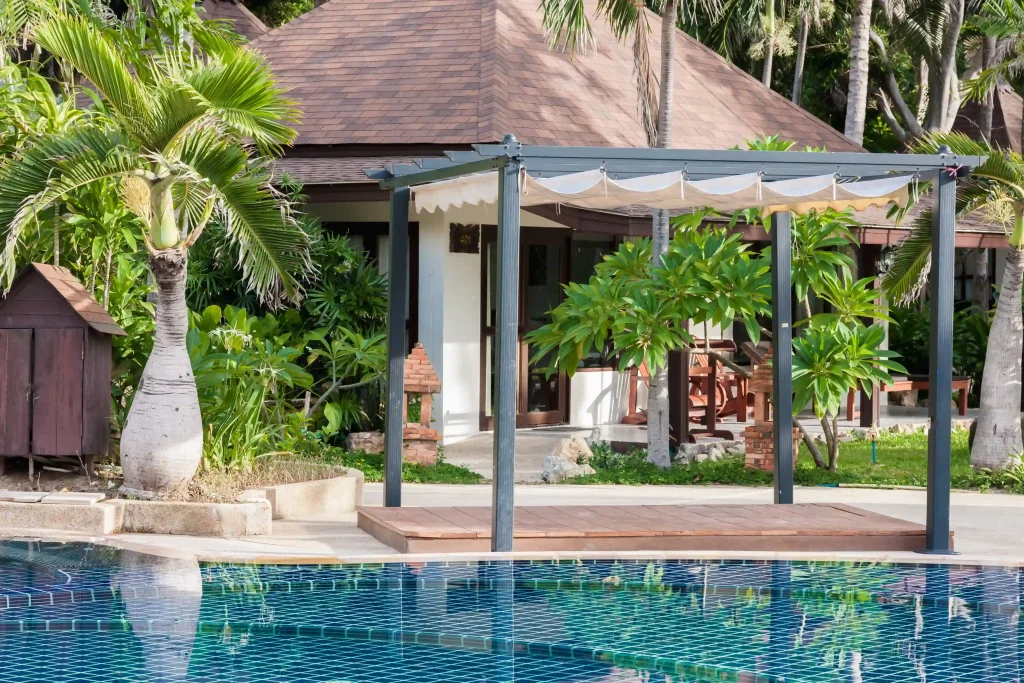
The seamless blending of internal and outdoor areas is one of the most important features of tropical architecture. Incorporating pergolas and other forms of shade architecture into the design of transitional spaces is a common practice among architects. Ensuring lifetime and harmony with the surroundings depends on selecting the best wood for pergola. Wood should compliment the building style and withstand moisture, insects, and rot as well.
The Role of Wood in Tropical Architecture
For centuries, tropical architecture has relied mostly on wood because of its adaptability and natural appeal. However, not all kinds of wood are suitable for coastal and humid environments. Natural resistance to rot and termites makes hardwoods such as teak, ipe, and balau among the preferred options. These species work especially well for exterior uses, including cladding, decks, and pergolas.
Finding wood for tropical construction mostly relies on sustainability. Responsibly grown timber, recognized by groups like the Forest Stewardship Council (FSC), is becoming more and more important to many designers and architects. Because they minimize waste and provide more strength and durability, engineered wood products—such as glulam and cross-laminated timber—are also becoming more and more popular.
Advanced Composite Materials for Tropical Conditions
Although classic wood is still a great choice, modern innovations in material science have brought composites with better durability and maintenance than natural materials. Fiber-reinforced composites, such as carbon fiber and fiberglass panels, are finding more and more applications in tropical architecture due to their resistance to UV deterioration and dampness. For shade systems, facades, and roofing projects, these materials provide a durable yet lightweight solution.
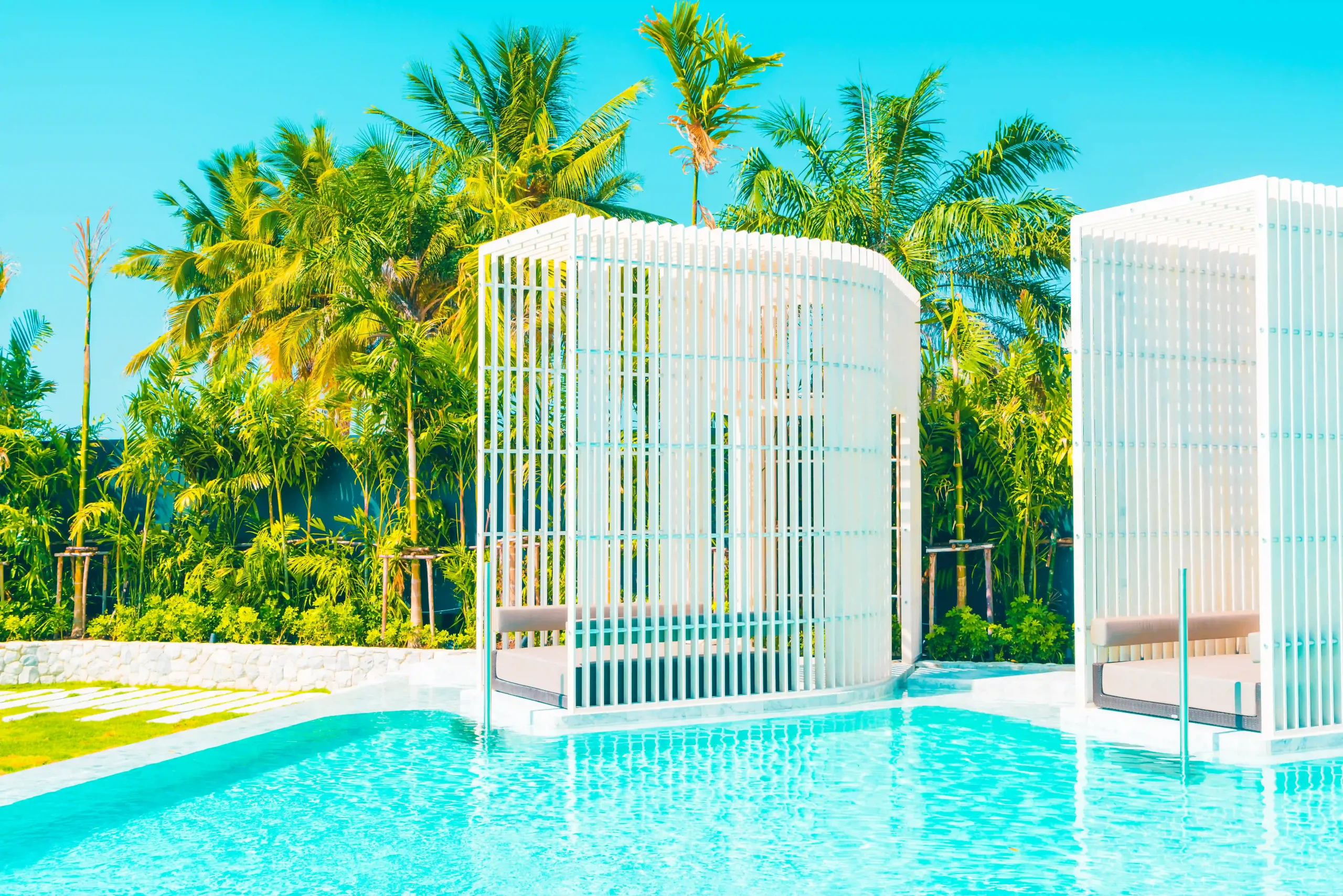
Wood-plastic composites (WPCs) are also becoming a sustainable substitute for conventional lumber. Made from plastic and recycled wood fibers, WPCs offer the visual appeal of wood without the susceptibility to warping, termites, and warping. For exterior cladding and decking, architects choose these materials to guarantee longevity in tropical conditions.
Concrete Innovations in Sustainable Tropical Design
Although concrete is a basic building element in tropical design, its high carbon footprint raises environmental issues. Recent developments in carbon-neutral and bio-based concrete solutions help to solve these problems.
One such breakthrough is self-healing concrete, which is enhanced by water-activated bacterial agents. In humid areas, where fissures in traditional concrete could cause water intrusion and structural damage, this material significantly reduces maintenance.
Using geopolymer concrete—which substitutes industrial waste like fly ash and slag for Portland cement—is another rising trend. Perfect for tropical areas, this alternative lowers emissions while preserving durability. Prefabricated construction also uses lightweight aerated concrete, which offers excellent moisture resistance and thermal insulation.
Natural Stone and Its Adaptability in Coastal Environments
Because of its durability and resistance to erosion and salty air, stone has long been a preferred building material in tropical regions. Common flooring, facades, and landscaping materials are basalt, limestone, and coral stone. Their natural porosity helps control humidity and temperature, hence maintaining cool interior conditions.
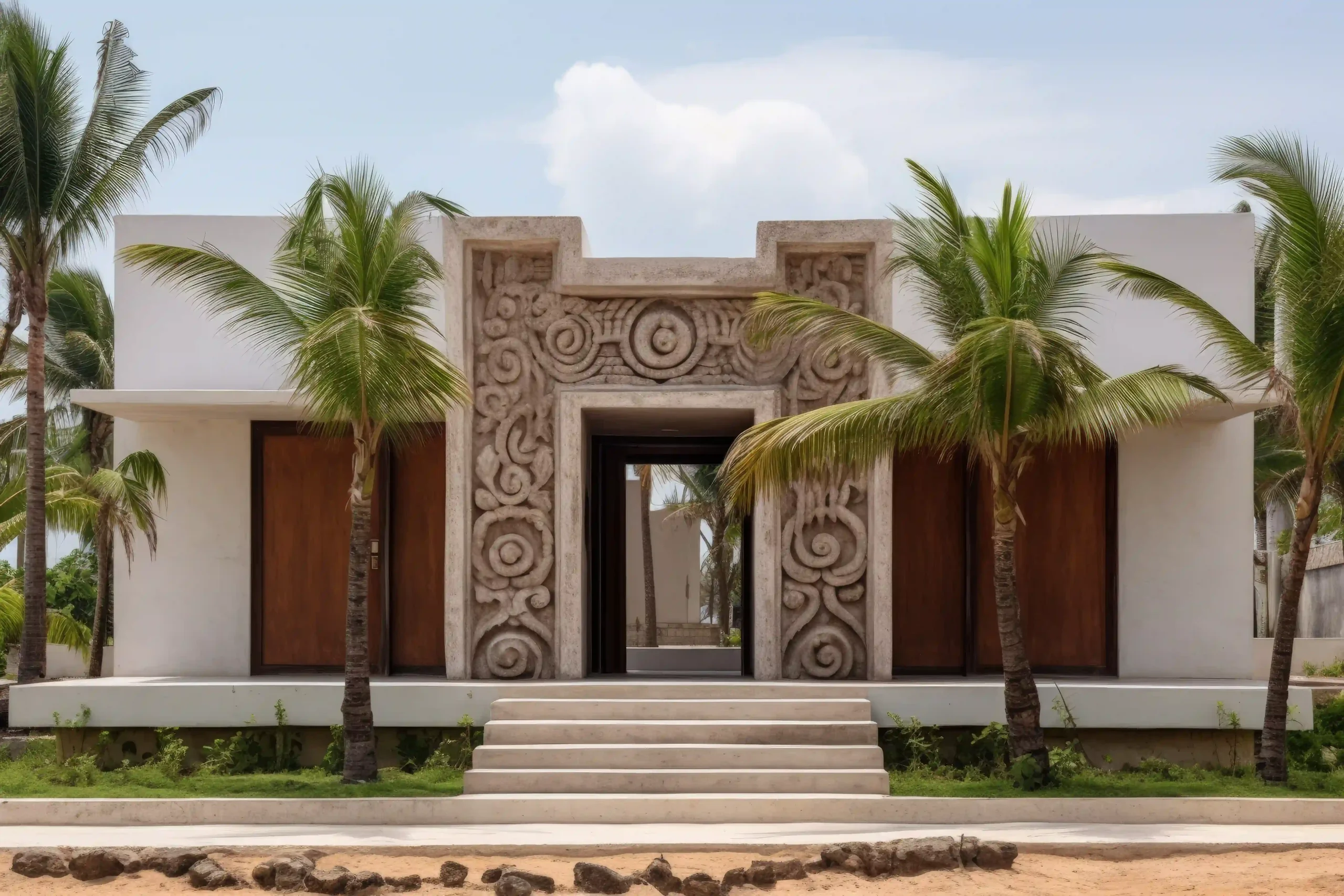
Stone that is sustainably sourced is in greater demand, with architects giving locally produced materials top priority in order to reduce emissions related to transportation. Using reclaimed stone from demolition sites adds even more to a circular economy in construction.
Bamboo: A Fast-Growing Sustainable Alternative
In tropical architecture, bamboo is becoming known as a workable substitute for traditional wood. The high strength-to-weight ratio of this rapidly renewable material makes it suitable for structural applications. Everything from flooring and roofing to whole building frames uses treated bamboo poles.
Laminated bamboo panels, which improve durability while preserving the natural look of the material, are being tested by tropical-oriented architects. Bamboo is an eco-friendly material that can lessen the impact of building projects on the environment due to its carbon sequestration properties.
Smart Glass and Climate-Responsive Facades
In tropical architecture, incorporating passive cooling methods is essential to reduce dependency on air conditioning. Architects can now manage solar gain and heat transmission like never before using smart glass technologies. Based on temperature and light intensity, electrochromic and thermochromic glass can alter transparency, thus maximizing energy efficiency.
In tropical regions, parametric design concepts are also influencing facade innovations. Inspired by biomimicry, dynamic shading systems react to environmental variables, therefore controlling natural light and airflow. These kinetic facades provide a visually appealing aspect to buildings and help to lower overheating.
Green Roofs and Living Walls: Integrating Nature into Urban Spaces
In tropical cities, where urban heat islands are a growing issue, the integration of greenery into design is very successful. Living walls and green rooftops naturally insulate, helping to enhance air quality and lower surface temperatures.
Thriving in these systems are tropical plant species including bromeliads, ferns, and philodendrons, therefore producing a rich, self-sustaining environment. Some projects also include aquaponic and hydroponics systems into their vertical gardens, therefore encouraging local food production in urban environments.
Biophilic Design: Merging Nature and Architecture
Strong emphasis in tropical architecture can be observed in the relationship between nature and built environments, which is something that biophilic design ideas emphasize. Strategic integration of large overhangs, open courtyards, and water features improves natural ventilation and cooling.
To complement the changing scenery, materials that age gracefully are purposefully utilized, such as corroded metal and worn wood. Architects that give natural elements and sensory experiences top priority build environments that respect the underlying ecology and support well-being.
The Future of Sustainable Tropical Architecture
Tropical architecture is always evolving to meet the requirement for ecological, visually attractive, and resilient materials. The choice of building materials changes as climate change becomes more severe to handle rising sea levels, higher temperatures, and frequent storms.
Emerging technologies have enormous potential for tropical building moving forward, such as 3D-printed biodegradable materials and algae-based bioplastics. These developments will help to define the next generation of environmentally conscious buildings together with traditional knowledge and local architectural skills.
Working in tropical and coastal settings, architects and designers have an opportunity to rethink sustainability by utilizing material creativity. Carefully choosing materials that strike a mix of durability, environmental impact, and beauty can help to build buildings that not only survive but also improve the natural and cultural settings they surround.
Although the path toward a more sustainable built environment is ongoing, tropical architecture may keep inspiring and flourishing in tune with nature by means of careful design and ethical material sourcing.
