


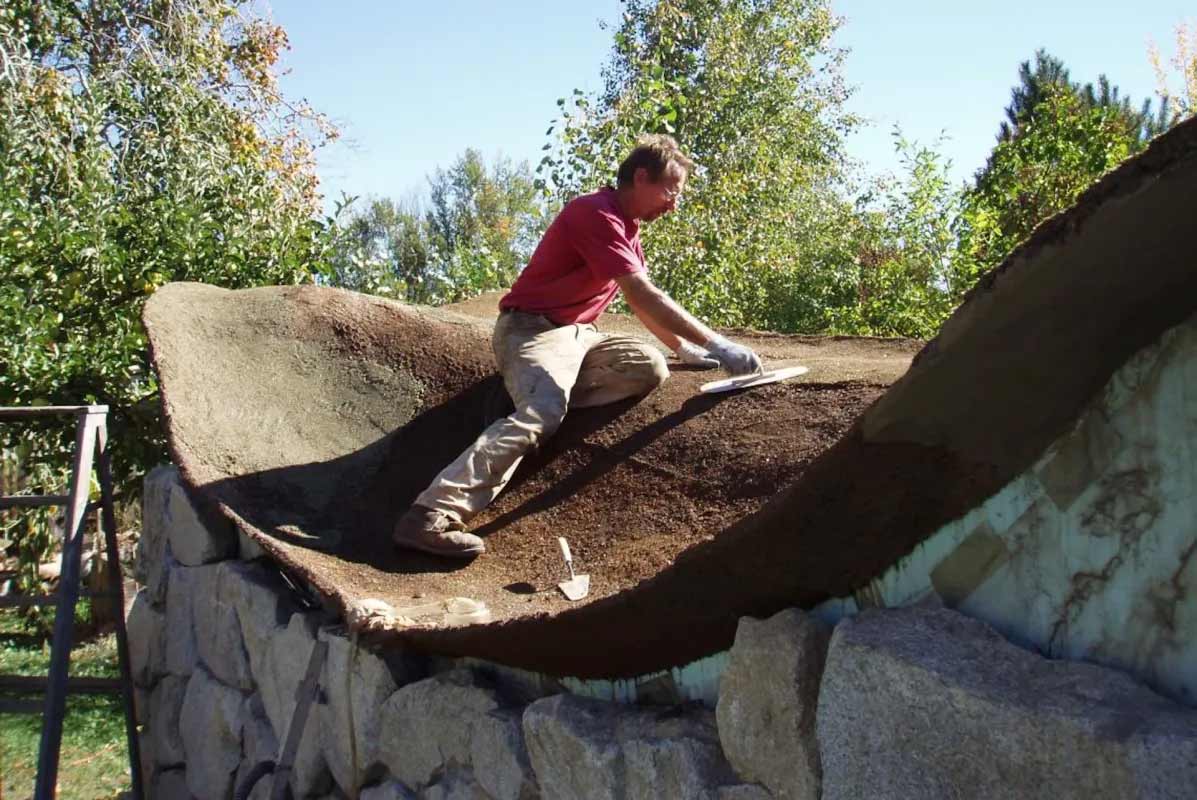
Researchers and engineers are always devising new and innovative solutions to mitigate the environmental impact of conventional building materials like concrete. Many novel materials are emerging to improve upon current environmental problems as a result of the search for carbon-neutral and sustainable alternatives to current construction processes. Concrete has been the material most frequently targeted in attempts to develop an equivalent or replace it. Ferrock is among the innovative materials that have shown enormous potential as a substitute for cement.
As a better-performing, carbon-negative alternative to cement, ferrock is a building material made primarily of recycled materials. It is intended to replace or minimise the use of concrete. The primary raw materials used in its production are recycled steel dust and ground-up glass silica. Iron carbonate, which solidifies into ferrock, is created when carbon dioxide and steel particles combine. The complex nature of ferrock as a building material is explored in this article, which also looks at its composition, manufacturing method, uses in the construction industry, and benefits over other conventional building materials.
What is Ferrock?

Ferrock stands out as a viable option in the search for environmentally friendly building materials since it provides both structural stability and advantages for the environment. Derived from the words “ferrum” (iron) and “rock,” ferrock is a cutting-edge, environmentally friendly substitute for traditional concrete. The material, created by David Stone in the early 2000s, is a pioneer in the green building movement because of its remarkable sustainability and durability.
Ferrock is made of recycled steel dust, a byproduct of the steel industry, mixed with other materials like lime powder, metakaolin, water, and silica from ground-up glass. When the mixture is poured and reacts with carbon dioxide, it produces an odourless, colourless gas and iron carbonate. That is what binds carbon dioxide from the atmosphere into the ferrock after it solidifies. When silica and steel dust are combined with water, ferrous rock, and a high carbon dioxide concentration, the mixture undergoes a hardening process.
Compared to concrete manufactured with regular Portland cement, ferrock has five times the strength. In comparison to traditional concrete, it is also more flexible and able to tolerate higher compression pressures brought on by seismic forces. When it comes to agreements of alluring elements, chronic scepticism, and waste usage, ferrock is a more potent and beneficial eco-friendly binding material. In the process of forming concrete, it functions as a kind of binding element that can completely replace cement.
Composition and Fabrication

Approximately 95% of ferrock is composed of recycled materials. Ferrock can be used as a green alternative to standard concrete, which is mainly made of cement. Iron dust is the main component of ferrock; it is a waste product of iron mills that is carelessly improved with iron from this powder and then dumped in the trash instead of being recycled. To produce an iron carbonate mould that forms ferrock while it dries, the essential component, iron oxide, reacts chemically with carbon dioxide during the curing process to become iron carbonate, accompanied by an element-di-group of chemical components and rust. This reaction improves the material’s strength and durability, in addition to sequestering carbon.
Because ferrock is more flexible and stronger than regular Portland cement, it can be used in seismically active regions. Compared to typical concrete production, the fabrication method uses less energy because it only requires mixing the components, shaping the material into the appropriate shape, and letting it dry naturally. Furthermore, these elements are combined during the process to produce a compound that has qualities comparable to traditional concrete but has a far smaller environmental impact.
Applications

From structural parts to ornamental components, ferrock’s adaptability is applied in a wide range of architectural and construction contexts. It is authorised to use ferrock for walls, paving, walkways, breakwaters, and slabs. It has been used worldwide in sustainable building projects and architectural exhibits. Its application in sculptures, art installations, pavements, and building facades are notable instances of how versatile and malleable it is and how it can be used to create environmentally responsible constructions. Furthermore, its strength, affordability, and environmentally friendly qualities make it a competitive alternative to conventional concrete and have the potential to completely transform the building sector, especially as the need for sustainable construction materials rises.
Because of its great compressive strength and anti-corrosion properties, it is perfect for infrastructure applications where structural integrity is crucial. Projects like seawalls, retaining walls, and bridges are included. But with the current rate of building growth, these materials will probably continue to be easily accessible. Additionally, ferrock is a preferred material for shielding sensitive equipment in the defence and telecommunications industries due to its capacity to absorb and reduce electromagnetic radiation.
Benefits

Because of its increased strength and corrosion resistance, ferrock has a longer lifespan and may be used in a variety of structural applications with less regular maintenance required. Its compressive strength and resistance to environmental variables facilitate its adaptability in construction projects. The moldability of ferrock is a significant advantage. In contrast to conventional concrete, ferrock makes it easier for architects and designers to mold and experiment with unique forms and shapes for their sculptures. This adaptability expands building projects’ aesthetically pleasing potential and makes it possible to create original and creative designs.
Additionally, ferrock has significant ecological benefits. Compared to conventional concrete, less energy is used in the creation of ferrock. The overarching objective of minimising the environmental impact of construction materials is in line with this reduction in energy usage. Ferrock actively absorbs and retains CO2 during its curing process, in contrast to conventional concrete, which releases carbon dioxide during manufacture. Its environmentally favourable profile is improved by this carbonation procedure, which makes it a sustainable option for building. Furthermore, ferrock is a cost-effective material due to its durability and low maintenance needs, even after initial manufacturing expenditures.

In conclusion, as a strong substitute for conventional building materials, ferrock is a monument to inventiveness in sustainable construction. Its ability to change the architectural landscape and address environmental problems is highlighted by its distinctive composition, manufacturing process, and variety of applications.
The material is essential to halting global warming because of its remarkable strength, affordability, and capacity to sequester carbon dioxide. A more resilient and environmentally friendly future is achieved by using recycled steel dust as the main ingredient in cement manufacture, hence eliminating the need for energy-intensive operations.
