




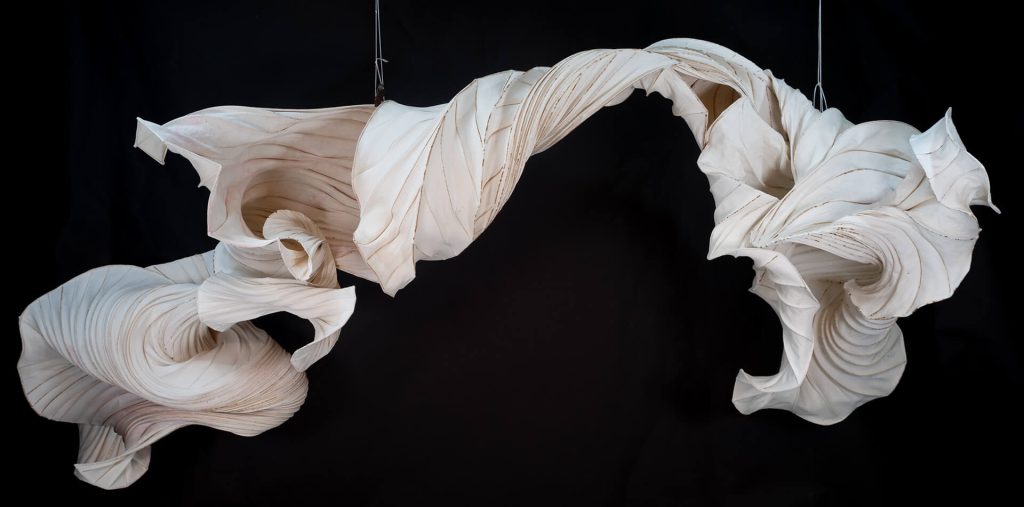
Peter Gentenaar’s paper artwork looks like it comes from dreams; magnificent flowers or animals from another dimension. The materials have harmonious and delicate colors.

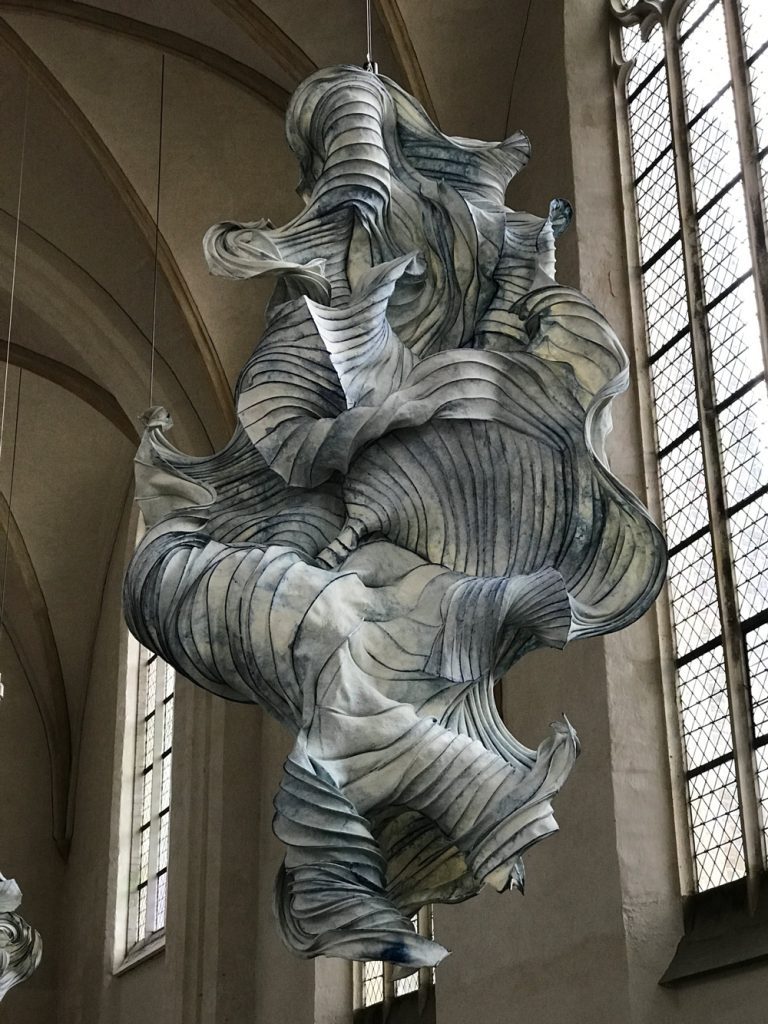
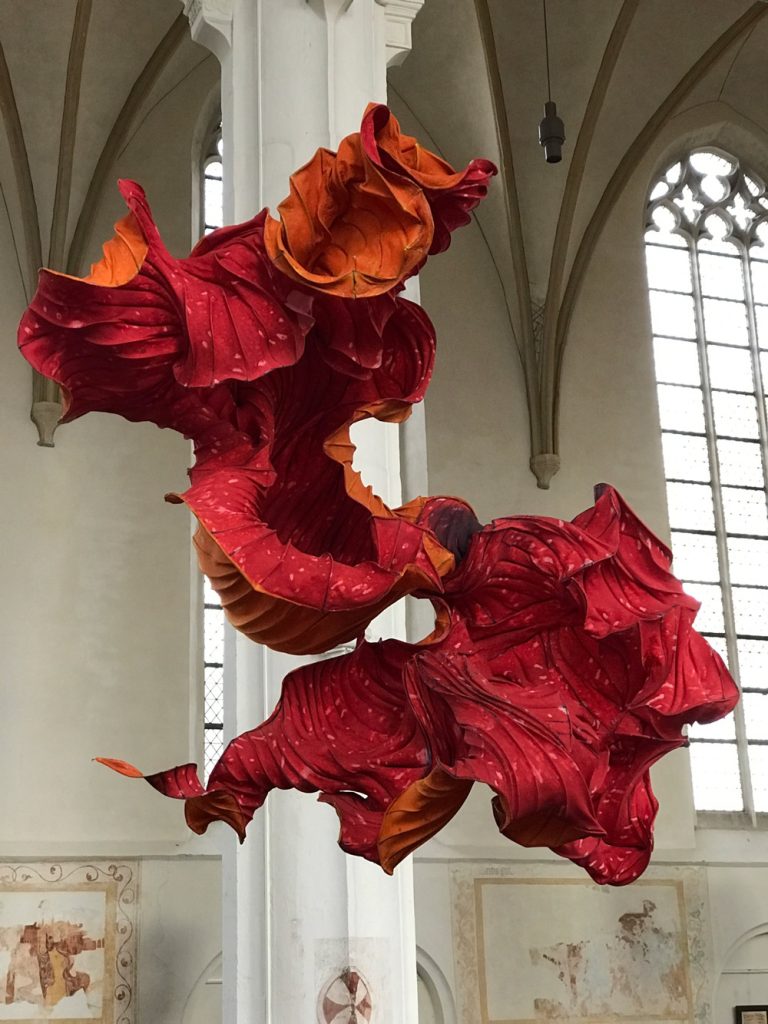
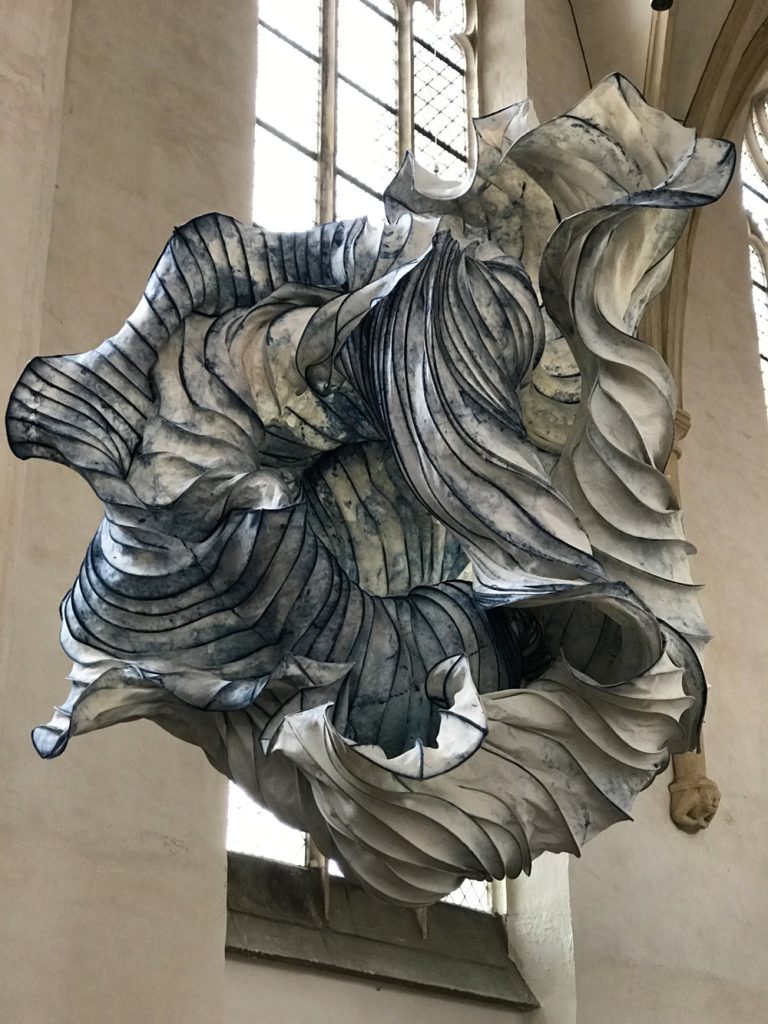
Gentenaar attended California College of Arts, where he earned an MFA in printing. Later, Gentenaar established his own studio in the Netherlands, where he primarily worked with lithography. He chose to create his own paper with the assistance of Jo Persoon of the Royal Dutch Paper Factory, KNP. Jo Persoon showed Gentenaar how to create paper pulp using beaters and how to make paper with vacuum systems that sucked water out of the pulp. Gentenaar’s laboratory beater was incapable of processing lengthy fibers, so he created his own beater.
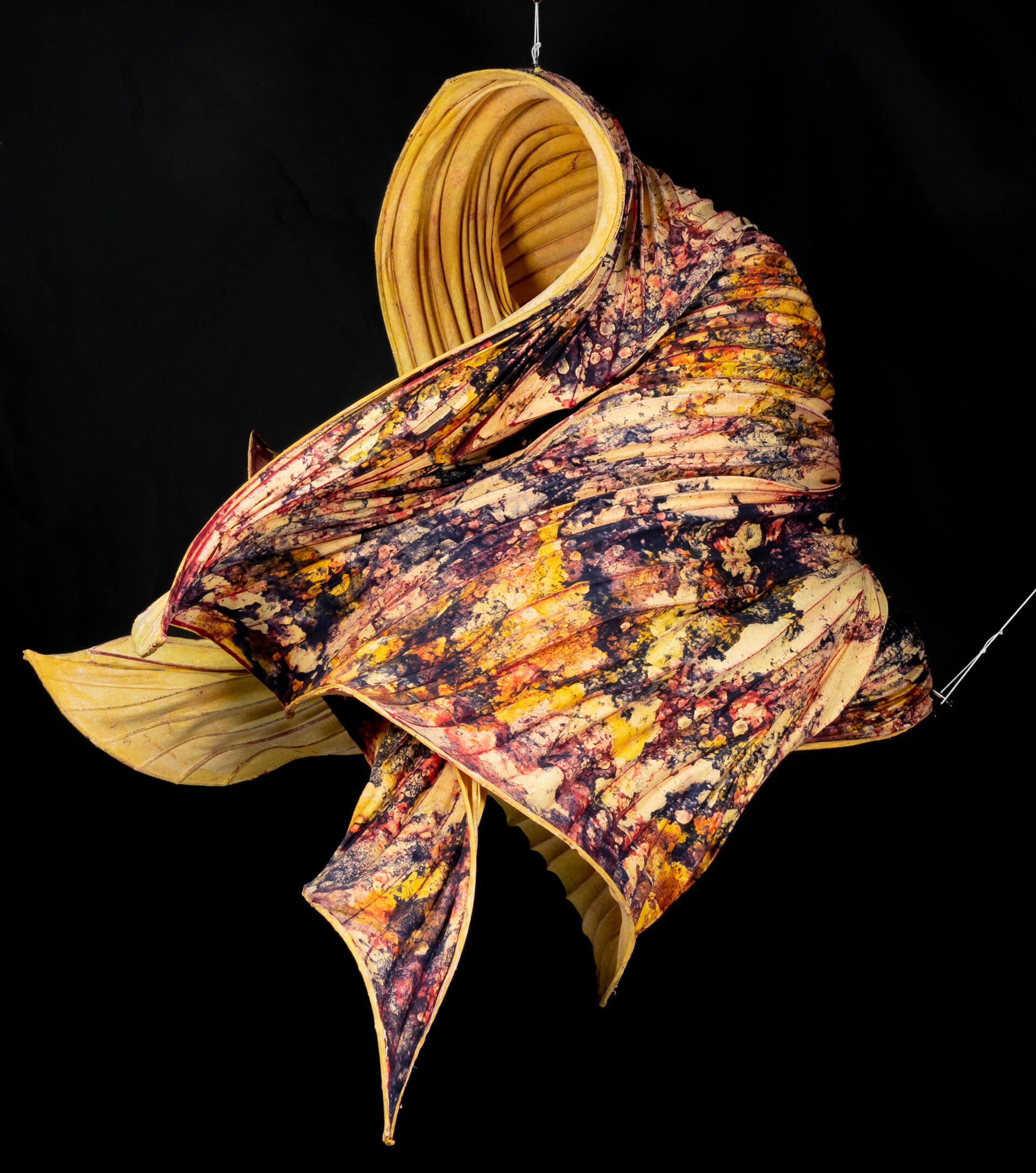
A paper sheet is thin and sturdy, similar to a leaf, and is strengthened with very tiny bamboo ribs. During the drying phase of Gentenaar’s paper sculpture, a remarkable play of forces develops as a result of Gentenaar’s long-term hammering of pulp. The paper shrinks significantly, up to 40%, and the force of this stresses the non-shrinking bamboo framework, exactly like a leaf does as it dries.
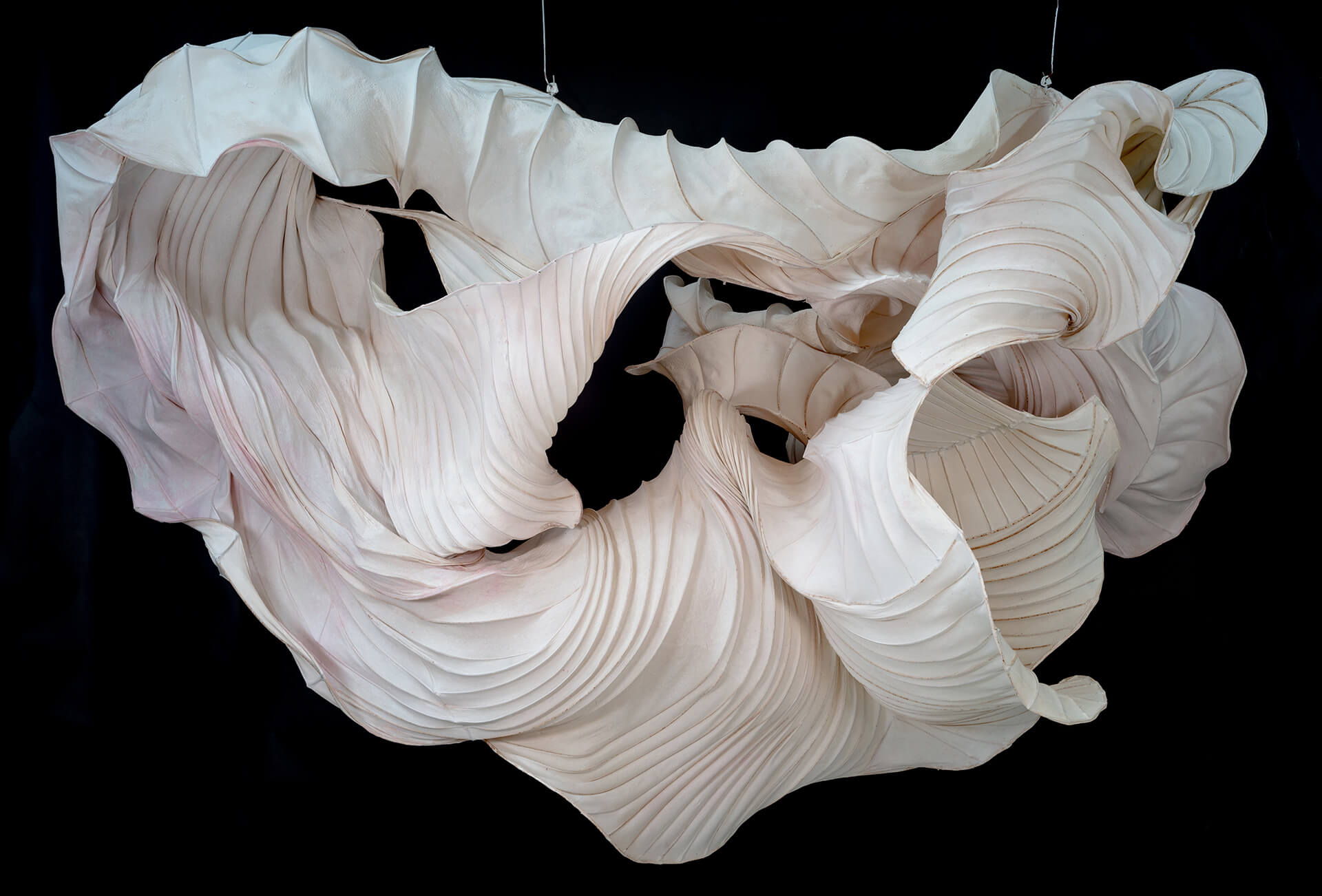
Gentenaar’s sculptures begin as flat, 2-dimensional sheets of colorful pulp on his vacuum table. The shapes in his art are generated by the simultaneous drying and shrinking of pulp. The material’s simplicity as a carrier, color, texture, and shape all in one makes working with it amazing and straightforward.
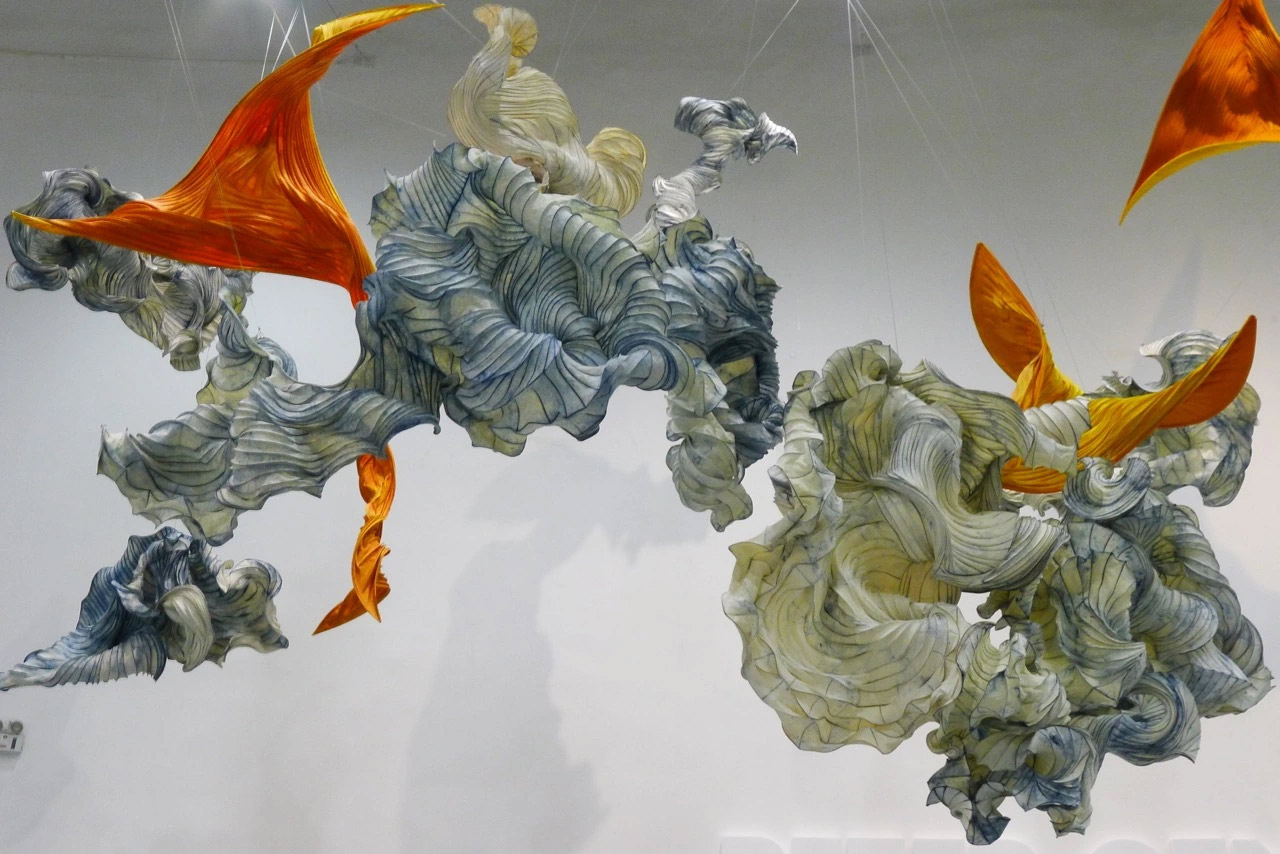
Gentenaar initiated the Holland Paper Biennial in Museum Rijswijk and CODA, Apeldoorn, to bring paper art to the public’s attention and to be inspired by fellow paper artists. Pat and Gentenaar collaborated with friends to create seven booklets containing the first seven Biennials: Tactile Paper (1996), Paper & Fire (1998), Paper & Water (2000), Timeless Paper (2002), Spirit of Paper (2004), Paper Takes Flight (2006), and Pure Paper (2007). (2008).
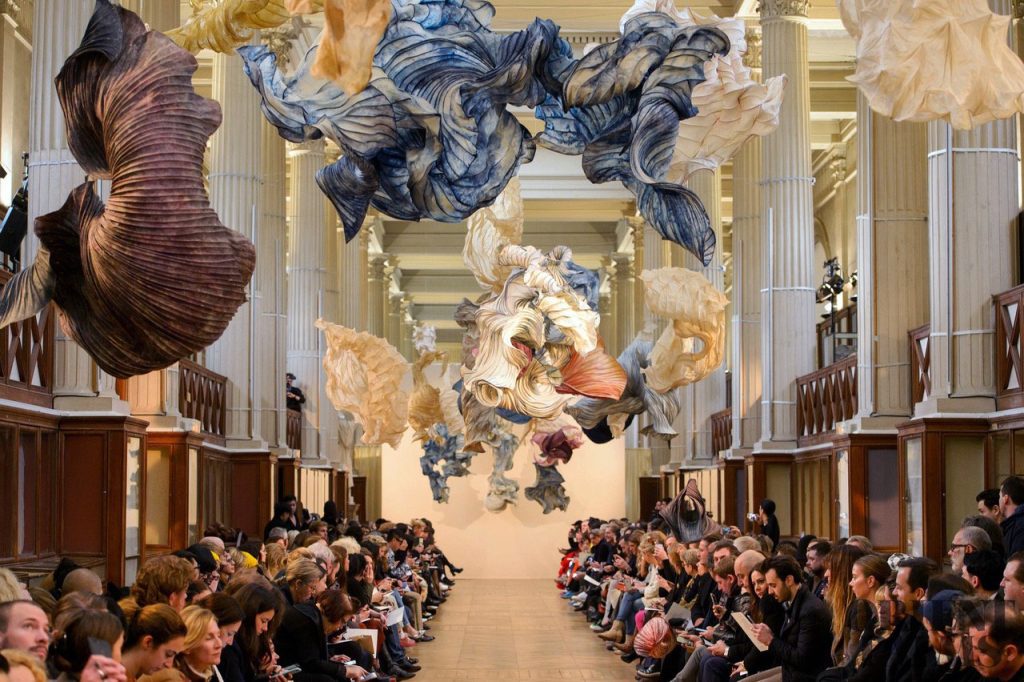
Peter Gentenaar’s artworks were also exhibited at Iris van Herpen’s “Ludi Naturae” show in Paris, where they were described as a “floating installation that blossoms around the garments as the models move.”

