

The oldest teaching and practicing architect in the world, Peter Eisenman, is one of the most contentious figures in the field of architecture and is known for his architectural work and theoretical essays. Eisenman has continually challenged the classical understanding of form in architecture and is keenly interested in investigating form-meaning relationships. His interdisciplinary approach is focused on the center where philosophy and architecture converge.
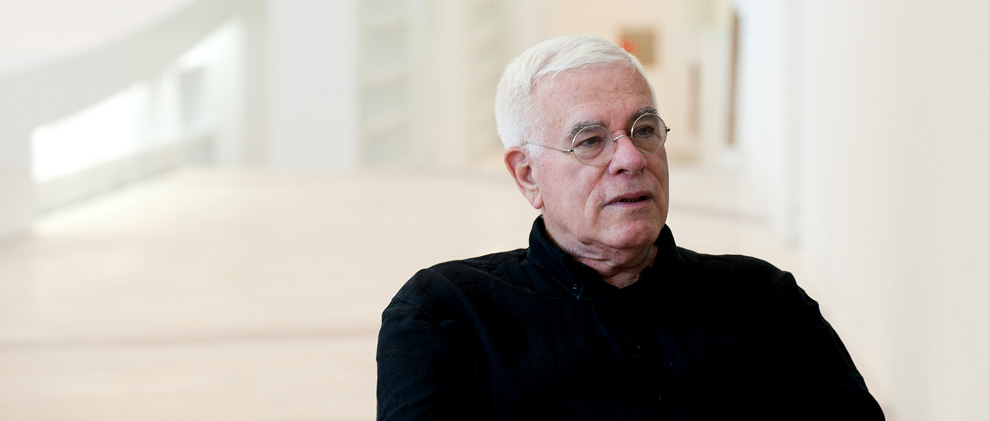
He holds a Bachelor of Architecture degree from Cornell University and received his Master of Science in Architecture degree from Columbia University in 1960. Then, he studied at the University of Cambridge, where he earned an M.A. in 1962 and a Ph.D. in 1963.
Eisenman has taught at Ohio State, Harvard, Princeton, and Cambridge throughout his academic career. He previously held the position of The Cooper Union’s Irwin S. Chanin Associate Professor of Architecture in New York City. The Formal Basis of Modern Architecture (Lars Müller Publishers, 2006) Written Into the Void: Selected Writings, 1990-2004 (Yale University and Press, 2007) and Ten Canonical Buildings, 1950-2000 (Rizzoli, 2008), and Lateness (Princeton University and Press, 2020) are among his most recent volumes as an author.
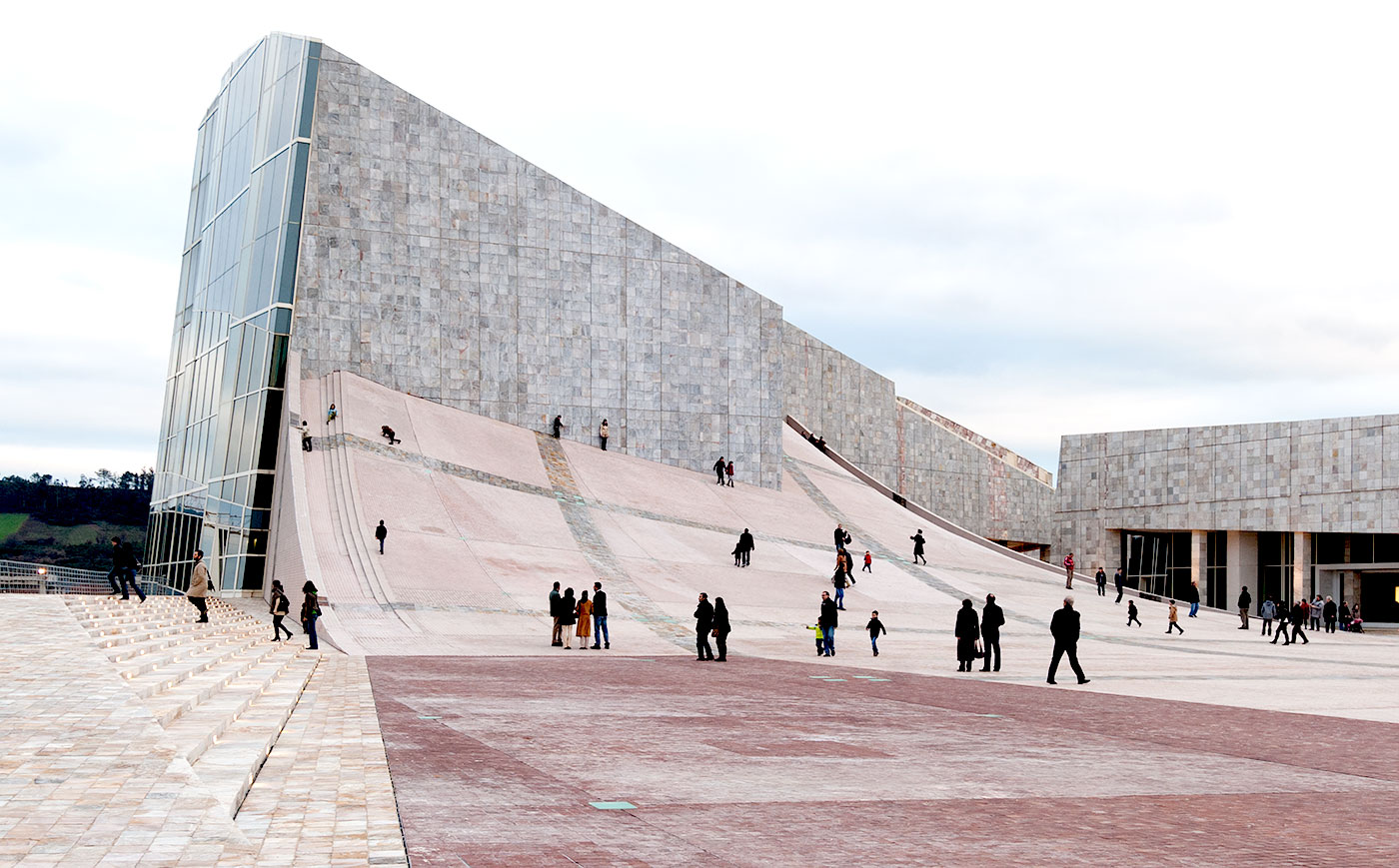
In conjunction with academic achievements, an outstanding career in design and professional practice is demonstrated by several creative private homes, facilities for educational institutions, and large-scale housing and urban design projects, many of which made him a remarkable award-winning designer.
Colin Rowe taught me how to see what was not present in a building. Rowe did not want me to describe what I could actually see. Rather, Rowe wanted me to see what ideas were implied by what was physically present.
Peter Eisenman
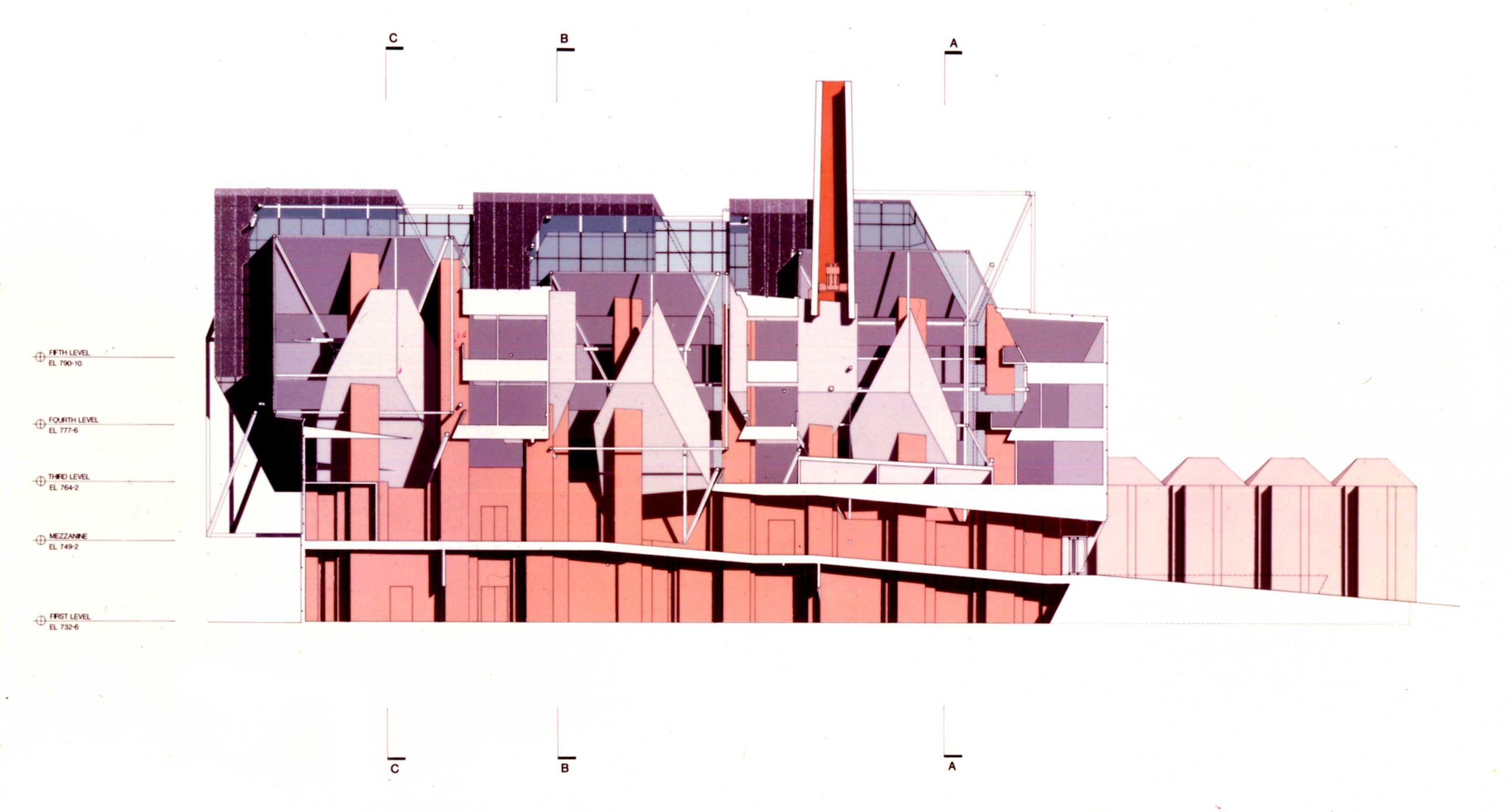
Earlier in his career, Peter Eisenman was highly influenced by his mentor, Colin Rowe. His new sources of inspiration then included theorists like Derrida, Deleuze, Foucault, and Lacan. According to Stefan Corbo, Eisenman’s interest in Jacques Derrida’s philosophy led him to consider architecture as a text, and the development of Eisenman’s de-composition theory was the subject of deconstruction. He delved into the conceivable possibilities for a heterodox architecture, starting with his research on Palladio, intending to make it a critical endeavor.
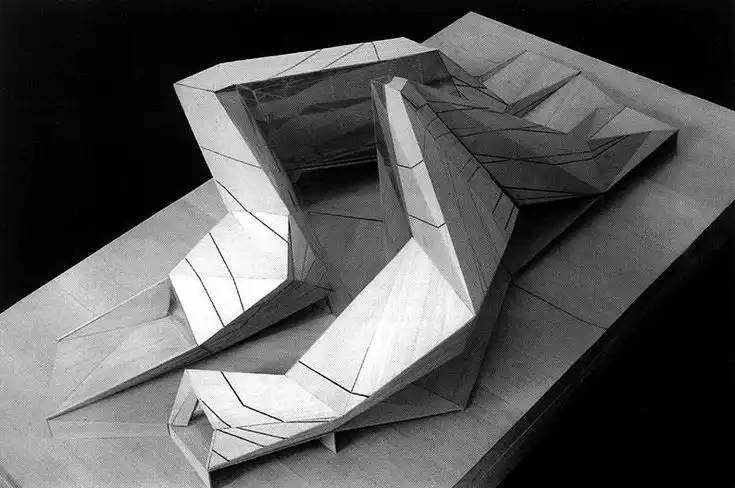
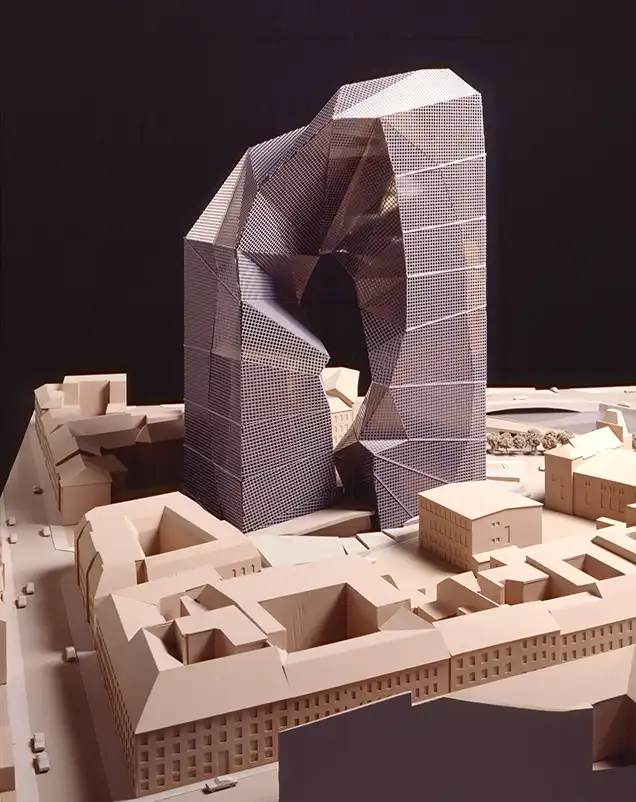
Corbo also states that Einsenman’s fascination with Jacques Derrida’s 1967 book of Grammatology allowed him to investigate new linguistic possibilities and deepen the concept of textual architecture. It was not until the 1980s that he started investigating the potential for non-Euclidean geometries in his designs. Eisenman developed his approach by investigating discontinuities and displacements.
House I

Location: Princeton, New Jersey
Year: 1967-1968
At the intersection of Rosedale Road and Galbreath Drive in Princeton, New Jersey, the project was constructed as an addition to the already-existing home of Mr. and Mrs. Bernard Barenholtz and called, therefore, also the Barenholtz Pavilion. It functions as a private gallery where antique toys are displayed and studied. Eisenman regards House I as an endeavor to rationally conceptualize and comprehend the physical world, possibly without regard to its form or meaning.
The spaces within the houses are formed as solid and void. Each void is the presence of the absence. Corbo argues that the House Series can be regarded as his initial attempt to materialize the worries and fears Peter Eisenman encountered during his theoretical research.
University Art Museum
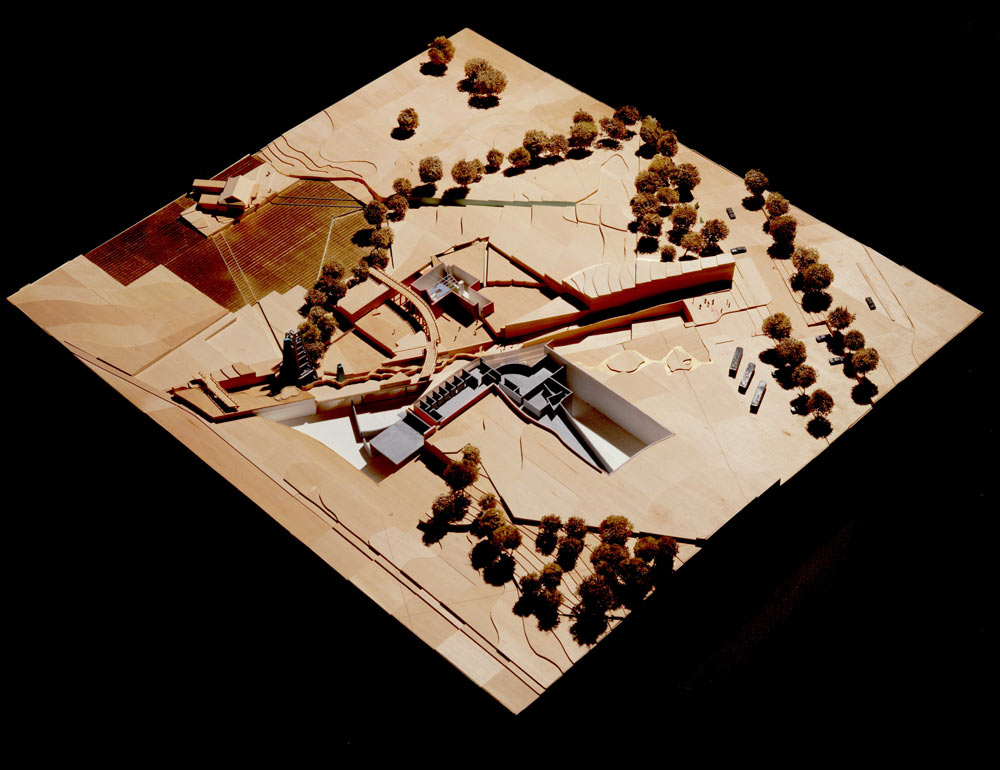
Location: Long Beach, California
Year: 1986
Composed of four central exhibition spaces: an audiovisual installation gallery, a black-box theater/ auditorium, a cafe, a conference space, a library, administrative offices, and storage areas, and a series of exterior terraced sculpture courtyards, the building is located in arboretum which is to comprise of a 2-acre artificial pond botanical gardens, terraces, and seating areas.
Where a raised walkway unites the northern and southern parts of the arboretum, the experimental design made it likely for the museum to be discovered and observed as if one were an archaeologist. The form of the building is depicted by the overlapping registration of multiple maps: the ranch that once stood on the location and the altering patterns of fault lines, rivers, channels, and the shoreline.
Parc de La Villette
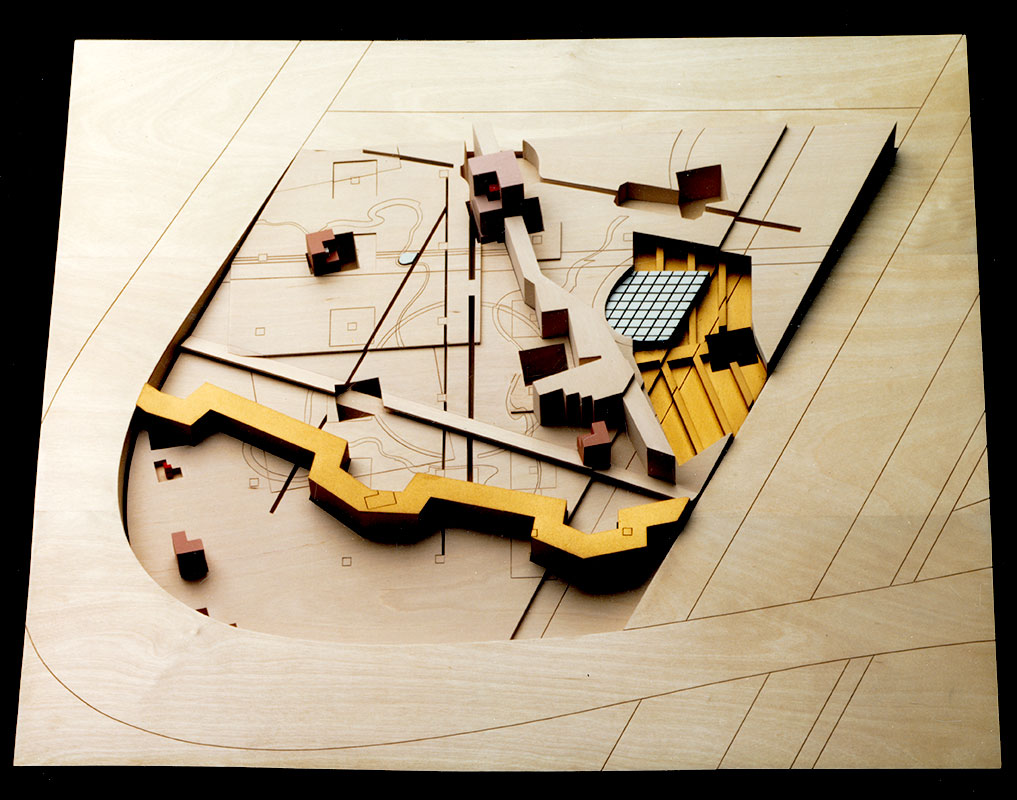
Location: Paris, France
Year: 1987
The theoretical foundations of this project were developed in collaboration with French philosopher Jacques Derrida. A Deconstructivist architectural work, according to Eisenman, Parc de La Villette is a study of time and is about analogies. Questioning the representation of architecture, it is claimed that the resulting vagueness of place and time implies that architecture is not limited to the present but echoes, conveying an ever-growing range of references. Chora, a term borrowed from Plato’s Timaeus that generally translates to “place” or “space,” was the name of the concept of the study. Brendon Wocke claims that the study of Parc de La Villette can be interpreted as forming a dialogue on the aesthetics of space.
Wexner Center in Ohio
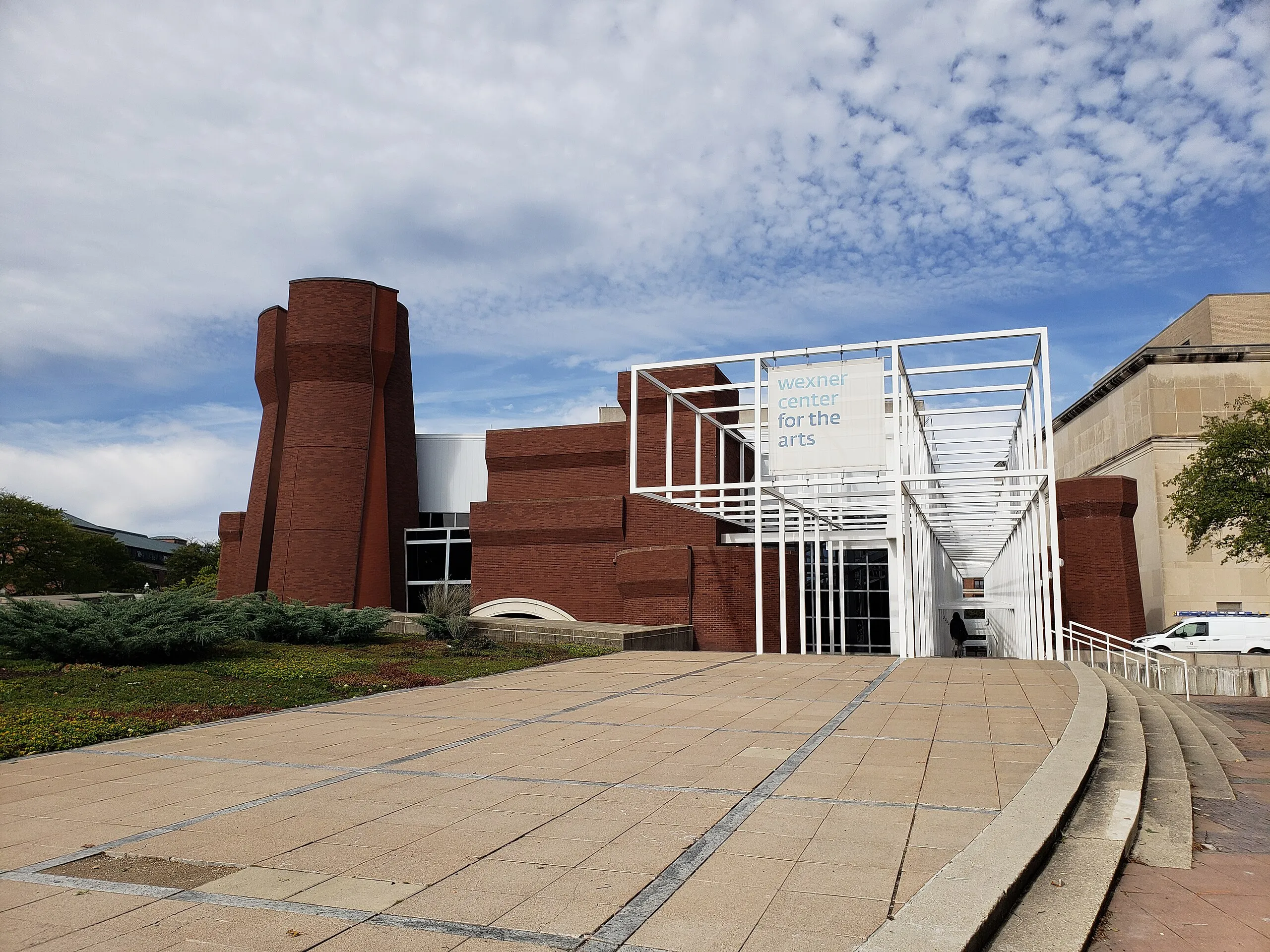
Location: Columbus, Ohio
Year: 1983-1989
Attracted a lot of attention in 1983; the Wexner Center for the Arts was the outcome of an Ohio State University competition, which was achieved by the partnership of Peter Eisenman, Richard Trott, and landscape architect Laurie Olin. The Wexner Center is located on the eastern end of the Ohio State University campus, where the city street grid makes an unexplored pedestrian approach to the university.
The Wexner Center was assembled to equip an interdisciplinary setting for exploring and exhibiting modern art. The Ohio State Army is implied by the brick walls and towers resembling castles, where prominent exterior grid “scaffolding” extends the entire building length.
Memorial to the Murdered Jews of Europe (2005)
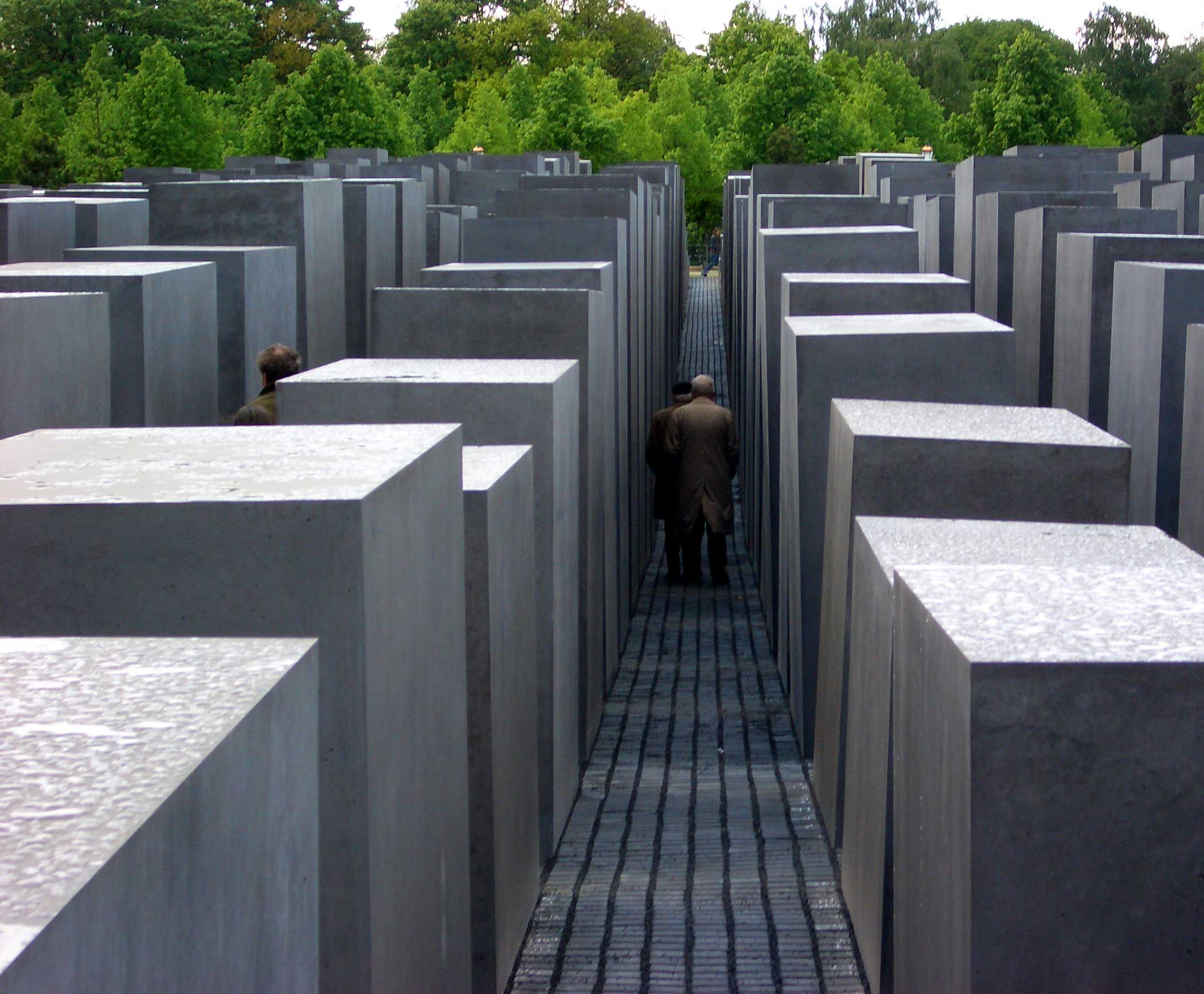
Location: Berlin, Germany
Year: 1997 (competition), 1998-2003 (design), 2003-2005 (construction)
“In this monument, there is no goal, no end, no working one’s way in or out. The duration of an individual’s experience of it grants no further understanding since understanding the Holocaust is impossible. The time of the monument, its duration from top surface to ground, is disjoined from the time of experience. In this context, there is no nostalgia, no memory of the past, only the living memory of the individual experience.” Said Peter Eisenman.
Constituting nearly 3.000 stelae, concrete pillars arranged across the undulating ground, the Memorial to the Murdered Jews of Europe, which is also known as the Holocaust Memorial, is located in Berlin. Indeterminate spaces emerge from an alteration in the grid structure. Designed as an architectural memorial, the project is dedicated to Jewish victims of Nazi genocide in World War II. Micheal Hays argues that one of the themes is “abstraction, as a way of critical memory that is a kind of memory which is reflective and contemplative.”
Hamid Hassanzadeh Interviews Peter Eisenman
In PA Talks 14, Hamid Hassanzadeh sits down with Peter Eisenman for an insightful discussion on deconstructivism, architectural theory, and the evolving role of design in contemporary practice. Eisenman reflects on his groundbreaking projects, his intellectual influences, and the philosophical underpinnings of his work, offering a deep dive into his unique approach to architecture.
The conversation also touches on the challenges of pedagogy, the relationship between language and form, and the continued relevance of deconstruction in today’s architectural discourse. This interview provides an invaluable glimpse into the mind of one of the most influential architects and theorists of our time. Watch the full interview here.
Lateness (POINT: Essays on Architecture)
In Lateness, Peter Eisenman explores the concept of architectural time, challenging the traditional notions of progress and historical continuity. Drawing inspiration from the works of philosophers like Theodor Adorno and architects such as Aldo Rossi, Eisenman examines how lateness—an aesthetic and intellectual condition—can create new forms of architectural meaning. Through in-depth analyses of key projects, the book argues for an architecture that resists temporal linearity, instead embracing ambiguity, fragmentation, and critical delay. Lateness is an essential read for those interested in the intersections of philosophy, history, and architectural theory. Learn more about the book here.
Rewriting Alberti
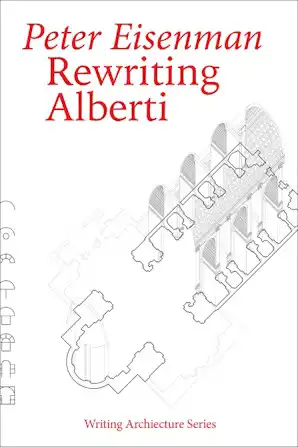
Peter Eisenman’s upcoming book, Rewriting Alberti: Writing Architecture, set to be released in September 2025, offers a profound reexamination of Leon Battista Alberti’s seminal texts through the lens of contemporary architectural theory. Published by MIT Press, the book challenges conventional interpretations of Alberti’s writings, engaging with deconstructivist thought and exploring the evolving relationship between language, design, and space.
Eisenman’s critical approach dissects Alberti’s influence on architectural discourse, questioning historical narratives and proposing new frameworks for understanding architectural authorship. As a key figure in deconstructivism, Eisenman continues his intellectual exploration, bridging Renaissance ideals with modern theoretical perspectives. Rewriting Alberti is an essential read for architects, theorists, and scholars eager to rethink the foundations of architectural thought. Learn more about the book here.
