


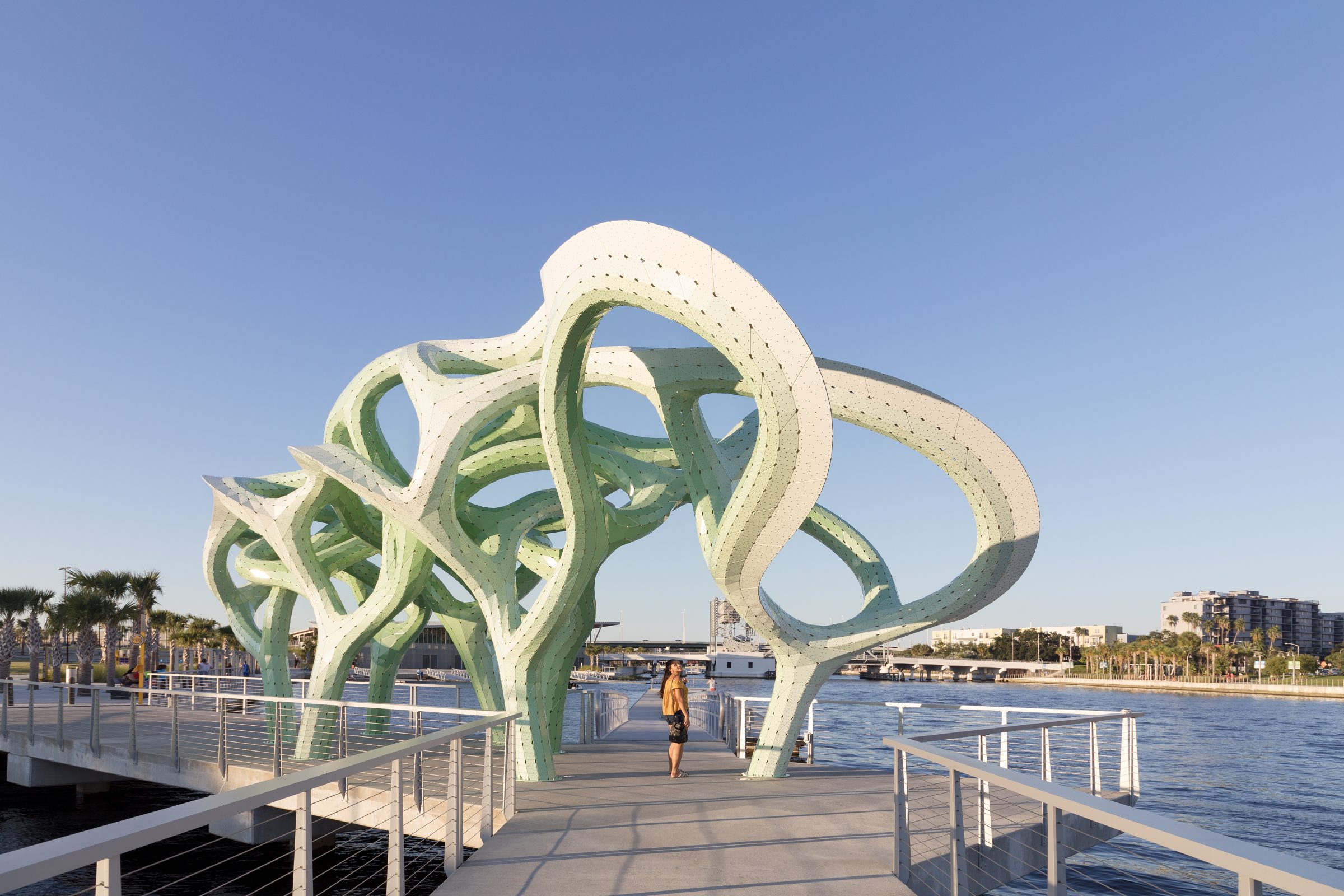
On July 16–17, 2022, Computational Design: NEXT 10, a two-day online conference, featured cutting-edge architects and designers from diverse disciplines. Thanks to the speakers and presenters who shared their advanced methods for delving deeply into architectural technology, the conference addressed the key issues in parametric and computational design. The collaboration between Parametric Architecture (PA) and DesignMorphine made it possible for students and young architects to have a deeper understanding of these subjects, which are becoming more interconnected. To register and access recordings of the complete Computational Design: NEXT 10 conference, click here.
Computational Design: NEXT is a futuristic event that explores the potential and opportunities of computational thinking to support a shift in perspective toward better solutions by taking a step back and evaluating all the existing tools and technologies.
Day 1
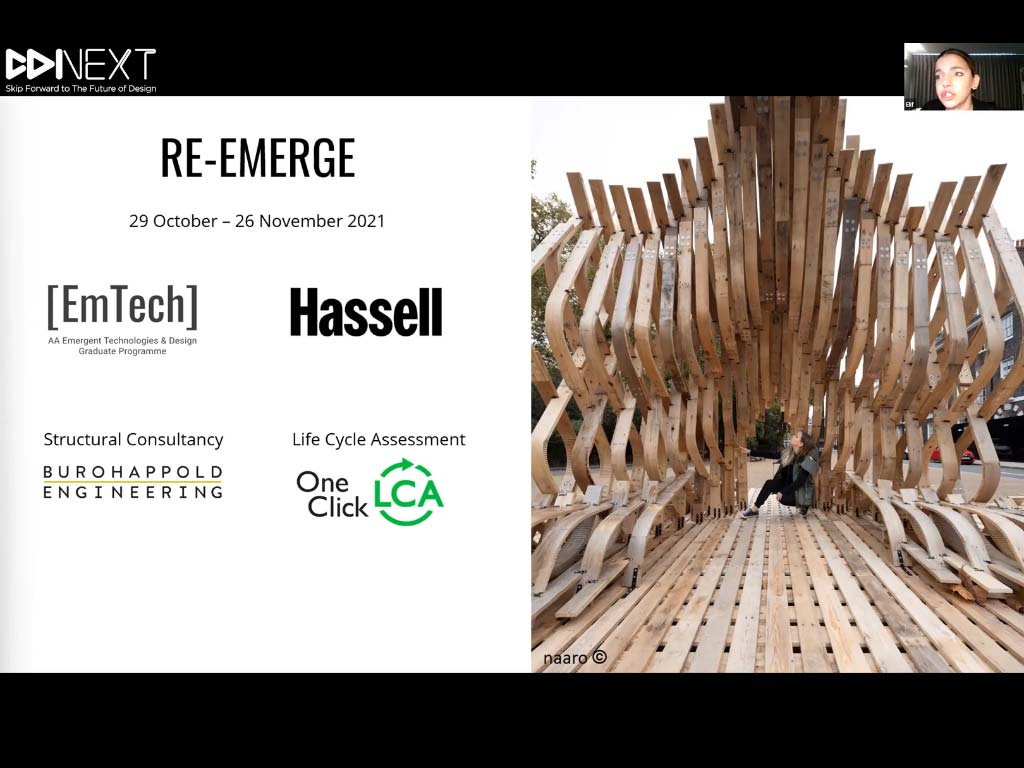
In the first place, Elif Erdine opened the event with an engaging lecture about emerging technologies and the approaches used in different contexts to deal with emerging problems. She highlighted the multifaceted nature of architecture and the necessity of devising methodologies based on architectural, ecological, urban, and material solutions. These methodologies must focus on computational workflows and software applications. Additionally, she provided the audience with the experimental design approach at EmTech. She discussed the physical material-based experiments that calibrated the computational workflows and helped redefine the tradition of craftsmanship. These experimentations are based on evolutionary processes of nature, evolving the architect’s role from delivering a single solution to designing the problem itself.
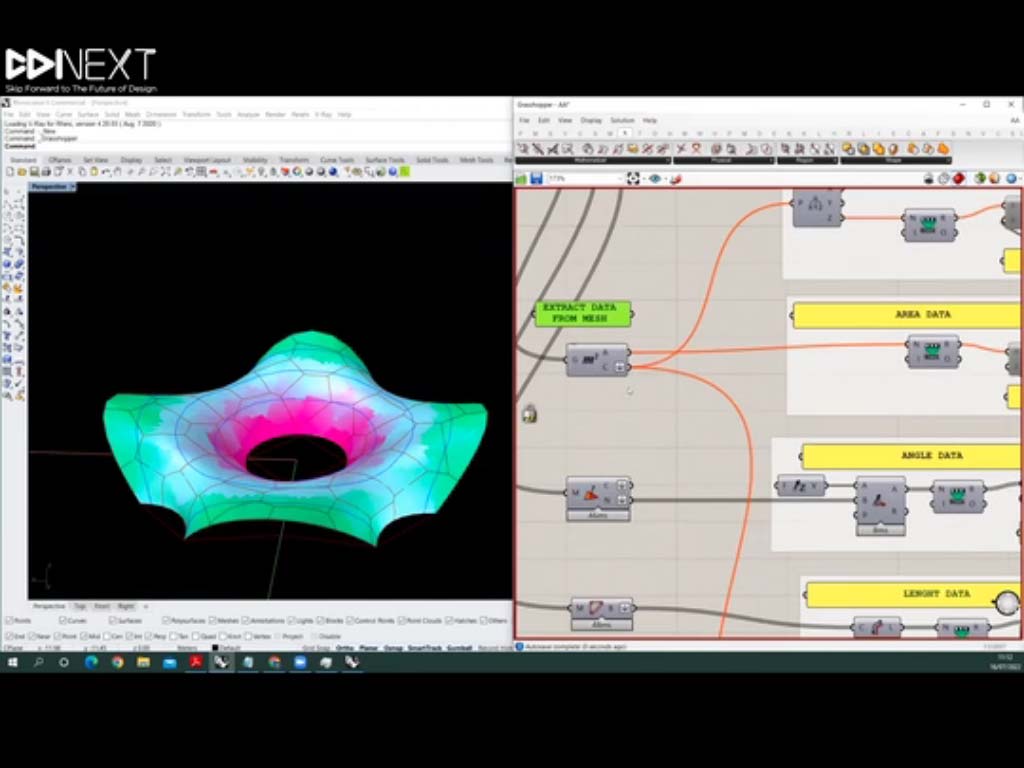
Starting with a brief presentation, Ignacio Revenga delivered a parametric design workflow using Rhino3D, Grasshopper3D, and some plugins like Weaverbird, Kangaroo Physics, Pufferfish, and Lunchbox. His design process consisted of defining the basic geometry, dividing the surface domain, applying perimeter conditions, and relaxing the mesh using kangaroo physics, data analysis, and visualization. The data included height, area, angle, length, and distance, which were reparametrized to be applied to the general geometry.
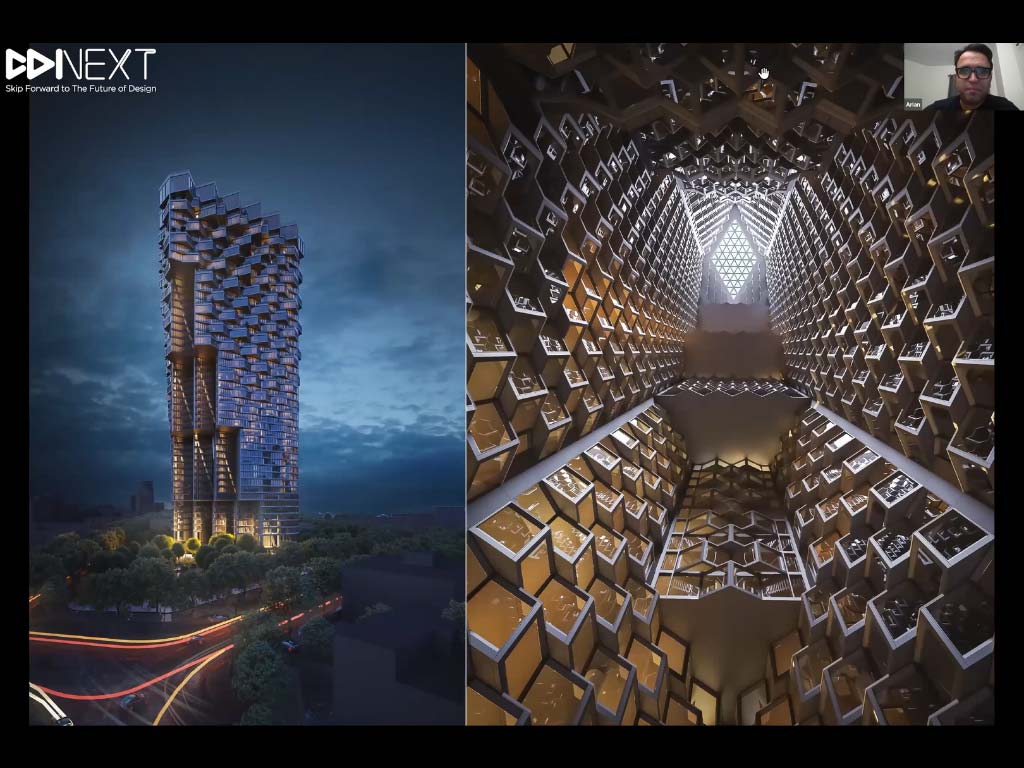
Then, Arian Hakimi continued by presenting a summary of his work at Zaha Hadid Architects. His lecture mainly focused on the bottom-up design methodology in search of holistic design systems. This cross-disciplinary approach is an evolutionary design method, ranging from large-scale high-rise buildings to small-scale fashion items and product designs. Later, he remarked on his passion for patterns and geometries and the importance of integrating geometrical aspects with this bottom-up methodology. Arian believes that each project consists of three phases of inspiration, perception, and component analysis within this perspective. So, he showcased the different number of outcomes we can witness through this approach.
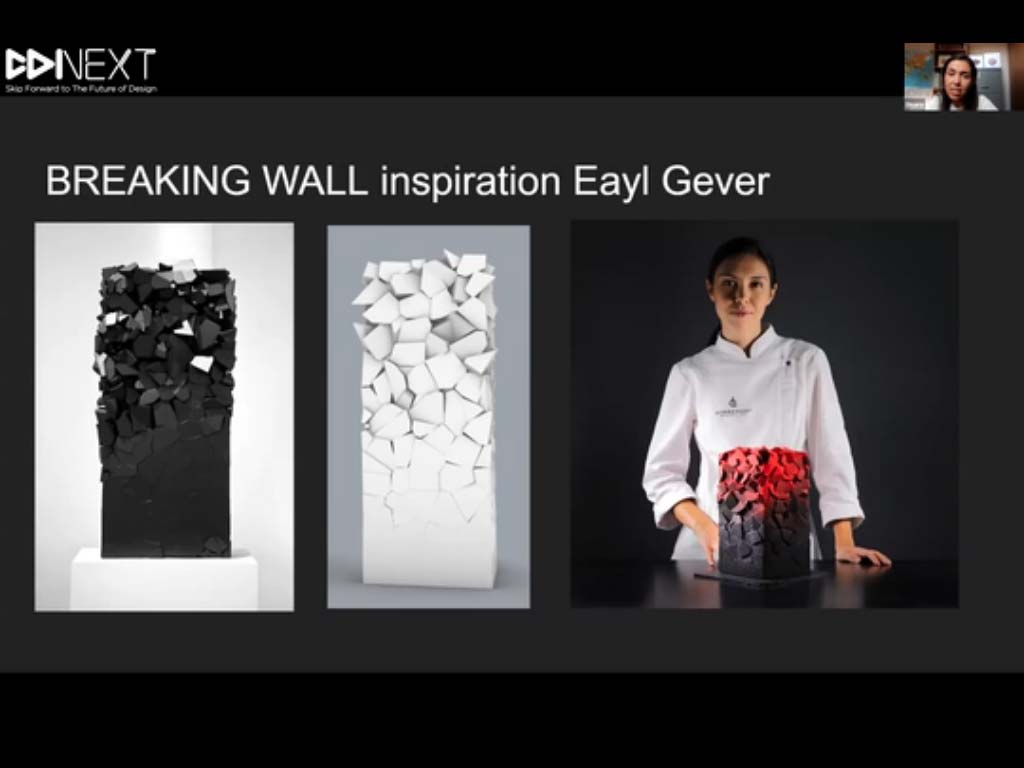
Later, Dinara Kasko, the renowned pastry chef, delivered an engaging presentation about her path from architecture to pastry. She related her journey of how she discovered her interest in baking and spent hours in the kitchen. Currently, she is designing edible design objects with custom geometrical molds. She addressed both the modeling and manufacturing phases of her unique molds and the challenges she faced during the process. She finally showcased many of her projects in which she had benefited from contemporary software tools like 3dsmax, Grasshopper3D, and Houdini and existing manufacturing tools like 3Dprinting technologies.
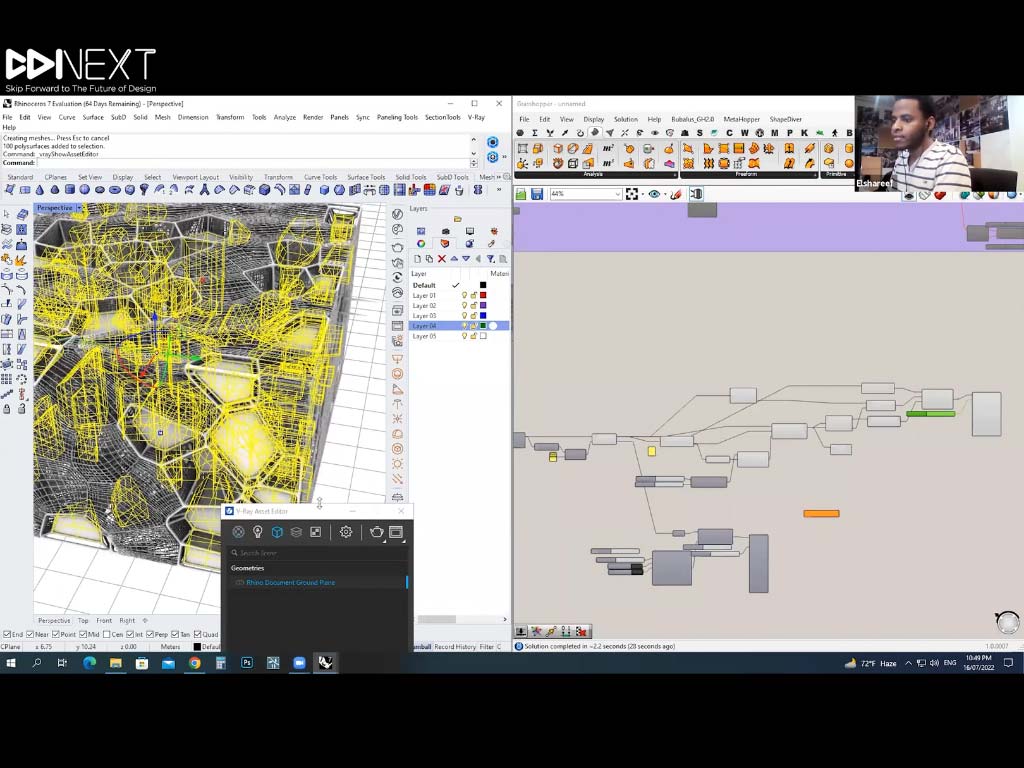
Elshareef Kabbashi provided a captivating workflow to create any desired shape using Grasshopper3D. First, he highlighted his experiences experimenting and exploring design with Rhino3D and Grasshopper3D. Then, he focused on his inspirations while creating concepts, furniture, and jewelry designs. His main approaches were based on SubD geometries and render engines like Keyshot and Vray.
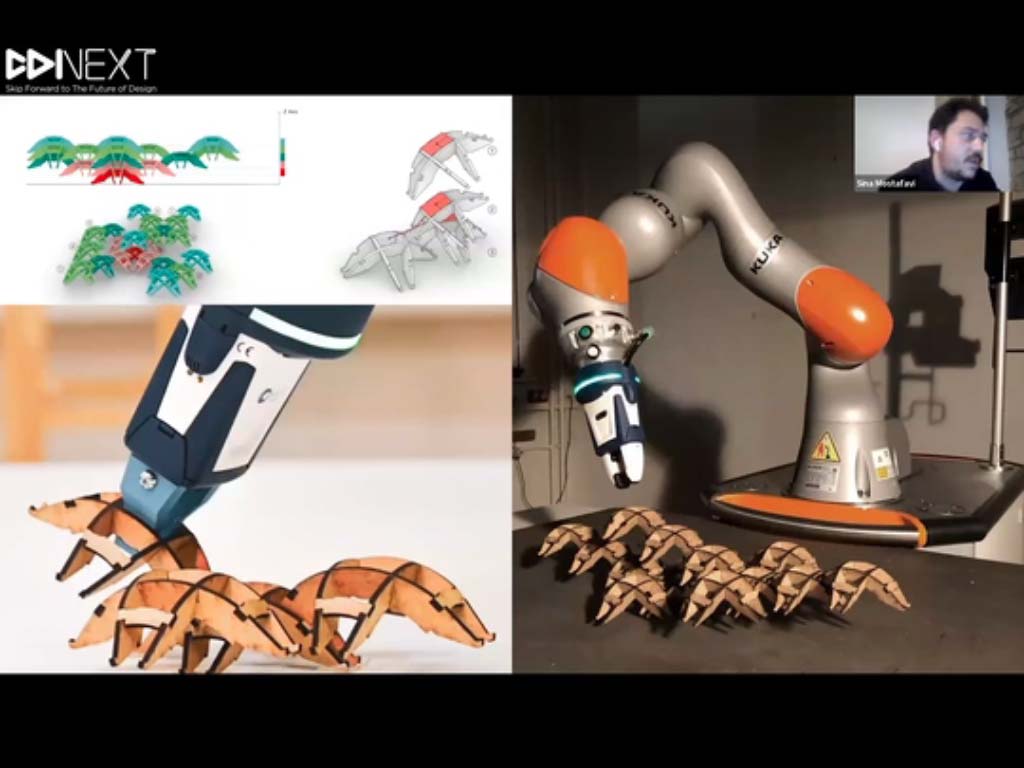
Finally, Sina Mostafavi’s fascinating lecture was about hybrid fabrication intelligence and architectural robotics. After addressing the context and background of his work, approach, and vision for future practice and pedagogy, he associated different performance criteria with geometric variations. Learning from the history of craft and construction, he highlighted the importance of subtractive and additive methods in materializing architecture. Additionally, he questioned the way emerging technologies like architectural robotics, new multi-materiality, computation, artificial intelligence, and additive manufacturing are transforming the experience and practice of architecture, construction, making, fabrication, and craft.
Day 2
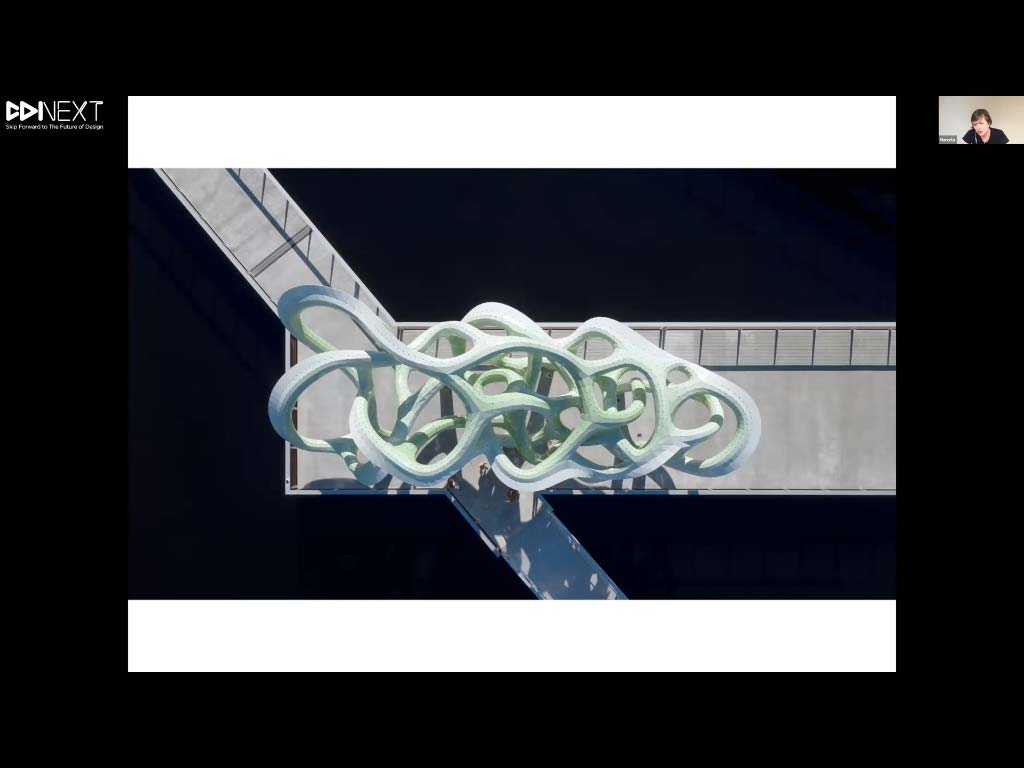
The second day started with Marcela Spadaro’s presentation on architectural photography and creating images, videos, and gifs of contemporary, innovative architecture and design around the world, which differ in scale, scope, and the degree of innovation they embrace. Her work encompasses a wide range of small objects like furniture and sculptures to large buildings. She enlightened the audience about the technical issues of sunlight, shadow, and color to highlight the aesthetics and main characteristics of projects. She also underlined the significance of suitable timing to activate different design aspects.
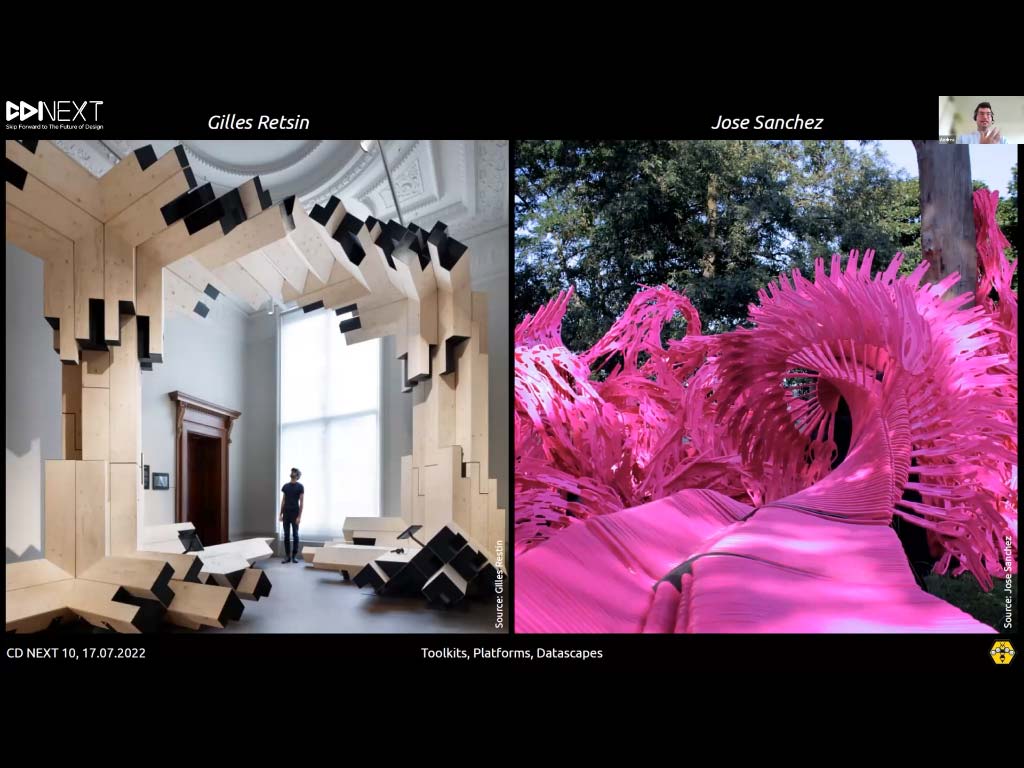
The conference was carried on by Andrea Rossi’s lecture on toolkits, platforms, and data scapes in architecture. He mainly focused on the Grasshopper3D plugin Wasp as a model for open-source thinking in architecture. Taking a very long step back and looking at architecture in its most fundamental principles, he clarified two main paradigms constructing architecture from discrete parts combined in a set of sequences or building architecture as a single continuous mass. He explained that most of the projects of architects today look like a set of constant surfaces, although containing discrete parts in themselves. Later, he mentioned the necessity to increase efficiency and create new design possibilities through extreme customization of final products, non-reversibility of material use processes, and low adaptability of final products.
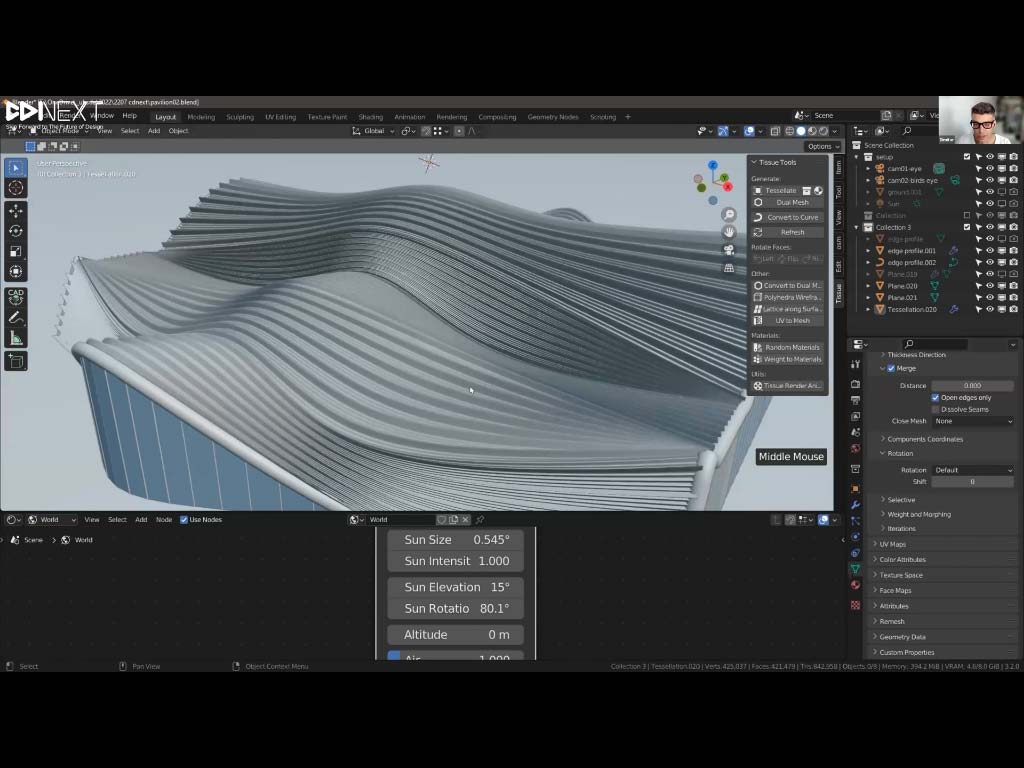
Dimitar Pouchnikov provided an advanced architectural design within Blender as a general 3Dmodeling program. After giving a good overview of Blender features like poly modeling, non-destructive modifiers, animation, rigging, video editing, VFX, rendering with Cycles and Eevee, extensive community and addons, and geometry nodes, he made a comprehensive comparison of Autodesk Maya, Grasshopper3D, Rhino3D, and Blender and showcased of his recent projects. Then, he delved straight into the Blender to deliver a workflow based on the Tissue addon. Finally, he provided the primary resources where participants can learn Blender efficiently and practically and the communities where they can ask questions.
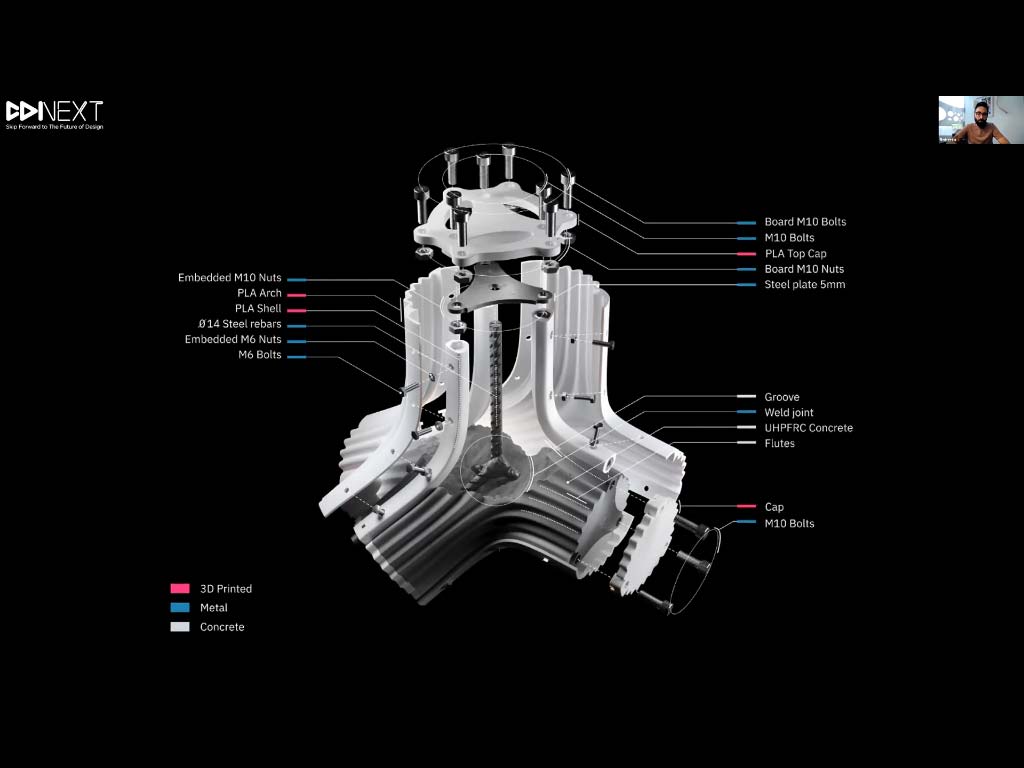
Roberto Naboni focused on the topic of enabling sustainable architecture with cyber-physical design. As an experimental architect, he illustrated some of his work with the “Create” research group over the last couple of years. His emphasis is on computational design and architectural robotics techniques and working with various materials. Therefore, he discussed material-driven investigations with high uses of natural resources, experimental construction, and motivation.
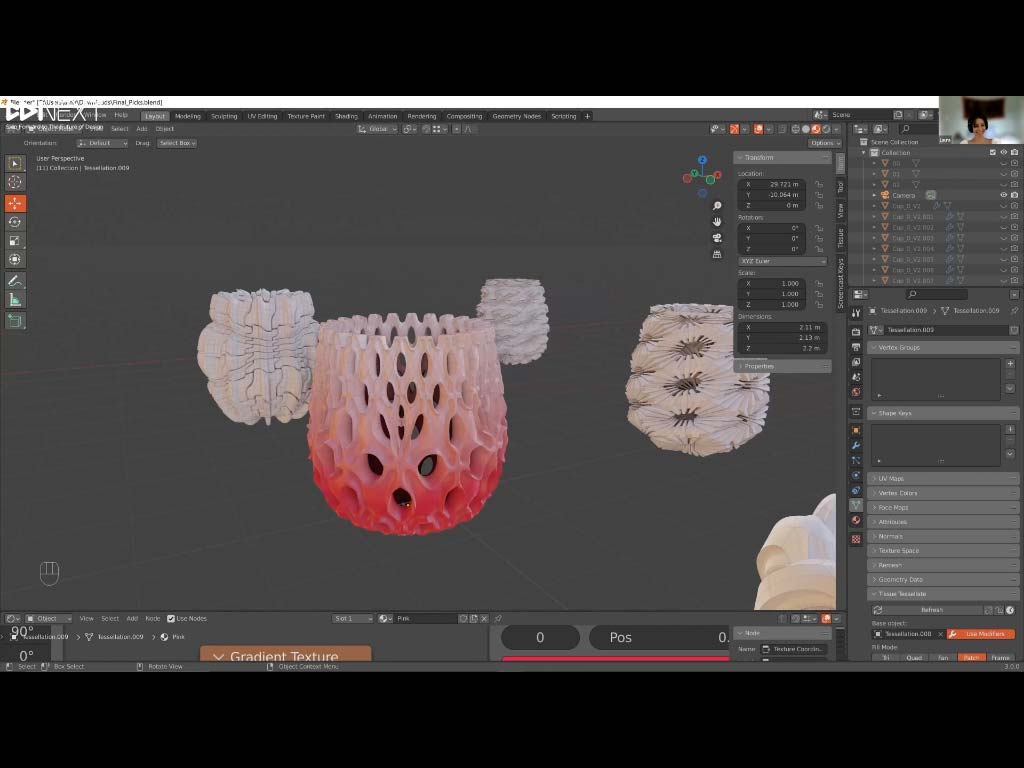
As a research collaborator at the MIT lab, Laura Maria Gonzalez dived into the topic of using computational tools to generate novel forms with novel qualities in the material. After highlighting the potential of Blender software for conceptual beginnings, she talked about the importance of materials in these explorations. She mentioned the significant impact of buildings on carbon emissions and the necessity to turn them into living organisms as materials. By adding functionalities to these materials, they can sense and respond to specific incentives. Finally, she delivered a Blender workflow to generate different modules for these living things.
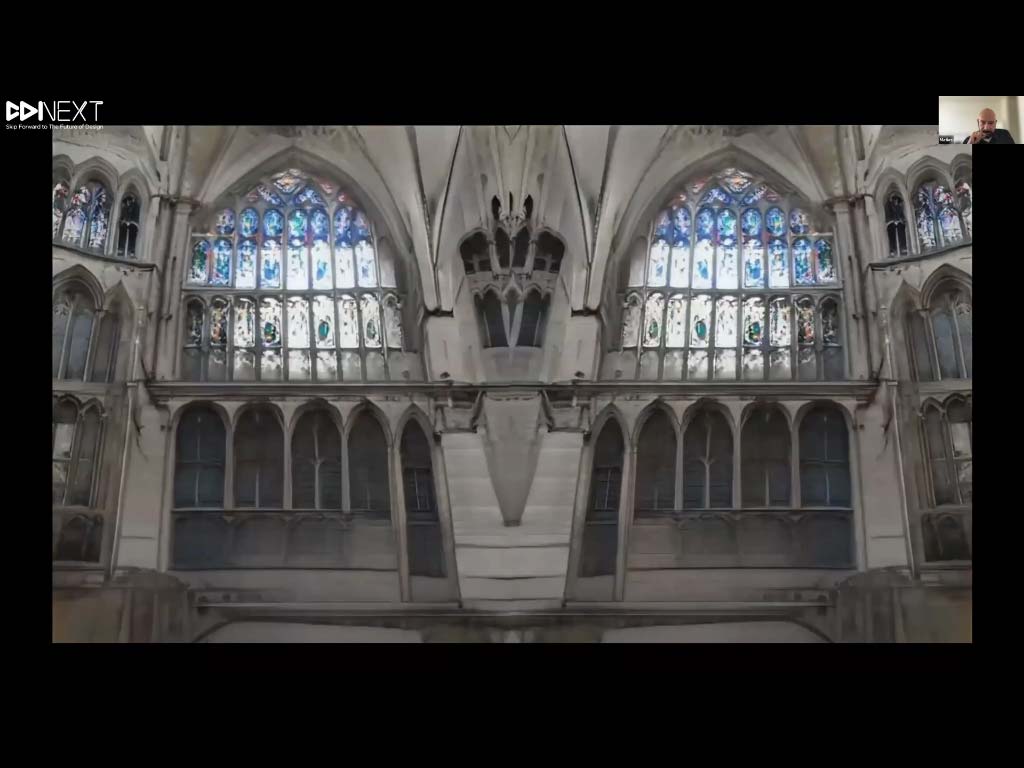
Last but not least, Matias Del Campo mainly discussed neural architecture as a field of architecture primarily concerned with the emerging field of artificial networks. He addressed issues like AI, why we use it as architects, and how we can teach machines to learn instead of doing a task. He extended the subject by explaining deep learning, machine learning, training networks, and GAN architecture and training. Later, he showcased some of his projects when elaborating on the 21st-century design methods and neural architecture as a new paradigm.
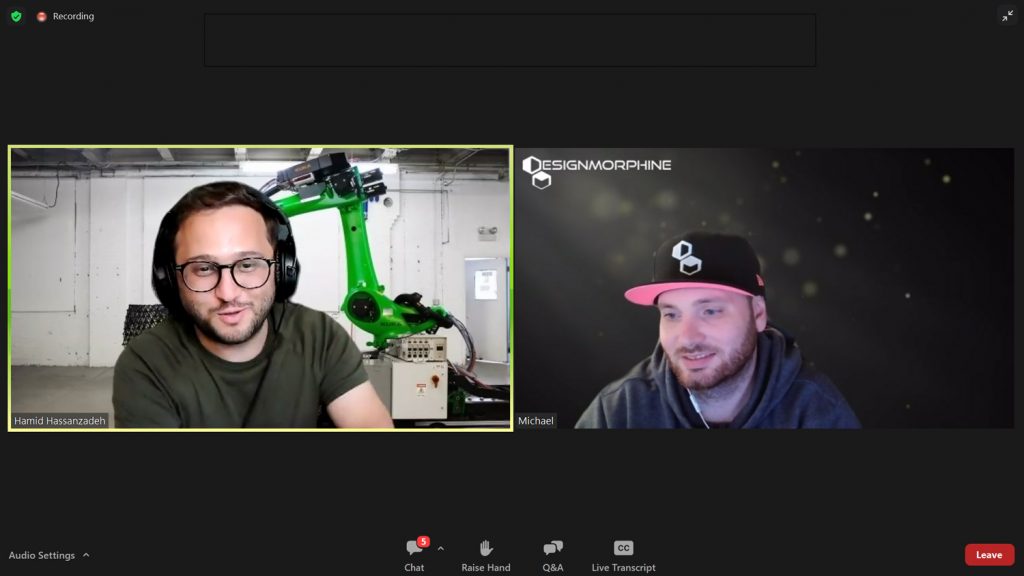
The author of PA, Hamid Hassanzadeh, provided an endnote before closing the Computational Design: NEXT 10. Along with Michael Pryor, the Design Director of DesignMorphine, Hamid thanked the attendees. The release dates for Computational Design: NEXT 11 and Computational Design: NEXT 12 were announced.
An overview of current architectural advances and technology was given to participants of Computational Design: NEXT 10, which featured a world-class array of speakers and innovators. The conference’s principal objective was to foster opportunities for collaboration by enabling us to interact with innovators from around the globe while learning about the exciting field of computational design. Click here to register and view recordings of the complete Computational Design: NEXT 10 conference.
