

Close Menu
ParametricParametric

    Subscribe to Updates

    Get the latest creative news from FooBar about art, design and business.

    What's Hot

    tetsstststtt

    July 23, 2026

    Soundscape in Architecture: Designing Through Sound

    July 23, 2026

    MVRDV Wins Shift Embassy Competition with Rotterdam ROCKS!

    July 23, 2026
    Facebook X (Twitter) Instagram
    Facebook X (Twitter) Instagram Pinterest YouTube LinkedIn TikTok
    ParametricParametric
    Courses
    • Articles
      • Archipreneurs
      • Technology
      • BIM / AEC
      • 3D Printing
      • Architects
      • Artificial Intelligence
      • Robotics
      • Sustainability
      • Tools
      • Case Study
      • City Guide
      • Opinions
      • Interviews
      • Architecture & Design
        • Urbanism
        • Metaverse
        • Space Architecture
        • Geography
    • Projects
      • Architecture
      • Interior
      • Design
        • Fashion
        • Pavilion
        • Installation
        • Digital Art
        • Landscape Design
      • Products
    • Workshops
    • Ads
    • Architecture News
    • Digital Members
    • Books
    • CDNext
    • CDNEXT Recordings
    • Competitions
    • Events
    • PA Talks
    • Jobs
    • landscape
    • Landscape Architecture
    • PA Quotes
    • PAACADEMY
    • podcasts
    • memorial
    • Studio Recordings
    • Studio Workshops
    • Uncategorized
    • Videos
    ParametricParametric
    Home»Architecture News»Cornell Researchers Develop Flexible Solar Fabric That Tracks the Sun
    Architecture News

    Cornell Researchers Develop Flexible Solar Fabric That Tracks the Sun

    adminparametBy adminparametJuly 23, 202604 Mins Read0 Views
    Facebook Twitter Pinterest LinkedIn Tumblr WhatsApp Reddit Email
    Share
    Facebook Twitter LinkedIn Pinterest Email

    Cornell University’s HelioSkin project has brought to life a flexible, photovoltaic fabric inspired by plant biology. This photovoltaic textile merges engineering, biology, and architecture, offering lightweight solar power collection that could wrap around curved surfaces from backyard canopies to stadiums and skyscrapers.

    Bio-Inspired Design: HelioSkin’s Solar Fabric Innovation

    HelioSkin takes its cue from heliotropism, the phenomenon by which plants, such as sunflowers, track the sun throughout the day. Researchers studied Arabidopsis, a model plant that bends its stem up to 90° toward the light by growing cells on the shaded side approximately 25% larger in size.

    Using that insight, the team translates cellular growth patterns into computational models and structural form, enabling a fabric that morphs slowly over its surface to follow the sun, without motors or heavy mechanisms.
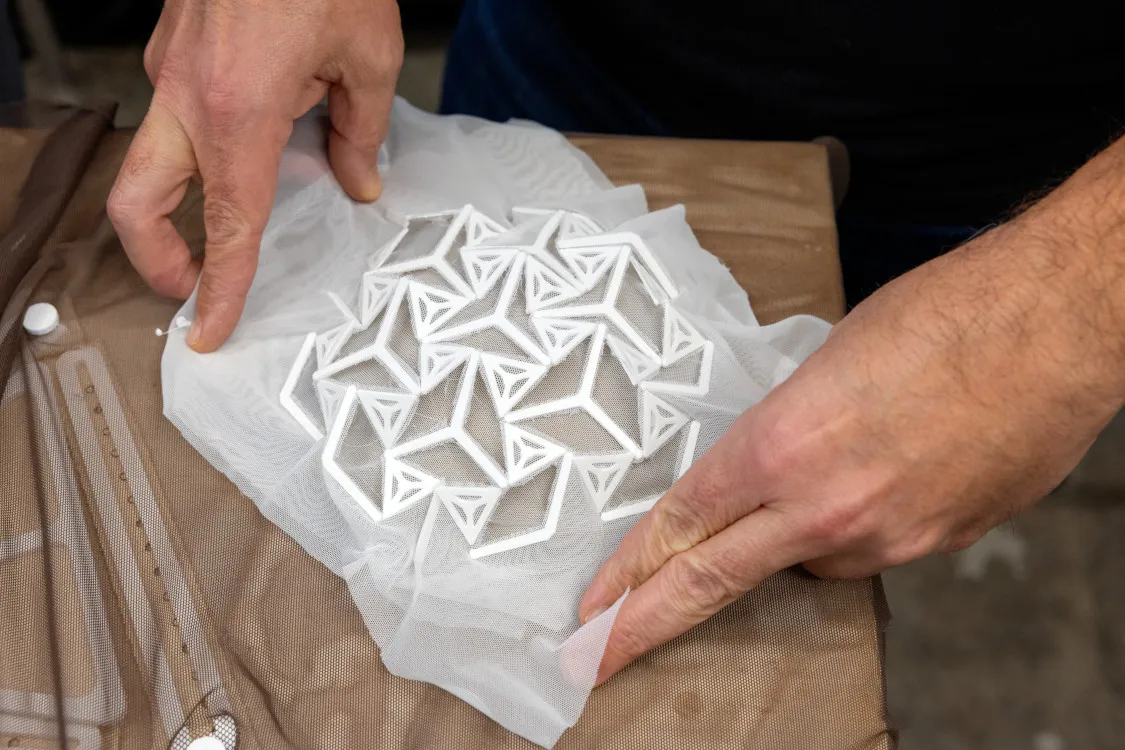
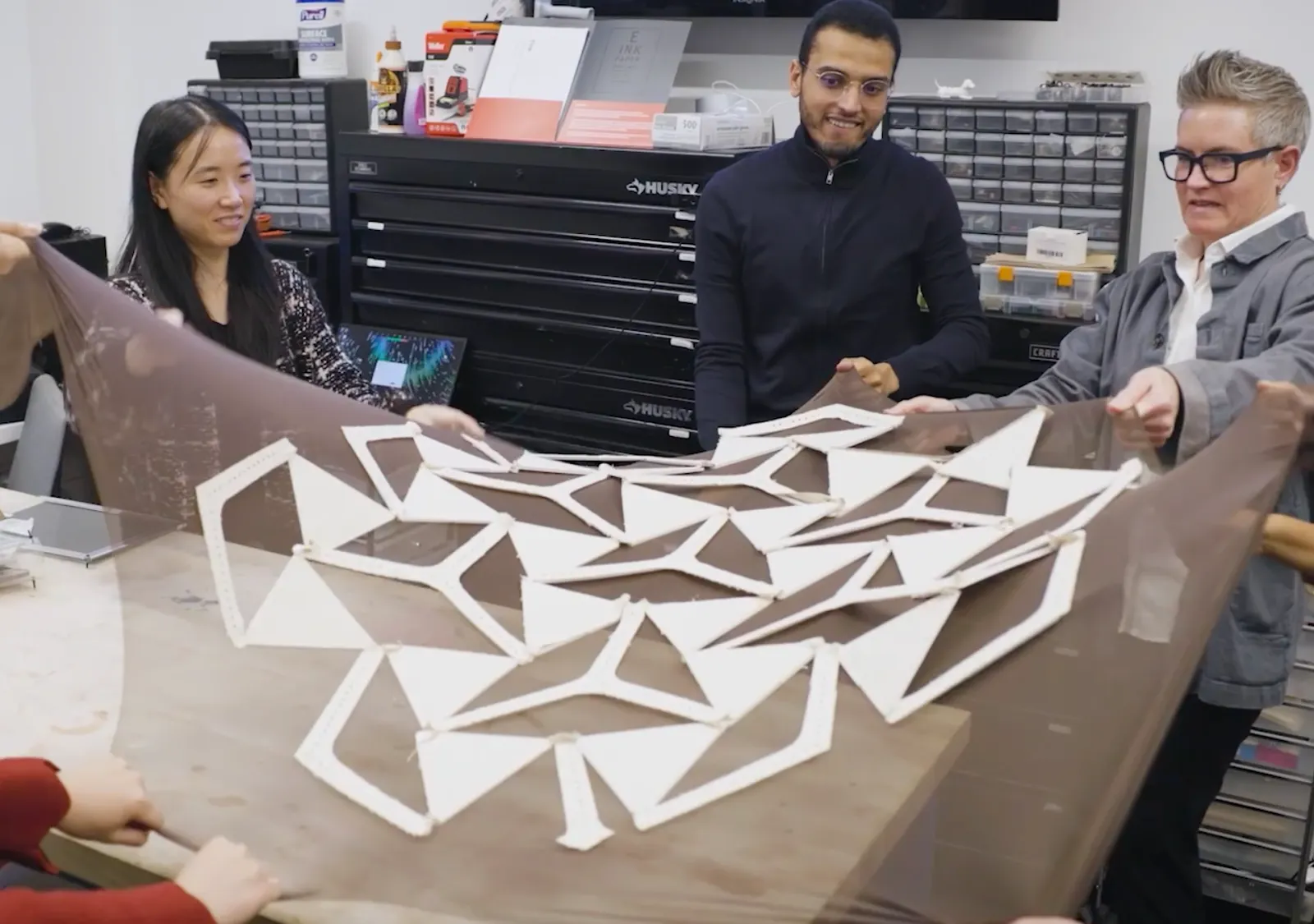
    The development of HelioSkin is the result of a unique collaboration between experts from architecture, physics, and plant biology. At the forefront is architect Jenny Sabin, whose work focuses on adaptive design and material innovation. She is joined by physicist Itai Cohen, known for his research on dynamic systems and material behavior, and plant biologist Adrienne Roeder, who brings deep insight into plant growth patterns and morphology. 

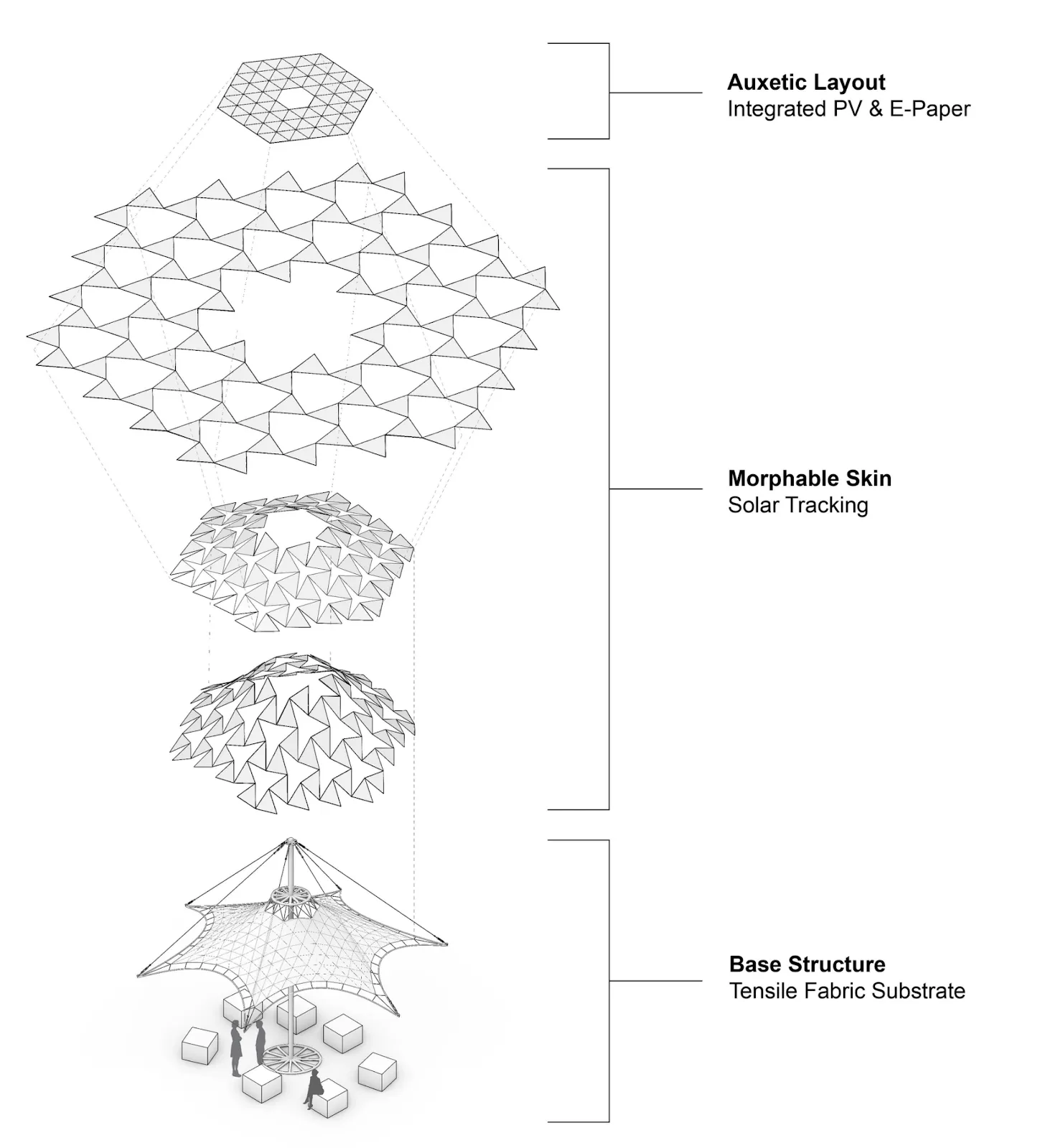
    Together, they combine origami/kirigami patterns, 3D printing, digital fabrication, and soft substrates to create solar modules that bend, stretch, and flex while maintaining energy performance.
    As Sabin explains: “We’re passionate not only to produce energy passively, but also to create transformational environments. Sustainability is about performance and function, but equally, it’s about beauty.”
    In its first real-world application, the HelioSkin team is creating a 150-square-foot solar canopy designed for outdoor environments like patios or small public spaces. Unlike traditional rigid panels, this flexible structure can subtly track the sun across the sky throughout the day, improving energy capture without relying on motors or heavy hardware.

    To get this pilot off the ground, the project received $650,000 in Phase I funding from the U.S. National Science Foundation’s Convergence Accelerator program. The team is now seeking an additional $5 million to expand development over the next three years. The goal is to refine key elements like sensing systems, energy wiring, surface geometry, and manufacturing scalability, making the technology ready for broader deployment.
    HelioSkin’s Market Potential and Use Cases

    HelioSkin is a flexible, stretchable fabric that can conform to almost any surface, including curves and irregular shapes. That opens up possibilities far beyond rooftop building façades, shade structures, public art installations, and more. Despite its unconventional design, HelioSkin competes closely with traditional solar panels in terms of both energy output and cost per watt.

    A key part of the project’s success is the involvement of industry partners. E Ink is contributing expertise in integrating dynamic e-paper displays, enabling surfaces that can change appearance or convey information. Rainier Industries is helping engineer the durable, flexible substrate materials, while SunFlex is optimizing the photovoltaic components to ensure maximum efficiency.

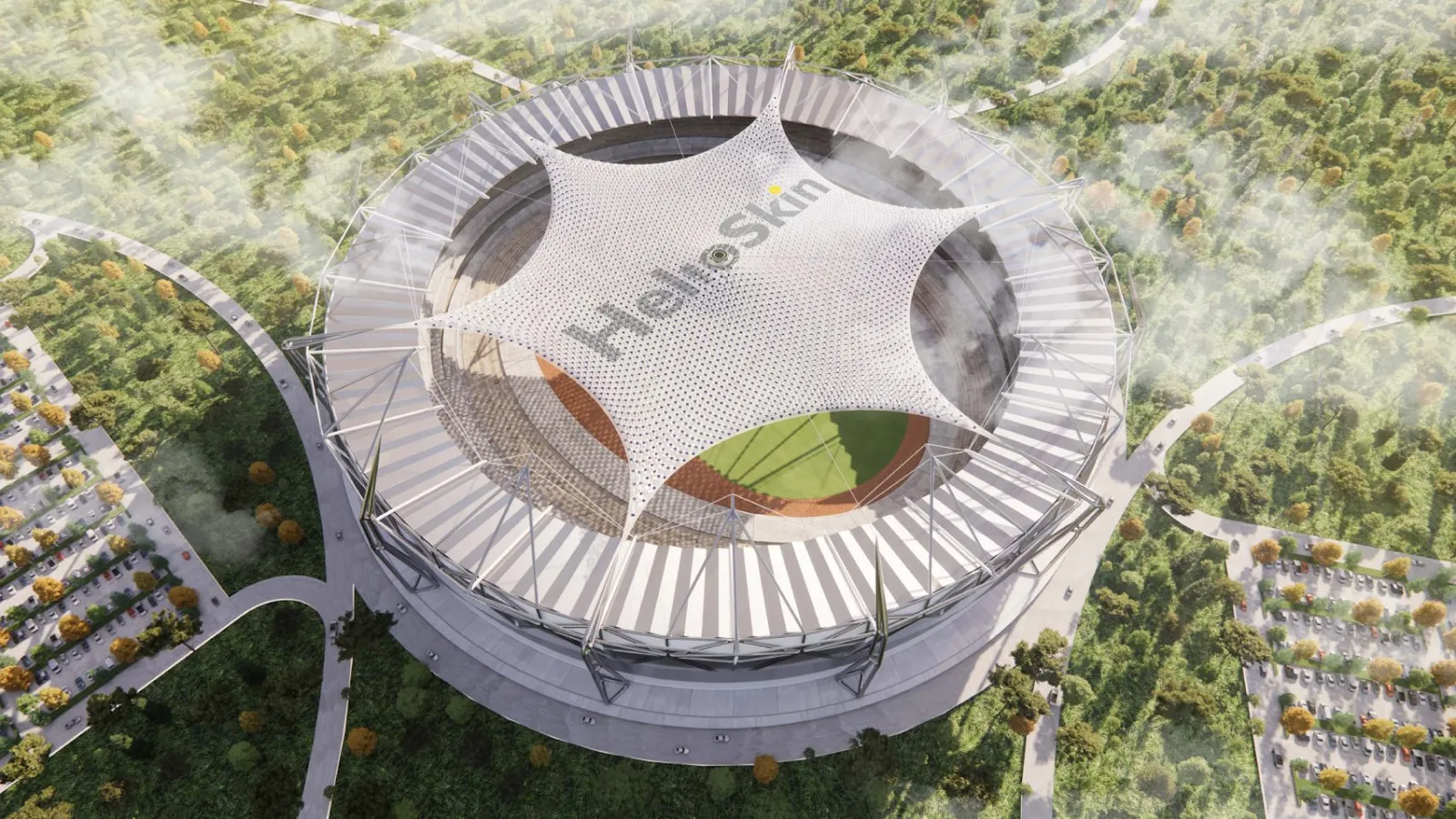
    A surprising application emerged using HelioSkin as dynamic, solar‑powered advertising skins, where E Ink display features can shift patterns or branding, ideal for retail façades or stadium exteriors.

    Buildings account for approximately 40% of U.S. greenhouse‑gas emissions, while heating, cooling, and lighting contribute ~28% of CO₂ output. HelioSkin addresses both energy and architectural design challenges, making solar energy visually appealing and functional on complex geometries.

    Cornell’s photovoltaic fabric, HelioSkin, is a solar product in renewable energy integration. It combines plant-inspired adaptability, architectural design, and scalable fabrication to provide solar power in a form that people want to see and use.
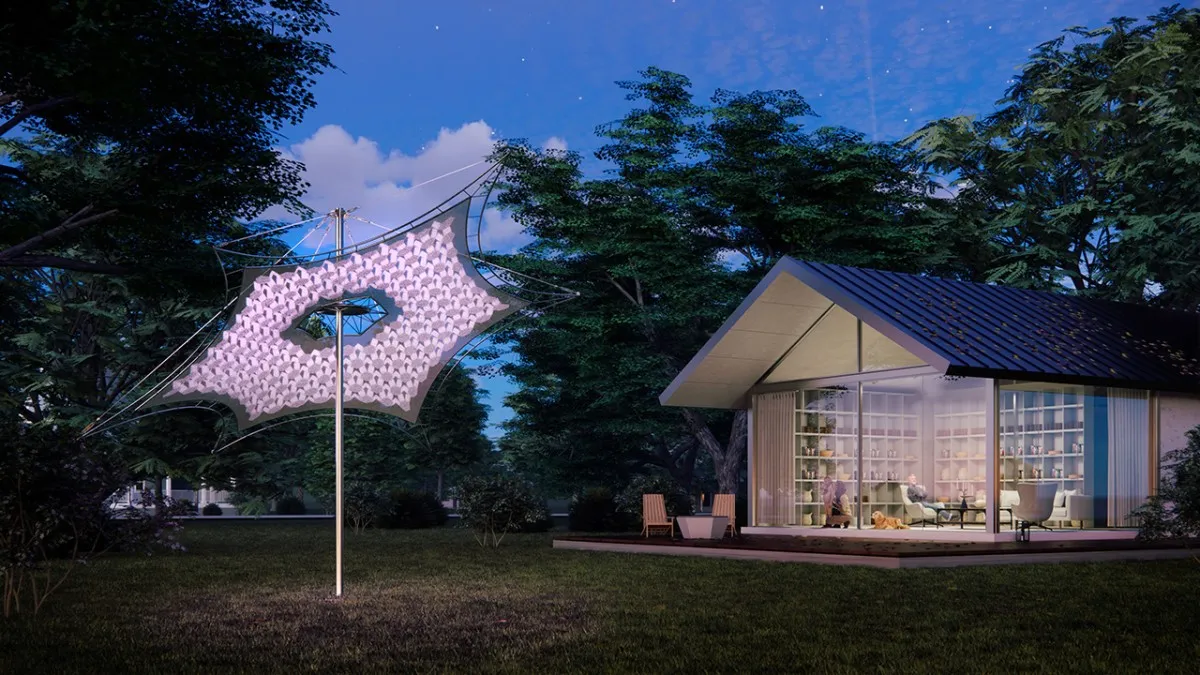
    A rendering of a solar backyard canopy prototype. Image: Jenny Sabin Lab

    HelioSkin Details

    • Mechanism: Bio-inspiration from heliotropism, Arabidopsis stem curvature
    • Fabric design: Origami/kirigami patterns, stretchable photovoltaic substrate
    • Pilot prototype size: ~150 sq ft backyard canopy, dual-axis tracking
    • Industry partners: E Ink, Rainier Industries, SunFlex
    • Potential applications: Retractable roofs, building skins, solar advertising displays.

    Image Credit: Jenny Sabin Lab/Cornell University

    Bio-inspired design cornell university HelioSkin solar fabric
    Share. Facebook Twitter Pinterest LinkedIn Tumblr Email
    adminparamet
    • Website

    Related Posts

    MVRDV Designs Urban Revivo’s Beijing Flagship Store in Sanlitun

    July 23, 2026

    Morandi Bridge Collapse Ex-CEO Sentenced to 12 Years

    July 23, 2026

    MVRDV Wins Shift Embassy Competition with Rotterdam ROCKS!

    July 23, 2026
    Add A Comment
    Leave A Reply Cancel Reply

    Demo
    Top Posts

    Design Reviews Are Moving Beyond Still Images and Animations. D5 3.1 Shows What’s Next.

    July 23, 20268 Views

    tetsstststtt

    July 23, 20264 Views

    World Architecture Festival Unveils 2026 Shortlist Featuring 416 Projects Worldwide

    July 23, 20264 Views

    15 Picturesque Neighborhoods Around the World Every Design Lover Should Visit

    July 23, 20263 Views
    Don't Miss

    tetsstststtt

    By adminparametJuly 23, 2026

    Soundscape in Architecture: Designing Through Sound

    July 23, 2026

    MVRDV Wins Shift Embassy Competition with Rotterdam ROCKS!

    July 23, 2026

    Shanghai’s Pollinator Machine Installation Brings Ancient Evolution to Life

    July 23, 2026
    Stay In Touch
    • Facebook
    • Twitter
    • Pinterest
    • Instagram
    • YouTube
    • Vimeo

    Subscribe to Updates

    Get the latest creative news from SmartMag about art & design.

    Demo
    About Us
    About Us

    Your source for the lifestyle news. This demo is crafted specifically to exhibit the use of the theme as a lifestyle site. Visit our main page for more demos.

    We're accepting new partnerships right now.

    Email Us: [email protected]
    Contact: +1-320-0123-451

    Our Picks

    tetsstststtt

    July 23, 2026

    Soundscape in Architecture: Designing Through Sound

    July 23, 2026

    MVRDV Wins Shift Embassy Competition with Rotterdam ROCKS!

    July 23, 2026
    Most Popular

    Design Reviews Are Moving Beyond Still Images and Animations. D5 3.1 Shows What’s Next.

    July 23, 20268 Views

    tetsstststtt

    July 23, 20264 Views

    World Architecture Festival Unveils 2026 Shortlist Featuring 416 Projects Worldwide

    July 23, 20264 Views
    Facebook X (Twitter) Instagram Pinterest YouTube LinkedIn TikTok
    • Home
    • Buy Now
    © 2026 ParametricArchitecture. All Rights Reserved. By utilizing this website, you are consenting to our User Agreement, Privacy Policy, and Cookie Statement. In compliance with the privacy laws of Turkey and the United States, we recognize and respect your rights. Please be aware that we may receive commissions for products bought through our affiliate links. Unauthorized reproduction, distribution, or transmission of any material from this site is strictly forbidden without prior written permission from ParametricArchitecture.

    Type above and press Enter to search. Press Esc to cancel.

    Sign In or Register

    Welcome Back!

    Login to your account below.

    Lost password?