
Close Menu
ParametricParametric

    Subscribe to Updates

    Get the latest creative news from FooBar about art, design and business.

    What's Hot

    tetsstststtt

    July 23, 2026

    Soundscape in Architecture: Designing Through Sound

    July 23, 2026

    MVRDV Wins Shift Embassy Competition with Rotterdam ROCKS!

    July 23, 2026
    Facebook X (Twitter) Instagram
    Facebook X (Twitter) Instagram Pinterest YouTube LinkedIn TikTok
    ParametricParametric
    Courses
    • Articles
      • Archipreneurs
      • Technology
      • BIM / AEC
      • 3D Printing
      • Architects
      • Artificial Intelligence
      • Robotics
      • Sustainability
      • Tools
      • Case Study
      • City Guide
      • Opinions
      • Interviews
      • Architecture & Design
        • Urbanism
        • Metaverse
        • Space Architecture
        • Geography
    • Projects
      • Architecture
      • Interior
      • Design
        • Fashion
        • Pavilion
        • Installation
        • Digital Art
        • Landscape Design
      • Products
    • Workshops
    • Ads
    • Architecture News
    • Digital Members
    • Books
    • CDNext
    • CDNEXT Recordings
    • Competitions
    • Events
    • PA Talks
    • Jobs
    • landscape
    • Landscape Architecture
    • PA Quotes
    • PAACADEMY
    • podcasts
    • memorial
    • Studio Recordings
    • Studio Workshops
    • Uncategorized
    • Videos
    ParametricParametric
    Home»Projects»Design»Batik Pavilion Bridges Indonesian Textile Heritage and Architectural Geometry
    Design

    Batik Pavilion Bridges Indonesian Textile Heritage and Architectural Geometry

    adminparametBy adminparametJuly 23, 202604 Mins Read0 Views
    Facebook Twitter Pinterest LinkedIn Tumblr WhatsApp Reddit Email
    Share
    Facebook Twitter LinkedIn Pinterest Email

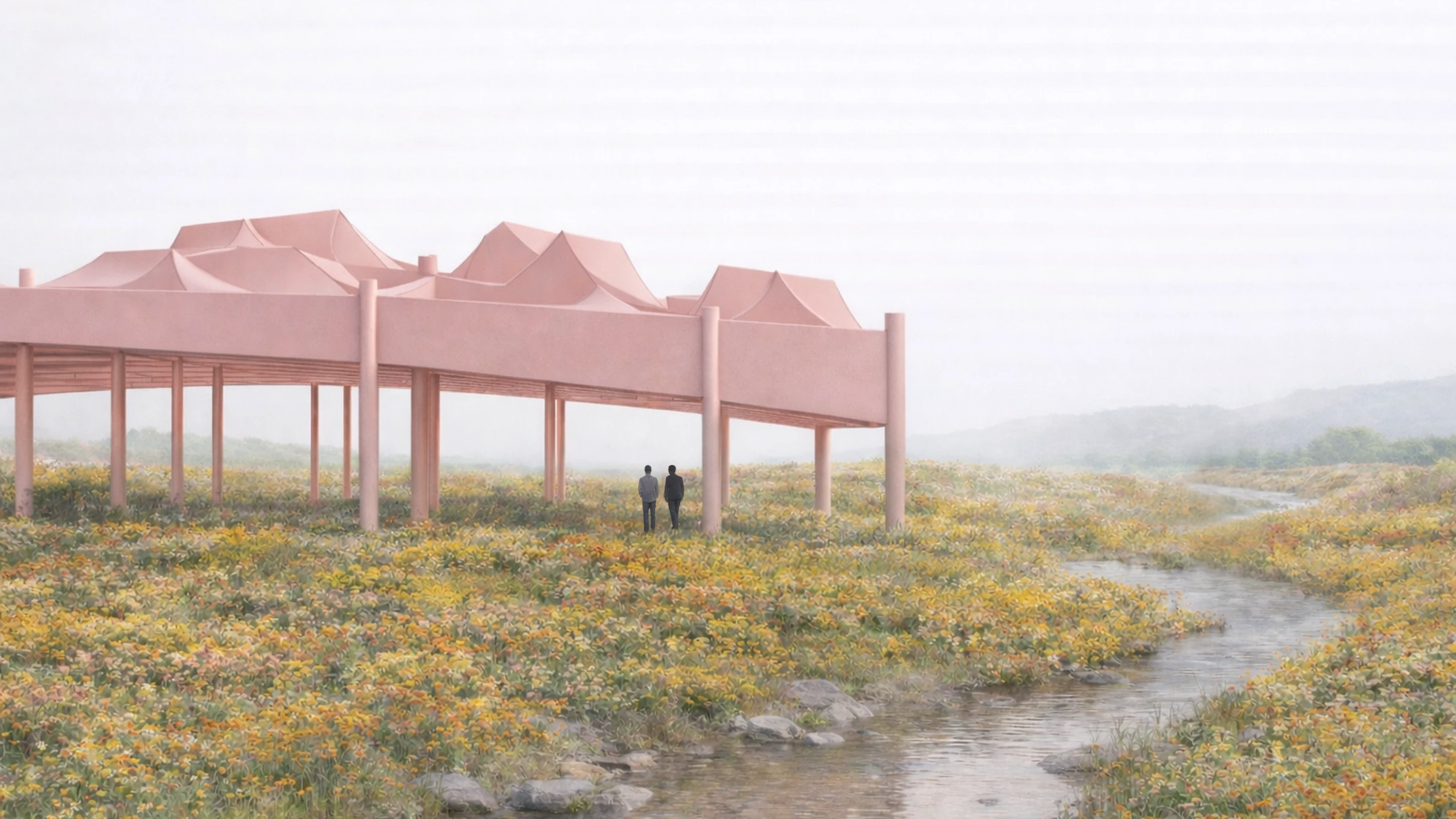
    Batik Pavilion, an unbuilt architectural exploration by Indonesian designer based in Los Angeles, Samantha Shanne, reinterprets the geometric logic of Batik Kawung, a traditional Indonesian textile motif recognized by UNESCO as part of its intangible cultural heritage, into a spatial and civic experience. Rather than approaching batik as mere surface decoration, the project positions it as an organizing system, where pattern becomes structure, light modulator, and programmatic guide, shaping how the pavilion is experienced and occupied.

    Conceived as a pavilion for Nusantara, Indonesia’s new capital city, the project celebrates national identity while demonstrating the integration of computational design and cultural tradition. Positioned as a flexible public space, the pavilion accommodates both everyday use and collective gatherings. It offers shaded areas for rest, circulation paths that encourage informal encounters, and moments of quiet reflection within a larger civic landscape.
    Batik Pavilion

    The design begins with a close study of the Kawung motif itself. Historically associated with royalty and those in positions of power, the pattern has since become one of the most recognizable and widely used batik geometries in Indonesia. Its composition is defined by a repetitive arrangement of four oval forms, often interpreted as referencing the sugar palm fruit (kolang-kaling), which grows in clusters of four. This simple yet highly ordered geometry establishes a framework of symmetry, repetition, and proportion principles that serve as the conceptual foundation for the pavilion. At the same time, the motif carries symbolic associations with balance, harmony, and continuity principles that serve as the conceptual foundation for the pavilion.

    Parametric Reinterpretation and Spatial Logic of Batik Pavilion

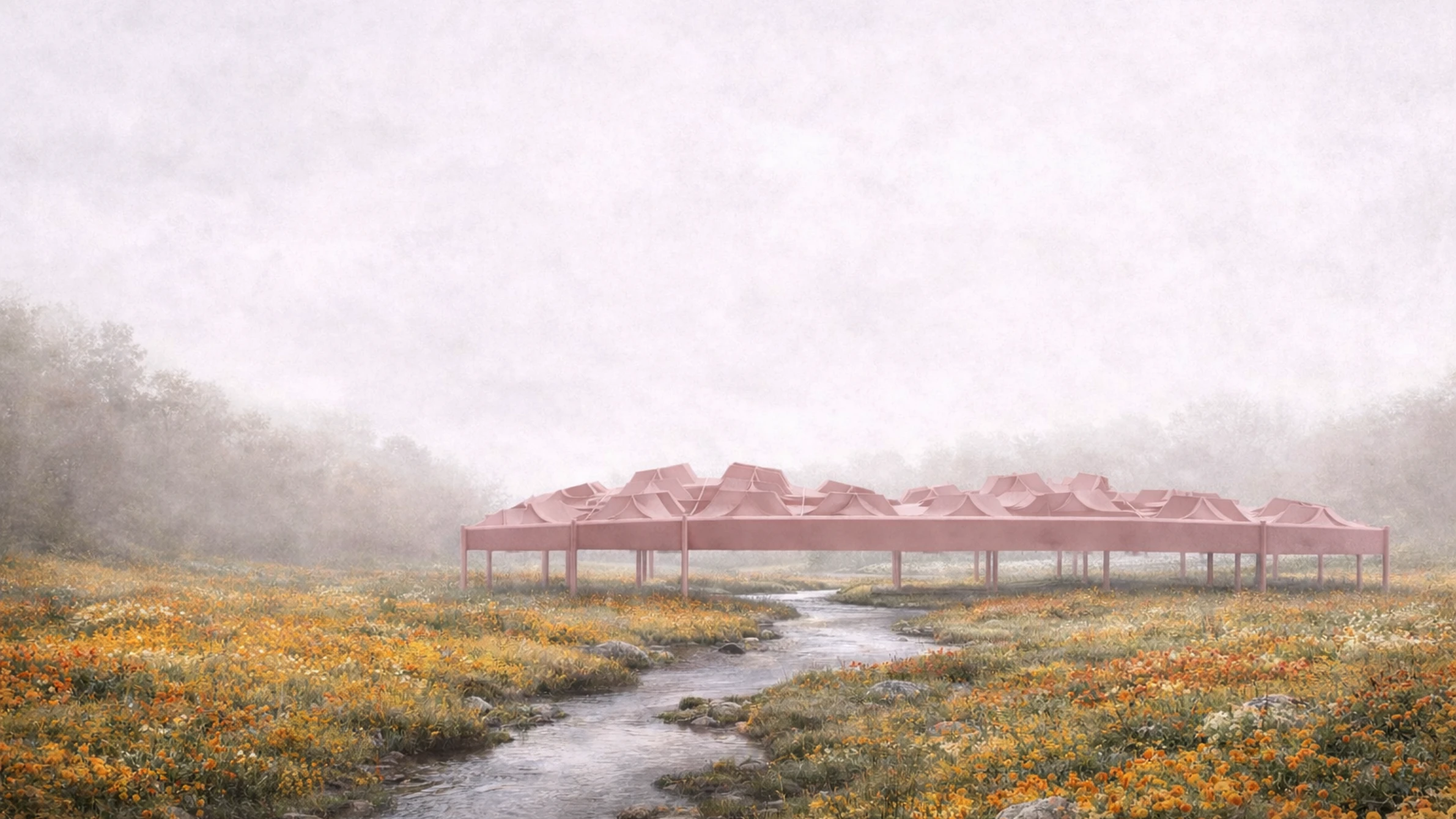
    This underlying logic is reconstructed parametrically using Grasshopper, allowing the motif to be explored beyond its conventional two-dimensional representation. Rather than reproducing the pattern as a static graphic, the system is deliberately destabilized: elements are rotated, reshuffled, and offset to introduce subtle irregularities within an otherwise consistent field. This controlled variation preserves the legibility of the original motif while opening it up to spatial and structural interpretation. The result is a system that maintains a recognizable cultural reference while resisting rigid uniformity, producing a more dynamic and adaptable architectural language.
    Batik Pavilion

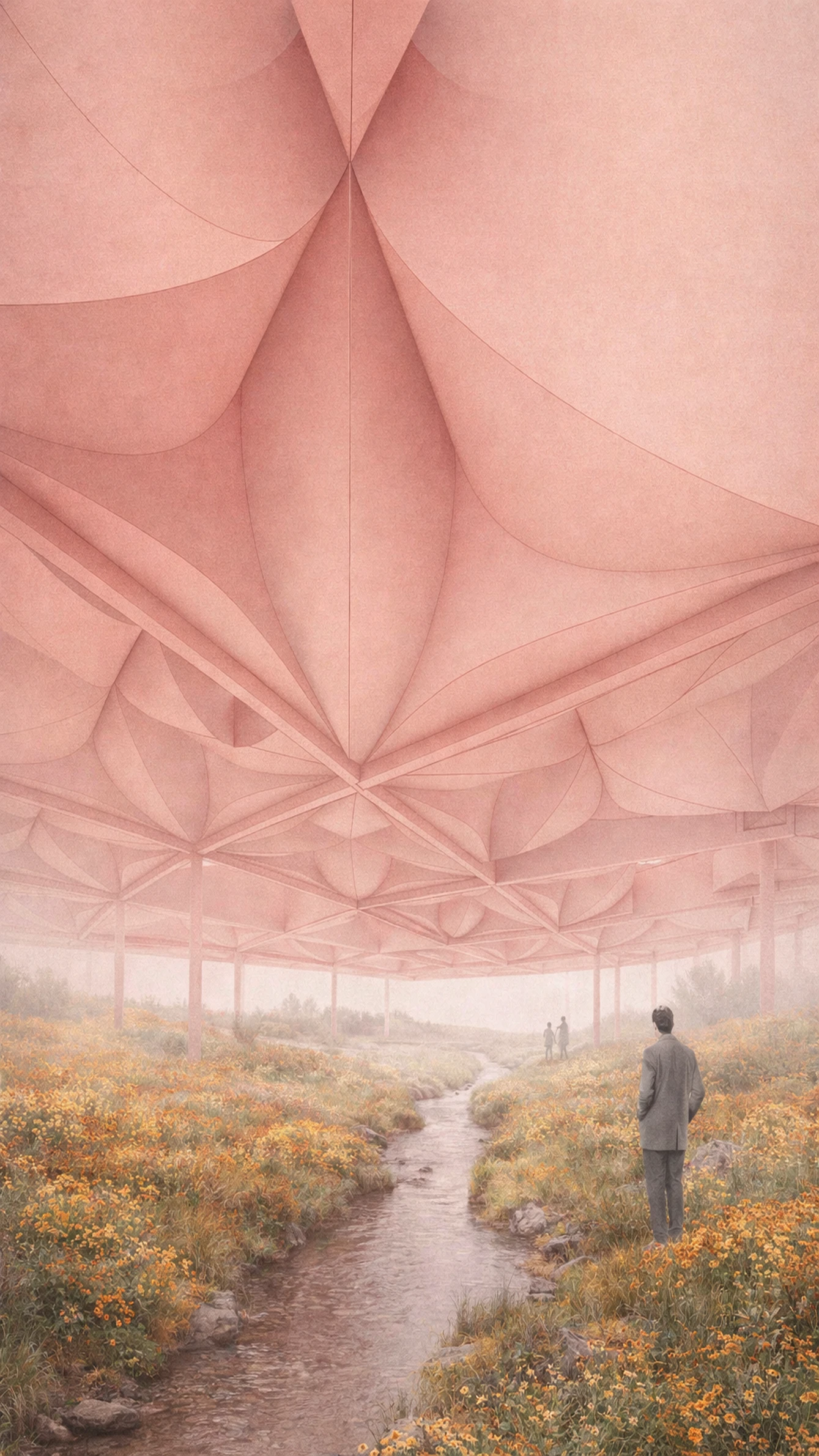
    A subtractive process is then applied to the generated geometry, carving out portions of the pattern to produce a network of voids. These voids are not incidental; they become the primary drivers of light, porosity, and spatial differentiation. The resulting roofscape is composed of a series of irregular, interlocking shells, conceived as lightweight glass fiber reinforced concrete (GFRC) panels. These shells span across a steel space-frame lattice, creating a system that is both structurally efficient and visually continuous. A field of thin steel columns supports the canopy below. Their small footprint lets them blend in with the landscape. This strategy reinforces the perception of the roof as a hovering plane—light, porous, and seemingly detached from the ground.

    Light becomes a primary architectural material. A field of idiosyncratic voids encourages the interplay of natural light and dynamic shadows throughout the day. As the sun moves, the pattern of light projected onto the ground shifts continuously, echoing the logic of batik as a living, time-based medium. What is traditionally worn on the body is instead experienced at the scale of space, transforming cultural patterns into atmosphere.
    Batik Pavilion

    Batik Pavilion proposes an architectural language where cultural heritage becomes both spatial experience and structural logic. By bridging traditional craft with computational design, the project demonstrates how inherited cultural systems can inform new modes of making. It suggests that the future of architecture in contexts like Nusantara lies not in choosing between tradition and innovation, but in allowing the two to co-evolve. In this way, the pavilion stands as both a marker of an emerging capital and a broader argument for how architecture can carry cultural memory forward—transforming it into form, structure, and experience.

    Batik Kawung Batik Pavilion cultural heritage Indonesian Textile Heritage UNESCO
    Share. Facebook Twitter Pinterest LinkedIn Tumblr Email
    adminparamet
    • Website

    Related Posts

    Why Everyone Is Talking About the Marisfrolg Fashion Campus in Shenzhen

    July 23, 2026

    Audi Zero One Sphere: Wini Camacho’s Radical Electric Car Design

    July 23, 2026

    External Reference’s Deportienda Features a Massive 3D-Printed Wave Inspired by the Atlantic

    July 23, 2026
    Add A Comment
    Leave A Reply Cancel Reply

    Demo
    Top Posts

    Design Reviews Are Moving Beyond Still Images and Animations. D5 3.1 Shows What’s Next.

    July 23, 20268 Views

    tetsstststtt

    July 23, 20264 Views

    World Architecture Festival Unveils 2026 Shortlist Featuring 416 Projects Worldwide

    July 23, 20264 Views

    15 Picturesque Neighborhoods Around the World Every Design Lover Should Visit

    July 23, 20263 Views
    Don't Miss

    tetsstststtt

    By adminparametJuly 23, 2026

    Soundscape in Architecture: Designing Through Sound

    July 23, 2026

    MVRDV Wins Shift Embassy Competition with Rotterdam ROCKS!

    July 23, 2026

    Shanghai’s Pollinator Machine Installation Brings Ancient Evolution to Life

    July 23, 2026
    Stay In Touch
    • Facebook
    • Twitter
    • Pinterest
    • Instagram
    • YouTube
    • Vimeo

    Subscribe to Updates

    Get the latest creative news from SmartMag about art & design.

    Demo
    About Us
    About Us

    Your source for the lifestyle news. This demo is crafted specifically to exhibit the use of the theme as a lifestyle site. Visit our main page for more demos.

    We're accepting new partnerships right now.

    Email Us: [email protected]
    Contact: +1-320-0123-451

    Our Picks

    tetsstststtt

    July 23, 2026

    Soundscape in Architecture: Designing Through Sound

    July 23, 2026

    MVRDV Wins Shift Embassy Competition with Rotterdam ROCKS!

    July 23, 2026
    Most Popular

    Design Reviews Are Moving Beyond Still Images and Animations. D5 3.1 Shows What’s Next.

    July 23, 20268 Views

    tetsstststtt

    July 23, 20264 Views

    World Architecture Festival Unveils 2026 Shortlist Featuring 416 Projects Worldwide

    July 23, 20264 Views
    Facebook X (Twitter) Instagram Pinterest YouTube LinkedIn TikTok
    • Home
    • Buy Now
    © 2026 ParametricArchitecture. All Rights Reserved. By utilizing this website, you are consenting to our User Agreement, Privacy Policy, and Cookie Statement. In compliance with the privacy laws of Turkey and the United States, we recognize and respect your rights. Please be aware that we may receive commissions for products bought through our affiliate links. Unauthorized reproduction, distribution, or transmission of any material from this site is strictly forbidden without prior written permission from ParametricArchitecture.

    Type above and press Enter to search. Press Esc to cancel.

    Sign In or Register

    Welcome Back!

    Login to your account below.

    Lost password?