


India is a country shaped as much by its geography as by the architectural imagination of its people. Across centuries, dynasties and communities have articulated identity, power, and devotion through temples carved from rock, forts anchored in desert plains, and cities planned with cosmic precision. Each structure, whether a stepwell in Gujarat or a marble mausoleum in Agra, acts as both a functional space and a cultural artifact.
This guide offers an architectural reading of India, tracing its evolution from ancient ritual forms to contemporary experiments in concrete and steel. For the design-conscious traveler, India is a layered spatial archive. From Mughal grandeur to post-independence modernism, these sites tell a story not just of aesthetics, but of civilization itself.
Mughal and Sultanate Landmarks
The magnificence of Indo-Islamic architecture in India exemplifies architectural principles such as ornamentation, symmetry, and monumental scale. These structures were recognized by domes, minarets, expansive landscape courtyards, intricate carvings, and handcrafted jaalis that reflect the cultural and political power of the Mughal era.
1. Taj Mahal
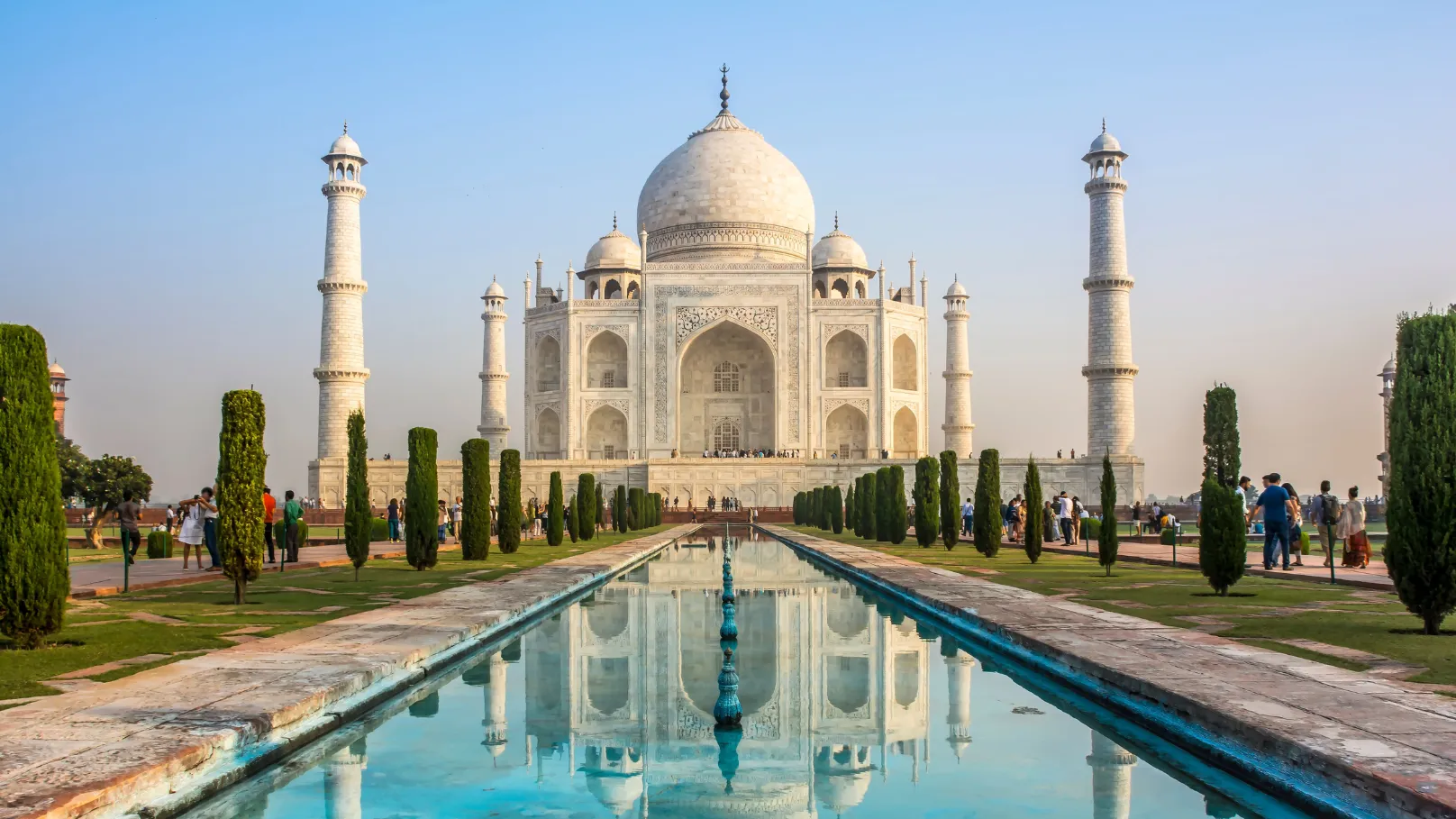
A journey to the Taj Mahal begins long before you reach its gleaming marble facade. Passing through the grand red sandstone gate, visitors are drawn into a carefully choreographed sequence, lush Persian-style gardens, linear reflecting pools, and the symmetrical framing of minarets all lead the eye toward the iconic dome. The layout gently slows your pace, inviting you to take in each element as part of a larger story of love, craftsmanship, and power.
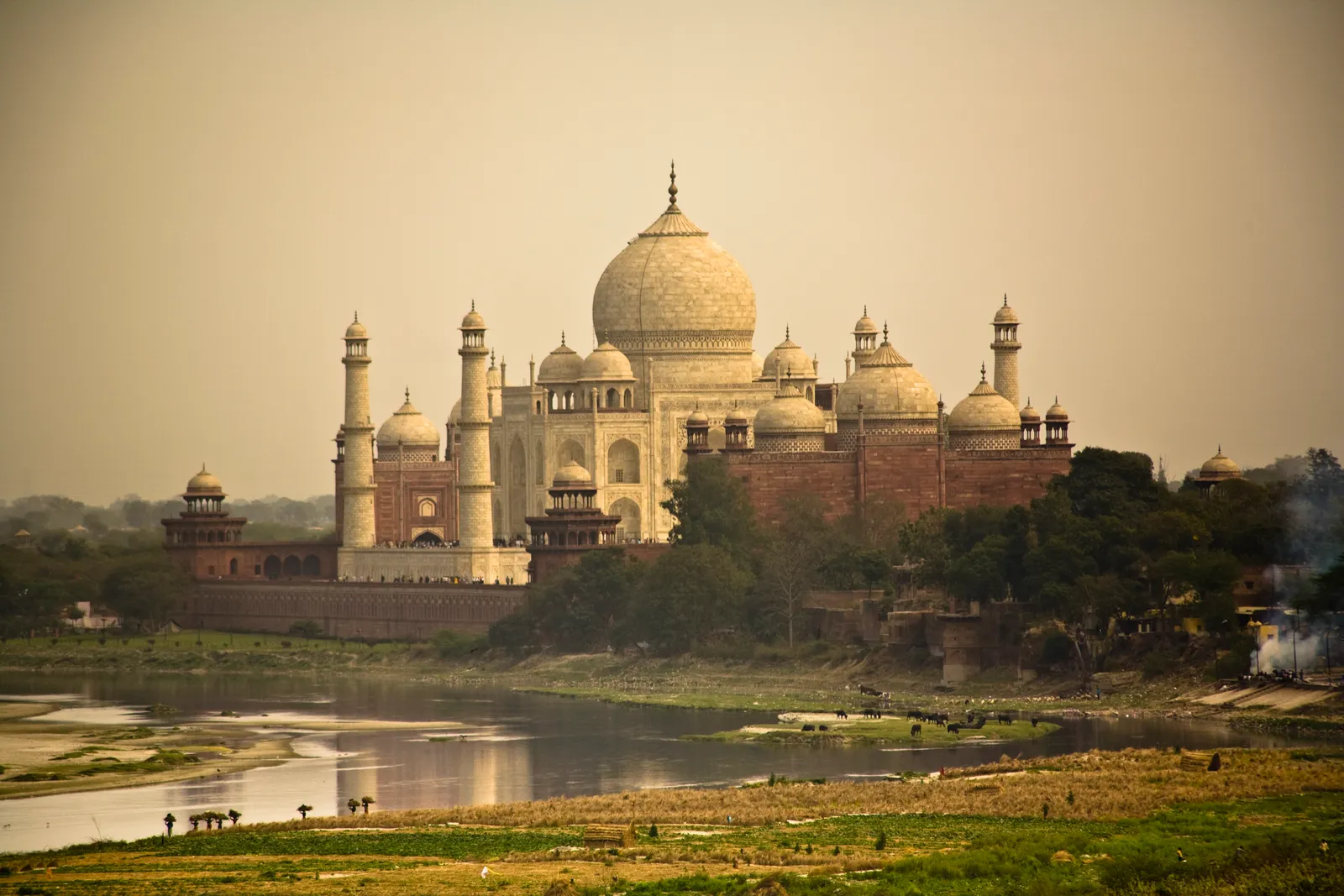
Built in the 17th century by Mughal emperor Shah Jahan in memory of his wife Mumtaz Mahal, the monument is an architectural meditation on permanence and beauty. Clad in translucent Makrana marble, the mausoleum captures subtle shifts in daylight and shadow. Intricate inlays of semi-precious stones, a perfectly balanced onion dome, and flanking minarets all follow Mughal principles of symmetry and scale.
2. Red Fort
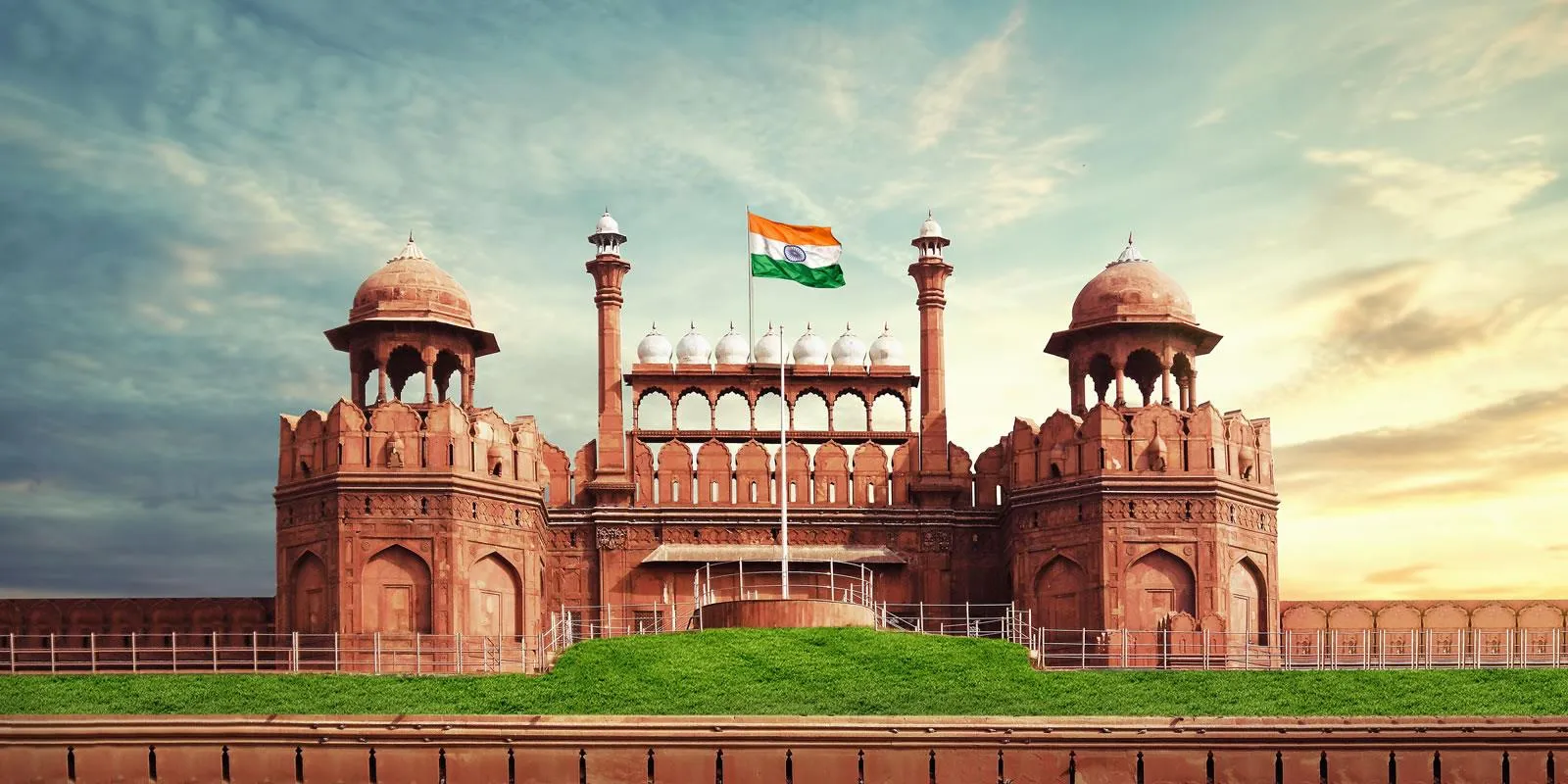
Constructed with red sandstone, it is a prime example of the 17th-century Mughal fortress that blends Persian, Timurid, and Hindu traditions. Highlighting power and legacy, the fortress includes massive defensive walls with an ornate palace and courtyards. The symmetrical octagonal layout of the fort was the primary residence of the Mughal emperors for nearly 200 years.
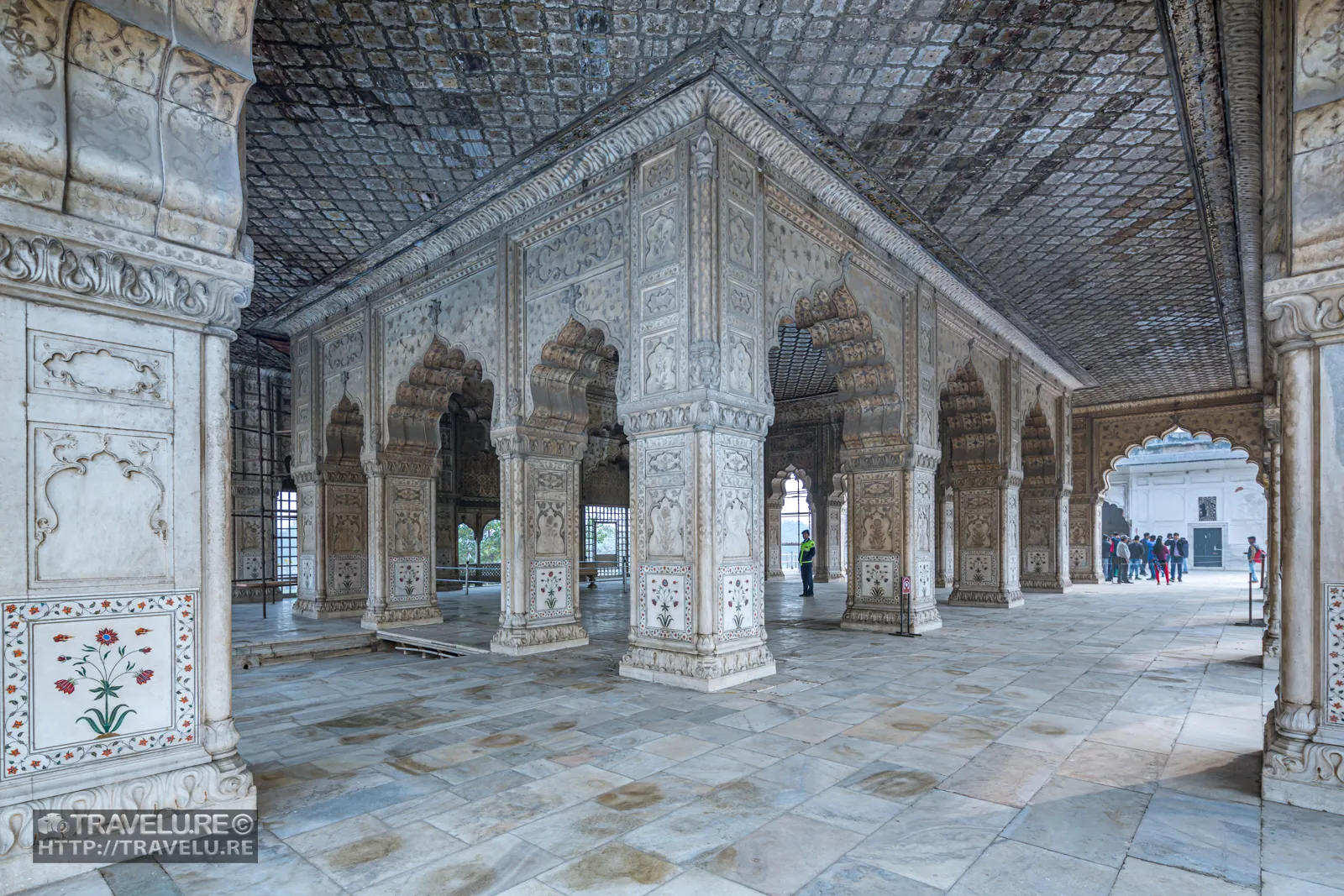
The journey for the travelers emerges from the Lahori Gate, the main entrance to various spaces such as the Diwan-i-Aam (Hall of Public Audience), Diwan-i-Khas (Hall of Private Audience), Rang Mahal (Palace of Colors), and Moti Masjid. Serving as a powerful symbol of sovereignty, every year the Prime Minister of India delivers a speech from the ramparts on August 15th, commemorating India’s independence from British rule.
3. Qutub Minar
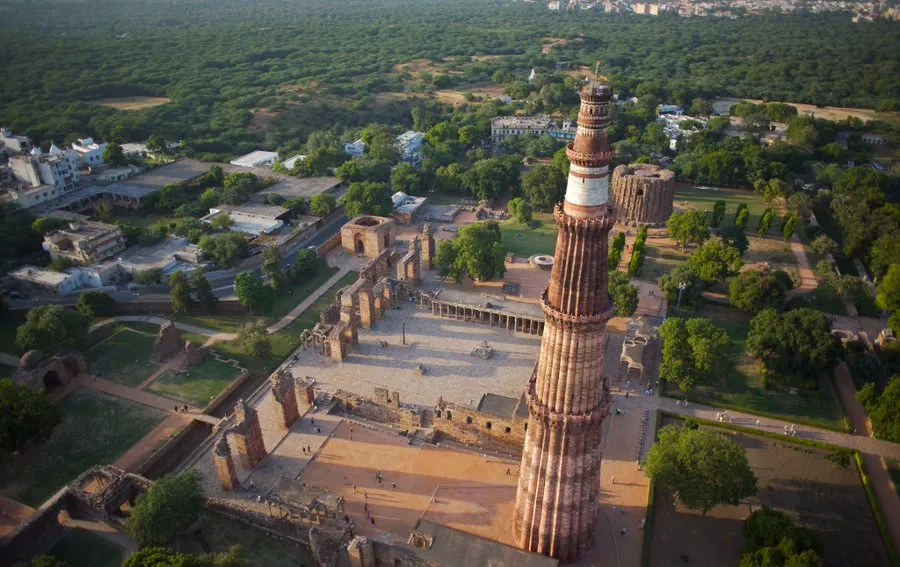
A symbol of cultural and historical transition, Qutub Minar is a UNESCO World Heritage Site in Delhi, located in a larger Qutub complex that narrates the story of victory. The 12th-century, 73-metre-tall India’s tallest brick minaret, marks the beginning of Islamic architecture in India and is a masterful piece of early Afghan architecture.
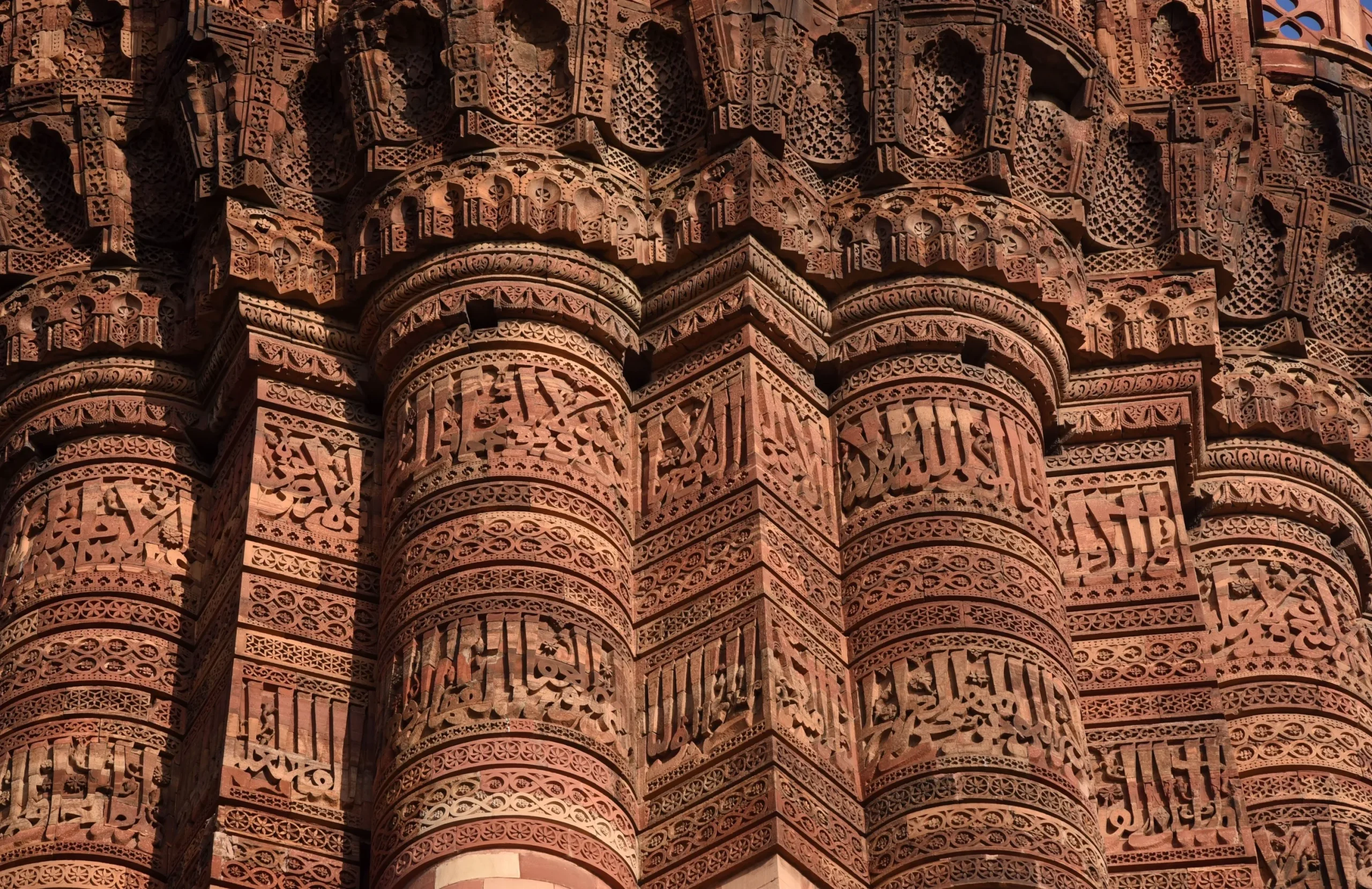
The tapering form features intricate carvings, verses from the Quran, and fluted balconies primarily constructed from red and buff sandstone. Walking in the complex, one can encounter other significant structures such as Alai Darwaza, a ceremonial arched gateway, and an iron pillar illustrating ancient metallurgical skills that have resisted rust for over 1,600 years.
4. Fatehpur Sikri
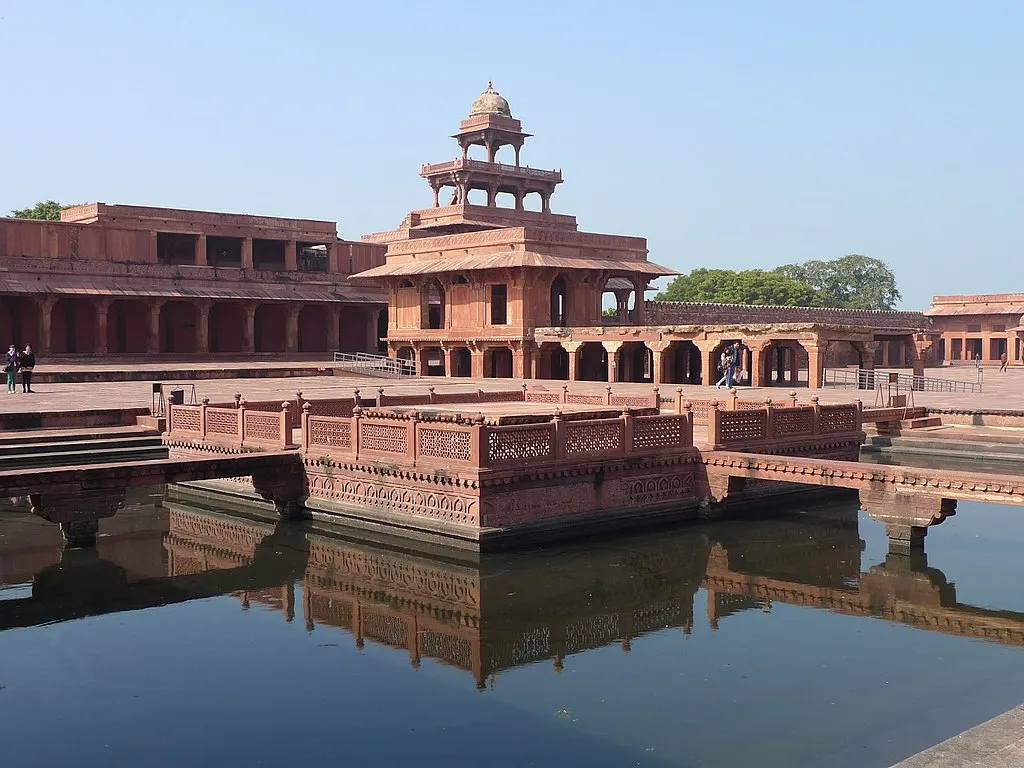
Built by Emperor Akbar in the late 16th century, Fatehpur Sikri was a profound gesture of gratitude and devotion. Known as the city of Victory, it was constructed with red sandstone featuring grand structures such as Jama Masjid, Panch Mahal, and Diwan-i-Khas, showcasing Akbar’s vision of artistic, political, and cultural pinnacle. The complex created dynamic living capital with interconnected areas on the sloping levels of a ridge serving as a functional and symbolic unified empire.
Religious and Spiritual Architecture
With intricate ornamentation, these structures reflect the spiritual intention behind the design that harmonizes form, function, and aesthetics.
1. Golden Temple
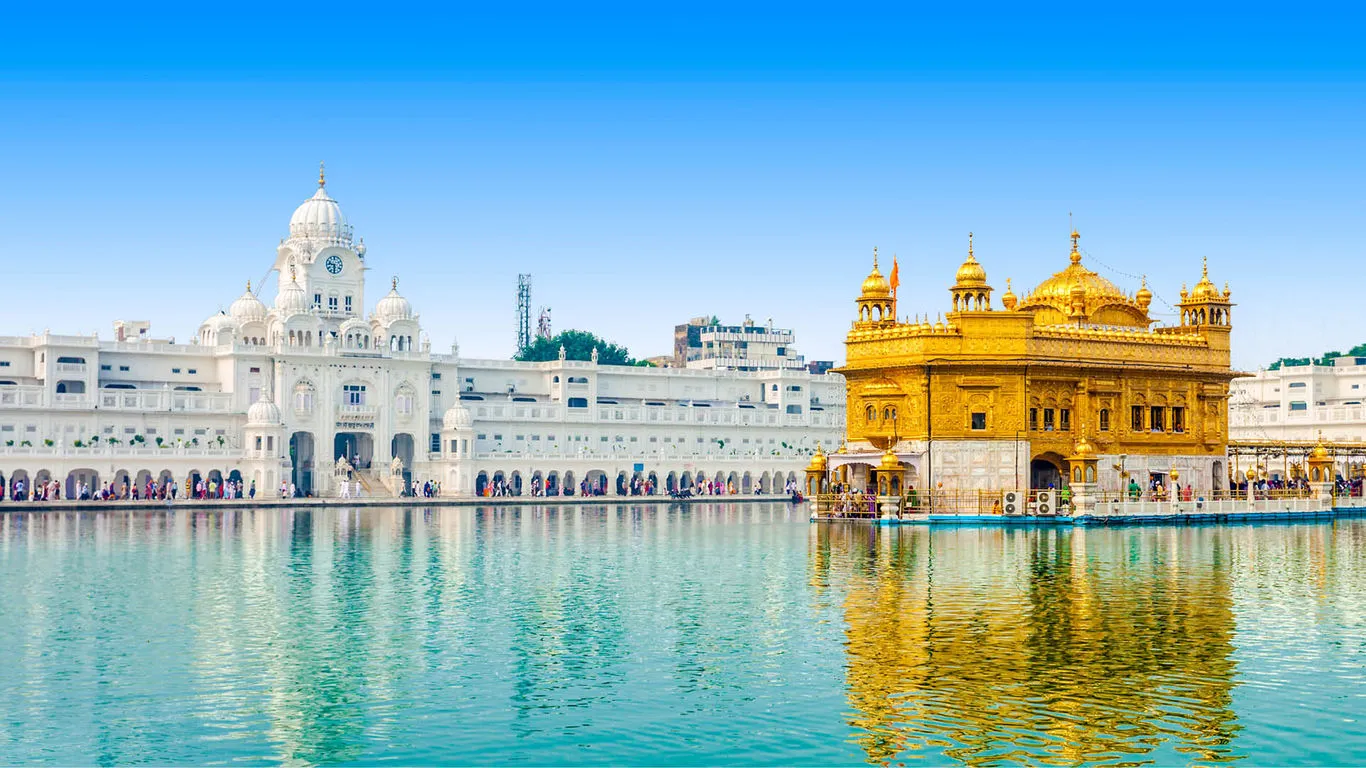
Floating at the center of a shimmering man-made water tank (Amrit Sarovar), the gold-plated Golden Temple, in Amritsar, Punjab, is an experience glistening in sunlight, peaceful chants, and langar, making it one of India’s most welcoming and soul-stirring destinations. The Golden Temple, or Harmandir Sahib, is a worship place crafted with a marble base, intricate carvings, and gilded domes surrounded by serene walkways, creating a symmetrical composition that highlights openness, tranquillity, and divine connection.
2. The Konark Sun Temple
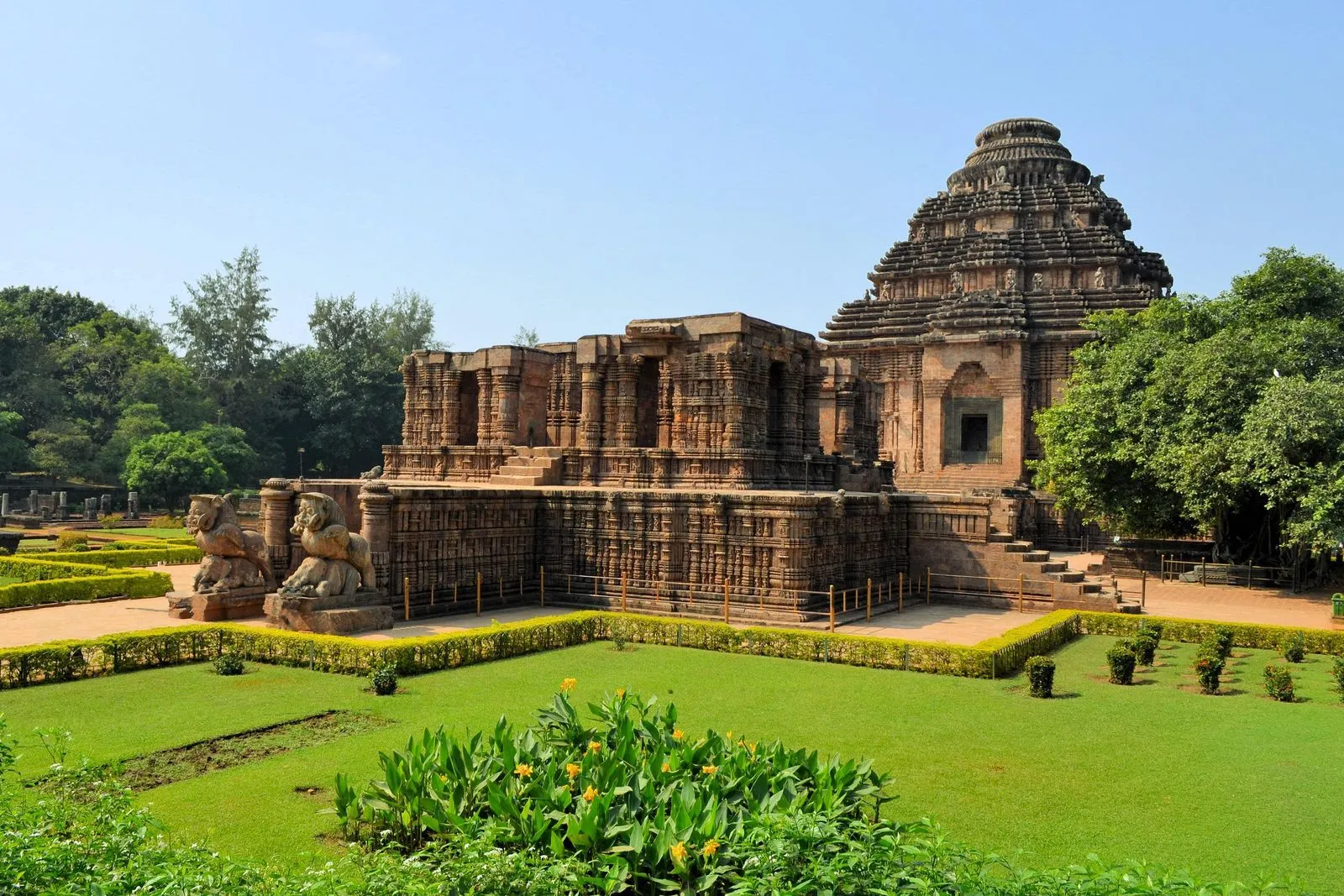
Manifested as the chariot of the Sun God, Surya, the Konark temple was built in the 13th century by King Narasimhadeva I of the Eastern Ganga dynasty. The colossal stone carved out of a chariot resembles a cosmic vehicle for the sun deity, with 24 exquisitely carved stone wheels and pulled by seven mighty horses. The walls feature carvings of gods, animals, dancers, and celestial beings that reflect the craftsmanship and artistic expression of the period.
3. Lotus Temple
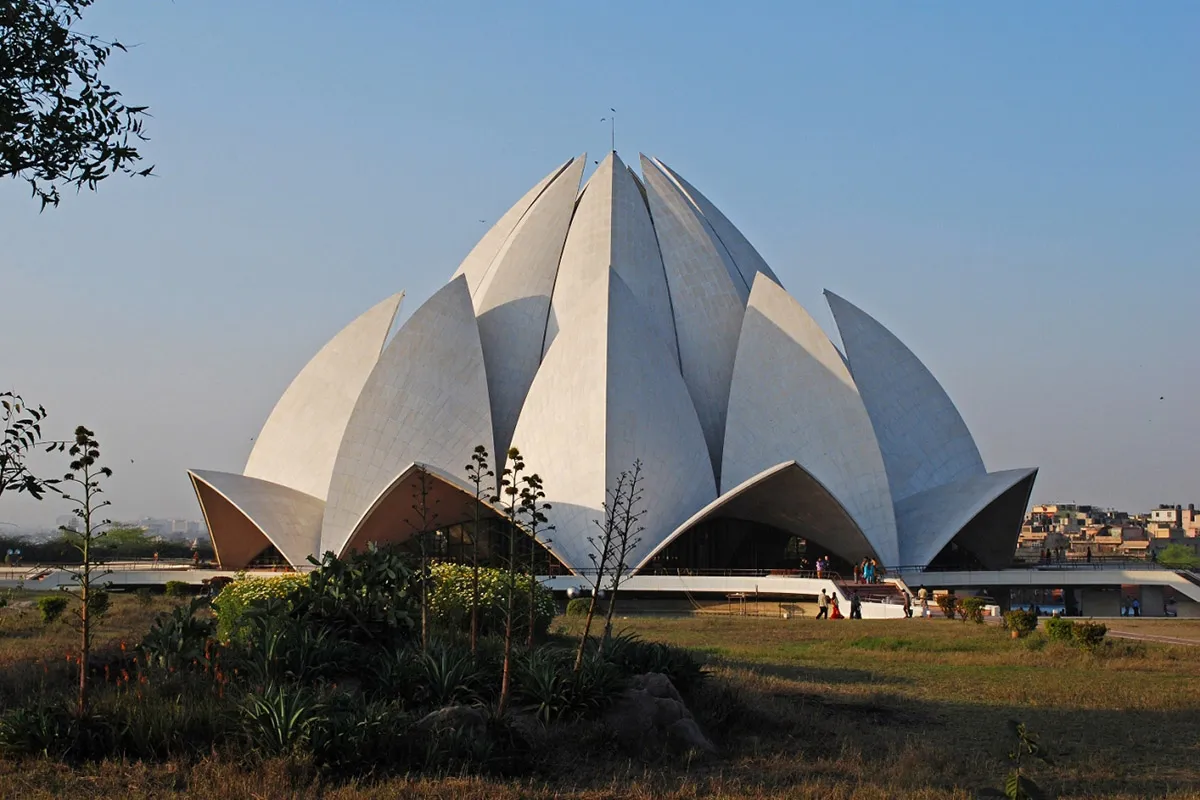
Designed by Iranian-Canadian architect Fariborz Sahba, this Baháʼí House of Worship doesn’t just resemble the lotus; it embodies its spiritual symbolism of purity, peace, and sacredness, which is deeply rooted in Indian culture. As one steps inside the white Pentelikon marble-clad petals from Greece, the bustling noise of the city fades, leaving one in the presence and stillness as light filters through the skylight above. Unlike a conventional temple, it doesn’t have idols or rituals but just an open space where travelers can sit, reflect, and connect with their higher self.
Ancient and Medieval Heritage Sites
These historical heritage sites and structures represent India’s power, technological knowledge, cultural values, religious beliefs, and profound political narrative.
1. Sanchi Stupa
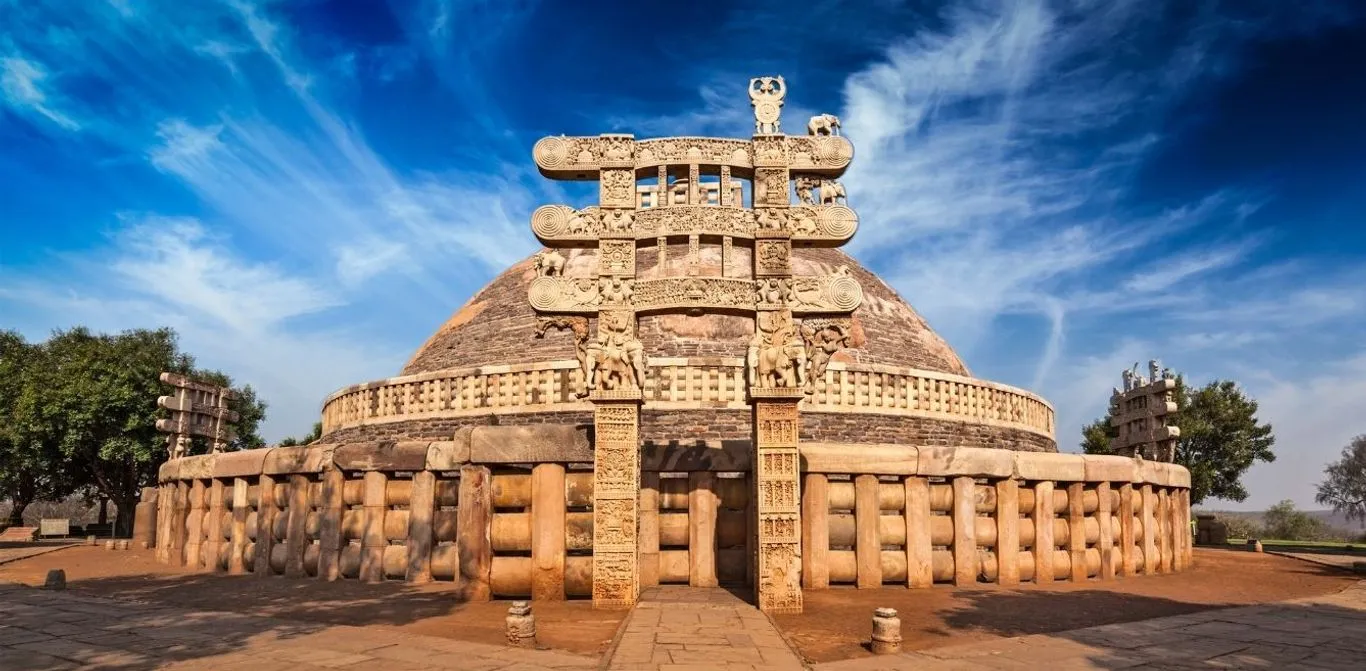
A masterpiece of Buddhism, the Sanchi stupa narrates the story of Buddha’s life through delicate figures, animals, and symbols. Located on the hilltop in Madhya Pradesh, the massive stone dome encircled by a carved gateway creates a sense of rhythm and adds a new layer to the spiritual architecture. Entering inside, there is a staircase to the upper pradakshinapatha, which encircles the dome, a belief that walking clockwise is a form of meditation and a fundamental part of spatial experience.
2. Ajanta and Ellora Caves
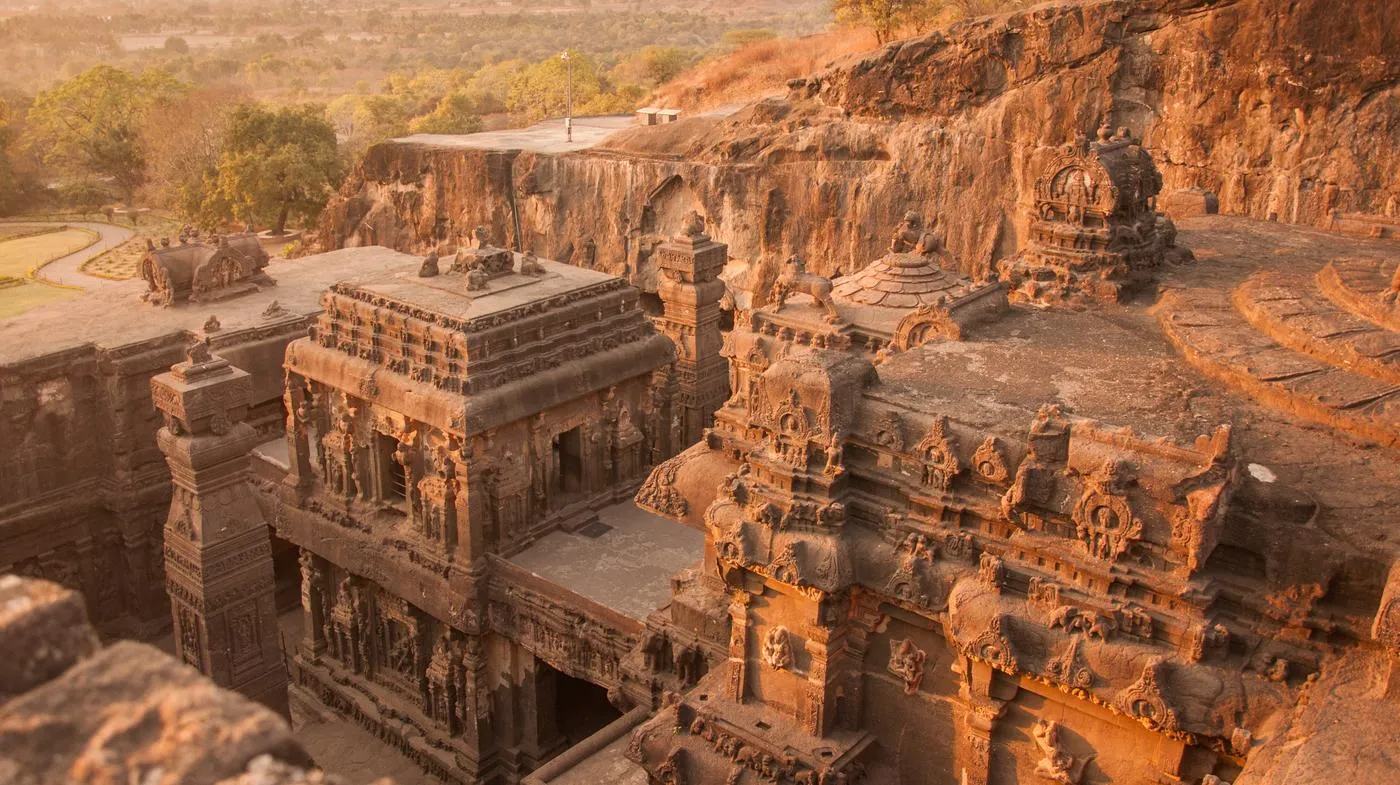
Carved out of volcanic basalt cliffs, these rock-cut structures, often grouped, are two UNESCO World Heritage Sites in Maharashtra. Stepping inside these hidden series of caves, it echoes the evolution of Indian art, craftsmanship, architecture, and religious thought over a period of nearly a thousand years. At Ajanta, the ancient Buddhist monasteries and prayer halls offer travelers breathtaking artistic endeavors, while in Ellora, the famous Kailash temple, hewn from a single rock, features colossal pillars and ornate carvings that rise like an open-air cathedral.
3. Rani ki Vav
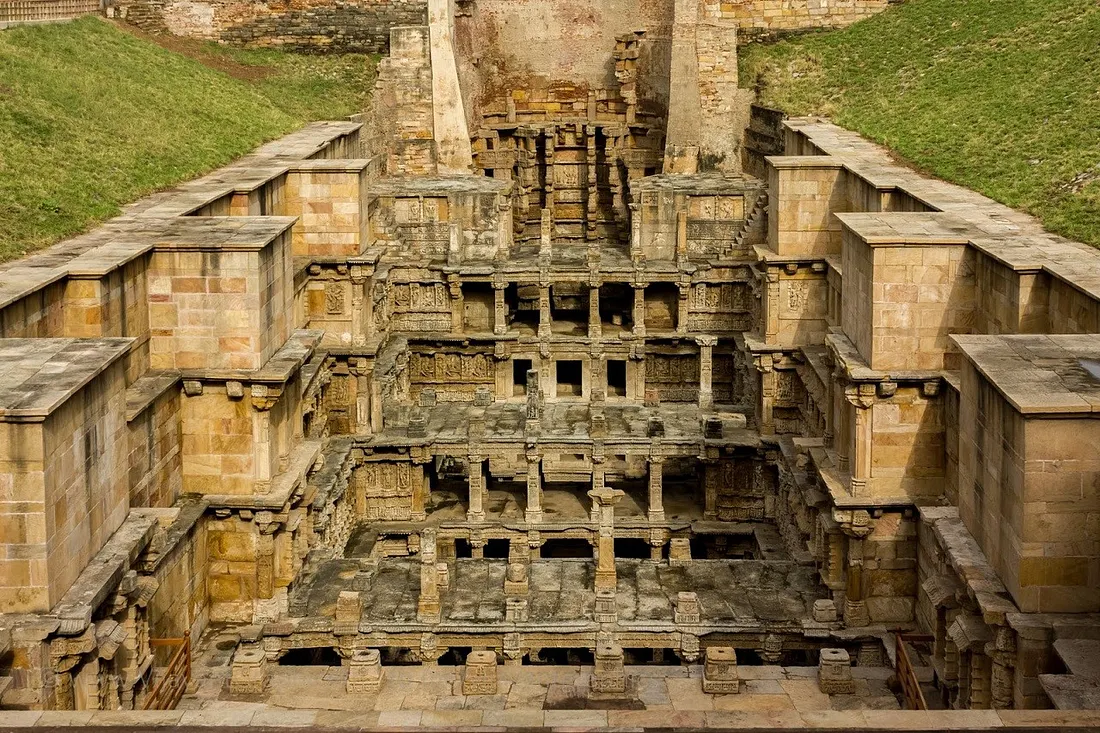
At first glance, it looks like a simple stepwell, but as you descend its stone steps, Rani ki Vav, situated in Patan, Gujarat, reveals itself as an underground palace of carvings. Every level draws one into a deeper world of motifs, sculptures, divine figures, celestial nymphs, and floral patterns, all narrating the imagination, engineering, and water conservation. Responding to the arid climate of Gujarat, the design of a simple well into a seven-storey inverted temple serves function, aesthetics, and spirituality.
Modern and Contemporary Architecture
These landmarks reflect India’s architectural innovation, merging modernist principles with local context, climate, and culture.
1. Jawahar Kala Kendra
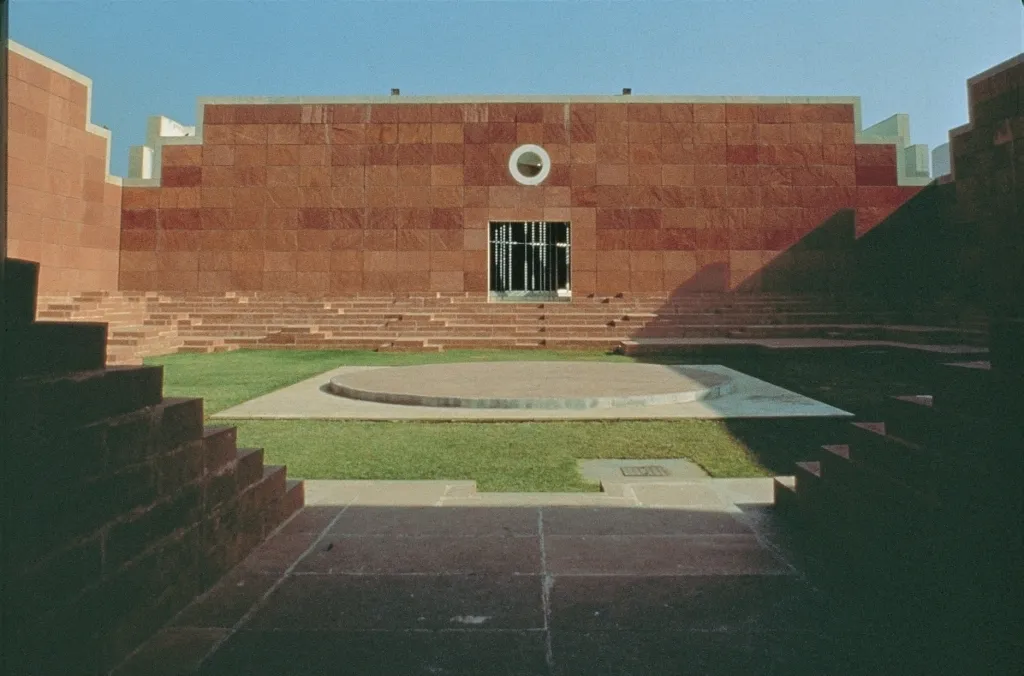
Inspired by Jaipur’s original city plan and the ancient Vedic concept of nine planets, Charles Correa designed this cultural center that is modern and deeply rooted in cultural and cosmic significance. To experience Jawahar Kala Kendra, one can move through distinct spaces like a museum, library, or theater, sensing the spatial representation as a dynamic cosmic diagram. The design divides the complex into nine square grids, with one square left open, forming an entry courtyard and symbolizing the emptiness in the creation. It is a living hub for travelers to catch an exhibition, watch a play, or enjoy Correa’s geometric play of light and shadow across its wall.
2. Indian Institute of Management
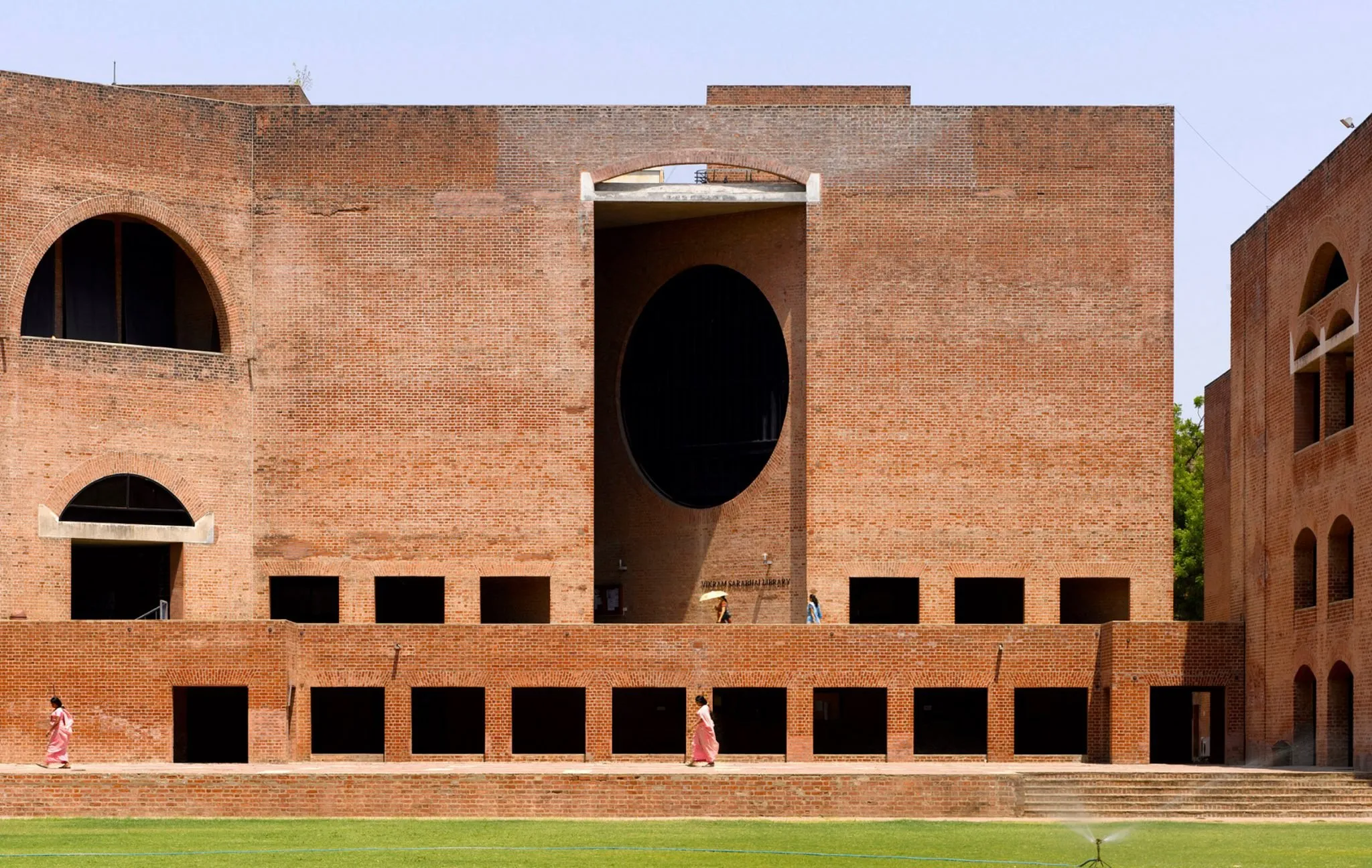
The master of forms and light, Louis Kahn, designed the IIM campus in Ahmedabad, showcasing modernist architectural principles with exposed brick walls, dramatic geometric forms, and open courtyards that frame the sky. The design aimed to create spaces that foster creativity, collaboration, and personal growth, reflecting modern institutional values and emphasizing functionality and aesthetics.
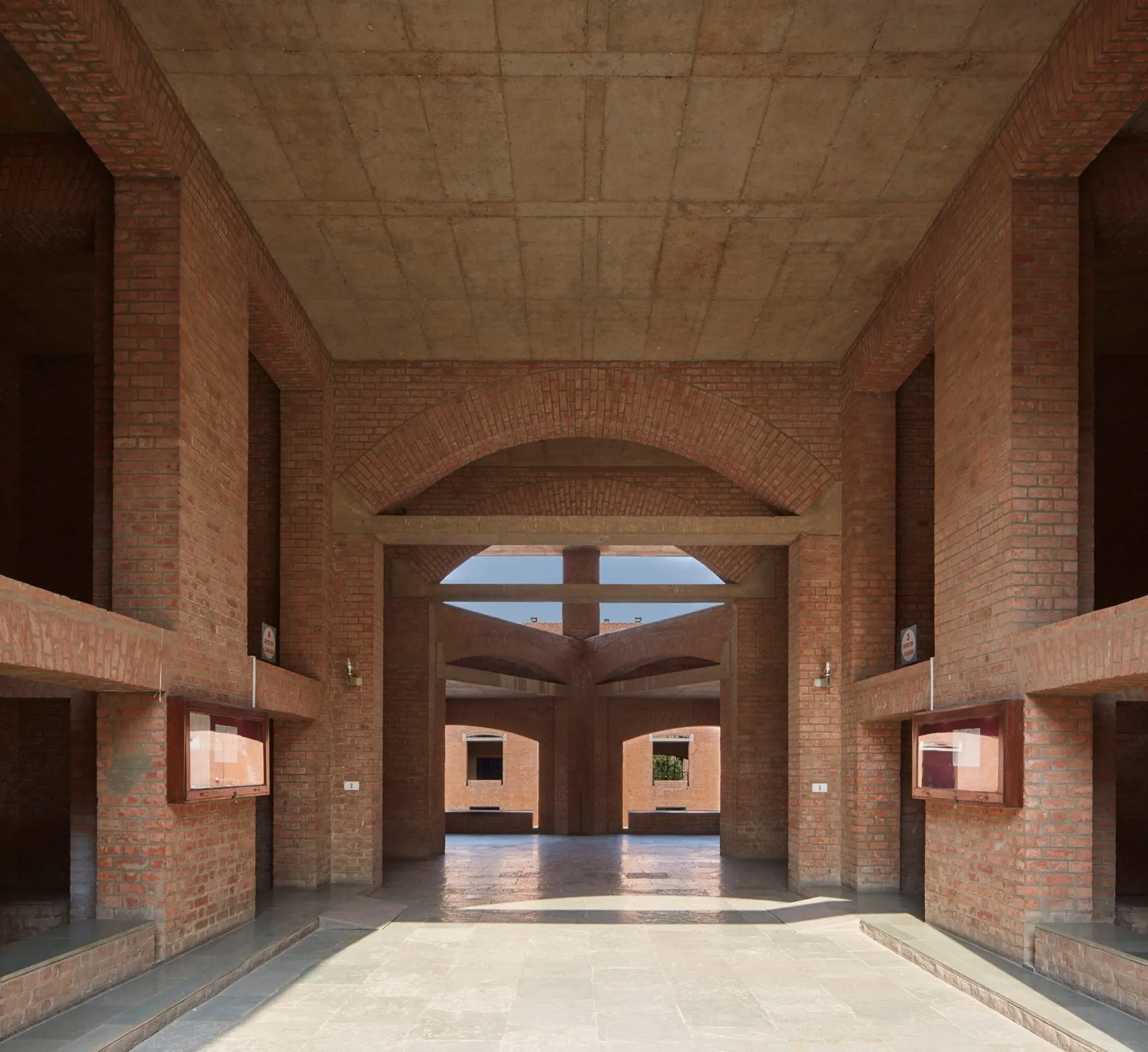
The structure was constructed with brick, incorporating the interplay of sunlight. The large circular and rectangular cutouts in the brickwork, known as jali, are a direct reference to traditional screens, serving both to filter the harsh Gujarat sunlight.
3. The Chandigarh Capitol Complex
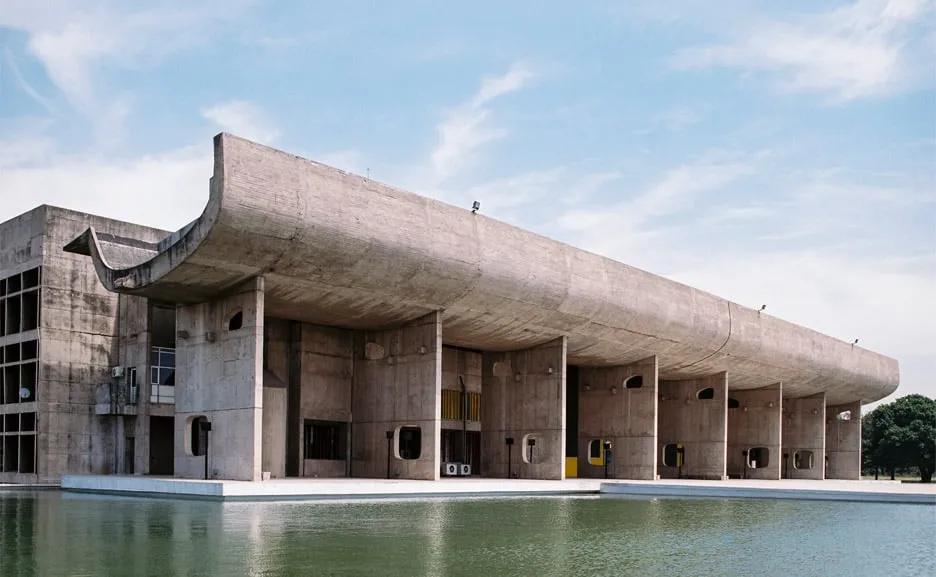
Designed by the Swiss-French architect Le Corbusier, the Chandigarh Capitol Complex is a modernist building with a powerful concept that was expressive, sculptural, and represented a new national identity of a free society. With a bold, concrete, brutalist form, the complex was reserved for monumental assembly halls, secretariats, and high court buildings that embody a forward-thinking design. Surrounded by an open plaza, the thoughtful design of order, proportion, scales, axis, and raw form balances governance with human scale.
4. Auroville Matrimandir
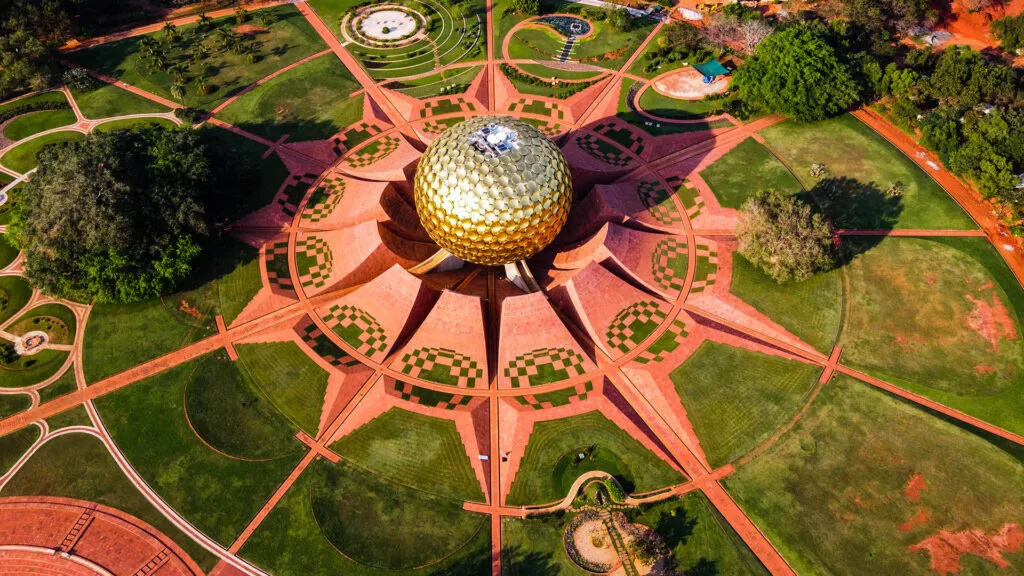
Located in Puducherry, rising like a giant golden orb amidst lush gardens, the Matrimandir is the spiritual heart of Auroville and a striking example of futuristic contemporary architecture. Conceived by Mirra Alfassa on the vision for a universal city and spiritual unity of humanity, there are meditation chambers in Matrimandir for travelers to experience silent concentration and a spiritual quest for a higher consciousness.
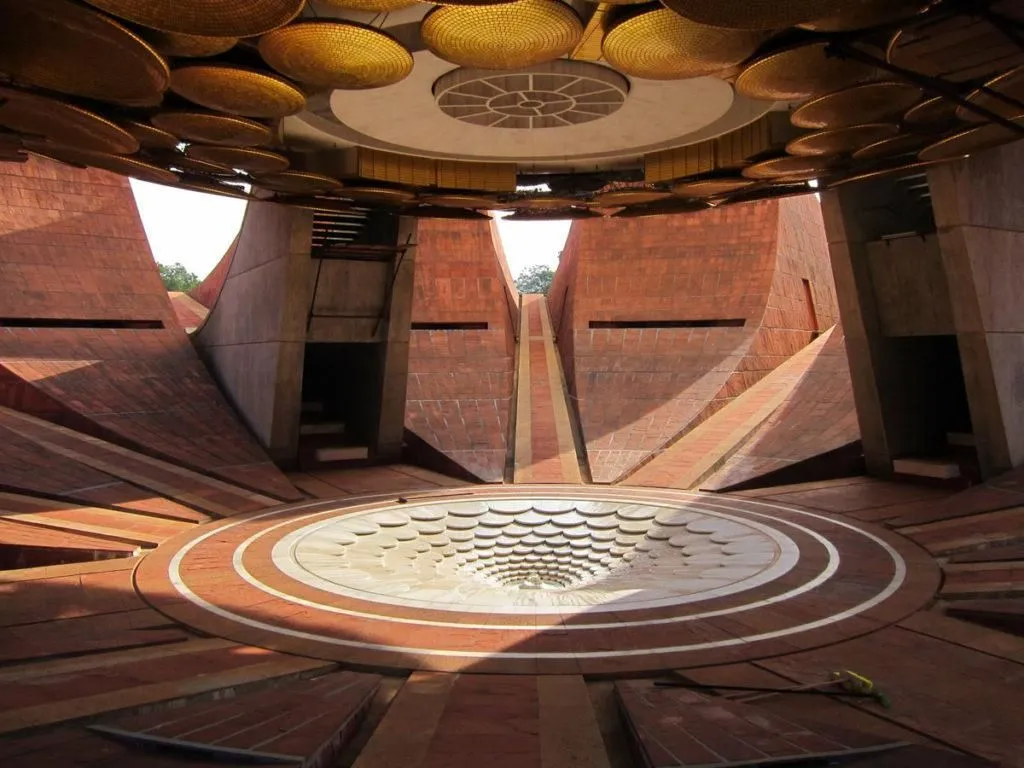
The main chamber, with its polished metallic surface reflecting sunlight, was arranged on a central axis and featured an inner chamber representing the mind in the center. It contributes to providing a peaceful atmosphere enveloped in light, geometry, and a transformative experience.
India for the Curious Traveler
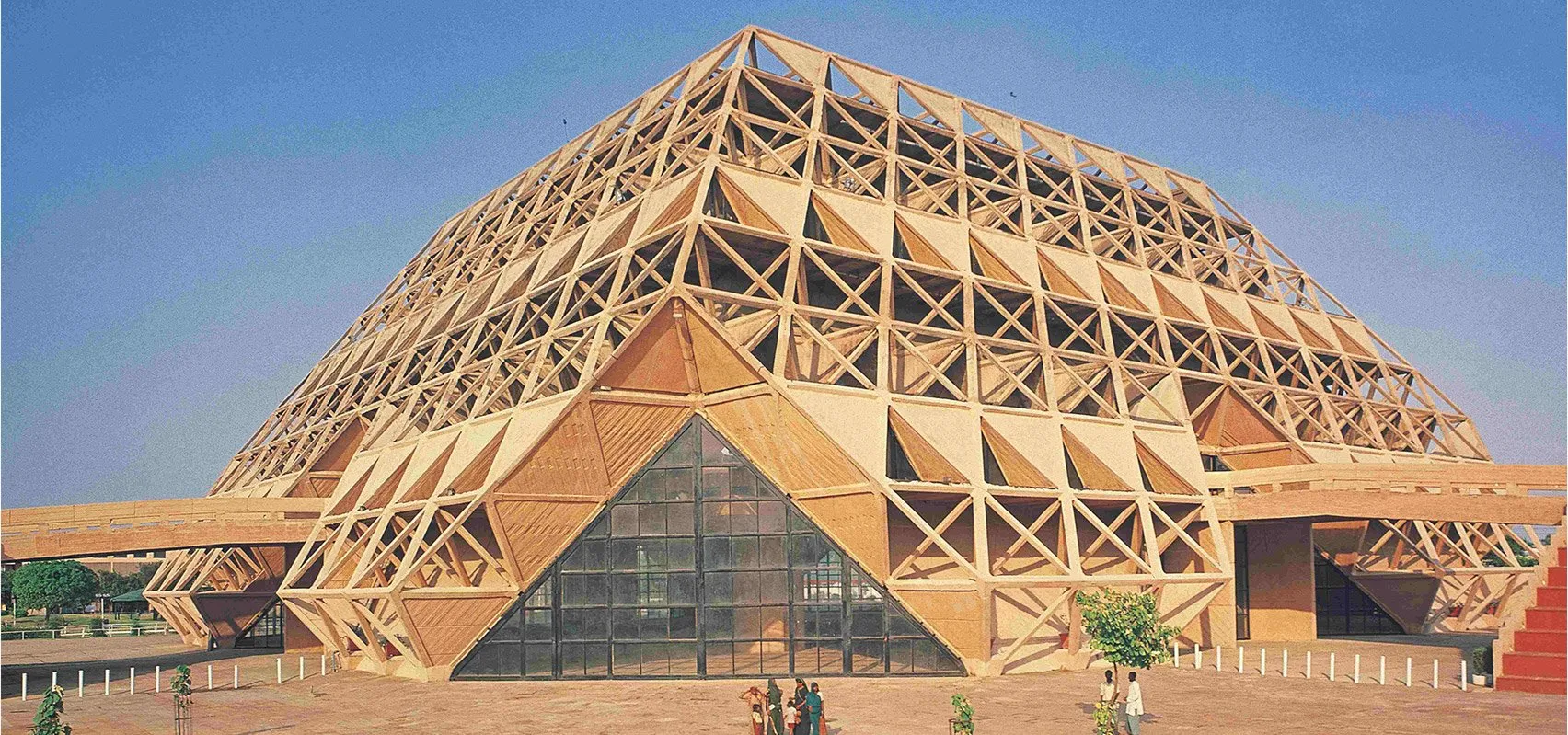
For curious travelers, India is a land of passion, spirituality, and a tapestry of culture, history, and natural wonders. Each structure is a chapter in the grand narrative of India’s architectural evolution, reflecting dynastic legacies, religious philosophies, and local craftsmanship.
Exploring India’s architecture is to engage in a sensorial and intellectual journey. For those willing to look closely, India offers a design culture both rooted and radically alive.
