


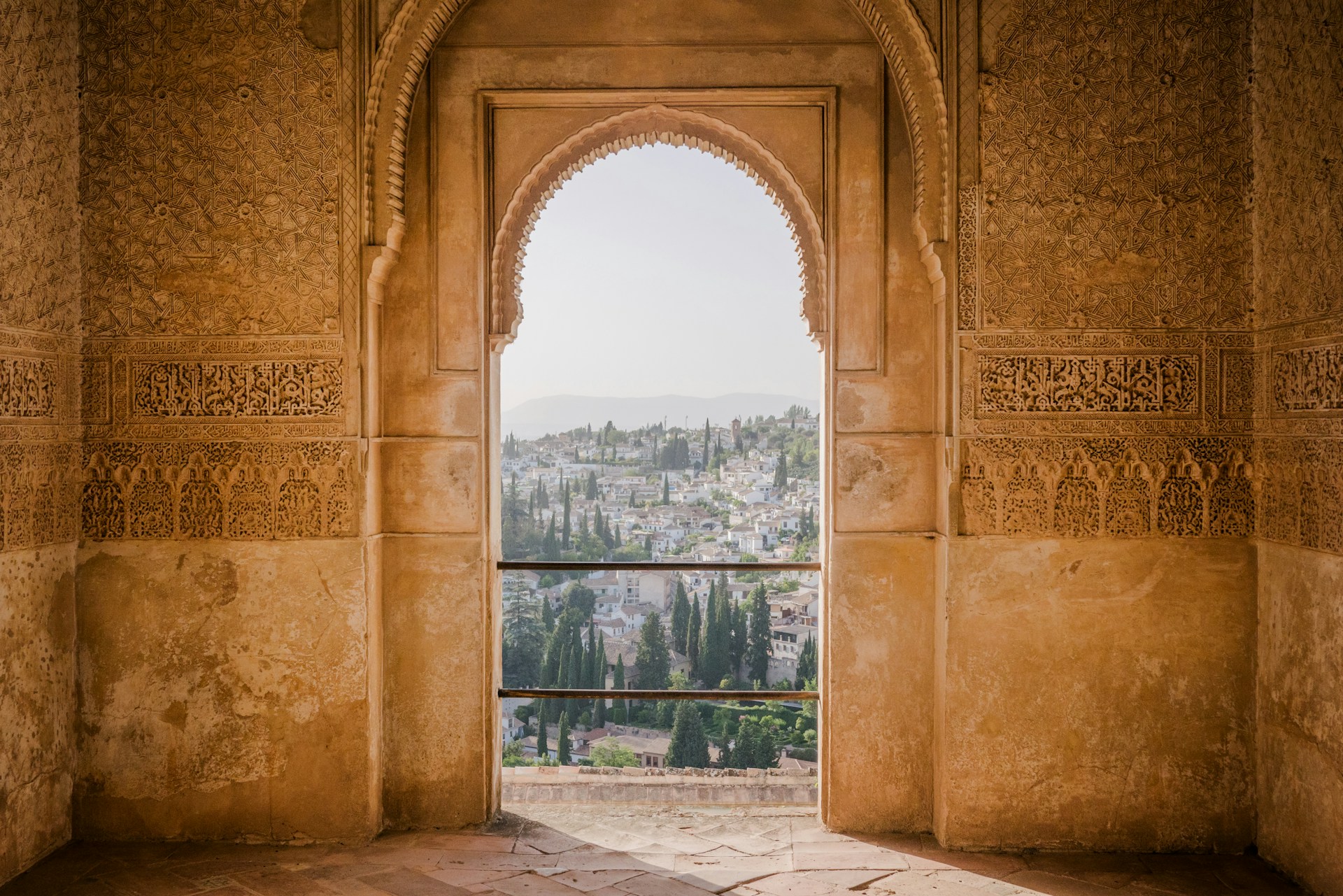
The second half of the 7th century marked the beginning of the Arabic civilization in Al Andalus (Spain). It was occupied by Islamic rulers who influenced the region and gave birth to a concept that modern-day architects build on and teach.
Islamic architecture is known to be associated with the Arab world because of its intricacy, geometrical patterns, symmetrical silhouettes, and radiant colors. However, its influence was derived from many European countries with Arabic roots, like the Iberian Peninsula, composed of Spain, Southern France, Gibraltar, and Portugal, ruled by Arabs from 711 until 1492. Despite Spain being in Southwest Europe, it had an autonomous character that made it ironically connected yet disconnected from the region’s known identity (due to its Arabic and Islamic history). This part of the European continent has a rich historical past that went through so much under Islamic rulers in an Era known as the Islamic Golden Age. Given its name, the Islamic golden age marked the start of enlightenment in the world of art, architecture, science, mathematics, and medicine in Spain and beyond.

Throughout the many decades the Arabs took over the region, and long after they left, their traditions and cultural monuments remain. Arches, domes, columns, courtyards, also known as ‘sahn’, vaultings, intricate geometric patterns, and water elements were the main artistic and architectural elements found in palaces, mosques, and other places of worship.
An example of everything the Moors believed in and loved is the famous Alhambra fortress and the mosque of Cordoba in Granada, Spain, both of which are exceptional architectural monuments until this present moment. Modern-day architects, urban planners, and artists draw inspiration from these buildings because of their original and intricate Arabic and Islamic elements that act as a testament to the creativity and intelligence of the Moors, who had so much to bring to the world of Art.
Now, let’s delve deep into Alhambra and its significance!

Alhambra in Arabic literally translates to, “The Red One”. It was given that name because of the castle’s unique and traditional red walls. Alhambra is one of the long-standing monuments that remains today, making it a UNESCO World Heritage site since 1984. It is the last trace and memory that is alive and well of the Islamic Golden Age, of architecture in its purest forms, of details that today’s contemporary designs miss out on, of geometry, art, and vernacular beauty, of old times that gave birth to so much and taught us the true meaning of architecture.
Alhambra’s architecture and design style

The architectural style of Alhambra falls under Islamic architecture and Spanish Renaissance; its distinct features include arches and columns, which are common elements used in Islamic architecture. Frescoes are seen, which are paintings done on wet plaster often depicting scenes from nature, mythology, and religion. Mosaic tiles are found across the fortress with their intricacy in detail and geometrical tilework along with sculpted stuccos, which are types of plasters used for decorative moldings on the walls, creating a three-dimensional effect in-wall design.
Alhambra’s decorative walls included stucco, tiles, wood carvings, motifs, and inscriptions that adorn the walls, showcasing the builders’ craftsmanship, artistic, and intelligent minds back in the day. In addition to their love of geometrical patterns and details, they had an extreme passion for poetry, which is engraved throughout Alhambra’s walls. Poetic verses in Arabic symbolize culture and religion, adding a layer of significance to the architectural beauty of the fortress.
Because beauty is useless if it is not functional, the designers and architects of Alhambra chose the materials of the building very carefully to ensure comfort all year round. Lastly, one of the most important and significant features of Alhambra and Islamic Architecture is the central fountain in a central courtyard or the so-called ‘Sahn’.
The central water element adds an aesthetic appeal to the palace complex while also being one of the most functional features by providing a means of natural ventilation during hot weather and adding a touch of peacefulness.
Alhambra’s architectural style is a testament to the fusion of art, culture, and religion, resulting in a grand and beautiful structure that stands as one of the most well-known symbols of Spain’s history.
The Structure of Alhambra

The materials used for building Alhambra were raw materials, including clay, aggregate, and lime,, making the palace lightweight and adaptable to the region’s climate. Clay is used as a binding material in the form of adobe bricks or clay mortar for construction, and aggregate is used with the clay to form the concrete/mortar.
In the case of Alhambra, the materials used were mostly made of metamorphic rocks and mud. Lastly, lime is used to hold the construction materials together for the building. During the summer season, the lightweight material helps cool the interiors of the palace, while during the winter season, the materials keep the inside warm and cozy, reducing the need to use additional elements for ventilation, making it a completely natural process felt until today.
The Exterior of Alhambra

In addition to the beauty and complexity of its materials, Alhambra is a palace with several entrances, each with its own story.
Puerta de la Justicia (Gate of Justice) is the main entrance gate of the palace located in the Southeastern area and was designed by Yusuf I, one of the Nasrid rulers. The steps leading up to the gate had a ‘defensive design’ strategy, which makes defenders spot intruders from a distance, allowing them to be prepared for potential threats.
Carved on the gate is a hand with five fingers symbolizing the five pillars of Islam, which are Al Shahada (faith in God and his messenger Muhammad PBUH), prayer, zakat (the act of giving), fasting, and pilgrimage (hajj). This symbolism reflects the religion and culture embedded in Alhambra’s architectural elements. Other gates include Puerta del Vino (gate of wine), Puerta de las Armas (gate of the arms), Puerta del Arrabal, Puerta de los Siete Suelos (Gate of Seven Floors), and Puerta de las Granadas (Gate of the Pomegranates) which is named after pomegranates that are symbolic fruits in Islam representing fertility, abundance, and righteousness.

Another grand example of the Golden Age of Islam in the West is The Great Mosque of Cordoba, which is the second largest Islamic monument after the Holy Mosque in Mecca, Saudi Arabia, but the largest in Western Islamic art. The grand mosque mastered architectural innovations by pioneering to blend elements from both the East and West. This includes double arches for roof support influenced by structures like the Los Milagros Aqueduct in Merida and the integration of Roman and Visigoth building methods.
The grand mosque of Cordoba is described as an architectural hybrid that combined artistic values from both Islam and Christianity even in terms of material like using honeycomb capitals and innovative ribbed vault systems.
Like the Alhambra, it included a courtyard or a “sahn” that served aesthetic and functional purposes in Islam.
In conclusion, Islam’s enduring influence on Spanish architecture is epitomized by the remarkable legacy left behind by caliphates, scholars, mathematicians, scientists, designers, doctors, and numerous other great minds. Beyond the sheer beauty of their artistic creations, their ability to seamlessly integrate functionality with context and time is what truly stands out. The reasons behind their innovations and the methodologies they employed continue to be subjects of study and education today, showcasing the profound and unique impact of the Islamic Golden Age and Islamic architecture on the world.
