

Explorers of the oceans, founders of trade ways, creators of the arts and crafts, stewards of nature, and warriors of their time: The Vikings. Their profound legacy continues to this day in different forms. Once Vikings, now Danes define functionality, practicality, durability, and sustainability in architecture and design. These core values have been channeled through the soothing passage of time.
Viking Settlements: The Roots of Danish Urban Planning
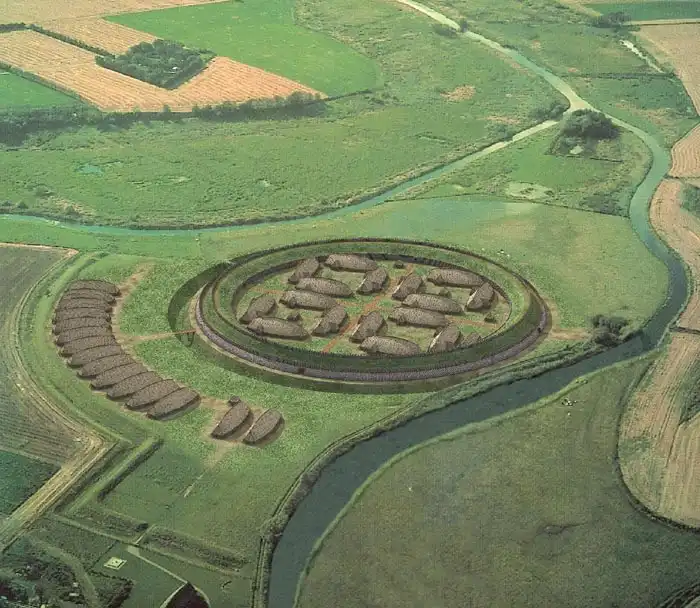
Viking settlements in Denmark during the pre-Christian era, around 800AC-1066AC, were built as a comprehensive hub that consisted of a dwelling house — the long house —stables, workshops, and banquet rooms. Daily activities were cooking, eating, sleeping, storytelling, crafting and carving wood, weaving wool, tool making, caring for animals, performing rituals, etc. Structures were functionally established to fulfill a certain activity or need. These hubs reflect the collective lifestyle of Danes and their roots in creating efficient urban planning.
The Role of Yggdrasil: Symbolism in Viking Architecture
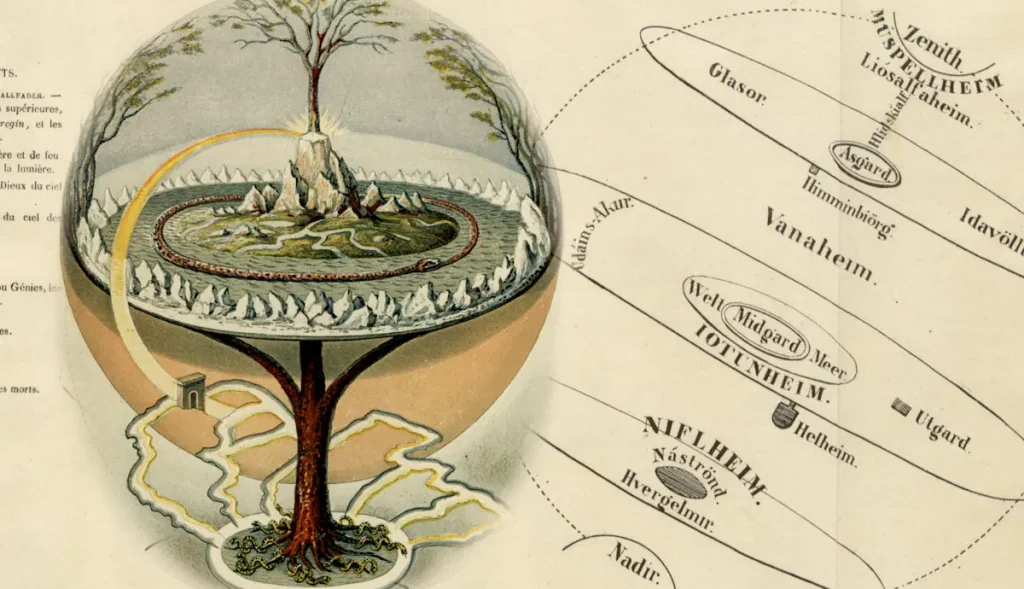
Vikings’ religious practices show how they centralized the World Tree, Yggdrasil. According to sagas and edicts, Yggdrasil holds the entire cosmos together, preserving balance. No wonder why the longhouse in the center of Viking farms was made out of wood, given this deep symbolic connection. Other materials used for constructing their homes were thatch, daub (consisting of clay, mud, dung, and straw), stones, and turf. The primary usage of wood still resonates in Danish design.
Craftsmanship as Daily Life: The Art of Viking Creation
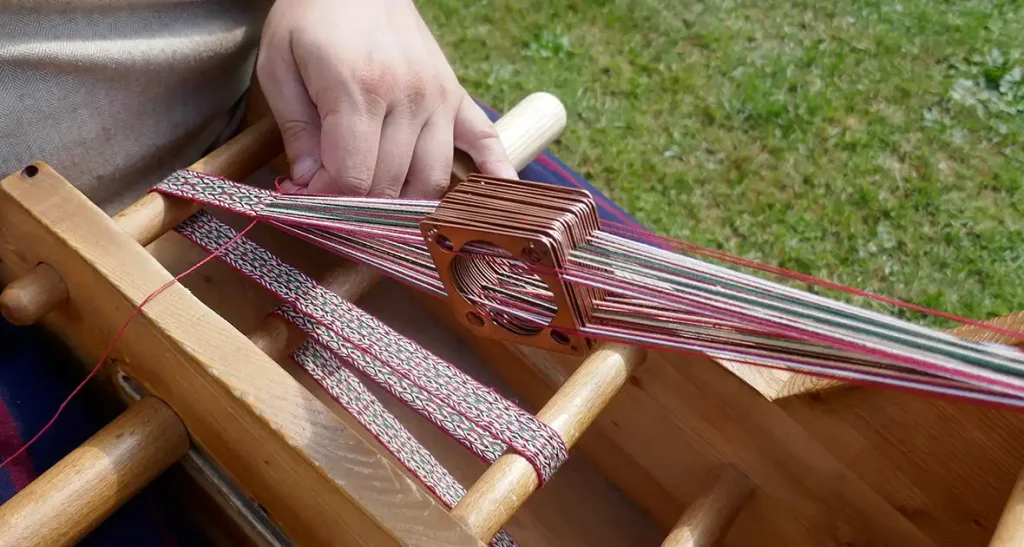
In these hubs, craftsmanship was not only used to construct shelters and lodging. Vikings were highly skilled artisans creating daily objects as part of their daily routine. Their crafts included jewelry made out of glass beads and silver, weapons forging, processing wool and flax, plant dyeing, spinning, walking, weaving, sewing, nalbinding, embroidery, felting, wood carving, and boat building. The Danes’ attention to detail lies down in the ancient craft traditions.
The Jelling Stones: Denmark’s Birth Certificate
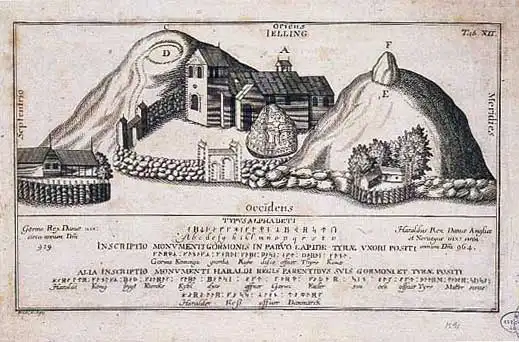
Around 965 AC, the ruler of the time, King Harald Bluetooth, announced that the Danes were now Christian by erecting a rune stone in Jelling, Denmark. Often referred to as the ‘‘Denmark’s Birth Certificate,’’ this stone features symbolic carvings on both sides: one side shows an animal wrapped by a snake, and the other side shows a representation of Christ.
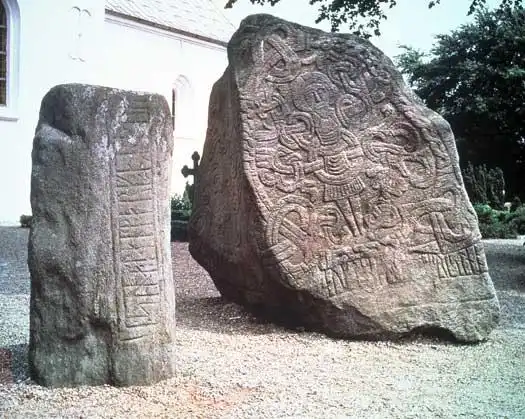
Harald’s runestone reads: ‘‘King Harald bade this monument be made in memory of Gorm his father and Thyra, his mother, that Harald who won for himself all Denmark and Norway and made the Danes Christians.’’ Shifting from polytheist religion to monotheistic religion was a gradual process. This politically crafted decision influenced the Danish societal structure as well as their architectural silhouette since every religion requires a form of worship.
The First Wooden Church: Transformed Legacy
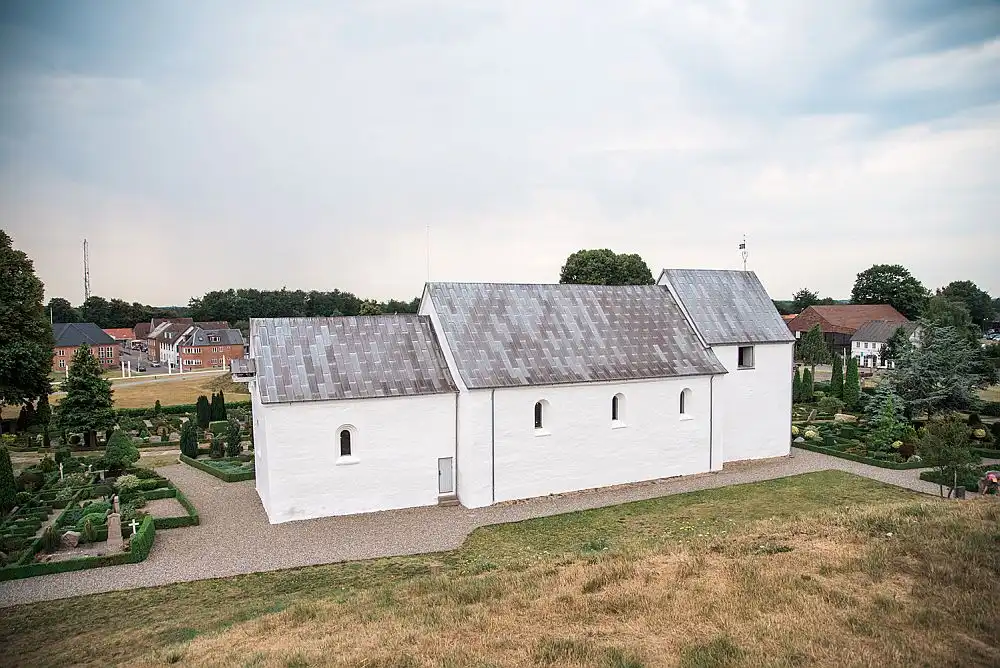
After sending the Norse Gods away, King Harald Bluetooth built the first wooden church to welcome Christianity. Although the original church and the two subsequent wooden churches couldn’t survive the flames of time, their legacy remains deeply embedded in Danish history. The Jelling Mound site itself indicates the gradual process of Christianisation.
Today, the current limestone church, built around 1100 AC, symbolizes this transition. Limestone was a common material in medieval Danish architecture with its availability and workability solidifying the religious transition. The church’s design embraces a minimalistic approach over cluttered ornamentation. Its simple, clean, and modest lines showcase the tranquil confidence of the Danish people, signaling their architectural evolution. The church features a rectangular nave, a smaller chancel, and narrow windows special to typical Romanesque architecture.
Its altar faces east, a common practice in most medieval churches, honoring the rising sun and Christ’s resurrection. This unassuming design reflects deep-rooted Danish values: durability, functionality, and harmony with its surroundings. Thus, this site represents the simplification of Danish aesthetics in architecture and design while reducing the prominence of elaborate ornamentation.
Reforms Influence Architecture and Design: Simplicity over Grandiosity
As the Middle Ages progressed during the 11th and 12th centuries, Christianity took deeper roots in Denmark. Rulers came and went, the monarchy grew stronger, and the royal family became an important part of Danish society. By the 13th and 14th centuries, Gothic influences began to spread from central Europe through trade ways and political interactions, and Denmark remained mainly resistant to the ornate features and grandiosity of the Gothic style.
In the 15th and 16th centuries, they chose to adopt Lutheranism over the Gothic style with the influence of the Protestant Reformation that favors Protestantism’s simplicity and modesty. This decision reflects their strong heritage of simplicity, minimalism, and focus on quality over excess.
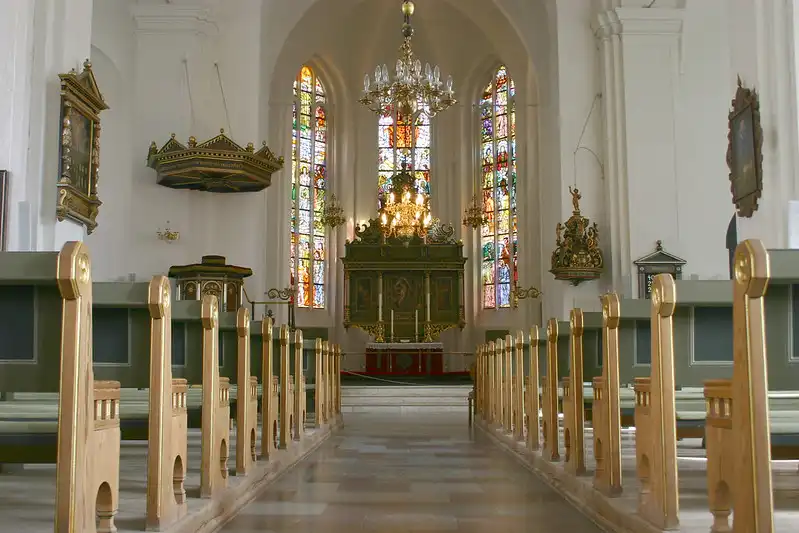
After the Lutheran Reformation, St. Nicolai Church in Kolding was simplified to align with Lutheran values. The interior was purified by sweeping the unnecessary ornaments away and centralizing the altar to honor the word of God.
From Minimalism to Dutch Renaissance Ornamentation: Building a National Identity
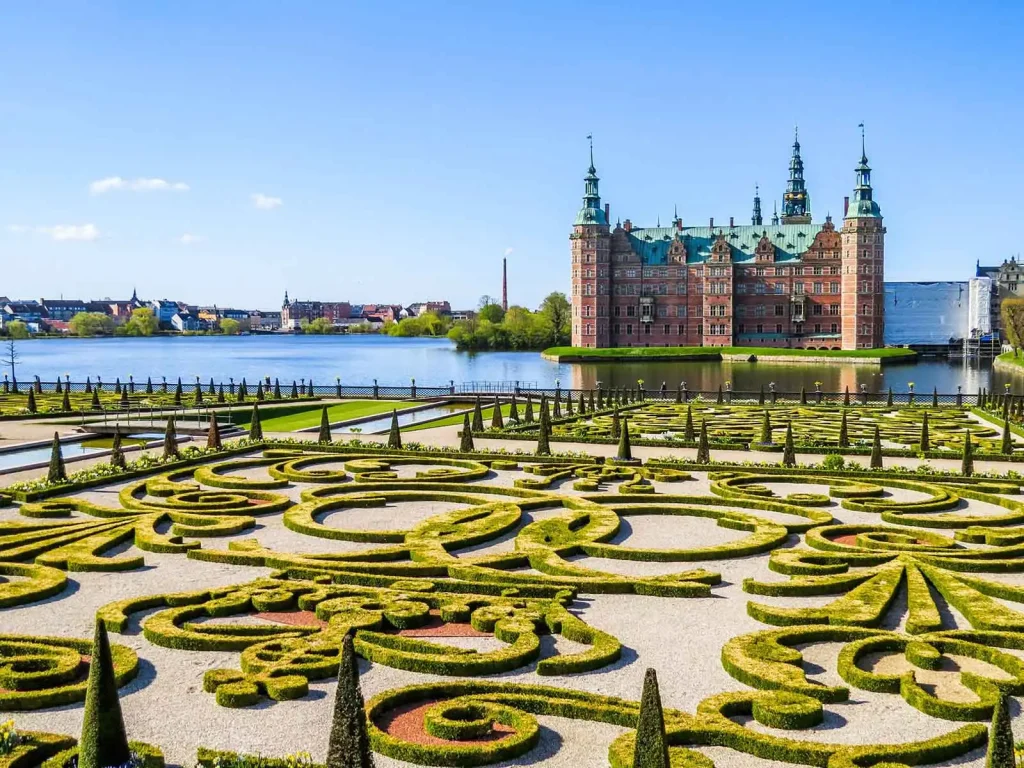
After the Renaissance reached its peak in central Europe, the Dutch were at the forefront of Renaissance architecture in Northern Europe. In the 17th century, King Christian IV of Denmark was heavily influenced by the Dutch Renaissance and commissioned the architects Hans van Steenwinckel the Elder and Hans van Steenwinckel the Younger to build a castle that showcases the power, wealth, sophisticated culture, and national pride of Danish monarchy.
The construction of Frederiksborg Castle began in 1600 and lasted until 1620. The castle features a symmetrical layout with ornamental gables. The use of brick and sandstone clearly reflects the Dutch Renaissance style.
The garden of Frederiksborg Castle is a masterpiece of its own. It is characterized by a symmetrical orientation, axial layout, and ornamental details. It symbolizes the power of monarchy over nature and their harmonious relationship while representing the Danes’ enduring admiration for the natural world.
Even though the clean lines and functionality as core values of Lutheranism never faded away, Christian IV was eager to prove Denmark’s ambition to assert itself as a significant European power. This era witnessed a shift to more ornate styles.
Absolutism: Tour de Force in Danish Architecture
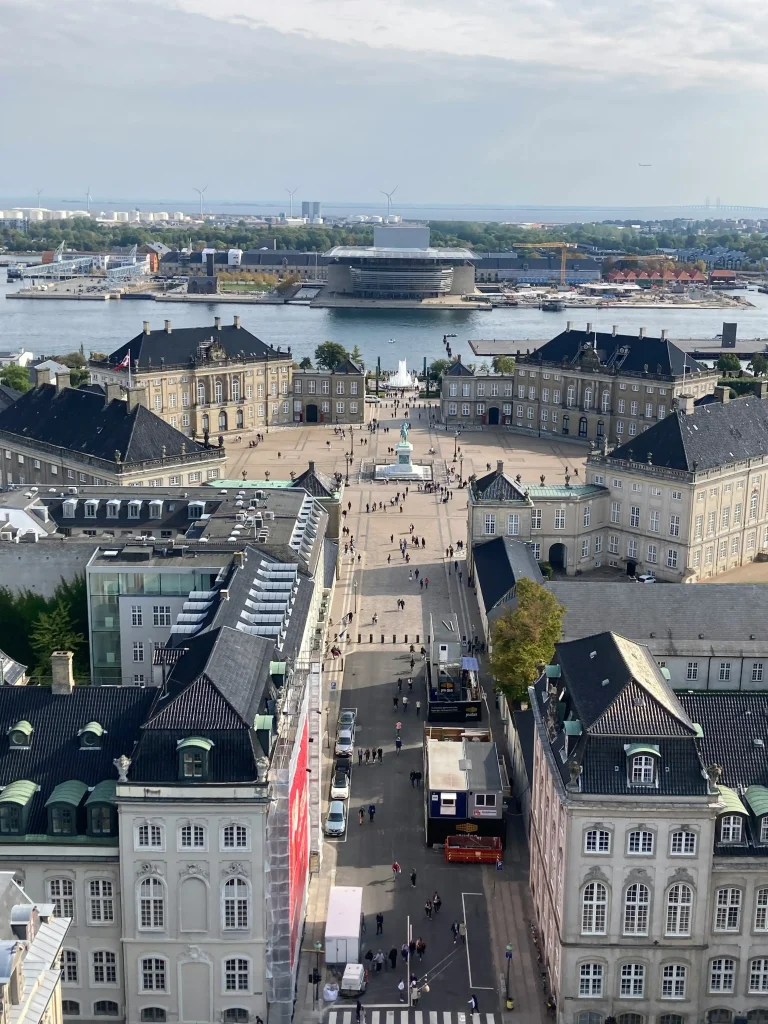
Shifting religions gave place to shifting regimes. After King Christian IV’s death, Denmark went through a change in regime from an elective monarchy to an absolute monarchy. Absolutism took its place in the pages of history till 1839. During the period of absolute monarchy, Denmark’s societal structure, political stance, and approach to design transformed significantly.
Danish Nationalism: Back to the Roots
By the time it was the 17th and 18th century, grandeur Baroque and exuberant Rococo influenced the built environment in Denmark, aligning with the ambition to show the absolute monarchy’s powerful stance. While both architectural styles are crowded with ornamentation, Danish Baroque and Danish Rococo were characterized by more restrained features.
A significant example of Danish Rococo is the Amalienborg Palace in Copenhagen. This palace has been the official residence of the Danish royal family since 1794. Architect Nicolai Eigtved was the mastermind behind the plan for an octagonal castle square surrounded by four palaces. The balanced order and harmony of the palace symbolized the idealized notion of monarch rule. The equestrian statue of Frederick V riding toward the Marble Church also conveyed the story of the king as God’s living image on Earth. Amalienborg is considered one of Europe’s finest examples of Rococo architecture.
Denmark fell into conflicts during the 19th century. Wars were waged, territories were lost, regimes were changed… However, the Danes found the opportunity to return to their fundamental values. The Golden Age of Danish culture emerged, and writers like Hans Christian Andersen awakened Danish nationalism. In 1905, a very Danish building was completed—the Copenhagen City Hall.
Martin Nyrop, the architect, carefully designed the building in the National Romantic style with a sense of Danish high-quality craftsmanship. During this period, Danish architecture and design took a new lease on life, embracing its core values.
High-quality materials, attention to craftsmanship, functionality, simplicity, and modesty were at the center of the built environment, and designed goods formed a basis for the Danish Modernish Movement. Designers and architects like Kaare Klint, Arne Jacobsen, Hans J. Wegner, Jørn Utzon, and Poul Henningsen were some of the most influential creators of Danish Modernism.
Globally Proved: Modern Danish Design
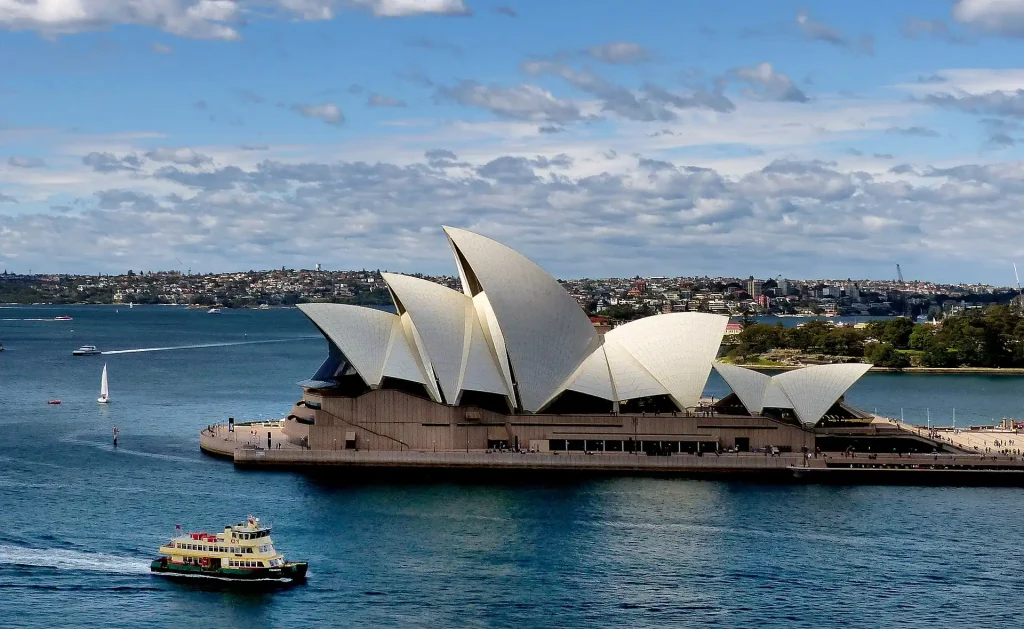
A pivotal point for the recognition of Danish design and architecture was the international design competition for a new performing arts center in Sydney, Australia. Jørn Utzon won the competition with his sensational design inspired by the sails of ships. After the competition, Danish architecture was globally proved and solidified its place in the world of design.
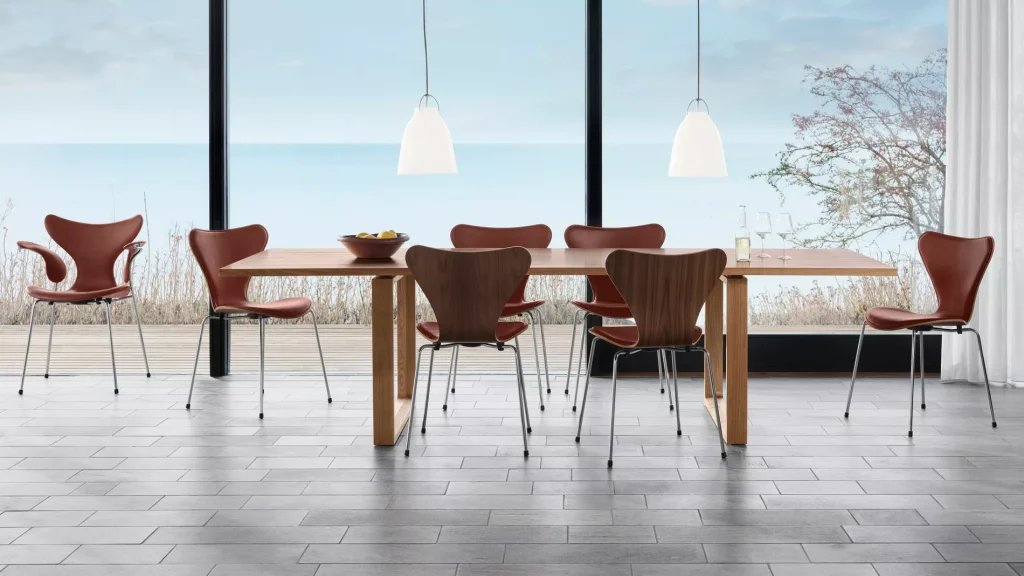
Another influential name was Arne Jacobsen AKA the synonym of global modernism. He played a crucial role in enriching Danish design and architecture, promoting it to the world. His signature is under many buildings and pieces of furniture of his time: SAS Royal Hotel, The Toadstool, Aarhus Rådhus, Ant Chair, Egg Chair… Although he introduced himself as an architect, his furniture designs contributed to modern interior design. His choices of high-quality materials and their combinations created sleek interior elements that redefined the spaces as functional, comfortable, and approachable. He continues to inspire contemporary designers around the world with his timeless and appealing creations.
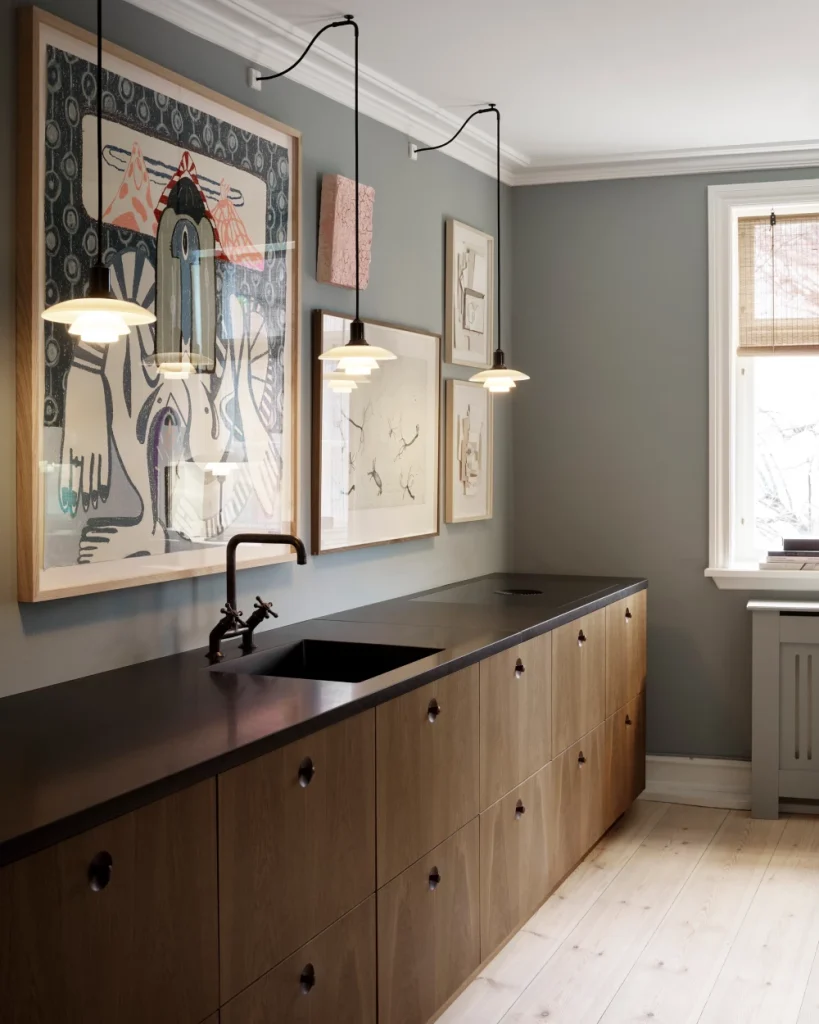
When interior design is mentioned, light is an essential element. For Danish people, long winters and limited daylight resulted in valuing the light more and more. Poul Henningsen is a renowned name in Danish name lighting design. His glare-free lighting designs became the signature of Danish interiors, contributing to the comfortable, cozy spaces essential to the Danish concept of Hygge – embracing comfort and well-being-.
LEGO House, Museum in Billund, Denmark
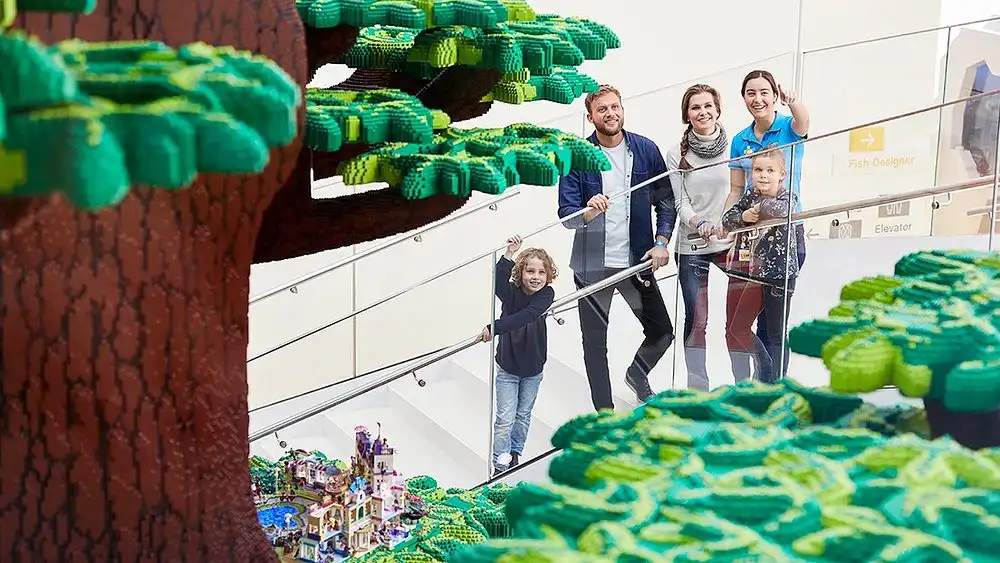
The Danish people’s intrinsic desire to create their surroundings based on their values extends beyond interiors. The creation of their own space begins at a very early age with one of the most creative yet simple LEGO bricks. These colorful blocks not only help raise self-confident, decisive, expressive, and intelligent new generations but also show the collective mindset and deep-rooted craftsmanship that reflect the enduring values of Danish culture.
From the Viking Age to this day, Danish architecture and design have inspired the world and are continuing to do so. Their deep-rooted values endured the change of the times and grew even stronger through it. Their transformation teaches us to return to our core values to achieve true uniqueness.
Learn with PAACADEMY: Check out the workshops at PAACADEMY to learn from the industry’s best experts how to use advanced parametric design tools, AI in design workflows, and computational design in architecture!
