


Bamboo is a woody grass plant with a hollow stem and is one of the most versatile construction materials. It is a natural composite material mostly grown in tropical regions. As one of the most primitive construction materials, bamboo finds application in the AEC industry even today due to its great compressive and tensile strength. Bamboos are amongst the fastest-growing plants in the world, making them available in abundance for construction purposes. In fact, bamboo is one of the most loved materials across the globe due to its cost-effectiveness and environment-friendly nature.
Architects across Asia are familiar with bamboo as a native construction material and use it on varying scales throughout their projects. Below is a list of the most outstanding bamboo construction in the Asian continent.
1. Diamond Island Community Center, Ho Chi Minh City, Vietnam
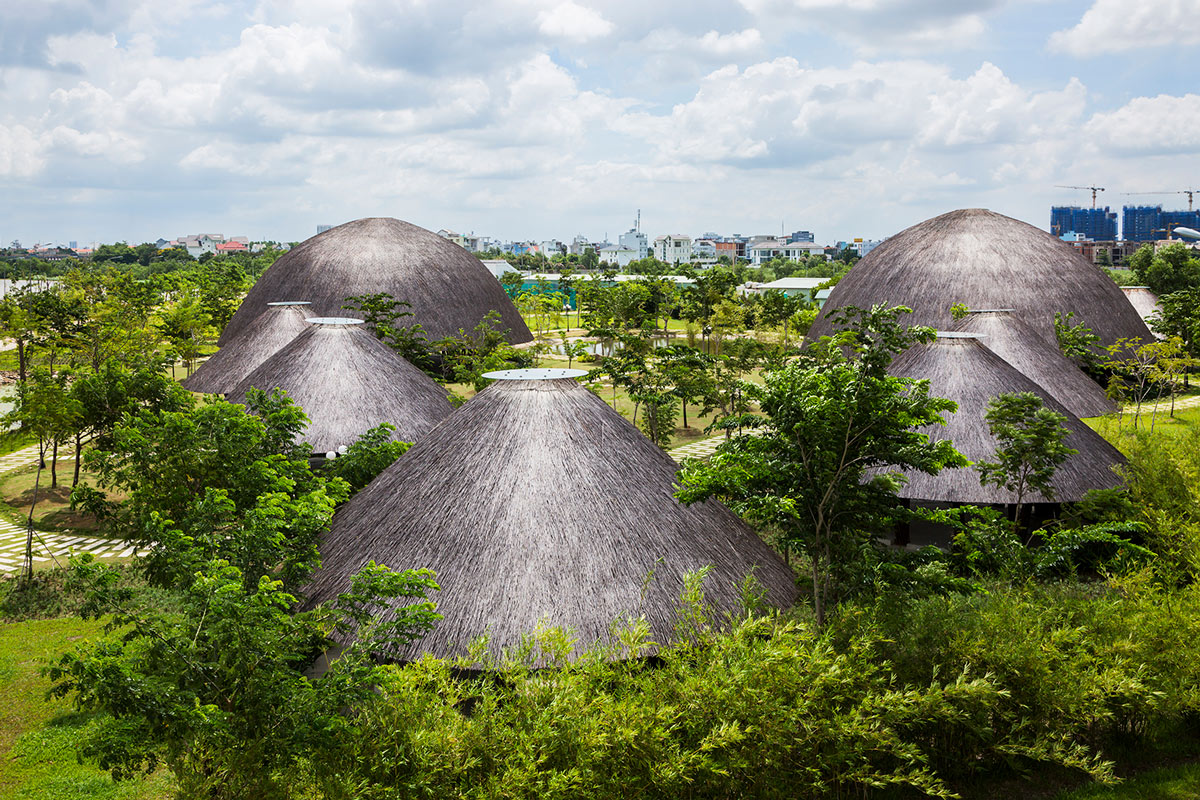
Designed by Vo Trong Nghia Architects, Diamond Islands comprises bamboo pavilions on an islet next to the Saigon River. The pavilions are topped with thatches and are used as a multi-purpose space for hosting events such as conferences, banquets, and parties. The circular roofs are supported by bamboo stakes that are bound and woven together. The bamboo roof blocks the sun, thereby cooling and shading the space underneath.
2. Bamboo Pavilion, Shanghai, China
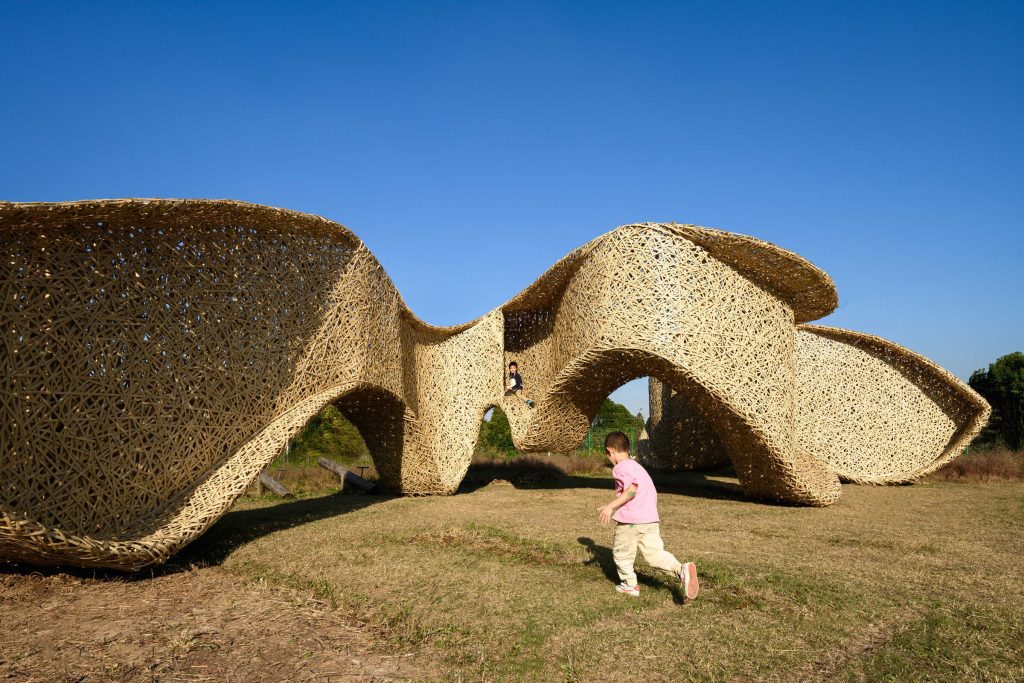
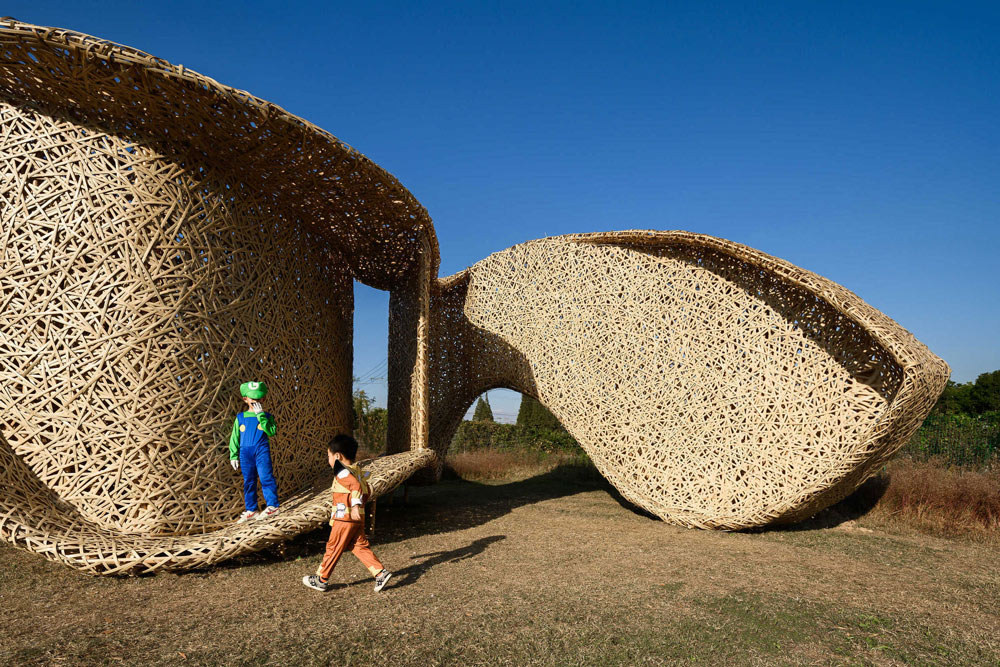
Lin Architecture has designed the Bamboo Pavilion on the rural island of Chongming, Shanghai. This meandering structure is designed to bring vitality to an empty site by creating a space for social interactions. The structure stays in place with the help of a bamboo framework that is wrapped in sliced bamboo strips to form semi-enclosed spaces. The project architects have used eight unique types of bamboo joints to realize the abstract structural form of the building.
3. Tea Leaf Market of Zhuguanlong, Fujian, China
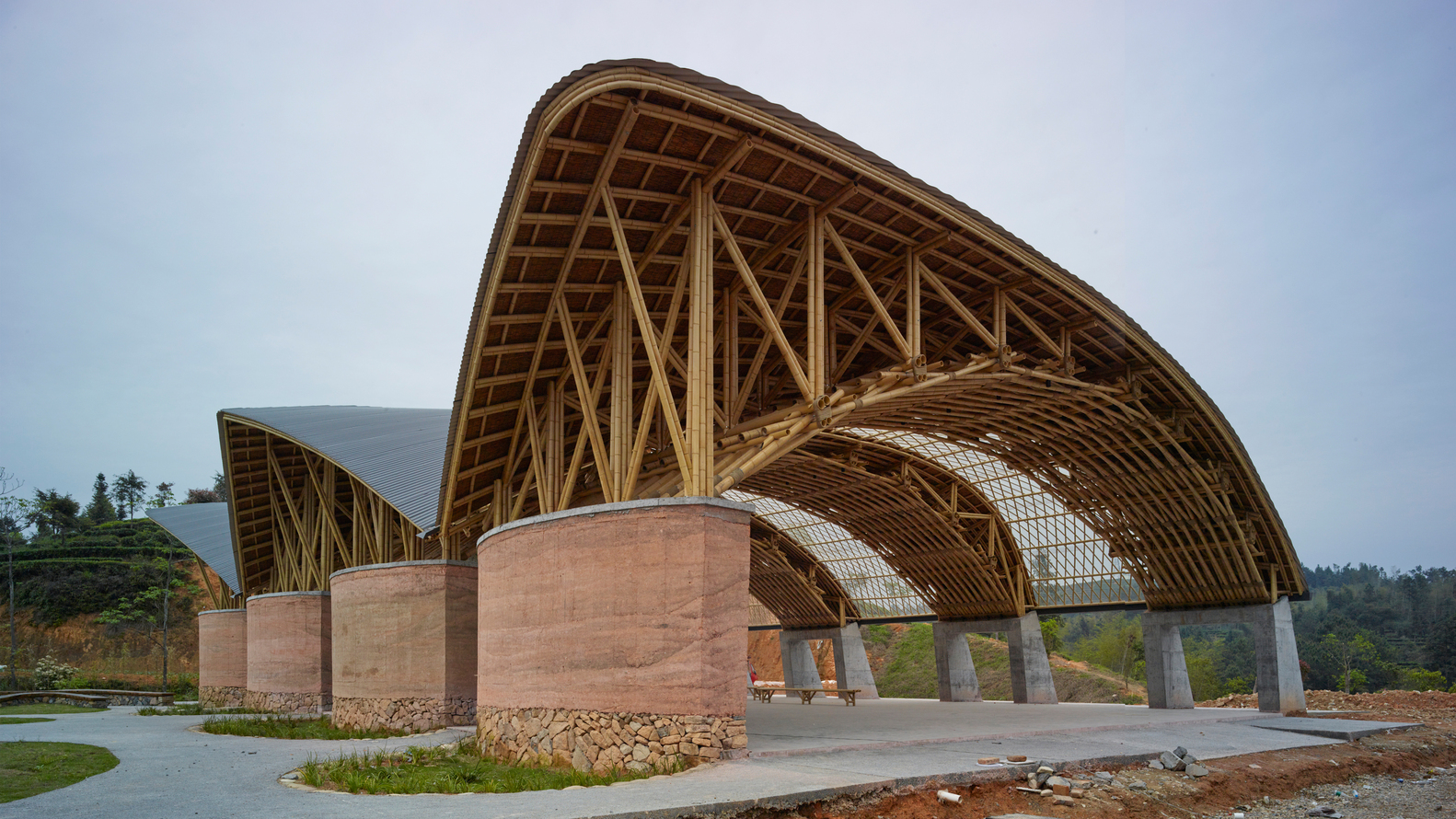
The design brief mentioned creating a large-span space to accommodate various mega-events such as weddings, funerals, trading exhibitions, etc. The project is designed by SUP Atelier using lightweight bamboo stakes to tackle larger spans. The walls are made of rammed earth and concrete capped with a bamboo roof that spans 60 feet in width. The roof consists of 4 layers of bamboo structure topped with timber planks, membranes, and steel tiles.
4. Bamboo Sports Hall at Panyaden International School, Chiangmai, Thailand
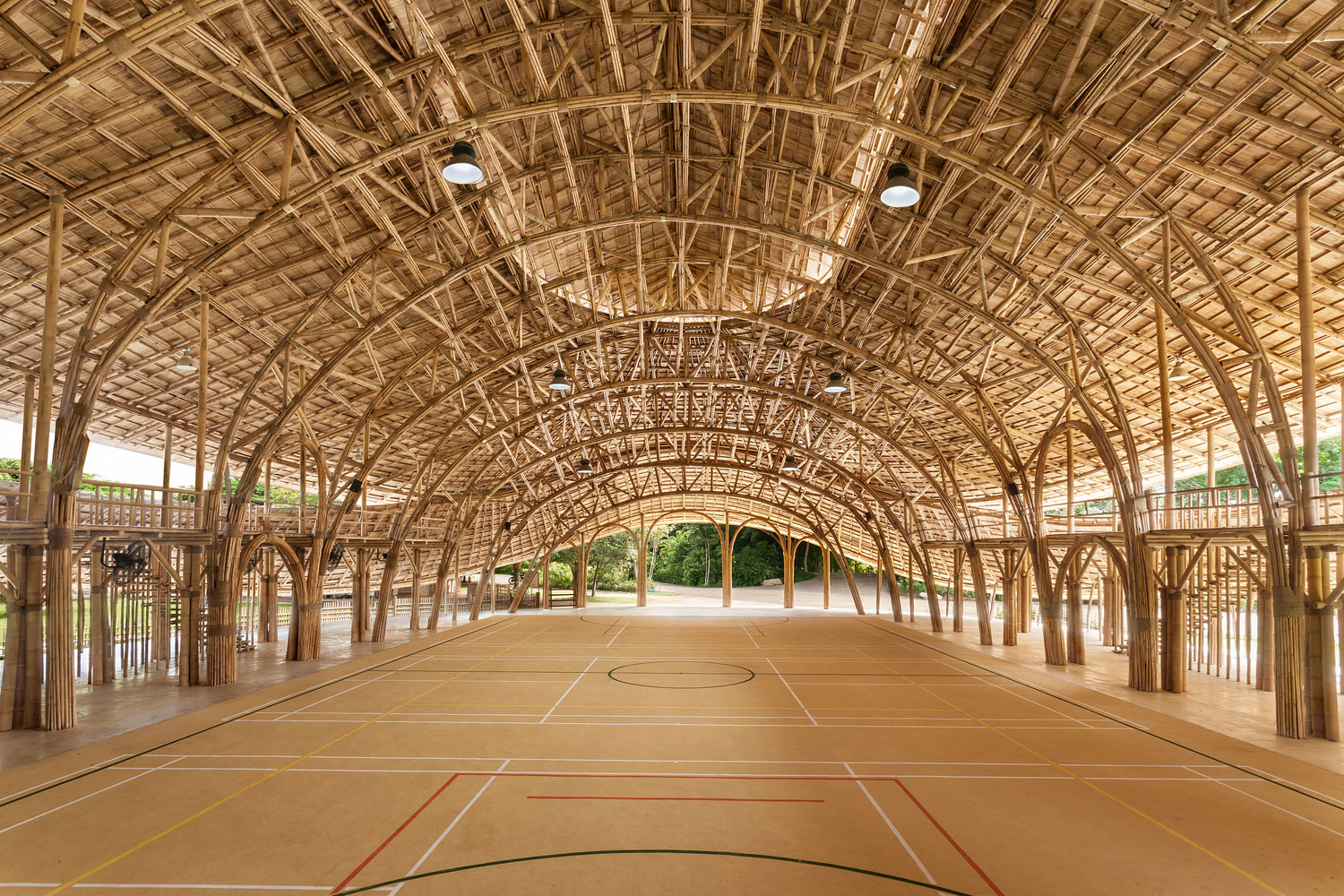
Designed by Chiangmai Life Architects, the Bamboo Sports Hall at Panyaden International School is built entirely from bamboo. The structural design of this hall is inspired by lotus and can accommodate 300 people for hosting the games of basketball, volleyball, futsal, and badminton. The wavy form of the roof represents harmony in design. The architects have used bamboo stakes of different sizes to bound together large bundles of thin stalks.
5. Bamboo Pavilion, Guilin, Guangxi, China
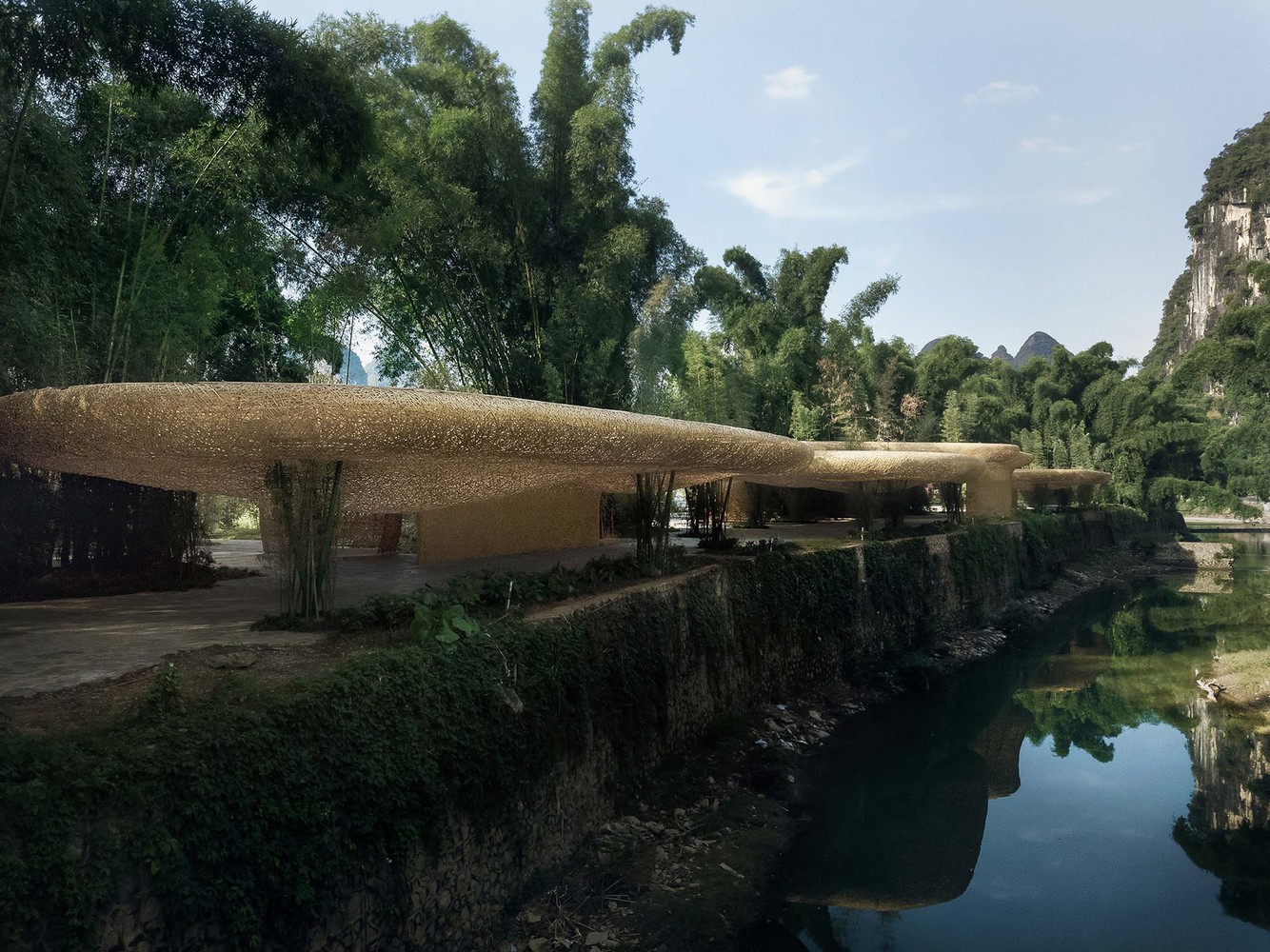
The bamboo pavilion designed by LLLab is created to have floating clouds on top of the circulation space between two performance spaces of a local show, “Impressions Sanjie Liu.” In a comforting and relaxing environment, the structure is located on the riverside, backed by a long stretch of continuous bamboo forest. The canopies stretch 460 feet long and are handwoven abstractly using sliced bamboo strips to form subliminal and organic shapes.
6. Sharma Springs, Indonesia
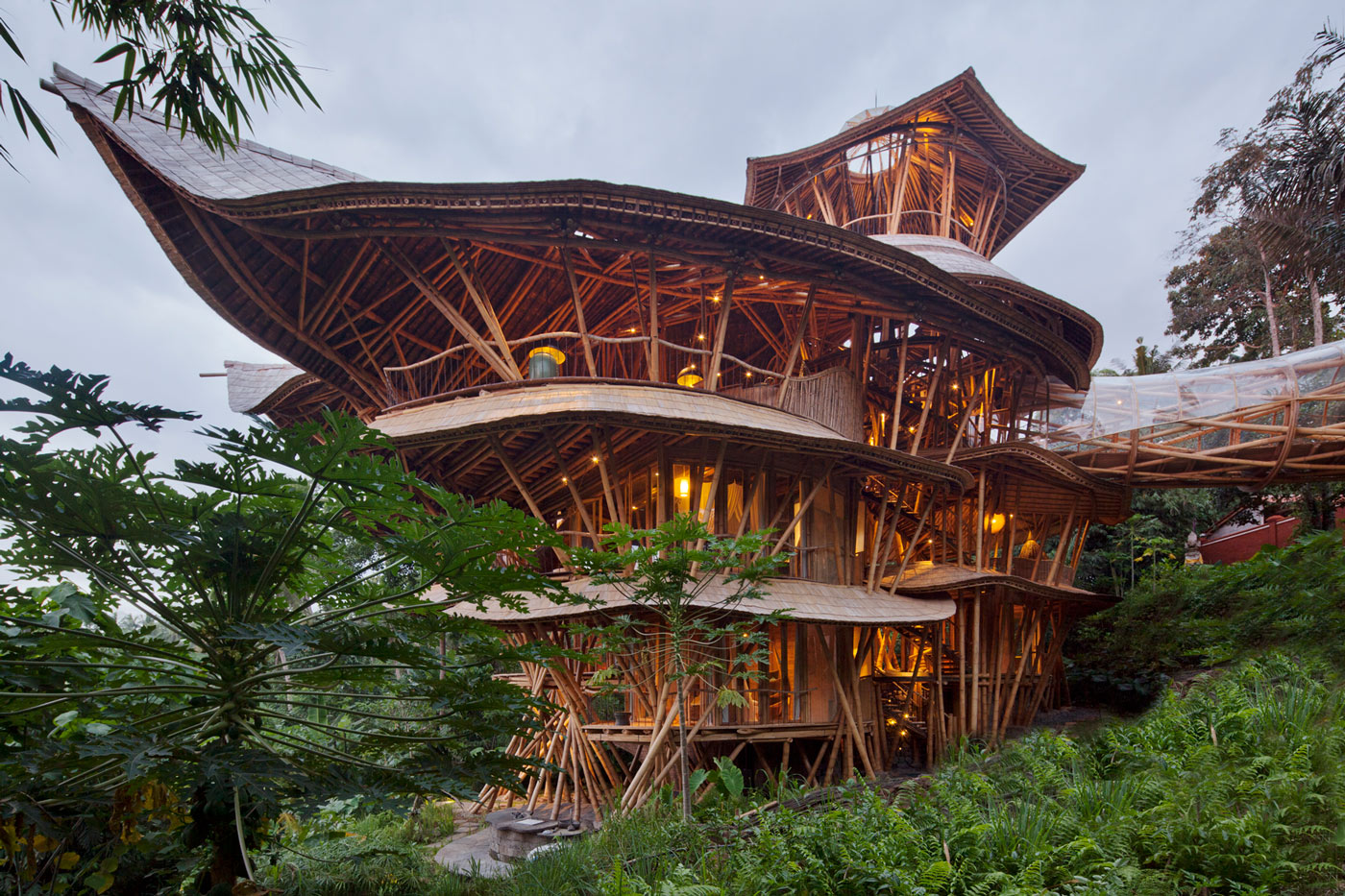
Sharma Springs is a forest getaway home designed by IBUKU in Indonesia overlooking the Ayung river valley. Built entirely from bamboo, the house has 6 floors accommodating 4 bedrooms enveloped in glass. The house also contains a library, playroom, living area, dining room, and kitchen.
7. Kontum Indochine Cafe, Vietnam
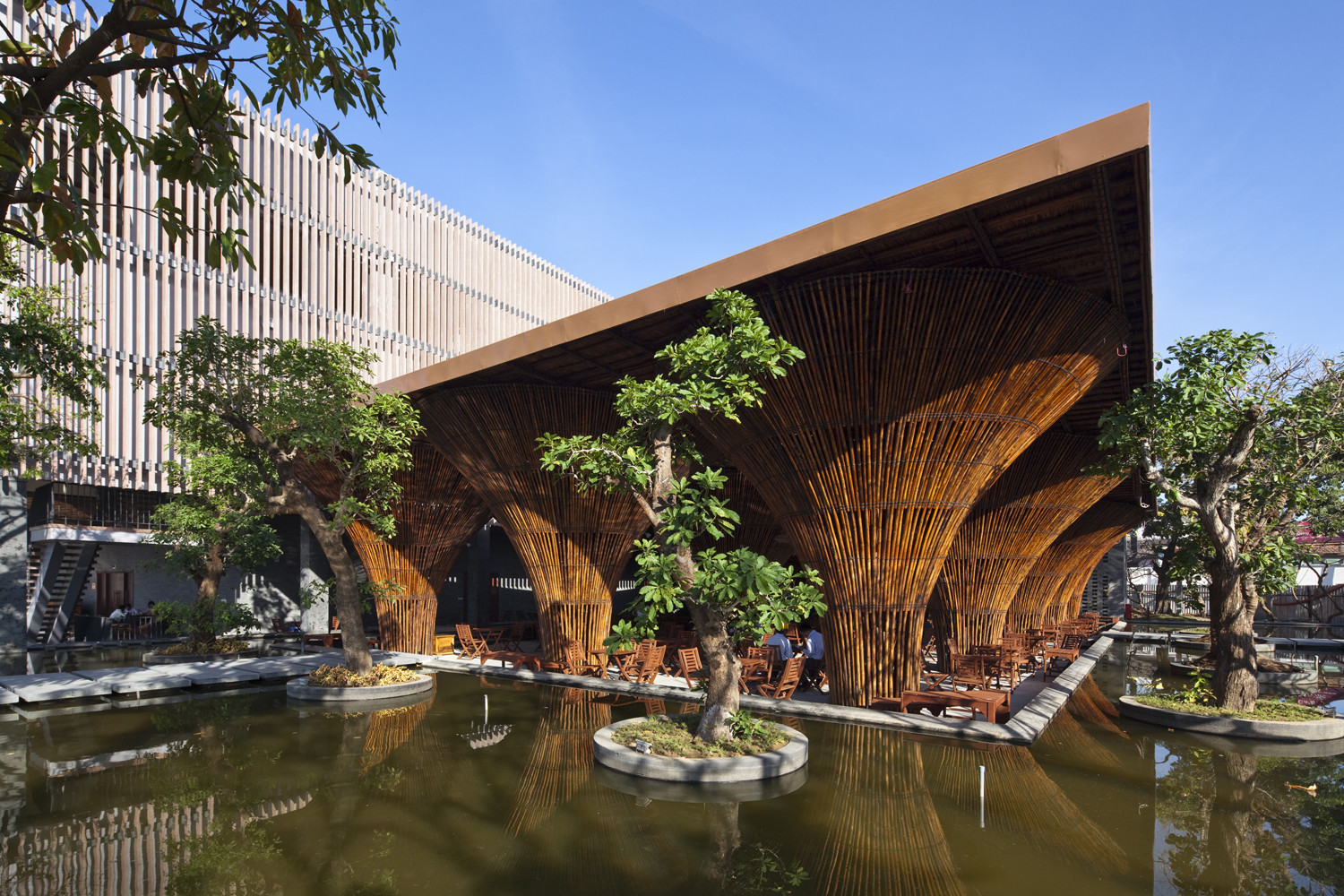
Designed by Vo Trong Nghia Architects, Kontum Indochine Cafe is a restaurant and banqueting hall of the Kne Hotel. The designers have taken inspiration from traditional Vietnamese baskets for designing the structure. It comprises 15 conical bamboo columns that support the roof. The roof structure is composed of plastic panels cladded in bamboo.
8. The Arc at Green School, Indonesia
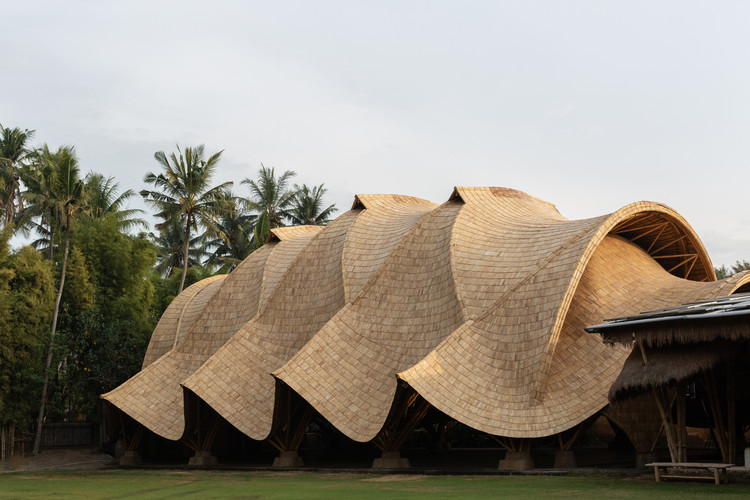
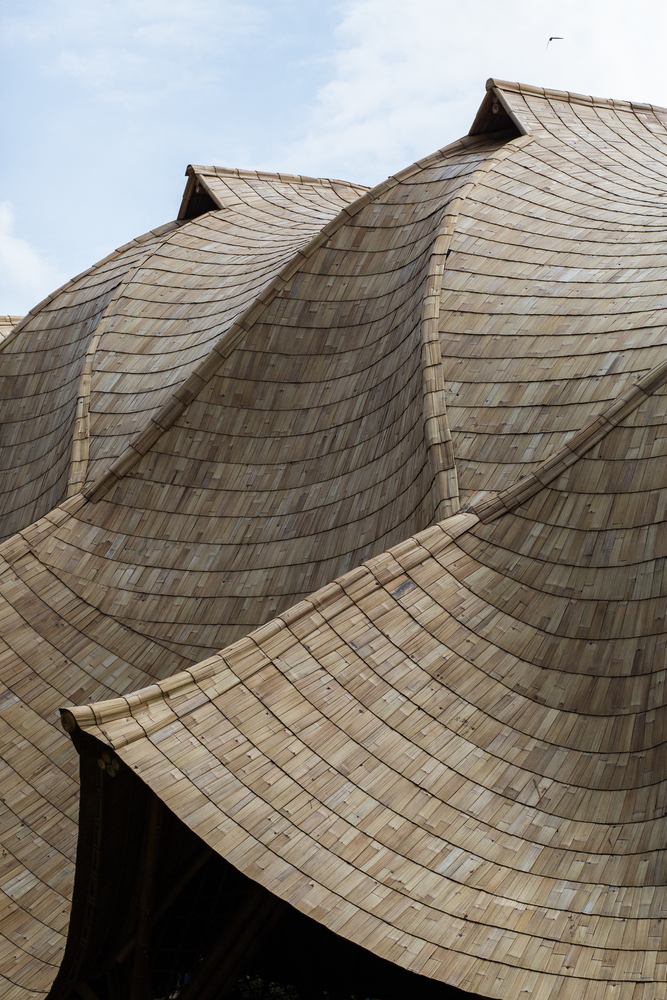
Designed by IBUKU, The Arc Green School is located in Bali, Indonesia. The Arc is the latest benchmark in the school’s 12-year history of breaking boundaries and expanding horizons, raising the bar for sustainable education worldwide. The Arc at Green School is the first building of its kind, constructed from a series of intersecting 14-meter tall bamboo arches spanning 19 meters, interconnected by anticlastic gridshells that derive their strength from curving in two opposite directions.
In Conclusion
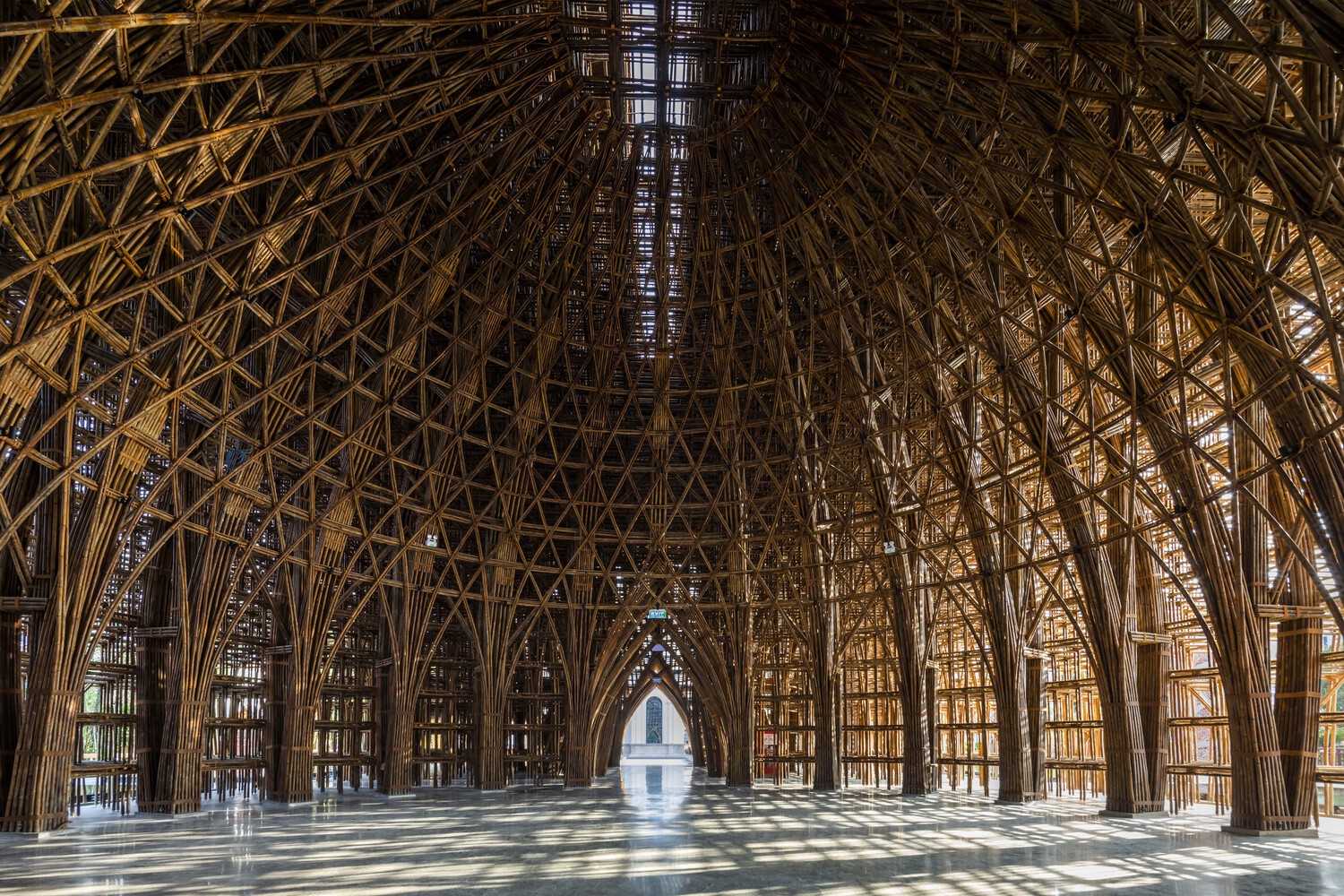
Architects can experiment with various structural forms and assemblies using bamboo to develop interesting design details. With regular maintenance and treatment, bamboo structures can stand the test of time and present beautiful examples of quality construction. Using bamboo for construction, especially in areas where it is locally available, can contribute to the creation of more sustainable, cleaner, and greener designs.
