


Train stations, as the urban face of railways that establish new connections between countries and continents, are facilities where trains stop to pick up and drop off passengers and cargo. As a result of the widespread use of railways during the Industrial Revolution in the early 19th century, train stations began to be built rapidly. Initially designed as simple structures that could only fulfill functions such as waiting for trains and welcoming passengers, these stations have become magnificent structures over the years with the development of needs and technology.
Train stations built all over the world have gone beyond being just transportation points and have become symbols of cities over time. As significant structures in architectural history, train stations embody the technological, cultural, and social characteristics of the era in which they were built, symbolizing the city’s economic power and reflecting the identity of the place they are located. Today, there are historic train stations that have attracted attention with their architecture since the day they were built.
Grand Central Terminal
Location: New York, USA
Year: 1913
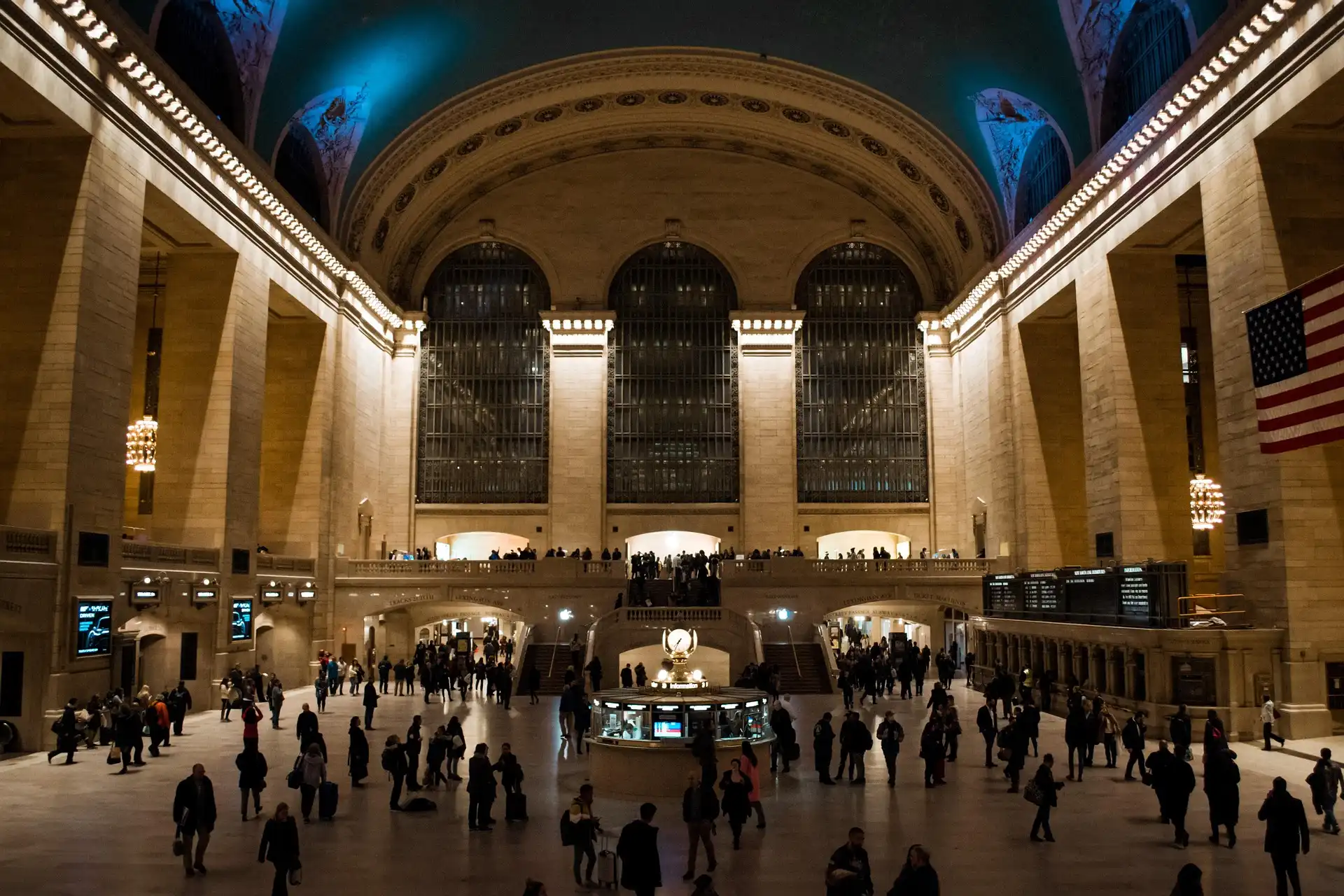
Grand Central Terminal, a historic train station well-known worldwide, has become a symbol that defines the city of New York. Grand Central Terminal, which was the largest train station in the world when it was built, has a total of 44 platforms connected to 67 railways. This terminal, which has a high passenger capacity, has platforms on the first floor and various commercial areas and offices on the second floor.
Constructed in the Beaux-Arts style, Grand Central’s elegant arches, geometric patterns, and lustrous surfaces are truly breathtaking. The main hall, with its colossal vaulted ceiling adorned with celestial murals, creates a sense of soaring grandeur. The ceiling, embellished with 2,500 stars, represents the night sky and reflects the artistry of the era.
The huge semicircular arched windows that illuminate the hall support the beauty of this vaulted ceiling. The ornately carved clock located in the main hall is a functional and aesthetic element of this historic station. The Oyster Bar’s self-supporting tile vault, designed by Guastavino and his son, is another marvel, with its intricate, interlocking tiles creating a breathtaking ceiling.
One of the architectural factors that makes Grand Central Station so recognizable is the constant use of arches. Passages covered with double-radius arches show the way to passengers walking along the hall to catch the train. It is possible to come across elliptical arches decorated with classical wall paintings and masterful tiles in this historic train station.
This historic train station, which is a part of the cultural and social fabric of New York, was accepted as a New York historical heritage in 1978. The historic terminal structure, which was renovated with restoration work that began in the 1980s after it was taken under protection and made more functional with additions made in the 1990s, is a transportation hub that is an effective element of the New York skyline with its architecture, history, and social impact.
St Pancras International Station
Location: London, UK
Year: 1866-1876
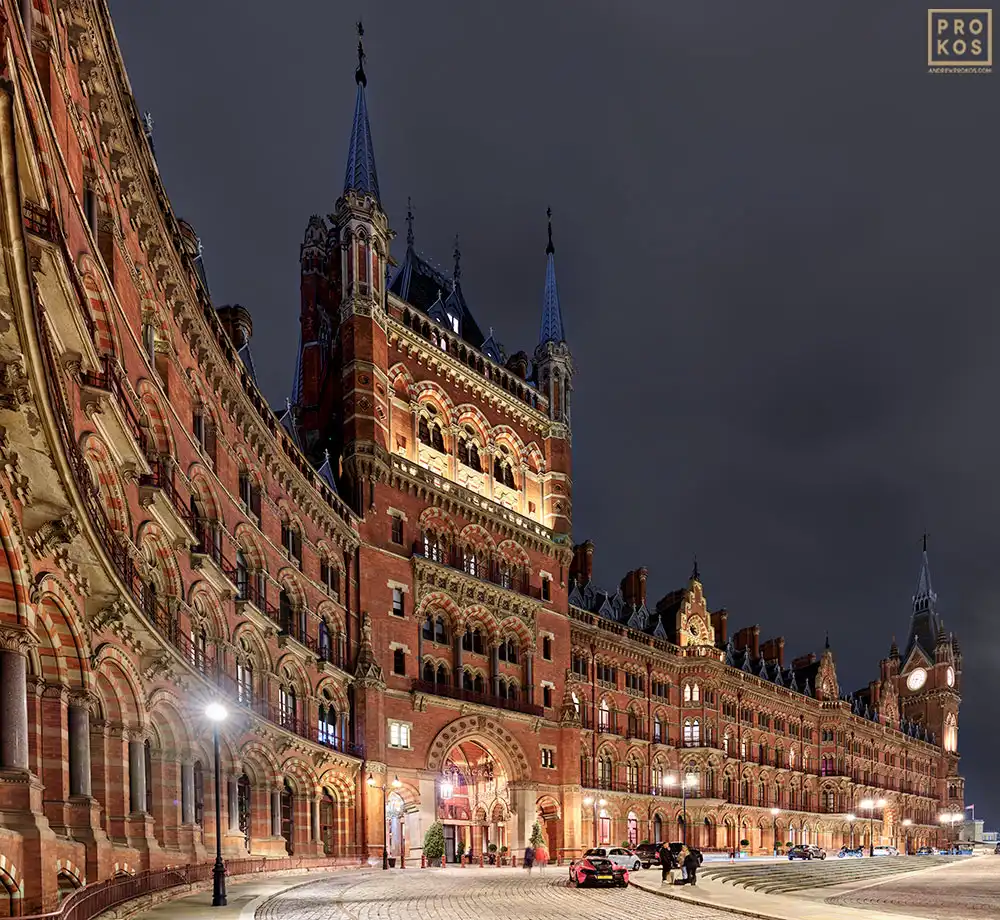
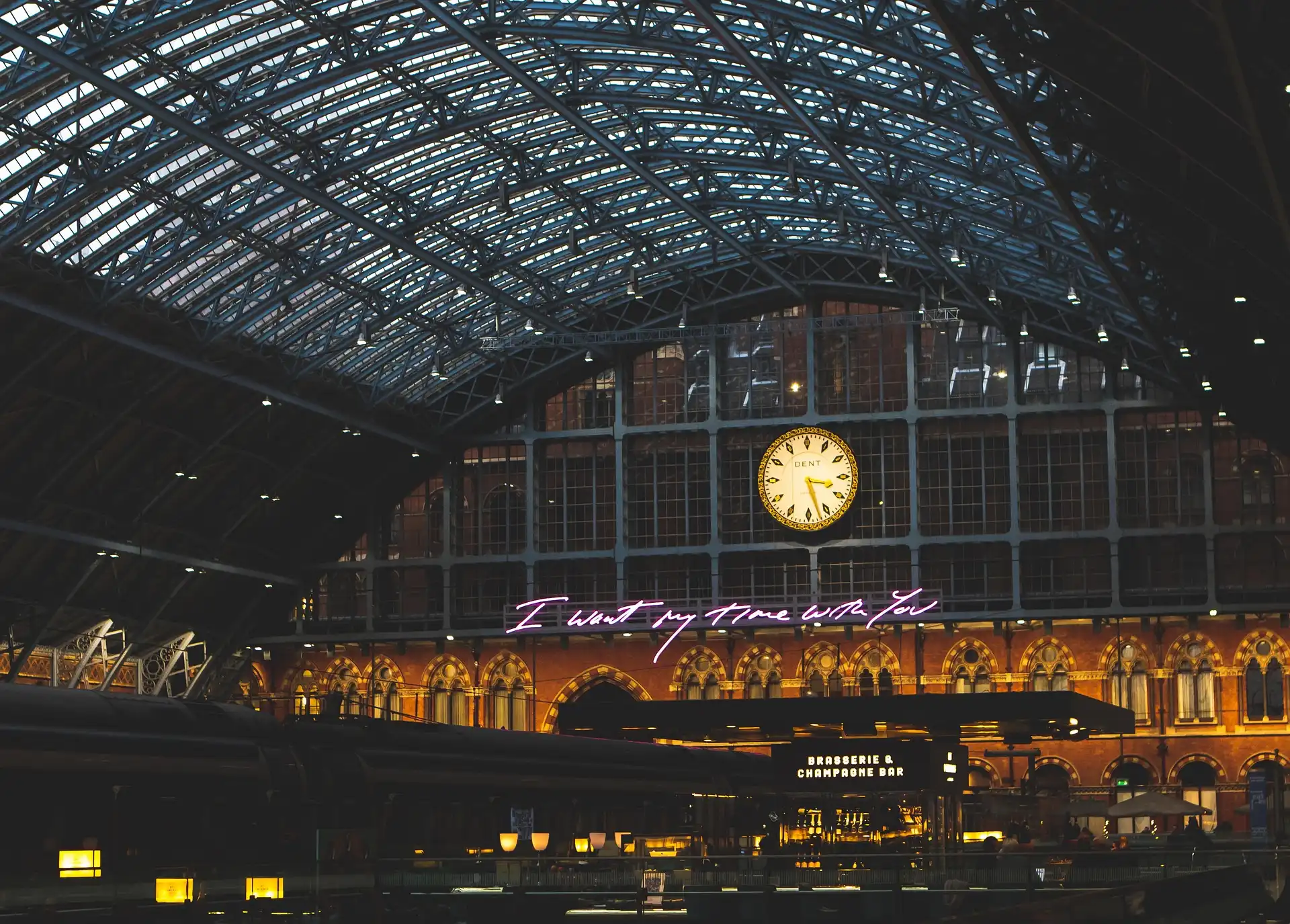
St. Pancras International Train Station, which is used by 45 million passengers a year and acts as a gateway to Europe, is one of the iconic and historical symbols of London. Designed by William Henry Barlow and Sir George Gilbert Scott, the historic train station is a structure that exhibits the splendor of the Victorian era. With its impressive details of Gothic architecture, its exterior facade, high arched ceilings, and giant iron columns, this historic train station, which goes beyond being just a transportation center, has become one of the well-known historic stations of London with its large iron-framed dome rising to 74 meters.
The Prince’s Hall inside is noteworthy for its ceramic floor and stained-glass windows. The ‘The Lovers’ statue, placed in the center of the station during the 2007 restoration, is one of London’s icons.
St. Pancras International Train Station, which was used for many years, entered the restoration process in the 20th century. This historic station, which started the Eurostar high-speed train service and thus started to offer a high-speed train alternative to Paris, Brussels, and other European capitals, has become suitable for modern travel needs. Combining the grandeur of the past with the modern technologies of today, St. Pancras International Station is not only a travel destination but also one of London’s icons with its historic significance and architecture.
Chhatrapati Shivaji Maharaj Terminus
Location: Mumbai, India
Year: 1887
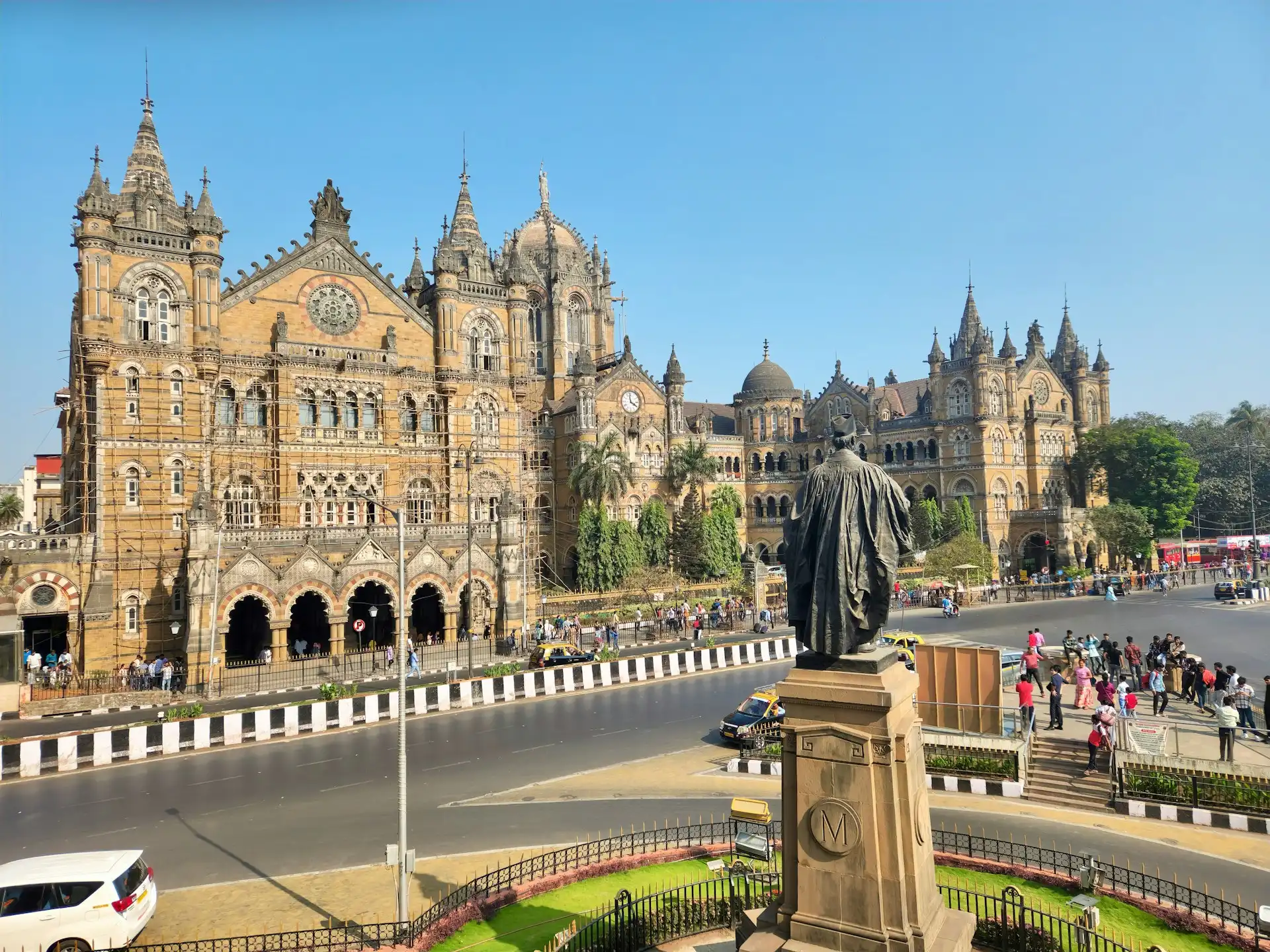
Chhatrapati Shivaji Terminal (formerly known as Victoria Terminal) is a historic railway station with its architecture reflecting the Victorian Gothic Revival style, which is on the UNESCO World Heritage List. Opened for the Queen’s Golden Jubilee celebrations, this terminal is one of the busiest and most magnificent railway stations in India.
Designed by British architect Frederic William Stevens, the building is a well-known station built on a C-shaped plan on an area of 2.85 hectares. The station’s design is influenced by London’s famous stations and Gothic cathedrals, and its large domed roof is striking.The central dome is flanked by two wings. The northern wing, directly connected to the train station, houses waiting rooms and other passenger facilities. The southern wing, on the other hand, accommodates offices for staff, police, and postal services.
The exterior of Chhatrapati Shivaji Maharaj Terminus is a combination of local stones from India (sandstone and limestone) and British engineering techniques. The local animal figures on the facade, arched tympanums, portrait roundels of human faces, and stonework in the ornamented rose windows express the rich Italian Gothic style. Additionally, the terminal’s outer walls are adorned with gargoyles, allegorical grotesques wielding battleaxes, and relief busts representing India’s diverse castes and communities.
There are two crowned columns at the terminal’s entrance gates. There are tympanums depicting lions representing Great Britain, tigers representing India, and peacocks. The spacious entrance hall that greets the passengers at the entrance is remarkable for its high ceilings and first-class Italian marble coverings. The doors and windows are crafted from twisted teak wood, and some steel windows mounted on the drum of the octagonal ribbed dome are adorned with coats of arms and pictorial stained glass panels.
Sirkeci Train Station
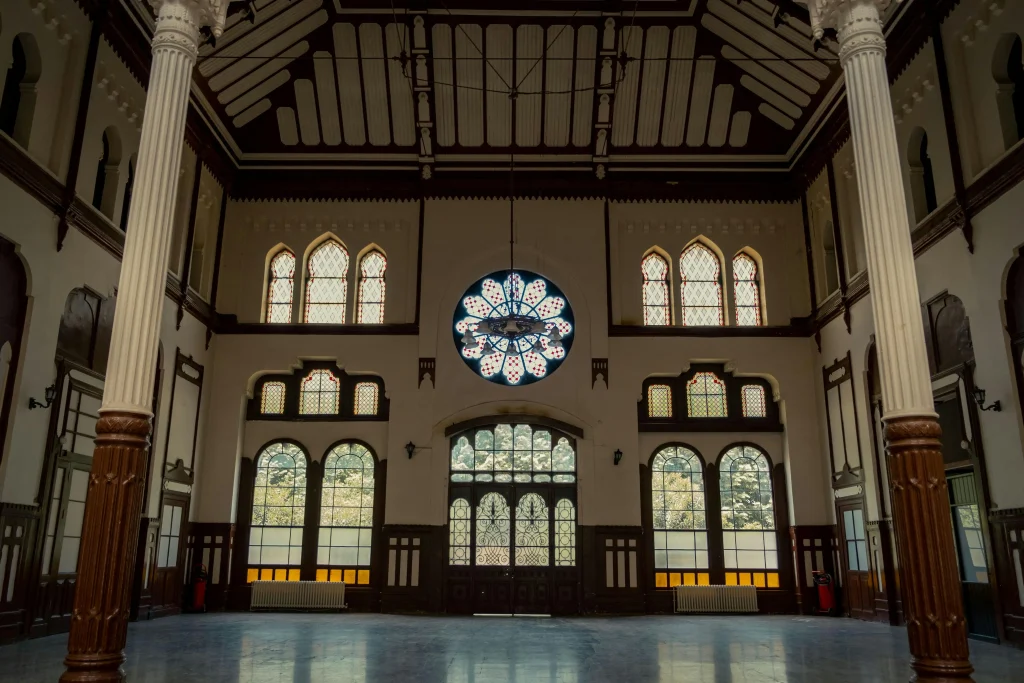
Location: Istanbul, Türkiye
Year: 1890
Designed by German architect A. Jasmund, Sirkeci Station is not only a railway station but also an important historical and cultural symbol for Istanbul. Built-in an order dominated by the Orientalist architectural style during the reign of Sultan Abdulhamid II, Sirkeci Station was the terminus of the Hejaz Railway.
Constructed with granite for its base and marble and stones imported from Marseille and Aden for its facade, Sirkeci Train Station boasts a symmetrical front. The main entrance located in the center of the façade is bordered by minaret-shaped clock towers at the corners. A twelve-lobed rose window is placed on the flat arch made of pink and white stones located just above the door.
Reminiscent of European Gothic architecture with its rose window, monastery vault, and pointed arches, this train station bears the influence of Islamic architecture with the clock towers on both sides, the eaves of the monastery vault, and the triangular pediment in the middle. The north facade, serving as the main entrance, is the most ornate section of the building.
Featuring pointed horseshoe arches—a rare sight in Ottoman architecture—the station’s decorative elements include curved motifs on the cornice. The interior, decorated with an eclectic style, features arch types, column capitals, stained glass windows, and decorative arch arrangements framing the doors.
Today, Sirkeci Train Station continues to be a functional railway station, accommodating the Marmaray Suburban Train Line. This historic landmark, with its architectural elegance, remains an iconic structure that graces the Istanbul skyline.
Antwerpen-Centraal Station
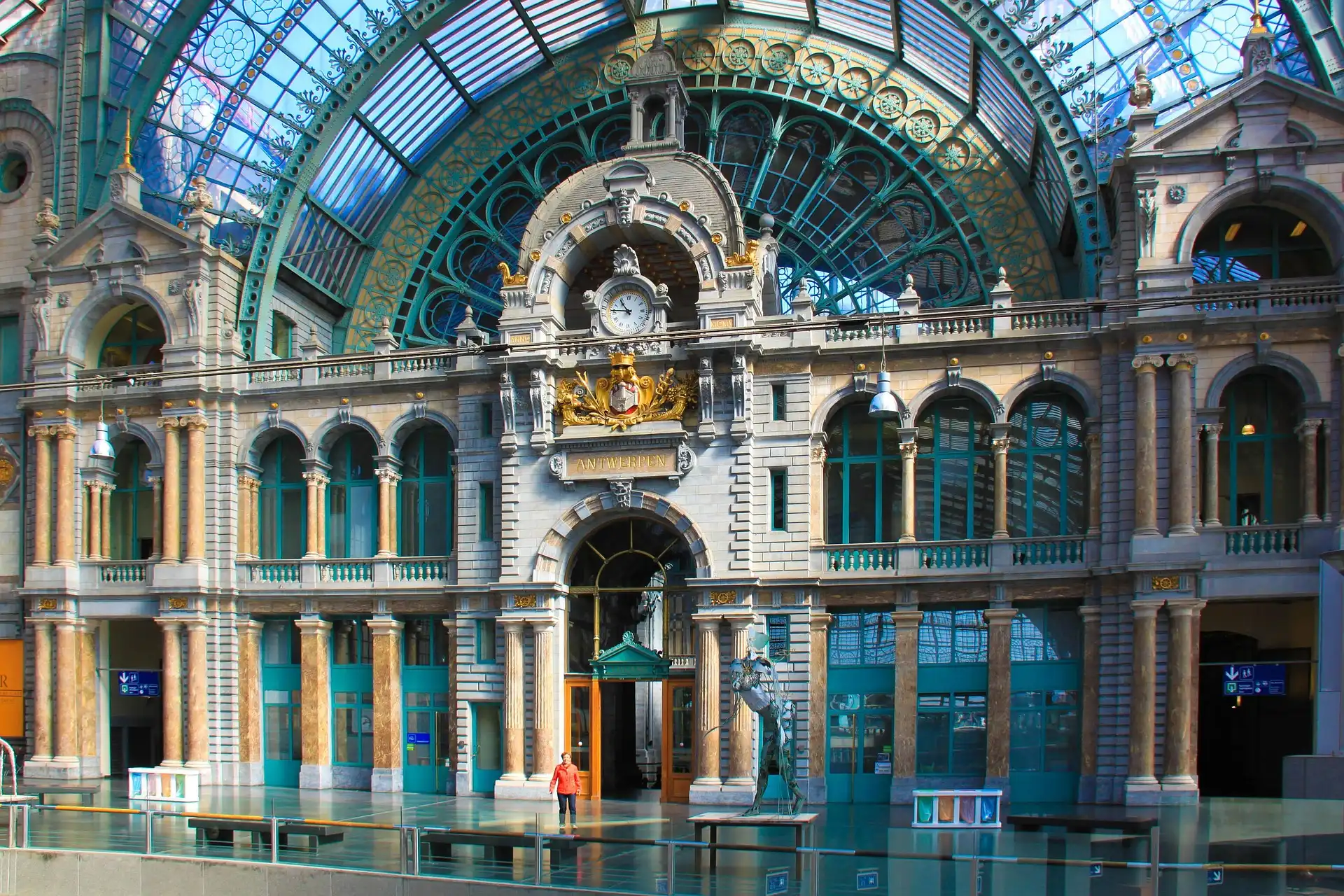
Location: Antwerp, Belgium
Year: 1905
Considered one of the most beautiful stations in the world, the historic Antwerpen Centraal is an important transportation point with both its architecture and function. Designed by architect Louis Delancenserie, this station can be defined as Baroque-medieval eclecticism, with its dome inspired by the Pantheon and stone cladding. The large central dome covers the main hall of the main station and emphasizes the spacious area inside.
Known as the “Cathedral of Rail” due to its colossal dome, eight smaller towers, and opulent interiors, this four-story, 14-track station is constructed from 20 different types of marble. Its elegant metal structures and expansive glass surfaces are striking, and the glass ceiling bathes the interior in natural light, creating an airy ambiance. The magnificent staircase in the interior takes passengers to the waiting rooms and the train station. The cast-iron vault, combined with the glass enclosure, lends an air of grandeur to the interior. There is a clock on the semicircular glass panel of this lavishly decorated historic station.
Antwerpen- Centraal Station, which was damaged during the Second World War, was repaired in 1986. With the extensive restoration project completed in 2009, Antwerpen-Centraal, which has become an important hub on the north-south line connecting cities such as Amsterdam and Paris, has become suitable for modern transportation where high-speed trains such as Thalys can be used.
An important symbol for the Belgian railway, the historic Antwerpen Centraal has gone beyond being a transportation center with its magnificent architecture and engineering innovations of the period it was built and has become a well-known work of art.
Gare du Nord
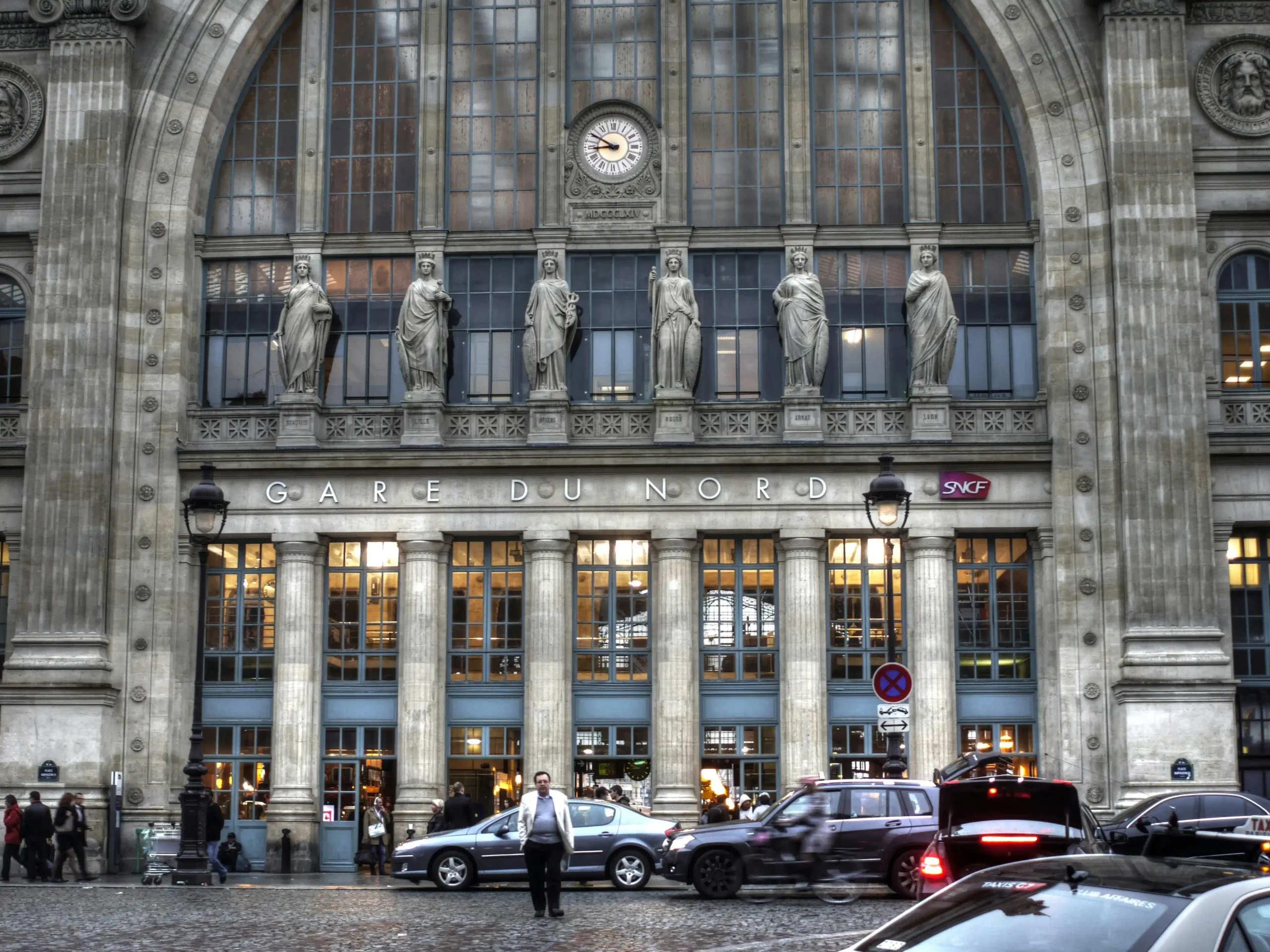
Location: Paris, France
Year: 1864
As Europe’s busiest railway station, serving approximately 190 million passengers annually, Gare du Nord boasts 43 platforms, a combination of underground and elevated levels. Gare du Nord, which draws attention with its huge dimensions and magnificent façade, is decorated with 23 statues representing the destination cities. The Cavalier statue at the top symbolizes Paris. The main hall, spanning 73 meters, is supported by two rows of 38-meter-high cast-iron Corinthian columns and is surrounded by smaller halls. The main hall, which has a high ceiling, turns into a bright area with large windows.
Reflecting the industrial revolution of the era, the station’s construction employed steel and glass.The use of steel not only ensured structural integrity but also contributed to the station’s imposing appearance.
The right side of Gare du Nord, which has been accessible by high-speed trains such as Thalys since 1994 and Eurostars since 1995, was expanded in 2001. Designed by Jean-Marie Duthilleul, Étienne Tricaud and Daniel Claris, two large contemporary glass roofs illuminate the interchange hub between the SNCF station and the regional express network.
Learn with PAACADEMY: Check out the workshops at PAACADEMY to learn from the industry’s best experts how to use advanced parametric design tools, AI in design workflows, and computational design in architecture.
