


XPENG officially revealed its next-generation humanoid robot, IRON, during the company’s 2025 AI Day, a high-profile event dedicated to showcasing advancements in artificial intelligence, robotics, and autonomous technologies. The presentation marked a pivotal moment in the evolution from an electric vehicle manufacturer to a pioneer in what it calls “Physical AI,” the fusion of intelligent software with embodied machines.
The event captured global attention when XPENG’s founder and CEO, He Xiaopeng, removed the robot’s synthetic exterior on stage to dispel rumors that a human performer was hidden inside. This bold gesture underscored the company’s confidence in its engineering achievements and positioned IRON as a new benchmark in lifelike robotics.
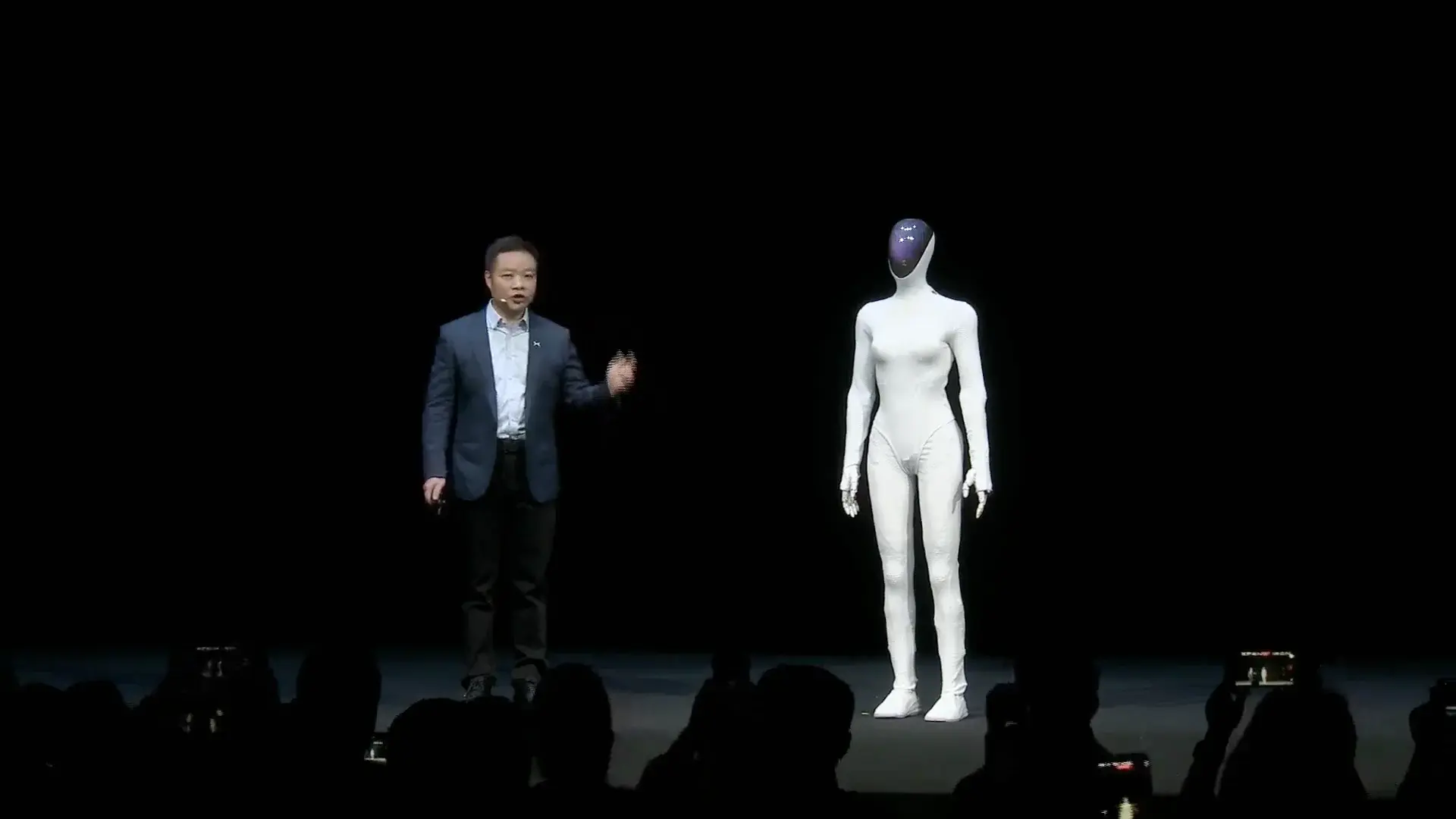
Beyond spectacle, the AI Day reveal emphasized XPENG’s strategic intent to extend its AI ecosystem beyond mobility into next-generation humanoid platforms. The IRON robot represents the culmination of XPENG’s expertise in mechatronics, computer vision, and autonomous decision-making areas previously refined through years of autonomous driving research. By integrating its in-house AI chips, full-stack control systems, and solid-state battery technology, XPENG signaled a long-term commitment to redefining how artificial intelligence interacts with the physical world.

The IRON humanoid robot’s design and motion
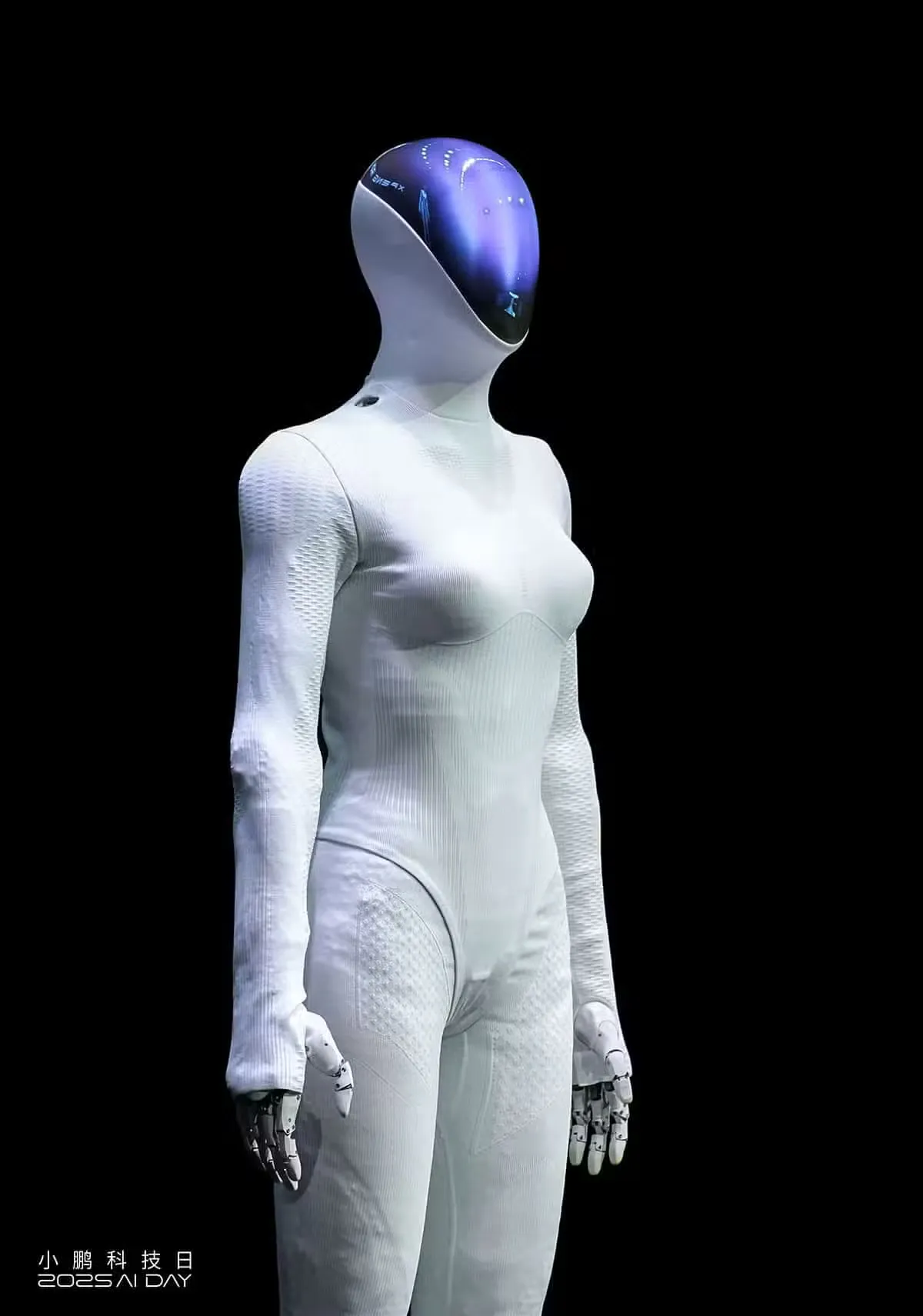
Humanoid robot IRON embodies what the company calls a “born-from-within” design principle, a departure from the conventional approach of merely wrapping mechanical structures in a humanoid shell. Instead, the engineers have built its anatomy to mirror that of a human being, complete with a spine-like central column, bionic muscle frameworks, and a seamless synthetic skin covering the entire body.
This internal-first design gives IRON a human appearance and sense of organic motion that feels strikingly lifelike, an aspect that both XPENG and the Indian Defence Review highlighted as central to its engineering identity.
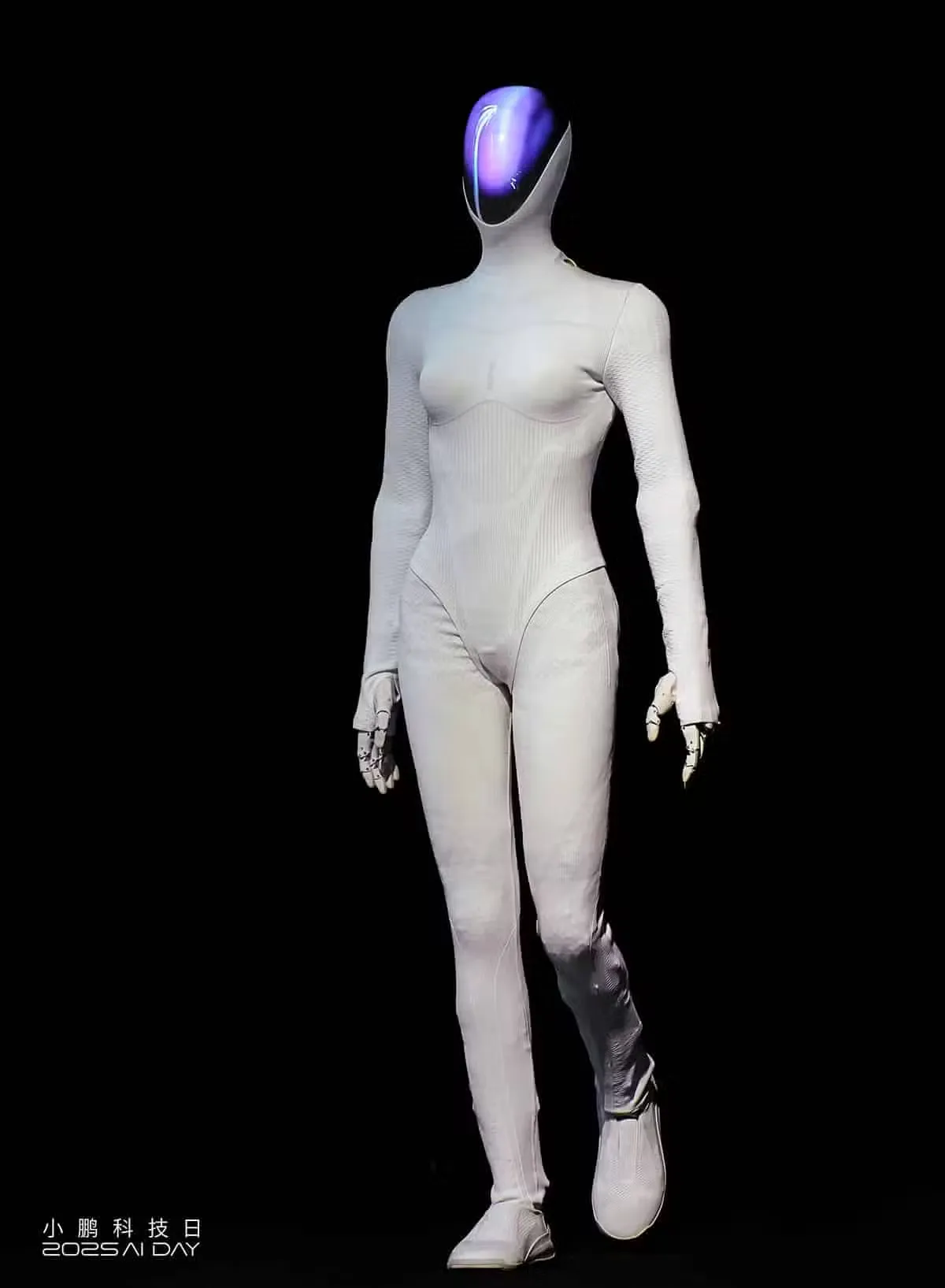
In terms of mechanics, IRON boasts an impressive 82 degrees of freedom across its structure, with 22 degrees of freedom in each hand alone. This high level of articulation allows it to perform intricate gestures, manipulate objects with precision, and maintain an ‘eerily fluid gait’ that, as noted by Global Times, has left many observers questioning whether they were watching a machine or a performer.
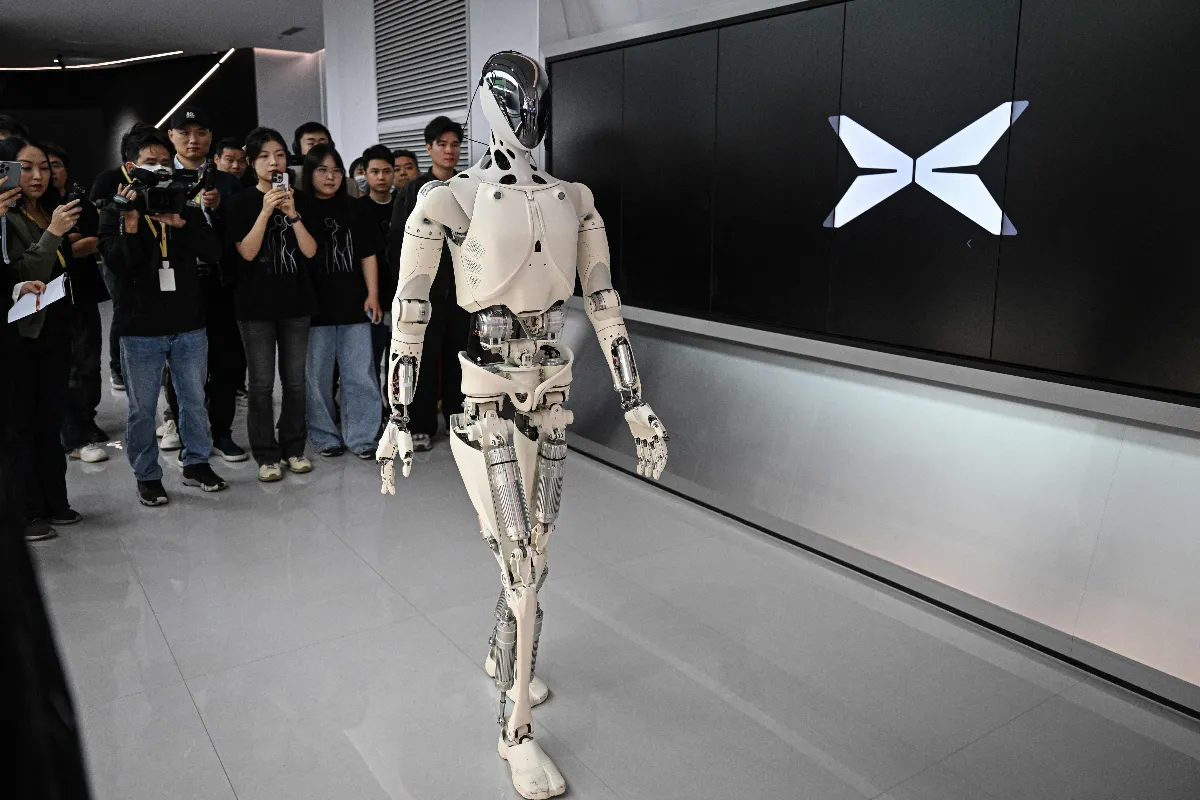
XPENG has also incorporated what it describes as the industry’s smallest harmonic joint in the robot’s hands. This innovation enables a true 1:1 human-sized hand replication, allowing IRON to execute delicate, coordinated movements that go far beyond simple mechanical grips. The attention to scale and precision underscores XPENG’s drive to make the robot function as naturally as it looks.

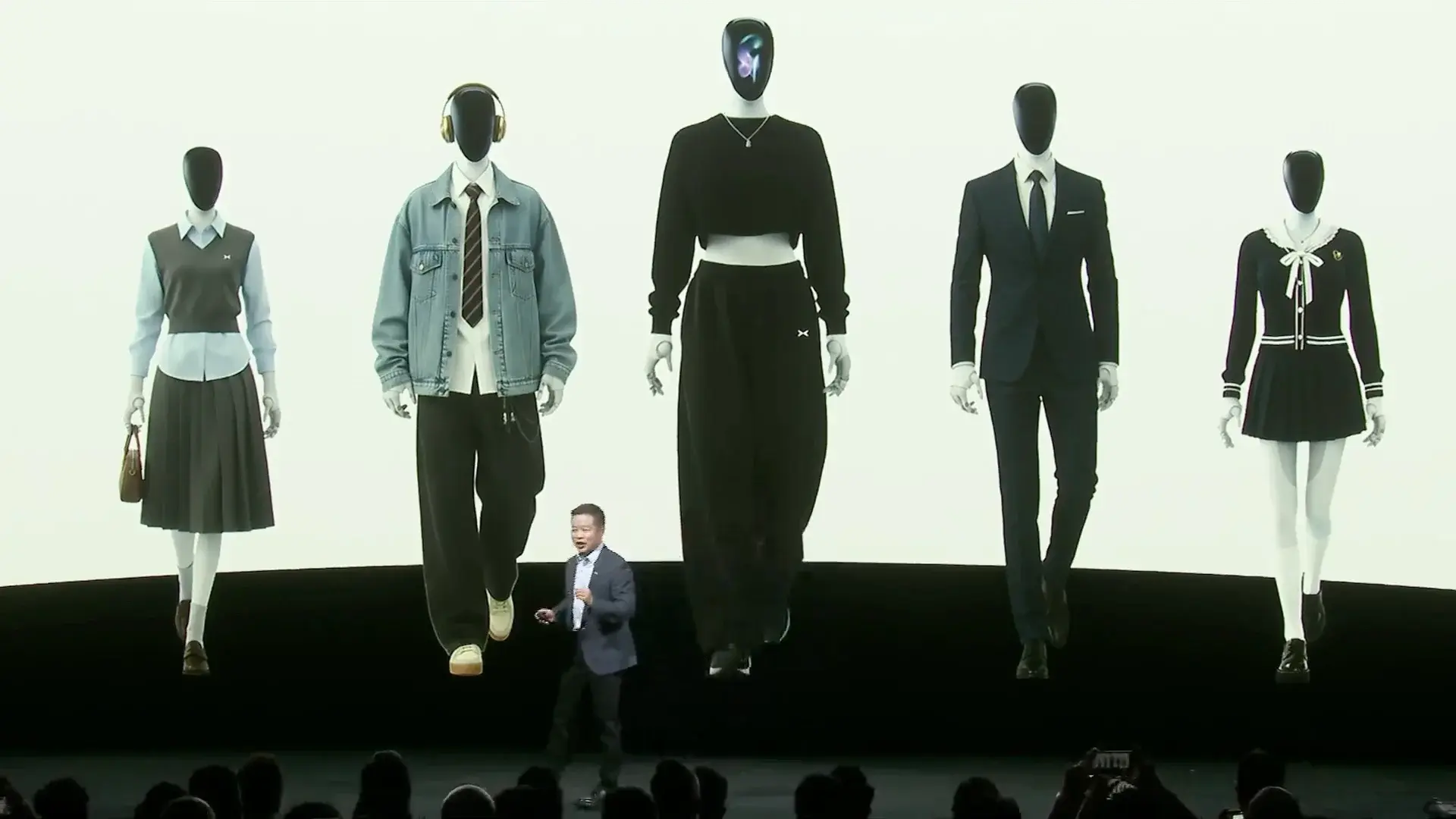
Further refining its human-centric design, XPENG has introduced customizable body features, including adjustable height, physique, and even gender presentation. The robot’s synthetic skin can also be modified to suit various social or professional contexts, making IRON adaptable for environments such as homes, retail stores, and office spaces. This flexibility, according to XPENG, is essential to ensuring that humanoid robots can blend seamlessly into daily human settings, not as machines but as relatable presences.
AI, Perception & Control Architecture
XPENG lays out a high-order “Physical AI Full-Stack Self-Research System” underpinning IRON’s intelligence.
The robot’s “brain” combines three large-model systems:
- VLT (Vision-Language-Task): core engine for autonomous actions and decision-making.
- VLA (Vision-Language-Action): derived from the company’s autonomous driving technology, adapted for complex joint control.
- VLM (Vision-Language-Model): more general multimodal capability underpinning perception and interaction.
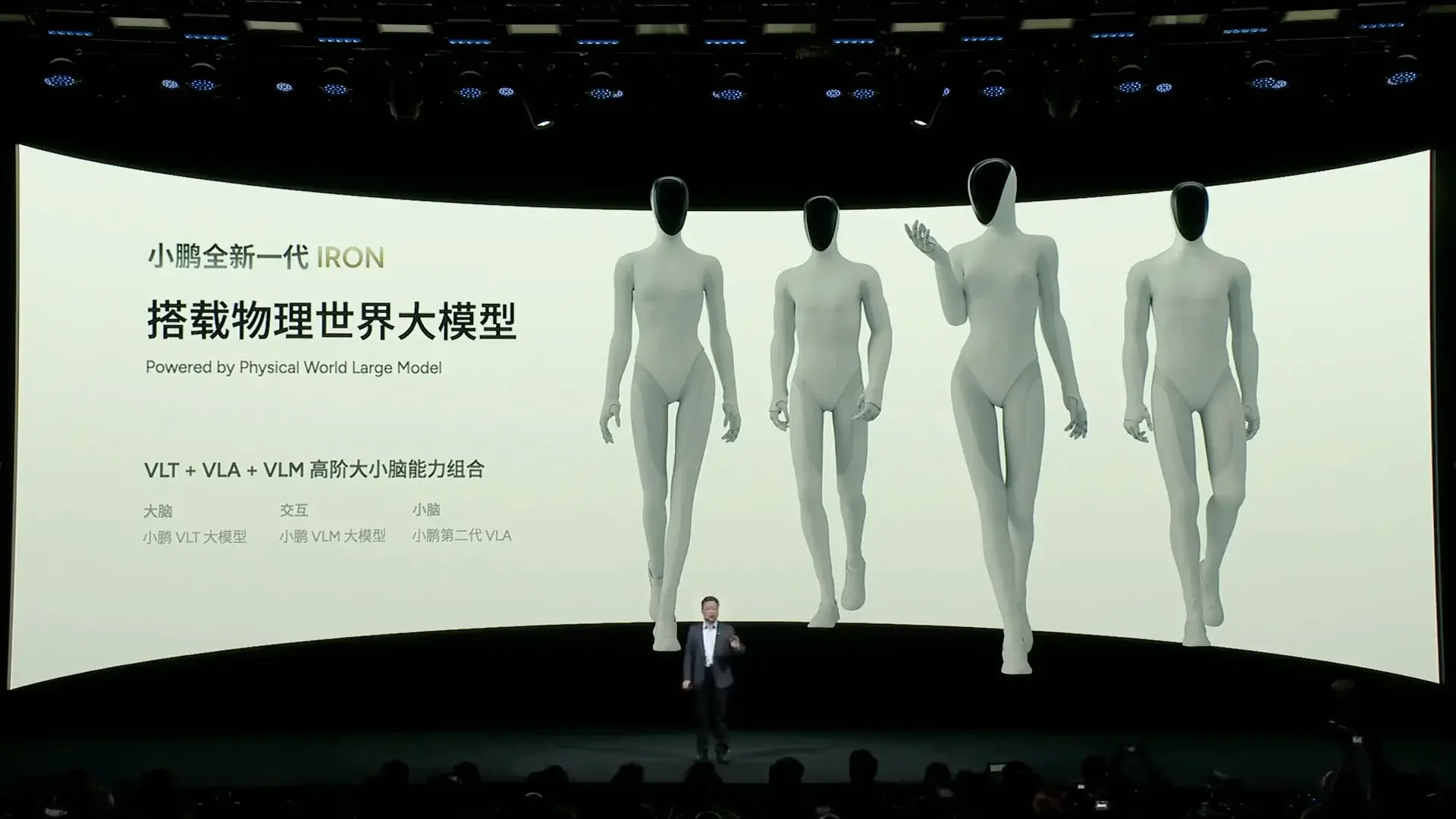
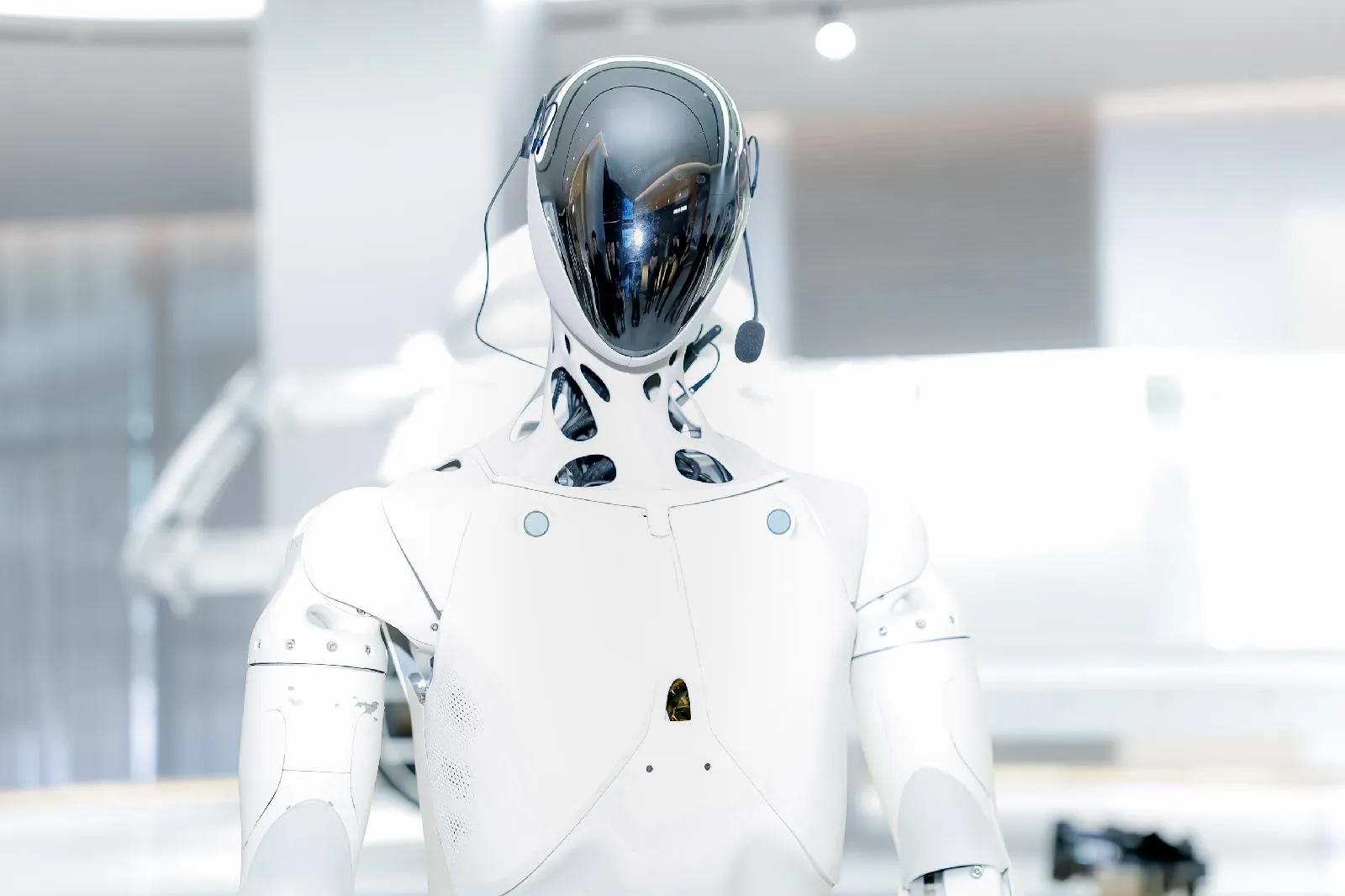
On the compute hardware side, IRON uses three of XPENG’s in-house AI chips, claiming a combined peak of 2,250 TOPS (trillions of operations per second). On stage, He Xiaopeng pointed out that the “ear indentations” on the robot’s head were in fact microphones, not purely cosmetic.
Power & Safety Architecture
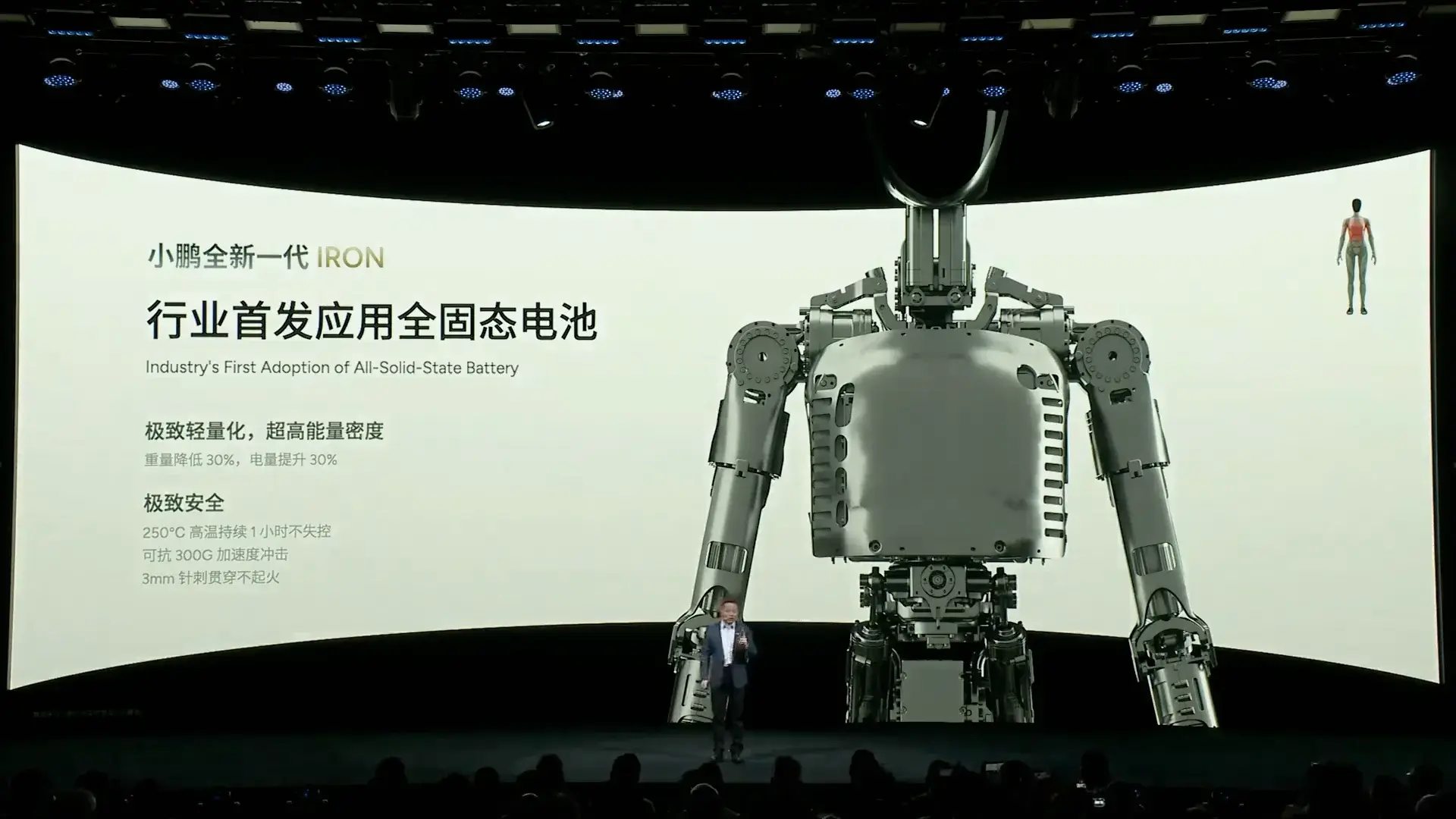
One of the most remarkable aspects of XPENG’s IRON lies in its power and safety architecture, particularly its use of an all-solid-state battery, a pioneering move in the field of humanoid robotics.
According to reports from the Financial Times and Humanoids Daily, IRON stands as the first robot of its kind to integrate this advanced battery technology, which promises exceptionally high energy density while significantly improving operational safety compared to conventional lithium-ion systems.
XPENG emphasizes that the choice was both strategic and ethical. Humanoid robots, designed to operate in proximity to people, demand the utmost reliability in power storage and thermal stability.
The company contends that deploying solid-state batteries in such machines serves as an ideal proving ground for the technology, merging efficiency with safety in a way that aligns perfectly with the robot’s human-centric design philosophy.
XPENG IRON Robot Commercialization Strategy and Production Timeline
XPENG has outlined a clear and calculated commercialization roadmap for its next-generation humanoid robot, IRON, positioning it for early deployment in service-oriented environments rather than domestic or industrial spaces.
The company expects IRON to perform practical, people-facing roles such as reception duties, retail assistance, security patrolling, and guided tours. This approach allows XPENG to introduce humanoid robotics in settings where smooth human interaction and reliability matter most, while avoiding the complexities and safety constraints of home or factory integration during the initial phase.
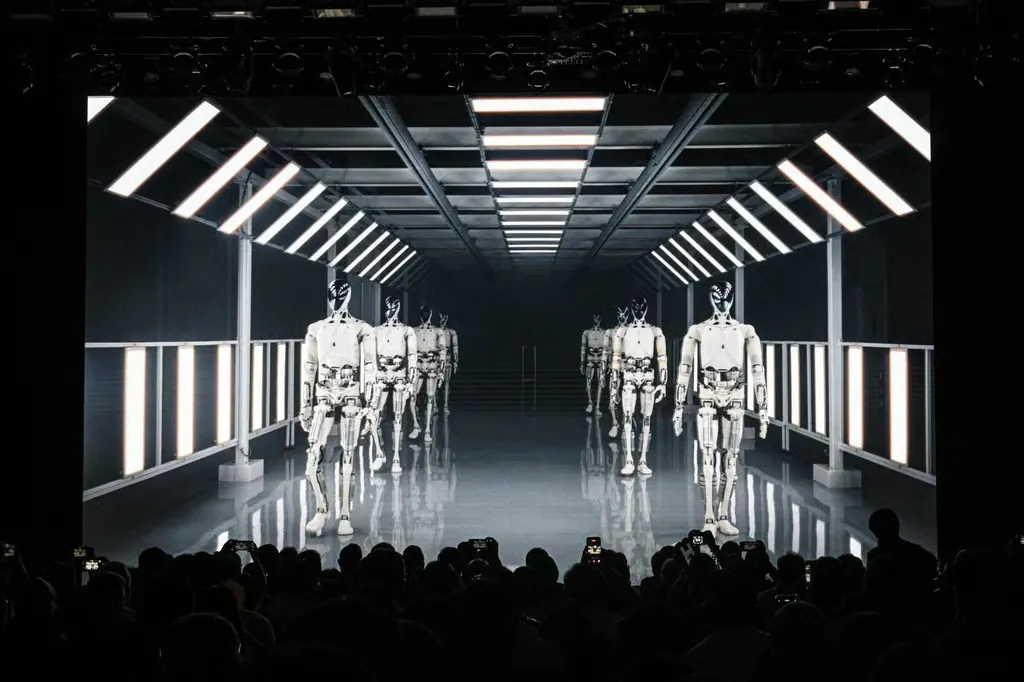
Mass-production preparations for IRON are expected to commence by April of next year, with large-scale manufacturing targeted for completion by the end of 2026. This timeline underscores the intent to transition from prototype to commercial reality within a relatively short period.
To ensure a sustainable and scalable ecosystem, XPENG also plans to release an open IRON SDK (Software Development Kit), inviting global developers and technology partners to build customized applications and integrations for the robot. By co-developing an application ecosystem, the company aims to foster innovation around IRON’s capabilities and create a flexible platform that evolves beyond its initial service roles, potentially setting the stage for a new era of intelligent, human-like robotics.
Credit: XPENG
