


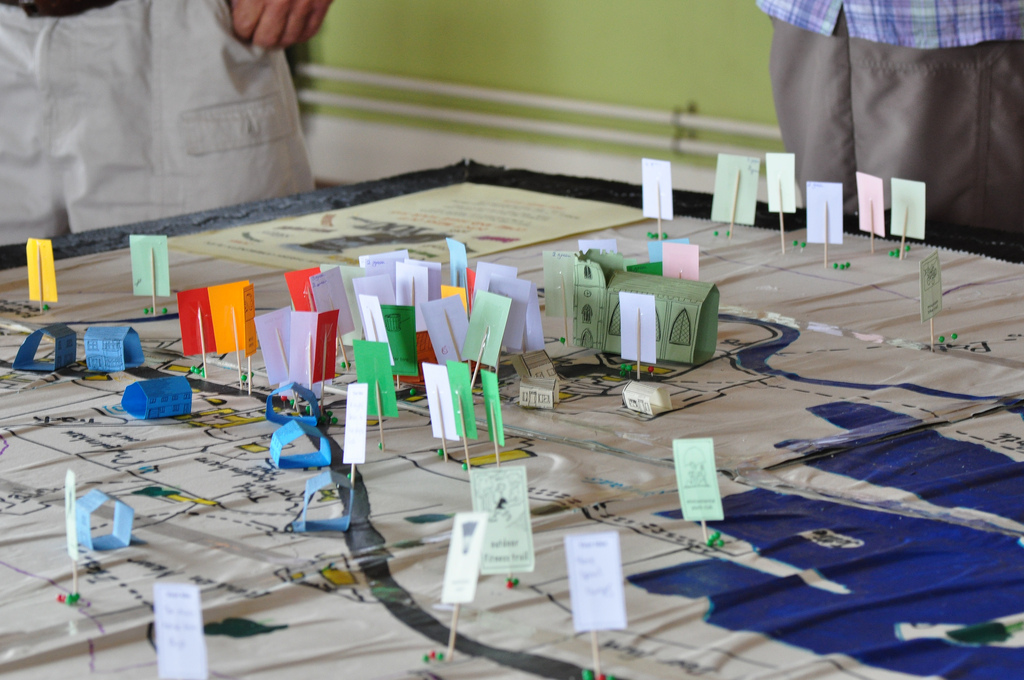
Sustainability in a built environment takes an all-around, holistic approach to planning the cities which accommodates the environmental aspects with social integrity. With an overarching focus on placemaking- an idea that focuses on the design and management of urban community spaces, sustainable urbanism helps reduce the impacts of adverse effects of changing climate. This article explores the principles of creative placemaking, and the qualities of places to address the cultural, social, economic, and environmental challenges.
Overcoming Environmental and Social Challenges through Placemaking

Cities can control their ecological footprint by promoting green building practices and balancing the demand and supply of energy to increase efficiency by encouraging the use of renewable energy. Placemaking can help in maintaining the balance as it emphasises the creation of green and blue infrastructure acting as the lungs of the cities to mitigate the adverse microclimatic effects of heat islands, improving the air quality, and creating biodiversity habitats for local species.
On the other hand, it allows effective collaboration and engagement of the communities and the decision-makers by including the communities to be the face of the new place. Creative and successful placemaking reinstates the lost sense of place, promotes safety in public spaces, and makes them more vibrant for a range of uses. Such places become the catalyst for social interaction, cultural exchange of thoughts, and civic participation helping communities become more cohesive.
Placemaking while emphasising the human dimension in sustainability, also gives the tools to implement sustainable policies and decisions on the space. “Sustainable design is a design philosophy that seeks to maximize the quality of the built environment while maximizing or eliminating negative impact on the natural environment”.
Reclaiming the Sense of a Place with Nature

The notion of Sustainability goes above and beyond the conventional approach of placemaking. We have to be more creative in balancing the management of human interventions combined with best practices of local landscaping methods respecting the indigenous context of natural spaces. Natural systems of water management like SUDs, attention ponds, and bioswales allow the creation and protection of habitats for local species. Designing the streets to accommodate these systems allows the introduction of peninsulas and islands, resulting in improved habitats for aquatic and terrestrial species. Using the connected green network strategies, these green space networks will reach into the urban areas, allowing pedestrian access to more green space, parks, and water bodies like streams, burns and lakes to be dominant elements of Sustainable Urbanism.

Retrofitting urban spaces can be experienced in both integrated green networks and cultural networks which are comprehensive as well as resilient and self-sustaining. A notable example of Sustainable Urbanism through creative placemaking is the New York High Line project in the USA. The old raised railway line which was out of use was repurposed to create a 1.45-mile-long linear park on the West Side of Manhattan. It exemplifies sustainability with adaptive reuse by transforming an out-of-use industrial structure/ space into an attractive and thriving green space that enhances biodiversity and controls the urban microclimate while serving as a vibrant communal gathering space.
The High Line has implemented a creative placemaking strategy by planting native plant species to create and enhance the biodiversity of the place which also helps in naturally cooling the space. It also serves as a green tissue that connects the neighbouring areas and improves walkability and permeability by offering the neighbouring residences great connections to their surroundings through serene green corridors.
Pioneers of Sustainable Urbanism
Countries like Denmark, Germany, Sweden, Singapore and are at the forefront when it comes to successfully implementing the strategies of Sustainable Urban principles with stalwart efforts on planning healthy and resilient cities through place identity.
Denmark

The Danish city of Copenhagen is at the forefront with its consistent approach to planning and designing sustainable places while satisfying the needs of the local community, whether it is with active travel and transport, newly well-designed safe bike routes, inclusive public spaces and mixed land use planning.
The waterfront development is a successful Sustainable Urbanism project as allows easy access to elements of space such as water, light and open space, access to green space and creative thinking which ensured making the waterfront a sustainable place.
Germany

The eco-district in Freiburg is a pedestrian-friendly place that promotes care-free streets and fosters a sustainable lifestyle using energy-efficient buildings, substantial land use for green space and tree cover, and the community-focused design of the neighbourhood place.
Sweden

Sweden has implemented a unique placemaking strategy using an open Inner-City block typology and a subtle urban morphology with scale and sizing for zoning and land use in Hammarby Sjöstad. The neighbourhood has a dense urban pattern and the building units are designed around spacious green courtyards. The design and placemaking strategy is based on Stockholm’s Centre City morphology concerning the width of the streets, built areas, density and land use which are human-scaled integrated with open patterns, views of the waterfronts, parks and green space, and direct sunlight.
Singapore

Singapore’s national development strategy has incorporated sustainable urbanism. It is well-known for its “City in a Garden” concept, which includes places built around vertical garden systems, green corridors, and comprehensive water management strategies. Singapore’s efforts in placemaking emphasise creating community spaces that foster social interaction and cohesion of cultural experience, resulting in a vibrant urban setting.
Similarly, countries like Sweden, The Netherlands and Norway are among the front runners for their active commitment to sustainable urbanism with initiatives like sustainable transport networks and active travel in urban mobility, waste management, building life cycle analysis, and green energy to name a few.
Key Principles Guiding Sustainable Urban Development

Sustainable Urbanism in these countries is encouraged by the following key principles:
1.Integration of Green and Blue Infrastructure
Implementing strategies for the creation of green spaces for biodiversity protection such as parks and parklets, turning roofs into bee gardens/ green roofs, and urban forests and pocket parks have driven the environmental impact of cities in reducing carbon footprint whilst improving the health and well-being of the people and the wider natural environment within the cities.
2.Community-Centered Placemaking
The place-based approach involves the active participation of the communities in shaping and managing the needs of public spaces. This holistic approach ensures that the cities meet the needs of not only the residents but also foster a direct sense of ownership and belonging in protecting natural assets. It allows communities to put forward their views and be an integral part of decision-making that influences the process of placemaking while ensuring the actions are accountable.
3.Multimodal Transport and Active Travel
Prioritising a variety of modes of transportation including cycling, walking, and public transit to minimize the dependency on personal vehicles, can result in reducing the operational carbon and other forms of harmful gas emissions, and it can promote a healthier lifestyle with active travel opportunities like cycling and walking. It allows the creation of better wayfinding solutions by using appropriate signboards and improves permeability through city streets.
4.Resilient and Adaptive Placemaking
The places within the city must be designed keeping the environmental challenges in mind so that the places can adapt and be transformed to withstand the adverse climatic conditions. This involves infrastructure planning that is adaptable to new use and promotes creation and efficient energy storage and distribution while integrating nature-based solutions. The places should have a sense of safety, belonging, ease of access and cultural significance to create distinctive neighbourhoods rather than mass-produced urban fringes without any sense of a place.

To summarise, Sustainable Urbanism is guided by placemaking principles which offer a holistic approach to shaping healthier places and neighbourhoods within the cities that address not only environmental but social challenges as well. It is important to consider sustainability as a process instead of thinking of it as an end product. It is a never-ending journey of reinventing, reiterating, and reorienting the space around us to adapt to face the challenges of human-induced climate change.
