It’s Ground Control for Major Tom: As the planetary orbit feels closer than ever, it’s good to remind ourselves that even space architecture begins with human connection. The question is no longer if we’ll live on Mars, but how. The Red Planet poses extreme environmental challenges: bone-chilling temperatures, unrelenting radiation and an almost non-existent atmosphere. Yet the vision of a human settlement on Mars has shifted from distant dream to imminent reality. This makes designing for Martian life one of the most compelling and urgent frontiers in architecture today.
Interestingly, cinema has long served as a testing ground for such ideas. While often dramatized for effect, sci-fi films offer surprisingly sharp insights into what it takes to live on Mars. They explore everything from structural resilience and closed-loop systems to the psychological impacts of isolation and the importance of community. Some even undertake agriculture (potatoes, anyone?). For architects, science fiction becomes a speculative lab where imagination meets problem-solving and storytelling becomes a tool for prototyping the future. We round up five pop culture classics that, apart from the Hollywood spectacle, offer serious food for thought on designing for life on the Red Planet.

1. The Martian (2015): Survival and habitat design on Mars
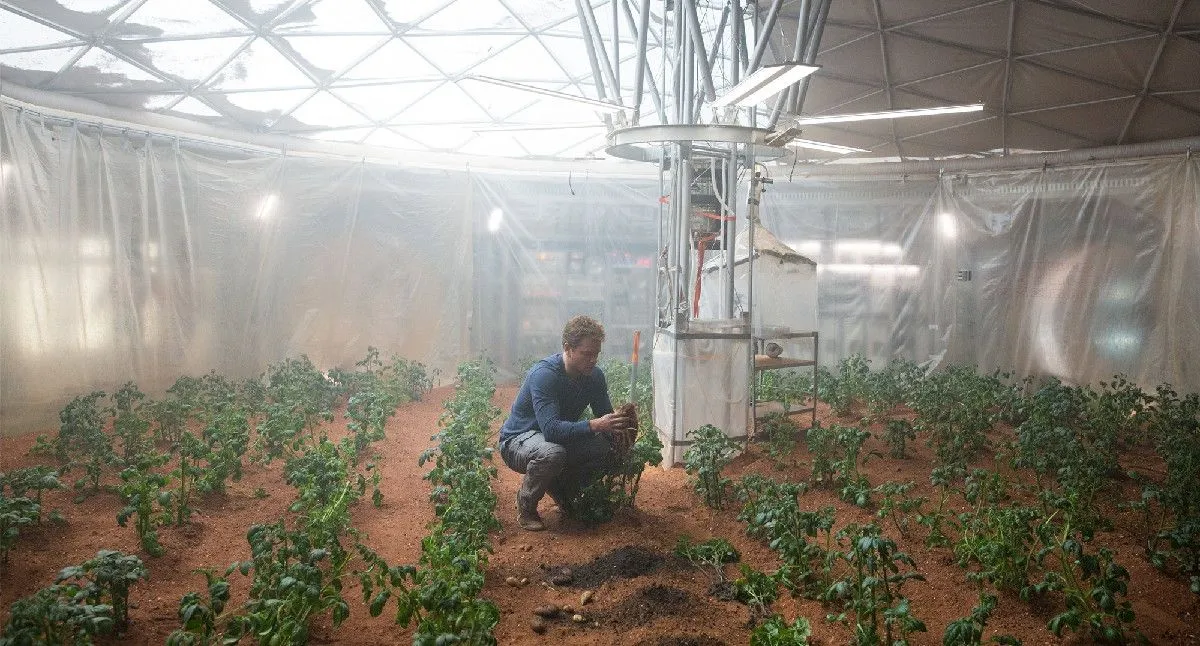
Ridley Scott’s The Martian stands out for its scientific realism. The story revolves around astronaut Mark Watney, who survives alone on Mars by retrofitting his temporary habitat, the Hab, into a life-sustaining environment. This film emphasizes the importance of modular, airtight structures that integrate life-support systems like food production and oxygen generation. Watney’s potato farm, grown in Martian soil with human waste as fertilizer, transforms his shelter into a regenerative ecosystem. It’s a powerful metaphor for resilient architecture.
For real-world architects, the lesson is clear: design must be self-sufficient, adaptable, and capable of evolving with human needs. These are the same principles explored in PAACADEMY’s Mars Architecture – Studio Valentina Sumini, which investigates computational design’s capabilities applied to space architecture.
2. Total Recall (1990): Futuristic Martian cities and life support
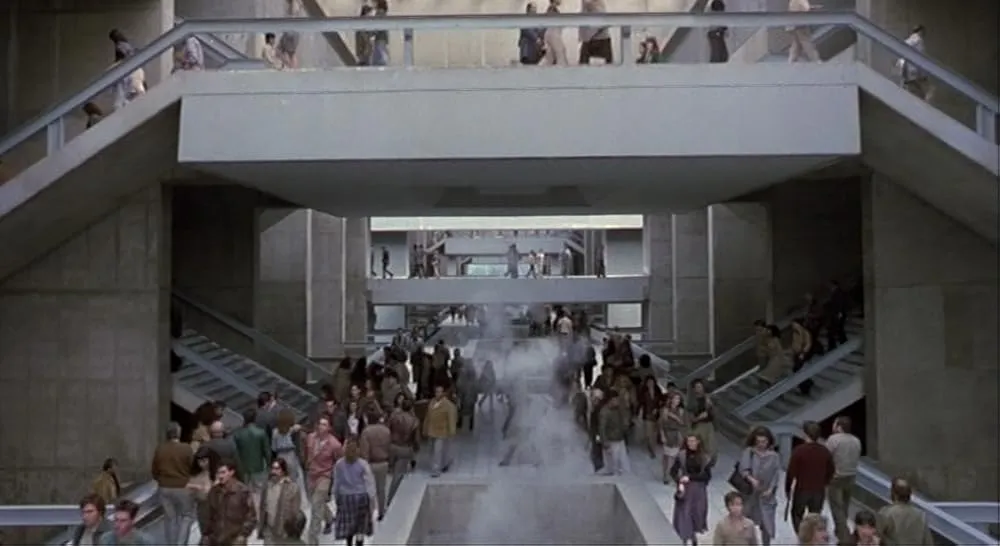
In Total Recall, Paul Verhoeven envisions sprawling cities on Mars built underground or beneath protective domes. These settlements rely heavily on life-support systems that are privatized and controlled, turning oxygen into a commodity. The architecture leans into a brutalist territory with a harsh, geometric and defensive style. It reflects a world where protection from the external environment is paramount and social inequality is entrenched in the very design of the city.
This dystopian vision raises critical questions about access and equity in Martian settlements. Who controls the infrastructure? Who gets to live in the safer zones? In imagining architecture for Mars, architects must not only solve technical challenges but also design systems that promote fairness and resilience.
Courses like Computational Dreamscape on PAACADEMY encourage designers to build speculative yet deeply human environments using advanced computational tools. These methods offer pathways to imagine future cities as socially inclusive, even on a distant planet.
3. Guardians of the Galaxy (2014): Adaptive cities in extreme space environments
While not set on Mars, Guardians of the Galaxy gives us Knowhere, a city built inside the skull of a celestial being. It may sound absurd, but the underlying concept is rich with architectural relevance: adaptive reuse in extreme environments. Knowhere functions as a fully enclosed ecosystem, complete with atmosphere, gravity and urban life. The settlement exemplifies the idea of building entirely self-contained cities in uninhabitable surroundings. Precisely what Mars demands.
Translating this to the red planet means designing within protective shells, possibly lava tubes or inflatable habitats covered in regolith to shield against radiation. Architecture for Mars must synthesize protection, livability and environmental control in compact, multifunctional spaces. Films like Guardians push the boundaries of what adaptive architecture could look like, encouraging architects to think less like engineers and more like worldbuilders.

4. Mission to Mars (2000): Building the first colonies on Mars
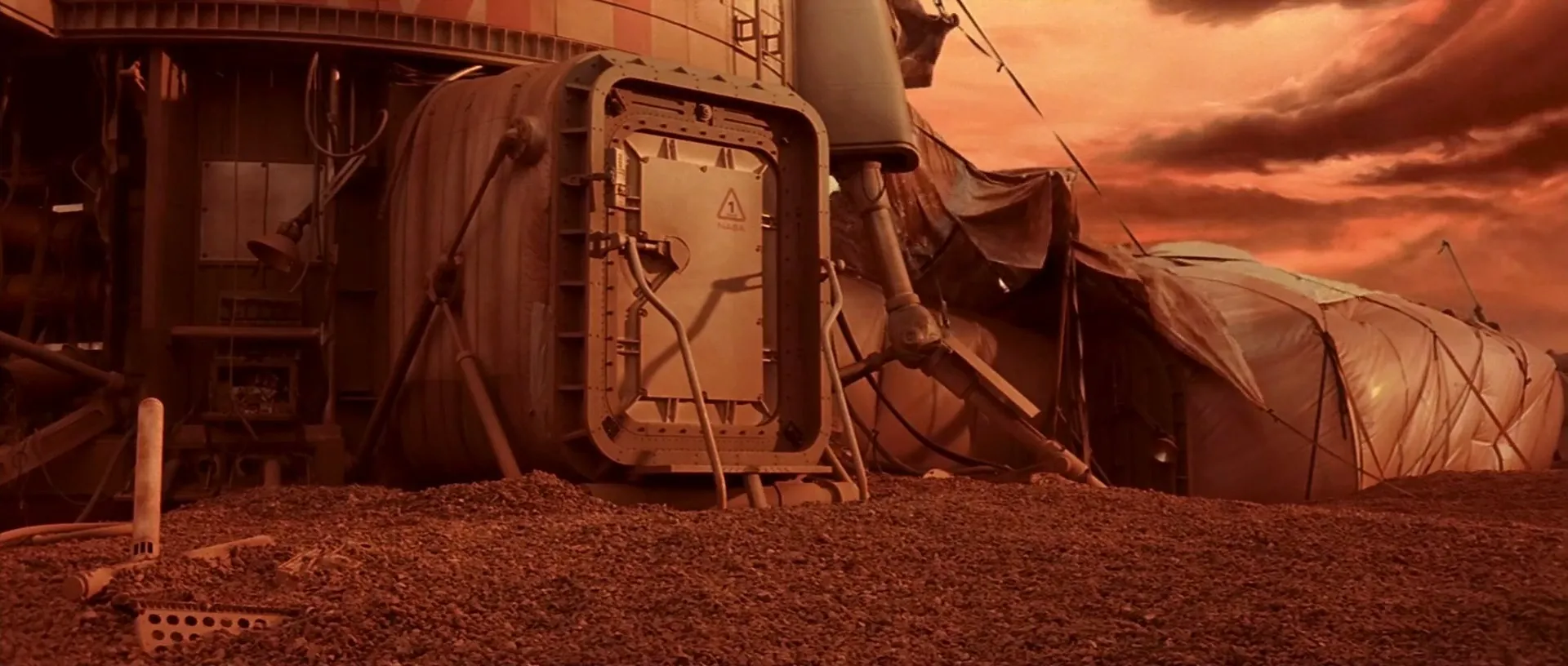
Brian De Palma’s Mission to Mars imagines early colonization efforts featuring modular, prefabricated structures. These habitats are designed for survival amid dust storms, radiation and isolation. The architecture in this film is pragmatic and engineered for autonomy, scalability and emergency resilience. Solar panels power the systems and structures, which are designed to be quickly deployable and self-reliant.
But what stands out is the emotional toll of Martian isolation. Architecture for Mars must be mindful to nurture its inhabitants. That means incorporating natural light, spatial variety and communal areas, even in resource-constrained environments. This aligns with emerging interests in designing not just physical structures but psychological habitats like spaces that support human behavior, culture and emotional needs.
5. Dune (2021): Desert planet living with advanced infrastructure
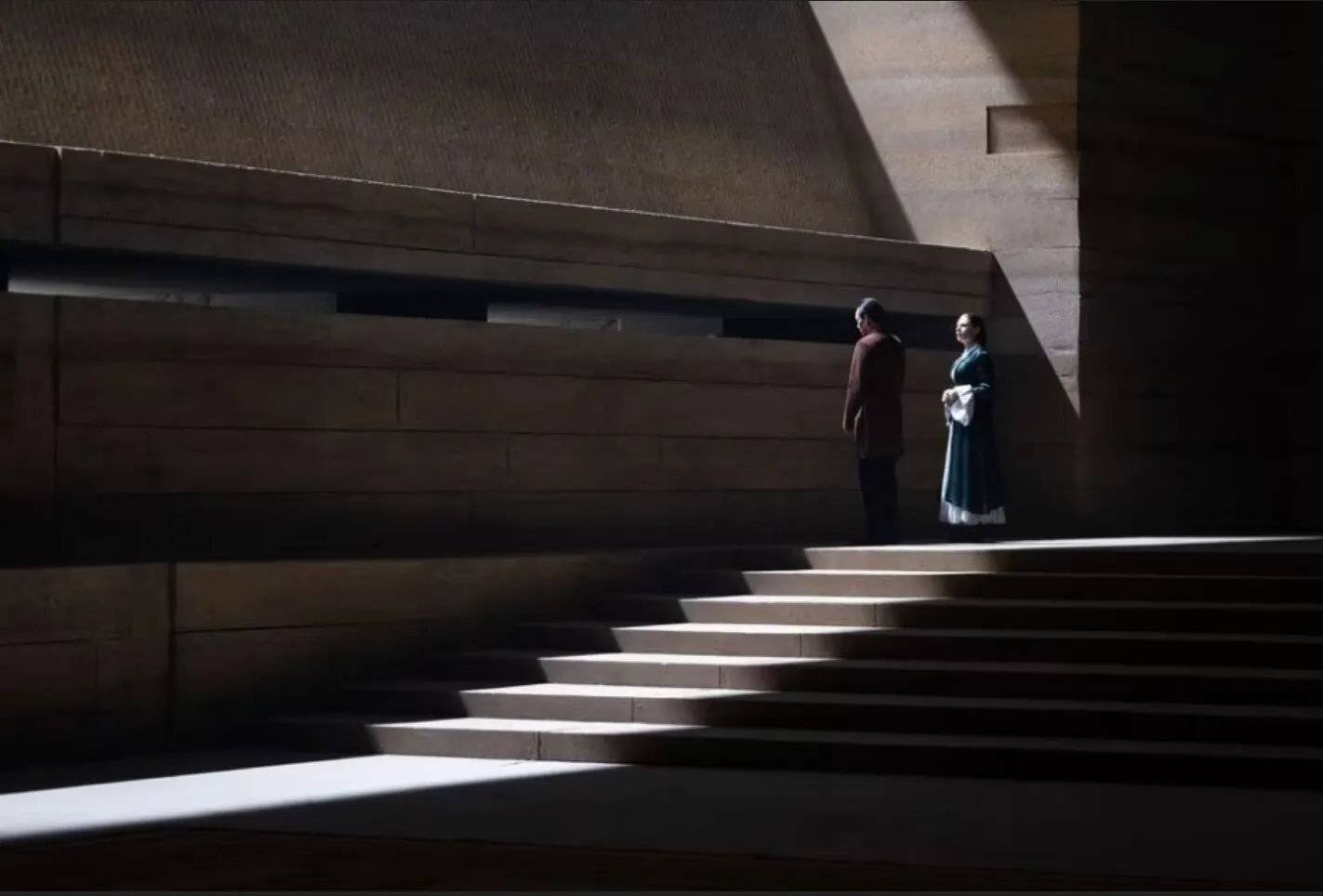
Set on the desert planet Arrakis, Dune shares many conditions with Mars such as arid climate, deadly terrain and extreme scarcity of water. Denis Villeneuve’s version of Arrakis is visually stunning, with architecture that camouflages into the landscape.Cities are built into cliffs or carved from stone, with passive cooling, thermal mass and hidden water systems. The architectural language draws from vernacular desert design with thick walls, shaded courtyards and wind-blocking forms, while adding futuristic layers of environmental control.
On Mars, similar principles will apply. Buildings will need to conserve every drop of water, resist erosion and harness natural geology for thermal insulation. Architects might use 3D-printed regolith, inflatable cores and self-healing materials to achieve these ends. Moreover, like the Fremen of Dune, Martian settlers will need to live in harmony with their environment.
Architecture for Mars: A new design ethos
Across these five films, a few recurring themes emerge that are essential for architecture on Mars:
Self-Sufficiency: Structures must function as closed-loop ecosystems that produce their own food, recycle waste and manage energy independently.
Protection: Settlements must shield residents from radiation, dust storms and extreme temperatures.
Adaptability: Designs need to evolve with human needs, incorporating modularity and flexibility from the start.
Equity: Access to life-supporting architecture must be fair and inclusive, avoiding the dystopian pitfalls of privatized oxygen and gated settlements.
Cultural Imagination: Beyond function, Martian architecture should express identity, beauty and narrative; qualities that turn habitats into homes.