

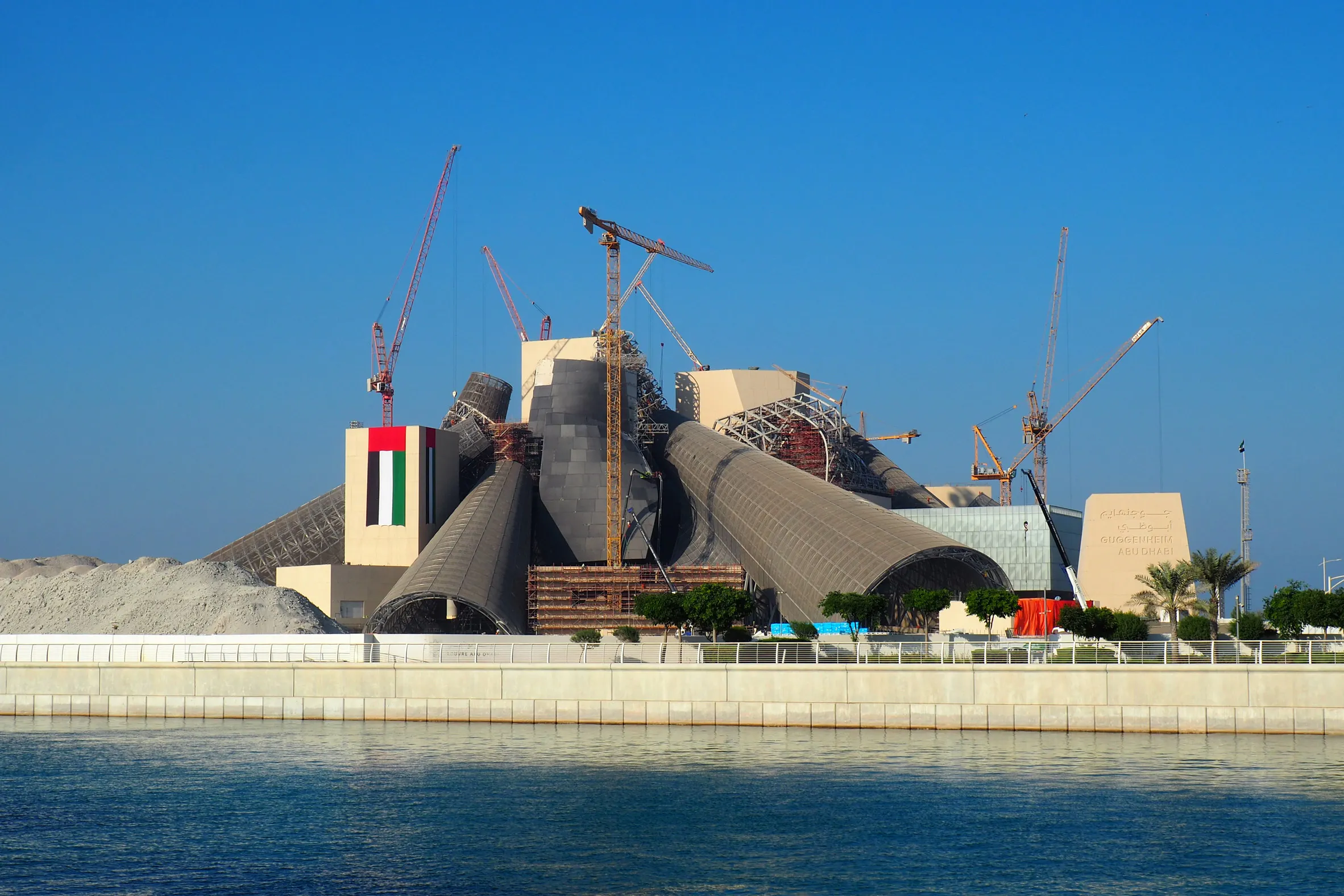
The Guggenheim Abu Dhabi, designed by the late Frank Gehry, is edging toward its final construction phase, setting the stage for a landmark addition to the cultural landscape of Saadiyat Island, Abu Dhabi. First announced in 2006, the project has faced repeated delays and changes. As of 2025, the building’s structure is largely in place, signaling that the museum may soon transition from construction to interior and commissioning.
Although a definitive public opening date has not been issued, recent reports indicate that the construction is scheduled for completion by 2025, with full opening likely in 2026.
What the Museum Will Feature
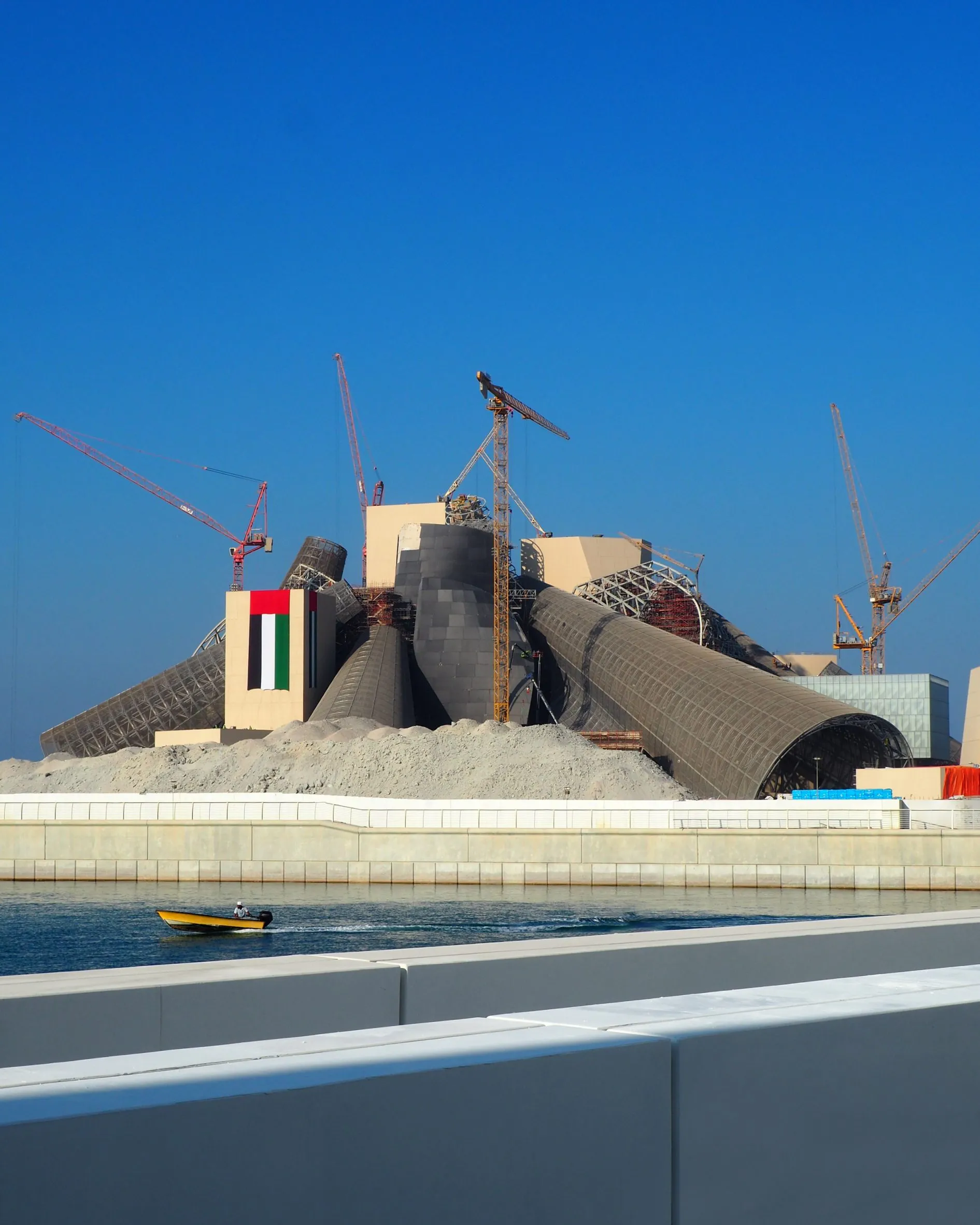
Once completed, Guggenheim Abu Dhabi will be the largest museum in the Solomon R. Guggenheim Foundation’s network. The building will cover a footprint of roughly 30,000 square meters, spread over multiple levels connected by glass bridges surrounding a central atrium. The design integrates a set of distinctive cone-shaped volumes, eleven (or nine, per different sources), which rise from the main structure. These cones serve as functional spaces, entrances, transitional zones between interior galleries and exterior terraces, and exhibition or gathering areas.
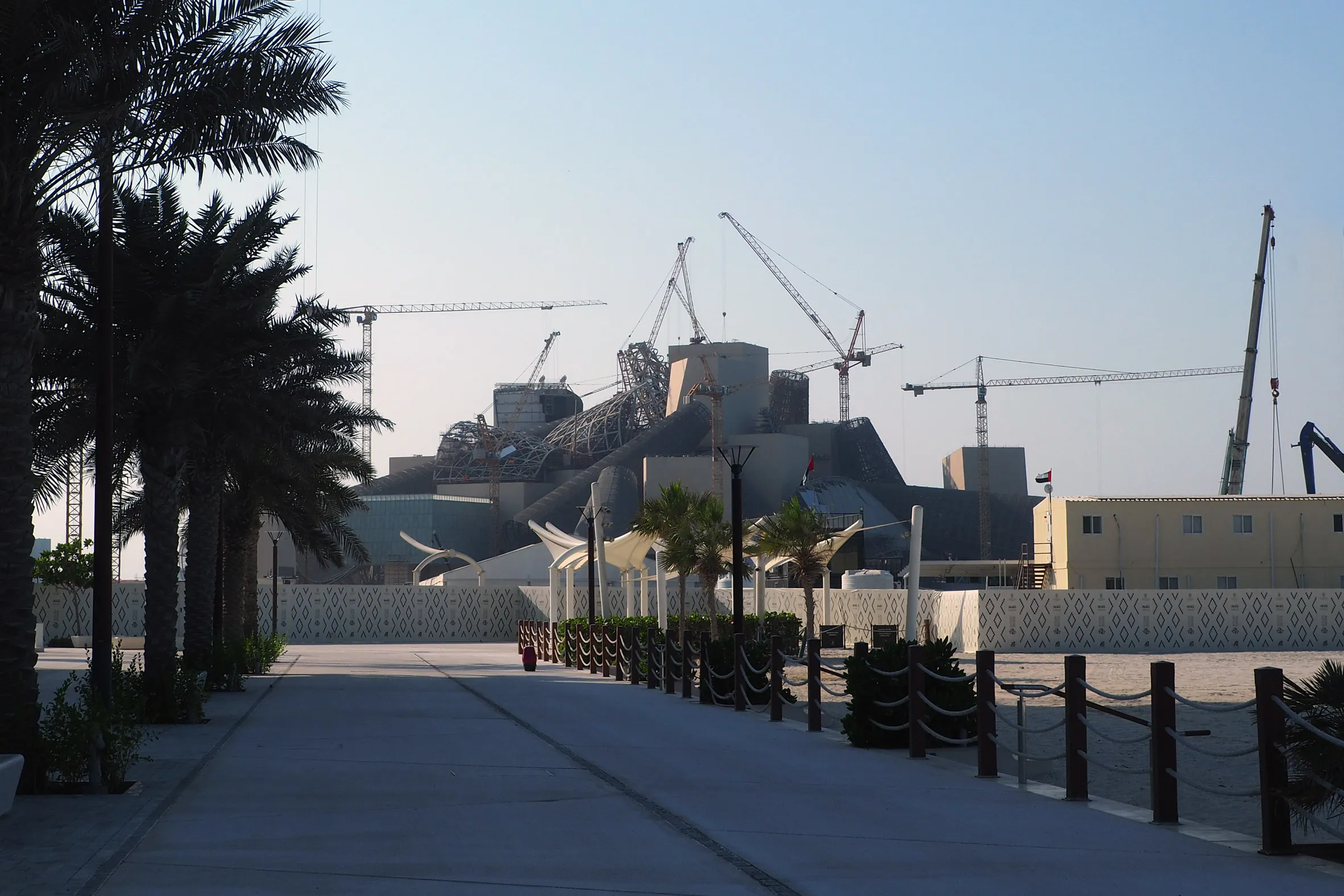
Inside, the museum is planned to adapt a diverse program of galleries for both permanent and temporary exhibitions, a center for art and technology, educational spaces, archives, a library, research facilities, and conservation and restoration laboratories. The layout with galleries of varying scale and height will allow for flexible curation and enable the display of large contemporary installations requiring generous volumes.
Frank Gehry’s design responds to the local climate and context. The placement of the museum on a peninsula at the tip of Saadiyat Island, almost surrounded by water, allows for framing views of the Arabian Gulf. The architecture draws on traditional Middle Eastern forms of passive climate adaptation. The cone-shaped elements, open galleries, and courtyard plan reflect a reinterpretation of historical wind-tower and courtyard typologies for ventilation and shading, adapted for contemporary museum use.
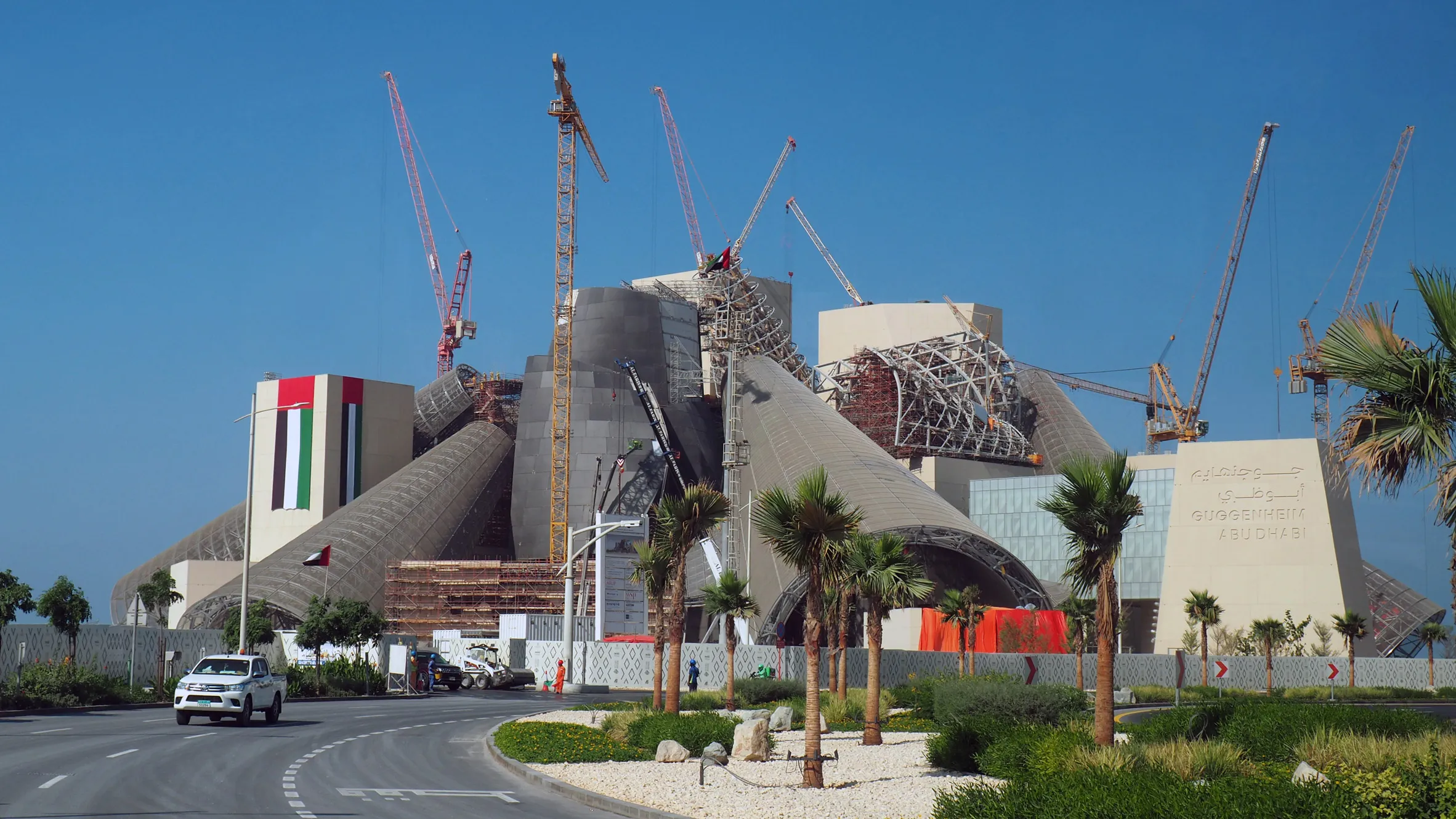
The Guggenheim Abu Dhabi museum will add significant importance to the city’s art infrastructure. The next phases will involve internal installation of climate-control systems, lighting, interior finishes, and then curatorial planning. Only after these phases are complete will the museum be ready to welcome the public.
Image credit: © Lizzie Crook/Dezeen
