


Every two years, the Venice Biennale transforms this fragile lagoon city into the center of the global arts and architecture scene. But as the crowds flood in and pavilions pop up, one uncomfortable question has lingered in the background: What’s the environmental cost of culture?
In 2025, the Biennale began to answer that. For the first time, sustainability was a central theme across programming, exhibitions, and infrastructure. From launching a Manifesto for a Circular Economy to achieving a carbon-neutral film festival, the Biennale took much-needed steps toward reducing its footprint. But did it go far enough?
Difference between greenwashing and a green framework
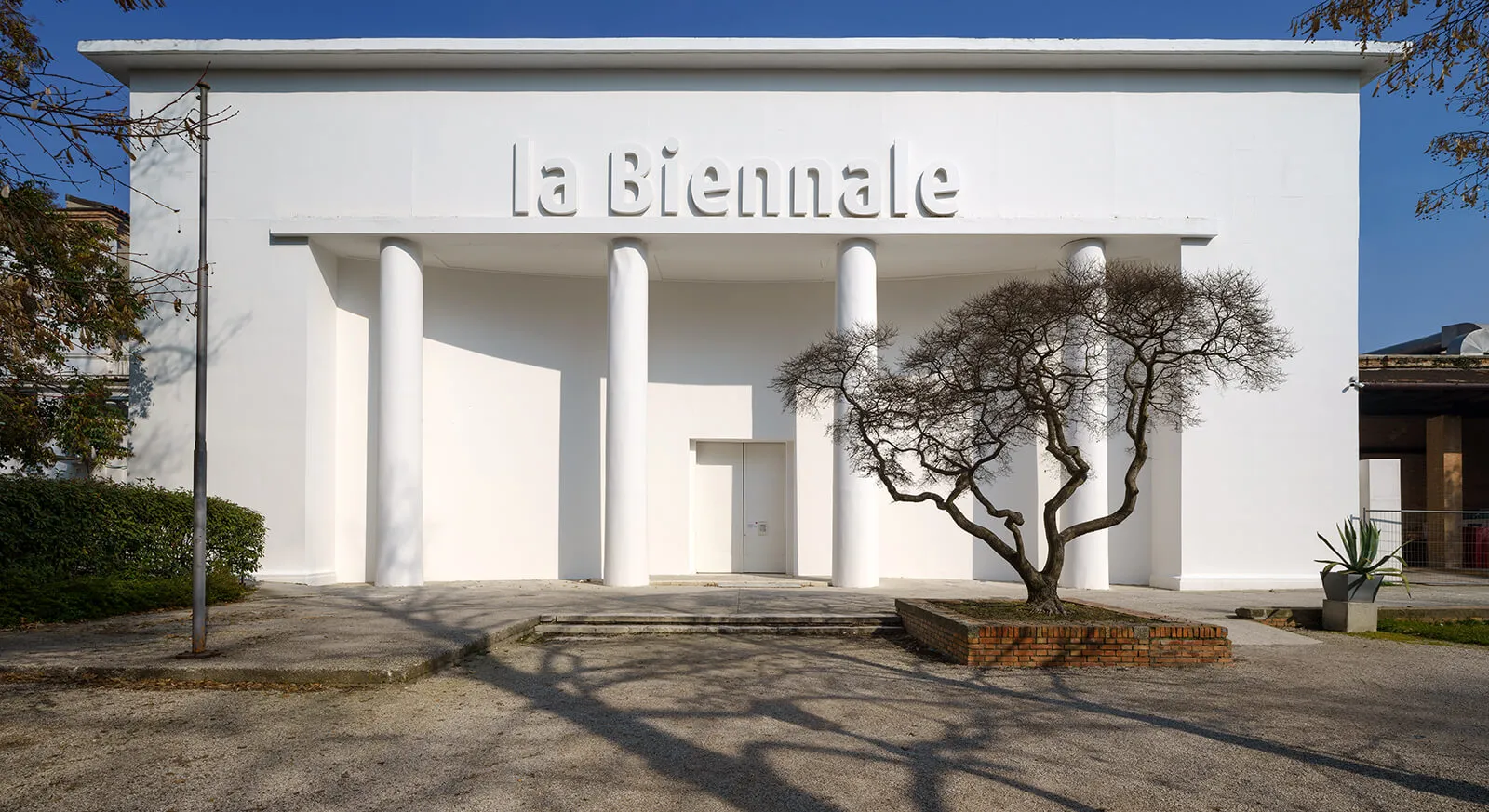
This year, the Biennale rolled out an environmental sustainability policy that outlines specific, measurable goals. It includes reducing emissions, optimizing waste management and promoting circular design principles. One major leap forward was the integration of real-time environmental monitoring using sensor technology installed across the exhibition venues. The Biennale’s organizers worked with academic and climate partners to track everything from electricity usage to visitor movement and heat distribution, data they committed to publishing publicly.
The Manifesto for a Circular Economy urged participants to prioritize reusability, low-impact materials and smart logistics. It was a call to rethink how we build and display. Sustainable design in architecture is a concept gaining traction not only at global events like the Venice Biennale, but also in education and practice. PA Academy is helping architects and designers embed sustainability into their workflow. Courses like Eco-Parametric Structures by Studio Mamou-Mani allow students to analyze climate data and optimize energy performance from the ground up. These skills mirror the very monitoring systems now shaping the Biennale.
The first carbon-neutral film festival
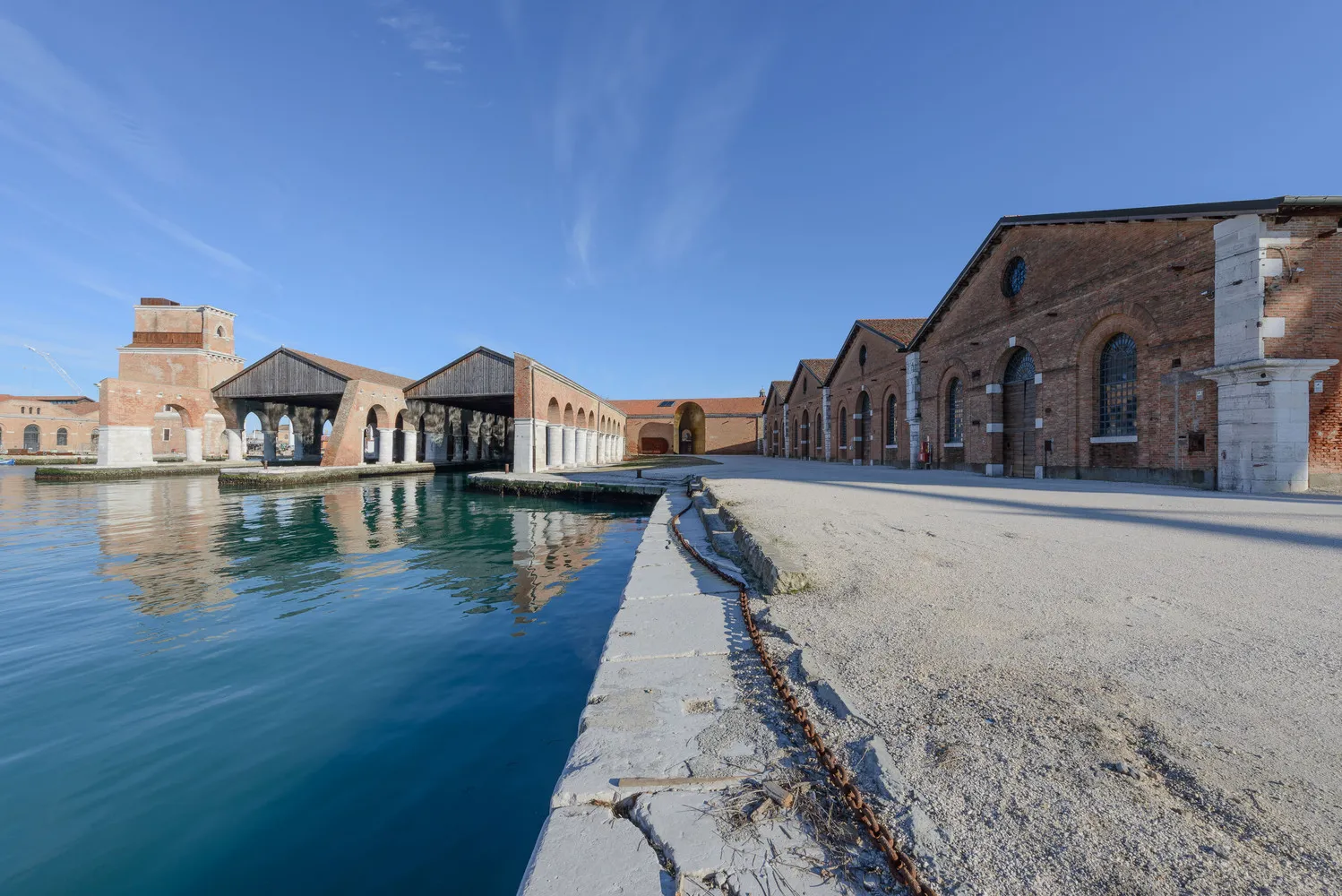
On the cinematic side, the Venice International Film Festival marked a milestone: it became fully carbon neutral for the first time. Organizers achieved this through comprehensive emissions tracking, verified carbon offsets, and a redesign of transportation and event logistics.
The festival also introduced the Green Film label, given to films produced with sustainable practices. These ranged from set construction to catering to distribution. And notably, many of the labeled films also addressed climate-related themes from water scarcity to climate migration, proving that form and message can go hand-in-hand. This shift sets a precedent. Festivals can be glamorous and green. And Venice, a city on the climate frontlines, can’t afford to be anything less.
Architecture steps up on global narratives of ecology
One of the Biennale’s most powerful strengths is its international scope. The 2025 edition saw numerous national pavilions place sustainable design in architecture at the heart of their curatorial statements. Rather than just showcasing flashy aesthetics, many opted for installations that were immersive, sensory and deeply reflective of their local environmental contexts.
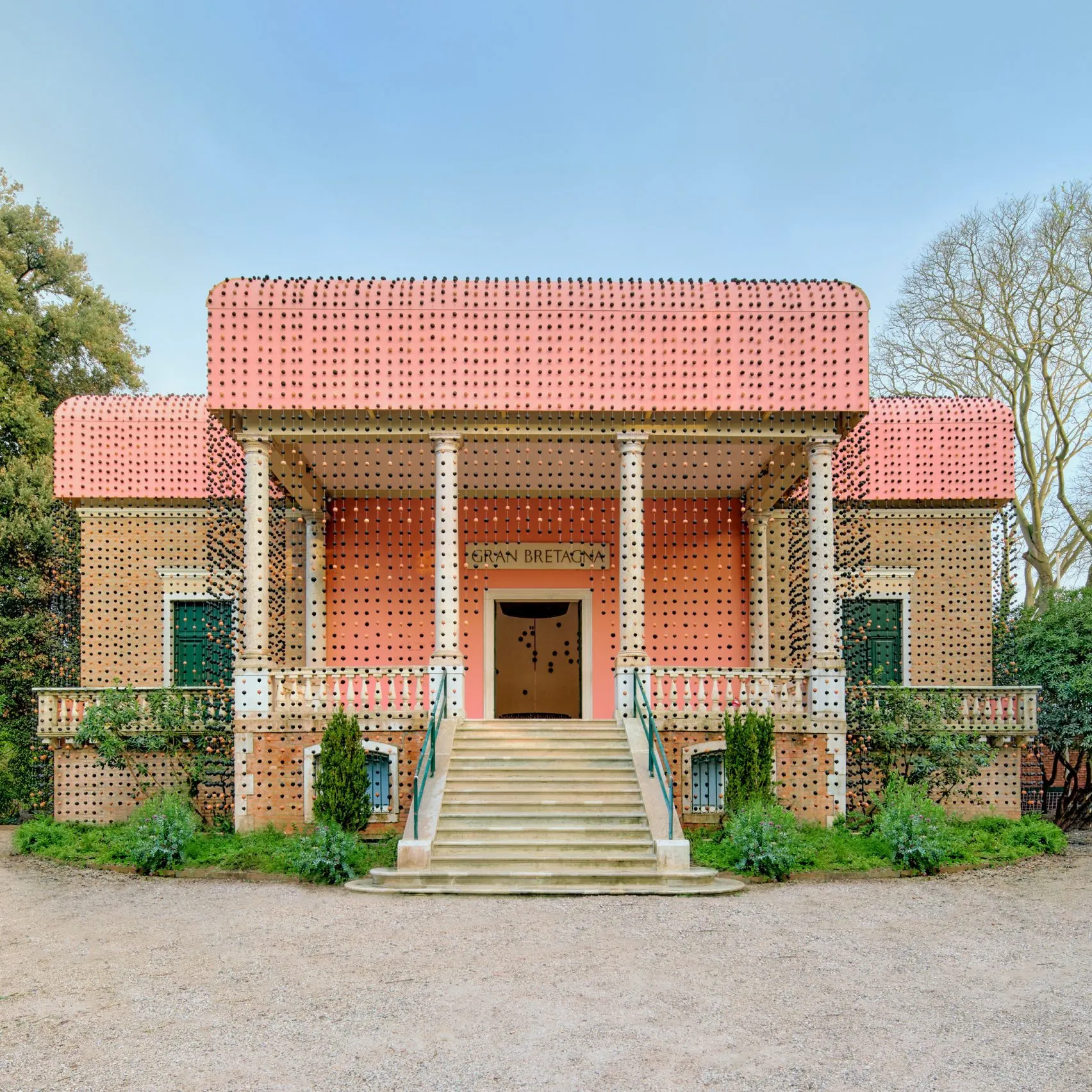
United Kingdom – “Geology of Britannic Repair”
This pavilion explored architecture’s entanglement with colonialism and extraction. A beaded veil made from clay and agricultural waste hung over the building, tethered by red glass beads. The materials spoke of land use, labor and repair, reminding visitors that sustainability is also historical, not just technical.
Germany – “STRESSTEST”
Here, the climate crisis was felt viscerally. The “stress” room simulated a suffocating heatwave using thermal ceiling mats, while the “de-stress” room provided relief with trees and natural ventilation. It was a brilliant demonstration of environmental design’s emotional impact and a reminder that architecture has a role to play in cooling our cities.
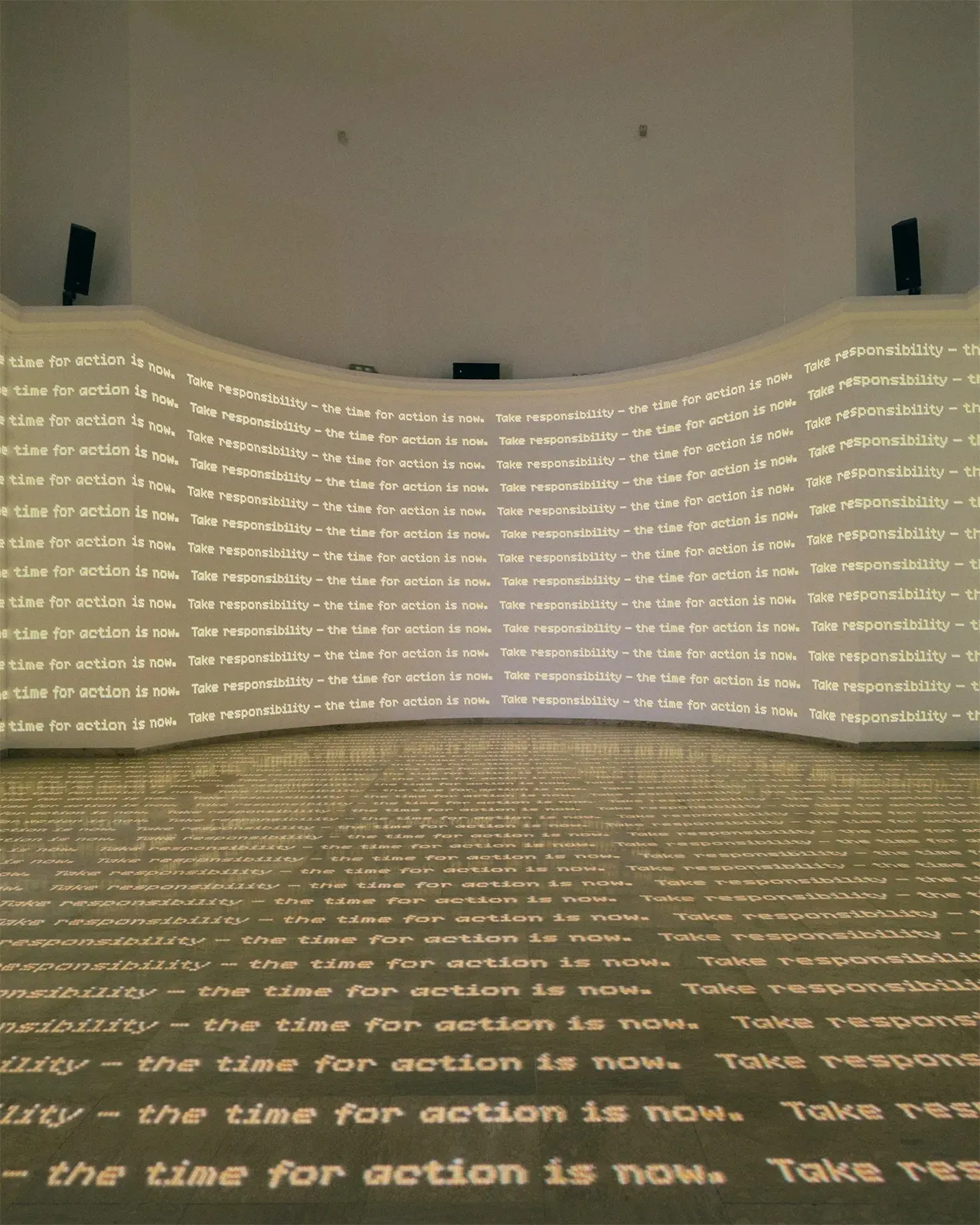
Bahrain – “Heatwave”
Bahrain Pavilion showcased passive cooling systems inspired by traditional Bahraini design. Solar chimneys, modular structures, and geothermal wells addressed rising heat with elegance and practicality. The pavilion positioned architecture as a bridge between climate justice and design, particularly in regions where outdoor labor is intense and dangerous.
United Arab Emirates – “Pressure Cooker”
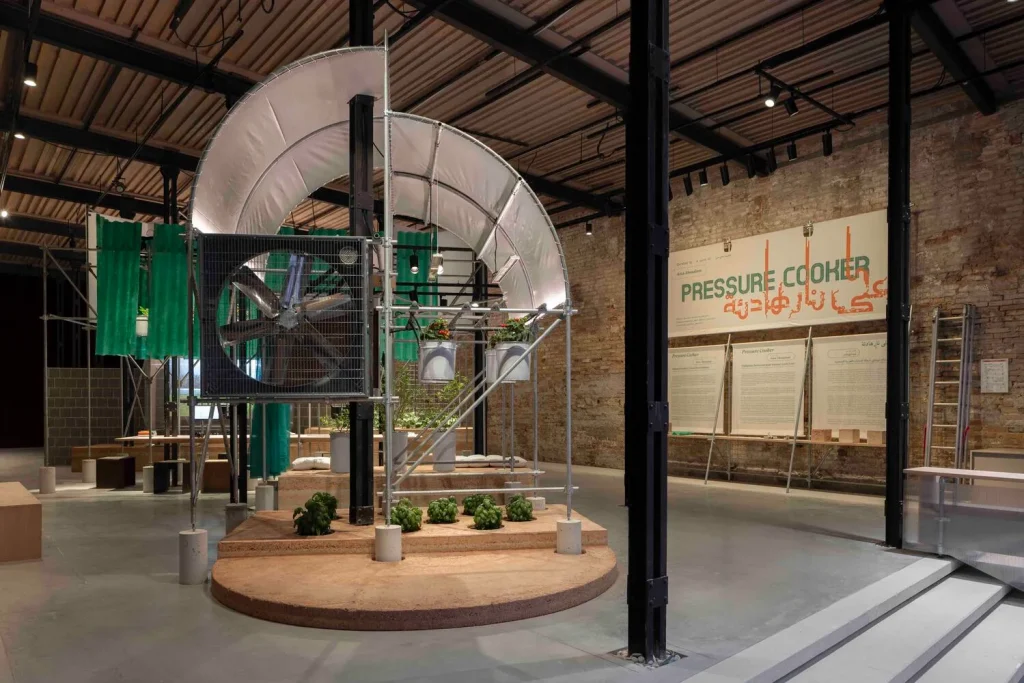
Food security meets architecture in this thoughtful “Pressure Cooker” pavilion. Adaptive greenhouses developed through archival research and field experiments demonstrated how the UAE is blending vernacular knowledge with high-tech solutions to grow food sustainably in arid conditions. The exhibit aligned closely with themes explored in PAACADEMY’s Parametric Design as a Catalyst for Social Innovation, where technology becomes a tool for community resilience.
Lebanon – “The Land Remembers”
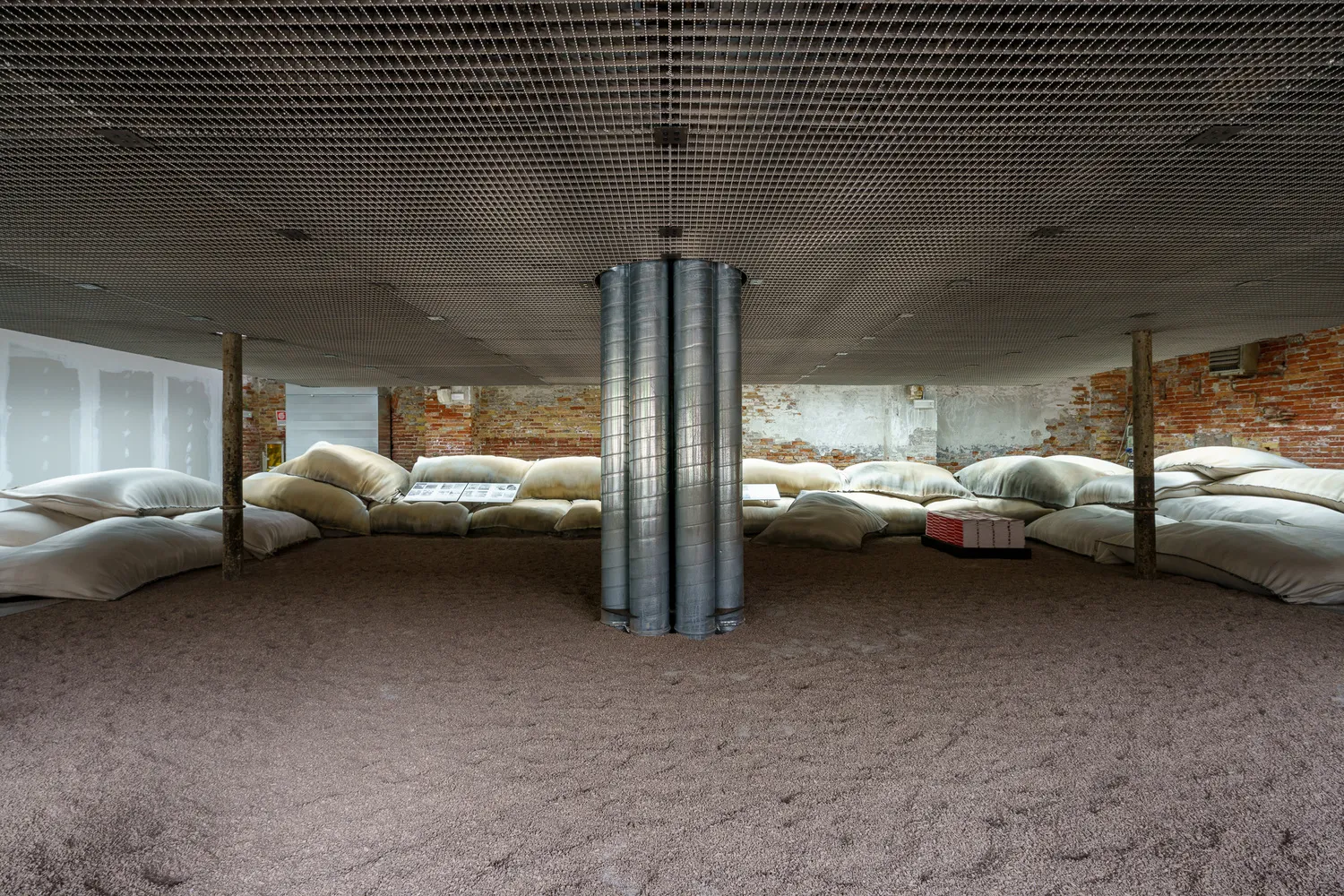
Lebanon’s poetic installation imagined a fictional government ministry tasked with ecological restoration. Built from soil bricks embedded with wheat seeds, the structure will grow over time, transforming with each day. The installation functioned as an activist space, complete with a petition and educational programming.

Iceland – “Lavaforming”
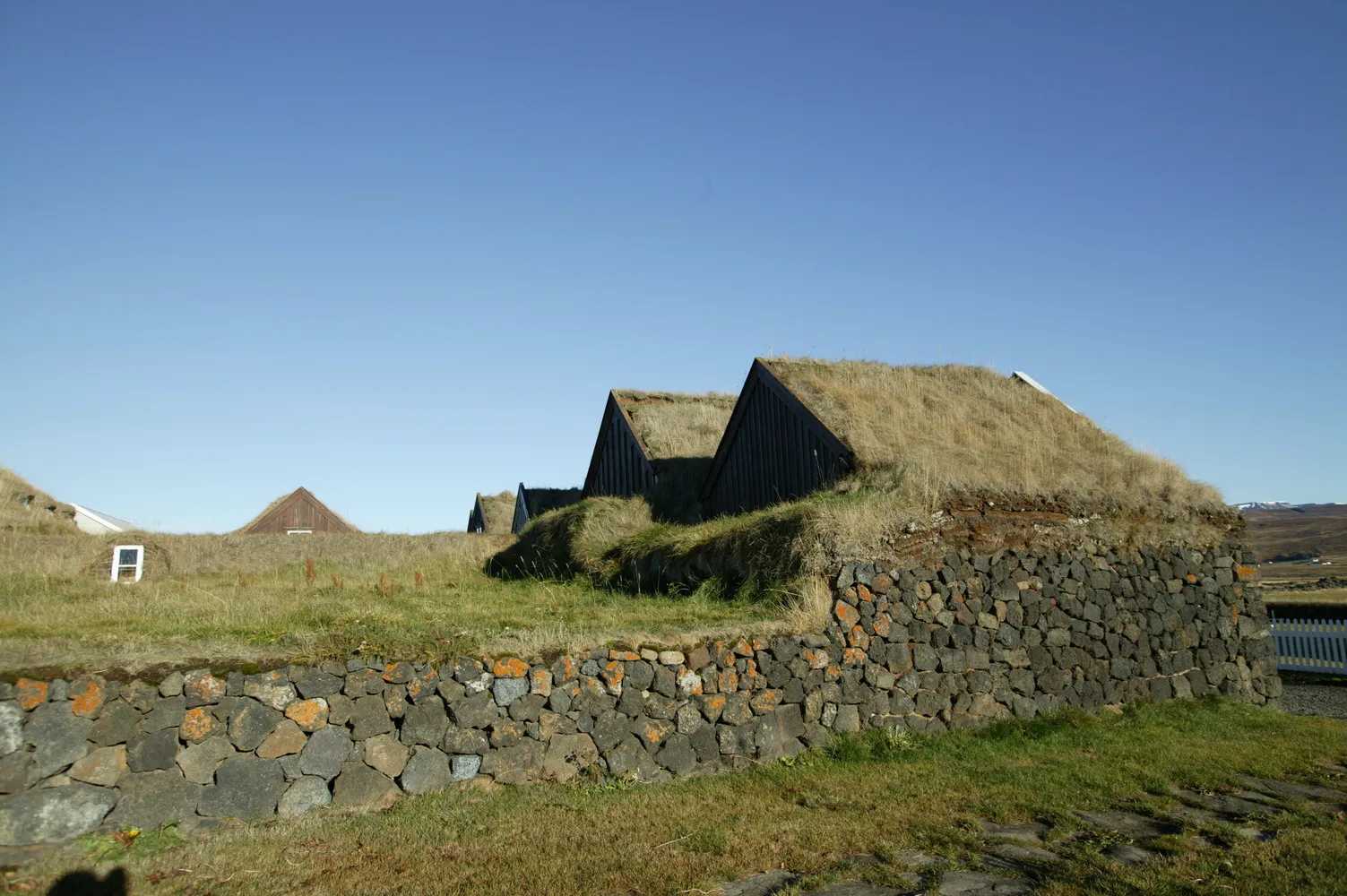
Iceland’s contribution focused on lava as a sustainable building material, exploring how volcanic geology could support low-impact construction. The exhibit tapped into Iceland’s deep geothermal heritage, illustrating how local materials can reduce reliance on carbon-intensive supply chains.
Local stakes, global lessons
Venice is a protagonist in the dialogue for urgent climate consciousness. The city is one of the world’s most vulnerable urban environments. With increasing acqua alta (high tide) events and rising sea levels, the Biennale’s environmental pivot feels both timely and necessary.
The introduction of smart sensors, data collection, and open reporting systems has turned Venice into a living lab for environment-responsive architecture. Many of these techniques are mirrored in parametric design workflows taught in advanced design programs. In PAACADEMY’s Environment-Reactive Computation with Ladybug, students learn how to use environmental data to shape architecture that adapts in real time.
Still, some contradiction remains
While the 2025 edition is the greenest yet, contradictions are hard to ignore. Thousands of international flights, short-term pavilion constructions, and high shipping emissions are still baked into the format.
Many curators have floated ideas to reduce the footprint further: A four-year cycle instead of two, mandatory use of local or reusable materials, decentralized or hybrid exhibitions and strict carbon budgets for participating nations. Logistical tweaks are not enough. The Venice Biennale demands an ideological shift. It requires rethinking what the Biennale is for, and who it’s by.
A Turning Point?
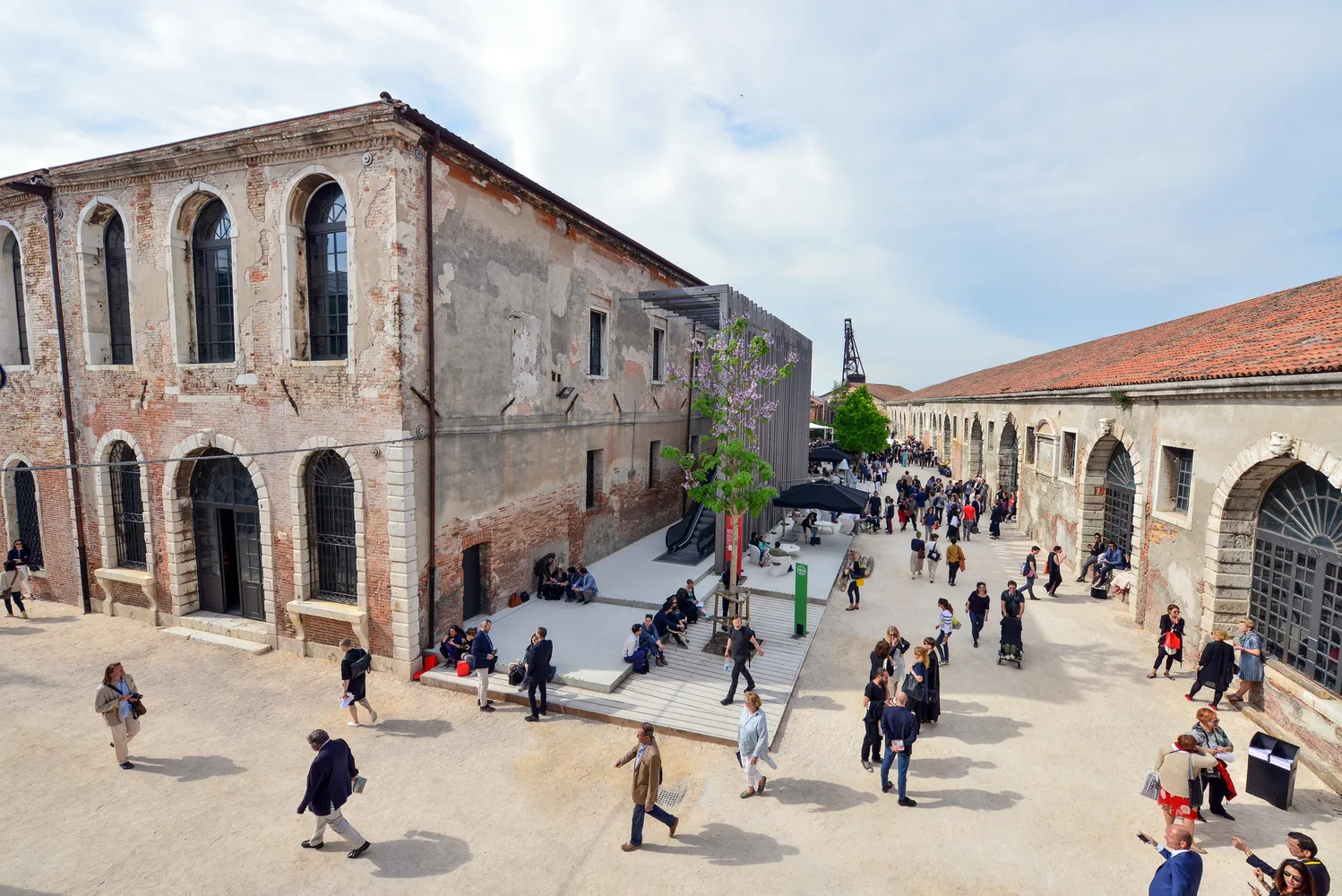
This year at Venice Biennale architects, artists, and institutions are now treating the climate crisis as a shared responsibility, and not a sideline issue. From carbon-neutral cinema to living pavilions, from lava bricks to wheat-seeded walls, 2025 felt like the beginning of a new era. One where sustainable design in architecture is a defining culture.
As the Biennale continues to evolve, the real question becomes: Will this momentum carry forward? Or will it dissolve once the spotlight fades? Because in Venice, a city on the edge, both literally and metaphorically, going green cannot simply be a fleeting idea to be applauded. It’s the only way forward.
