



Artificial intelligence (AI) is radically transforming how architects approach sustainability in our architecture, engineering, and construction industry. Using AI’s ability to process vast amounts of data and optimize processes, the buildings’ environmental impact can be minimized.
With increasing urbanization and the growing need for sustainable development, AI can offer architects the tools to design energy-efficient and environmentally healthy buildings. This adoption of AI technology is not just about optimizing our current practices; it is enabling the creation of smarter, greener structures that can help our cities adapt to changing environmental demands and anticipate the evolving challenges of climate change.
Sustainable construction methods

AI-driven systems are revolutionizing construction practices by improving construction precision and minimizing waste. For example, in large urban developments, AI is used to optimize construction workflows, ensuring that materials like steel, concrete, and glass are used efficiently.
Building Information Modelling (BIM) is a fundamental AI technology used in the design process. BIM is a digital procedure frequently used in the architecture, engineering, and construction industries to manage building information. BIM enables architects to simulate numerous construction situations and select the most sustainable materials and procedures. For example, AI-enabled BIM technology in China has helped reduce material waste and improve energy efficiency by integrating recycled materials into the construction process.
Another notable case is the development of Masdar City in the UAE. In this project, AI tools help guide construction practices by minimizing resource consumption during the construction process. They continuously analyze real-time data to identify potential inefficiencies in the construction process so that architects can make adjustments to reduce carbon emissions and save resources.
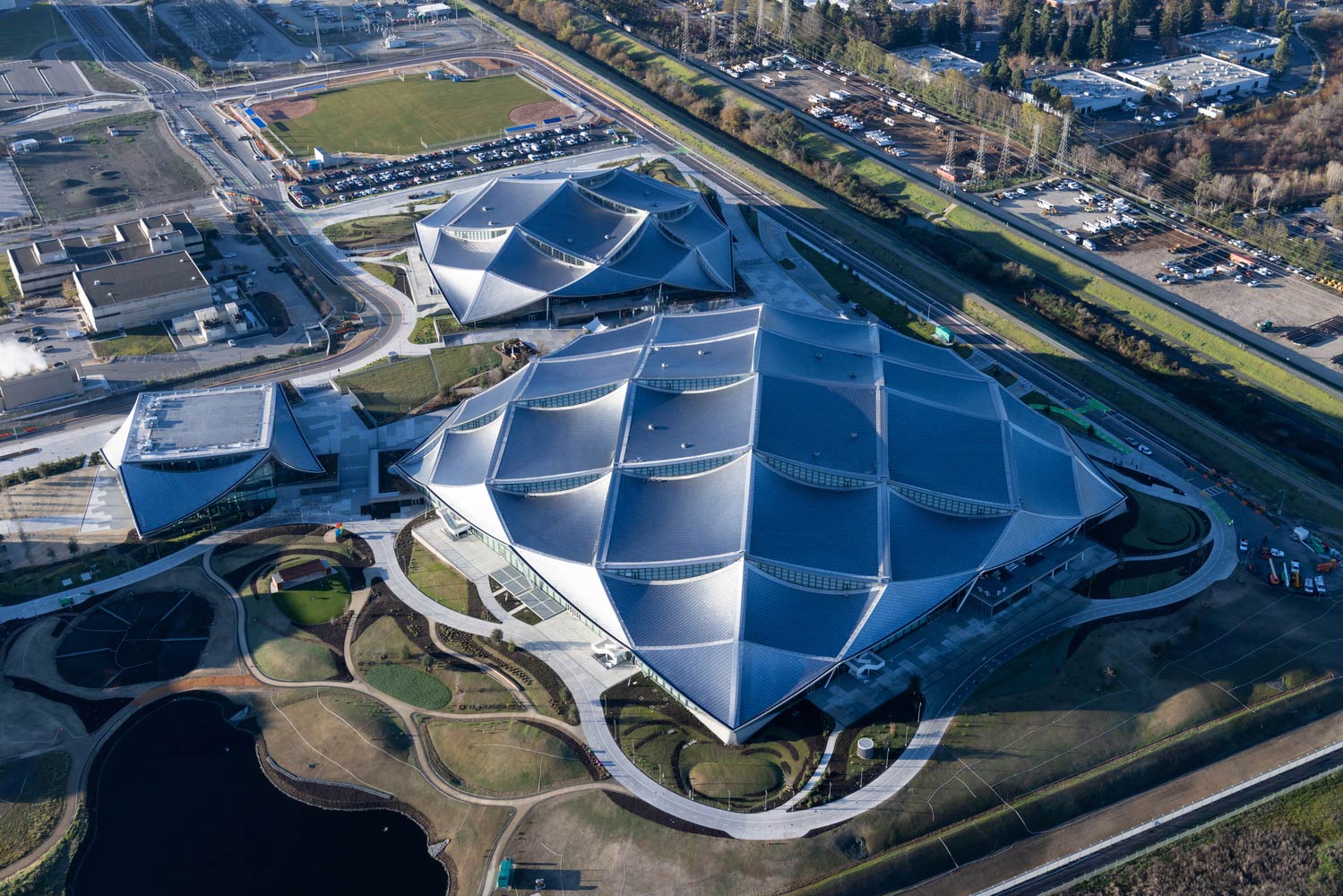
Another example is Google’s Bay View Campus, where AI technology integrates and manages how renewable energy sources, like solar and geothermal energy, are used efficiently throughout the construction process.
Being efficient with our energy use

One of the most significant contributions of AI technology to our AEC industry is their ability to optimize how buildings use energy during operation. Nowadays, AI-driven smart systems can monitor and alter energy consumption in real time. This ensures that our buildings are using energy resources efficiently. One example is The Edge in Amsterdam, which is considered one of the world’s most sustainable office buildings. Its facility management systems can dynamically control the lighting, heating, and cooling based on real-time occupancy rates and help to save significant energy.
Another example is Seattle’s Bullitt Centre which uses sensors to track energy and water usage. This facility management sensoring allows the building to modify how resources are used in real time. These innovative technologies enable the building to generate more energy than it consumes, which establishes a new opportunity for buildings to be energy-positive, giving back to the environment. This is where AI’s predictive skills can help architects and building managers anticipate energy demand and optimise energy consumption to avoid energy waste.
Powering smart cities

AI’s role in smart grids has transformed the way energy is distributed and consumed within buildings and urban environments. AI-driven smart grids can analyse urban data in real time to predict peak energy loads and adjust power distribution from renewable sources accordingly. This not only optimises the way energy is consumed but also helps to reduce our dependence on fossil fuels. For example in the Sidewalk Labs’ Quayside project proposal, smart grids were designed to manage energy distribution based on real-time demand, ensuring energy is used efficiently while maximising the integration of renewable energy sources like solar and wind.
Moreover, in Masdar City, AI systems help balance energy demand with supply, dynamically adjusting energy consumption based on environmental conditions. The ability to manage energy consumption in real time allows AI-powered systems to ensure that buildings use minimal external energy, making these structures more sustainable and resilient to energy shortages.
Maintaining cities and transport

AI’s impact on sustainable building goes beyond construction and energy management to include urban planning and transportation design. That is because AI can enable the development of smart cities that optimize energy use, decrease waste, and improve the general quality of life. The Songdo International Business District in South Korea demonstrates how AI may be used to control energy use, transportation systems, and trash management. Songdo’s AI systems continuously monitor the city’s energy and resource use, assuring maximum efficiency and minimal environmental effect (CNN).
Similarly, Hudson Yards in New York City uses AI to handle energy distribution, water recycling, and building performance across numerous buildings. Hudson Yards has established itself as a paradigm for future sustainable urban environments by using artificial intelligence into all aspects of development. AI guarantees that resources are used efficiently, and that the district’s structures are energy-efficient and environmentally responsible.

AI-powered transportation solutions, such as the autonomous electric buses utilised in Masdar City, help to reduce the carbon footprint of urban commuting. These buses employ AI to alter routes depending on real-time traffic data, reducing both energy consumption and congestion while providing an environmentally beneficial method of transportation.
In Singapore, there is development to create AI-driven traffic management systems that analyse real-time traffic conditions and vehicle movements, in order to optimise traffic flow and reduce emissions. AI’s predictive capabilities allow for adjustments in traffic signals and route planning, ensuring that vehicles consume less fuel and emit fewer greenhouse gases. This AI-powered approach to urban mobility creates a more efficient, sustainable transportation system that benefits both the environment and city inhabitants.
How will AI play out in our future sustainable built environments?

As AI technology progresses, it is unsurprising that its role in sustainable architecture will become increasingly important. AI systems are already assisting architects in designing buildings and cities that reduce construction waste, increase energy efficiency, and improve city energy consumption. Projects like The Edge, Masdar City, Songdo, and Hudson Yards demonstrate the immense potential of AI to create more sustainable buildings and cities that prioritise our environment.
From AI-driven smart grids and transportation systems to sustainable construction practices and materials optimization, AI is driving significant advancements in sustainable building design. And as AI continues to evolve, its role in architecture will only expand, inspiring a new generation of architects and engineers to use AI to process complex environmental data and inform and guide our sustainability practices.
