

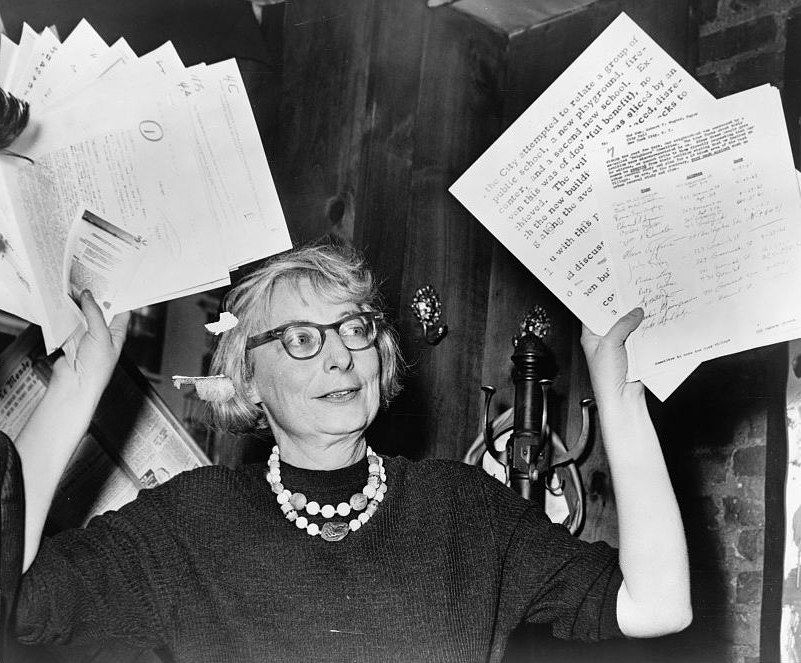
Jane Jacobs collected her observations of cities and her questions in “The Death and Life of Great American Cities” which she published in 1961 that was a critique of 1950s urban planning policy. She asked questions such as, “What factors make a city safe?”, “What is a neighborhood like?”, “What is the position of the neighborhood in big cities?”, and “How does life work in cities?”.
The book is a critique of post-World War II urban planning strategies blamed for the death of American city neighborhoods. She provides development and defense proposals for organic urban life in the United States by opposing modernist planning movements. She says that urban renewal brutally destroys the natural structure of cities. She demonstrates that megacities in developing nations will bring with them a slew of new urban issues. Instead of addressing city issues and how they should be, she claims that we can understand our city through our organizational power. She discussed the organic unity of this process.
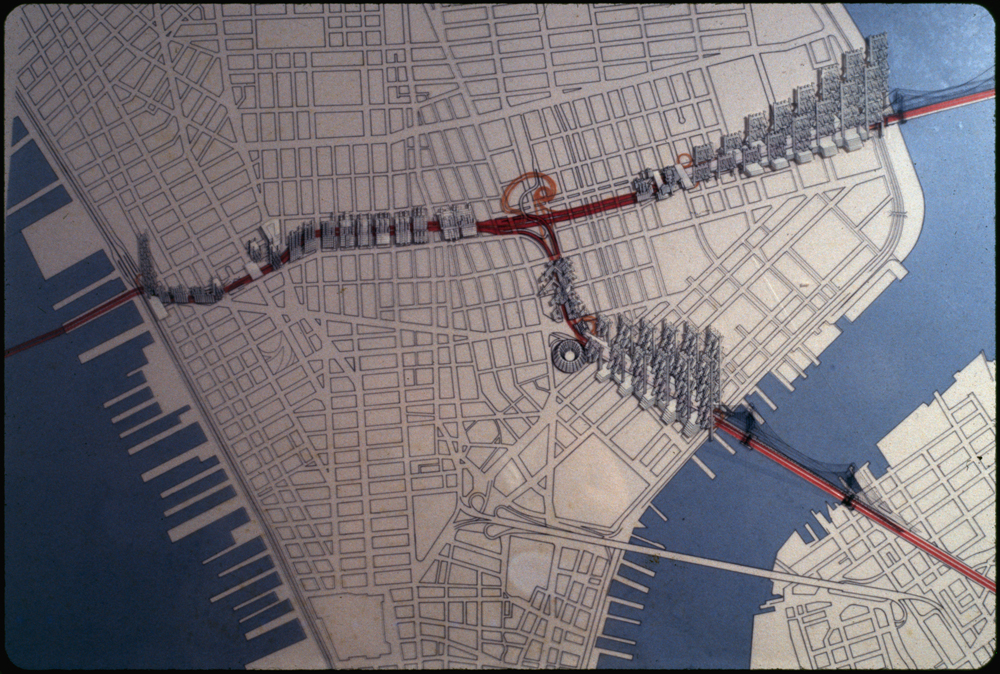
In her book, Jacobs commonly used examples from the New York area, where she lived. She compared native and newcomer responses to public events, trust, and ownership in the regions. For example, in the book’s introduction, she describes the North End neighborhood as “intimate, safe, and healthy,” but the neighborhood is characterized as a “terrible slum.” She argued that nothing can be founded on technical foundations and that everything must be viewed sociologically, where real-world events may differ from expert opinions.
Sidewalks are one of the important topics in the book. According to Jacobs, Sidewalks are an essential system for maintaining the neighborhood’s order. The shops on sidewalks, for example, and the reality that the entire city functions on sidewalks are significant. In a healthy community, the police do not always need to be present to keep the sidewalk safe. The natural proprietors of the streets should keep an eye on them. These natural owners are people who appreciate watching what happens on the street and can intervene if necessary. According to Jacobs, there is a link between empty streets and high-rise residential buildings, abandoned areas, stairwells, and other similar structures.
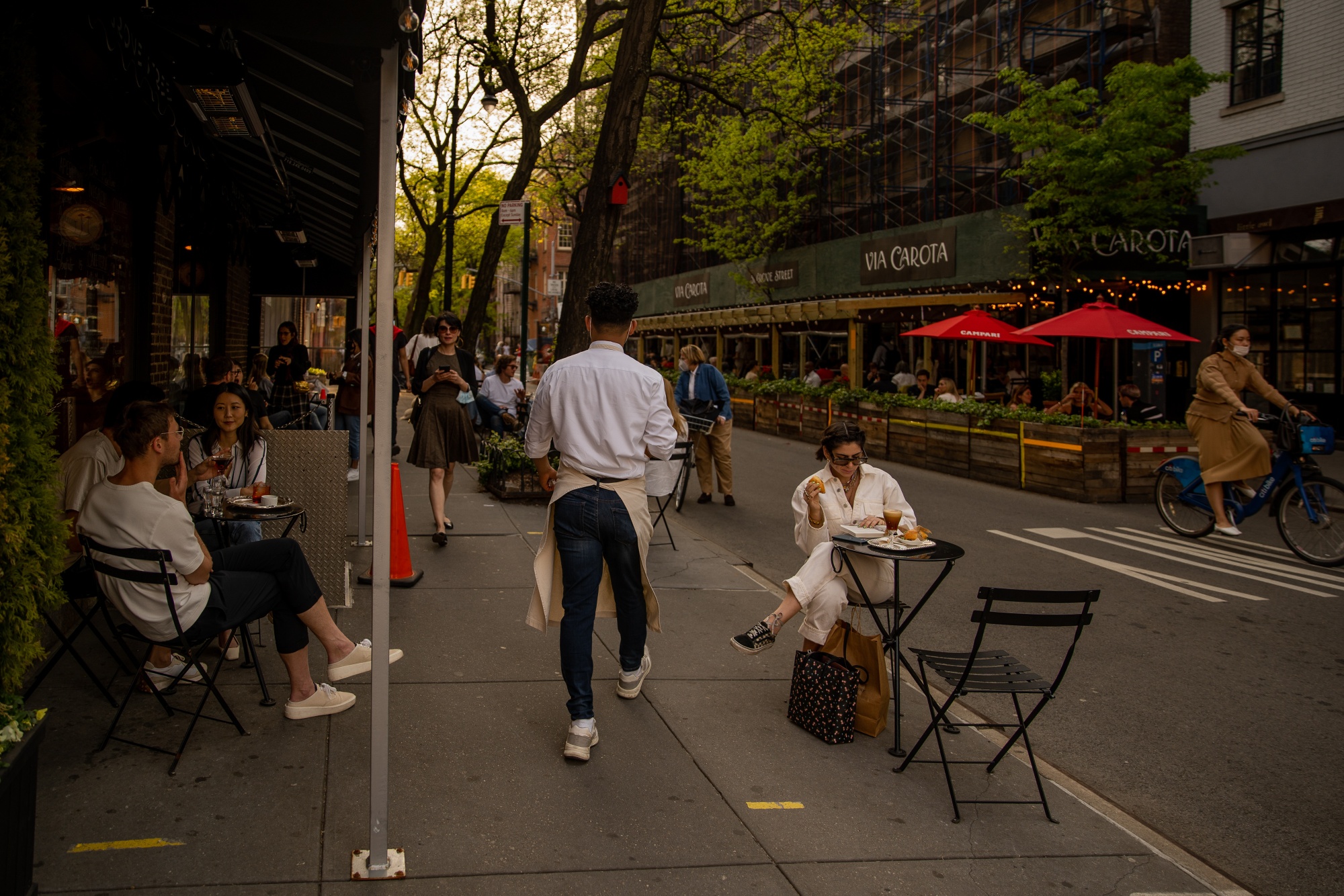
Jane Jacobs argued that successful city streets must possess three key qualities to accommodate strangers and promote safety as an inherent feature:
“First, there must be a clear demarcation between what is public space and what is private space. Public and private spaces cannot ooze into each other as they do typically in suburban settings or projects. Second, there must be eyes upon the street, eyes belonging to those we might call the natural proprietors of the street. The buildings on a street equipped to handle strangers and to insure the safety of both residents and strangers must be oriented to the street. They cannot turn their backs or blank sides on it and leave it blind. And third, the sidewalk must have users on it fairly continuously, both to add to the number of effective eyes on the street and to induce the people in buildings along the street to watch the sidewalks in sufficient numbers. Nobody enjoys sitting on a stoop or looking out a window at an empty street. Almost nobody does such a thing. Large numbers of people entertain themselves, off and on, by watching street activity.” said The Death and Life of Great American Cities.
Modernization of apartments, changes in resident profiles, lax access controls, apathy, and a lack of control and prevention functions can all make the presence of foreigners an automatic danger. When residents of apartments feel unsafe, they flee. This problem is not incurable. The main problems, according to Jacobs, can be pointed out by opening the corridors of the Brooklyn Project (Blenheim Houses) to the public, offering amenities to the environment, and providing tenants with areas to use. Jane Jacobs pointed out the importance of bars, restaurants, and public places based on the idea that having a moving living environment is a prerequisite for city safety.
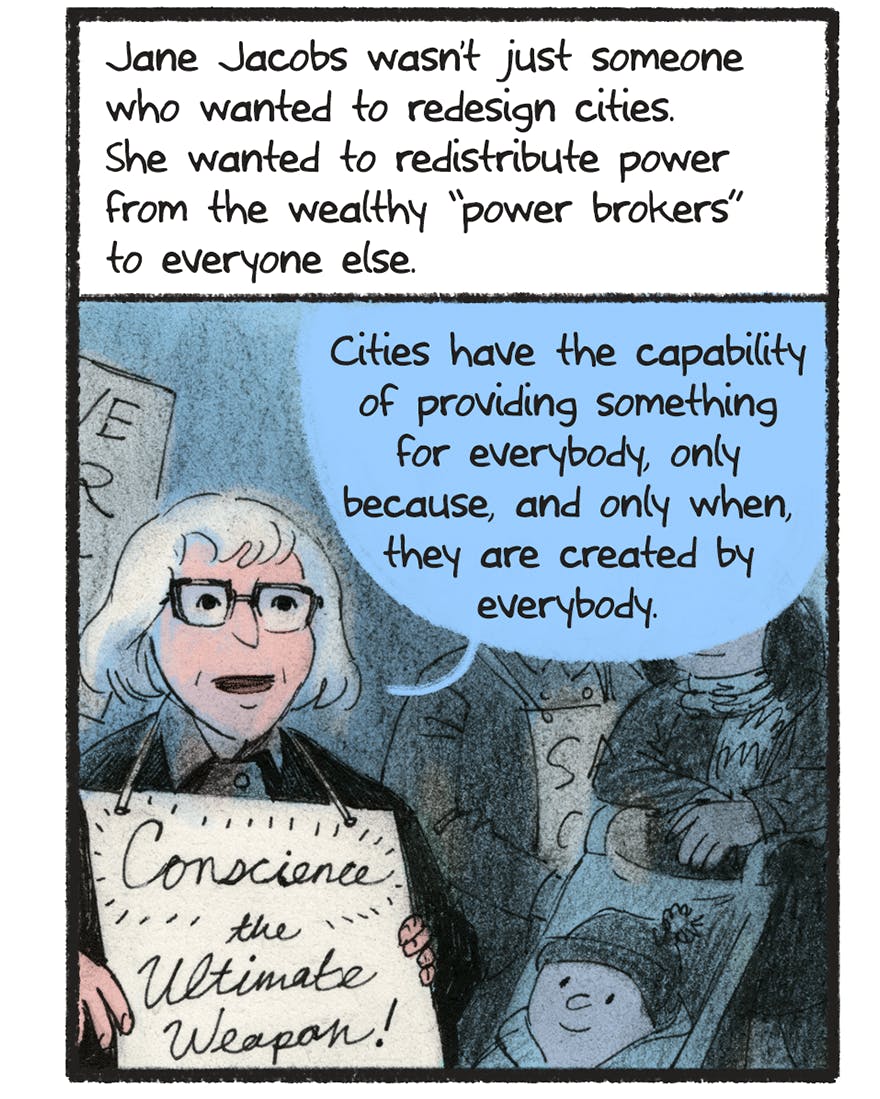
She argued that cities must be shaped by the people who exist in them. Jacobs’ theories influenced urban planning and development greatly, and her book remains a seminal work in the field.
“Cities have the capability of providing something for everybody, only because, and only when, they are created by everybody.”
-Jane Jacobs, The Death and Life of Great American Cities

One critique leveled at Jane Jacobs and her work, on the other hand, is her failure to address racism, both in American housing markets and in official policies such as redlining (the discriminatory practice of denying residents of certain regions services based on their race or ethnicity). Even before the release of “The Death and Life of Great American Cities,” her editor, Jacob Epstein, expressed concern about the lack of any discussion of race. Jacobs had reasons, but she didn’t have time to elucidate them. Sociologist Nathan Glazer agreed with Epstein’s concerns, but dismissed them as unrealistic, saying that “you can’t do everything.” This omission is especially troubling because what you see in the city often relies on who you are, and many of Jacobs’ appealing ideas appear to be far less universal.
Also “Why Our Cities Need Less Jane Jacobs” mentioned that Jacobs’ work is limited by her narrow viewpoint as a middle-class white woman in 1950s New York City, which prevented her from completely recognizing and addressing marginalized communities’ experiences. As a result, blindly invoking her work without acknowledging her blindness to these concerns is problematic.
So, Jane Jacobs’ book “The Death and Life of Great American Cities” offers a unique perspective and good critics of urban planning development. On the other hand, it also needs to be critically examined in light of contemporary issues and concerns.
