

Close Menu
ParametricParametric

    Subscribe to Updates

    Get the latest creative news from FooBar about art, design and business.

    What's Hot

    tetsstststtt

    July 23, 2026

    Soundscape in Architecture: Designing Through Sound

    July 23, 2026

    MVRDV Wins Shift Embassy Competition with Rotterdam ROCKS!

    July 23, 2026
    Facebook X (Twitter) Instagram
    Facebook X (Twitter) Instagram Pinterest YouTube LinkedIn TikTok
    ParametricParametric
    Courses
    • Home
    • Features
      • Typography
      • Contact
      • View All On Demos
    • Typography
    • Buy Now
    ParametricParametric
    Home»Projects»Design»Aguahoja: Programmable Biocomposites Digitally Fabricated by Neri Oxman and MIT Media Lab
    Design

    Aguahoja: Programmable Biocomposites Digitally Fabricated by Neri Oxman and MIT Media Lab

    adminparametBy adminparametJuly 23, 202603 Mins Read0 Views
    Facebook Twitter Pinterest LinkedIn Tumblr WhatsApp Reddit Email
    Share
    Facebook Twitter LinkedIn Pinterest Email

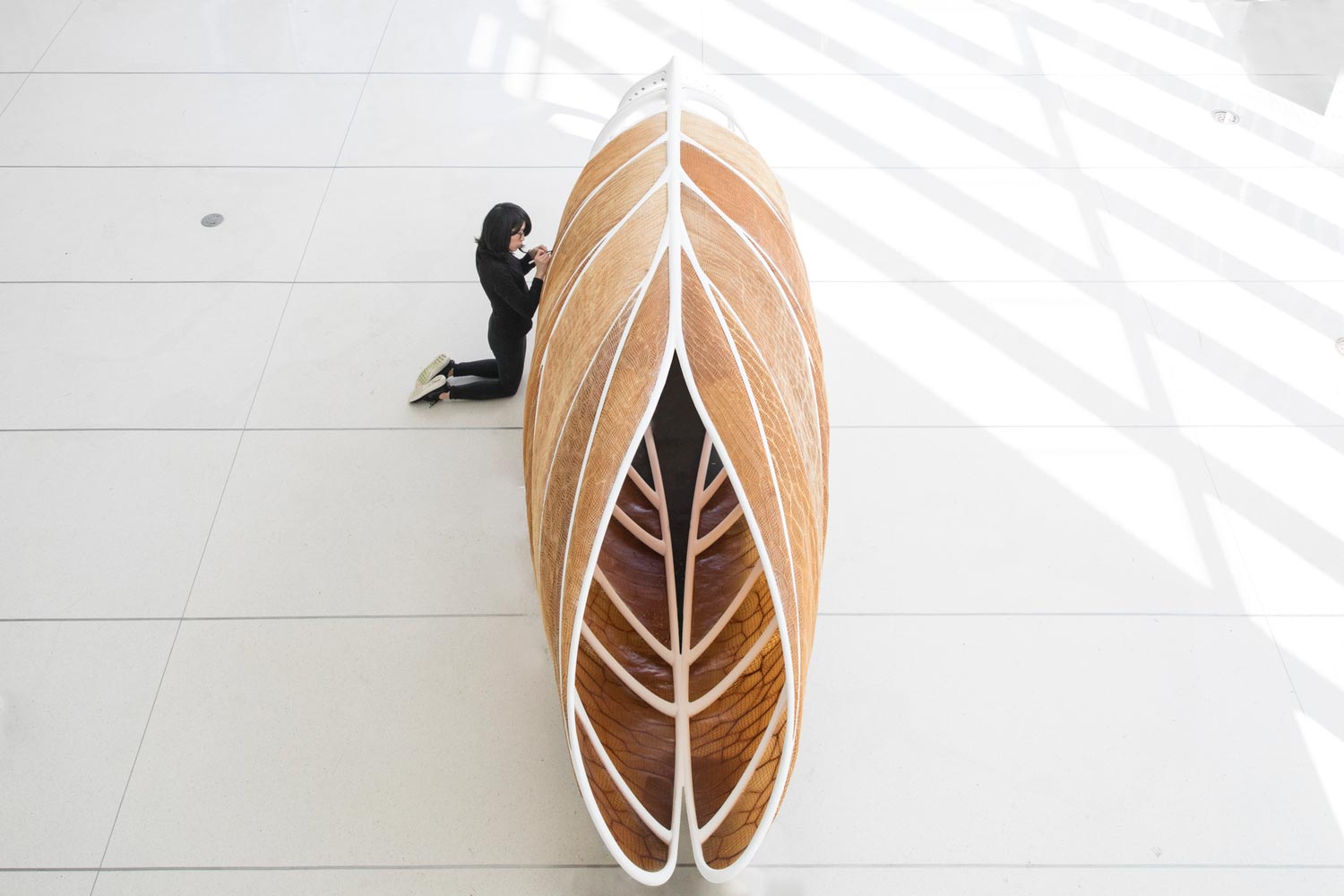
    A secondary skin developed and programmed by Neri Oxman and MIT using water-based biocomposites for digital design and fabrication. The Aguahoja project has exhibited a pavilion and a series of artefacts erected from molecular components found in tree branches, insect exoskeletons, and our own bones. They use natural ecosystems, inspired for a material production process that produces no waste.

    The Design Approach

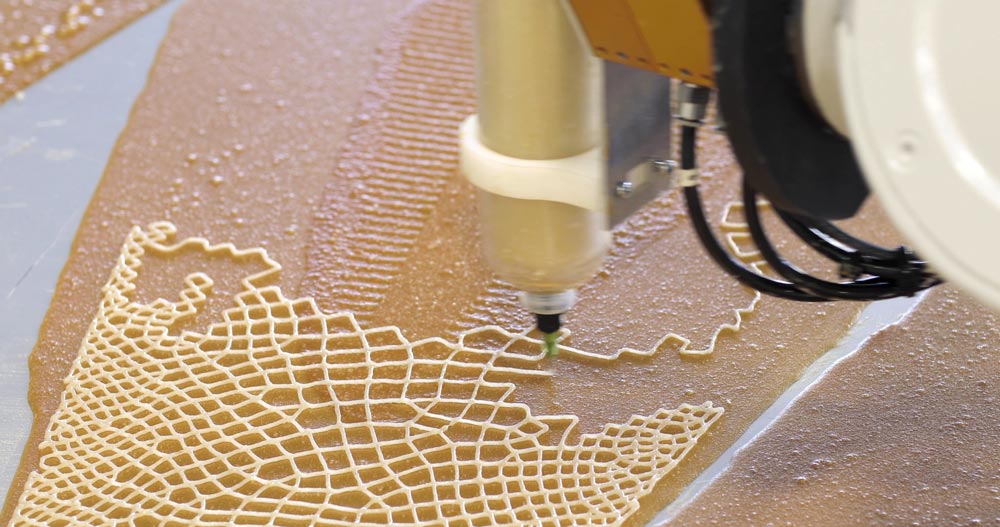
    The design approach facilitates close integration between material creation and robotic fabrication. The project consents creation of objects across varying scales. Besides it examines the importance of water in Nature’s systems, the birth cycle, adaptation and decay. This allows the re-use of materials in the whole composition. Incorporating inspiration of growth forests and coral reefs, waste virtuals non-exists, The design team compared to the waste production rates of current building industries, where objects expire and materials extracted from the earth. Indeed their creation can faster be replenished.
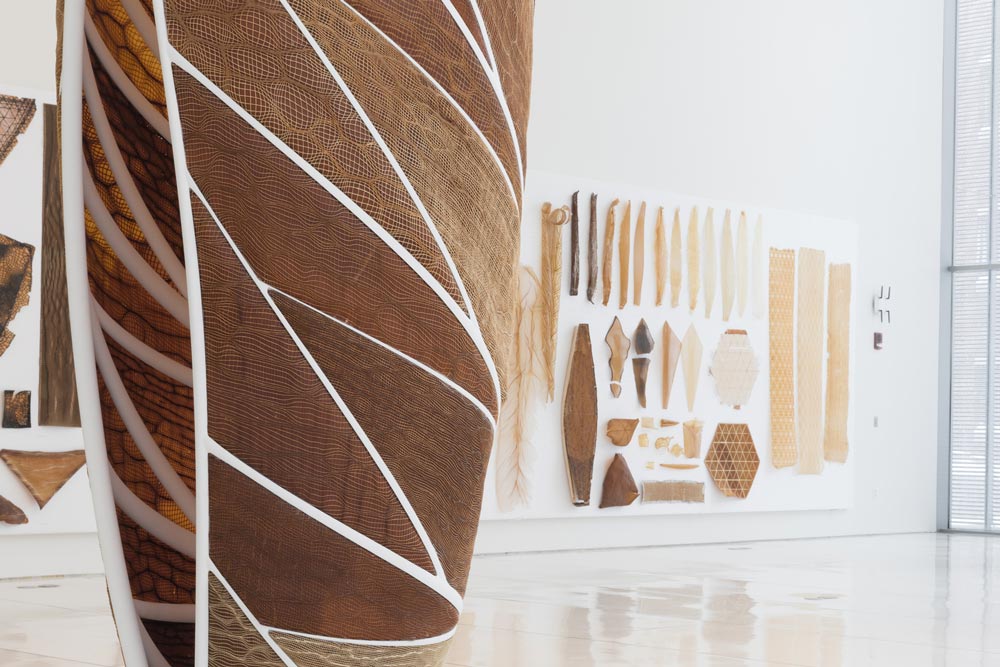
    Aguahoja uses biocomposites composed of the widely used materials on our planet: cellulose, chitosan, pectin, and many more. They digitally fabricate particularly to weave materials with specific properties adapting in response to heat and humidity. In death, the materials dissociate in water, thus eliminating production waste and fuelling life.
    The Aguahoja Pavilion

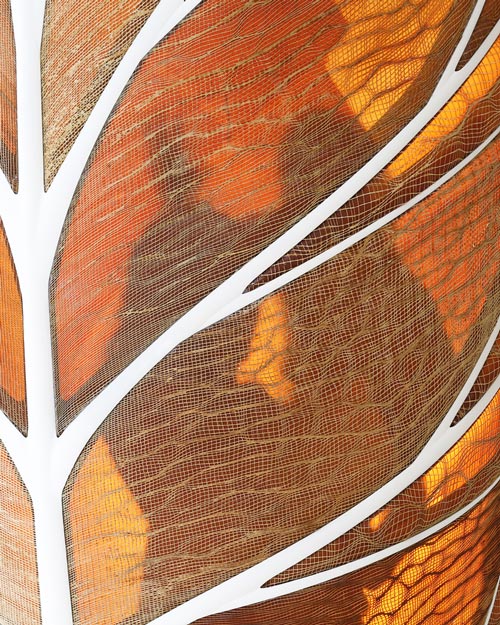
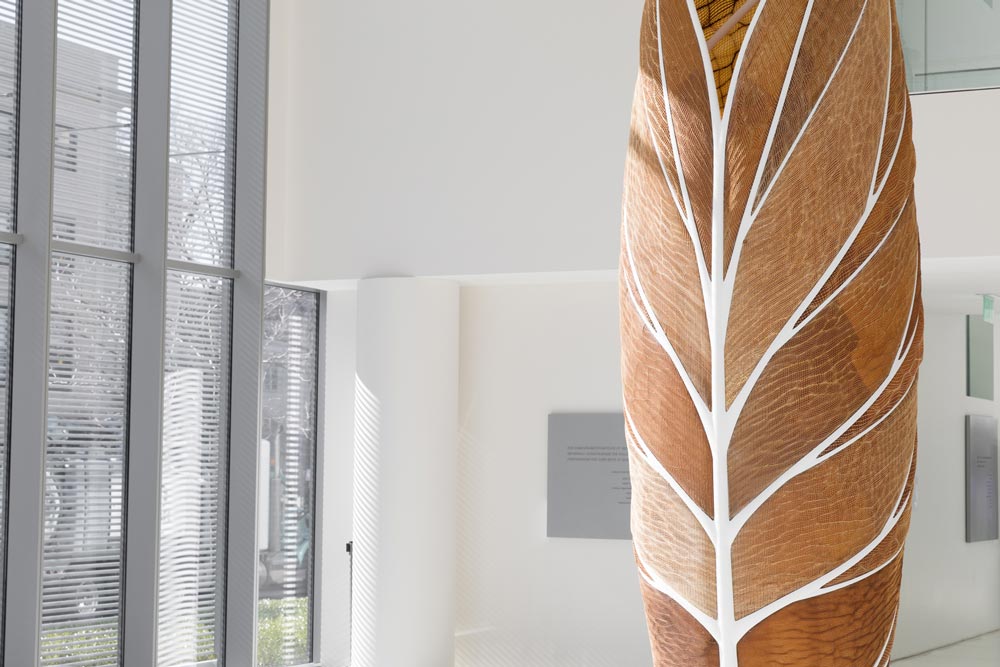
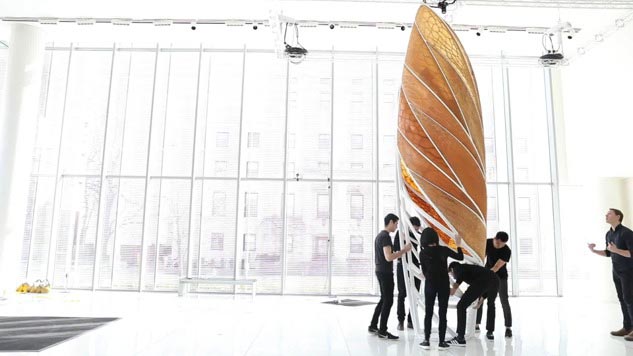
    The Aguahoja Pavilion continues its research on the application of environment-responsive biocomposites leading to the first architectural-scale iteration. Vertically upright in five meters, the structure’s skin indeed composes flexible biocomposite with functionally graded mechanical, chemical, and optical properties. Cellulose and chitosan allow for creating a generative surface pattern to additionally alter panels’ stiffness and colour by robotic deposition. Moreover, when exposed to rain the skin degrades programmatically. This restores its constituent building blocks to their natural ecosystem. This cycle continues naturally in synthesis.
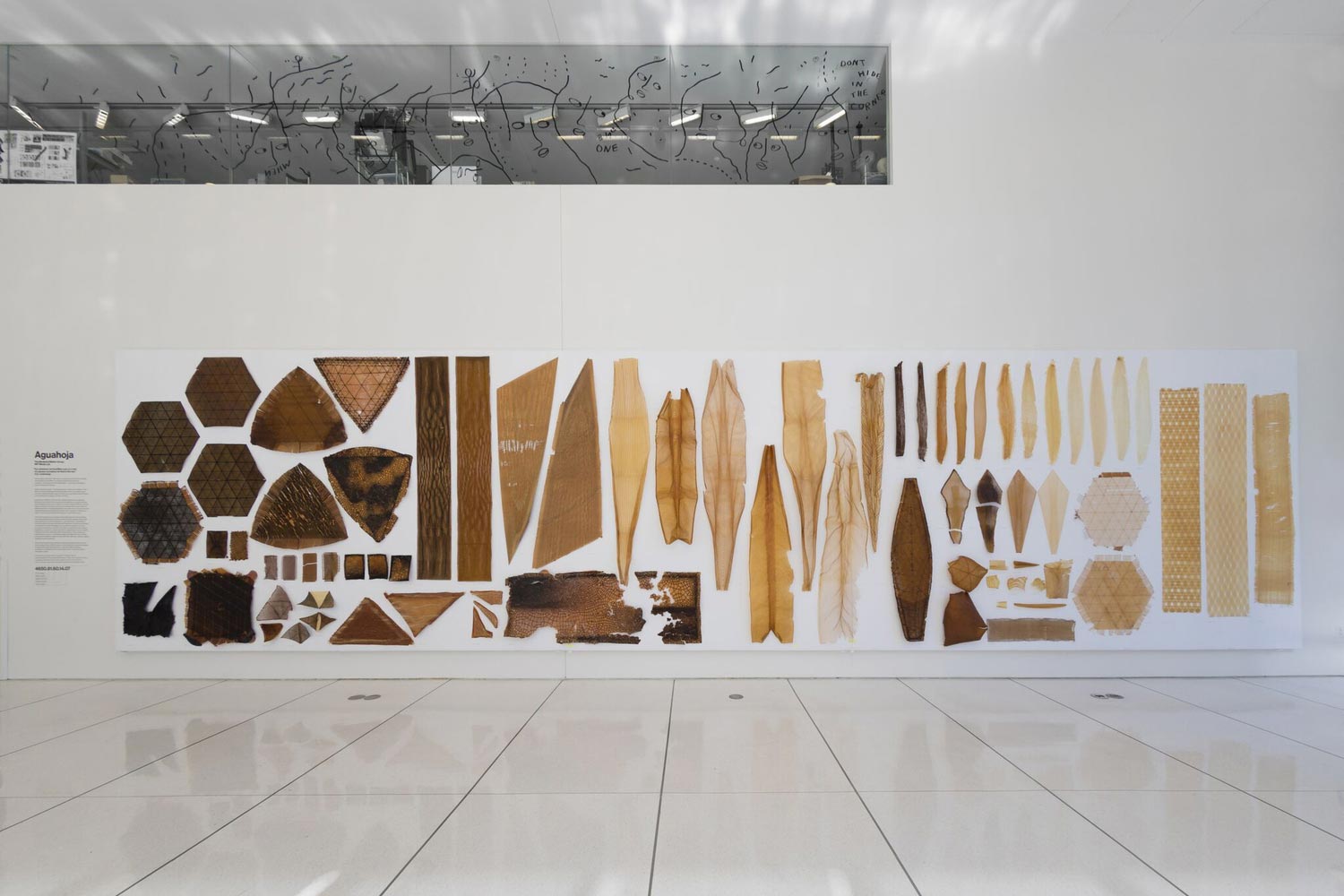
    Minute alterations to the molecular composition of biocomposites induce dramatic impact on their appearance and behaviour. The Aguahoja Artifacts subsequently represent years of exploration into parameterizing material chemistry. Especially developing a library of functional biocomposites. The pieces in the collection appear diverse in presence, yet all compose the same components; chitosan, cellulose, pectin, and water.

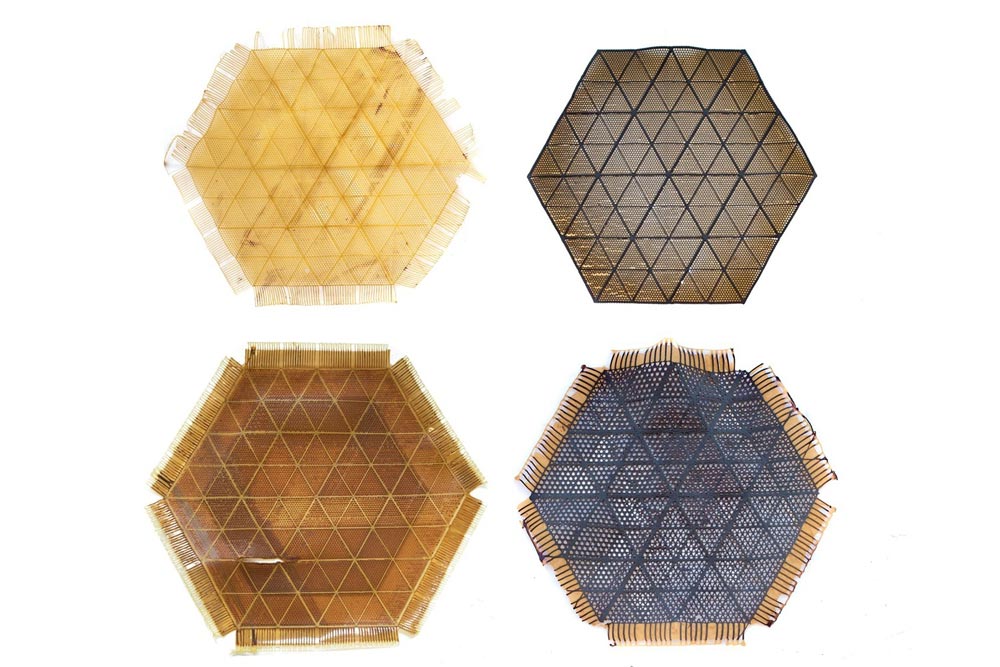
    The Aguahoja Artifacts

    The Aguahoja Artifacts forms an array and behaviours exhibited by these pieces. They reflect their manner of expression in Nature. Furthermore, a material such as chitin can compose both the exoskeletons of crustaceans and fungi’ cell walls. In contrast to steel and concrete, the composites indulge in constant dialogue with their environment. Some artefacts exude dramatic changes conforming in response to humidity and heat. Others darken or lighten as the season’s transform. Some seem brittle and transparent with glassy texture, while others remain flexible and tough like leather. Despite the emergent diversity, these artefacts share a standard quality mediated by humidity. As in death, they dissociate in water and return to the ecosystem.
    “Derived from organic matter, printed by a robot, and shaped by water, this work points toward a future where the grown and the made unite.”
    Project Team Members: Jorge Duro-Royo, Laia Mogas-Soldevilla, Daniel Lizardo, Joshua Van Zak, Yen-Ju (Tim) Tai, Andrea Ling, Christoph Bader, Nic Hogan, Barrak Darweesh, Sunanda Sharma, James Weaver, and Neri Oxman
    Undergraduate Researchers: Matthew Bradford, Loewen Cavill, Emily Ryeom, Aury Hay, Yi Gong, Brian Huang, and Joseph Faraguna
    Special Thanks: The MIT Media Lab, The TBA-21 Academy (Thyssen-Bornemisza Art Contemporary), GETTYLAB, and the Robert Woods Johnson Foundation, and the Autodesk BUILD Space
    Collaborators: Zijay Tang, Prof. Tim Lu and the Lu Lab based at the Research Laboratory of Electronics at MIT, and Shaymus Hudson

    digital fabrication GEN MIT Media Lab Neri Oxman
    Share. Facebook Twitter Pinterest LinkedIn Tumblr Email
    adminparamet
    • Website

    Related Posts

    Tesla Launches $225 Balance Bike for Kids

    July 23, 2026

    This Robotic Clothing Wraps Around You in Just 10 Seconds

    July 23, 2026

    Why Everyone Is Talking About the Marisfrolg Fashion Campus in Shenzhen

    July 23, 2026
    Add A Comment
    Leave A Reply Cancel Reply

    Demo
    Top Posts

    Design Reviews Are Moving Beyond Still Images and Animations. D5 3.1 Shows What’s Next.

    July 23, 20268 Views

    15 Picturesque Neighborhoods Around the World Every Design Lover Should Visit

    July 23, 20262 Views

    tetsstststtt

    July 23, 20261 Views

    MVRDV Designs Urban Revivo’s Beijing Flagship Store in Sanlitun

    July 23, 20261 Views
    Don't Miss

    tetsstststtt

    By adminparametJuly 23, 2026

    Soundscape in Architecture: Designing Through Sound

    July 23, 2026

    MVRDV Wins Shift Embassy Competition with Rotterdam ROCKS!

    July 23, 2026

    Shanghai’s Pollinator Machine Installation Brings Ancient Evolution to Life

    July 23, 2026
    Stay In Touch
    • Facebook
    • Twitter
    • Pinterest
    • Instagram
    • YouTube
    • Vimeo

    Subscribe to Updates

    Get the latest creative news from SmartMag about art & design.

    Demo
    About Us
    About Us

    Your source for the lifestyle news. This demo is crafted specifically to exhibit the use of the theme as a lifestyle site. Visit our main page for more demos.

    We're accepting new partnerships right now.

    Email Us: [email protected]
    Contact: +1-320-0123-451

    Our Picks

    tetsstststtt

    July 23, 2026

    Soundscape in Architecture: Designing Through Sound

    July 23, 2026

    MVRDV Wins Shift Embassy Competition with Rotterdam ROCKS!

    July 23, 2026
    Most Popular

    Design Reviews Are Moving Beyond Still Images and Animations. D5 3.1 Shows What’s Next.

    July 23, 20268 Views

    15 Picturesque Neighborhoods Around the World Every Design Lover Should Visit

    July 23, 20262 Views

    tetsstststtt

    July 23, 20261 Views
    Facebook X (Twitter) Instagram Pinterest YouTube LinkedIn TikTok
    • Home
    • Buy Now
    © 2026 ParametricArchitecture. All Rights Reserved. By utilizing this website, you are consenting to our User Agreement, Privacy Policy, and Cookie Statement. In compliance with the privacy laws of Turkey and the United States, we recognize and respect your rights. Please be aware that we may receive commissions for products bought through our affiliate links. Unauthorized reproduction, distribution, or transmission of any material from this site is strictly forbidden without prior written permission from ParametricArchitecture.

    Type above and press Enter to search. Press Esc to cancel.

    Sign In or Register

    Welcome Back!

    Login to your account below.

    Lost password?