


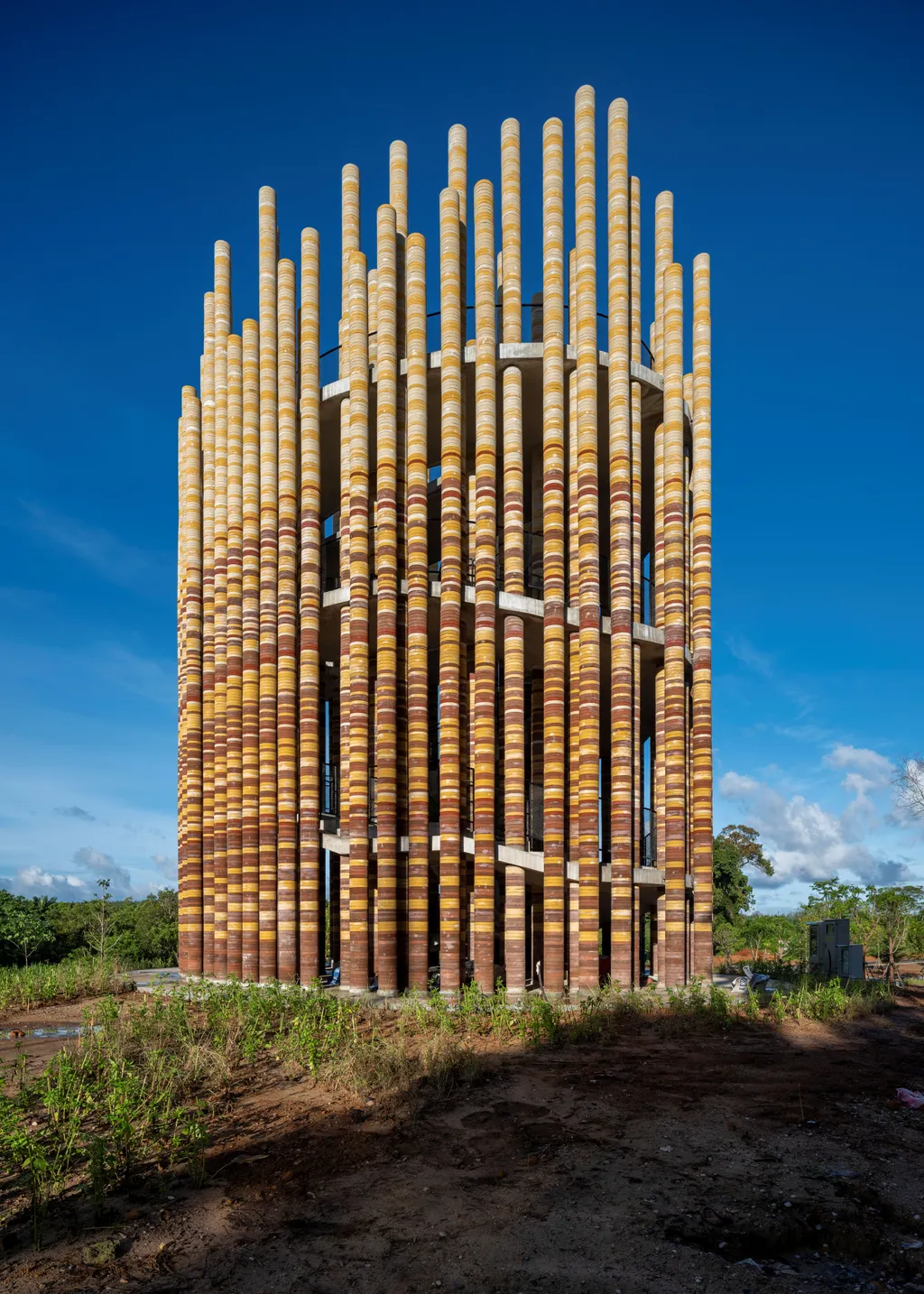
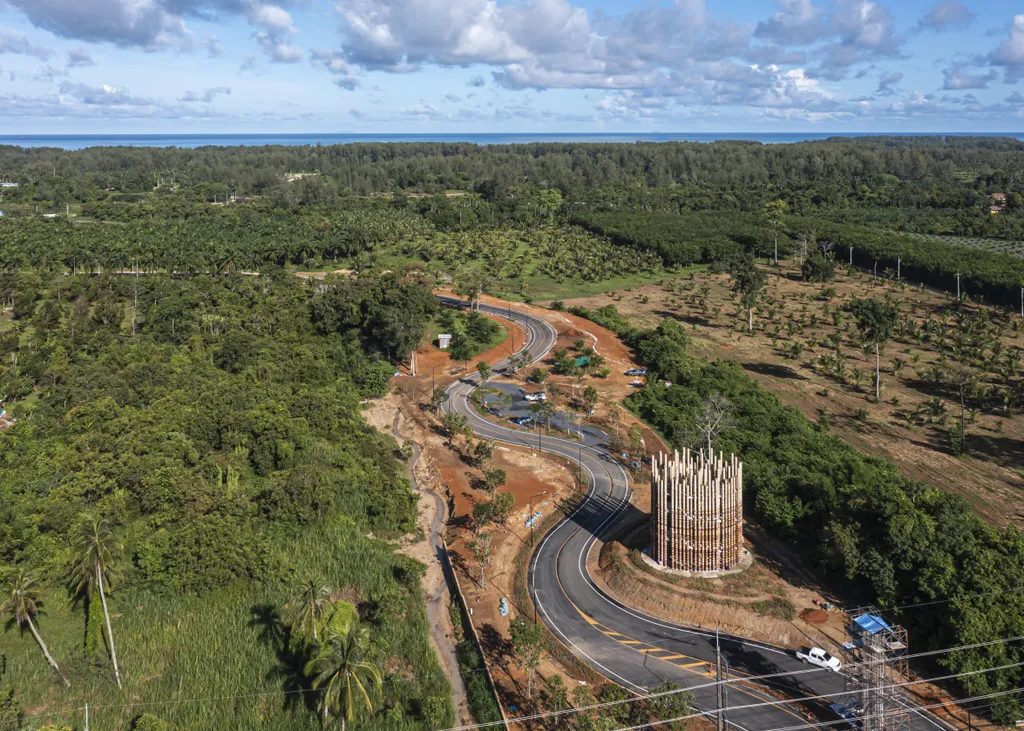
At the entrance of the Matalay development in Khao Lak, Phang Nga, Thailand, visitors are greeted by an unexpected landmark. Instead of concrete, steel, or fired clay, Goya Tower rises from hundreds of handmade circular bricks crafted primarily from elephant dung. Designed by Thai architect Boonserm Premthada and his practice, Bangkok Project Studio, the project transforms what is commonly considered waste into an architectural installation that celebrates ecology, local heritage, and craftsmanship.
Goya is the culmination of nearly six years of research into bio-based building materials. It demonstrates how architecture can emerge from local ecosystems while creating new economic opportunities for communities that have long lived alongside elephants.
From Material Experiment to Full-Scale Architecture
The story of Goya began long before construction.
Around 2020, Premthada started investigating the architectural potential of elephant dung in Ban Ta Klang, a village in Thailand known for its centuries-old relationship with domesticated elephants. The architect recognized the abundance of plant fibers derived from the animals’ herbivorous diet, which could provide natural reinforcement for construction materials.
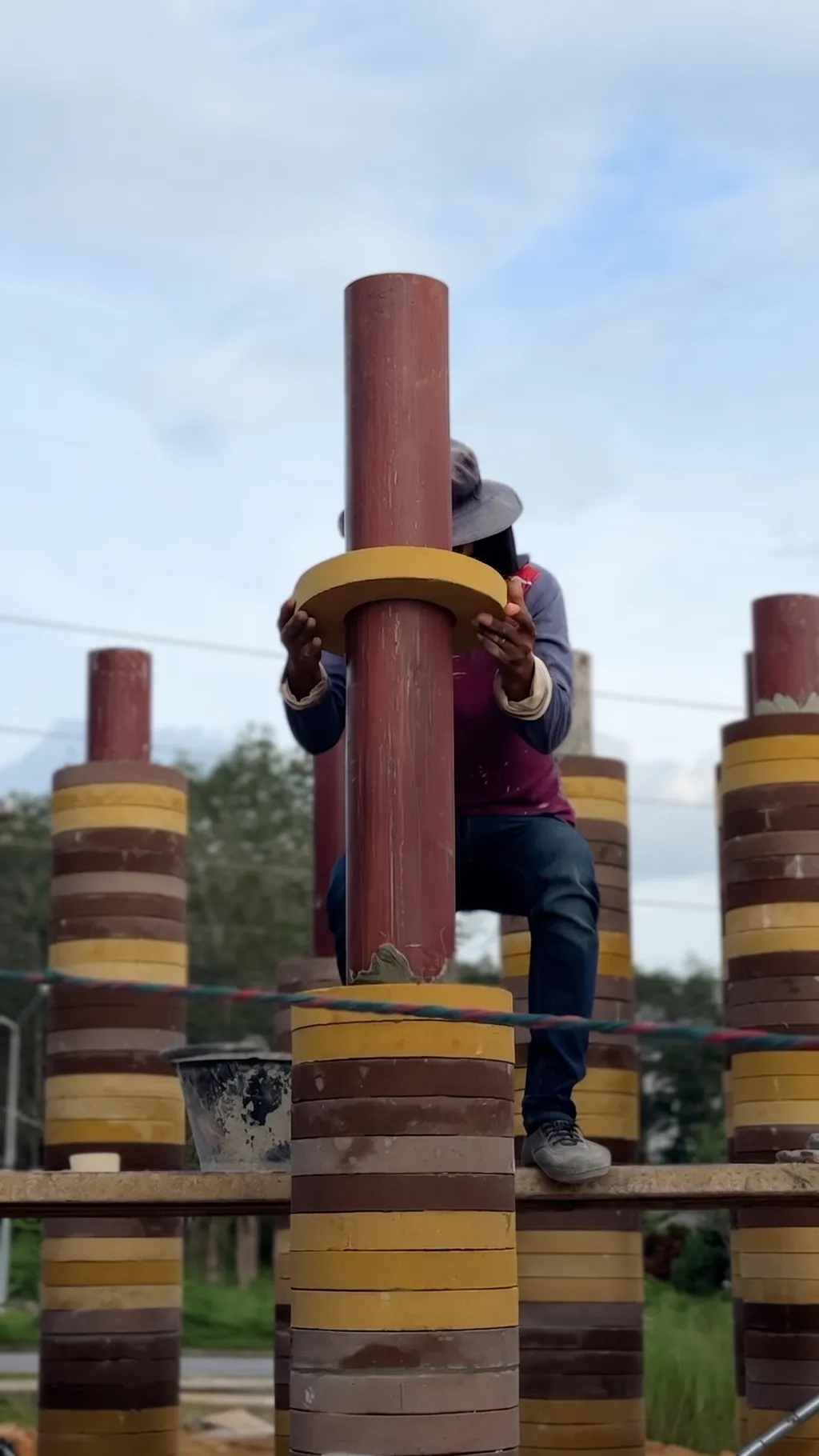
Working alongside local mahouts (elephant caretakers) and craftspeople, the team developed handmade bricks by drying elephant dung, blending it with cement and small amounts of water, pressing it into molds, and allowing the pieces to cure naturally in the sunlight. Avoiding kiln firing significantly reduces embodied carbon while preserving the material’s organic character.
Initially presented as experimental objects, the elephant-dung bricks later entered museum collections, including MoMA and M+ Museum. Goya Tower represents the first time this research has been realized as an inhabitable public building.
A Tower Named After an Elephant
The project takes its name from Goya, a female elephant born in the region.
The naming acknowledges the deep cultural bond between elephants and southern Thailand, where they have historically shaped both livelihoods and local identity. The nearby Khao Chang (Elephant Mountain), a limestone formation resembling a reclining elephant, further reinforces this symbolic relationship between landscape and architecture.
Premthada chose to create one that honors the species whose biological processes literally become part of the building.
Architecture Built Through Repetition
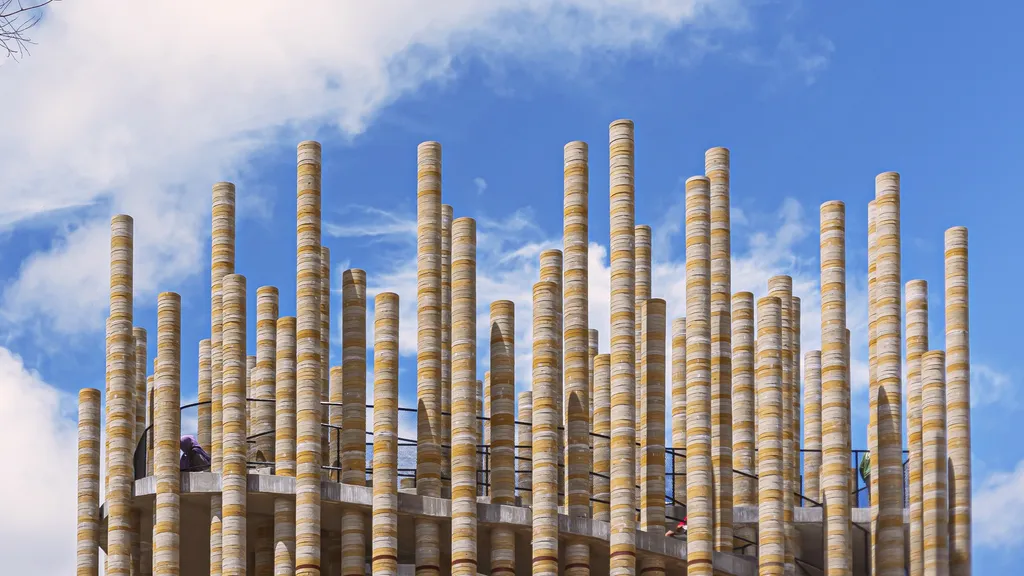
Goya is composed of a forest of cylindrical columns supporting elevated pathways that spiral upward through changing light and shadow.
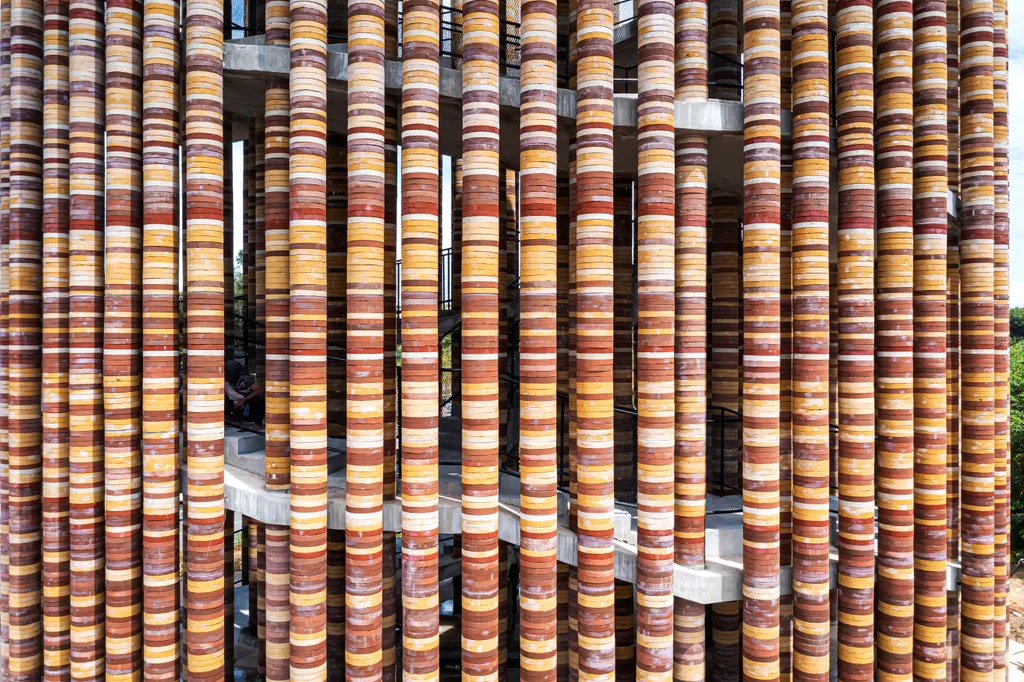
Instead of conventional masonry, each column is assembled by threading circular elephant-dung bricks onto central steel reinforcement rods. The repeated stacking creates both the tower’s structural rhythm and its textured façade.
Each brick measures approximately 330 mm in diameter and 50 mm thick, handcrafted before being stacked according to a pre-designed color sequence. Produced in five natural sunset-inspired tones, the bricks transition through warm gradients that give the tower its distinctive appearance, especially during evening light.
The result is architecture whose visual identity comes from the material itself.
Journey Through the Landscape
Goya emphasizes movement as an experience.
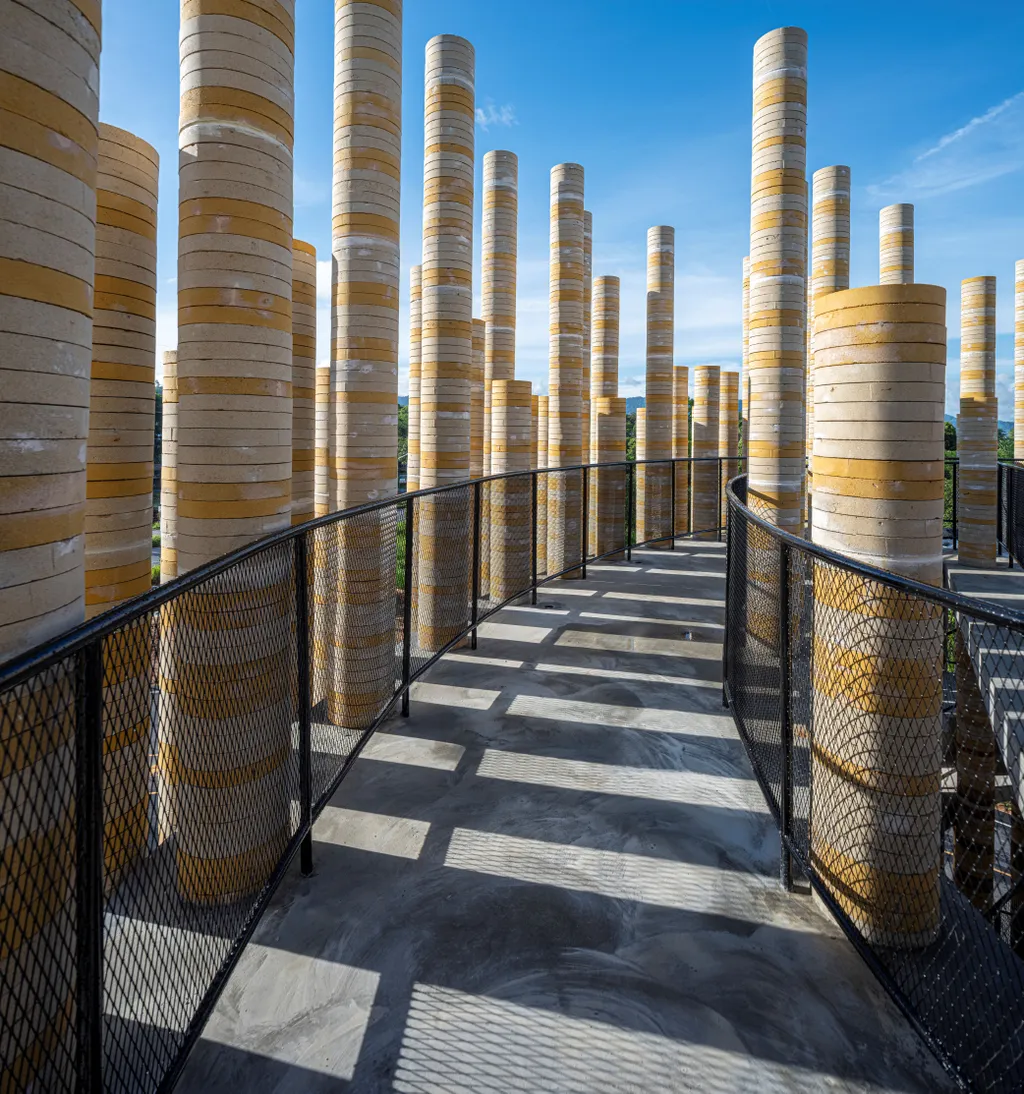
Visitors gradually ascend through a sequence of curved walkways that reveal shifting views of roads, gardens, forests, coastline, and sky. The architecture frames changing perspectives at multiple heights, encouraging slower engagement with the surrounding landscape rather than treating the tower simply as a viewing platform.
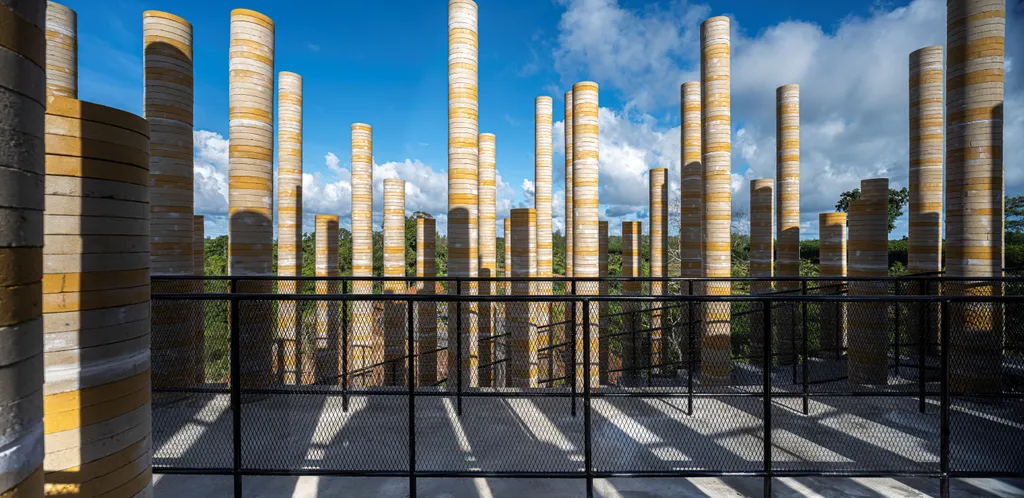
The cylindrical columns create alternating bands of sunlight and shadow throughout the climb, allowing visitors to experience the tactile qualities of the handmade bricks at close range.
Community, Craft, and Circular Economy
Premthada has consistently argued that sustainable architecture should generate value for local communities. By using elephant dung as a construction resource, the project proposes an additional source of income for elephant-raising communities while expanding traditional craft practices into architectural production.
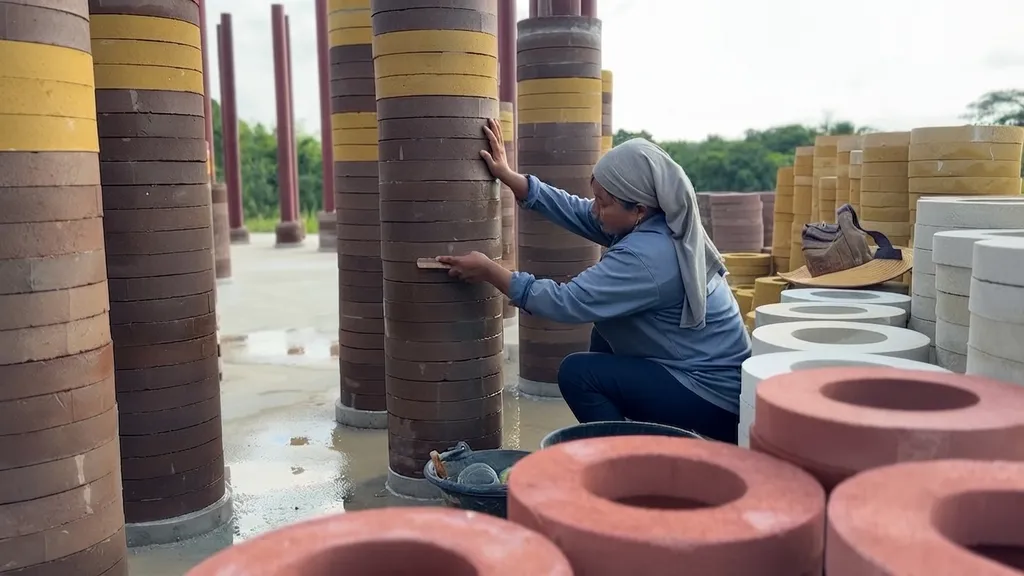
The manufacturing process depends largely on manual labor, sunlight, and time instead of industrial machinery, making each brick both a building component and a product of local craftsmanship.
This reflects the architect’s broader philosophy that buildings should emerge from relationships between humans, animals, climate, and available resources.
Boonserm Premthada’s Nature-Centered Design Philosophy
Goya Tower is part of a larger body of work in which Premthada explores architecture as a collaboration with nature.
Previous projects such as Elephant Theater, Elephant World, and Elephant Food House similarly investigate the intersection of architecture, biodiversity, local culture, and elephant conservation. Across these works, discarded or overlooked materials, including elephant dung, are transformed into meaningful architectural elements that challenge conventional definitions of building materials.
For Premthada, architecture is about revealing ecological relationships that already exist within a place.
Architecture That Completes a Natural Cycle
Goya Tower demonstrates how architecture can participate in natural cycles already present within a landscape. By transforming elephant waste into a durable construction material, Boonserm Premthada extends the life of a biological resource while creating an architectural landmark rooted in local culture, craftsmanship, and ecological thinking.
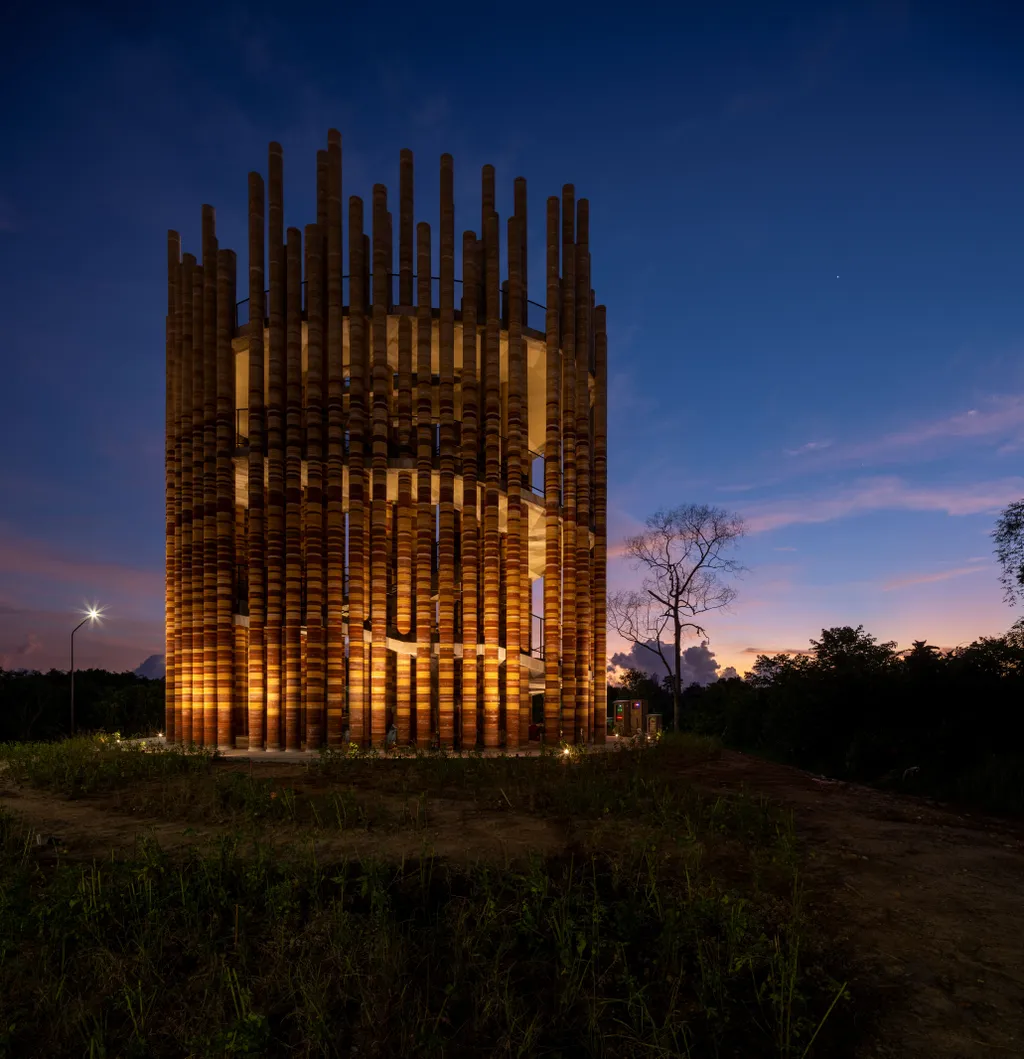
Instead of hiding its unconventional material, Goya makes it the central architectural expression, showing that the future of sustainable design may lie in new technologies in rethinking the value of what nature already provides.
Goya Tower Project Details
Project: Goya Tower
Location: Khao Lak, Phang Nga, Thailand
Architect: Boonserm Premthada
Studio: Bangkok Project Studio
Client: Matalay
Project Type: Observation Tower
Gross Floor Area: 543 m²
Completion: 2026
Primary Material: Handmade elephant-dung bricks with steel reinforcement
Brick Dimensions: 330 mm diameter × 50 mm thickness
Photography: Spaceshift Studio
