


Furniture is often described as the final layer of an interior: the element added after the architecture, finishes, and lighting have already defined the space. But in contemporary residential design, furniture plays a much larger role. The right piece does not simply complete a room. It can shape movement, create atmosphere, and give a space its architectural rhythm.
As homes become more open, flexible, and personal, furniture has become one of the main tools for organizing daily life. A sofa can define a social zone without the need for walls. A dining table can become the center of gravity in an open-plan interior. A sculptural chair can transform an empty corner into a moment of pause and presence.
For Romain Pison, founder of Garofano, this shift reflects a broader change in how people understand the home. Furniture is no longer only a matter of decoration or style. It is part of how space is organized, felt, and lived in. In this sense, furniture is spatial.
Furniture as a Spatial Tool
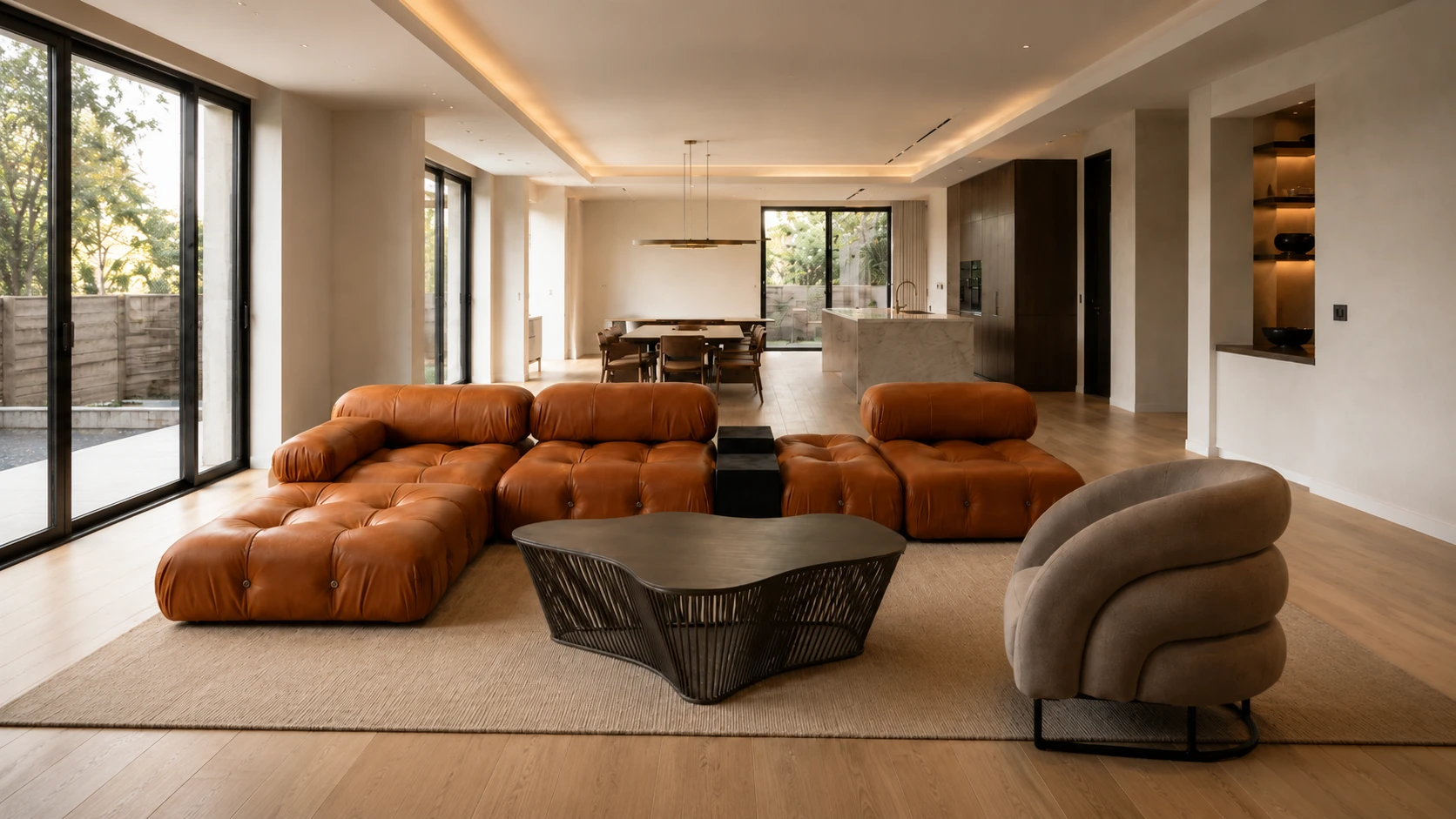
Open-plan homes rely on furniture to define how a room works. Without fixed partitions, pieces such as sofas, lounge chairs, coffee tables, and dining tables help create zones for gathering, resting, reading, or entertaining.
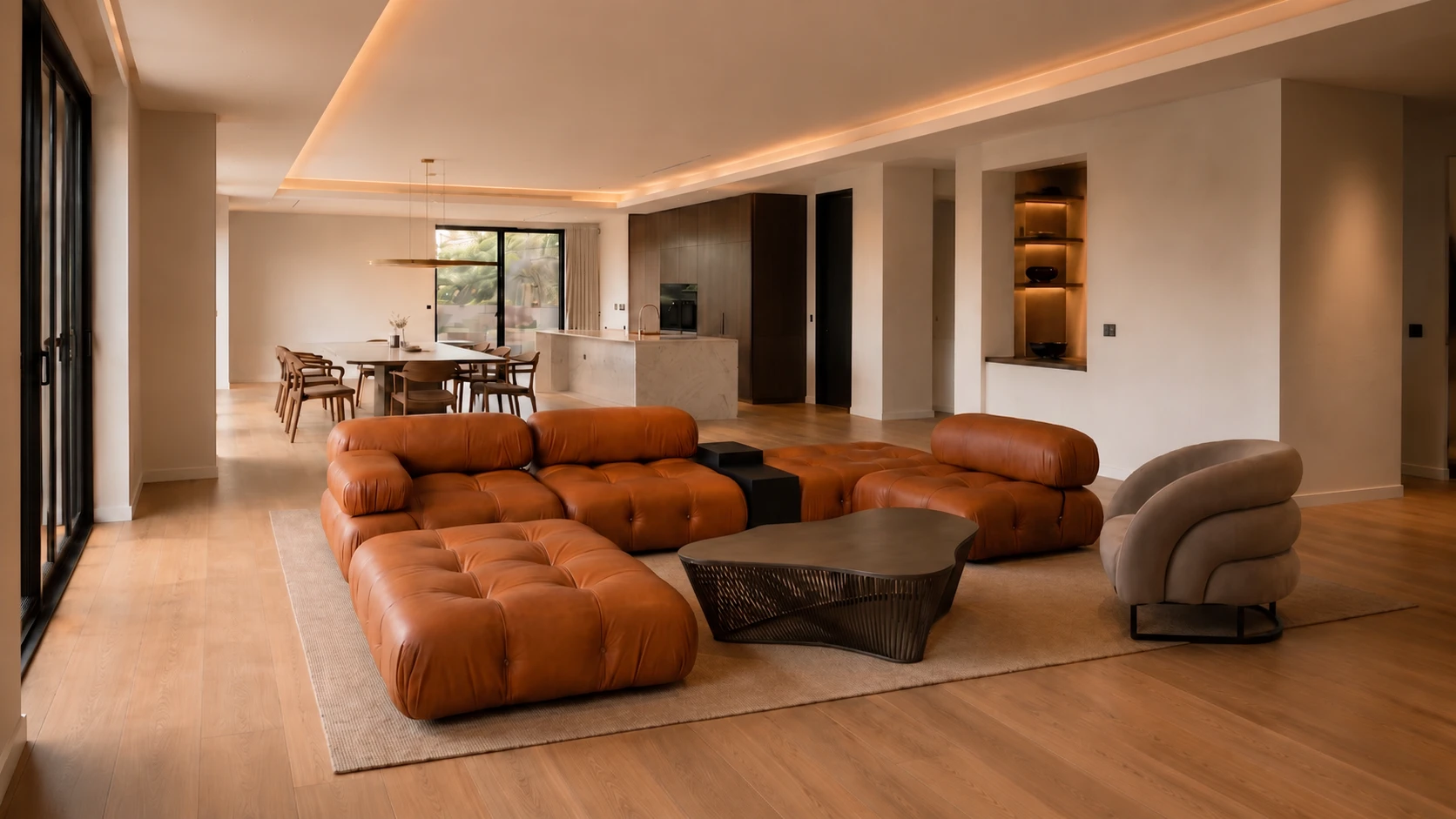
This is why proportion matters. A low, grounded sofa can make a room feel calm and expansive. A sculptural coffee table can anchor a seating area. A rounded lounge chair can soften a room with strong architectural lines. Each piece affects how the eye travels through the room and how people experience the space over time.
At Garofano, this idea is central to the way furniture is considered. A piece should not feel like an object placed inside a finished room. It should respond to the architecture around it, supporting movement, balance, and atmosphere. When selected with care, furniture becomes a quiet spatial tool: one that defines without enclosing, anchors without dominating, and brings intimacy to open interiors.
The most successful interiors are not simply filled with beautiful objects. They are composed through balance, scale, and rhythm.
Sculptural Form and Material Presence
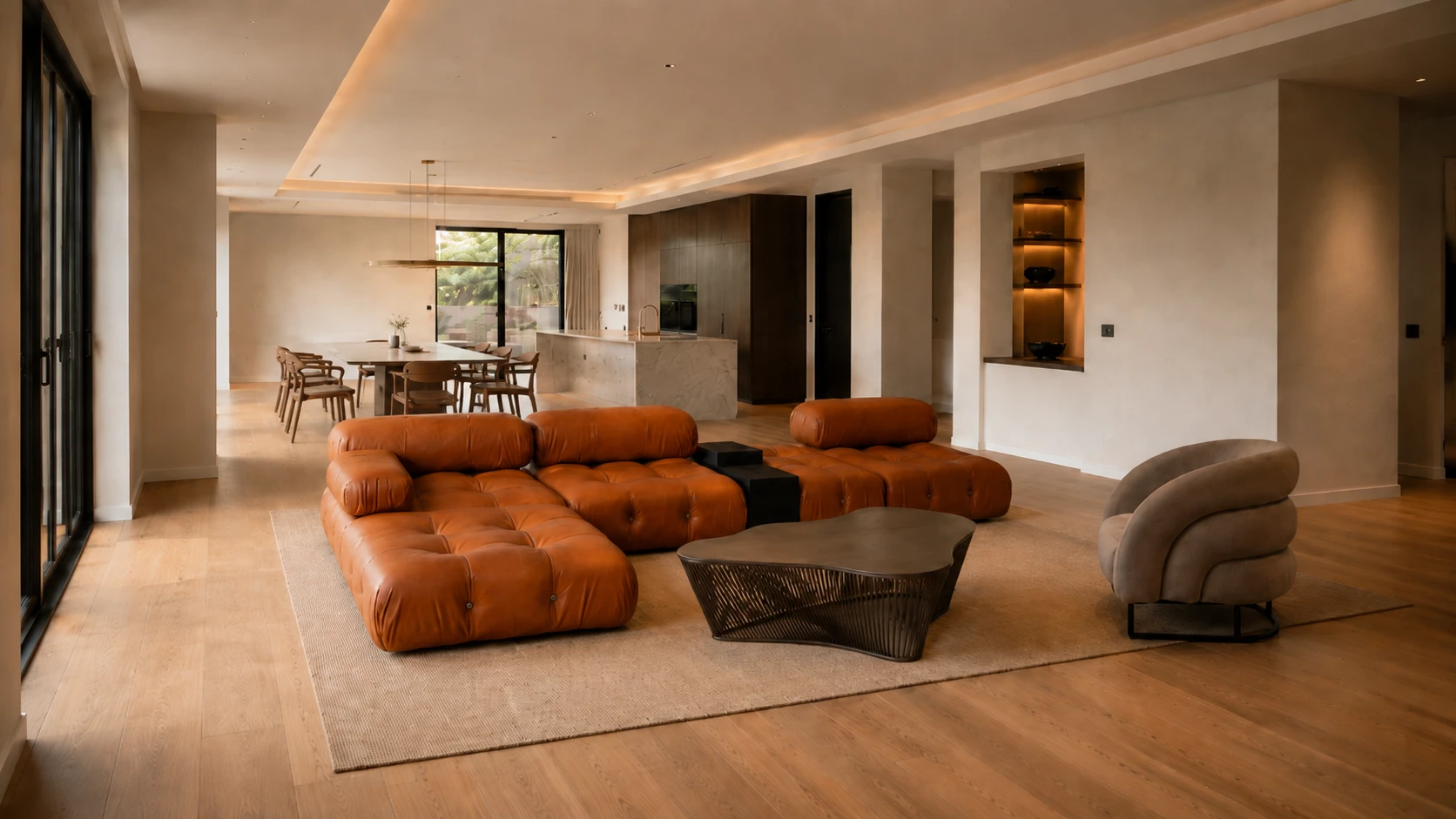
Sculptural furniture brings visual identity to a room. Its shape can create contrast, soften a space, or introduce a sense of movement. But for these pieces to work well, they must feel integrated rather than imposed.
Material is equally important. Stone, wood, upholstery, leather, and metal each affect how a space is experienced. A stone table brings weight and permanence. Upholstered seating adds softness and comfort. A carefully shaped chair can act almost like a small architectural object within the room.
Because people interact with furniture every day, its material quality is experienced more directly than many architectural finishes. Furniture is touched, used, moved around, and lived with. This makes it one of the most intimate expressions of design in a home.
Garofano’s Italian-inspired approach is rooted in this relationship between form, material, and use. Rather than treating sculptural furniture as a visual statement alone, the focus is on pieces that bring presence while still supporting comfort, proportion, and daily life. A table, chair, or sofa can be expressive, but it should also feel natural in the room it inhabits.
This is where made-to-order furniture becomes increasingly relevant. Instead of forcing a standard object into a finished interior, a more considered piece can respond to the scale, palette, and atmosphere of a specific home. For Pison, this is one of the reasons furniture can be understood as part of the architecture of a space: it shapes how the room is experienced from within.
The Role of Modularity
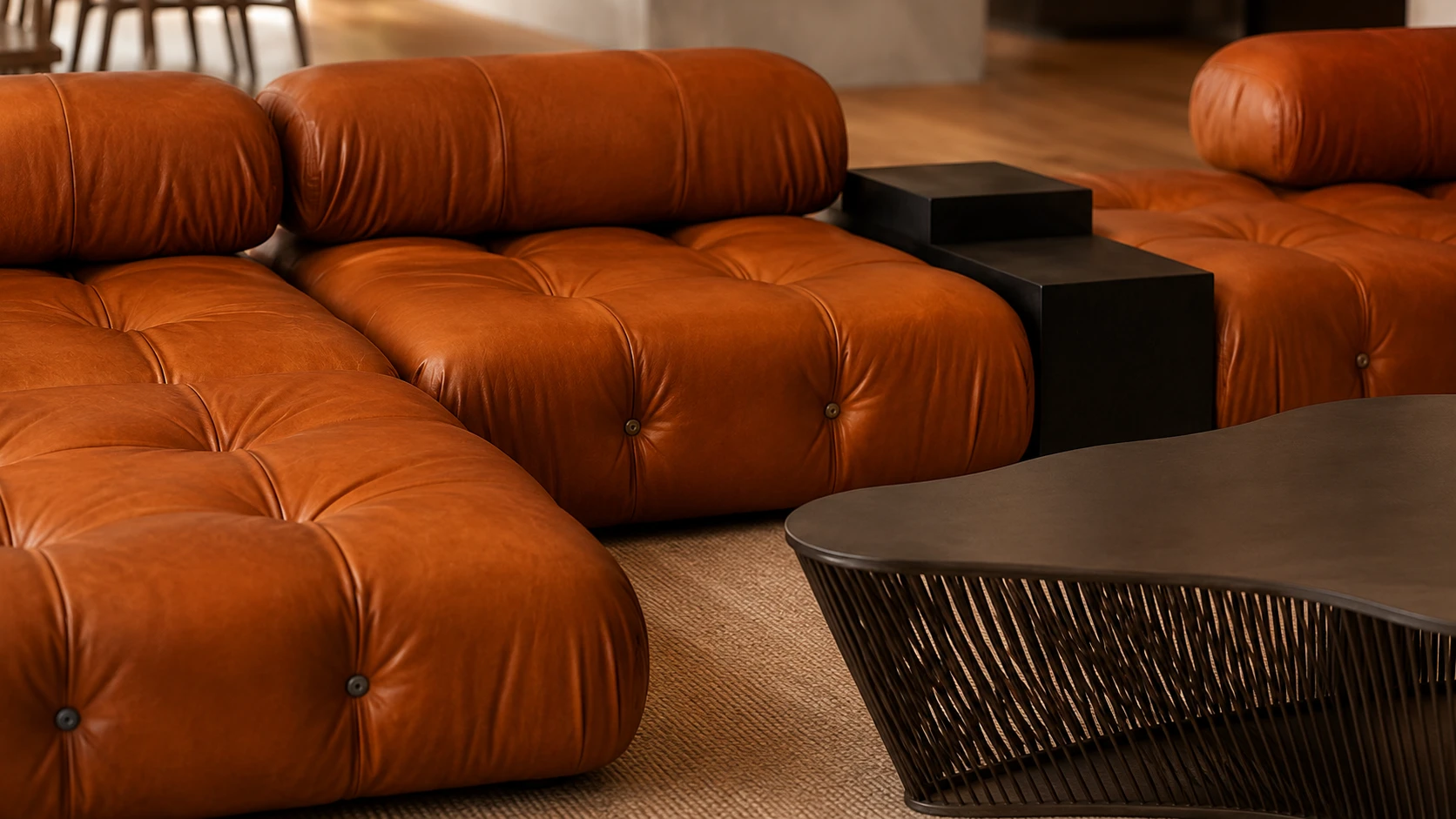
Modern interiors also require flexibility. Living rooms often support many activities, from entertaining to working to a quiet retreat. Modular sofas respond to this shift by allowing seating to shape space in different ways.
Rather than sitting passively against a wall, modular seating can create islands, corners, or open arrangements. It can define intimacy without closing the room. In open interiors, this makes the sofa one of the most important architectural elements.
This flexibility is not only practical. It also changes the way a room feels. A modular piece can guide movement, support conversation, and create a softer boundary between one area and another. In homes where spaces need to evolve throughout the day, this ability to adapt becomes essential.
Garofano’s view of modularity is less about constant rearrangement and more about spatial intelligence. The strongest modular pieces are those that allow a room to remain clear, calm, and composed while still supporting different ways of living. They offer flexibility without visual disorder.
A More Considered Approach to Furniture
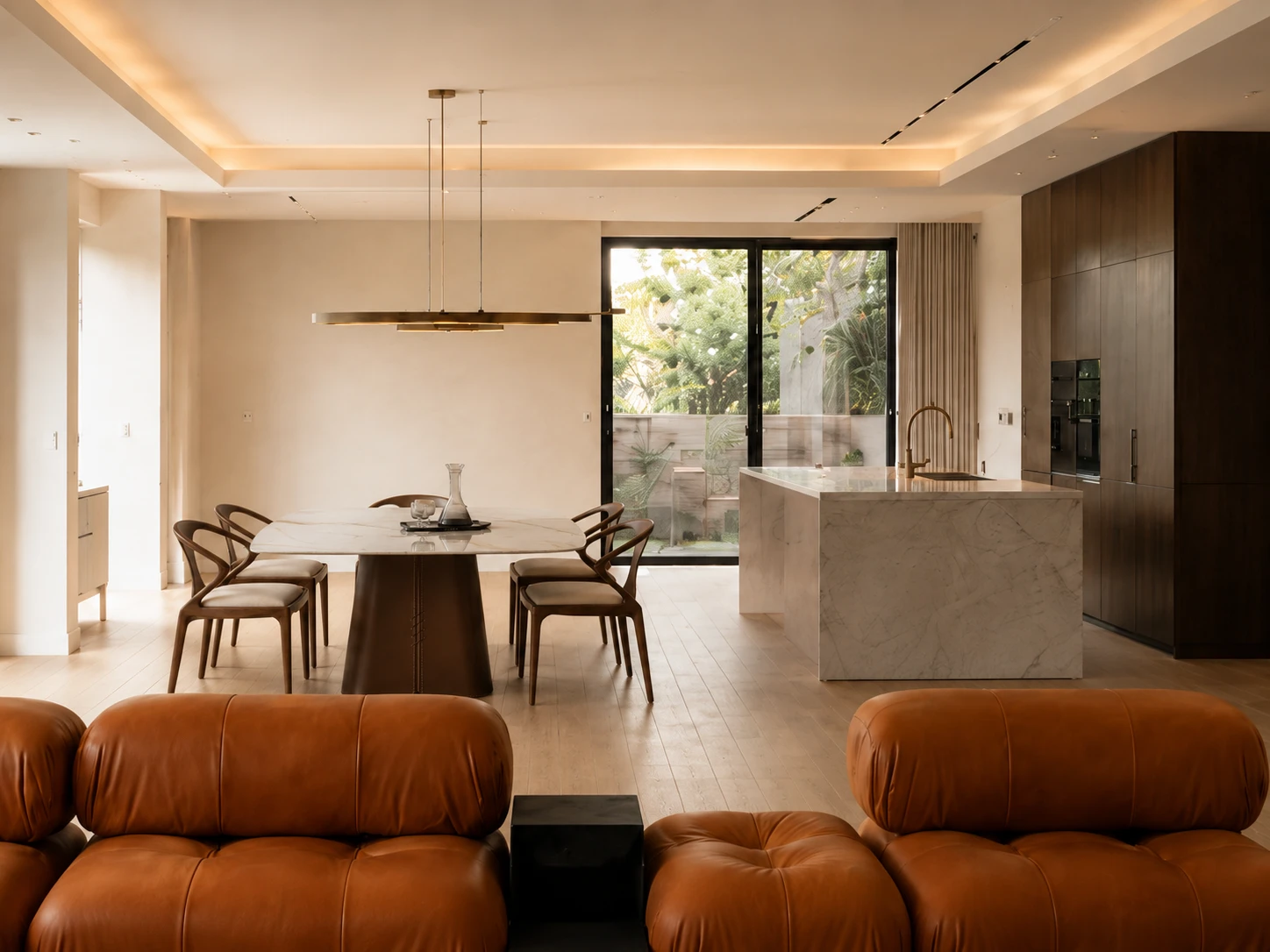
The growing interest in sculptural furniture reflects a wider shift in residential interiors. Homeowners and designers are moving away from rooms that feel overly decorated and toward spaces that feel composed, tactile, and intentional.
This approach favors pieces made with attention to proportion, material quality, and longevity. It also values customization, especially in private interiors where furniture needs to respond to the scale, palette, and atmosphere of a specific home.
Rather than selecting furniture only by style or trend, contemporary interiors increasingly ask what a piece contributes to the space as a whole. Does it create balance? Does it support movement? Does it bring warmth, weight, softness, or rhythm? These questions place furniture closer to architecture than decoration.
For Garofano, this considered approach is also about restraint. A piece does not need to announce itself loudly to have presence. Sometimes the most enduring furniture is defined by proportion, material honesty, and the way it quietly holds a room together.
In this sense, the value of a piece is not limited to how it looks in isolation. It is found in how it relates to the interior around it: how it sits in the light, how it frames a view, how it invites use, and how it contributes to the atmosphere of the home.
Beyond Decoration
The most compelling interiors are not always the most filled. Often, they are the most carefully composed.
When selected with attention to proportion, material, and spatial flow, furniture can do more than occupy a room. It can shape how the room feels, functions, and lives over time.
To think of furniture as spatial architecture is to treat each piece as part of the room’s structure, not simply as an object placed within it. In contemporary homes, the most enduring pieces are those that give space form, rhythm, and meaning.
Through Garofano, Romain Pison brings this perspective into the residential interior: furniture as something tactile, sculptural, and deeply connected to the way people live. It is not about filling space with objects, but about choosing pieces that help a home feel more balanced, intentional, and alive.
