


As the FIFA World Cup expands into its biggest edition yet, the 2026 tournament will unfold across 16 host cities in the United States, Canada, and Mexico, bringing together 48 national teams for the first time in the competition’s history. Spanning three countries and multiple climatic, cultural, and architectural contexts, FIFA World Cup 2026 marks a significant shift in the scale and geography of the tournament. Beyond hosting matches, these stadiums also reveal the urban ambitions and cultural identities of their respective cities.
Here are 16 FIFA World Cup 2026 stadiums you need to know before kickoff begins on June 11, 2026.
1. Mexico City Stadium
Matches: Opening Match (June 11), Group Stage (June 17, 24, 30), Round of 32 (July 5)
Mexico v South Africa — June 11
Uzbekistan v Colombia — June 17
Czechia v Mexico — June 24
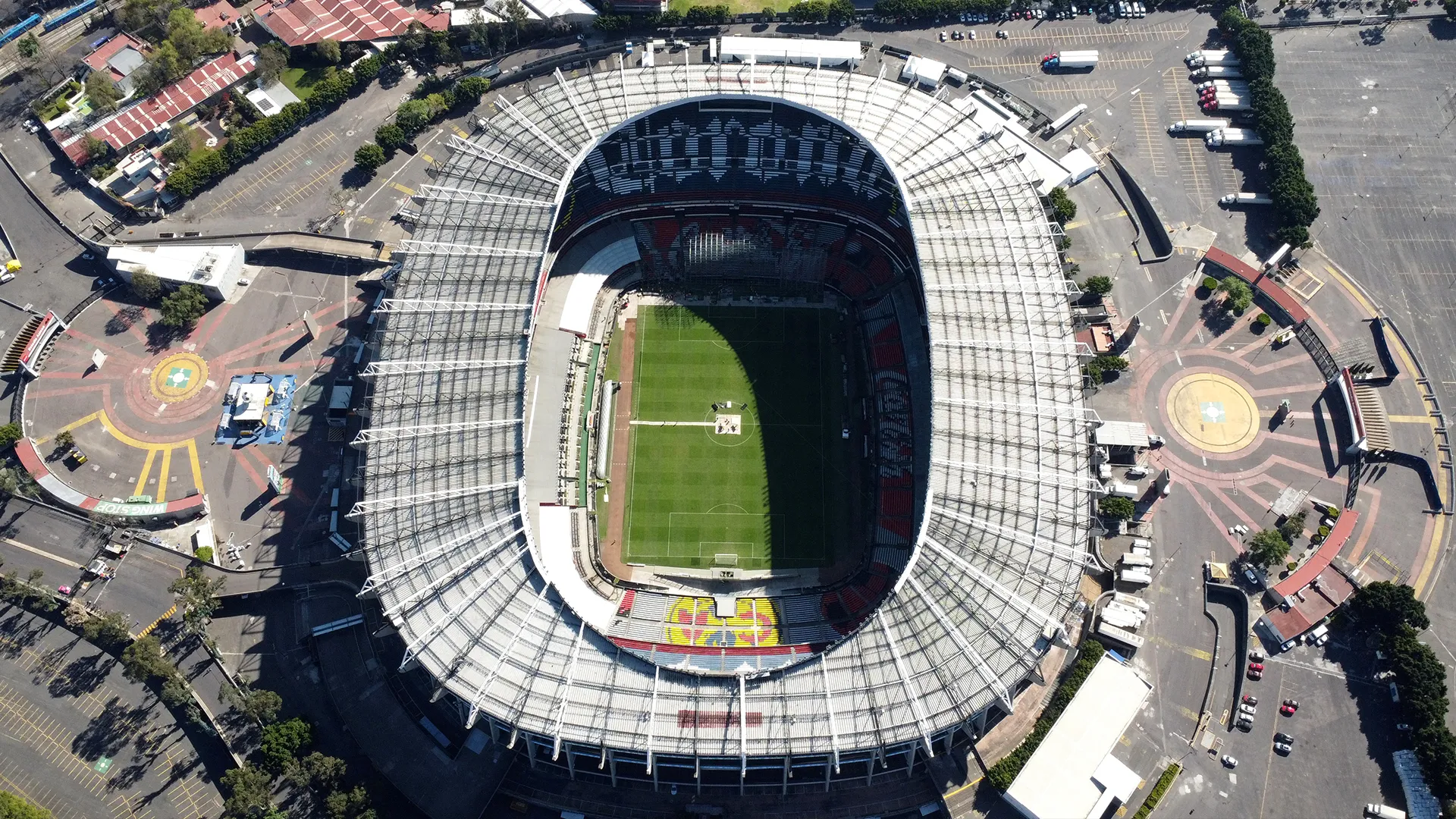
Mexico City Stadium, also known as Estadio Azteca, will host the opening match of the FIFA World Cup 2026, along with multiple group-stage and knockout fixtures.
Few stadiums in world football carry the legacy of Estadio Azteca. Located in Mexico City, the venue will become the first stadium in history to host matches across three FIFA World Cups, following the 1970 and 1986 editions. It remains closely tied to some of football’s most significant moments, from Pelé lifting the trophy in 1970 to Diego Maradona’s iconic performance against England in 1986.
Designed by architects Pedro Ramírez Vázquez and Rafael Mijares Alcérreca and inaugurated in 1966, the stadium reflects the monumental modernist architecture of mid-century Mexico. Its sunken bowl design amplifies crowd acoustics while reducing the building’s visual mass, and its exposed concrete structure and sweeping circulation ramps continue to define its identity.
2. Atlanta Stadium
Matches: Group Stage (June 15, 18, 21, 24, 27), Round of 32 (July 1), Round of 16 (July 7), Semifinal (July 15)
Spain v Cabo Verde — June 15
Czechia v South Africa — June 18
Spain v Saudi Arabia — June 21
Morocco v Haiti — June 24
Congo DR v Uzbekistan — June 27
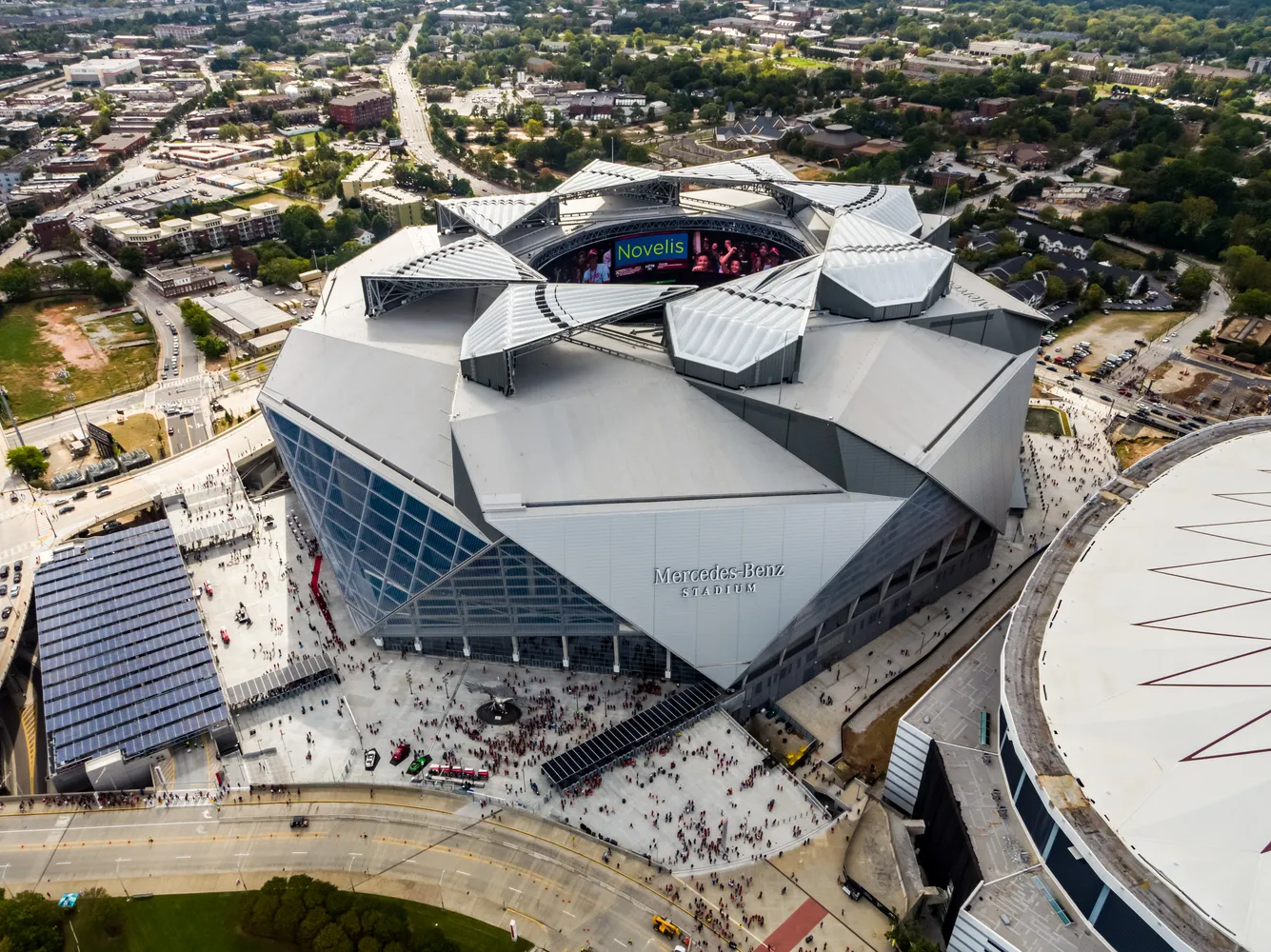
Atlanta Stadium, also known as Mercedes-Benz Stadium, will host eight matches during the FIFA World Cup 2026, including a semifinal on July 15.
Opened in 2017 in downtown Atlanta, Mercedes-Benz Stadium is designed by HOK. The stadium is best known for its retractable roof composed of eight triangular panels that open and close like a camera aperture, creating a dramatic oculus at the centre. Its massive circular halo video board, suspended beneath the roof, further reinforces the venue’s futuristic identity.
The stadium’s angular steel-and-glass exterior reflects Atlanta’s ambitions as a global city. At the same time, its flexible design allows it to transition between American football, football, concerts, and large-scale international events. Home to Atlanta United FC, the venue has consistently drawn some of the largest football crowds in North America. The venue represents the new generation of multi-purpose mega-stadiums in the United States with a capacity exceeding 70,000 during the World Cup.
3. Los Angeles Stadium
Matches: Group Stage (June 12, 15, 18, 21, 25), Round of 32 (June 30), Round of 16 (July 4), Quarterfinal (July 10)
USA v Paraguay — June 12
IR Iran v New Zealand — June 15
Switzerland v Bosnia and Herzegovina — June 18
Belgium v IR Iran — June 21
Türkiye v USA — June 25
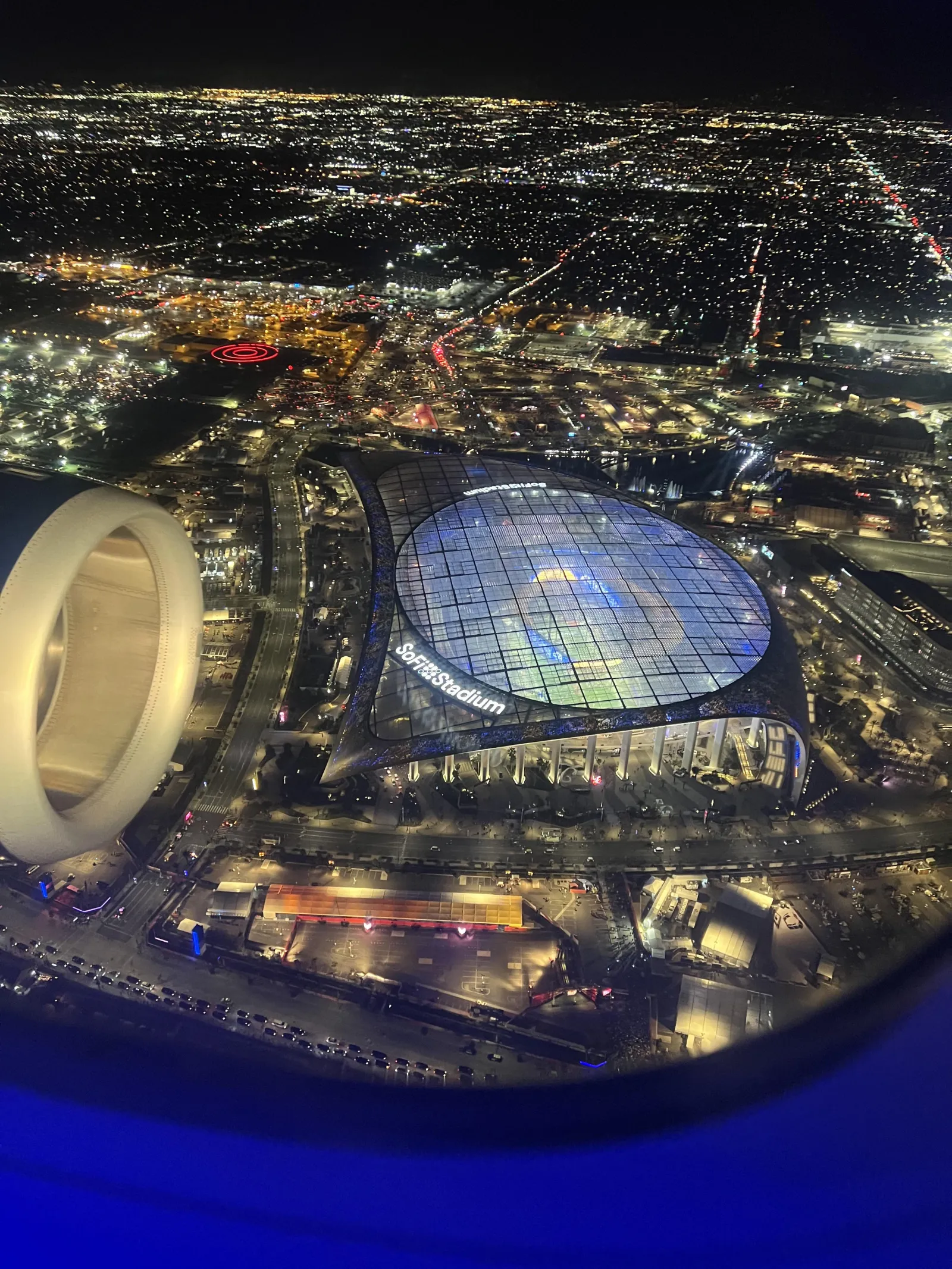
Los Angeles Stadium, also known as SoFi Stadium, will host eight matches during the FIFA World Cup 2026, including multiple knockout-stage fixtures.
Opened in 2020 in Inglewood, California, the Los Angeles Stadium represents a new era of entertainment-driven sports architecture. Designed by HKS Architects, the venue is defined by the sweeping translucent canopy roof that extends beyond the stadium itself, creating a sheltered open-air environment. Beneath it sits one of the world’s largest double-sided video boards, suspended above the field.
Los Angeles Stadium was actually conceived as the centrepiece of a larger mixed-use urban district integrating retail, public spaces, hospitality, and performance venues. Its fluid architectural form, extensive digital infrastructure, and cinematic presentation reflect the spectacle-oriented identity of Los Angeles itself.
4. Seattle Stadium
Matches: Group Stage (June 15, 19, 24, 26), Round of 32 (July 1), Round of 16 (July 6)
Belgium v Egypt — June 15
USA v Australia — June 19
Bosnia and Herzegovina v Qatar — June 24
Egypt v IR Iran — June 26
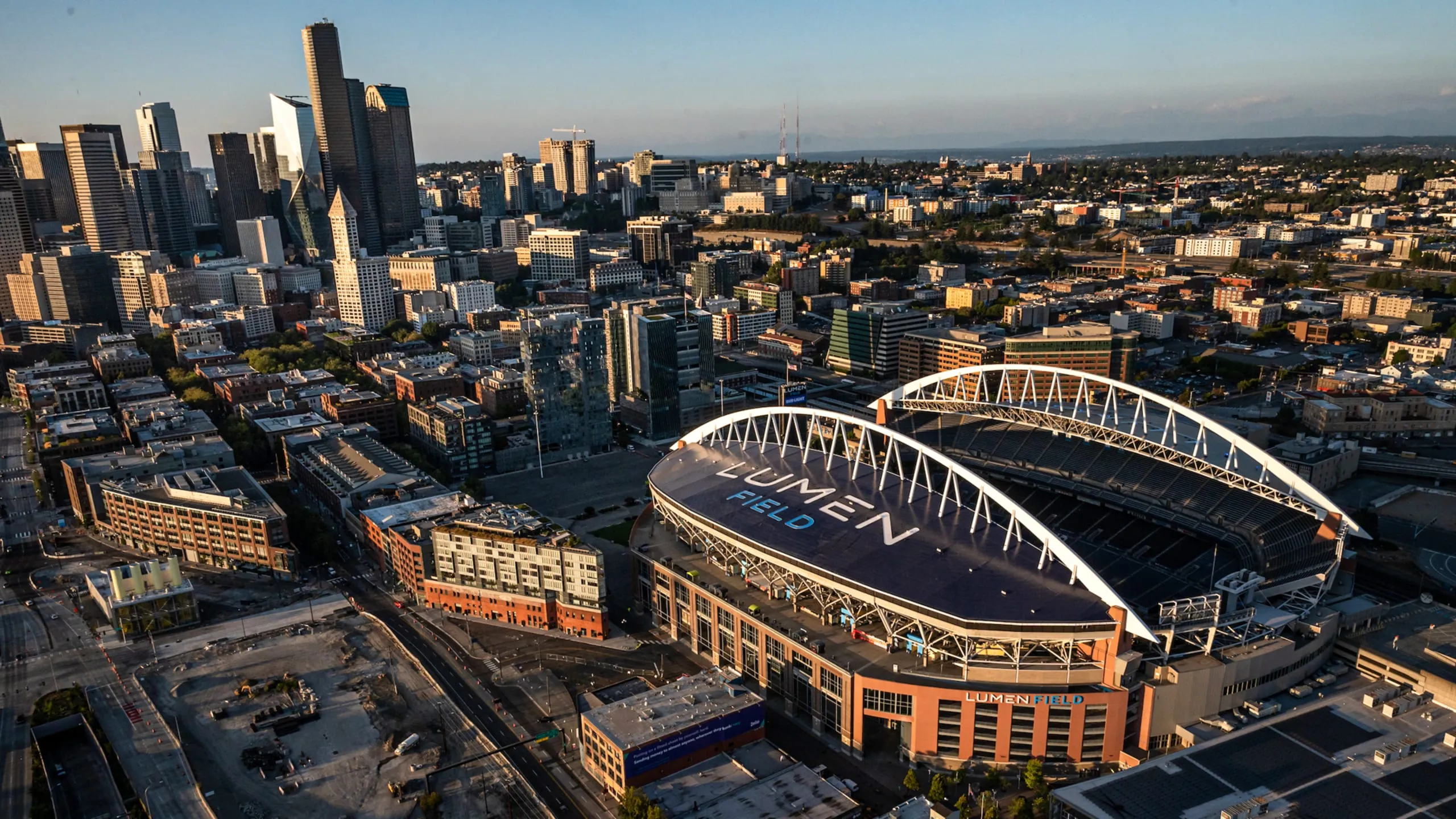
Seattle Stadium, also known as Lumen Field, will host six matches during the FIFA World Cup 2026, including group-stage and knockout fixtures.
Located along Seattle’s waterfront industrial edge, Seattle Stadium is widely regarded as one of the loudest and most atmosphere-driven stadiums in North America. Opened in 2002 and designed by Ellerbe Becket, the venue was built with acoustics in mind, using a compact bowl configuration and cantilevered roofing system to amplify crowd noise.
Unlike many newer stadiums centered on spectacle and digital excess, Seattle Stadium prioritizes proximity between fans and the pitch. Its exposed steel structure and open-ended design frame views of the Seattle skyline and surrounding landscape, giving the venue a distinctly Pacific Northwest character. Home to Seattle Sounders FC, Seattle Stadium consistently attracts some of the highest attendances in Major League Soccer, helping establish Seattle as one of the country’s strongest football cities ahead of FIFA 2026.
5. Kansas City Stadium
Matches: Group Stage (June 16, 20, 25, 27), Round of 32 (July 3), Quarterfinal (July 11)
Argentina v Algeria — June 16
Ecuador v Curaçao — June 20
Tunisia v Netherlands — June 25
Algeria v Austria — June 27
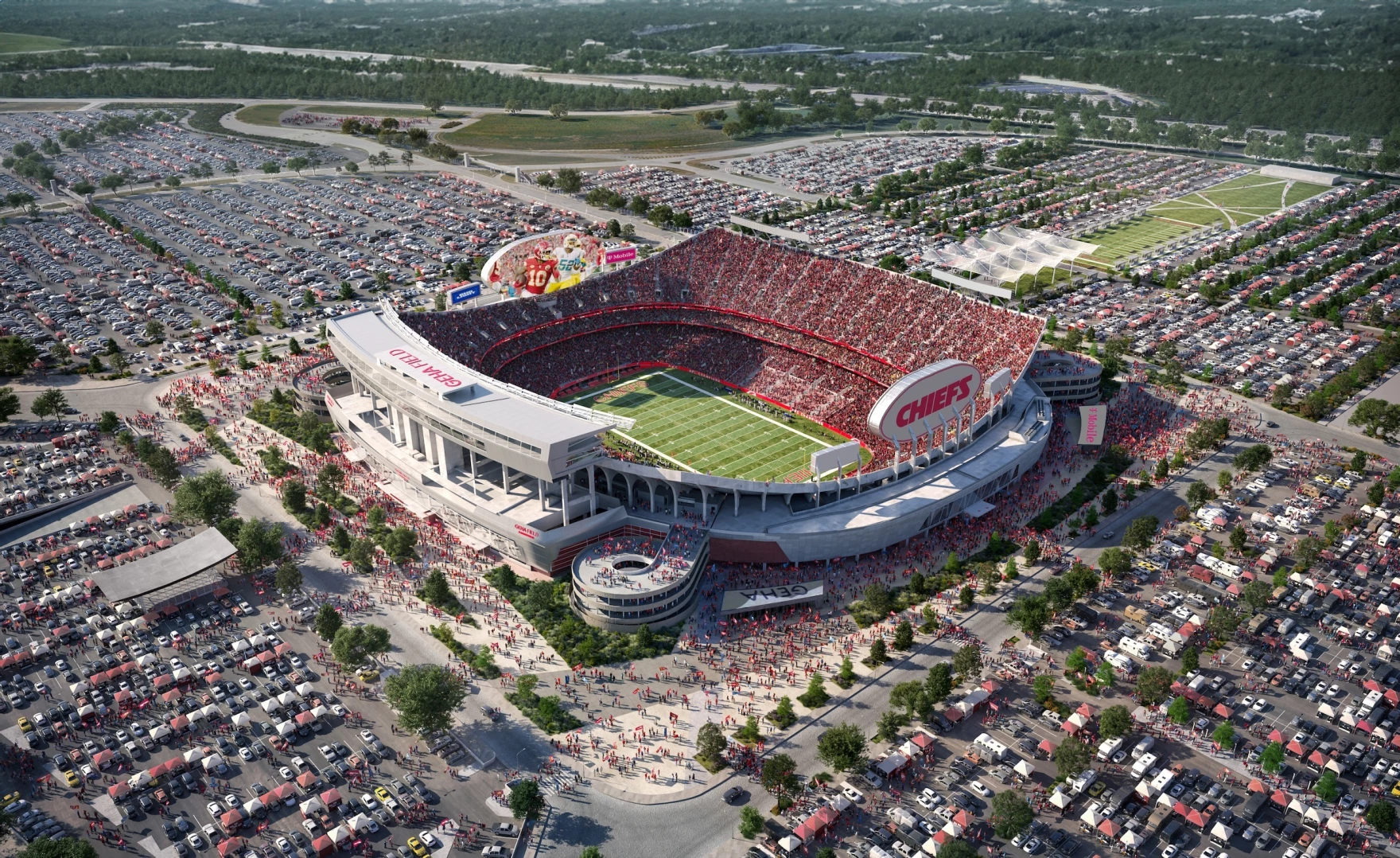
Arrowhead Stadium, renamed as Kansas City Stadium for the FIFA World Cup 2026, will host six matches during the tournament, including a quarterfinal fixture.
Opened in 1972 as part of the Truman Sports Complex in Kansas City, the stadium is best known for its record-breaking crowd noise. It was originally designed by Kivett & Myers; however, the firm Populous (then known as HOK Sport) handled the massive $375 million renovation in 2010 that modernized the venue for the current era. The stadium follows a straightforward bowl configuration that prioritizes visibility and acoustics, allowing sound to reverberate powerfully throughout the venue. Its exposed concrete structure and symmetrical form reflect the functional stadium architecture common in the United States during the 1970s.
While primarily associated with American football, the stadium’s inclusion in FIFA 2026 highlights Kansas City’s growing significance within football culture in the United States. The city has long maintained a strong connection to the sport through its clubs, fan culture, and role in developing football infrastructure nationally.
6. BC Place, Vancouver
Matches: Group Stage (June 13, 18, 21, 24, 26), Round of 32 (July 2), Round of 16 (July 7)
Australia v Türkiye — June 13
Canada v Qatar — June 18
New Zealand v Egypt — June 21
Switzerland v Canada — June 24
New Zealand v Belgium — June 26
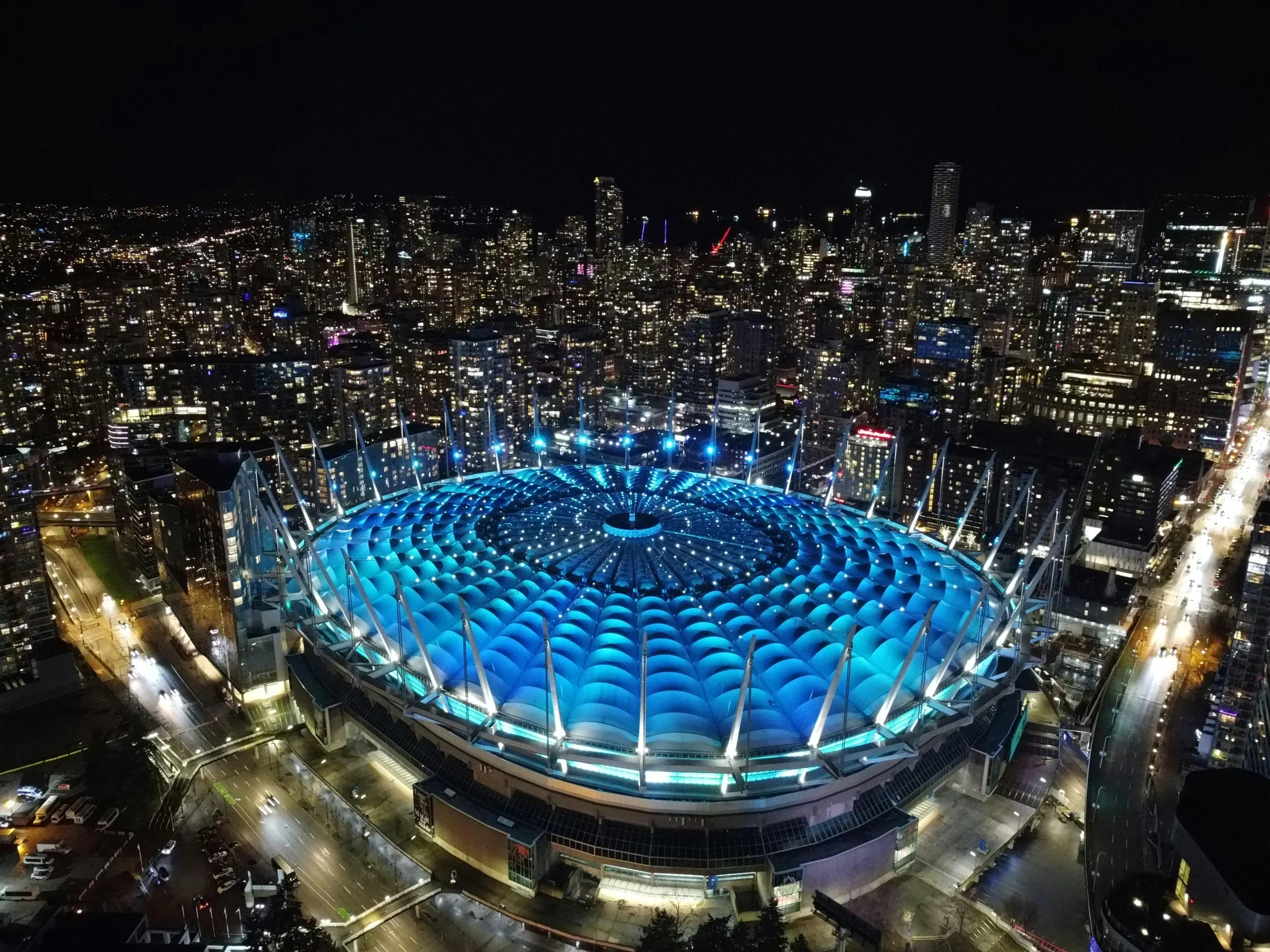
BC Place will host seven matches during the FIFA World Cup 2026, including multiple knockout-stage fixtures.
Located at the edge of downtown Vancouver, BC Place is one of Canada’s most recognizable sporting venues and a defining feature of the city skyline. Originally opened in 1983 and extensively renovated in 2011, the stadium is distinguished by its retractable cable-supported roof, which is one of the largest of its kind in the world. The roof’s lightweight engineering system and illuminated exterior give the venue a contemporary identity while responding to Vancouver’s often unpredictable climate.
Designed to function as a flexible multi-event arena, BC Place combines large-scale capacity with strong visual connections to the surrounding waterfront and mountains. Its transparent facade and open concourse areas create a more urban and outward-looking relationship with the city compared to the enclosed character of many North American stadiums. The stadium has also hosted major international tournaments, women’s football events, and large-scale civic gatherings, positioning it as an important venue within the World Cup’s tri-national landscape.
7. Miami Stadium
Matches: Group Stage (June 15, 21, 24, 27), Round of 32 (July 3), Quarterfinal (July 11), Third-Place Playoff (July 18)
Saudi Arabia v Uruguay — June 15
Uruguay v Cabo Verde — June 21
Scotland v Brazil — June 24
Colombia v Portugal — June 27
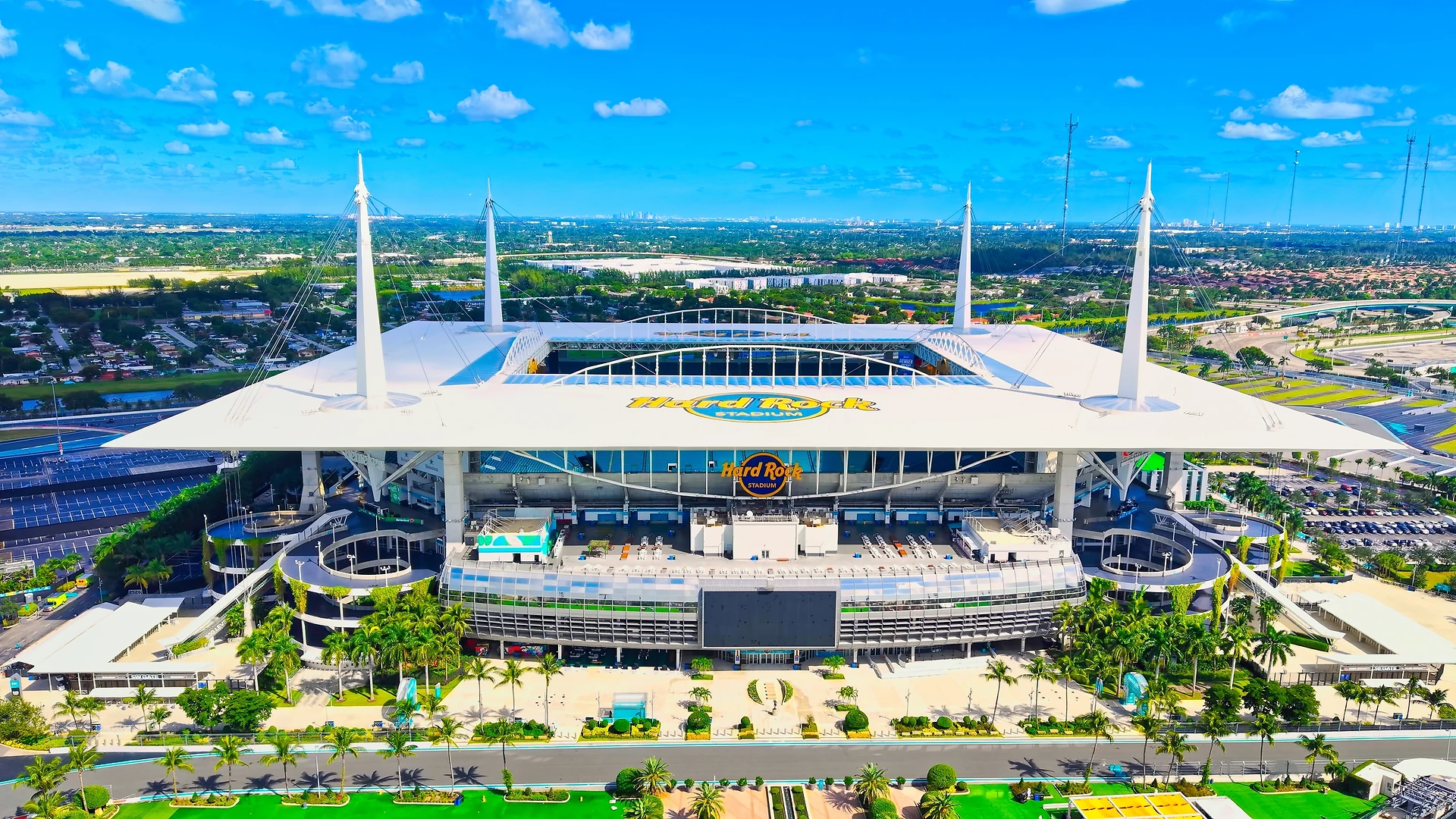
Hard Rock Stadium, renamed as Miami Stadium, will host seven matches during the FIFA World Cup 2026, including the third-place playoff.
Designed by HOK and originally opened in 1987, it has been repeatedly renovated over the decades. Miami Stadium reflects the evolving nature of contemporary sports venues in the United States. The most defining architectural intervention came through its recent redevelopment, which introduced a sweeping canopy roof hovering above the seating bowl while leaving the pitch open to the sky.
Located in Miami Gardens, the venue carries an event-driven identity shaped by the city’s entertainment culture, nightlife, and strong Latin American influence. Its flexible infrastructure allows it to host football, Formula One, concerts, and major international events with equal ease, positioning it as one of the country’s most adaptable mega-venues. Miami’s deep connection to Latin American football culture is expected to give the venue one of the tournament’s most energetic atmospheres.
8. Estadio Monterrey
Matches: Group Stage (June 14, 20, 24), Round of 32 (June 29)
Sweden v Tunisia — June 14
Tunisia v Japan — June 20
South Africa v Korea Republic — June 24
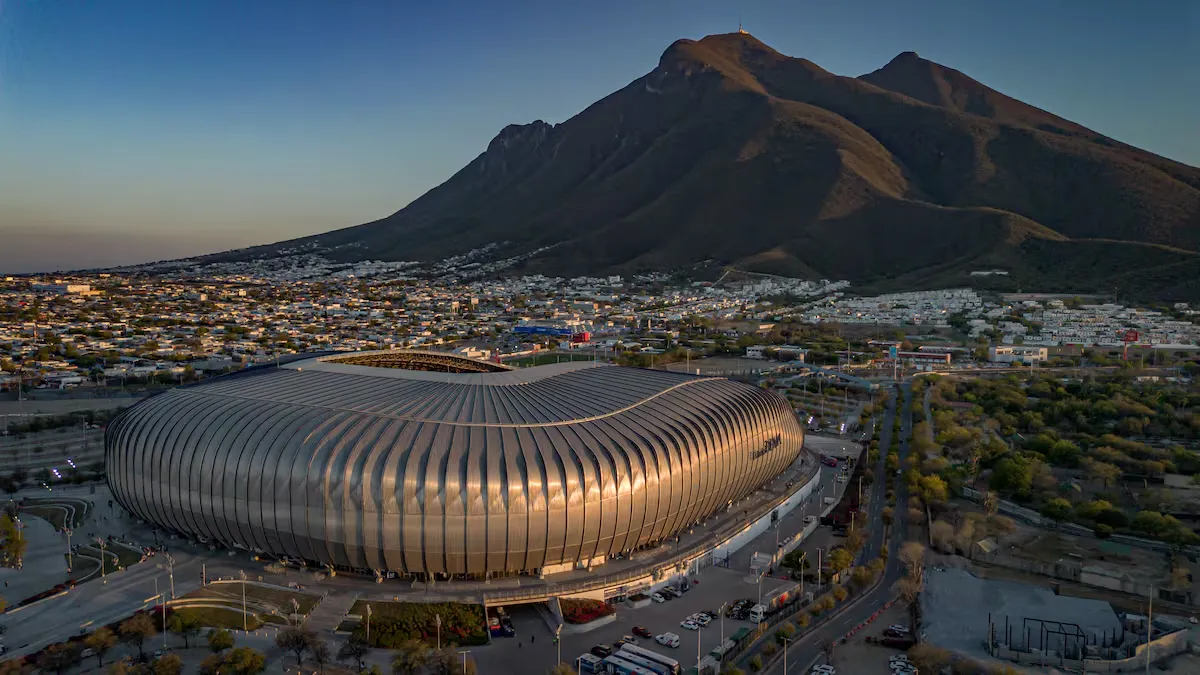
Estadio BBVA, renamed as Estadio Monterrey, will host four matches during the FIFA World Cup 2026, including group-stage fixtures and a Round of 32 match.
Opened in 2015 in Monterrey, Estadio Monterrey is designed by Populous in collaboration with VFO Arquitectos. The stadium is set against the backdrop of Cerro de la Silla mountain, a relationship that strongly shapes its identity. Its sweeping metallic facade and curved form were conceived to respond to the surrounding landscape, giving the stadium a lighter and more fluid appearance compared to the monumental concrete language of older arenas.
Built primarily for football, the venue emphasizes sightlines and crowd proximity. The partially open structure improves natural ventilation while allowing views toward the mountains and city beyond. As the home of C.F. Monterrey, Estadio Monterrey has become a symbol of contemporary Mexican football culture. Its inclusion in FIFA 2026 highlights Mexico’s transition from historic stadiums such as Azteca toward a newer generation of globally oriented football infrastructure.
9. Dallas Stadium
Matches: Group Stage (June 14, 17, 22, 25, 27), Round of 32 (June 30, July 3), Round of 16 (July 6), Semifinal (July 14)
Netherlands v Japan — June 14
England v Croatia — June 17
Argentina v Austria — June 22
Japan v Sweden — June 25
Jordan v Argentina — June 27
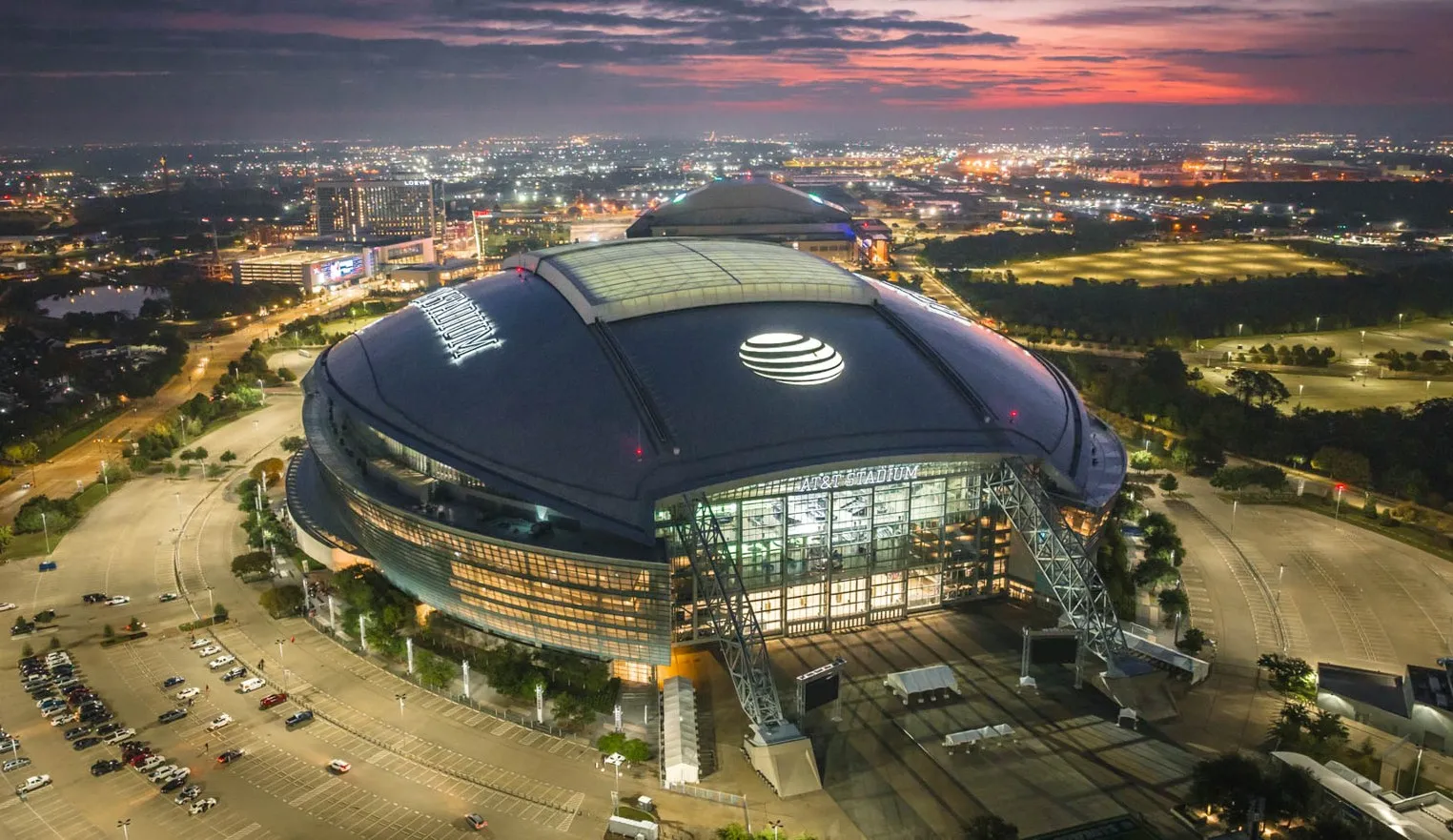
AT&T Stadium, renamed as Dallas Stadium, will host nine matches during the FIFA World Cup 2026, the highest among all tournament venues, including a semifinal on July 14.
Opened in 2009 in Arlington, Texas, Dallas Stadium was designed by HKS Architects as a large-scale spectacle venue. The stadium is recognised for its monumental retractable roof, massive glass end-zone walls, and one of the world’s largest suspended video screens, creating an environment built as much for entertainment as for sport itself.
The building’s immense scale and technological infrastructure allow it to accommodate a wide range of global events, from American football and concerts to boxing and international football tournaments. Despite its size, the seating bowl was designed to maintain strong sightlines and visual connectivity to the pitch, while the retractable elements help adapt the venue to varying event formats and climate conditions. As one of FIFA 2026’s primary venues, Dallas Stadium reflects the tournament’s growing association with mega-event culture and large-capacity entertainment architecture.
10. New Jersey Stadium, New York
Matches: Group Stage (June 13, 16, 22, 25, 27), Round of 32 (July 1), Round of 16 (July 5), Final (July 19)
Brazil v Morocco — June 13
France v Senegal — June 16
Norway v Senegal — June 22
Ecuador v Germany — June 25
Panama v England — June 27
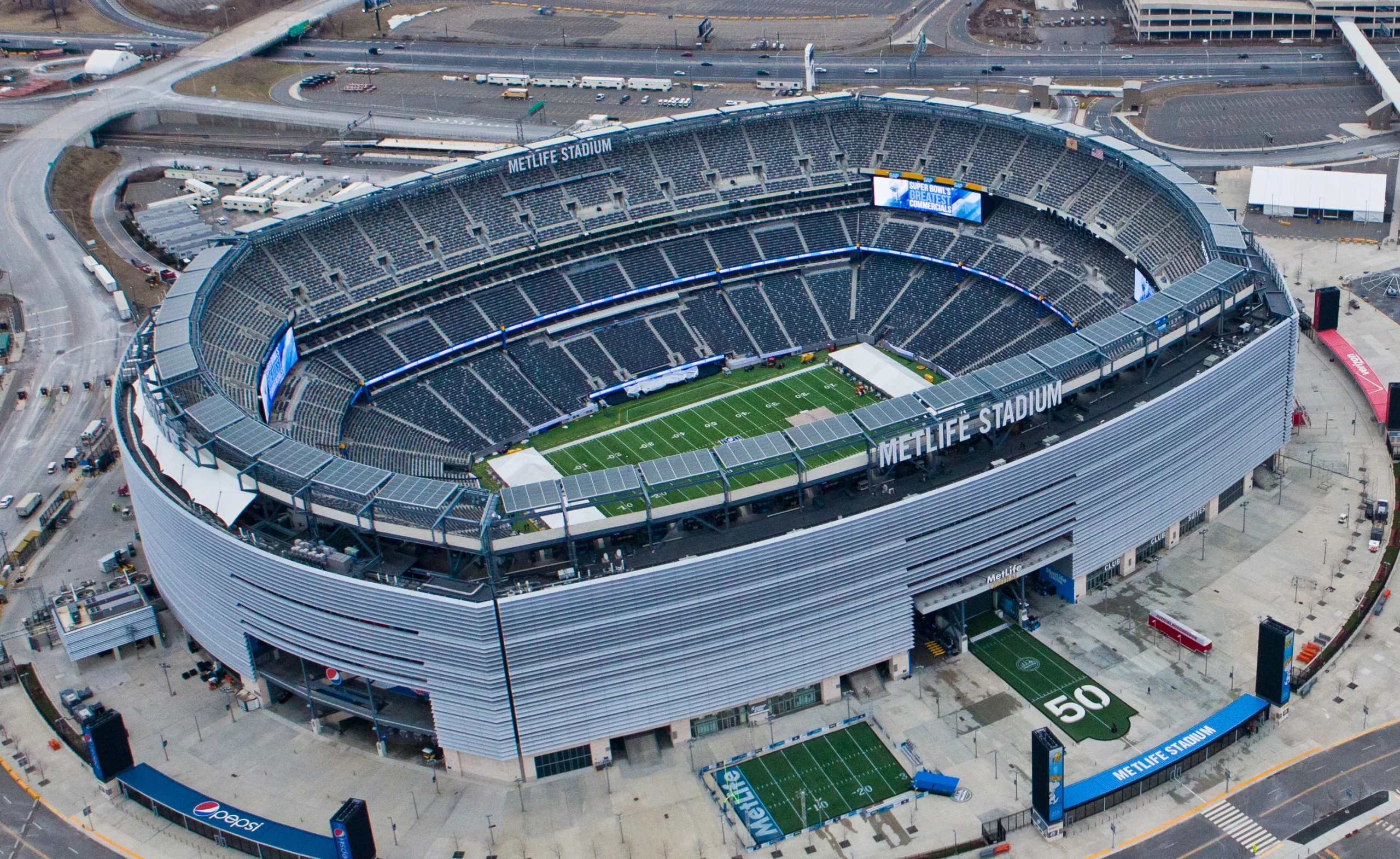
MetLife Stadium, renamed as New York New Jersey Stadium, will host eight matches during the FIFA World Cup 2026, including the final on July 19.
Located just outside New York City in East Rutherford, New Jersey, the stadium was opened in 2010 as one of the largest sports venues in the United States. Designed by the architecture firm EwingCole in collaboration with 360 Architecture and Rockwell Group, the stadium’s layered aluminium and glass facade shifts appearance with changing light conditions.
Built as a multi-purpose venue, MetLife prioritizes flexibility, circulation efficiency, and spectator capacity, accommodating more than 80,000 attendees during major events. Unlike some of the newer stadiums driven by highly expressive forms or retractable systems, its architecture is comparatively understated, relying instead on scale and infrastructure to establish presence.
11. San Francisco Bay Area Stadium
Matches: Group Stage (June 13, 16, 19, 22, 25), Round of 32 (July 4)
Qatar v Switzerland — June 13
Austria v Jordan — June 16
Türkiye v Paraguay — June 19
Jordan v Algeria — June 22
Paraguay v Australia — June 25
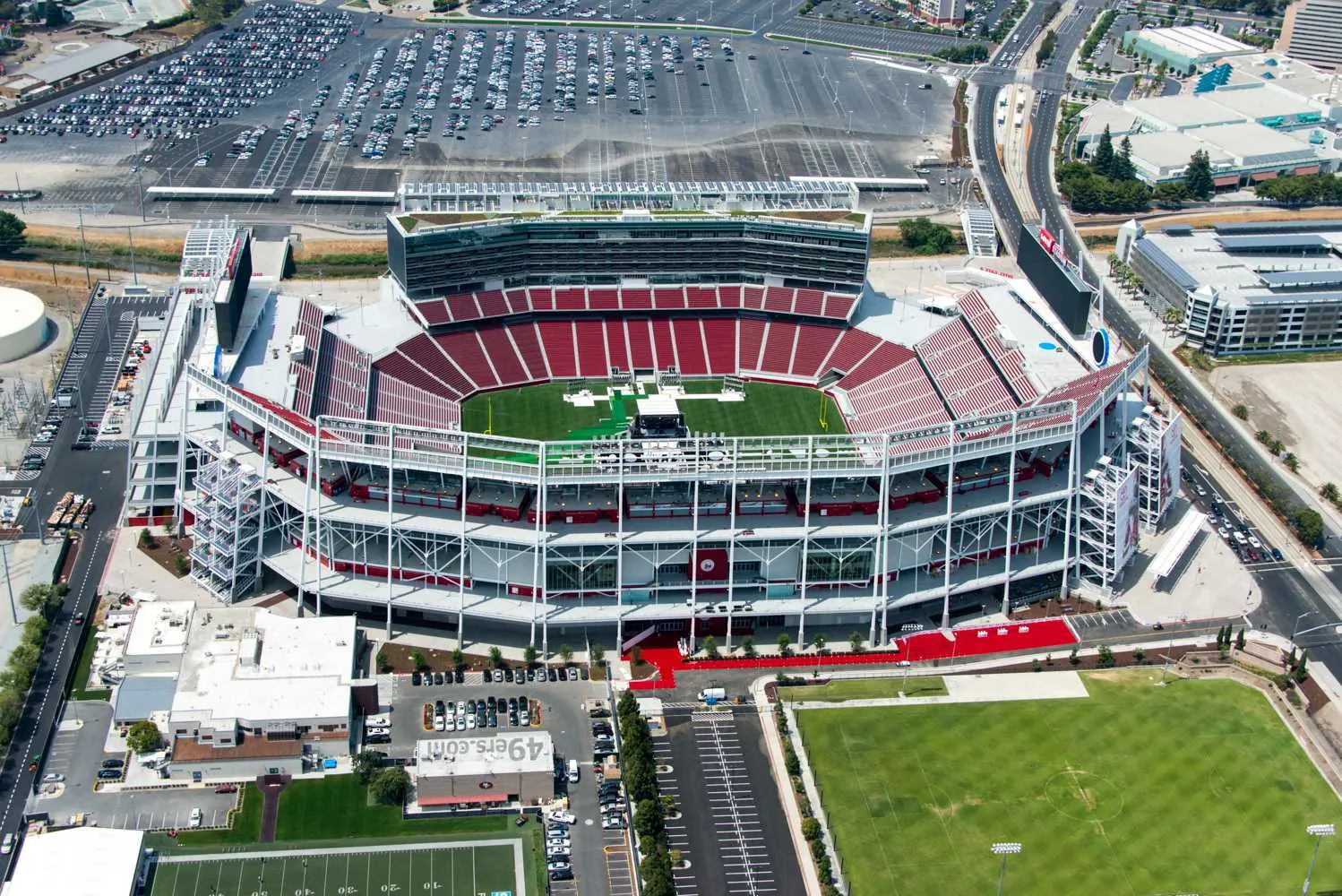
Levi’s Stadium, renamed San Francisco Bay Area Stadium, will host six matches during the FIFA World Cup 2026, including group-stage and knockout fixtures.
Opened in 2014 in Santa Clara, California, the stadium reflects the technological and sustainability-driven identity of Silicon Valley. Designed by HNTB, the venue incorporates extensive environmental strategies, including a green roof, solar integration, reclaimed water systems, and energy-efficient infrastructure, positioning it among the more environmentally conscious stadiums in the tournament.
Architecturally, the stadium adopts a clean and restrained contemporary language, with open concourses and wide terraces designed to maximize natural light and views of the surrounding landscape. Its asymmetrical seating configuration responds to the Californian climate by improving shade and thermal comfort for spectators during daytime events.
12. Estadio Guadalajara
Matches: Group Stage (June 11, 18, 23, 26), Round of 32 (June 29)
Korea Republic v Czechia — June 11
Mexico v Korea Republic — June 18
Colombia v Congo DR — June 23
Uruguay v Spain — June 26
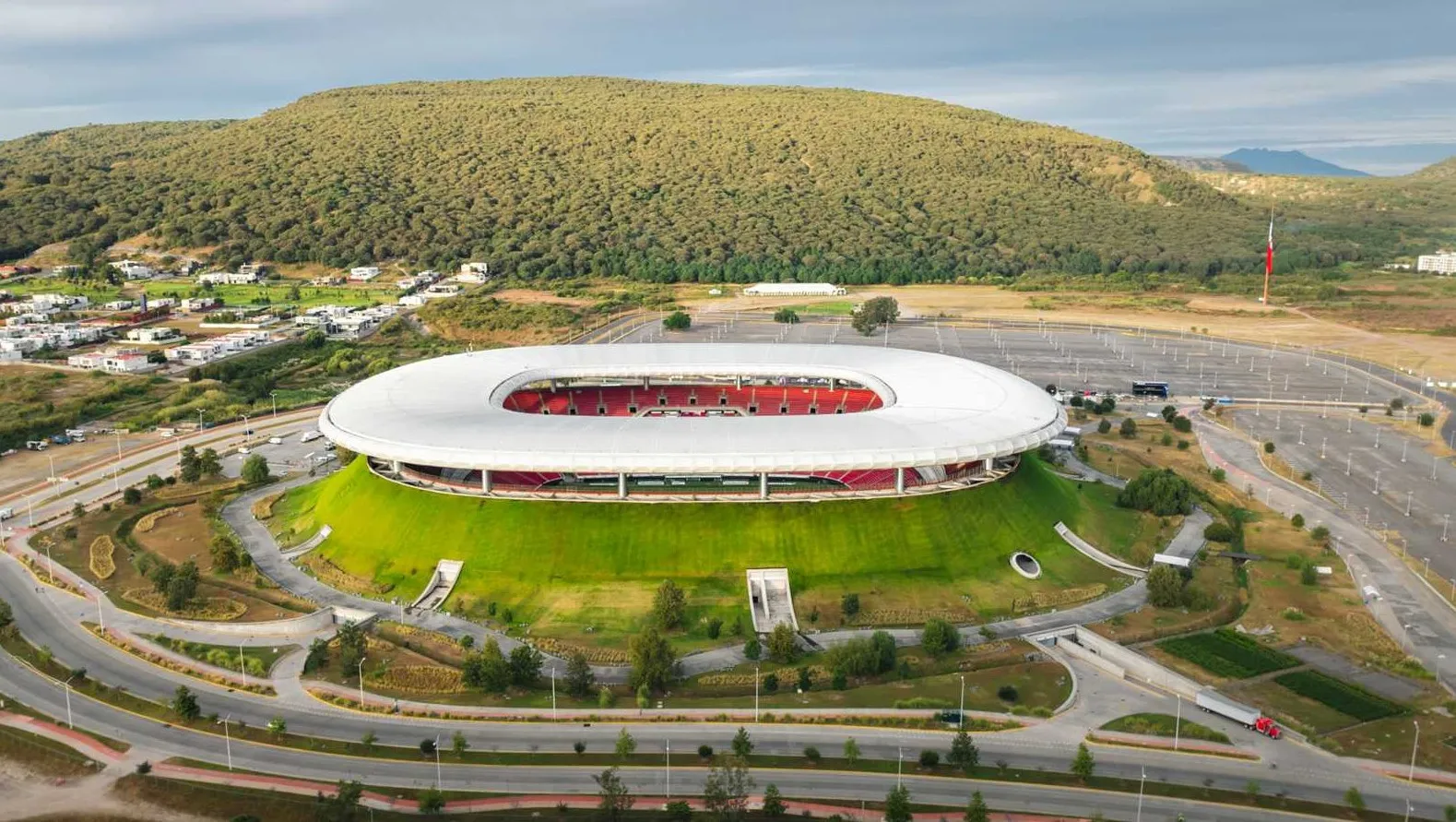
Estadio Akron, renamed as Estadio Guadalajara for the FIFA World Cup 2026, will host four group-stage fixtures and a Round of 32 match during the tournament. Opened in 2010 on the outskirts of Guadalajara, the stadium was designed by French architect Jean-Marie Massaud in collaboration with Daniel Pouzet and Mexican firm Arquitech. Its most distinctive feature is the sweeping green-covered roof, giving the stadium the appearance of a landform emerging from the earth.
The bowl of the stadium is partially embedded into the terrain, helping reduce the stadium’s visual scale while improving thermal comfort and acoustics. Its translucent roofing system also allows natural light to filter into the seating areas. Home to Club Deportivo Guadalajara, one of Mexico’s most historic football clubs, the stadium emerges as one of Mexico’s major football cities alongside Mexico City and Monterrey.
13. Toronto Stadium
Matches: Group Stage (June 12, 17, 20, 23, 26), Round of 32 (July 2)
Canada v Bosnia and Herzegovina — June 12
Ghana v Panama — June 17
Germany v Côte d’Ivoire — June 20
Panama v Croatia — June 23
Senegal v Iraq — June 26
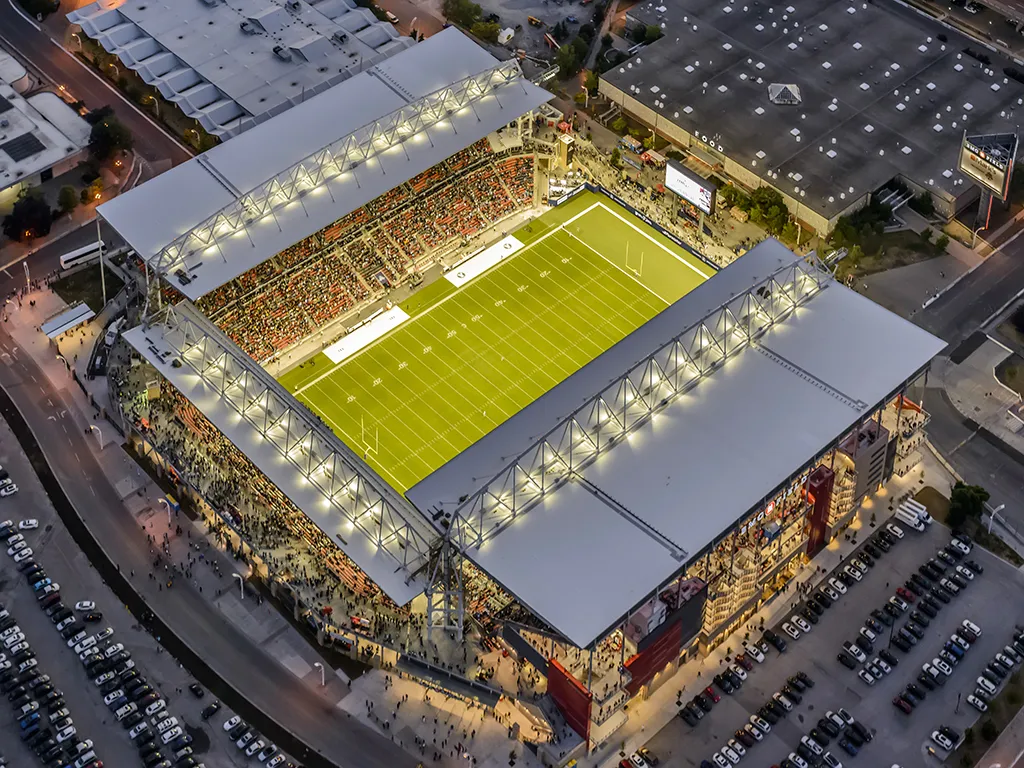
BMO Field, renamed as Toronto Stadium for the FIFA World Cup 2026, will host five group-stage fixtures and a Round of 32 match. Originally opened in 2007 and later expanded for major international tournaments, the stadium is one of Canada’s most football-focused venues and has played a significant role in the growth of the sport within the country.
Located along Toronto’s waterfront exhibition grounds, the stadium combines a relatively compact seating bowl with an open-air design that prioritises atmosphere and proximity to the pitch. Although the original architects were Brisbin Brooks Beynon Architects (BBB Architects), the more recent major expansions were led by Gensler.
Architecturally, the venue reflects a functional and contemporary approach, with exposed structural elements, expanded upper tiers, and a partially covered roof system introduced during renovations. As the home of Toronto FC and the Canadian national team, the stadium has become closely associated with Canada’s rising football profile ahead of the FIFA World Cup 2026.
14. Boston Stadium
Matches: Group Stage (June 13, 16, 19, 23, 26), Round of 32 (July 1), Quarterfinal (July 9)
Haiti v Scotland — June 13
Iraq v Norway — June 16
Scotland v Morocco — June 19
England v Ghana — June 23
Norway v France — June 26
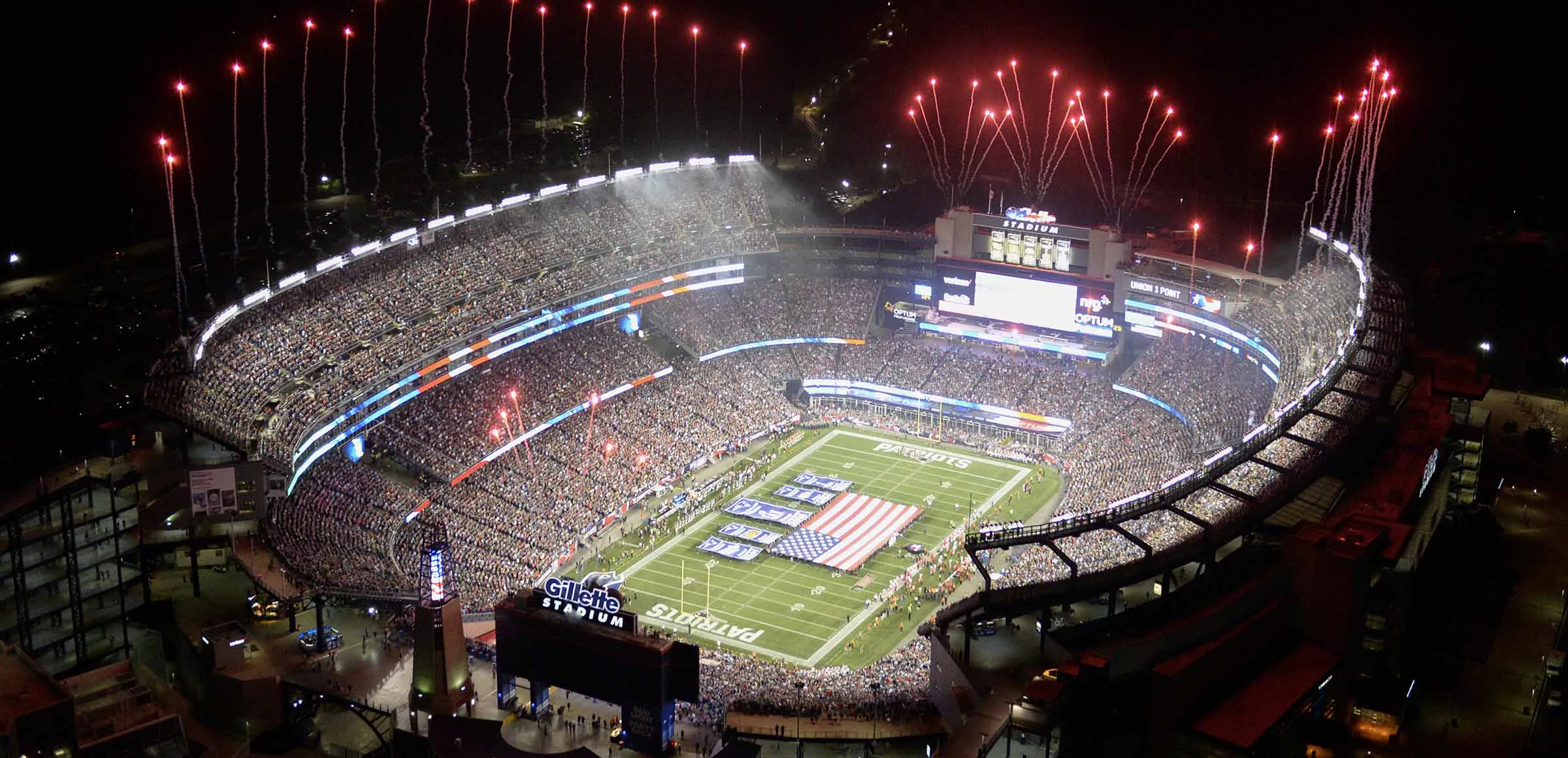
Gillette Stadium, renamed as Boston Stadium for the FIFA World Cup 2026, will host five group-stage fixtures, a Round of 32 match, and a quarterfinal. Opened in 2002 in Foxborough, Massachusetts, the stadium was designed by HOK Sport and reflects the large-capacity multi-purpose stadium model common in the United States during the early 2000s.
The venue is characterized by its open bowl configuration, exposed steel structure, and symmetrical seating design. While architecturally more restrained than some of the newer FIFA 2026 venues, the stadium’s scale and event infrastructure have allowed it to host major international sporting events, concerts, and football matches over the years.
Boston Stadium has also played an important role in the development of football culture in the northeastern United States through its association with the New England Revolution and numerous international fixtures. Its inclusion in the FIFA World Cup 2026 reinforces the region’s long-standing sporting legacy while introducing one of football’s biggest tournaments to one of America’s most historic metropolitan areas.
15. Philadelphia Stadium
Matches: Group Stage (June 14, 19, 22, 25, 27), Round of 32 (July 4), Round of 16 (July 7)
Côte d’Ivoire v Ecuador — June 14
Brazil v Haiti — June 19
France v Iraq — June 22
Curaçao v Côte d’Ivoire — June 25
Croatia v Ghana — June 27
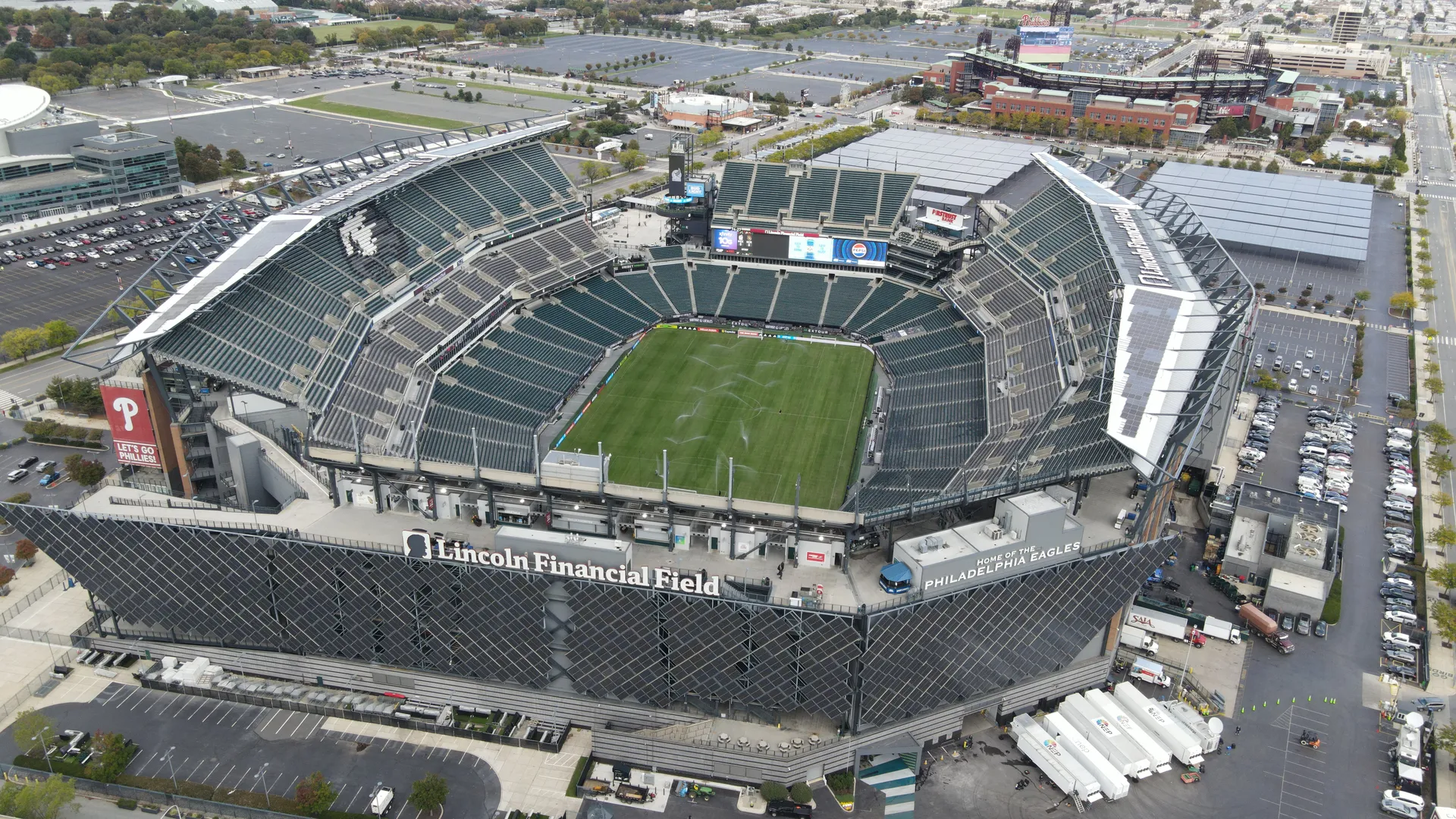
Lincoln Financial Field, renamed Philadelphia Stadium for the FIFA World Cup 2026, will host five group-stage fixtures, as well as Round of 32 and Round of 16 matches. Opened in 2003 and designed by NBBJ, the stadium reflects the modern American approach to large-capacity sports infrastructure.
The venue is defined by its open seating bowl, exposed steel framing, and expansive concourse systems designed to accommodate large crowds efficiently. Unlike many of the newer spectacle-oriented stadiums of FIFA 2026, Philadelphia Stadium relies less on dramatic form and more on functionality. It’s relatively steep seating arrangement helps create a strong connection between spectators and the pitch during football matches.
Situated within Philadelphia’s larger sports complex, the stadium forms part of a dense urban sporting district that has long been associated with the city’s passionate fan culture. Over the years, it has hosted international football fixtures, major concerts, and large-scale sporting events, making it one of the East Coast’s key venues ahead of the FIFA World Cup 2026.
16. Houston Stadium
Matches: Group Stage (June 14, 17, 20, 23, 26), Round of 32 (June 30), Round of 16 (July 4)
Germany v Curaçao — June 14
Portugal v Congo DR — June 17
Netherlands v Sweden — June 20
Portugal v Uzbekistan — June 23
Cabo Verde v Saudi Arabia — June 26
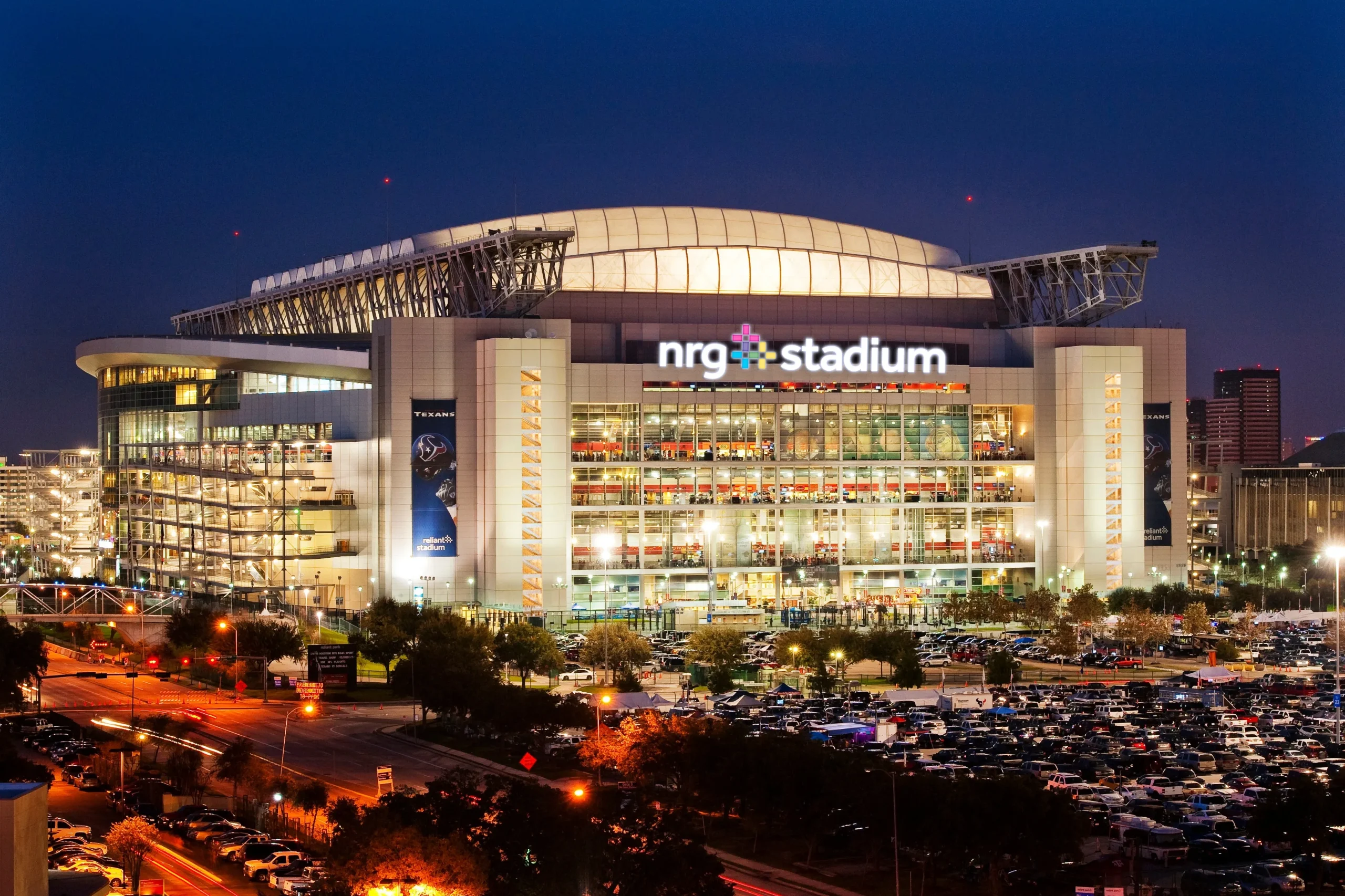
NRG Stadium, renamed Houston Stadium for the FIFA World Cup 2026, will host five group-stage fixtures, as well as Round of 32 and Round of 16 matches. Opened in 2002 and designed by HOK Sport, the stadium became the first NFL venue to feature a retractable roof, marking a significant moment in the evolution of large-scale sports architecture in the United States.
The stadium’s steel superstructure and expansive roof system were designed to withstand Houston’s extreme climate while remaining flexible for different event formats. Its enclosed bowl configuration helps create a controlled spectator environment. Though more restrained in form than some of the newer FIFA 2026 venues, Houston Stadium remains architecturally significant for its early integration of retractable roof technology.
Located within the NRG Park complex, the venue has hosted a wide range of international sporting events, concerts, and rodeos, reflecting Houston’s identity as a major event city.
Over the course of the tournament, these 16 stadiums will witness opening ceremonies, last-minute goals, emerging rivalries, and moments that may eventually become part of football folklore. Whether rooted in decades of sporting history or shaped by contemporary entertainment culture, the venues of the FIFA World Cup 2026 collectively frame the scale of the tournament’s biggest edition yet.
