


The rise of wood architecture is shaping eco-conscious, elegant, and forward-thinking built environments.
Wood has remained one of the most meaningful materials in architecture because it offers something few other materials can fully replicate, like warmth, texture, and emotional connection. In a design world driven by performance, sustainability, and innovation, wood continues to hold its relevance not only because it is beautiful but also because it is adaptable.
Architects and designers are considering timber as a material that softens the built environment. Unlike colder industrial finishes, wood introduces a human scale into architecture. It creates spaces that feel grounded, tactile, and inviting, whether used in interior surfaces, façades, roofs, or entire structural systems.
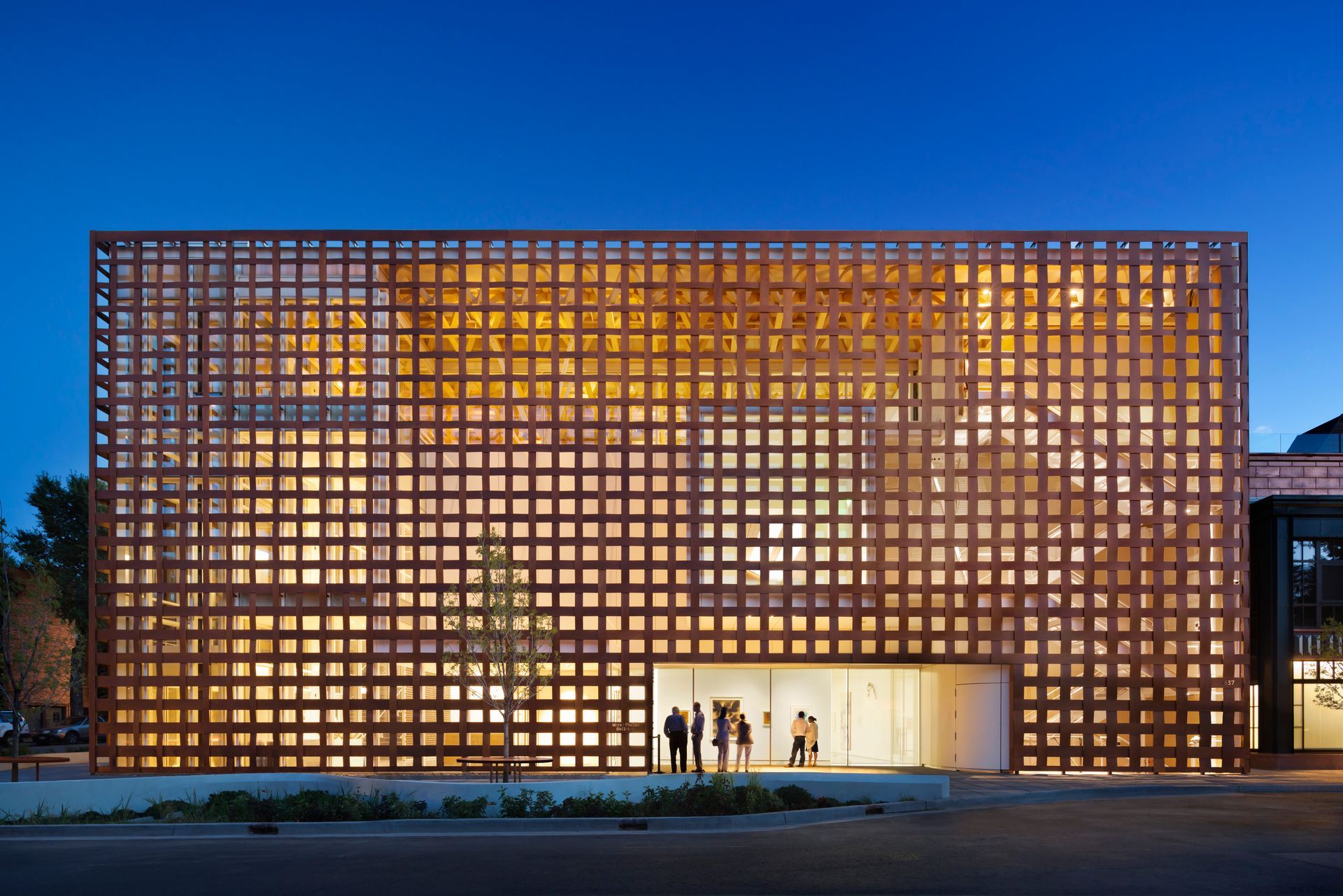
Wood as a Tool for Architectural Innovation
Contemporary design has transformed the role of timber far beyond conventional construction. Through advances in engineered wood products such as cross-laminated timber, architects can now push the structural and formal limits of wood in ways that were previously unimaginable. Timber is no longer seen as a secondary or decorative material and is now central to many of the world’s most ambitious design ideas.
Wood allows architects to create long spans, curved geometries, sculptural roofs, and expressive frameworks while maintaining a lighter environmental footprint compared to many conventional materials. Its structural versatility supports experimentation, especially in projects that seek to balance technical precision with organic expression. This makes timber relevant in contemporary architecture, where fluidity, geometry, and performance increasingly intersect.
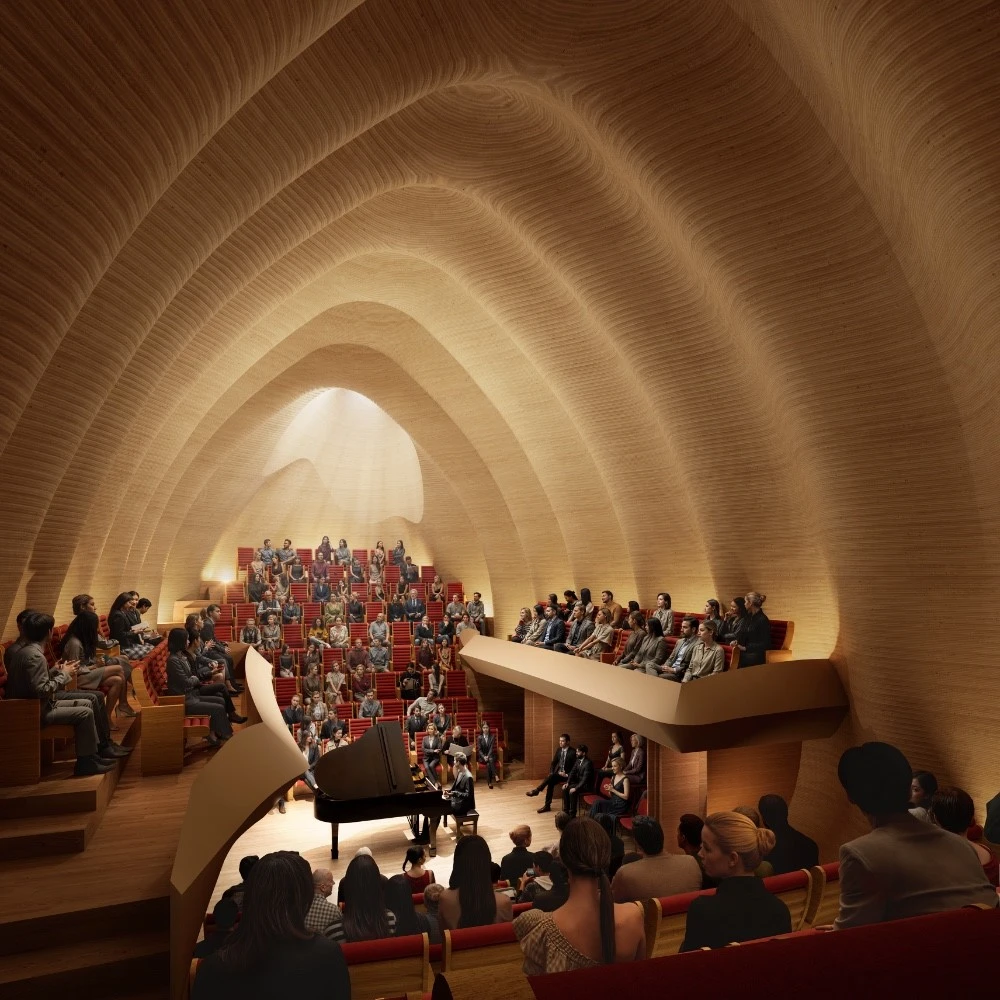
One interesting example is Shigeru Ban’s Design for a Timber Concert Hall in Altdorf, set within a historic 19th-century armory in the Swiss Alps. Instead of replacing the old structure, the design preserves its original masonry shell and introduces a sculptural wooden interior, creating a thoughtful dialogue between heritage and contemporary architecture.
Designed as an intimate venue with around 200–250 seats, the hall brings audiences closer to the stage for a more immersive musical experience. Its curved timber surfaces are also intended to improve acoustics by distributing sound evenly across the space.
Sustainability and the Shift Toward Responsible Design
One of the strongest reasons for wood’s growing importance in architecture is its environmental value. As the construction industry confronts the urgent need to reduce carbon emissions and rethink material systems, timber has emerged as a leading solution in low-impact design. Responsibly sourced wood is renewable, stores carbon, and often requires less energy to process than steel or concrete.
This does not mean wood is automatically sustainable in every context, but when used thoughtfully, it can support a more responsible and future-facing design approach. Timber also aligns with broader architectural priorities such as biophilic design, circular construction, and regenerative thinking. It helps create spaces that are not only efficient but also psychologically restorative and visually calm.
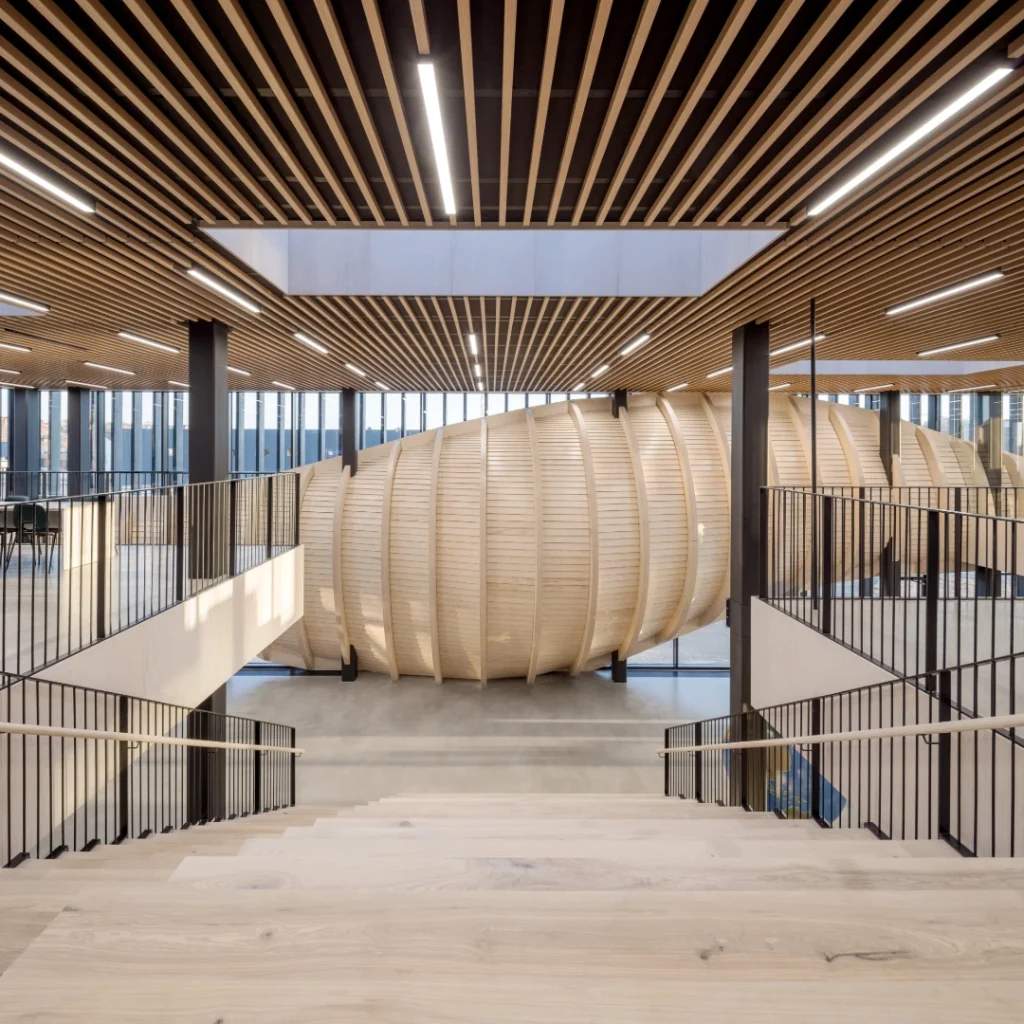
Klimatorium in Lemvig reflects how wood can shape sustainable architecture with a strong local identity. Set on the harborfront, Denmark’s international climate center uses timber, concrete, and steel to create a raw yet thoughtful material palette inspired by nearby boat halls and the town’s fishing heritage. Its wooden wave element adds warmth, texture, and a distinctive architectural presence.
Designed by 3XN, the building combines climate research spaces with public exhibition areas under one roof. Timber plays a visual and environmental role, helping connect craftsmanship, durability, and contextual design. Klimatorium shows how wood can support sustainable innovation while grounding architecture in place, culture, and community.
Timber in Workspaces and Contemporary Typologies
Wood has also become increasingly important in workplace design, where architecture is being reimagined to support collaboration, well-being, and flexibility. Offices are no longer just spaces of efficiency they are now expected to embody brand values, enhance experience, and foster healthier environments. Timber plays a powerful role in this transformation because it introduces warmth and softness into typologies that have traditionally relied on harder, more impersonal materials.
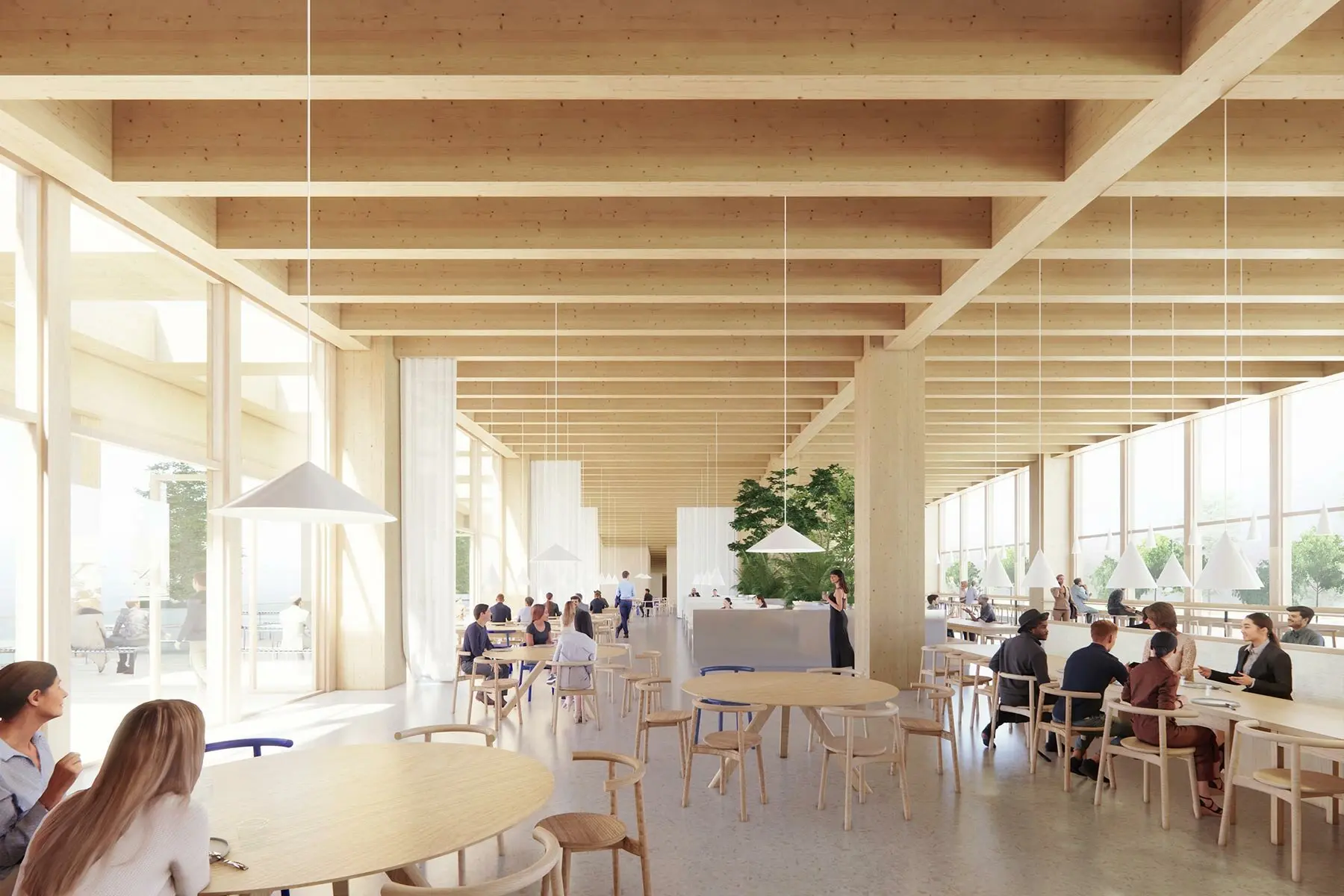
In modern workplaces, wood can help blur the line between professional function and human comfort. It contributes to calmer atmospheres, improves material richness, and supports a stronger connection between architecture and nature. These qualities are especially valuable in buildings that aim to feel progressive without becoming sterile.
Restoration, Memory, and Material Continuity
Wood is not only a material for new architecture, but it also plays a crucial role in preservation and adaptive reuse. In restoration projects, timber often carries structural and symbolic value. It can preserve a sense of history while also allowing contemporary interventions to emerge with sensitivity and clarity. This makes wood powerful in projects where the goal is not simply to rebuild but to reinterpret architectural legacy for the present.
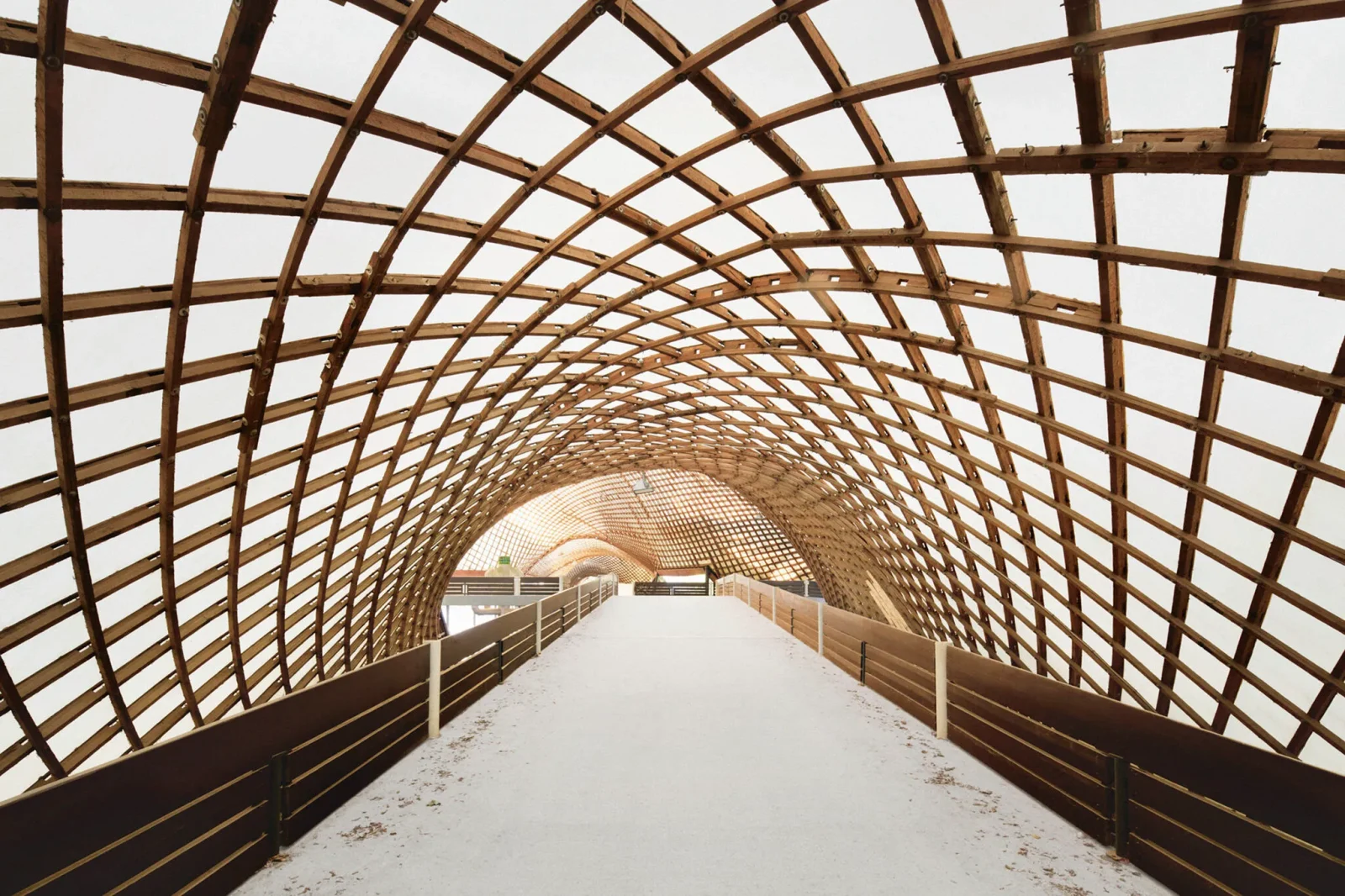
The restoration of timber structures often reveals the intelligence and craftsmanship embedded in earlier architectural eras. At the same time, it opens the door for new technologies and updated performance strategies that can extend a building’s life and relevance. In this way, wood becomes a bridge between the past and the future.
This dialogue is clearly visible in Restoring the Multihalle, which was originally built for the 1975 Federal Garden Exhibition in Mannheim. The Multihalle became a landmark in timber architecture despite being designed as a temporary pavilion. Created by Carlfried Mutschler and Joachim Langner, with structural input from Frei Otto, its free-form timber gridshell remains one of the most celebrated examples of lightweight wood construction.
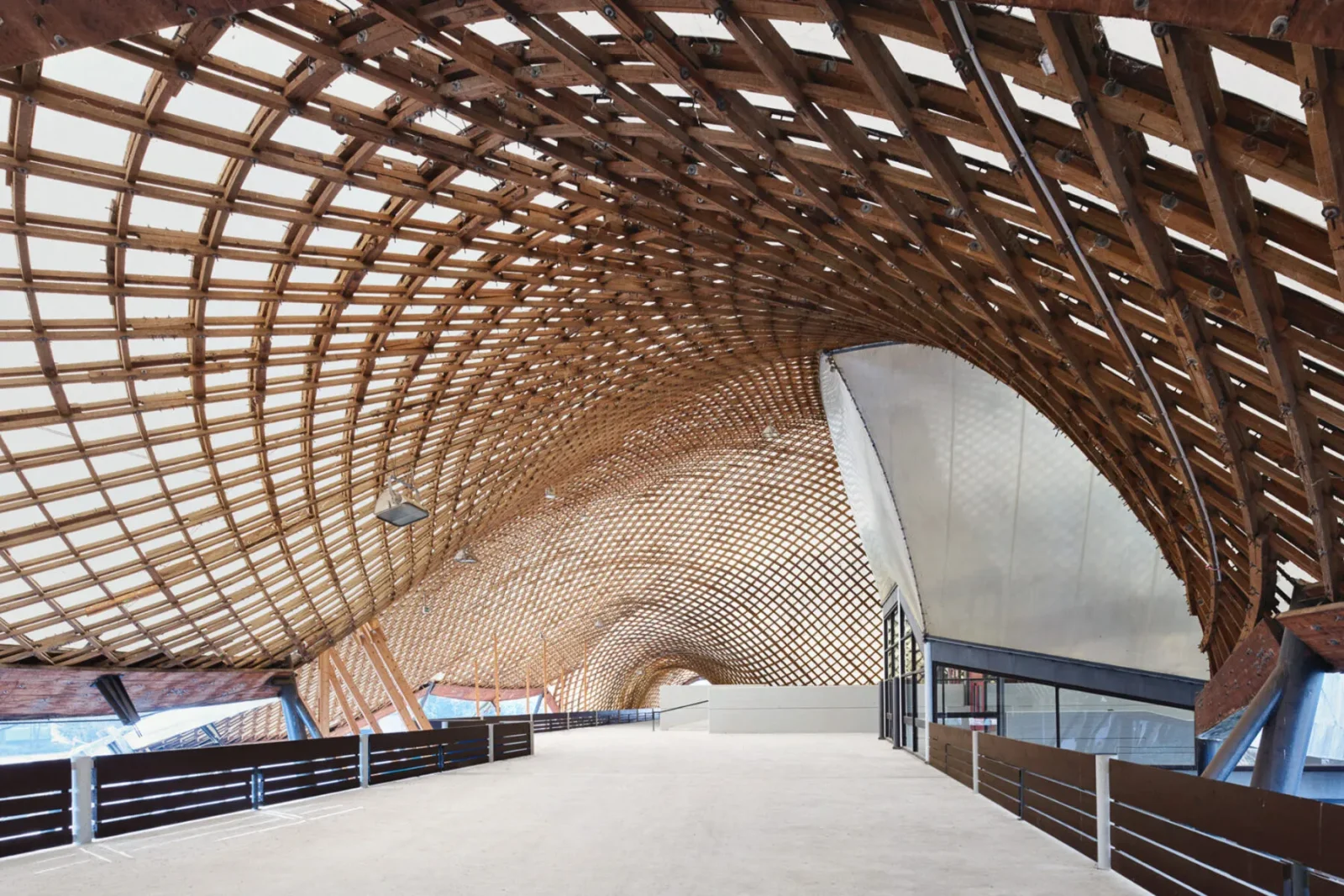
Now nearing 50 years old, the structure is undergoing careful restoration led by Fast + Epp. The project focuses on preserving its original timber form while improving durability through minimal intervention. By realigning warped wooden elements and strengthening key sections, the restoration highlights how sustainable wood architecture can protect design heritage while adapting iconic structures for the future.
Wood continues to matter because it addresses some of architecture’s most pressing priorities today. It brings warmth, tactility, and a human quality to spaces while also supporting more sustainable and forward-thinking design. As architects seek materials that combine environmental responsibility with creative freedom, timber continues to stand out as a powerful and relevant choice.
As architecture continues to evolve, wood is no longer simply returning but is advancing through new technologies, new programs, and new environmental demands.
