


Religion is a belief system that tries to answer questions about the nature of humans and the source of their existence with the concept of God. Religion, which has diversified and affected social formations throughout the history of humanity, also has a great place in architecture. These gathering, socializing, and sacred celebration areas, such as temples, which were also found in the first settlement areas discovered, appear in various forms and cultures throughout history.
Asia is the most populated continent in the world. It is possible to see many religious beliefs together in this continent, which has a very diverse cultural richness with a population of more than 4,500 billion. Hinduism, Buddhism, Sikhism, and Jainism are believed to have originated in South Asia. The culture created by all these different religions has also greatly affected the architecture. Many temples have survived from the past to the present, are still in active use, and attract attention with their construction styles and impressive images.
A temple visit is a must on a trip to Asia. It is possible to come across a list of must-see temples in every country from India to China, from Indonesia to Cambodia. This article lists 10 temples from the Asian continent with their stunning images and stories. With their eye-catching architecture from different countries, this list is a closer look for religious architecture enthusiasts or passers-by.
1. Angkor Wat
Location: Krong Siem Reap, Cambodia
Religion: Buddhism
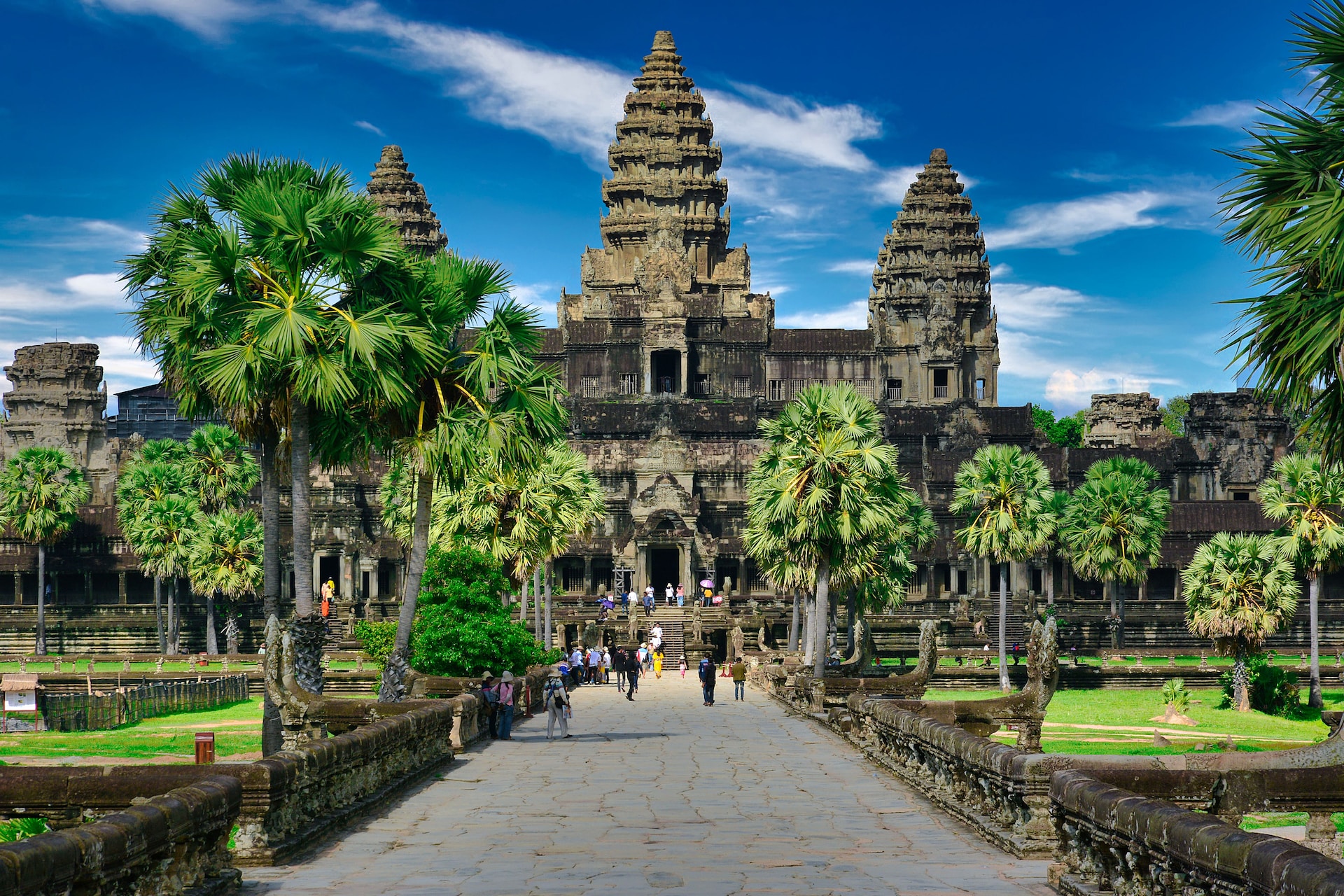
The 162.6-hectare Angkor Wat complex of temples is located in Cambodia. It is regarded as the largest religious edifice in the world by Guinness World Records. The Khmer Empire’s first Hindu temple, built by King Suryavarman II during the 12th century and dedicated to the god Vishnu, was progressively converted into a Buddhist temple by the end of the century.
An aerial view of Angkor Wat reveals that the temple is made up of a large outer wall that divides the holy temple grounds from the barrier-free moat that encircles the entire complex. The actual temple consists of three galleries, which run the length of the building, and a central sanctuary that is denoted by five stone towers. The five stone towers are meant to resemble Mt. Meru’s five mountain ranges, which are considered by both Hindus and Buddhists to be the mythological homes of the gods. Southeast Asia is where the temple mountain architectural style was developed. Hindu god temples on earth were intended by Southeast Asian architects to be a replica of Mt. Meru. The galleries and the voids they left between them and the moat represent Mt. Meru’s surrounding mountain ranges and seas. The gods reside on Mount Meru, although it is also regarded as an axis-mundi which is known as a cosmic or global axis that links the heavens and the earth.
Angkor Wat continues to play an important role in Cambodia. Angkor Wat has also become an important symbol for the nation of Cambodia. Today, the silhouette of Angkor Wat is embroidered on the flag of Cambodia. Some Buddhist monks and nuns continue to worship in this temple, which many people visit today.
2. Meenakshi Sundareshwarar Temple
Location: Madurai, India
Religion: Hinduism
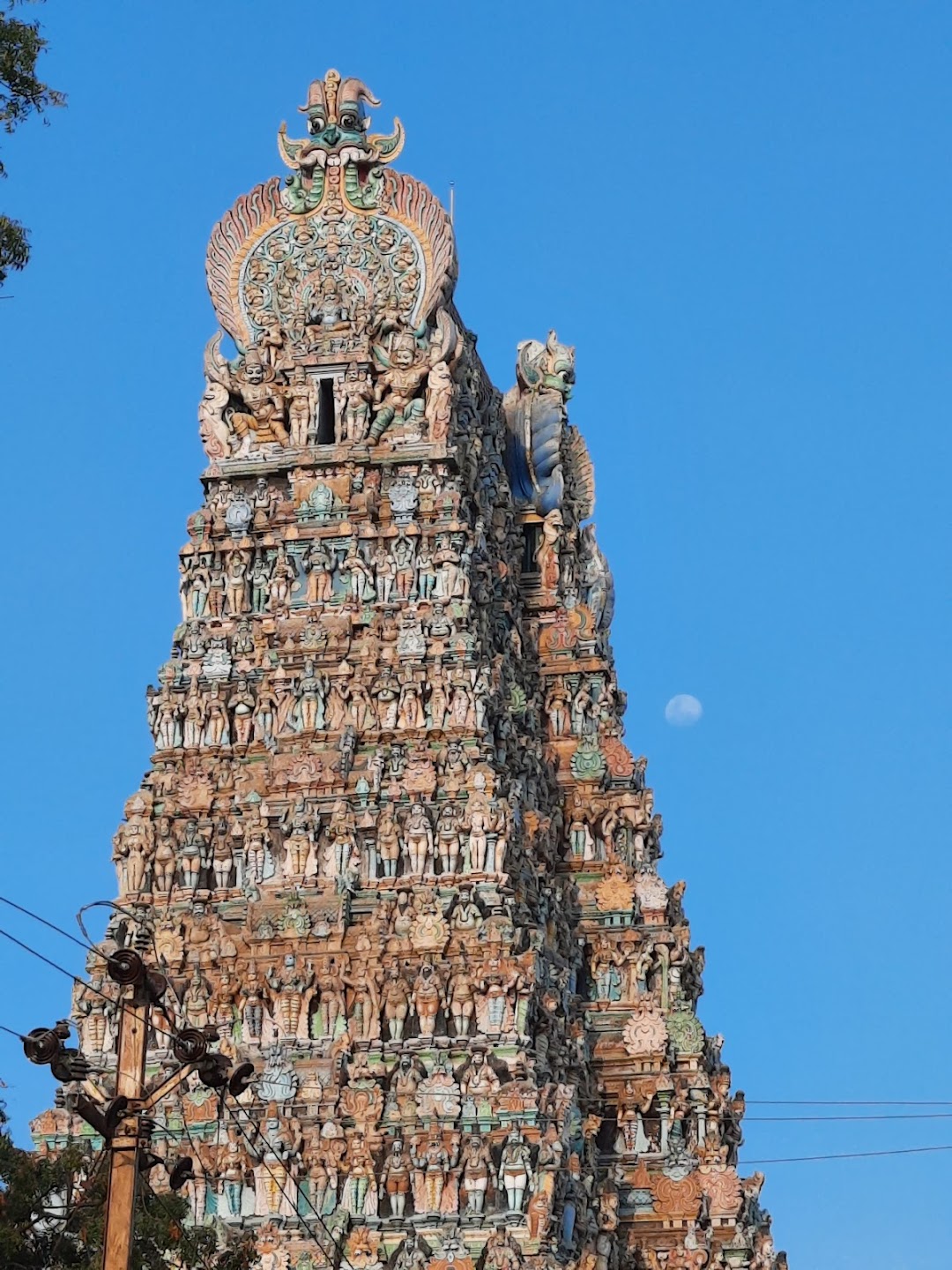
A historical site called Meenakshi Sundareshwarar Temple, also called Arulmigu Meenakshi Amman Temple, is situated in Tamil Nadu, India, on the southern bank of the Vaigai River. The ancient Hindu temple is regarded as the most significant and oldest temple in India. The historical landmark was one of the nominees for inclusion in the Seven Wonders of India list. The temple, which has a history that stretches back to the 7th century and also appears in classical Tamil literature, is regarded as the Taj Mahal of the South.
Hindu Tamils who come to worship Meenakshi and the Sunderashwar are the main visitors to the temple. More than 33,000 statues are considered there, and each of the fourteen entrances has two golden sculptures. The temple has a distinctive architecture built up of old inscriptions and sculptures. It was constructed utilizing Dravidian Architecture, a Hindu architectural style popular in southern Indian regions. Tall entry gates with two or more sides, similar to those found in temples, pillared halls, and covered porches, are characteristics of Dravidian architecture. There are two temples, one each for Meenakshi and Sunderashwar, at the core of the complex. This building style has given the temple color and draws many visitors who wish to view the distinctive architectural style.
3. Prambanan Temple
Location: Java, Indonesia
Religion: Hinduism
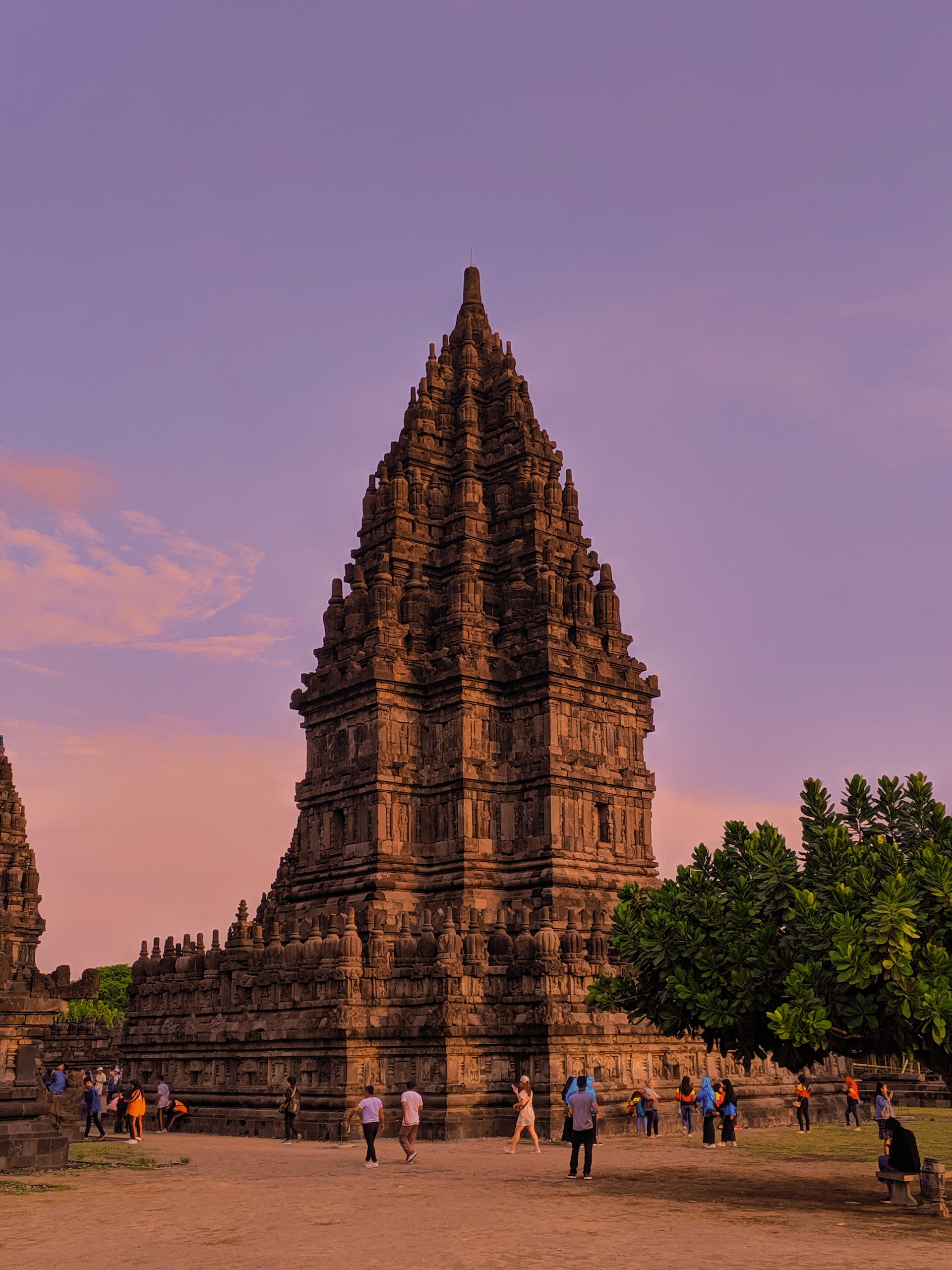
Prambanan is Indonesia’s largest Shiva-focused temple complex, which was constructed in the tenth century. Three temples honoring the three major Hindu deities—Shiva, Vishnu, and Brahma—as well as three temples honoring the animals who serve them—rise above the core of the final of these concentric squares. These temples are each decorated with reliefs depicting scenes. The temple complex is Southeast Asia’s second-largest Hindu temple monument after Angkor Wat and a UNESCO World Heritage site. It is distinguished by its tall, pointed architecture, which is typical of Hindu architecture, as well as by the center structure, which stands at a towering 47 meters high inside a complex of separate temples—originally made up of 240 temple buildings, the Prambanan temple complex is regarded as a masterpiece of Indonesia’s classical era and represents the ancient Java’s Hindu art and architecture.
The Prambanan temple was rediscovered in 1733 by CA Lons after being abandoned for hundreds of years. Since then, this temple has been restored, and many people agree that it is now Indonesia’s most exquisite and charming Hindu temple.
4. Wat Rong Khun
Location: Chiang Rai, Thailand
Religion: Buddhism
Architect: Chalermchai Kosipipat
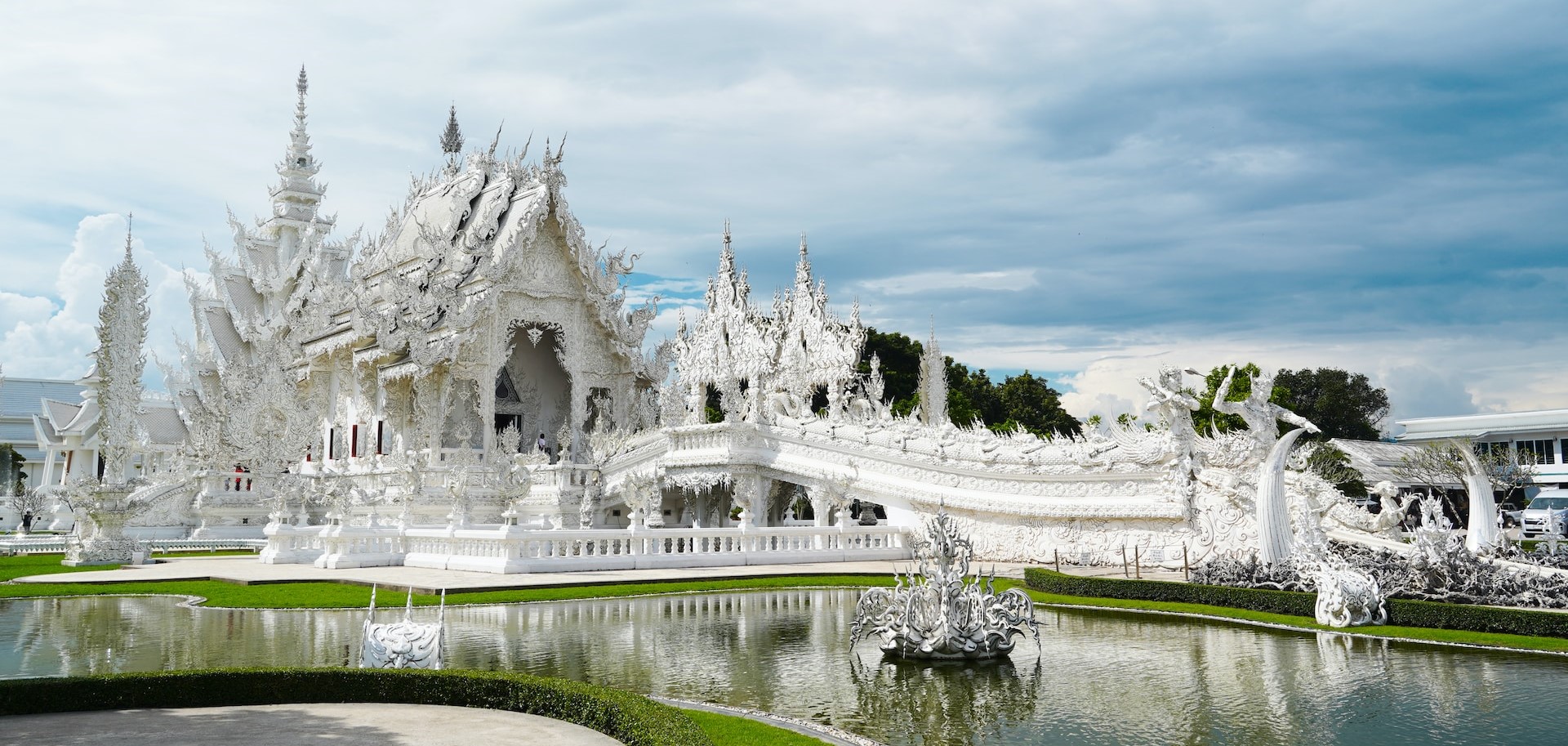
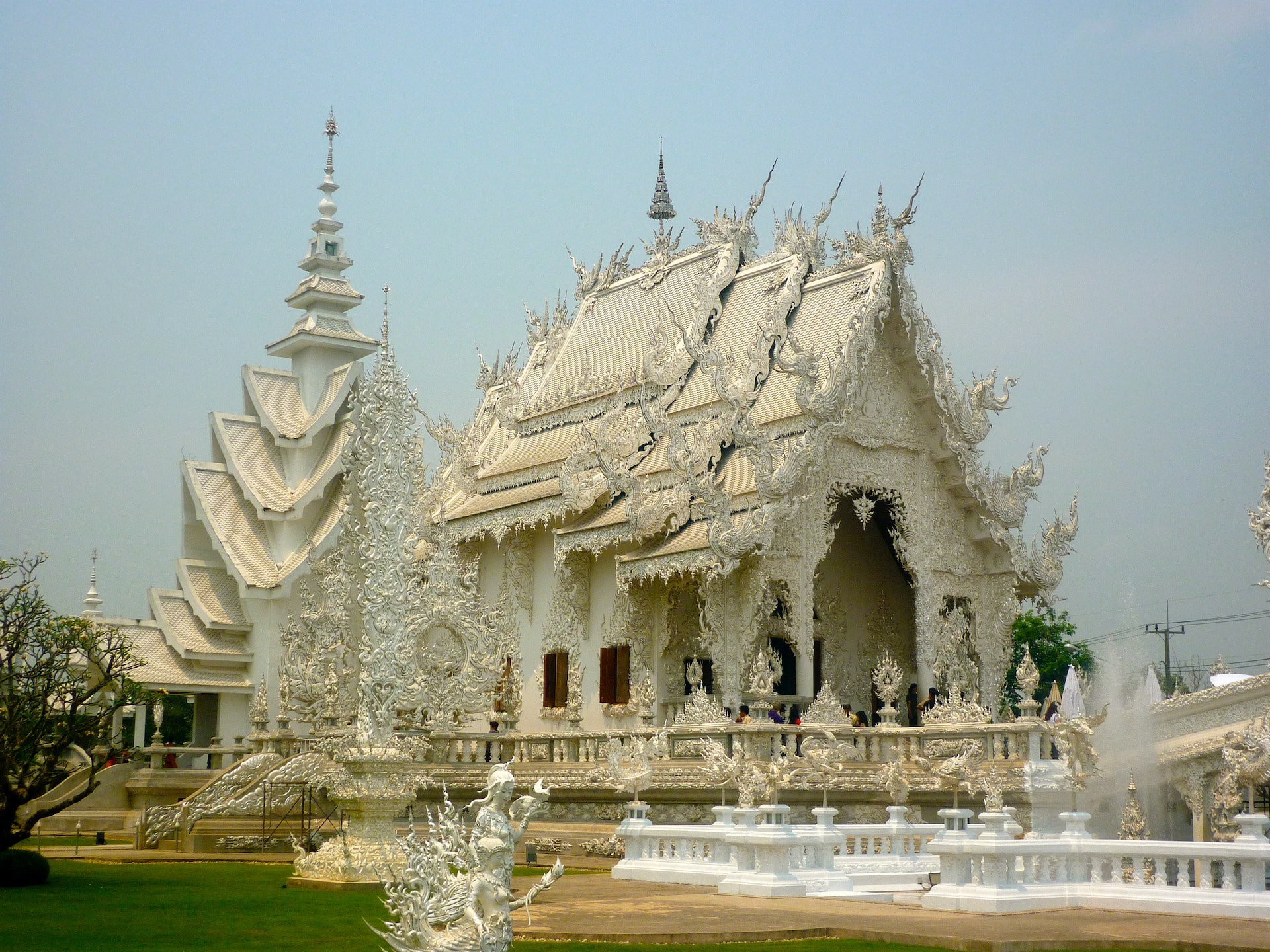
In Chiang Rai Province, Thailand, there is a privately owned art exhibit in the manner of a Buddhist temple called Wat Rong Khun, also known as the White Temple. Chalermchai Kositpipat, who planned and built it, is its owner. Beginning in 1997, work on the project was finished in 2008. The temple is still not complete. There will be nine structures, including a ubosot, a hall to house Buddhist relics, a meditation hall, the monks’ housing quarters, and an art gallery.
The old Wat Rong Khun was in extremely poor condition at the end of the 20th century. Due to a lack of funding, restoration work on the temple had to be suspended. Chiang Rai-born artist Chalermchai Kositpipat decided to entirely reconstruct the temple and pay for it out of his own money from selling his artworks. The temple was constructed by the artist as a place of study, meditation, and so that others can benefit from Buddhist teachings. Every element of the temple, including the bridge that connects “the cycle of rebirth” and the “Gate of Heaven,” has a purpose and inspires visitors to consider Buddhist teachings that outline how to resist worldly temptations, cravings, and greed and instead put one’s attention on one’s mind. With its unusual appearance, this contemporary temple attracts and is visited by many tourists.
5. Ta Prohm Temple
Location: Siem Reap, Cambodia
Religion: Buddhism
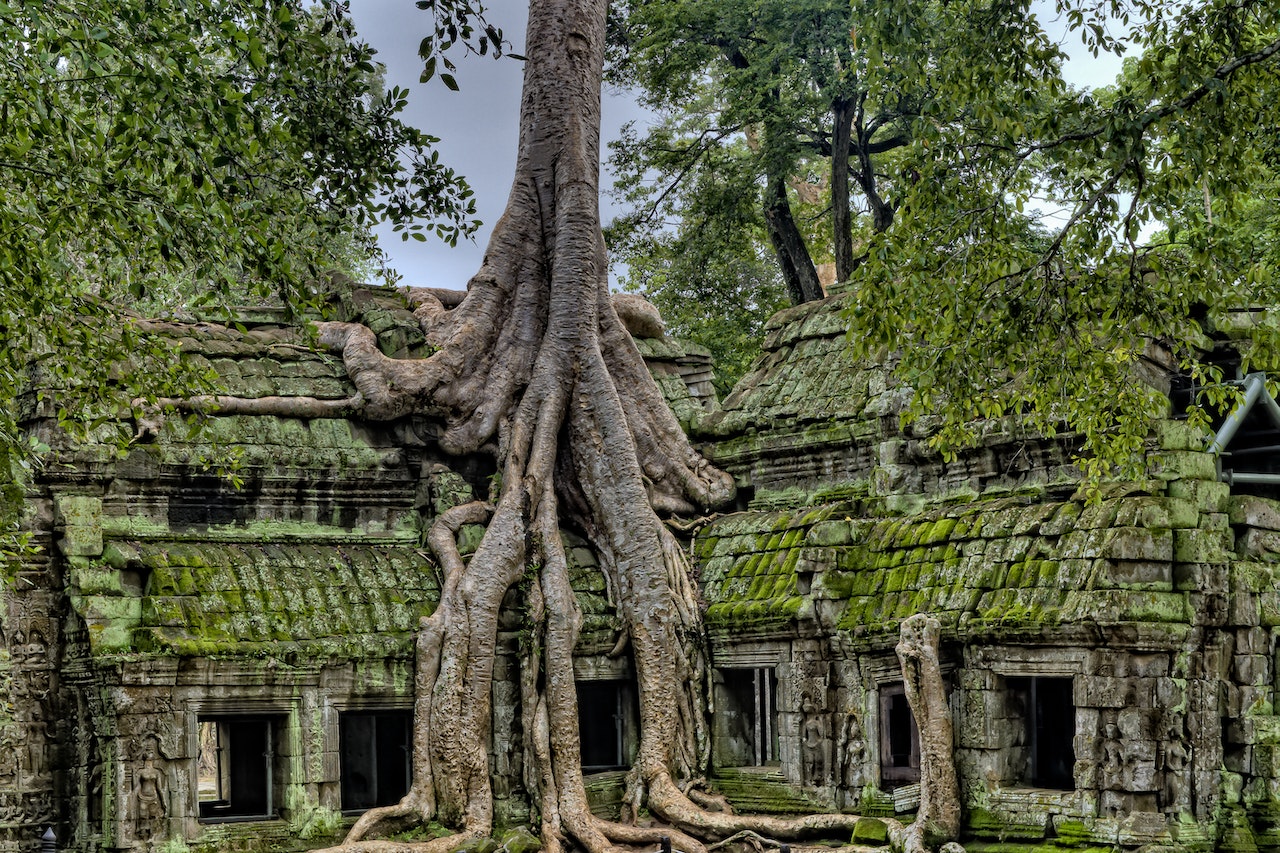
Ta Prohm Temple was constructed in the 12th century under the Khmer Empire and is today a tourist destination and a UNESCO World Heritage site. Since Ta Prohm is still mostly unrestored and has plants and trees growing among its ruins, it is renowned for its distinctive fusion of architecture and nature. As the old stone buildings entwined with the sprawling tree roots, a lovely and ethereal environment is created. The temple was built to serve as a Mahayana Buddhist monastery, housing thousands of people at one time. The temple’s intricate carvings, labyrinthine corridors, and eerie settings can all be explored by visitors today, creating a fascinating and unexpected experience.
The temple of Ta Prohm was neglected for centuries after the Khmer Empire fell in the 15th century. The École française d’Extrême-Orient decided that Ta Prohm would be mainly left as it had been found when the project to protect and rebuild the temples of Angkor started in the early 21st century as a “concession to the general taste for the picturesque.” Ta Prohm was chosen because it was “one of the most imposing and the one which had merged with the jungle best, but not yet to the point of becoming a part of it,” according to pioneering Angkor historian Maurice Glaize. Despite this, a lot of work has been done to keep the ruins stable, allow for access, and preserve “this condition of apparent neglect.”
6. Shwedagon Pagoda
Location: Yangon, Myanmar
Religion: Buddhism
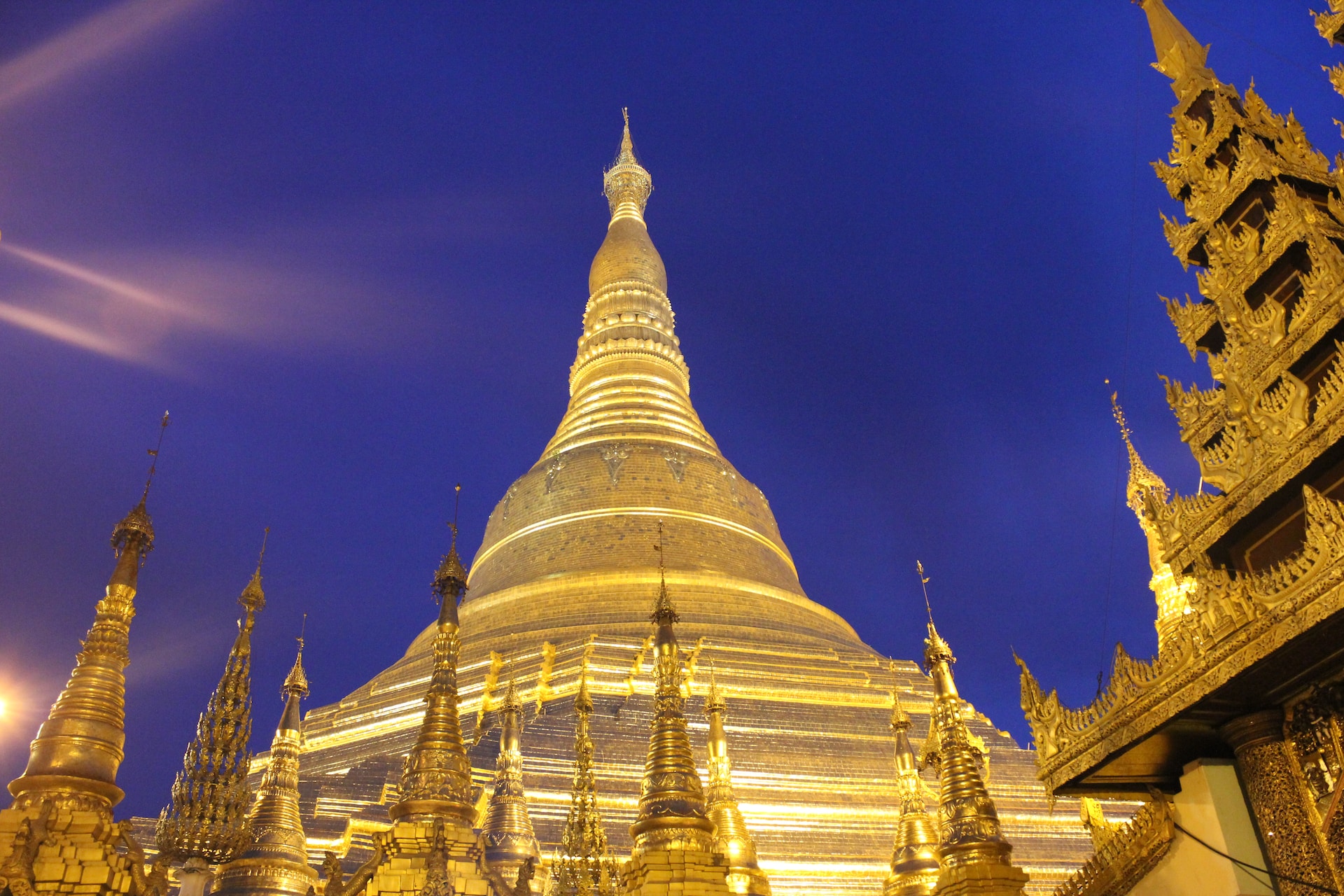
According to legend, the Shwedagon Pagoda was built more than 2,500 years ago, while the Buddha was still alive, making it the world’s oldest Buddhist structure. The Shwedagon Pagoda also contains sacred elements of Buddhism, such as Buddha’s hair. Located at the top of the 99-meter pagoda, the sacred stupa of Buddhism is completely covered with gold and has 4531 jewels. The largest of these jewels is a 72-carat diamond. Serving in areas such as meditation and worship, the pagoda also hosts mass demonstrations. Visible from all over the city, this temple is one of the landmarks and welcomes thousands of tourists every year.
Another interesting fact about the temple is that 4 tunnels are going down to the foundation of Shwedagon Pagoda, and no one knows what’s happening in these tunnels. According to some legends, there are swords in the tunnels that never stop and turn all the time. These swords are to prevent intruders from entering the Pagoda. According to some rumors, the tunnels extend to Bagan and Thailand.
7. Besakih Temple
Location: Bali, Indonesia
Religion: Balinese Hinduism
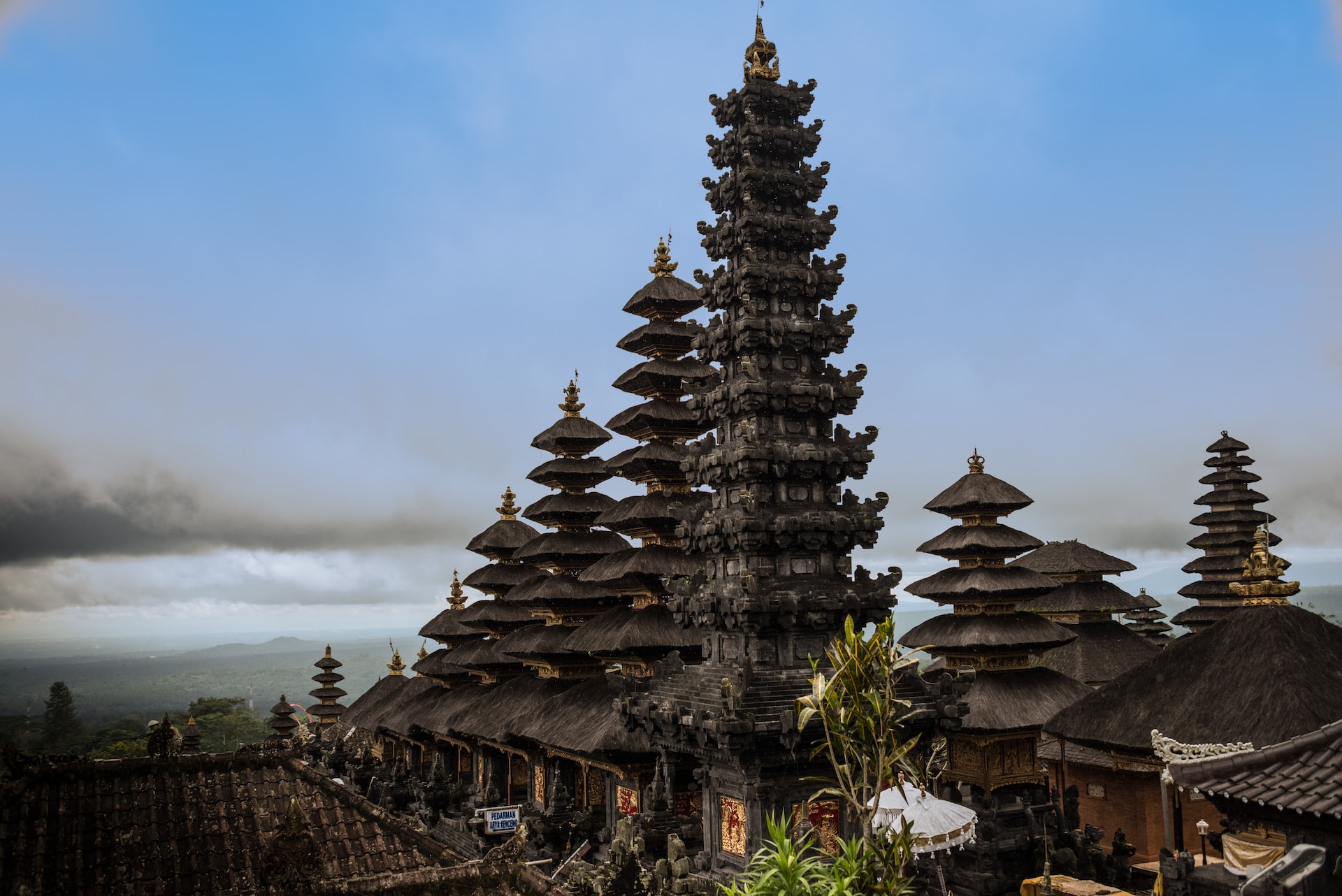
Historical sources written for the Besakih Temple show that the temple was used since 1284. However, many architectural details and artifacts captured in the temple show that the building has more than 2000 years of history. Therefore, the temple is important not only as a religious site but also for Indonesia’s history. The Besakih Temple is 6 stories high and rises gradually as it was built on a slope. Besakih Temple, which was built as a special building complex, has sequential structures consisting of 23 temples. The section called Besakih Temple refers to the tallest and main tower. Visitors can reach the highest point of the structure with stepped terraces.
Since practically every shrine commemorates its anniversary annually, the complex hosts at least 70 events annually. The 210-day Balinese Pawukon calendar year serves as the basis for this cycle. The gate-like image at the end of the stairs is in the memory of many of us. There is also a special interest in taking pictures at this spot, which has recently become a very popular tourist destination.
8. Temple of Heaven
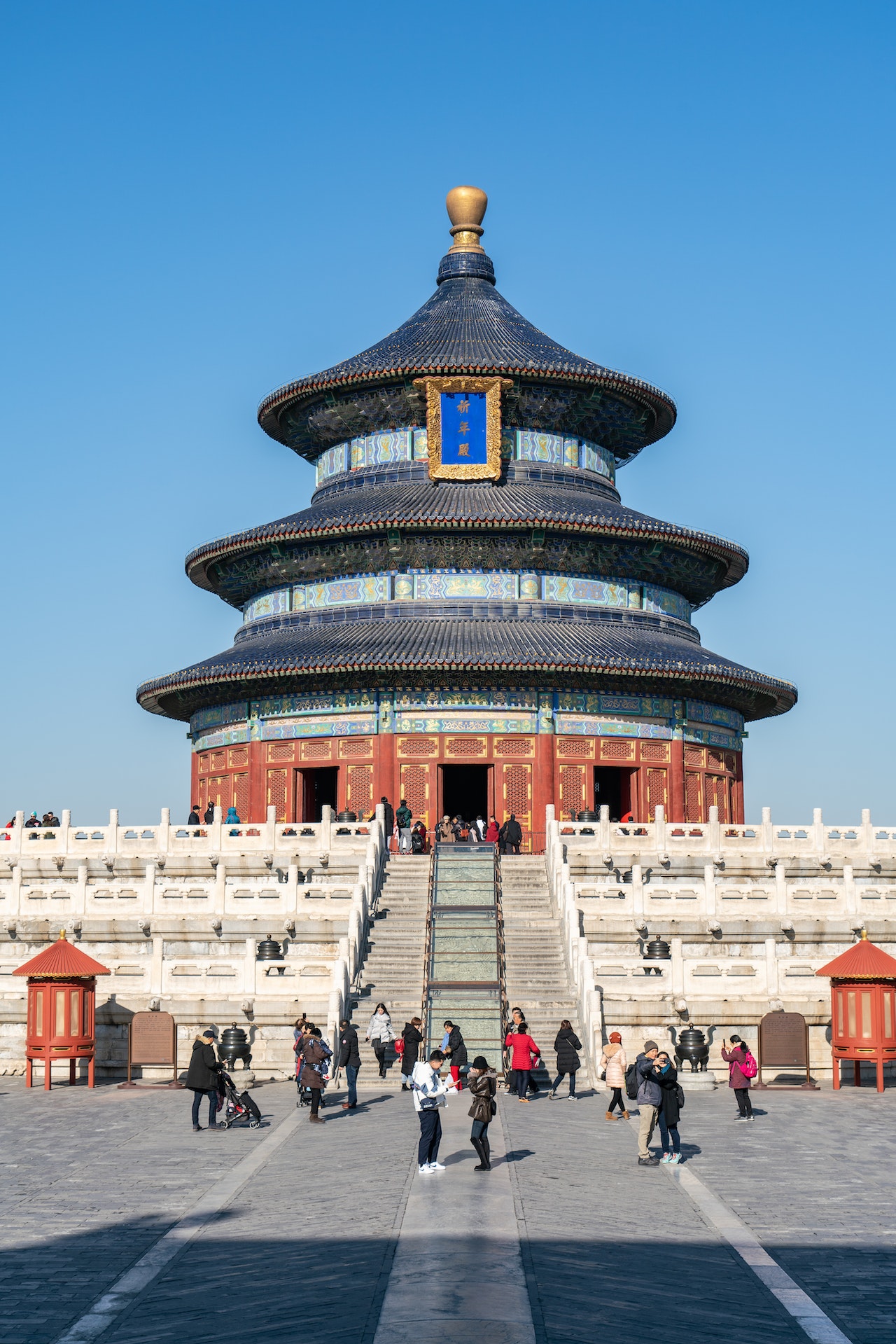
Location: Beijing, China
Religion: Taoism
Located in the southeast of Beijing’s core district, The Temple of Heaven is a collection of imperial religious structures. During their yearly prayers to Heaven for a bountiful harvest, the Emperors of the Ming and Qing dynasties visited the complex. When the Temple of Heaven was added to the list of World Heritage Sites in 1998, it was noted that it was “a masterpiece of architecture and landscape design which simply and graphically illustrates a cosmogony of great importance for the evolution of one of the world’s great civilizations” and that its “symbolic layout and design had a profound influence on architecture and planning in the Far East over many centuries.”
Although dedicated to Taoism, this temple was used to worship heaven over the years. The Temple of Heaven is the largest current architecture group for heaven worshiping in the world, with a total size of roughly 273 hectares. Even though 22 emperors formerly used it as a place of heavenly worship, it is now a public park where many locals go for their morning runs.
9. Fushimi Inari Taisha
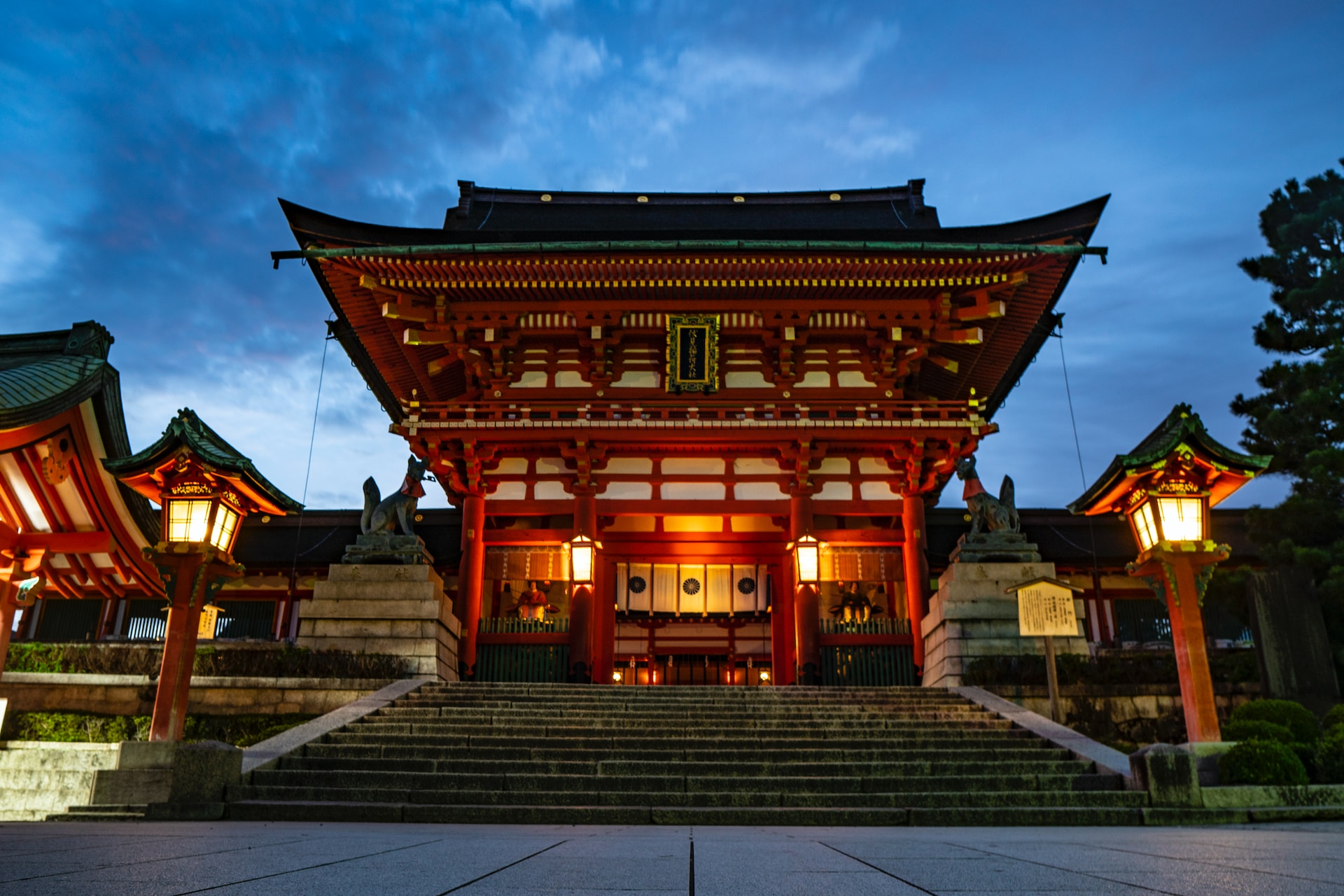
Location: Kyoto, Japan
Religion: Shinto
In southern Kyoto, there is a significant Shinto shrine called Fushimi Inari Shrine. Thousands of Vermilion torii gates that cross a maze of pathways behind its major structures are what make it famous. The pathways enter the sacred Mount Inari’s lush forest, which is home to the shrine grounds and rises to a height of 233 meters. The most significant of thousands of shrines to Inari, the Shinto god of rice, is Fushimi Inari. One of the interesting things in the site is the fox figurines. They can be seen all throughout the temple grounds because they are believed to be Inari’s messengers.
The rows of torii gates, referred to as Senbon Torii, are the shrine’s main attraction. In order to grant a wish or to express thanks for a wish that has been granted, it has become traditional since the Edo period (1603–1868) to donate a torii. Out of gratitude, donors have continued to install new gates up to the present day. Around 800 torii gates can be found along the main walkway. Images of these torii have become iconic with Fushimi Inar? Taisha.
10. Lotus Temple
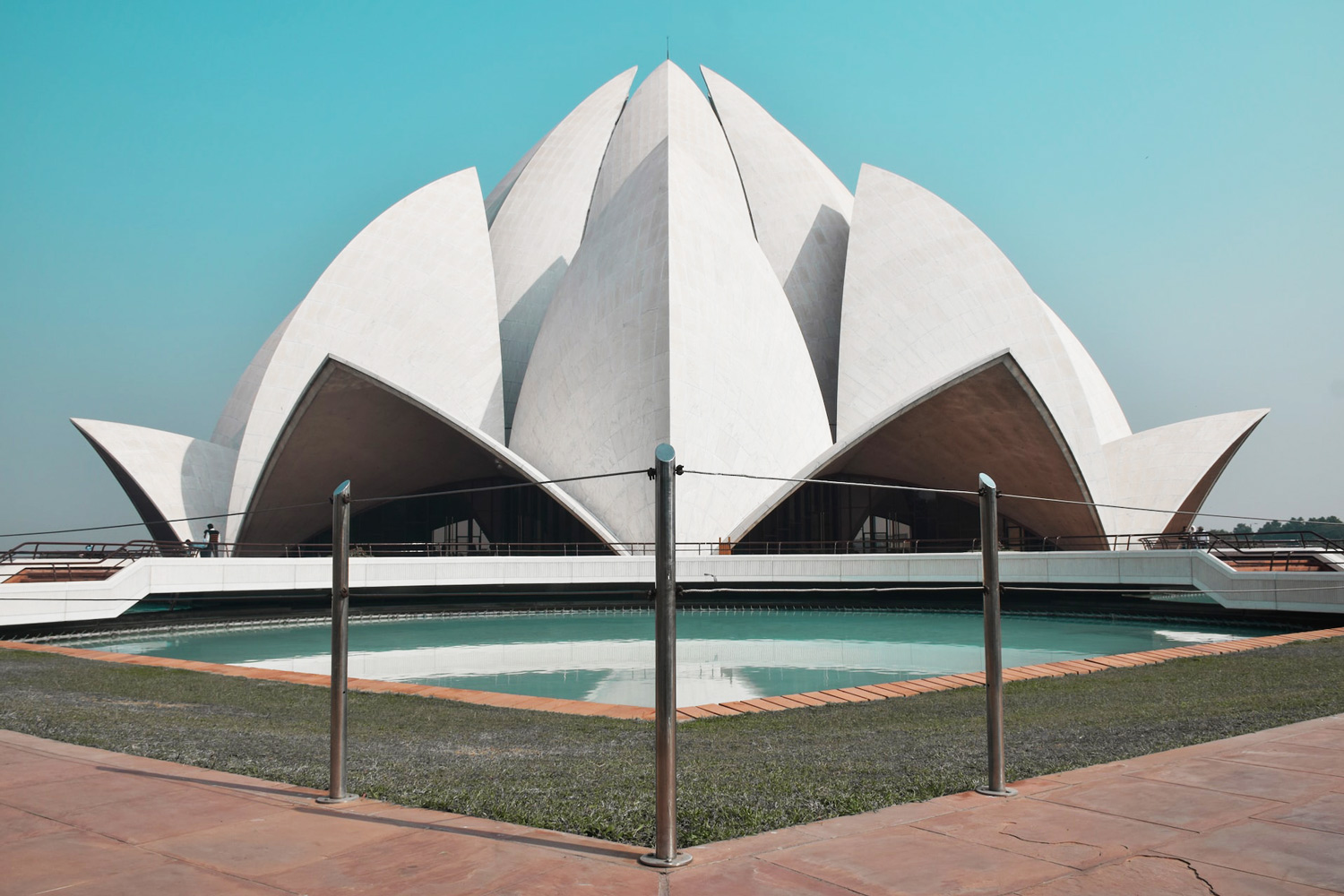
Location: New Delhi, India
Religion: Baha’i Faith
Architect: Fariborz Sahba
The Lotus Temple is a Bahá’ House of Worship that was established in December 1986 and is situated in New Delhi, India. It is notable for having a lotus-like shape and has grown to be a well-known landmark in the city. The Lotus Temple is accessible to everyone, regardless of religion or any other prerequisites, as are all Bahá’ Houses of Worship. The structure has nine sides made up of 27 free-standing marble-covered ‘petals’ grouped in clusters of three. Nine doorways lead into the building’s central hall, which has a ceiling height of little over 34 meters with seating for 1,300 people. The Lotus Temple has been highlighted in countless newspaper and magazine stories and has received various architectural awards.
From the outside, the lotus appears to have three sets of leaves or petals, each composed of a thin concrete shell. The nine entrances that round the outer circular hall are formed by the outermost petals, known as the “entrance leaves.” The following group of petals, referred to as the “outer leaves,” point inward. The outer hall is enclosed by the entryway and the outer leaves. A glass and steel ceiling at the level of the radial beams protects against rain and makes it easier for natural light to enter the prayer hall since the lotus is open at the top.
