



Radical movements throughout history do not just influence new building styles, but also how we live, think, and experience space. As I.M.Pei best described “Architecture is the very mirror of life. You only have to cast your eyes on buildings to feel the presence of the past, the spirit of a place; they are the reflection of society.” Just as advanced technology and artificial intelligence are reshaping modern design philosophies, past events gave rise to revolutionary ideas that challenged the foundational principles of architecture.
This article explores ten rebellious design philosophies that transformed architecture. We’ll delve into the core principles of movements like Futurism, Superstudio, Archigram and Metabolism, and overview how these radical ideas challenged conventional norms and ultimately redefined the built environment.
Chicago School

Period: 1880s–1900s
Pioneering Figures: William Le Baron Jenney, Louis Sullivan, Daniel Burnham, John Wellborn Root
Design Philosophy: Emphasis on practicality over excessive decoration.
Notable Examples: The Home Insurance Building (1885) – Carson, Pirie, Scott Building (1899)
After the Great Chicago Fire of 1871, there was an opportunity to rebuild the city with new architectural approaches and this is when the Chicago School emerged. It was fueled by a rejection for the ornate European styles and instead led with the motto form follows function. Coined by Louis Sullivan, this phrase mirrored the ethos of creating buildings that serve a purpose without unnecessary embellishments. This movement centered on creating taller buildings and steel-frame constructions, which then led to the invention of the elevator. The innovations reshaped urban architecture worldwide and set the precedent for modern skyscrapers.
Futurism

Period: 1909–1930s
Pioneering Figures: Filippo Tommaso Marinetti, Antonio Sant’Elia
Design Philosophy: Celebration of speed, technology, and modernity.
Notable Examples: La Città Nuova (The New City) – Lingotto Factory (1923)
As a revolutionary attempt to break away from the past and embrace the energy of the modern industrial world, Futurism was born in Italy pioneered by Filippo Tommaso Marinetti. He wrote a manifesto that glorified the machine age, advocated for innovation, and pushed to reflect the fast pace of modern life in design. Some of this era’s ideas, particularly Antonio Sant’Elia’s, of cities with towering skyscrapers, bridges, and complex transportation systems were never built. However, these concepts had a huge influence on following movements, like Modernism, by encouraging architects to think of buildings as dynamic and responsive to the needs of a new industrial society.
Constructivism

Period: 1913–1930s
Pioneering Figures: Vladimir Tatlin, El Lissitzky, Alexander Vesnin, Moisei Ginzburg
Design Philosophy: Merging art with industry to reflect the spirit of a socialist society.
Notable Examples: Tatlin’s Tower (1919) – Narkomfin Building (1928)
Born in post-revolutionary Russia, Constructivism emerged as an avant-garde movement to reflect the ideals of a new industrialized society. It was heavily inspired by preceding movements like Futurism and Cubism yet embodied its own utopian vision of communal spaces that served the public rather than the few elite. Constructivist architecture also rejected the ornamental styles of the past and favored bold geometric forms, minimal ornamentation, and the use of modern materials like steel, concrete, and glass. This perfectly embodied the movement’s ideological commitment to the working class, practicality, and efficiency.
De Stijl (Neoplasticism)

Period: 1917–1931
Pioneering Figures: Piet Mondrian, Theo van Doesburg, Gerrit Rietveld
Design Philosophy: Strive for purity and harmony through abstraction.
Notable Examples: Schröder House (1924) – Red and Blue Chair (1918)
Born as a reaction to the chaos of World War I, De Stijl, also known as NEoplasticism, emerged in the Netherlands with an aspiration to represent spiritual balance for a post-war world. The movement’s founders, including Piet Mondrian and Theo van Doesburg, believed that art should transcend individual expression and aim for universal harmony. This radical simplification rejected the decorative complexity of Art Nouveau and traditional architectural styles, and focused on pure abstraction by using vertical and horizontal lines combined with primary colors (red, blue, yellow) and black and white. De Stijl’s principles of geometric clarity and color balance influenced modern architecture, furniture design, and even fashion.
Bauhaus

Period: 1919–1933
Pioneering Figures: Walter Gropius, Ludwig Mies van der Rohe, Paul Klee, Wassily Kandinsky
Design Philosophy: Merge craftsmanship with fine arts to create functional designs.
Notable Examples: Dessau Bauhaus Building – Gropius House?
At a time when the world was recovering from World War I, Walter Gropius founded the Bauhaus in Weimar, Germany in 1919. Inspired by the Arts and Crafts movement and industrial design, Bauhaus combined craftsmanship with the fine arts. With the mantra “less is more” the school became famous for its approach in architectural design which embodied a minimalist aesthetic with flat roofs, glass curtain walls, steel frames, and principles of mass production. Marcel Breuer’s Wassily Chair and Herbert Bayer’s Universal Typeface, revolutionized furniture, typography, and architecture. The Bauhaus school laid the groundwork for modernist architecture, influencing movements like the International Style.
Situationist International

Period: 1957–1972
Pioneering Figures: Guy Debord, Asger Jorn, Constant Nieuwenhuys
Philosophy: Rejection of capitalist consumer culture.
Notable Examples: Constant Nieuwenhuys’ New Babylon (1959)
Influenced by Dadaism and Surrealism, the Situationist International (SI) was a European movement formed in 1957. It combined art and revolutionary Marxist theory to critique capitalist society which transformed human interactions into shallow, commodified experiences. These ideas culminated in 1968 during the French student revolts, where Situationist slogans like “Live Without Dead Time” covered the walls of Paris. Architecturally, the concept of unitary urbanism was introduced, which advocated to design cities that cater for authentic human interactions away from functionalist urban planning. It sought to redesign cities to foster authentic human interactions, breaking away from sterile, functionalist urban planning; Constant Nieuwenhuys’ New Babylona exemplified this vision.
Metabolism
Period: late 1950s–1970s
Pioneering Figures: Kiyonori Kikutake, Kisho Kurokawa, Fumihiko Maki, Masato Ohtaka
Philosophy: Architecture that could evolve like living organisms.
Notable Examples: Marine City (1958) – Nakagin Capsule Tower (1972)
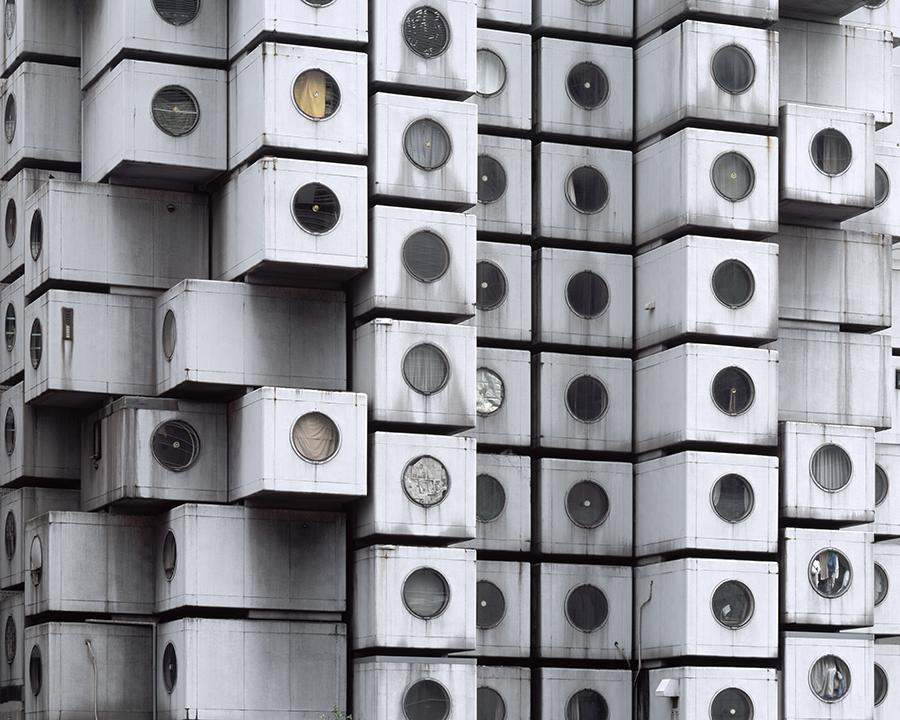
Metabolism was a radical architectural movement that emerged in post-war Japan to address the rapid urbanization and industrialization. Influenced by biological processes, the Metabolists envisioned buildings that could grow, transform, and adapt through modular, replaceable components. This concept rejected static modernist ideals, embraced flexibility in design, integrated architecture with the natural environment, and created resilient cities capable of responding to social and environmental changes. For example, Kisho Kurokawa’s Nakagin Capsule Tower is composed of capsule units that can be detached and replaced as needed. The movement’s legacy lies in its influence on sustainable design and urban adaptability.
Archigram

Period: 1960s–1970s
Pioneering Figures: Peter Cook, Ron Herron, David Greene, Warren Chalk
Design Philosophy: Futuristic cities driven by mobility, technology, and modular design?.
Notable Examples: Plug-In City (1964) – Walking City (1964)
Fueled by a desire to break free from the constraints of post-war modernism and traditional urban planning, Archigram formed as a revolutionary British group in the 1960s. They were inspired by pop culture, science fiction, and space-age technology. Projects like Plug-In City (1964) and Walking City (1964) were imaginative explorations of a future where architecture could respond to changing human needs through technological integration. While their projects were never realized, Archigram’s vision of cities as dynamic and flexible systems challenged the architectural norms. This movement reshaped how architects approached the relationship between technology and the built environment, influencing later movements like High-Tech and Deconstructivism.
Superstudio

Period: 1966–1978
Pioneering Figures: Adolfo Natalini, Cristiano Toraldo di Francia, Gian Piero Frassinelli
Philosophy: Exploration of anti-architecture and conceptual design.
Notable Examples: The Continuous Monument (1969) – Supersuperficie (1971)
Superstudio emerged in Florence during a period marked by post-war societal shifts and dissatisfaction with modernist architecture. Their work explored utopian ideals through conceptual projects which introduced the concept of anti-architecture. For example, the Continuous Monument proposed a grid-like structure that would span the globe to create a borderless world. This project was a direct critique of urbanization and the rigid norms of modern architecture. Though Superstudio never realized a physical building, their conceptual approach to architecture remains influential in contemporary architectural theory. It is said to have influenced the works of architects like Zaha Hadid and Rem Koolhaas.
Postmodernism
Period: 1960s–1990s
Pioneering Figures: Robert Venturi, Denise Scott Brown, Michael Graves, Charles Jencks
Philosophy: Rejection of Modernism’s minimalism in favor of complexity and contradiction.
Notable Examples: Vanna Venturi House (1964) – Neue Staatsgalerie (1984)
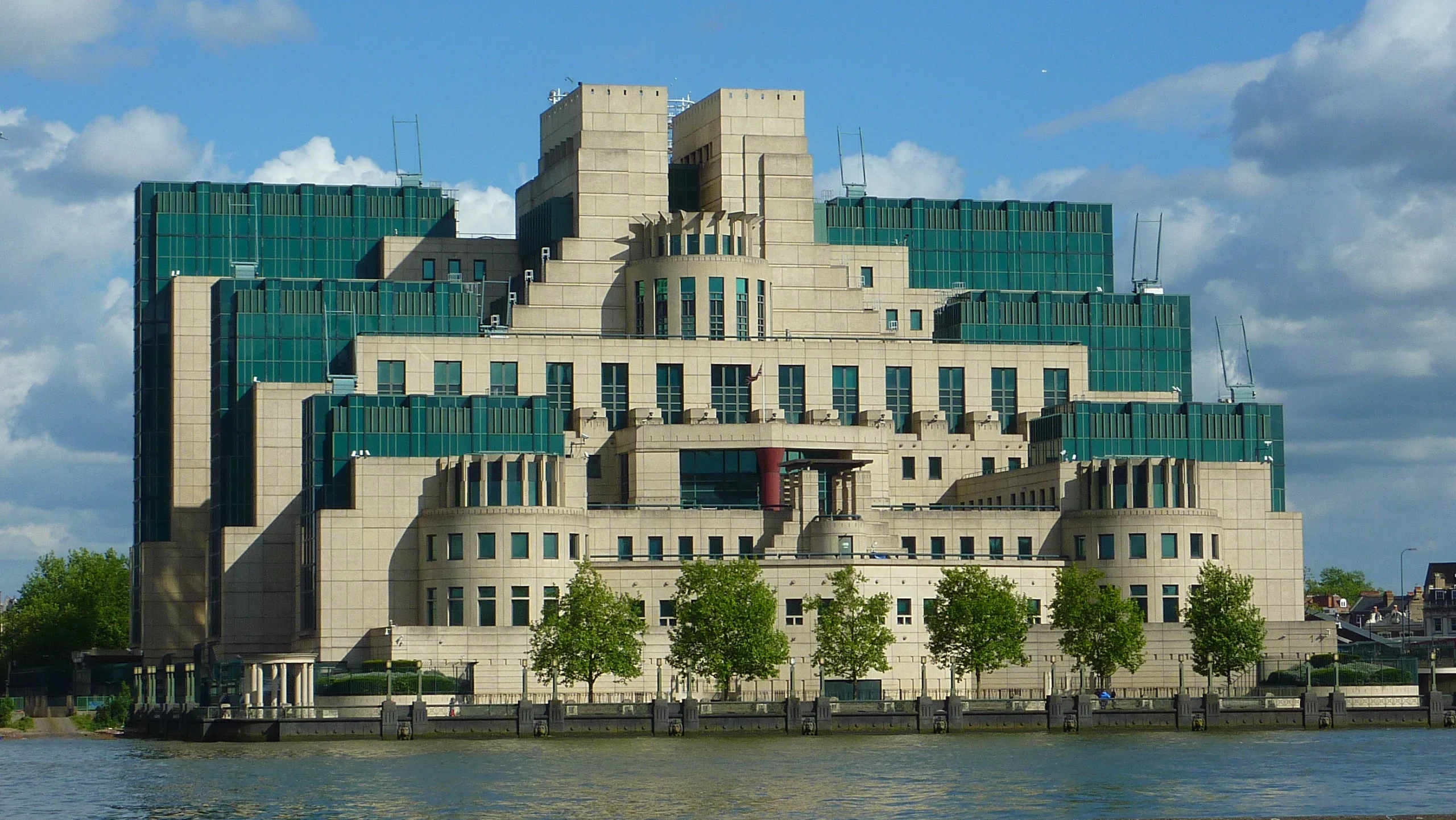
In the late 1960s, postmodernism emerged as a critique of Modernism with an attack on the motto of “less is more” with “less is bore”. Pioneered by Robert Venturi, postmodernism sought to explore complexity and contradiction in architectural design. It reintroduced historical elements while blending them with modern forms and materials to create whimsical, eclectic, and often ironic structures. With its bright colors and playful ornamentation, postmodernism was a break from the pristine shackles of modernity that unleashed creativity and experimentation. This movement shaped the architectural landscape by encouraging diversity and integrating cultural narratives into the built environment. Although highly criticized, its legacy continues to influence contemporary architecture, as designers strive to balance functionality with cultural expression.?
