




At the 2026 World Economic Forum (WEF) annual meeting in Davos, the United States unveiled an official master plan for the post-war reconstruction of the Gaza Strip as part of its broader ceasefire and peace initiative. The presentation took place on January 22, 2026, during the signing ceremony of a new international body called the Board of Peace.
Launch of the Board of Peace
At the WEF gathering, U.S. President Donald Trump signed the founding charter of the Board of Peace, a new international mechanism intended to oversee reconstruction in Gaza and possibly other future conflict zones. Trump said the Board could “do pretty much whatever we want to do” and emphasized its intended role in stabilizing Gaza. Leaders from roughly 19 countries, including Argentina, Qatar, Bahrain, Pakistan, Saudi Arabia, and others, participated in the signing.

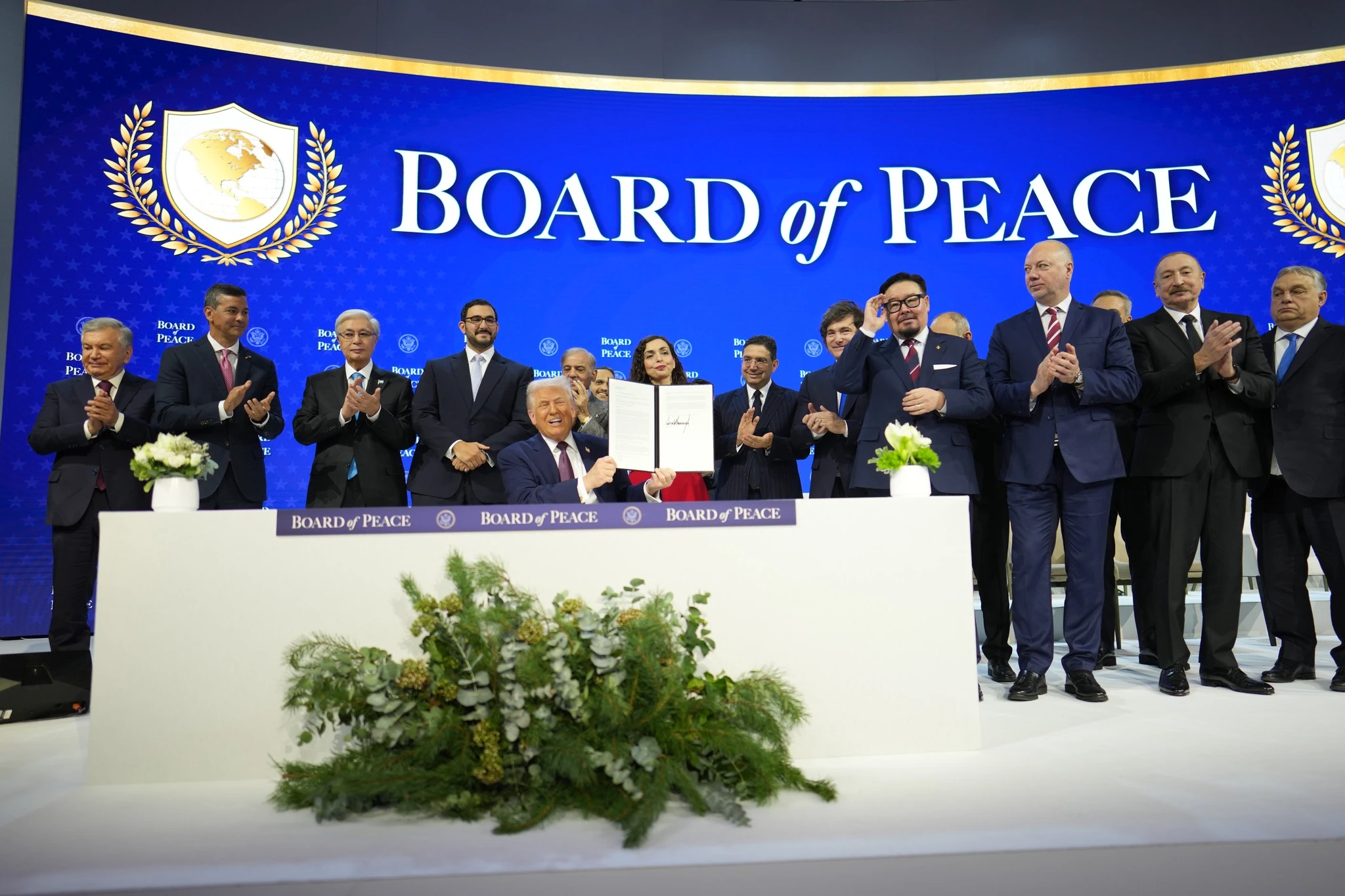
The Board of Peace was positioned by the U.S. administration as a mechanism to support a phased peace plan linked to the Gaza conflict. Invitations to roughly 60 nations were reported, with some joining and others reserving judgment.
Presentation of the Gaza Reconstruction Master Plan
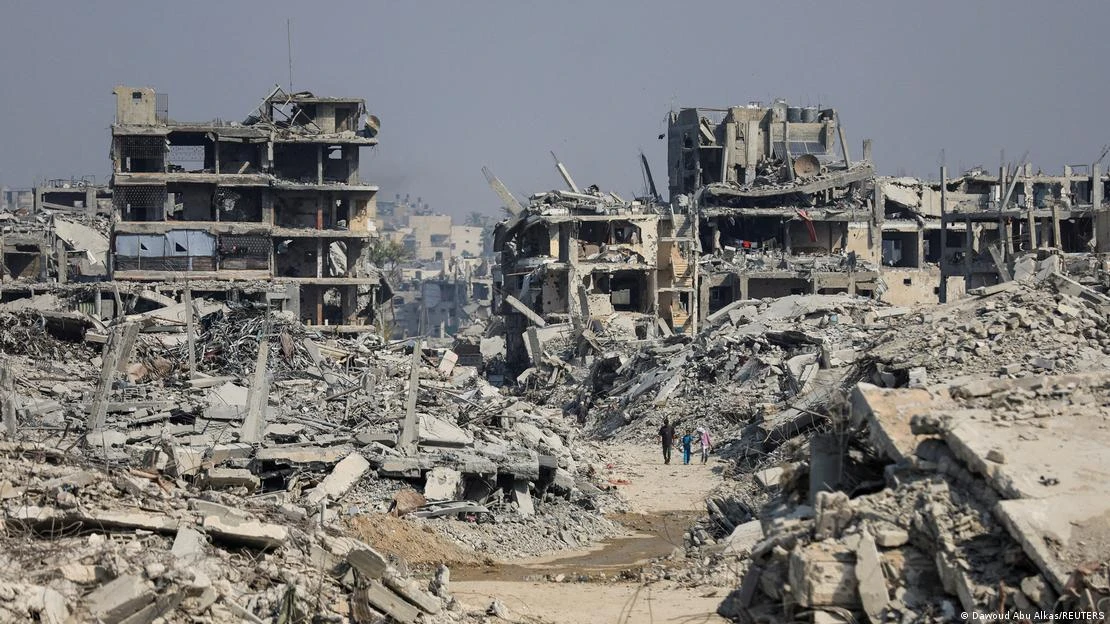
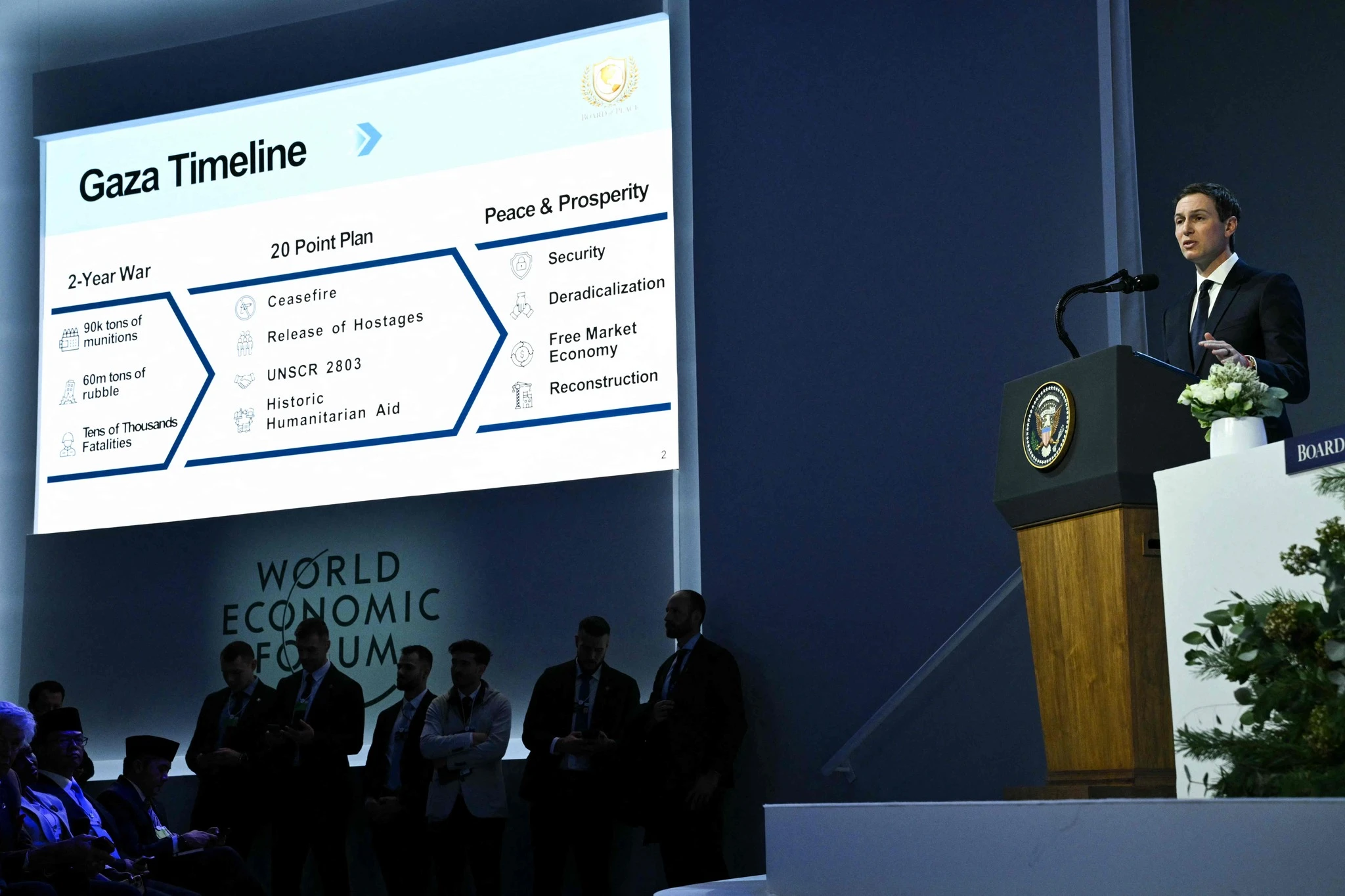
Following the Board of Peace ceremony, Jared Kushner, senior U.S. official and son-in-law to President Trump, presented the “master plan” for rebuilding Gaza. Kushner described the concept as a comprehensive blueprint for a future “New Gaza,” a territory rebuilt from the ruins of a war that devastated much of the Strip.
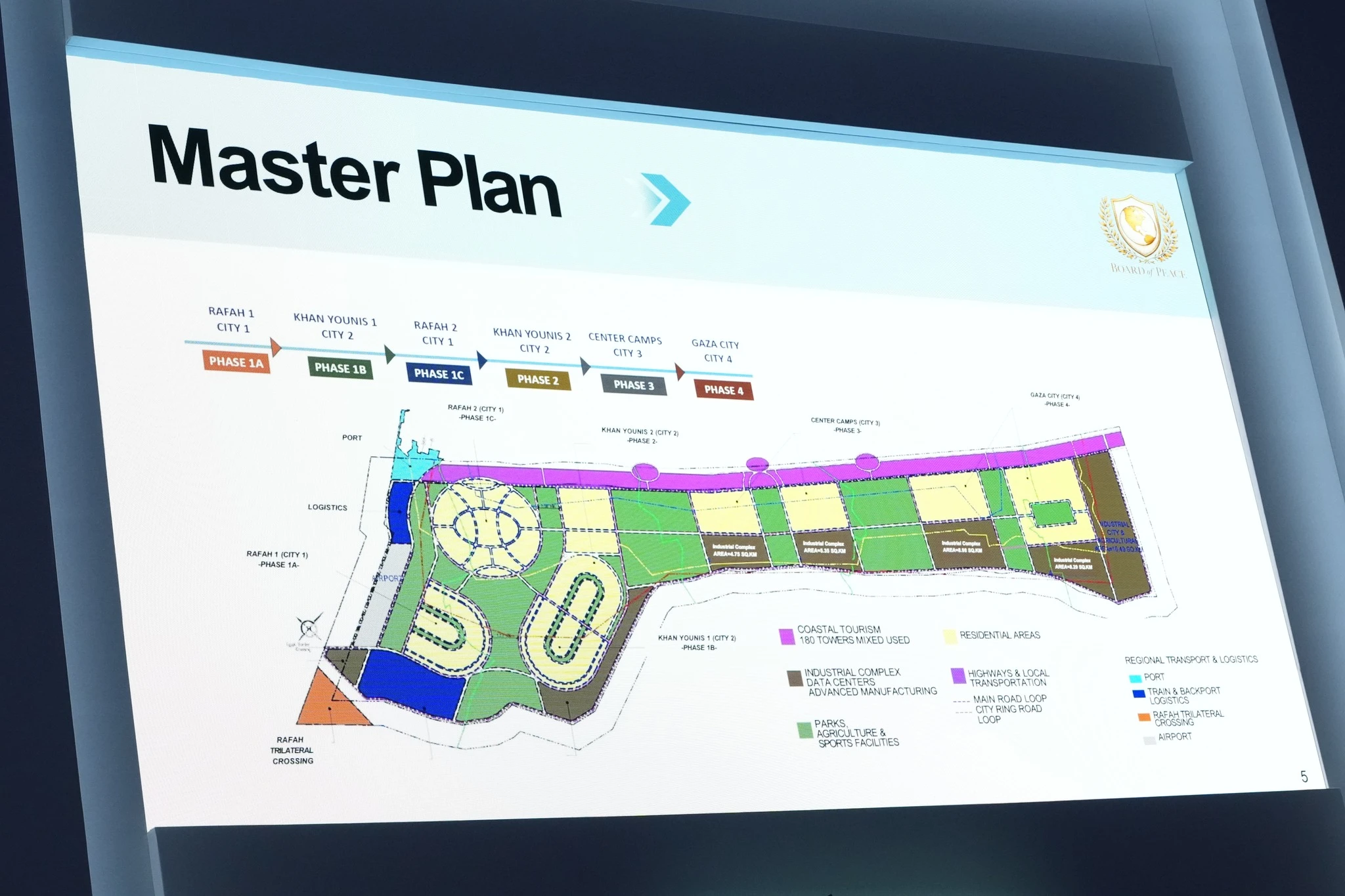
Kushner told the audience that the plan lacked a Plan B, meaning the reconstruction strategy was designed to proceed only once the prerequisites outlined in the broader ceasefire and peace deal were met.
Map and Project Layout Details
The plan presented at Davos included a color-coded map and slides showing large-scale redevelopment zones across Gaza. The master plan’s map allocated land for:
- Residential developments
- Industrial parks and data centres
- Seaside tourism and hotel corridors
- Parks, agriculture, and sports facilities
- New transportation infrastructure (port and potentially airport)

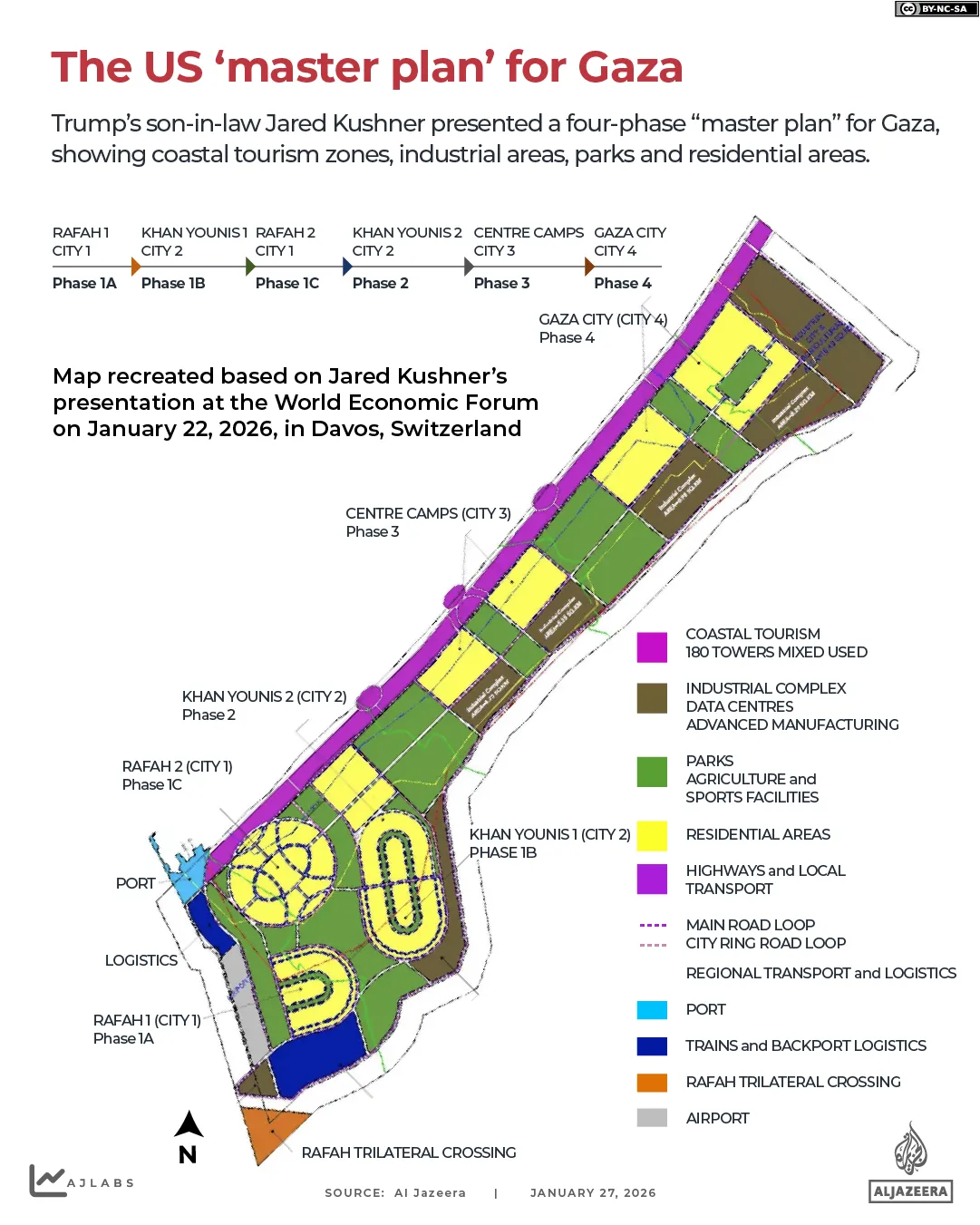
The redevelopment was depicted from the southern city of Rafah northward, with proposals comparing potential new construction to the style of high-rise developments seen in global coastal cities.
Renderings shown at the event suggested dense clusters of skyscrapers, seaside resorts, and mixed-use industrial and residential zones along the Mediterranean coastline.
Conditional Preconditions and Requirements
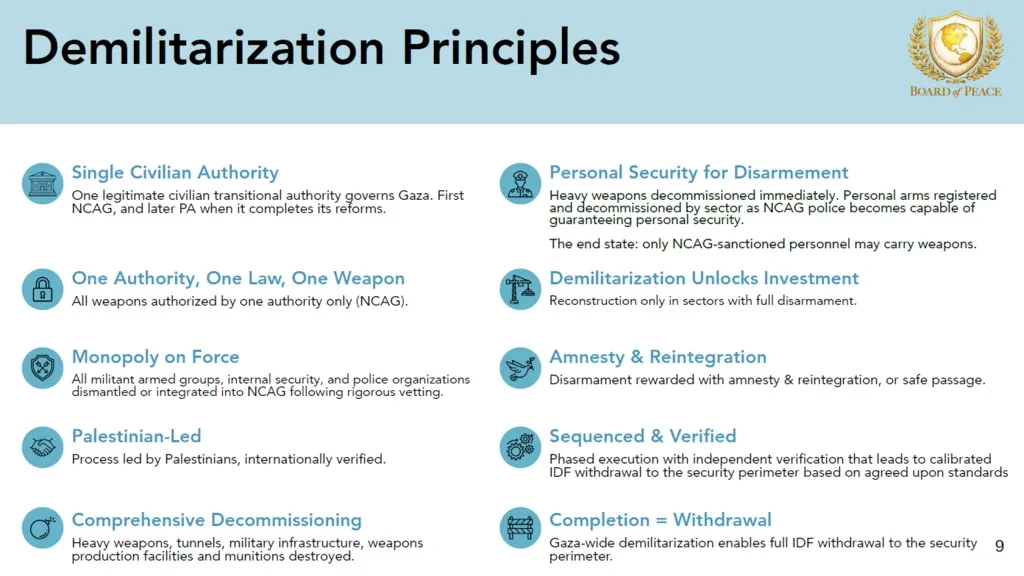
U.S. officials stated that demilitarization of armed groups, including Hamas, would be required before full reconstruction could begin. Large-scale rebuilding, infrastructure repair, and economic development projects were described as conditional on weapons collection and verified security conditions.

The plan also outlined a special economic zone with preferred tariffs and access arrangements intended to catalyze international investment.
Infrastructure and Urban Targets

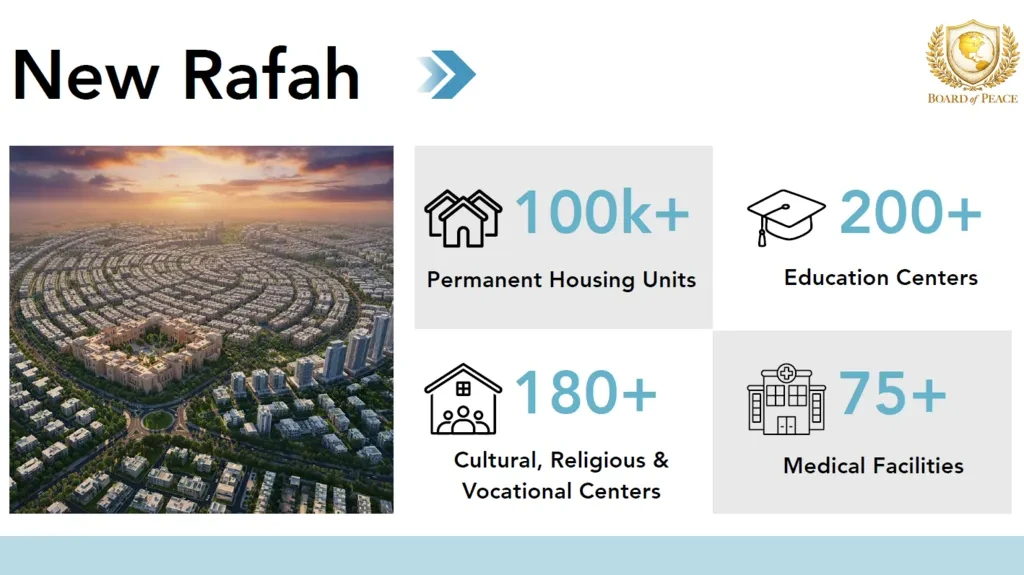
According to slides and planning documents referenced at Davos, key proposed elements included
- Over 100,000 permanent housing units
- 200+ education centres
- 180+ cultural, religious, and vocational centres
- 75+ medical facilities
- A projected GDP increase and creation of 500,000+ jobs across sectors, including agriculture, manufacturing, and services.
Additional infrastructure priorities mentioned were the restoration of utilities (water, electricity, and sewage) and the removal of tens of millions of tons of war rubble, tasks central to enabling future construction phases.

Officials at Davos said the plan anticipated more than $25 billion in investment, with hopes of private sector contributions as part of a financing strategy. A follow-up conference in Washington was announced to secure investment pledges.
U.S. presentations suggested that construction and redevelopment could occur over two to three years once the conditions were met, although details on funding commitments and implementation agencies were not publicly disclosed at the event.
Participating nations’ engagement with the Board of Peace varied, with some joining in signing and others expressing reservations about the mechanism’s structure or mandate.
Multiple reporting outlets noted that the plan presented at Davos had minimal direct input from Palestinian representatives in Gaza and lacked detailed frameworks for property rights, compensation, and long-term governance.
The announcement and master plan were part of a broader U.S.-brokered ceasefire framework following years of conflict in Gaza. Observers reported that violence and humanitarian crises continued in the territory even as these plans were unveiled.

