


In an unusual meeting of archaeology, fashion, and material science, researchers at Aalto University have transformed wood salvaged from a 17th-century shipwreck into a knitted dress. The experimental garment, created from timber recovered from the Hahtiperä shipwreck in Finland, is being seen as a remarkable example of how heritage materials and sustainable textile research can come together in contemporary fashion.
The project began with a maritime archaeological discovery made in 2019 in the Finnish city of Oulu. During renovation work beneath a hotel parking area, workers uncovered the remains of a 17th-century cargo ship buried underground for centuries. The vessel, later named the Hahtiperä wreck after Oulu’s old harbor district, became one of the oldest shipwrecks ever found in Northern Finland.
While much of the wreck was preserved for research and museum conservation, fragments of damaged wood remained unused. Instead of allowing the material to be discarded, a multidisciplinary team from Aalto University decided to explore whether the centuries-old timber could be turned into a textile fiber. What followed was a nearly two-year collaboration between archaeologists, chemists, textile researchers, fiber engineers, and fashion designers.
Turning Ancient Wood into Textile Fiber
The research team first studied the ship’s timber to understand its composition and origin. According to the researchers, the pine used in the ship likely came from forests in Ostrobothnia during the 1600s. After analysis, the outer layers of the wood, which contained impurities from centuries underground, were carefully removed. The remaining core material was shredded and processed into dissolving pulp.
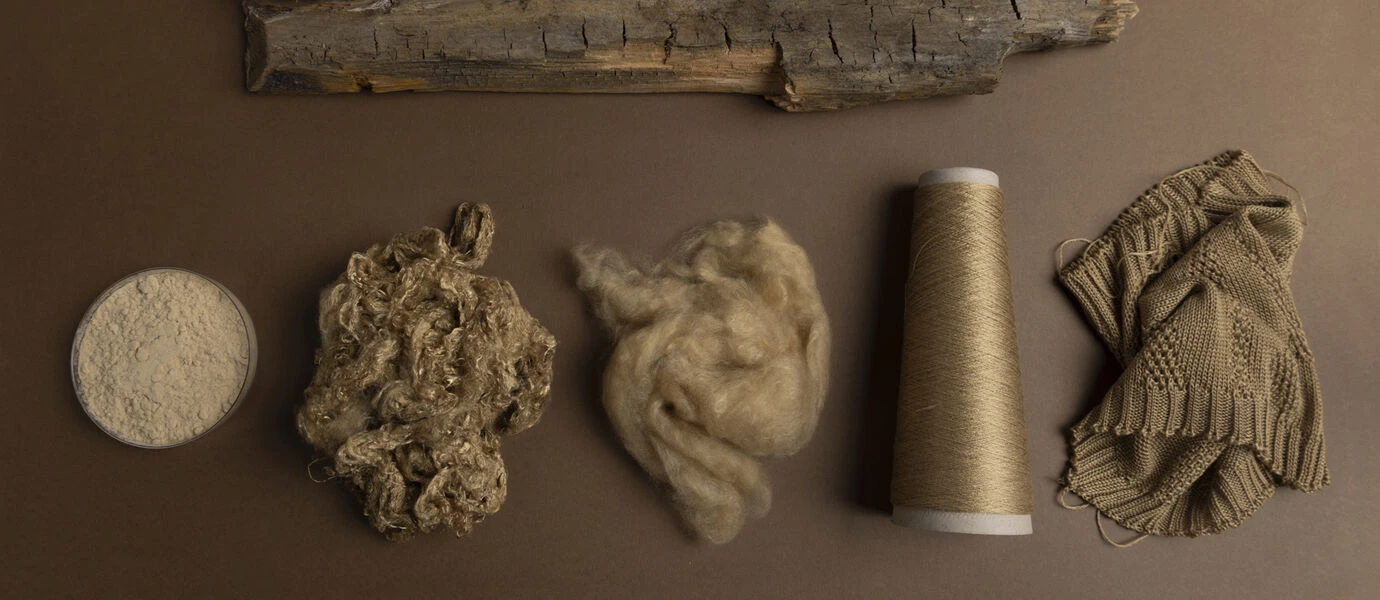
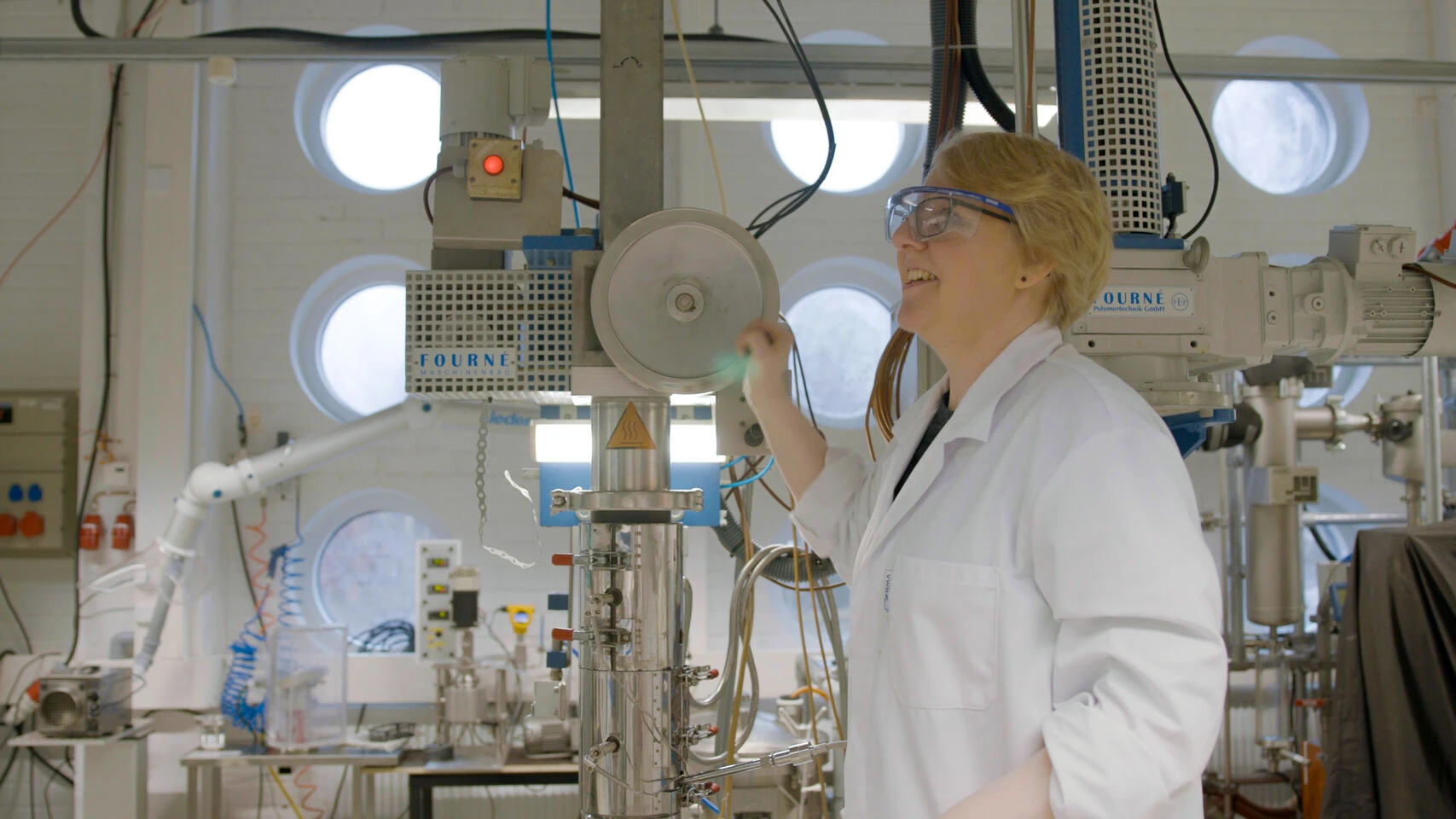
To transform the pulp into wearable fiber, the researchers used the Ioncell® process, a textile technology developed by Aalto University together with the University of Helsinki. Ioncell is designed as a more environmentally conscious process that converts cellulose-based materials into fibers using an ionic liquid solvent system.
The process can work with wood pulp, recycled paper, cardboard, agricultural waste, and textile leftovers. Researchers involved in the project said the shipwreck wood behaved surprisingly well during fiber production despite being over 300 years old. The resulting yarn had a subtle sheen and a naturally rich brown color that came directly from the aged timber itself, meaning the fiber required no additional dyeing or bleaching.
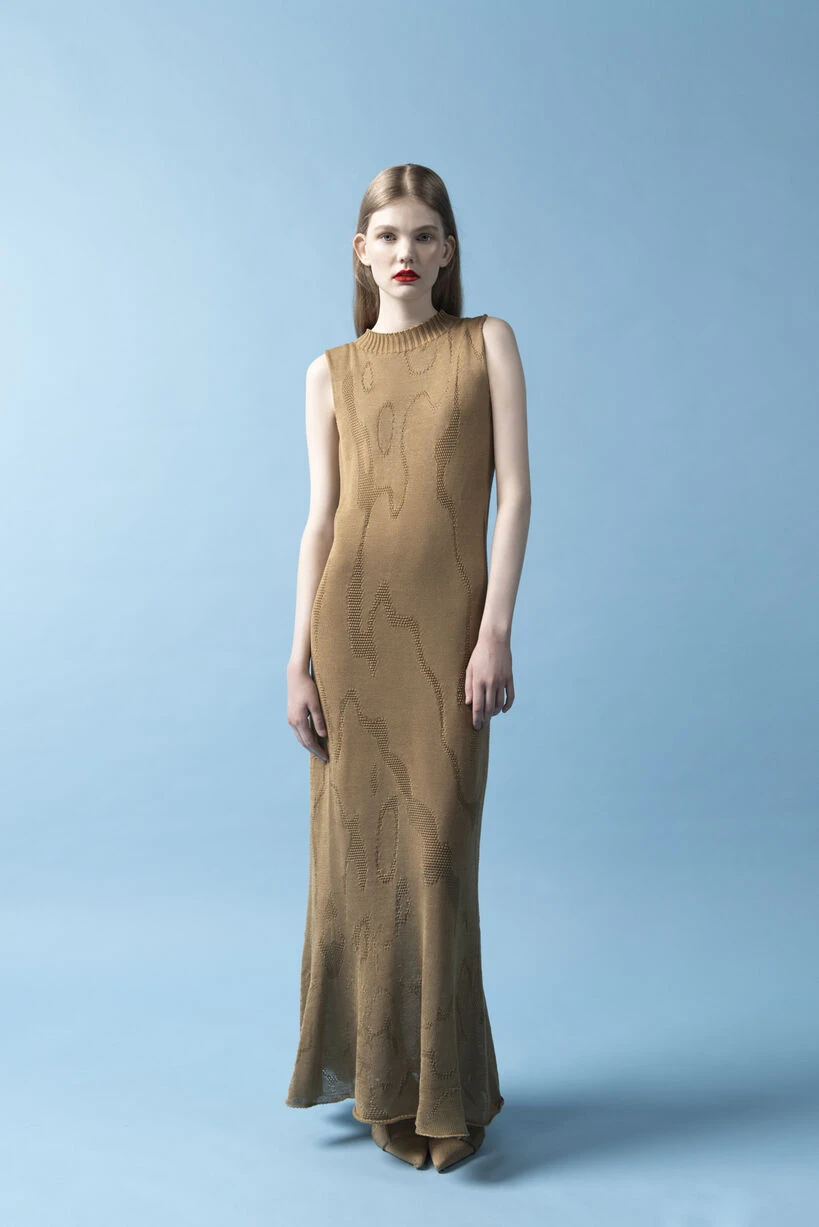
This natural coloring became one of the project’s most visually striking aspects. Rather than hiding the material’s age, the dress celebrates it. The warm, earthy tone of the knitted textile carries traces of the shipwreck’s long journey beneath the ground and sea.
Fashion Meets AI-Assisted Knit Technology
Once the fiber had been converted into yarn, the project moved into Aalto University’s knitting studio, where lecturer and knitwear designer Anna-Mari Leppisaari designed two identical dresses from the shipwreck yarn. One piece is currently being exhibited at the Oulu Art Museum, while the second will later appear in Aalto University’s “Designs for a Cooler Planet” exhibition.
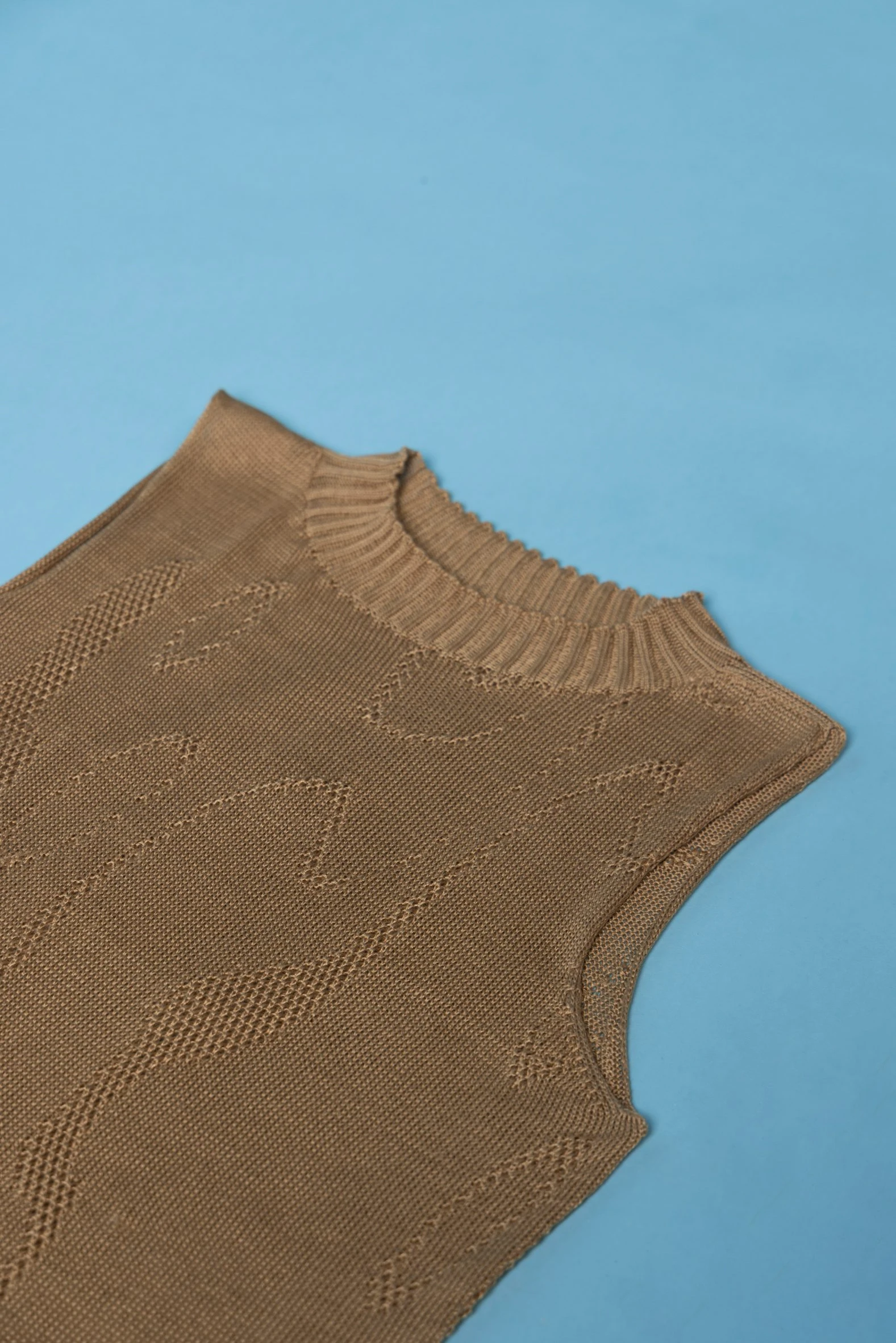
The dress itself reflects both craftsmanship and computational design. Its textured surface features patterns inspired by wood grain and digital noise, visually linking the organic origins of the material with contemporary technology. To create these patterns, researchers used an experimental AI-assisted knitting design system developed by senior university lecturer Severi Uusitalo.
The system works through evolutionary algorithms that generate different surface pattern proposals digitally. According to the designers, the technology was intended not to replace creative work but to support collaboration between human designers and computational tools. The team emphasized that the software could operate locally without requiring large-scale computing power or energy-heavy systems.
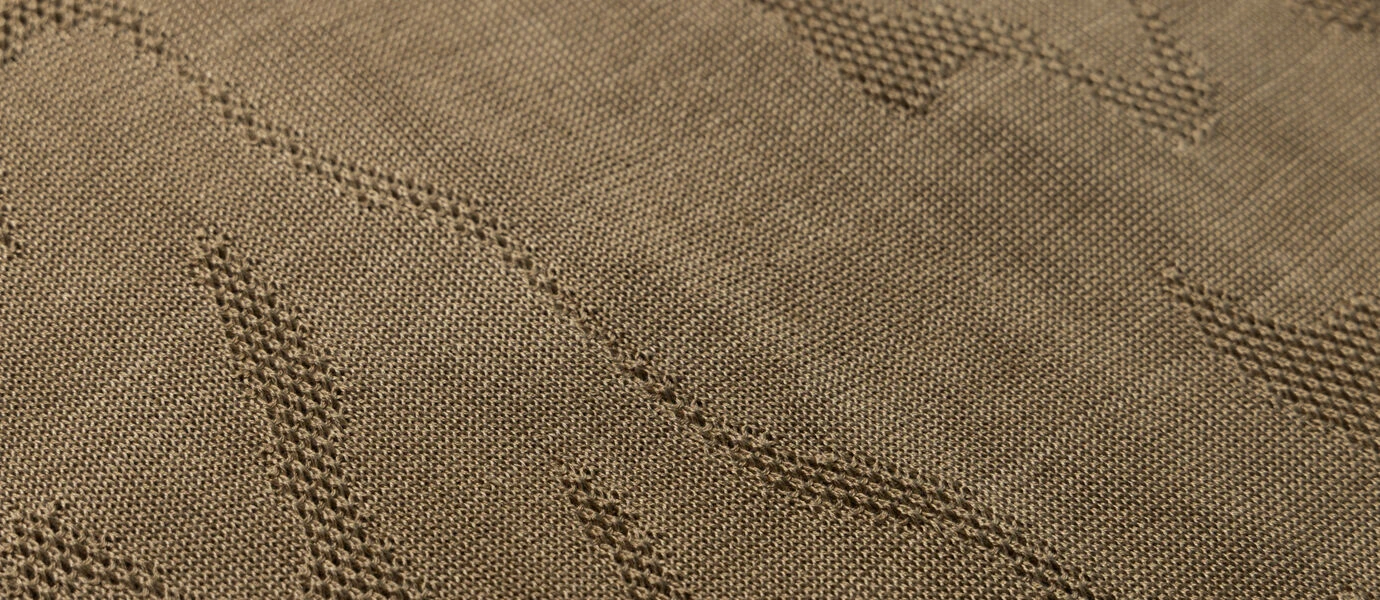
Leppisaari then produced the garments using a Shima Seiki knitting machine, creating the dresses as seamless three-dimensional forms. This method eliminated fabric waste during production, aligning with the project’s broader sustainability goals. The designer later noted that she was initially uncertain how the ancient-wood yarn would behave in an industrial knitting machine, but the fiber proved unexpectedly durable and strong.
Sustainability Beyond Symbolism
Although the project has attracted attention because of its unusual source material, researchers say its broader purpose lies in rethinking waste and material value within the fashion industry. Aalto University has spent years researching bio-based and circular textile systems that could reduce dependence on virgin fibers and synthetic fabrics.
The shipwreck dress demonstrates how cellulose-based waste materials, even centuries-old wood fragments, can potentially be reused instead of discarded. Researchers involved in the project described the dress as both an experiment and a storytelling object capable of making people reconsider the lifecycle of materials.
The project also connects with Finland’s wider reputation for material innovation and sustainable design research. Aalto University has previously explored biomaterials, including wooden crystals, natural dyes, and bio-based fashion embellishments as alternatives to petroleum-based textiles and plastics.
A Fashion Piece Carrying History

For maritime archaeologists, the dress also represents a new way of communicating cultural heritage. Underwater archaeological finds are often hidden within museums, archives, or research labs, far removed from everyday life. Transforming the shipwreck into clothing gives the material a more public and emotional presence.
The project allows the story of the Hahtiperä ship to continue through contemporary fashion and design. The result is a wearable archive, one that combines craftsmanship, sustainability research, archaeology, and technology into a single textile object.
As fashion increasingly looks toward circular systems and material innovation, the Aalto project shows how future textiles may emerge from laboratories and forgotten fragments of history.
