


Every year, the global construction industry generates roughly 11–13 billion tonnes of waste. This debris isn’t just an eyesore but is a carbon bomb. Demolishing a building releases massive amounts of embodied carbon, and sending that material to landfills wastes the digital, physical, and economic value locked inside.
Yet the way different regions handle this crisis varies wildly. The European Union has made Construction & Demolition waste a cornerstone of its circular economy, mandating high recovery rates and pushing for design-for-disassembly. Japan leads the world in technological innovation, turning concrete into aggregate and steel into rebar with near-perfect efficiency.
The United States relies on market-driven solutions and local ordinances, with some cities crushing it while others still landfill most of their debris. Meanwhile, China and many emerging economies are just beginning to build recycling infrastructure, leaving most waste to be buried or burned.
Let’s understand how the EU, US, Japan, China, and others tackle C&D waste, what’s working, what’s failing, and what the global construction industry can learn from each.
Scale of the Problem
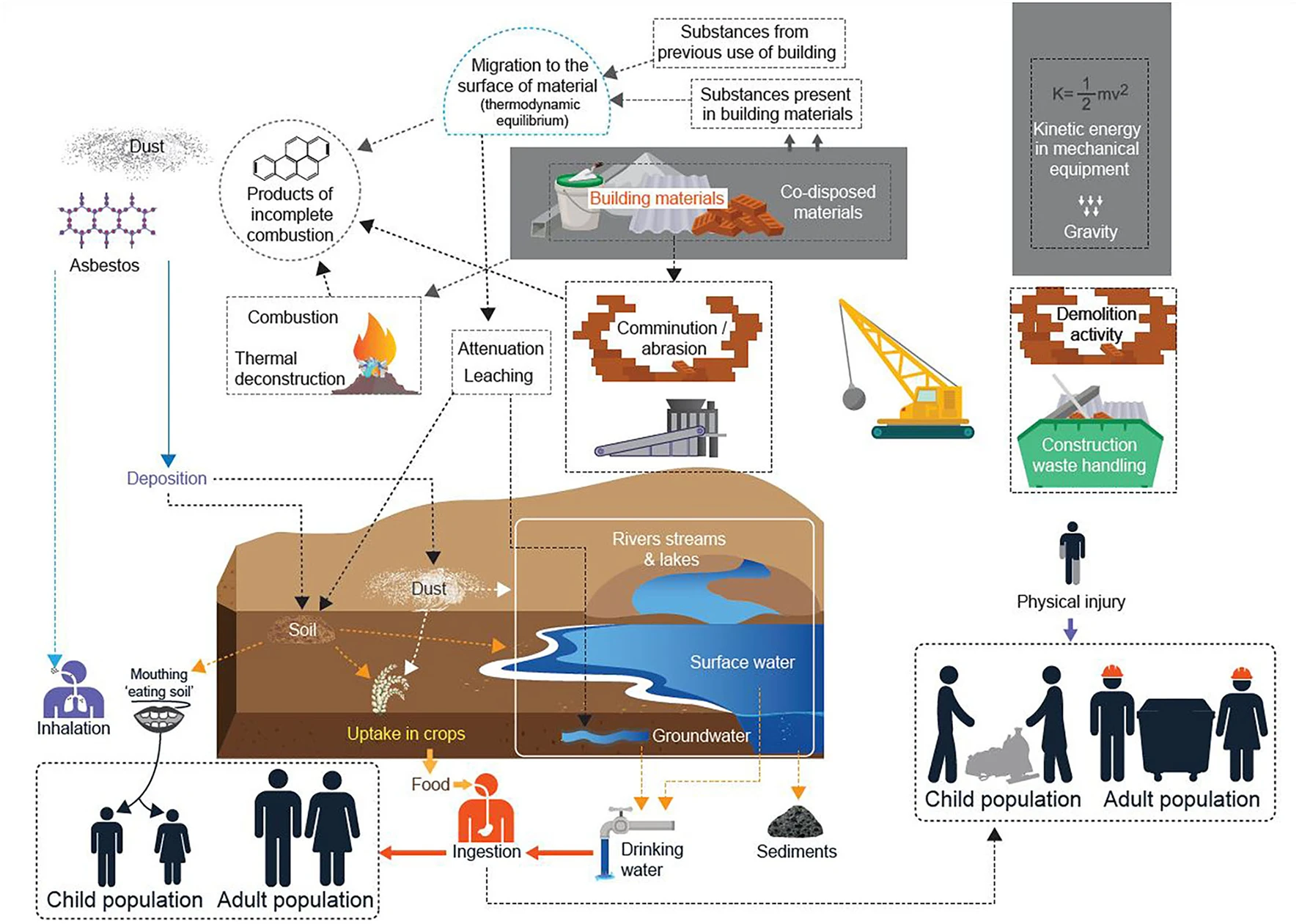
C&D waste includes everything from concrete, bricks, and steel to timber, drywall, glass, and insulation. When a building is demolished, most of it becomes debris. When a new one is built, packaging and off-cuts become waste. The linear model of “take, make, dispose” dominates most of the world’s construction sector.
The environmental cost is staggering. C&D waste fills landfills faster than any other waste stream in many countries. Materials like steel, concrete, and timber contain embedded carbon from their production, and when they’re landfilled, that carbon is wasted. Fresh raw materials are extracted to replace what could have been reused, and tons of valuable materials are thrown away instead of being sold or reused.
The European Union reports that construction and demolition waste represents approximately 35% of all EU waste, making it one of the most significant waste streams. In 2016, the reported EU CDW recovery rate stood at approximately 89%, substantially above the 70% target set by the Waste Framework Directive, though performance varies widely across member states, with the Netherlands and Germany hitting nearly 100% while Romania and Bulgaria hovered around 24%.
The European Union: Mandates, Passports, and Circular Ambition
The EU has taken the most legislatively aggressive approach to C&D waste. The Waste Framework Directive mandates that at least 70% of non-hazardous construction and demolition waste must be recycled or recovered by weight by the end of 2025, a target that most member states have already met or exceeded.
Key EU Strategies
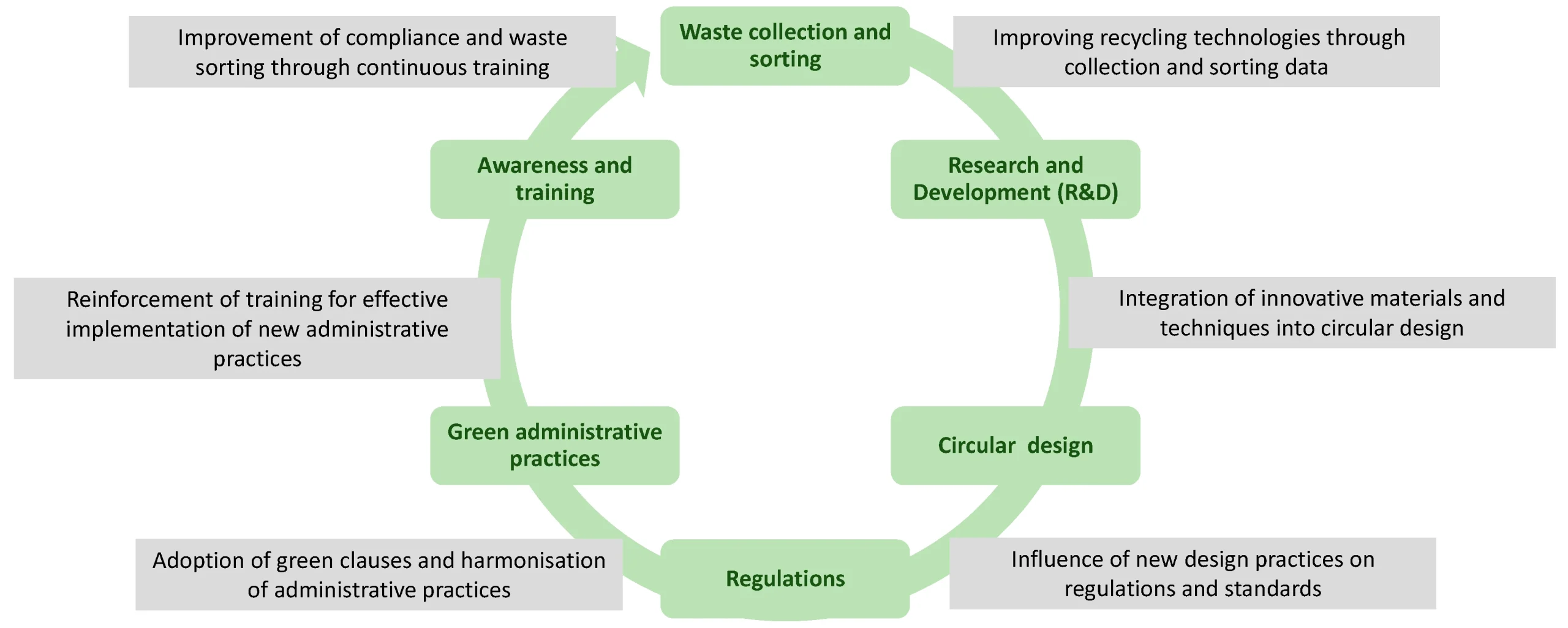
Material Passports and Digital Product Passports
The EU is pushing for material passports like digital records that track every component in a building: where it came from, what it’s made of, and how it can be reused. This allows future demolition crews to recover materials efficiently rather than just crushing everything.
Design for Disassembly (DfD)
New EU regulations encourage architects and engineers to design buildings that can be taken apart, not just torn down. This means using mechanical connections (screws, bolts) instead of glue and welds, and creating modular components that can be swapped out.
The Green Deal and Circular Economy Action Plan
The European Green Deal aims to make the EU climate-neutral by 2050, with construction as a major focus. The Circular Economy Action Plan promotes the use of reused materials, modular construction, and adaptive reuse of existing buildings.
Financial Incentives and Landfill Taxes
Many EU countries impose high landfill taxes to discourage dumping. In the Netherlands, landfilling C&D waste is effectively prohibited, requiring companies to recycle or reuse it. In Germany, recycling is incentivized through tax breaks for using recycled materials.
Real-World EU Success Stories
Triodos Bank Headquarters (Amsterdam): Designed for full disassembly with 165,312 screws and material passports for every component.

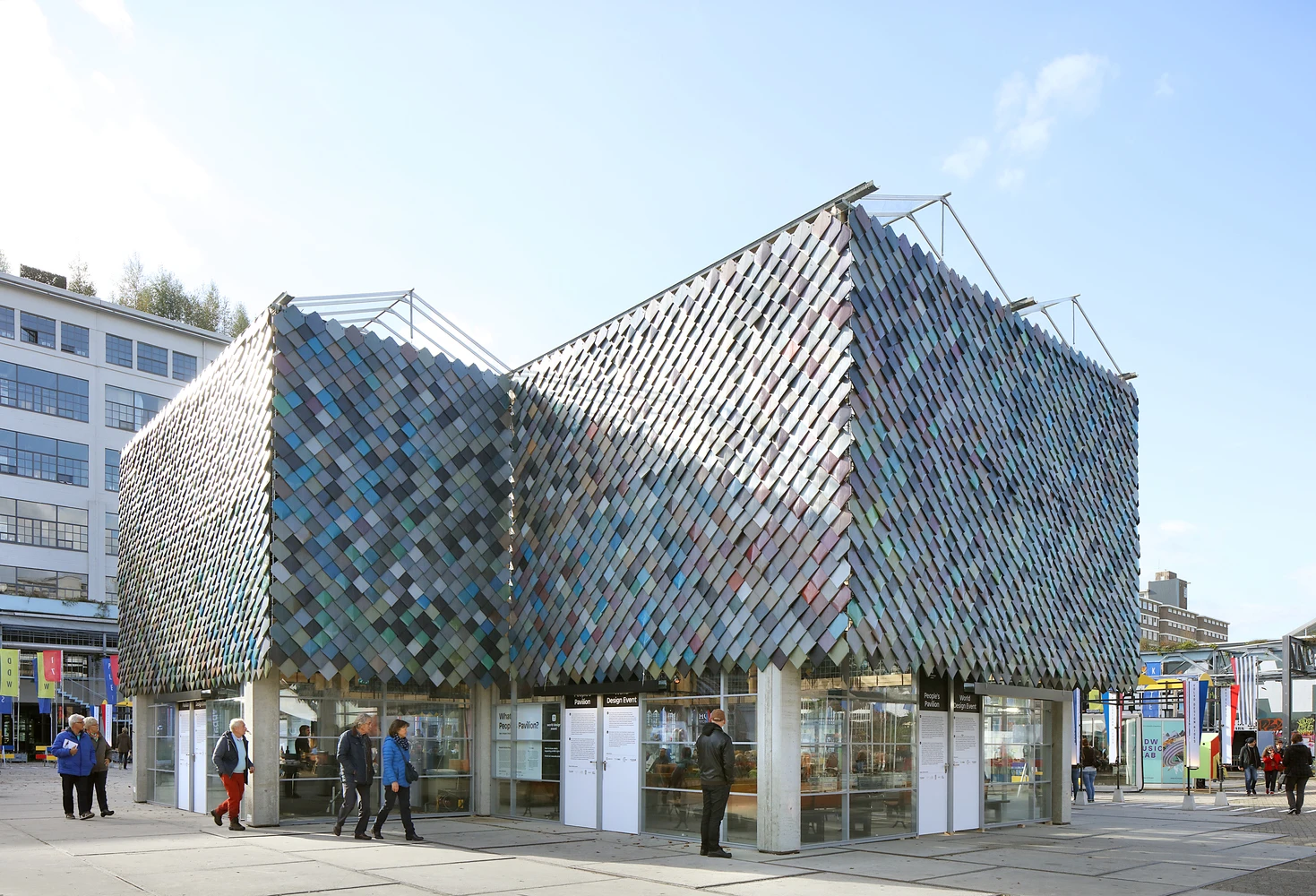
People’s Pavilion (Eindhoven): 100% borrowed materials, fully disassemblable, zero waste.
Brummen Town Hall (Netherlands): One of the first public buildings designed from the start to be taken apart and reused.

Despite these successes, the EU still faces uneven implementation across its member states. Some countries lack the infrastructure, knowledge, or political will to meet the 70% recovery target. Knowledge-sharing platforms like HSBooster and CIRCUIT are working to bridge this gap, but the distance between policy and practice remains wide in many regions.
Japan: Technology, Deconstruction, and Near-Perfect Recycling
Japan treats C&D waste not just as a problem but as a resource recovery opportunity. The country’s C&D Recycling Law (enacted in 2000) mandates that construction companies must sort and recycle at least 95% of concrete, steel, and wood from demolition sites. As a result, Japan has achieved over 95% recycling rates for concrete and steel in major cities.
Key Japanese Strategies
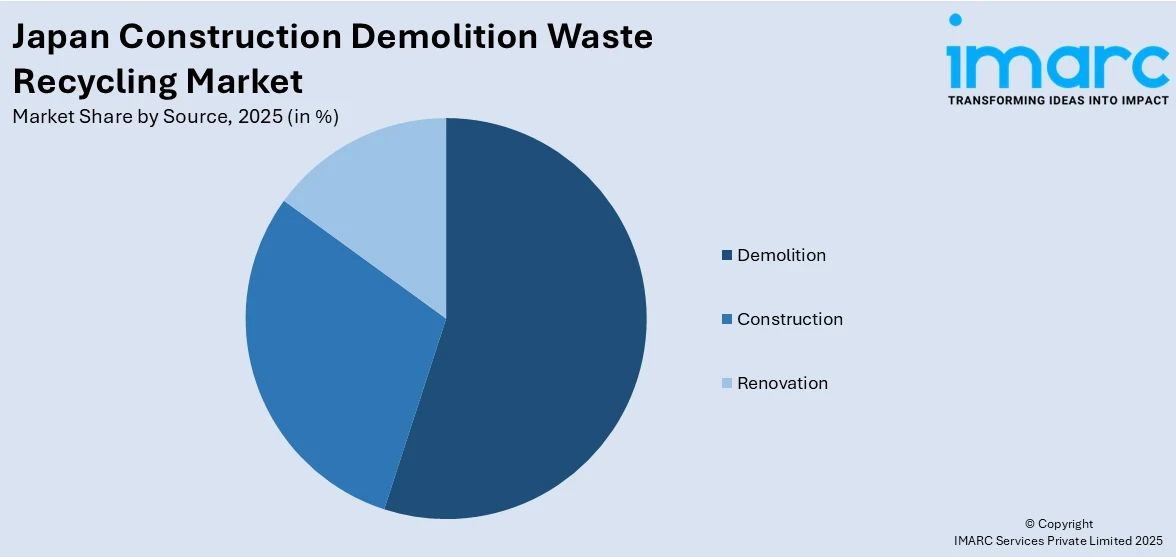
Deconstruction Over Demolition
Instead of using explosives or excavators to knock buildings down, Japanese firms often deconstruct them, dismantling beam by beam, brick by brick, to preserve materials for reuse. This is more labor-intensive but yields higher-quality recycled materials.
Advanced Sorting Technology
Japan’s recycling plants use AI-powered sorting machines, magnetic separators, and vibrating screens to separate concrete, steel, wood, and plastics with near-perfect precision. This allows for high-purity recycled aggregates that can be used in new construction.
Reuse Culture
Japanese construction firms maintain centralized reuse yards where salvaged materials are stored and sold. Architects often specify reused steel beams, reclaimed wood, and recycled concrete in new projects.
Pay-as-you-Throw (PAT) Fees
In many Japanese cities, demolition companies pay fees based on the amount of waste they send to landfills. This incentivizes them to sort and recycle rather than dump.
Real-World Japanese Success Stories
Tokyo 2020 Olympic Stadium: Built with 100% recycled steel and reused materials from old stadiums.
Osaka’s Concrete Recycling: Over 95% of concrete waste is recycled into new aggregate for road bases and new buildings.
Kobe’s Post-Earthquake Recovery: After the 1995 earthquake, Japan led the world in the deconstruction and recycling of damaged buildings, setting a global precedent.
Japan’s main challenge is high labor costs for deconstruction and an aging infrastructure that makes retrofitting old buildings difficult. But its technology-first, regulation-backed approach offers a blueprint for other countries.
The United States: Market-Driven Innovation and Local Leadership
The US has no federal mandate for C&D waste recycling. The EPA’s Resource Conservation and Recovery Act (RCRA) provides guidelines, but each state and city sets its own rules. The result is a patchwork: some cities recycle 80–100% of their C&D waste, while others landfill 90%.
Key US Strategies
Local Ordinances and Deconstruction Pilots
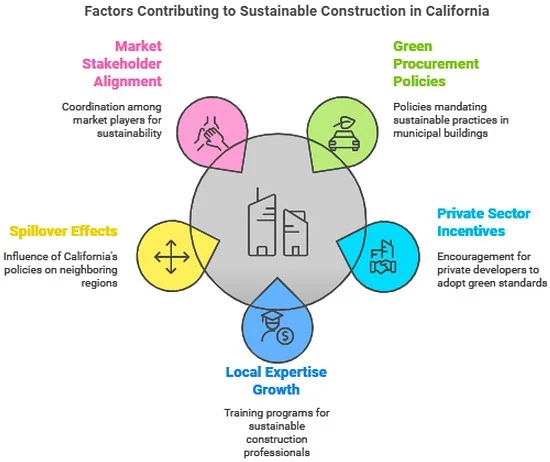
Cities like San Francisco, Seattle, Portland, and Minneapolis have passed deconstruction ordinances requiring selective demolition before new construction. These cities often mandate that 50–70% of C&D waste be diverted from landfills.
Market-Driven Recycling
In the US, recycling is often driven by economic incentives. When landfill fees are high and recycled materials are cheap, companies recycle. When landfill fees are low, they dump. This makes recycling volatile and regionally inconsistent.
Green Building Certifications
LEED, WELL, and Living Building Challenge certifications give points for using recycled materials, diverting waste from landfills, and designing for disassembly. This pushes developers to recycle even without mandates.
Real-World US Success Stories
San Francisco: Achieved 80%+ diversion of C&D waste from landfills through strict local ordinances.
Seattle’s Deconstruction Program: Requires selective demolition for buildings over a certain age, preserving whole wood and masonry.
Portland’s Material Reuse Database: A public platform where salvageable materials are listed for reuse.
The US’s main challenge is fragmentation. Without a national mandate, progress is uneven, and many regions still landfill most of their debris. But its market-driven, local-innovation model shows what’s possible when cities take matters into their own hands.
China and Emerging Economies: Rapid Growth, Low Recovery
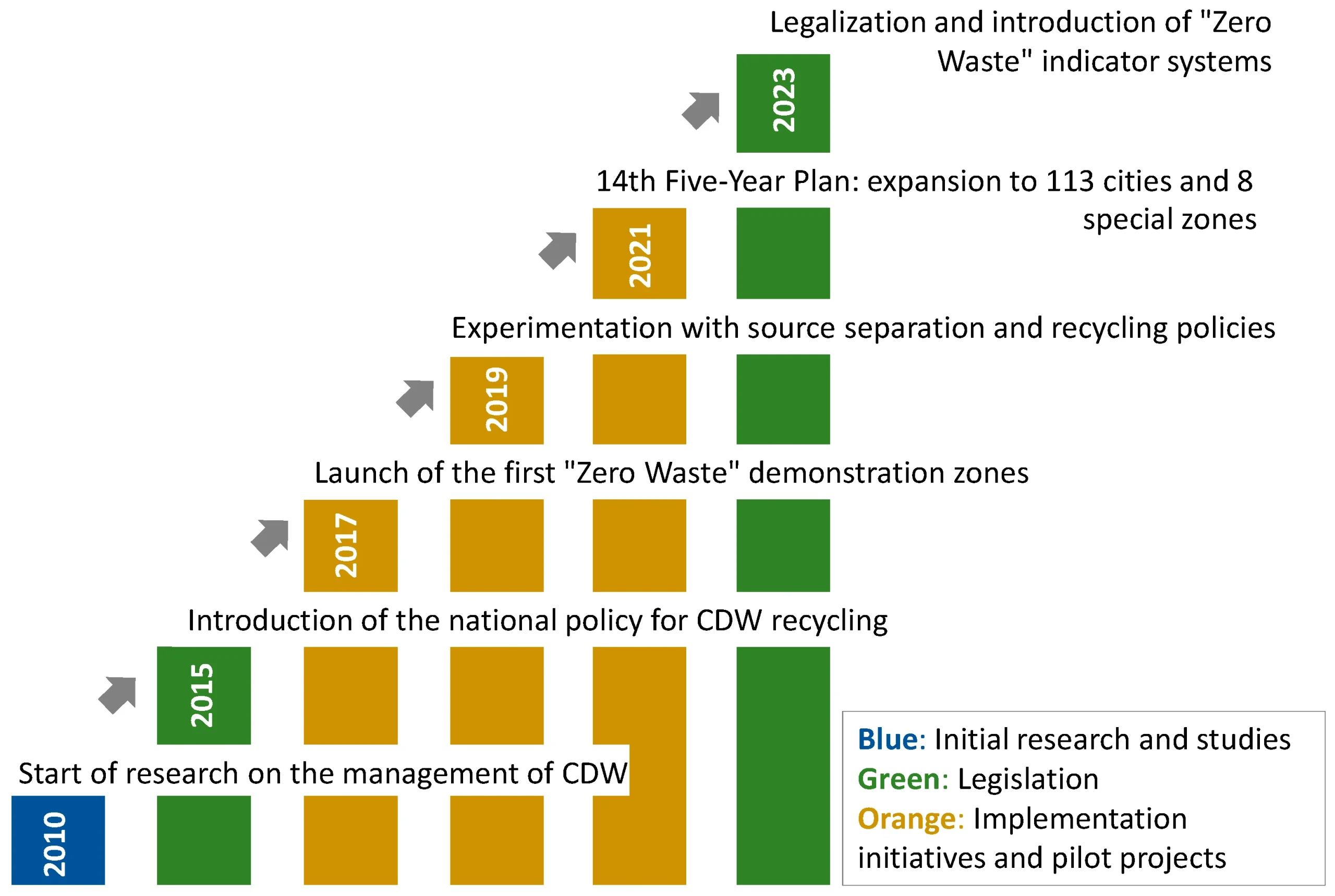
In China and many emerging economies, C&D waste is a growing crisis. Rapid urbanization, mass demolition of old buildings, and weak enforcement mean that most C&D waste still goes to landfills. In 2017, China’s C&D waste recovery rate was estimated at just 5%, compared to 89% in the EU and 95% in Japan.
Key Challenges in Emerging Economies
Key challenges in emerging economies include a lack of enforcement, where laws exist but are rarely implemented; no financial incentives, since low landfill fees mean there is no economic reason to recycle; missing infrastructure, with few recycling plants and reuse yards available; and rapid urbanization, where old buildings are demolished faster than recycling infrastructure can be built.
However, China is beginning to build new recycling facilities, and the government has set ambitious targets for C&D waste recycling. The challenge is scaling up fast enough to keep pace with construction.
What the World Can Learn
Each region has something valuable to offer. The EU shows that mandatory recycling targets and circular economy frameworks can drive massive change, while Japan proves that technology and deconstruction can achieve near-perfect recycling. The US demonstrates that local innovation and market-driven recycling can work even without federal mandates, and emerging economies need infrastructure, enforcement, and financial incentives to close the gap.
The future of C&D waste management lies in combining these approaches: mandates + technology + market incentives + global cooperation. The EU’s material passports, Japan’s sorting tech, and the US’s local deconstruction pilots could all be combined into a global standard for circular construction.
The global construction industry must design for disassembly from the start, not as an afterthought, track materials digitally using passports and blockchain, incentivize recycling through landfill taxes and subsidies, invest in sorting technology and reuse yards, and adopt best practices from each region regardless of borders. The question isn’t whether we can eliminate construction waste. The question is: which region will lead the way, and how fast can the rest catch up?
