


Marvel Studios’ Fantastic Four: First Steps, released on July 24, 2025, not only tells the story of superheroes but also revives the aesthetics of retro-futurism and Googie architecture. The film, which depicts four astronauts who venture into space and suffer from anomalies due to a cosmic storm, is set in Earth-828—a replica of our planet and home base for the Fantastic Four.
This alternate universe features modern fashion and flying cars, Flash Gordon-inspired rocket ships and robot butlers, mid-century modern chairs, and space-age architecture. Born from the fusion of the automobile culture of the 1950s and 1960s in America with space-age dreams, Googie architecture is evident in the spaces seen on Earth-828, characterized by pointed roofs, neon signs, glass facades, rounded furniture, and flying saucer-shaped observatories.
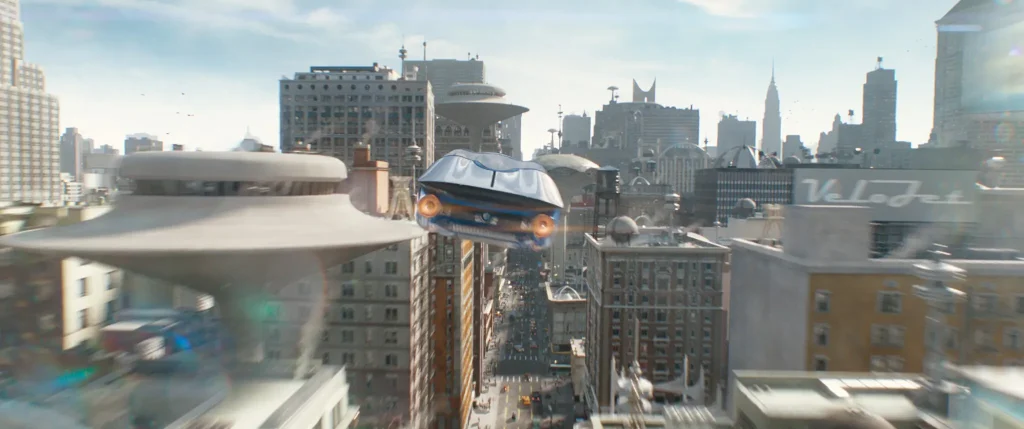
Conveying a sense of hope and optimism for the future, Fantastic Four: First Steps draws on the upbeat and futuristic atmosphere of Googie architecture to reflect the characters’ scientific genius and adventurous spirit.
Production designer Kasra Farahani created the film’s retro-futuristic world by drawing inspiration from concept cars by various artists and designers, modernist architects, period newspapers and comic books, as well as archival NASA footage. Moving beyond playful and naive retrofuturism, a more sophisticated version was designed for the movie. The film’s major inspirations were Stanley Kubrick’s “2001: A Space Odyssey” and the designs of architects such as Eero Saarinen and Oscar Niemeyer.
The New York City – Times Square
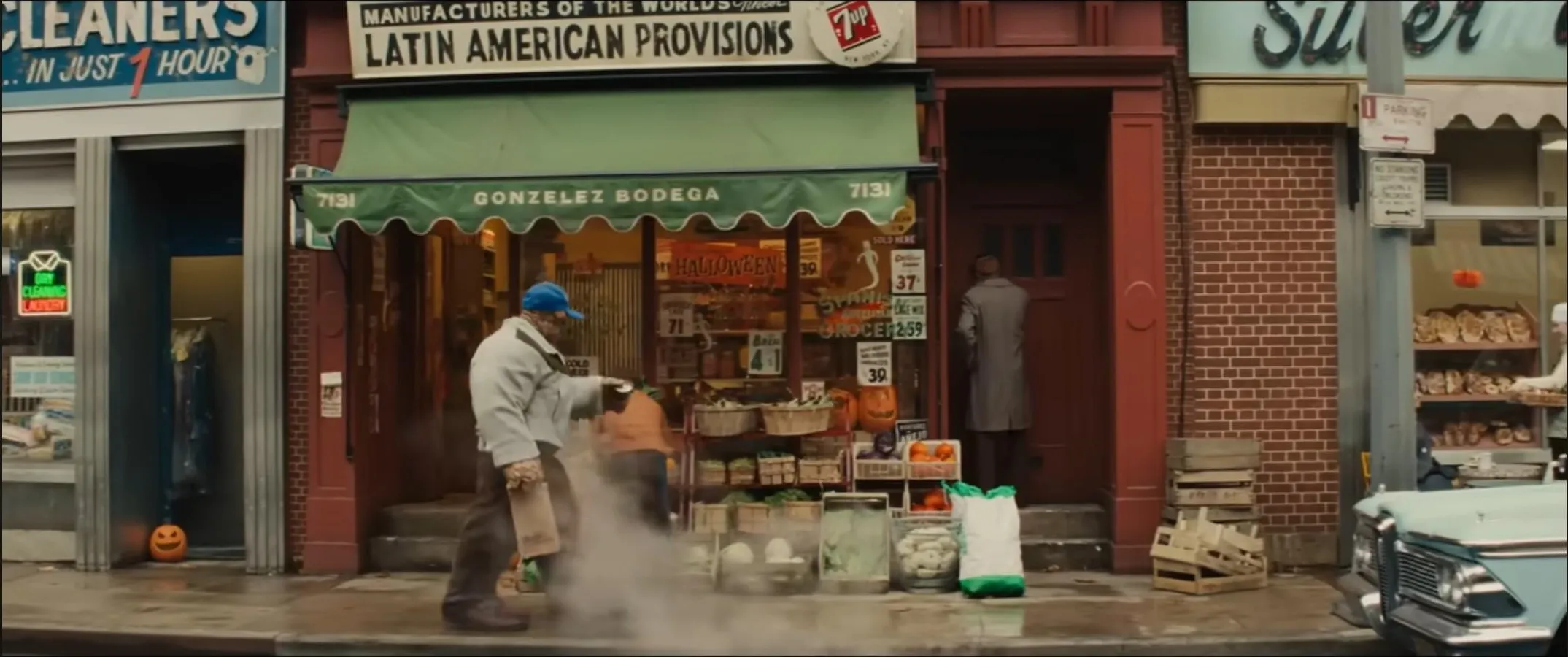
The New York City we see on Earth-828 in Fantastic Four: First Steps appears as a recreation of the 1960s. While the familiar skyscraper skyline is preserved, the city is infused with the futuristic visions of that era. Skyscrapers topped with parabolic dishes instead of antennas enhance Googie’s space-age influence. Iconic structures, like the Empire State Building, appear on Earth-828 with neon panels and chrome details, while the classic New York gray is replaced by warmer pastel tones.
Designed as a city transformed by the scientific wonders made possible by Reed Richards, leader of the Fantastic Four, New York harbors promising possibilities such as rocket-powered mail carriers and lunar mining exploration, inspired by “Closer Than We Think!”, a newspaper comic strip published from 1958 to 1963.
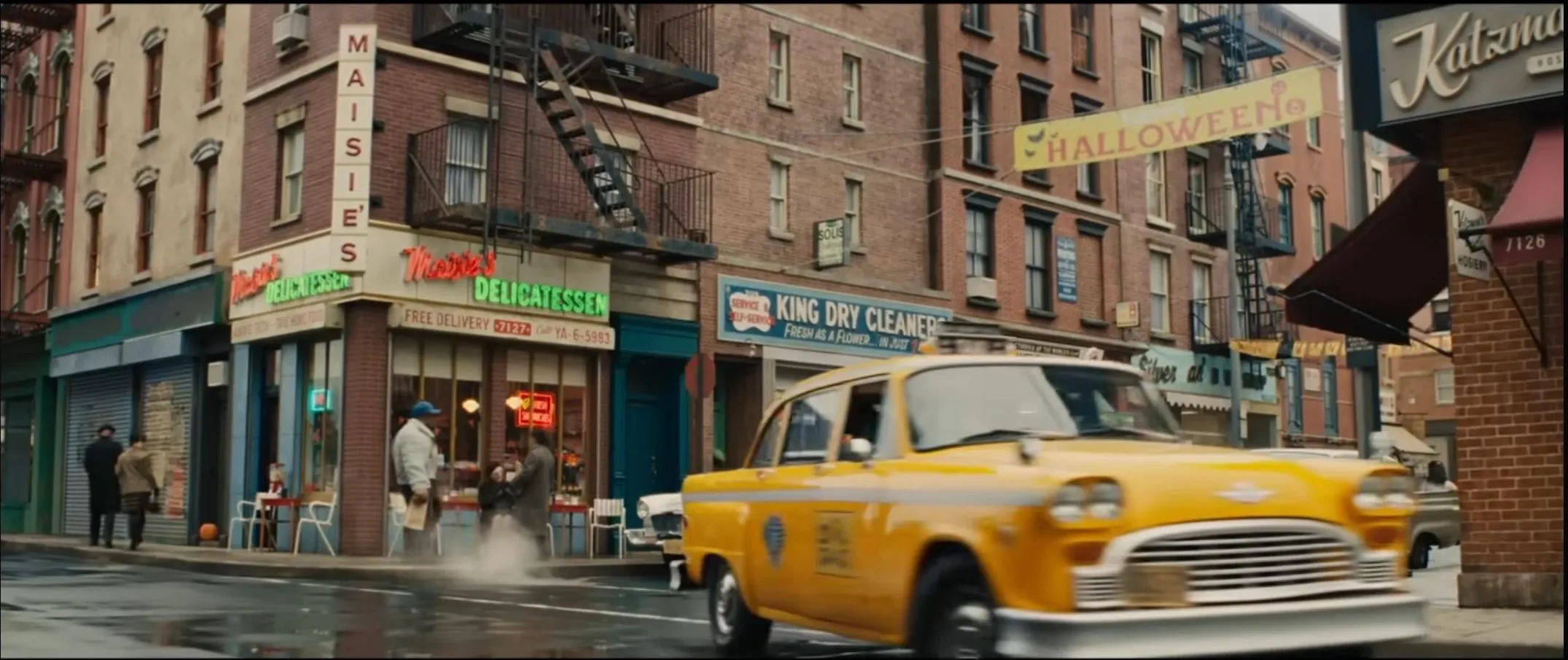
Times Square, envisioned as a “future past,” features billboards filled with ultra-sharp LED graphics reminiscent of 1960s poster designs. The Times Square set, built in 15 weeks, resembles historical photographs from the 1960s, while one-third of the set was designed differently.
The RKO Palace and Embassy Theatre were faithfully recreated with an added layer of retro-futurism. The parabolic curves and winged elements of the Googie-inspired city drew inspiration from Eero Saarinen’s Gateway Arch in St. Louis and the works of Brazilian architect Oscar Niemeyer.
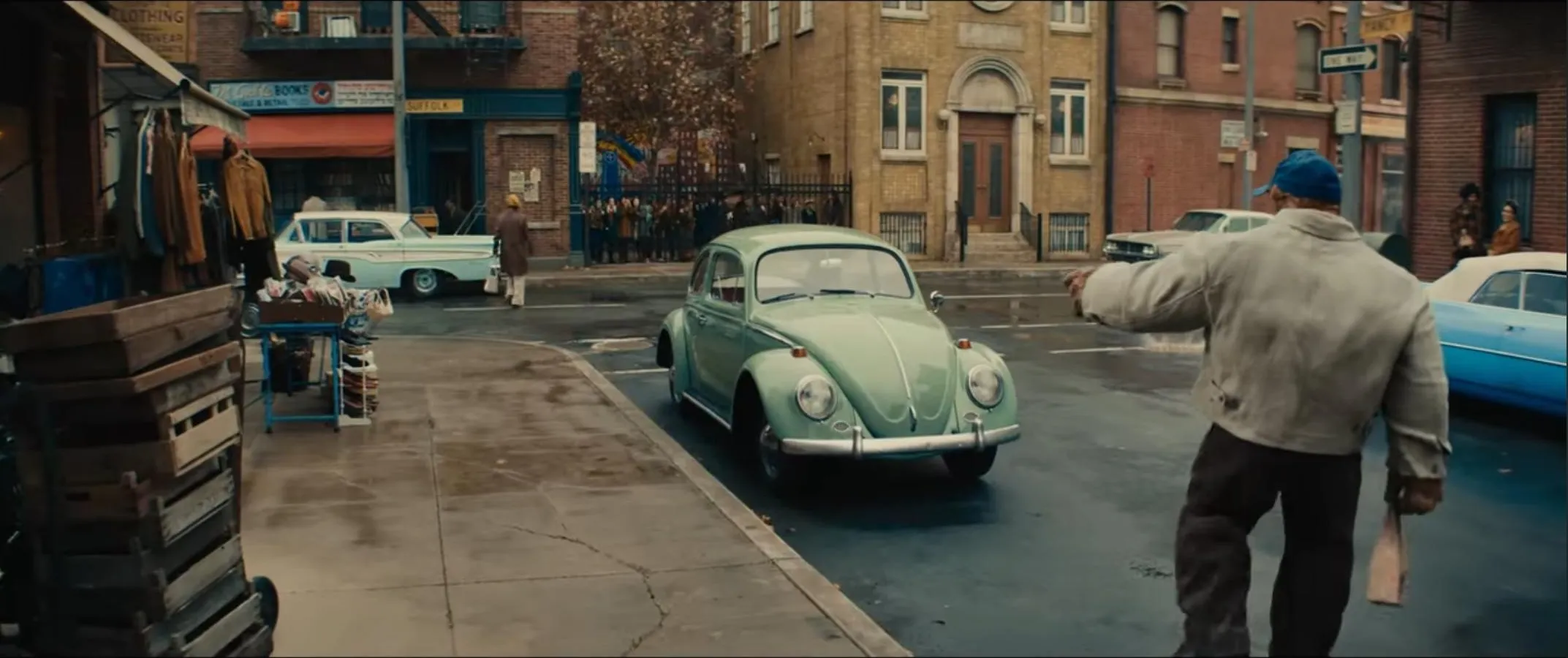
Another key factor in shaping the look of Earth-828’s New York was the historically accurate vehicles. Over twenty Checker cabs were paired with half a dozen retro-futuristic cars produced by the filmmakers. Two different Panhard models were fitted with winglets and retro-futuristic details, and the five bubble cars seen in the film were built on the chassis of a mobility scooter. The film also features tiny, single-seater cars with glass domes, zipping around and inside familiar 1960s vehicles.
Fantasticar
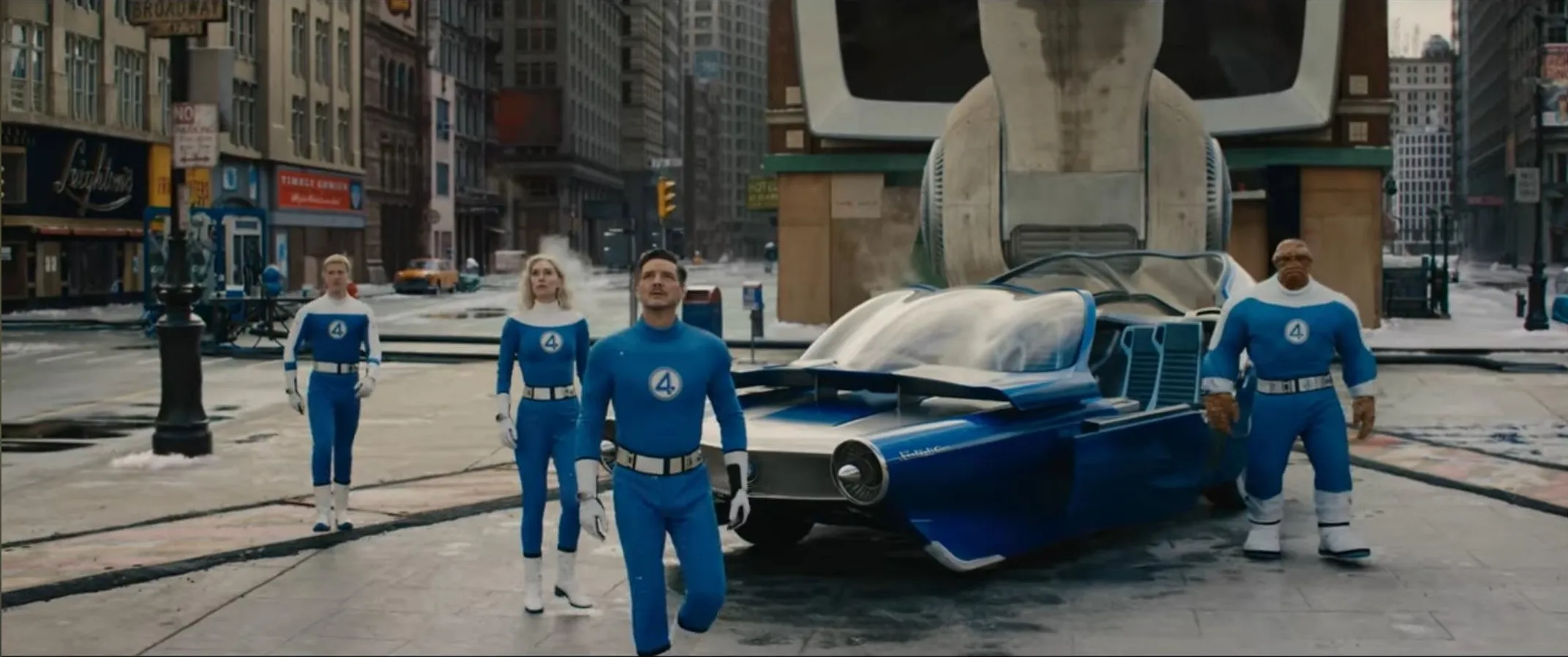
The original Fantasticar, an open-air flying vehicle dubbed the “Flying Bathtub” by Fantastic Four artist Jack Kirby in 1962, is a key element reinforcing the film’s retro-futuristic aesthetic. The vehicle seen in the film was designed with an aerodynamic design inspired by American concept cars like the 1964 General Motors Firebird IV. The new and improved Fantasticar retains the same sleek profile and bubble canopy roof, along with a cockpit-like front seat and rear lights that also function as jet thrusters.
The car’s bubble top and sliding doors open to allow four superheroes—even “Thing,” who has been transformed into a stone giant after an accident—to enter and exit easily. The designers also added whitewall tires, chrome bullet-shaped exhaust tips, and extendable front and rear seats to accommodate Thing’s larger rear. Built over 22 weeks, the stunt version of the vehicle features rear-wheel drive and a 450-horsepower electric motor.
Baxter Building
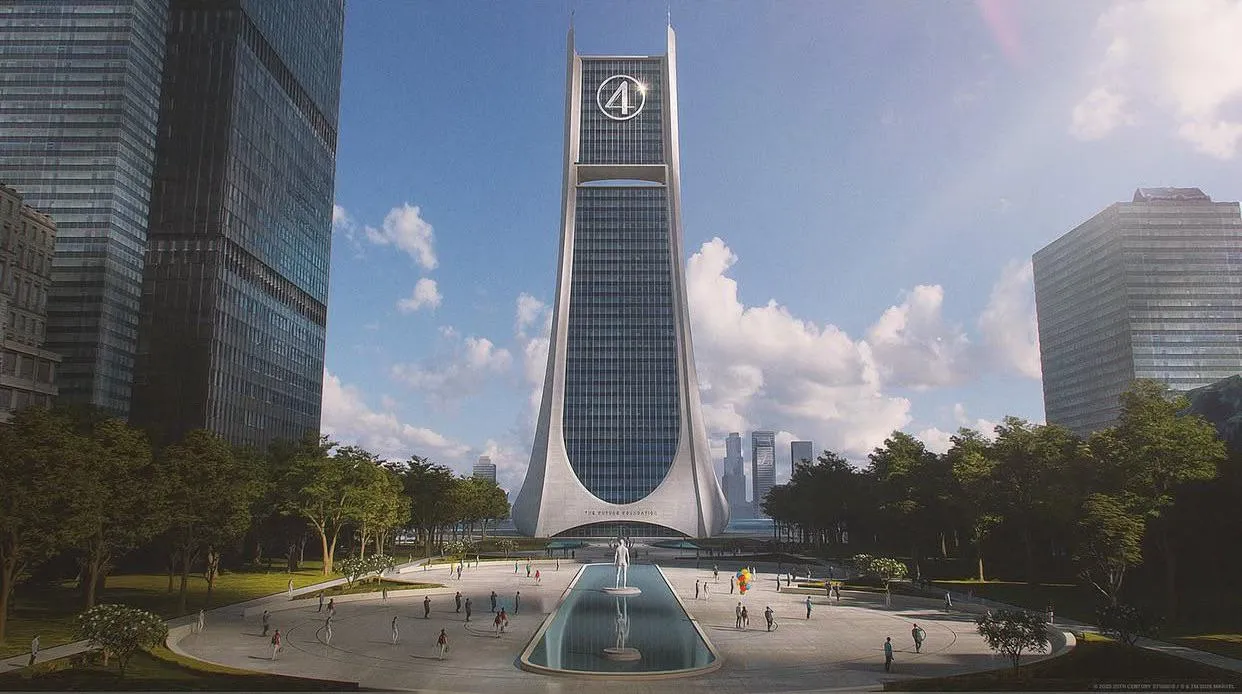
In the Marvel Universe, the Baxter Building, home and laboratory of the Fantastic Four, is depicted in the comics as a tall, modernist skyscraper. The production team has preserved this heritage while adding a retro-futuristic touch. Designed as a quintessential mid-century modern dream with geometric patterns, clean lines, and plenty of vibrant, warm colors, the Baxter Building draws inspiration from the West Coast aesthetic. The Baxter Building, and Reed’s laboratory within, is heavily influenced by the futuristic and optimistic architecture of Saarinen and Niemeyer.
Living Room
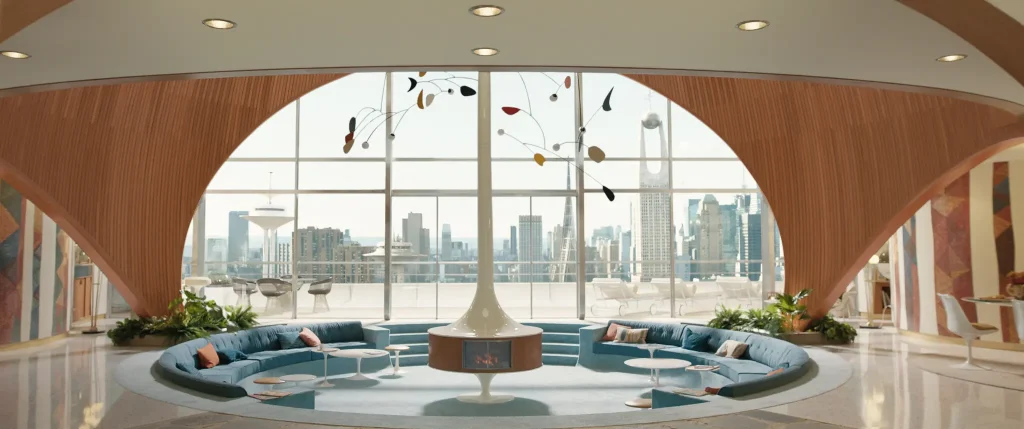
The Baxter Building’s living room, the command center of the Fantastic Four, features a circular seating nook in blue, the team’s signature color, at its heart. The carpeted, arched staircases and floor designs of the room were inspired by Oscar Niemeyer’s work at the French Communist Party headquarters in Paris.
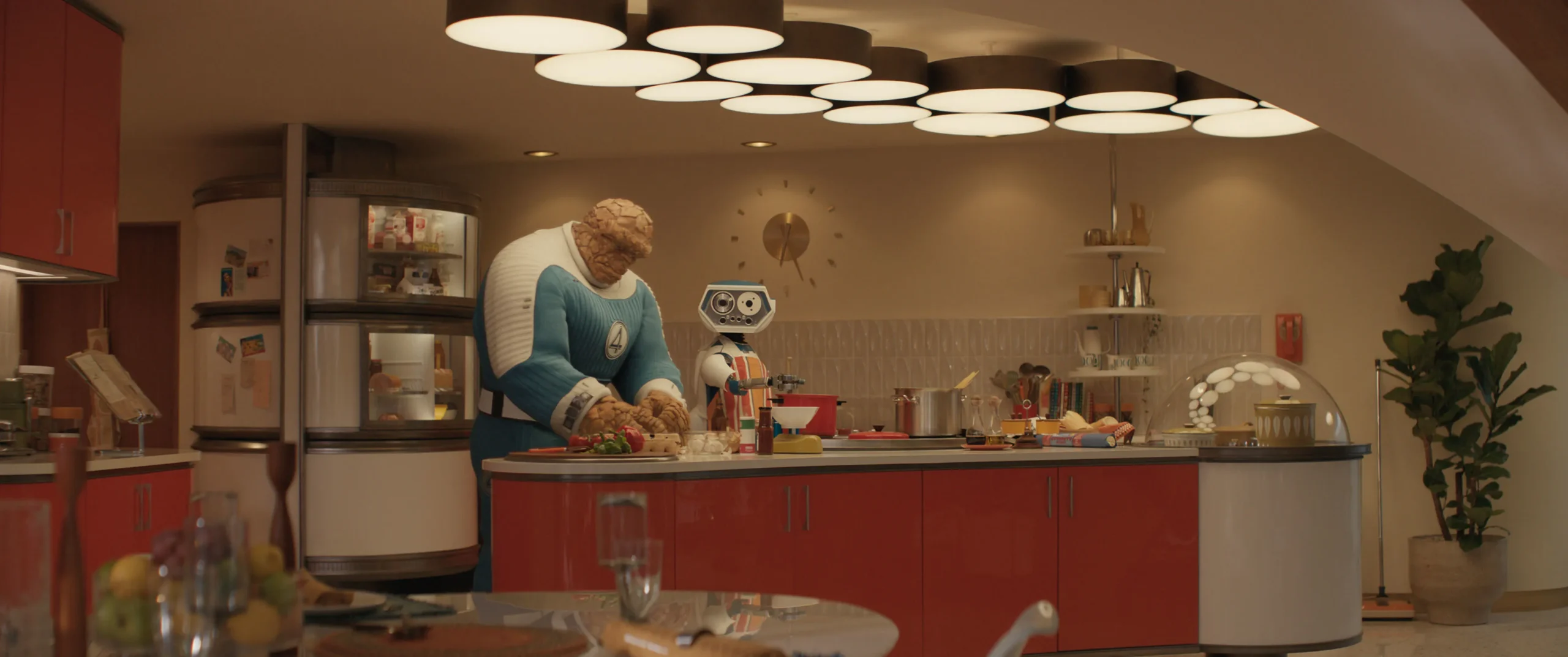
To add warmth to this New York loft, the production team incorporated many natural materials associated with mid-century modernism. Tons of wood, abundant ferns and plants, and flagstone can be seen throughout the space. To complete the design, the team added a rotating centerpiece with a fireplace on one side and a television on the other, a large, colorful mobile and record-listening station inspired by American sculptor Alexander Calder, and a womb chair designed by Saarinen.
Reed Richards’ Laboratory
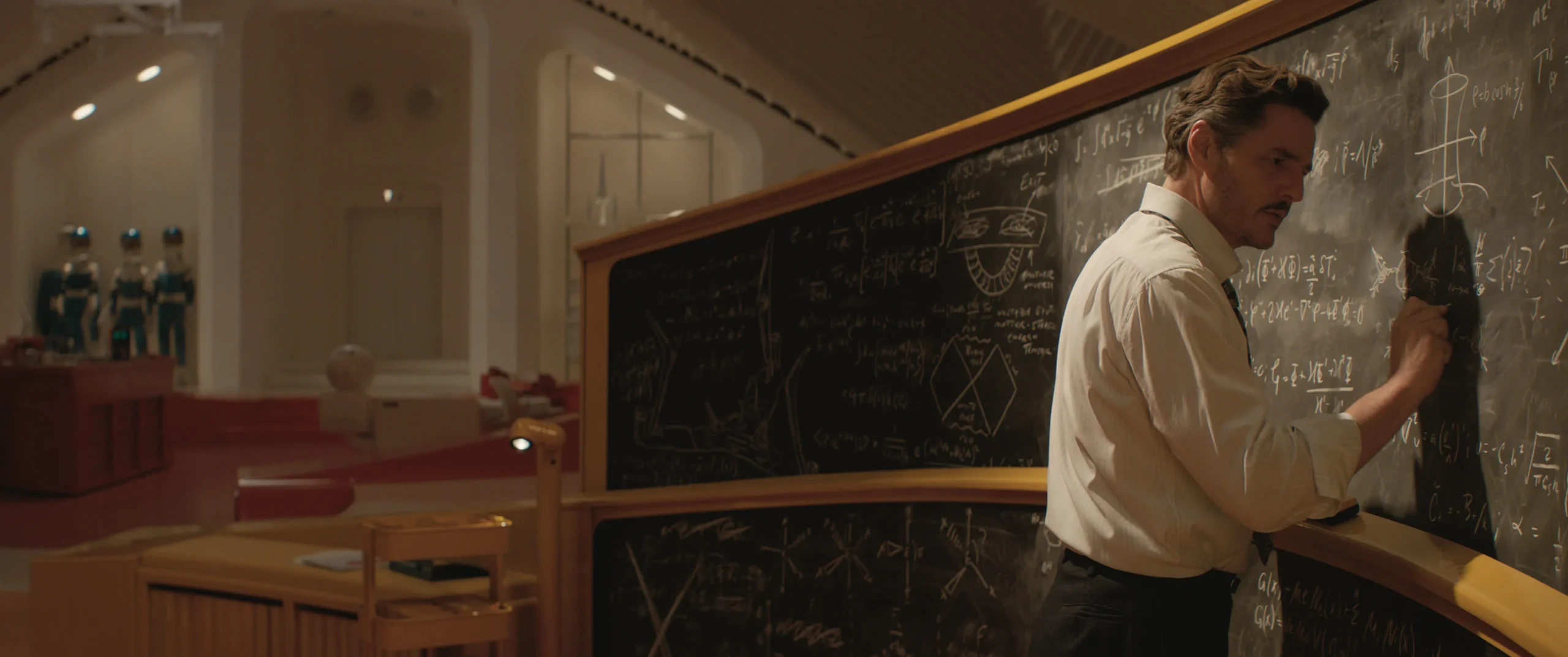
In The Fantastic Four: First Steps, Reed Richards’ laboratory, conceived not only as a workspace but also as a physical representation of the character’s intellect, is a crossroads between the optimistic scientific world of the 1950s and the digital science labs of today.
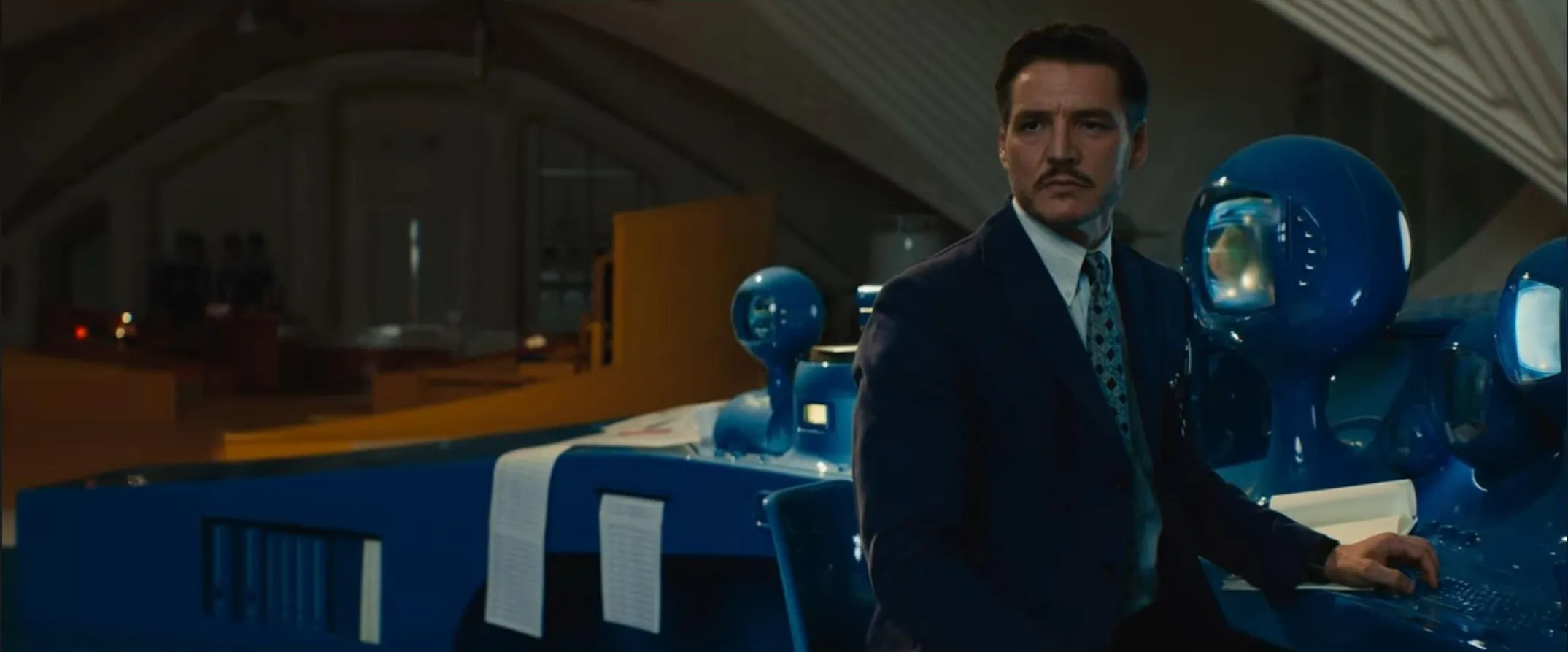
The lab features defining elements such as a vaulted ceiling and is organized around three brightly colored circular zones, each indicating a different function: the red-orange circle encountered upon entry is a cluttered space where Reed develops prototypes; the central yellow circle, with adjustable platforms, serves as a contemplation and discussion area; and the third blue circle functions as the mission control room, equipped with advanced computer technology.
The Baby Room
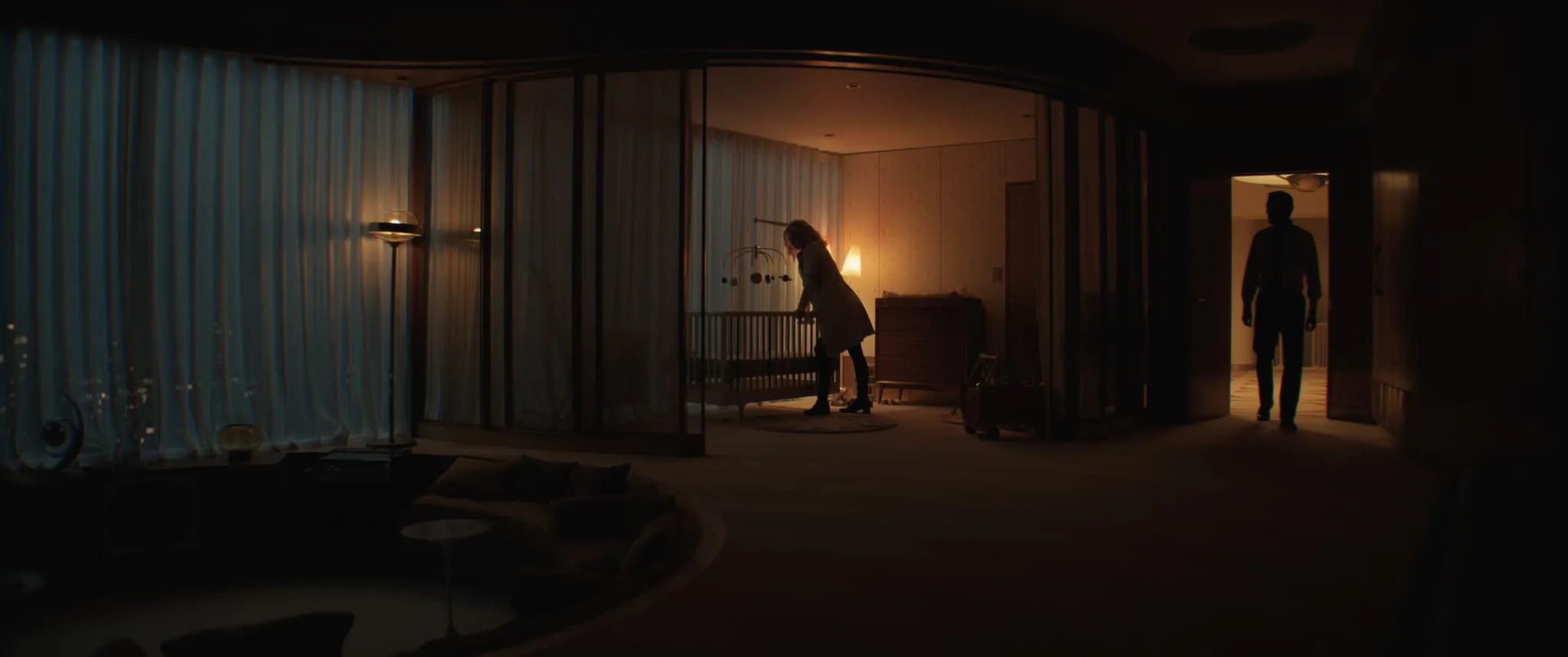
In Fantastic Four: First Steps, the baby room Reed and Sue create after the news of their baby is connected to their bedroom and features a partition to allow for complete enclosure. Early in the film, it serves as a small office used by Sue before being transformed into the child’s room. The wallpaper, designed specifically for the film with small rockets, planets, and delicate scale, is entirely in the Eames palette, bringing a touch of warmth and whimsy to the room.
Johnny Storm’s Room
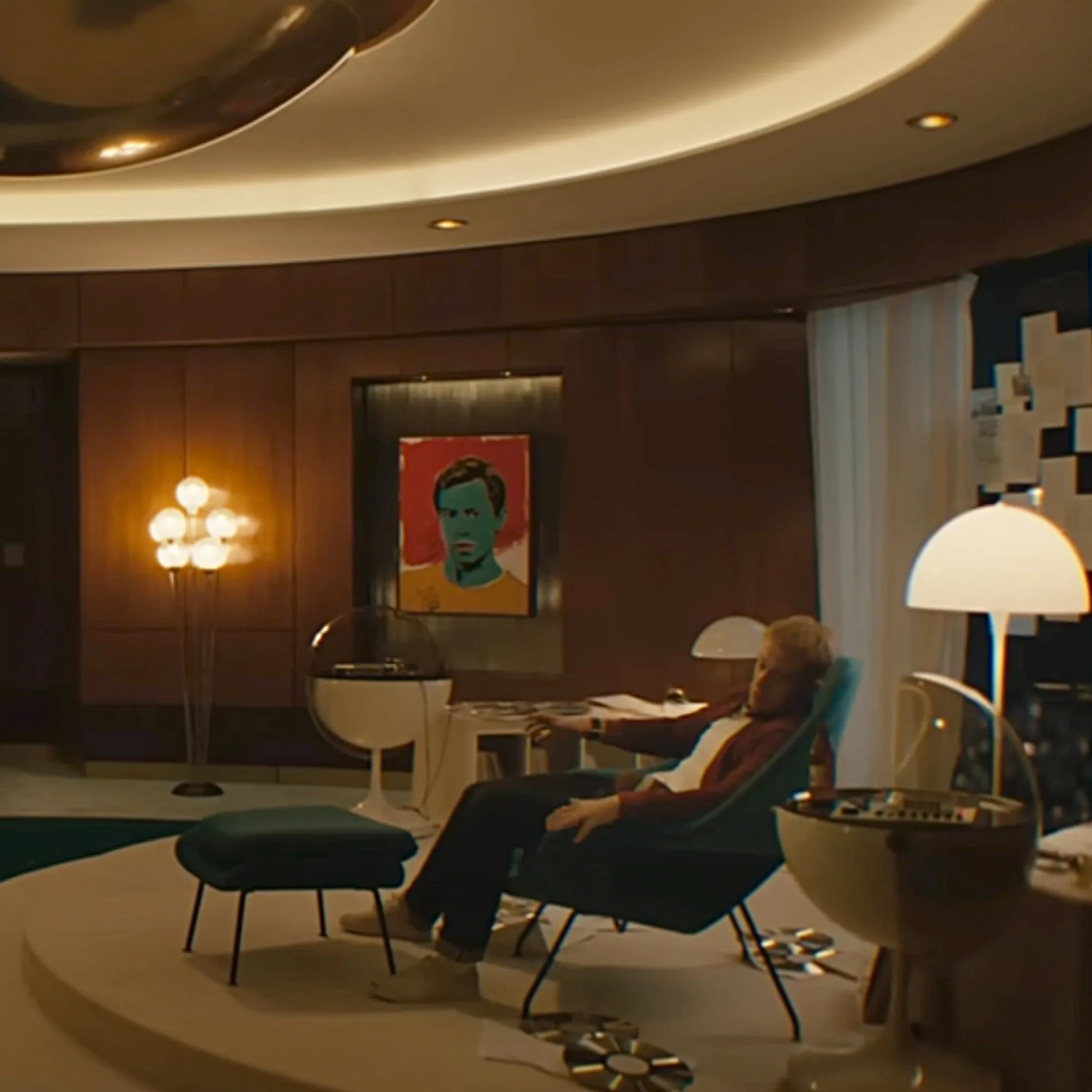
In Fantastic Four: First Steps, Johnny’s bedroom becomes a youthful manifesto of mid-century modernity meeting Marvel’s retro-futurism: a space where curves, glow, and a dash of rebellion fuse into something unmistakably his. The design speaks in the language of movement and optimism, echoing Googie’s exuberance while wrapping it in the warmth of wood paneling and the drama of neon.
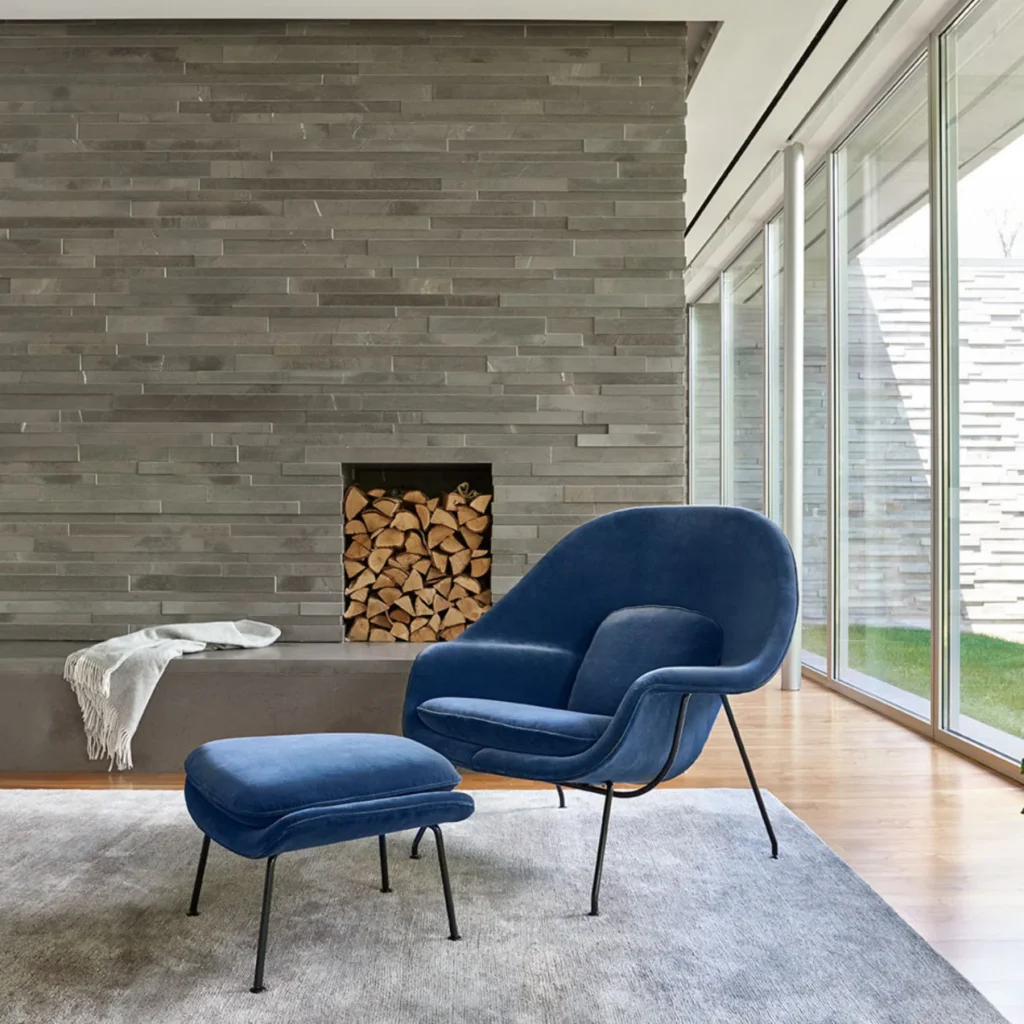
The set is a meticulous curation of icons: a custom round bed at its heart, the Saarinen Womb Chair in audacious blue, a translucent round-topped record player paired with Grundig’s Audiorama 8000 speakers, and the sculptural brilliance of Verner Panton’s Panthella lamps.
