


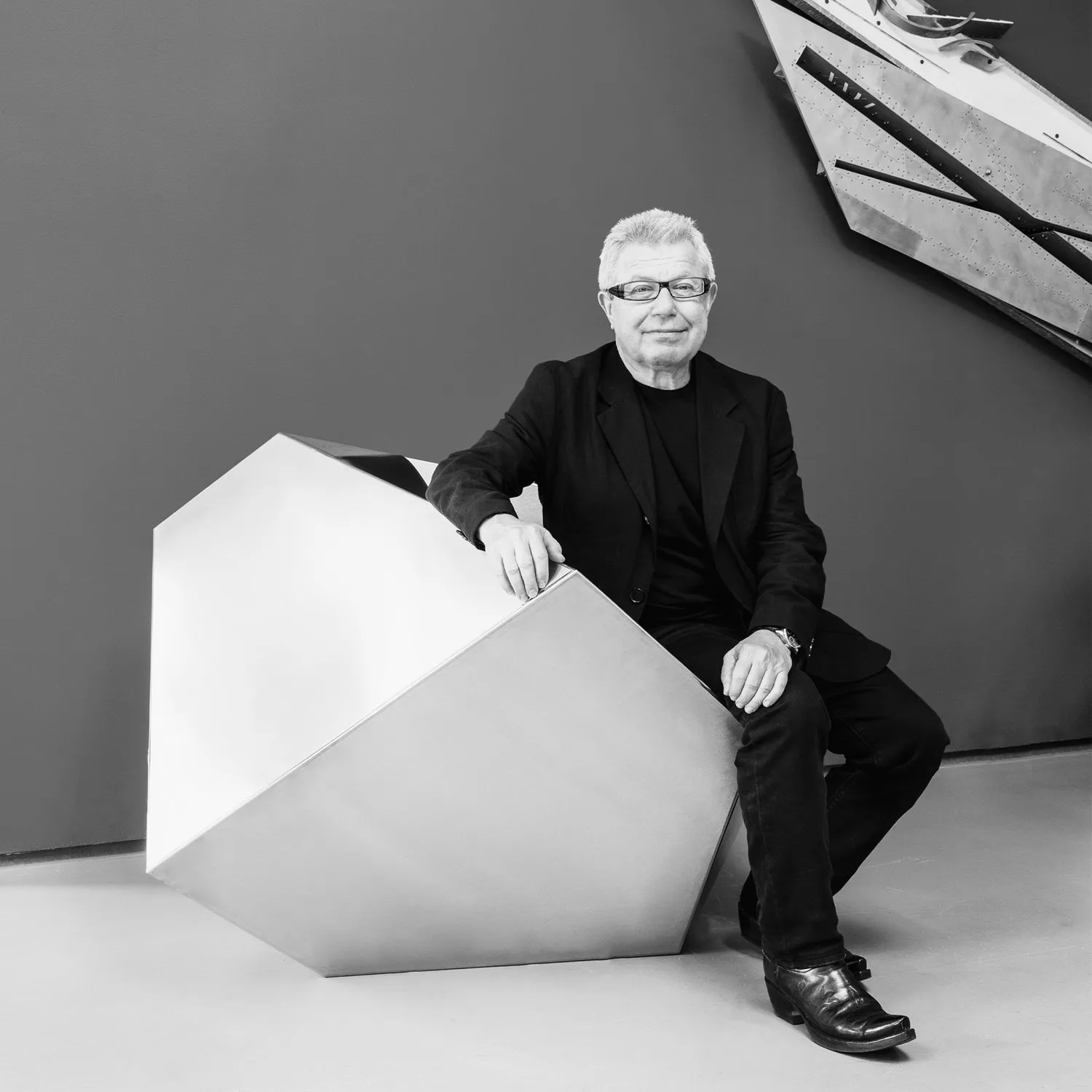
Daniel Libeskind is a deconstructivist architect whose work showcases sharp angles, distortion, and conceptual storytelling. Using deconstructivism, his architectural style places a strong emphasis on emotional and cultural effect, producing designs that recall memories and tell tales. His art embraces angular shapes, resists conventional geometry, and aims to emotionally engage the viewer.
Jewish Museum, Berlin
His debut project, Jewish Museum Berlin, is perhaps the purest form of his angular language, fascinating the world with its striking zigzag form. The voids slicing through the structure are not functional, they are negative spaces of memory, mimicking absence.

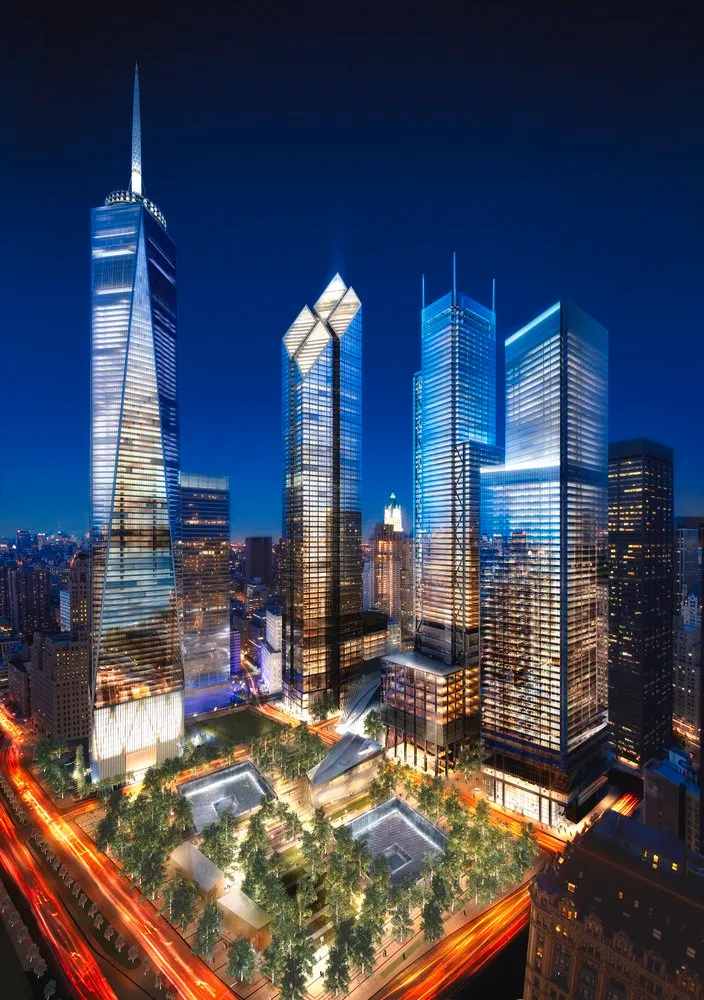
World Trade Centre Master Plan, New York
In designing the World Trade Centre master plan, Daniel Libeskind worked closely with all the stakeholders and devoted half of the 16-acre site to public space. Locations were set aside for museums, high-tech towers, and the streetscape while providing major new public facilities. Oscillating perfectly between loss and hope, the design turns trauma into a landscape of resilience, where architecture becomes a vessel for collective healing.
Ogden Centre for Fundamental Physics, Durham University, UK
Durham University’s Ogden Centre for Fundamental Physics in the UK echoes the vibrancy of theoretical physics. Light and openness are reflected in the interlaced facade, broken up by windows and bands. The structure is made of glass and stacked timber cladding that twists and pivots as it rises out of the ground. The disruption of conventional form that challenges traditional understandings of space and time through skewed openings and non-linear paths, making the building itself a kind of spatial equation.

Royal Ontario Museum, Toronto
Another remarkable marvel is the Royal Ontario Museum in Toronto. Completed in 2007, it is the largest museum in Canada. With its sharply jutting aluminium and glass forms, the structure erupts from the original museum, piercing through history. True to Daniel Libeskind’s ethos, the design is driven by diagonal lines, fractured planes, and non-orthogonal geometries. Critics and admirers call it a landmark of deconstructivist architecture, where Libeskind transforms the traditional museum into an experience of tension and light.

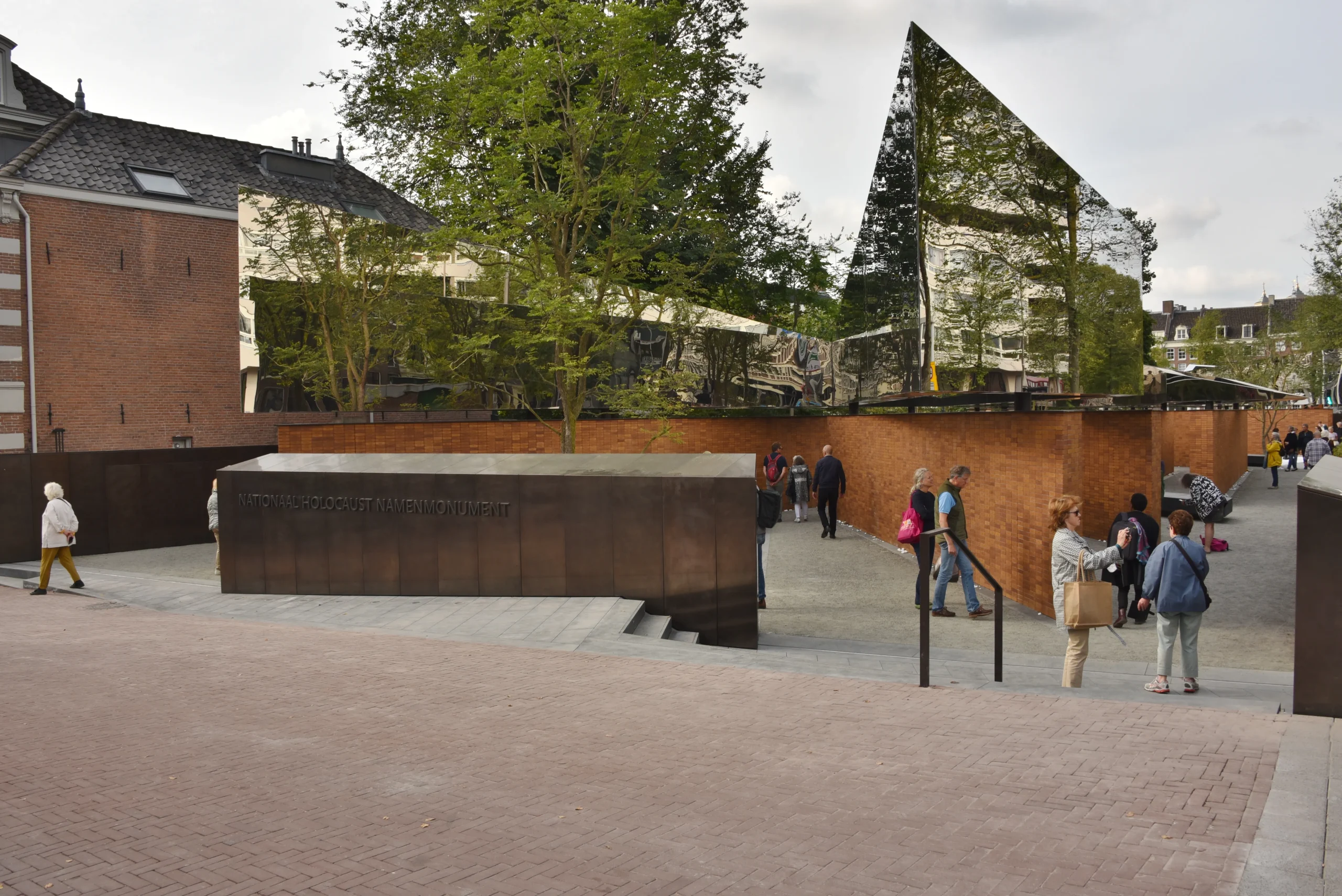
Dutch Holocaust Memorial of Names, Amsterdam
Characterised by a maze of brick walls and angular mirrors, the memorial commemorates Dutch victims of the Holocaust, with their names inscribed on 102,000 bricks. Studio Daniel Libeskind stated that the mirrors symbolise “an interruption in the history and culture of the Dutch people” since they are made to seem as though they are hovering above the brick walls. These walls are woven with crushed stones, trees, and monolithic benches that accentuate the memorial’s geometric angles.
Crystals at CityCenter, Las Vegas
Opened in 2009, this 500,000-square-foot retail and entertainment space is a vertical city within a city, which includes hundreds of private residences, resorts, and casinos. It is covered by a spiralling roof structure which boasts of dramatic angles and skylights. As the name suggests, the structure resembles a cluster of interlocking crystals. These angular forms are a deliberate metaphor of dynamic urban life, emulating the erratic aspects of a natural crystal.

V&A Museum Extension, London
Daniel Libeskind’s bold proposal to expand the ancient Victoria & Albert Museum in London, also referred to as the Spiral (1996, unbuilt), was an ambitious collision of Victorian architecture with modern angular geometry. Conceptually, it was a twisted, shard-like spiral that would have sprung out of the V&A building. It was combative in form and marvelously modern.
The Spiral was designed as a “space of interaction” as opposed to merely an exhibition hall, to redefine how guests navigated and interacted with the museum. It was a provocative juxtaposition intended to spark discourse about old and new. Notwithstanding its audacious plan, the Spiral was ultimately scrapped in 2004 because of financial difficulties and public controversies.

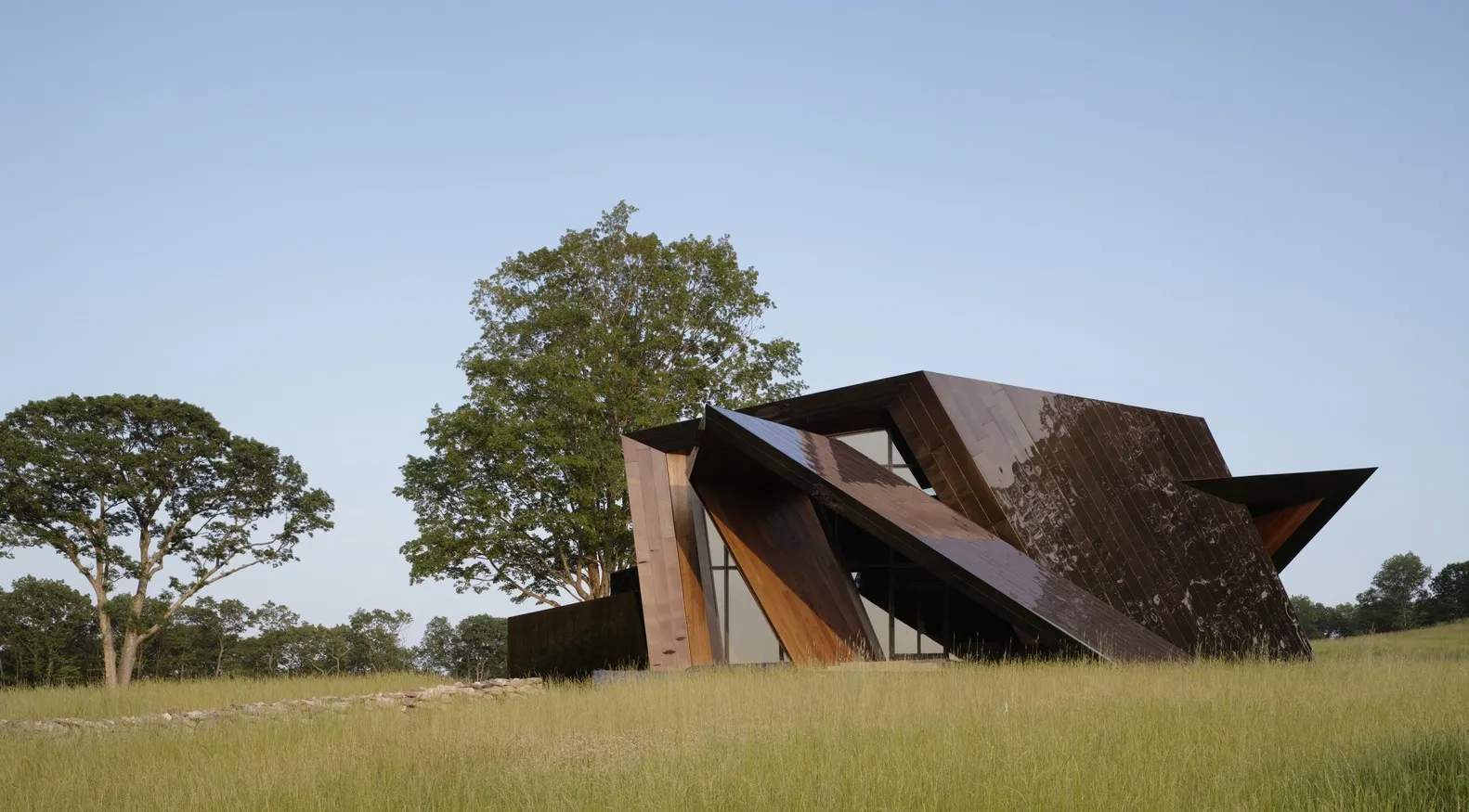
18.36.54, USA
A stainless steel-panelled house that resembles a Russian constructivist bird sitting on a grassy knoll is Daniel Libeskind’s radical interpretation of a weekend getaway. A mathematical series that guided Libeskind and gave the house its name is a continuously folding ribbon structure of 18 planes, 36 points, and 54 lines.
With its nearly invisible glazed panes that provide fragmented sights or indirect light entry points, the wrapping envelope that delineates the house’s limits serves as the foundation for every element of the building. As the roof plane folds down and extends into a piece of furniture, the ribbon marks the distinction of programmatic pieces and serves various tasks inside the space, which reads as a single volume.
The Villa, Germany
The Villa in Germany is one of Daniel Libeskind’s signature residential series. The prefabricated structure is composed of striking angles, creating a non-linear and dynamic interior. Clad in zinc panels with asymmetrical roofs, tilted walls, and dramatic light wells, the home appears like a piece of abstract art. This residential project shows Libeskind’s design vocabulary isn’t just limited to grand museums and public landmarks.

Daniel Libeskind continues to shape the architectural landscape with several dynamic projects currently under construction. To name a few – Fan d’Issy Mixed-Use in France, Einstein House in Israel, Infinity Towers in China and Pas de Deux in China. Each building is an immersive experience of his love for lines, fragments and sharp edges. Structures composed of intersecting volumes, varied façade accents, interlocking shards, and his representation of emotional geometry are mesmerising.
As he aptly stated:
“Architecture is not based on concrete and steel, and the elements of the soil. It’s based on wonder.”
— Daniel Libeskind
Daniel Libeskind’s Lasting Impact
In Libeskind’s world, architecture speaks a language of emotions. Memory, resiliency, identity, and change are all embodied in his designs. Through an angular vocabulary, he makes the invisible visible. Studio Daniel Libeskind is known for composing experiences, and his works remind us that healing can be found in unexpected forms.
