
Close Menu
ParametricParametric

    Subscribe to Updates

    Get the latest creative news from FooBar about art, design and business.

    What's Hot

    tetsstststtt

    July 23, 2026

    Soundscape in Architecture: Designing Through Sound

    July 23, 2026

    MVRDV Wins Shift Embassy Competition with Rotterdam ROCKS!

    July 23, 2026
    Facebook X (Twitter) Instagram
    Facebook X (Twitter) Instagram Pinterest YouTube LinkedIn TikTok
    ParametricParametric
    Courses
    • Articles
      • Archipreneurs
      • Technology
      • BIM / AEC
      • 3D Printing
      • Architects
      • Artificial Intelligence
      • Robotics
      • Sustainability
      • Tools
      • Case Study
      • City Guide
      • Opinions
      • Interviews
      • Architecture & Design
        • Urbanism
        • Metaverse
        • Space Architecture
        • Geography
    • Projects
      • Architecture
      • Interior
      • Design
        • Fashion
        • Pavilion
        • Installation
        • Digital Art
        • Landscape Design
      • Products
    • Workshops
    • Ads
    • Architecture News
    • Digital Members
    • Books
    • CDNext
    • CDNEXT Recordings
    • Competitions
    • Events
    • PA Talks
    • Jobs
    • landscape
    • Landscape Architecture
    • PA Quotes
    • PAACADEMY
    • podcasts
    • memorial
    • Studio Recordings
    • Studio Workshops
    • Uncategorized
    • Videos
    ParametricParametric
    Home»Architecture News»Why Ancient Roman Concrete Lasts Thousands of Years
    Architecture News

    Why Ancient Roman Concrete Lasts Thousands of Years

    adminparametBy adminparametJuly 23, 202603 Mins Read0 Views
    Facebook Twitter Pinterest LinkedIn Tumblr WhatsApp Reddit Email
    Share
    Facebook Twitter LinkedIn Pinterest Email

    Creative innovation in Roman concrete, commonly known as Opus Caementicium, enabled Romans to build monumental structures of varying scales and proportions. Roman architecture portrayed durability, monumentality and functionality unmatched until modern times. Dr. Admir Masic and Dr. Marie Jackson from the University of Utah, with  MIT civil engineer Linda Seymour, are prominent figures in the discovery of self-healing Roman concrete. The team used X-ray diffraction and scanning electron microscopy to study the mineral composition and microstructure with cutting-edge techniques to understand its chemical properties.

    What is Roman Concrete?
    Why Ancient Roman Concrete Lasts Thousands of Years
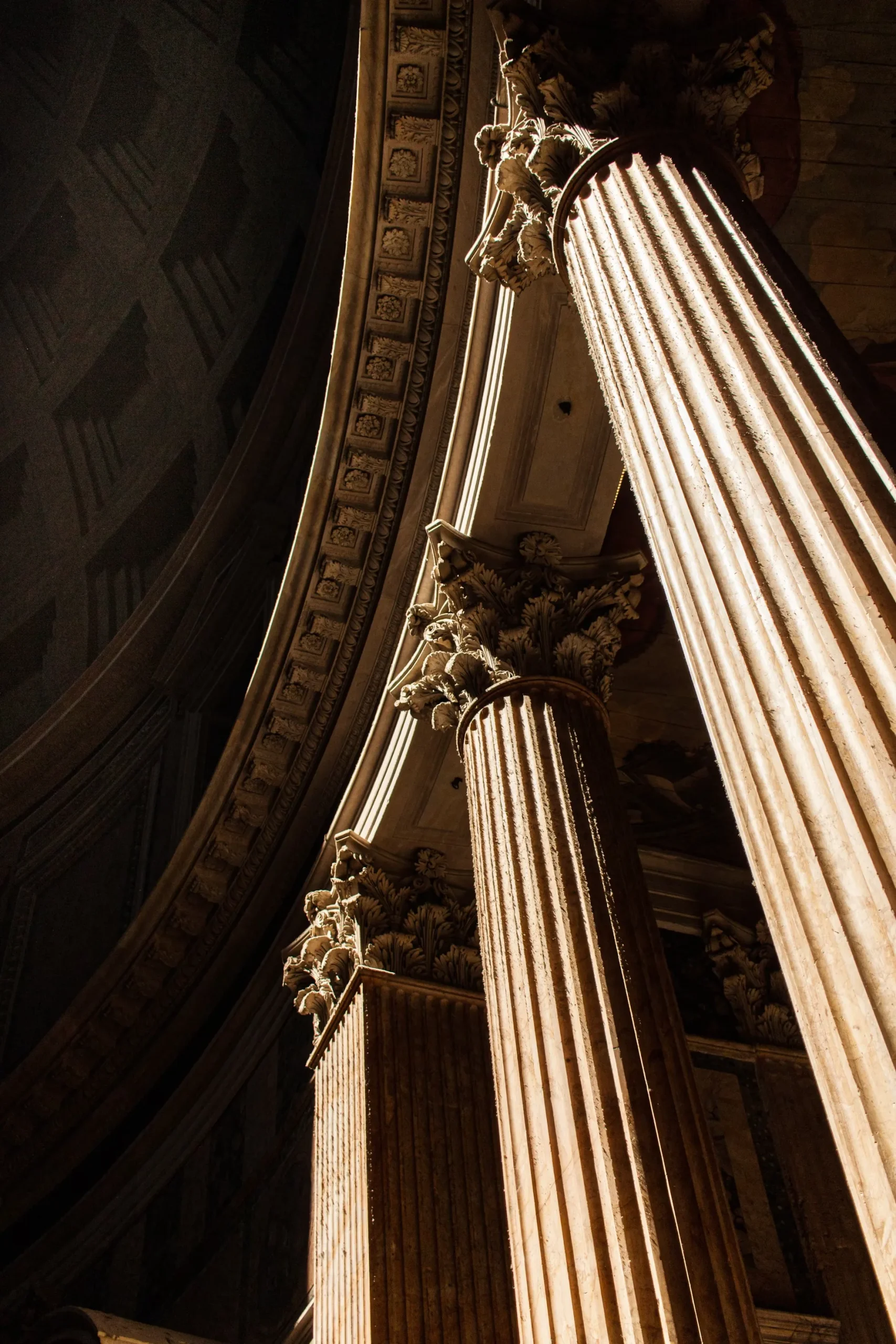
    The interior of the Pantheon focuses on the columns and the coffered dome © Adrian Botiča 

    Opus Caementicium, called Roman concrete, is a building material developed and widely used by ancient Romans, especially in marine environments. Influenced by Etruscan and Greek architecture, it evolved with the wide use of Opus Caementicium, transforming the design style of Roman construction. Ancient Romans explored forms and functionality, allowing for enormous spaces and more intricate forms such as arches, domes and vaults.
    Why Ancient Roman Concrete Lasts Thousands of Years
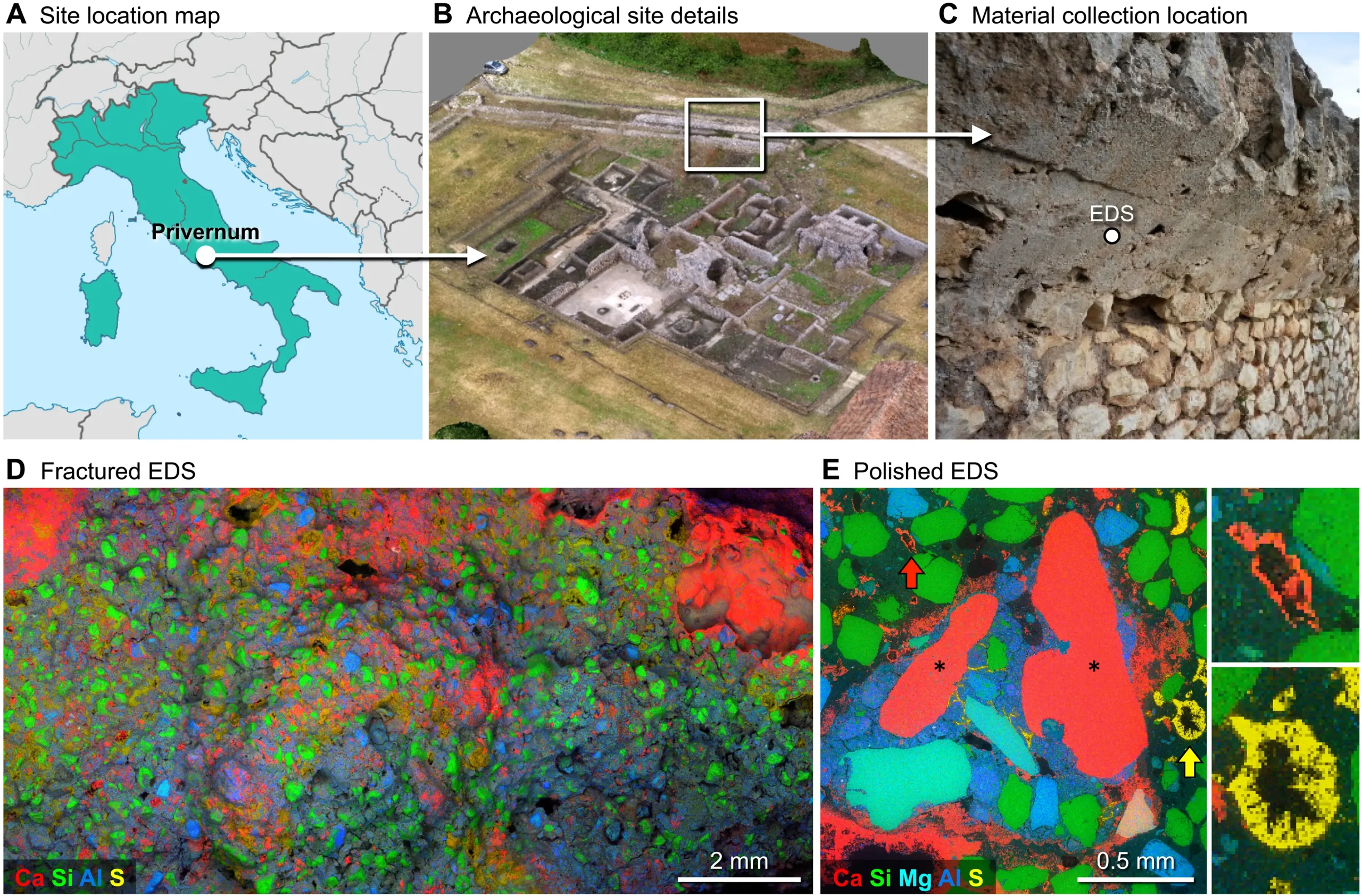
    Roman mortar samples investigated from the ancient city of Privernum, Italy I Science Advances

    Findings of the Key Ingredients of Roman concrete 

    • Lime (calcium oxide) -The base of the mix is critical for the concrete’s longevity
    • Volcanic ash (especially pozzolana from the Bay of Naples)
    • Sea Water
    • Small stones or rubble (aggregate)

    Self-healing Roman Concrete
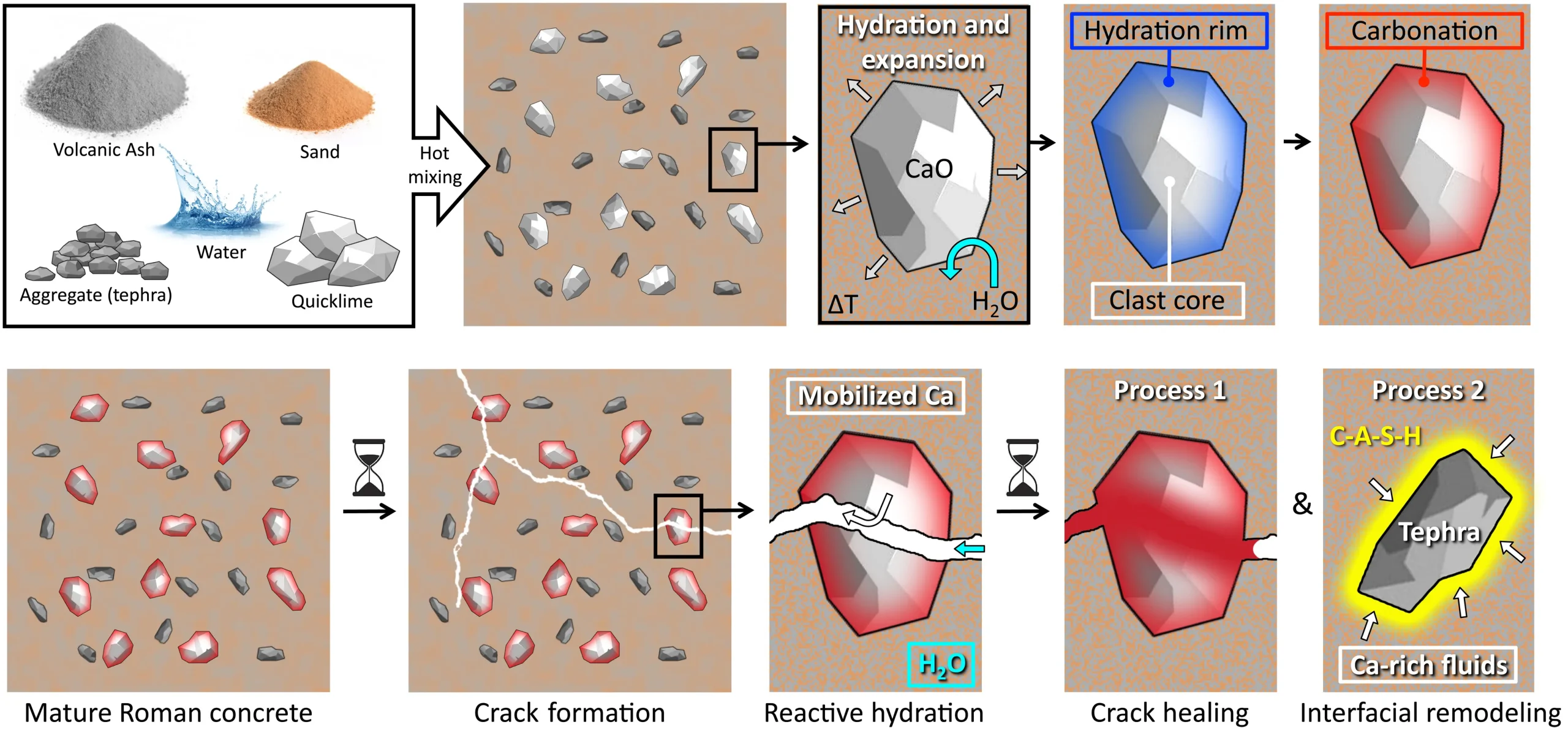
    A diagram illustrating the formation and self-healing mechanism of Roman concrete © Admir Masic et al., Science Advances 2023

    It is evident that modern concrete starts to degrade after a few years, while Roman buildings constructed primarily with Roman concrete are still standing for over 2000 years. Researchers found the secret ingredient behind the durability of Roman concrete, and that is the use of pozzolana, Volcanic ash in the proportionate mix. As ash reacts with seawater to create minerals that strengthen the concrete over time, making it incredibly durable. 
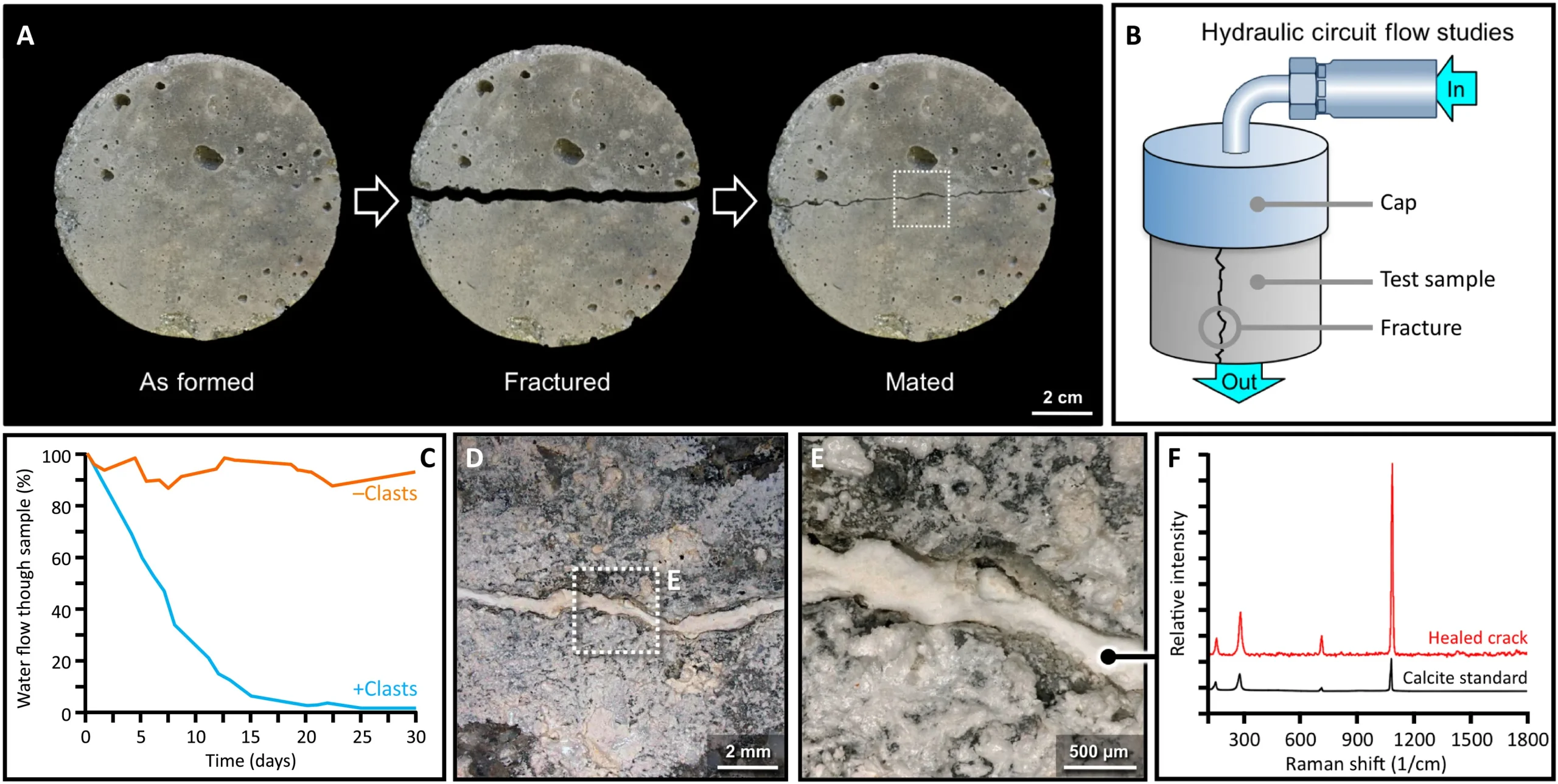
    A scientific investigation into the self-healing capabilities of concrete I Science Advances

    This volcanic ash is rich in a mineral called aluminium tobermorite that forms a crystal, strengthening the material.  When volcanic ash reacts with the lime and seawater, it forms a new mixed material known as “calcium-aluminium-silicate-hydrate”. It happens over centuries, and it grows stronger as they interact with the climate. Hence, his reaction makes Roman concrete a self-healing building material, repairing damages or cracks over time. 
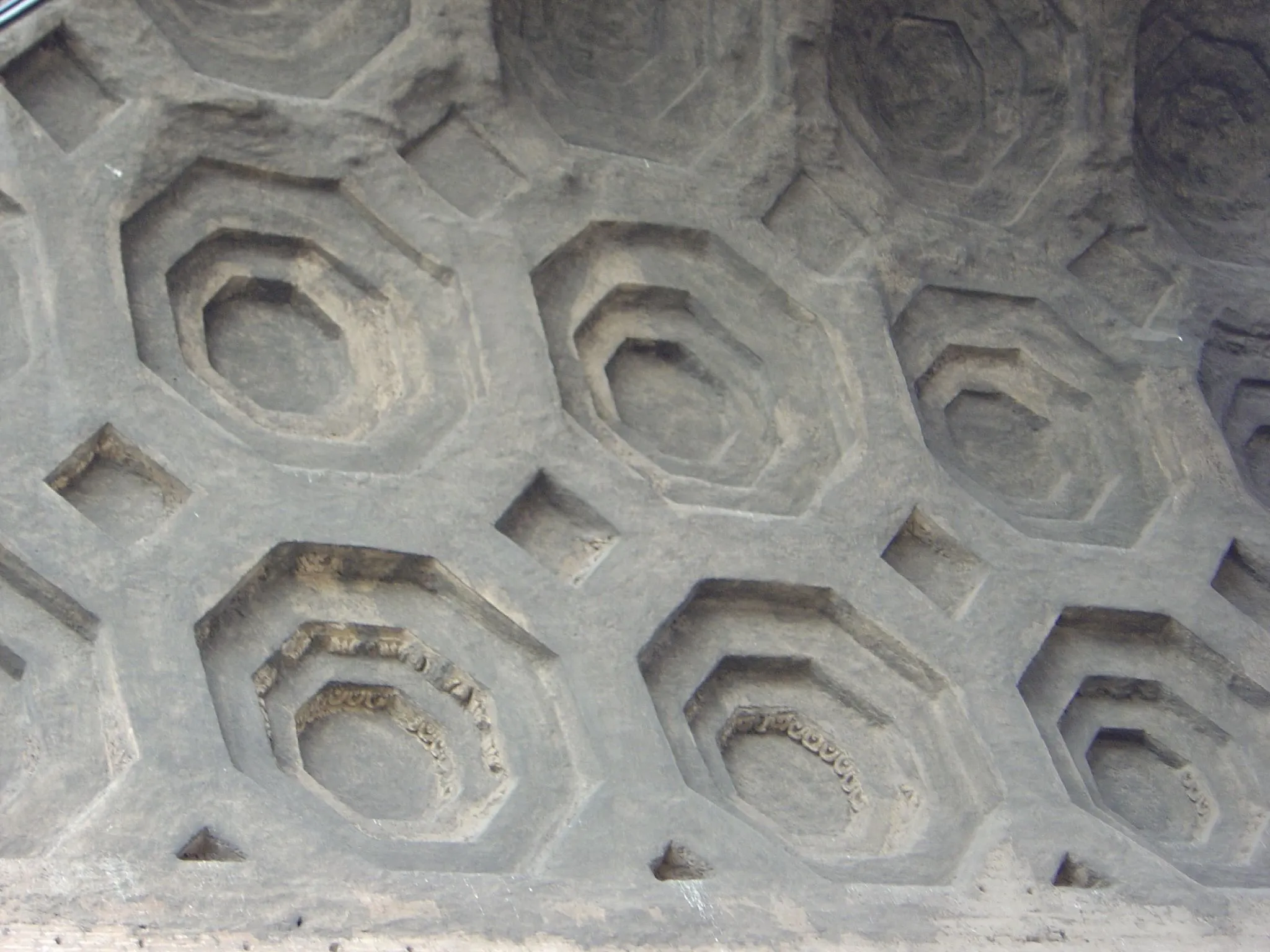
    The intricate pattern of a Roman concrete vault I Wikimedia Commons

    Ancient Romans used a hot mixing method composed of quicklime with pozzolana and water at high temperatures, leading to the creation of lime clasts. The examination of the composition opens up new ways to build eco-friendly building materials. Experimenters studied the chemistry of ancient Roman concrete, which will help to improve modern building materials to reduce carbon footprint and maintenance costs.

    Modern sustainable applications
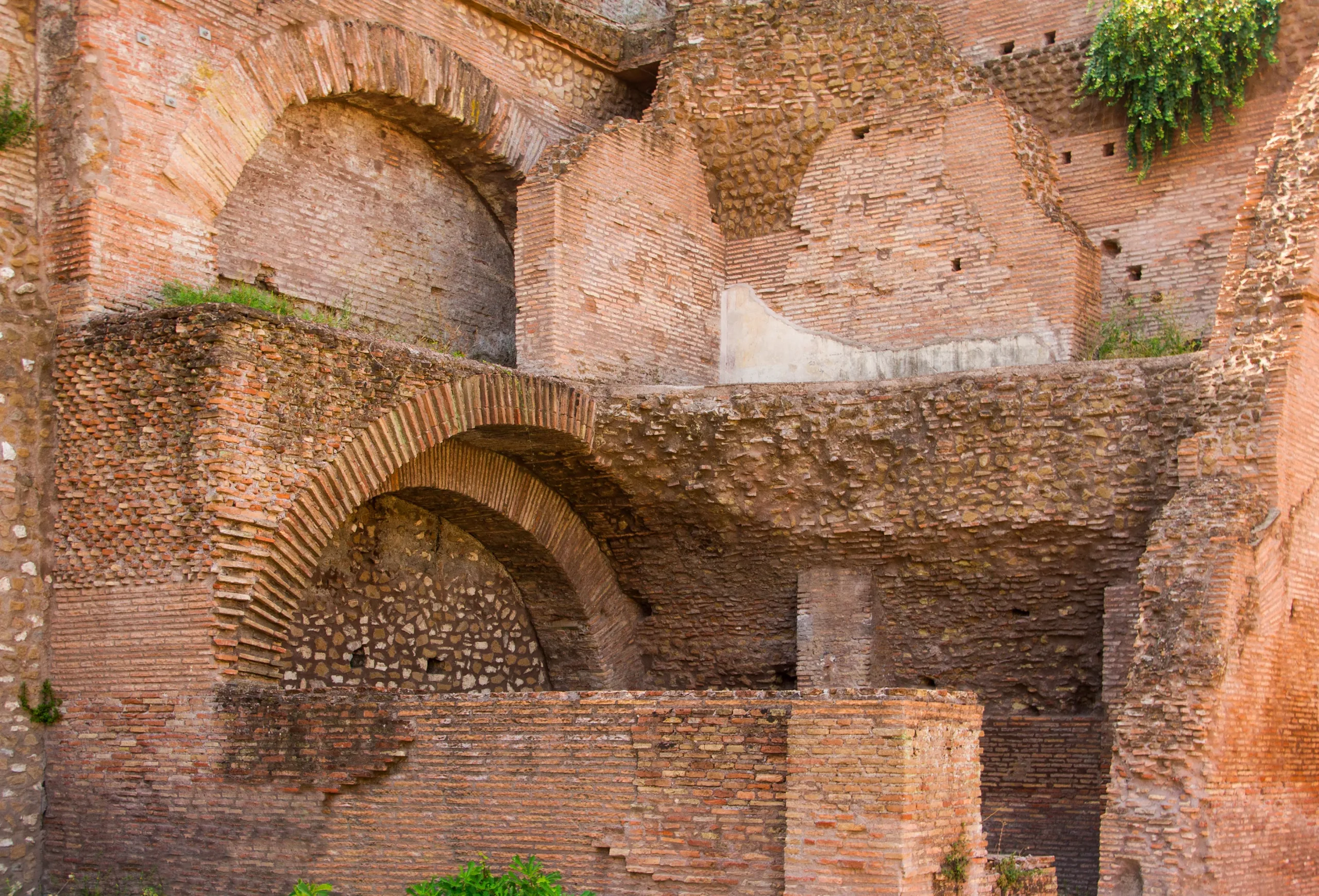
    Ancient Roman concrete vault in Rome © Berthold Werner I Wikimedia Commons

    Modern concrete is a significant source of global carbon emissions; applying this discovery can help reduce the environmental consequences of concrete. Currently, researchers are looking forward applying this learning to modern applications, enhancing the mixture of modern concrete in a sustainable and long-lasting way. These findings and scientific experimentation support the research that understanding the chemistry of Roman concrete opens the door to more sustainable and durable construction methods in the future.

    concrete roman architecture roman empire
    Share. Facebook Twitter Pinterest LinkedIn Tumblr Email
    adminparamet
    • Website

    Related Posts

    MVRDV Designs Urban Revivo’s Beijing Flagship Store in Sanlitun

    July 23, 2026

    Morandi Bridge Collapse Ex-CEO Sentenced to 12 Years

    July 23, 2026

    MVRDV Wins Shift Embassy Competition with Rotterdam ROCKS!

    July 23, 2026
    Add A Comment
    Leave A Reply Cancel Reply

    Demo
    Top Posts

    Design Reviews Are Moving Beyond Still Images and Animations. D5 3.1 Shows What’s Next.

    July 23, 20268 Views

    tetsstststtt

    July 23, 20264 Views

    World Architecture Festival Unveils 2026 Shortlist Featuring 416 Projects Worldwide

    July 23, 20264 Views

    15 Picturesque Neighborhoods Around the World Every Design Lover Should Visit

    July 23, 20263 Views
    Don't Miss

    tetsstststtt

    By adminparametJuly 23, 2026

    Soundscape in Architecture: Designing Through Sound

    July 23, 2026

    MVRDV Wins Shift Embassy Competition with Rotterdam ROCKS!

    July 23, 2026

    Shanghai’s Pollinator Machine Installation Brings Ancient Evolution to Life

    July 23, 2026
    Stay In Touch
    • Facebook
    • Twitter
    • Pinterest
    • Instagram
    • YouTube
    • Vimeo

    Subscribe to Updates

    Get the latest creative news from SmartMag about art & design.

    Demo
    About Us
    About Us

    Your source for the lifestyle news. This demo is crafted specifically to exhibit the use of the theme as a lifestyle site. Visit our main page for more demos.

    We're accepting new partnerships right now.

    Email Us: [email protected]
    Contact: +1-320-0123-451

    Our Picks

    tetsstststtt

    July 23, 2026

    Soundscape in Architecture: Designing Through Sound

    July 23, 2026

    MVRDV Wins Shift Embassy Competition with Rotterdam ROCKS!

    July 23, 2026
    Most Popular

    Design Reviews Are Moving Beyond Still Images and Animations. D5 3.1 Shows What’s Next.

    July 23, 20268 Views

    tetsstststtt

    July 23, 20264 Views

    World Architecture Festival Unveils 2026 Shortlist Featuring 416 Projects Worldwide

    July 23, 20264 Views
    Facebook X (Twitter) Instagram Pinterest YouTube LinkedIn TikTok
    • Home
    • Buy Now
    © 2026 ParametricArchitecture. All Rights Reserved. By utilizing this website, you are consenting to our User Agreement, Privacy Policy, and Cookie Statement. In compliance with the privacy laws of Turkey and the United States, we recognize and respect your rights. Please be aware that we may receive commissions for products bought through our affiliate links. Unauthorized reproduction, distribution, or transmission of any material from this site is strictly forbidden without prior written permission from ParametricArchitecture.

    Type above and press Enter to search. Press Esc to cancel.

    Sign In or Register

    Welcome Back!

    Login to your account below.

    Lost password?