

The need to be proactive in the maintenance and asset management of buildings is increasing, and there are many systems in place that aid in the process. One such technology is the development of Digital Twins, which not only has predictive capabilities for the built environment at the time of design but also engages real-time data post-construction to help maintain and manage resources. This leads to an increase in energy efficiency, reduction, and redirection of waste and/or resources, presenting a model that follows the principles of sustainability and circular economy.
Autodesk defines digital twin technology as “a virtual representation of a physical object, system, or environment. With up-to-date data bundled in one place, a digital twin evolves with the flow of information from sensors, building information models, IoT objects, and more.” This data is a common reference that spans the structure’s lifetime from design to construction to maintenance and even to its re-use. They are dynamic because they evolve with real-time data that is constantly fed to the model, which can help to predict issues, explore opportunities, make informed decisions, and plan to optimize and enhance performance.
Integrating Digital Twins in Construction
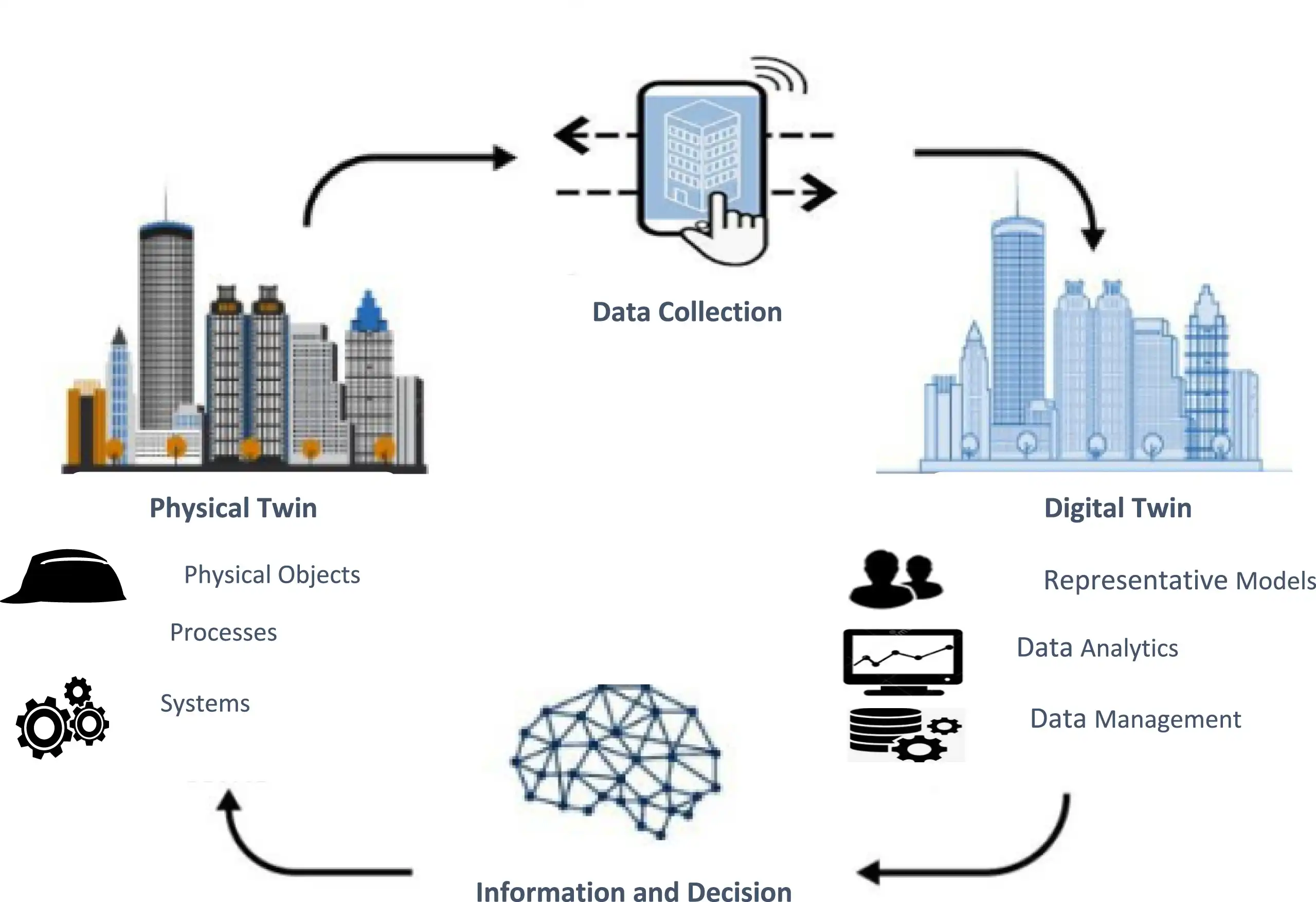
The planet has a finite number of raw materials and extracting them contributes to strain on the environment and increase in carbon emissions. Hence it becomes the responsibility of designers to be cautious in using them and keep deducing ways to reduce, recycle, and reuse. Digital twin technology can be incorporated in this regard, especially to predict building operations across lifestyles and make decisions across lifecycles, and this proves to be sustainable and supportive of the circular economy. The process of using and deploying Digital Twins in the construction industry involves the following steps:
- Digital Twin model development – The first step involves creating a baseline digital twin of the proposed facility, including formulating data gap reports.
- Measuring performance data – The next step is to gather measured information from various sources, including live or streaming operation data.
- Model calibration – Then comes the testing of the model with verification from actual experience and aligning the model as close as possible to reality.
- Analysis and diagnosis – When the model is ready according to the brief given by the client, possible future scenarios are run on the model to check for any changes to be made.
- Corrective action – At this juncture, the team sets alarms and alerts to facilitate performance optimization using real-time data.
- Deployment – The digital twin model is then shared with the participating stakeholders, who will also be given information and directions on how to use the systems employed during a workshop.
- Monitoring – The final step involves the monitoring of the digital twin post-implementation on the actual structure.
Digital Twins technology is slowly becoming an essential part of the construction industry, and it becomes crucial for professionals in the industry to be equipped to use them during design, construction, and post-construction phases. Check out PAACADEMY’s website for more information on relevant courses on digital applications in the architecture field.
Benefits of Using Digital Twin
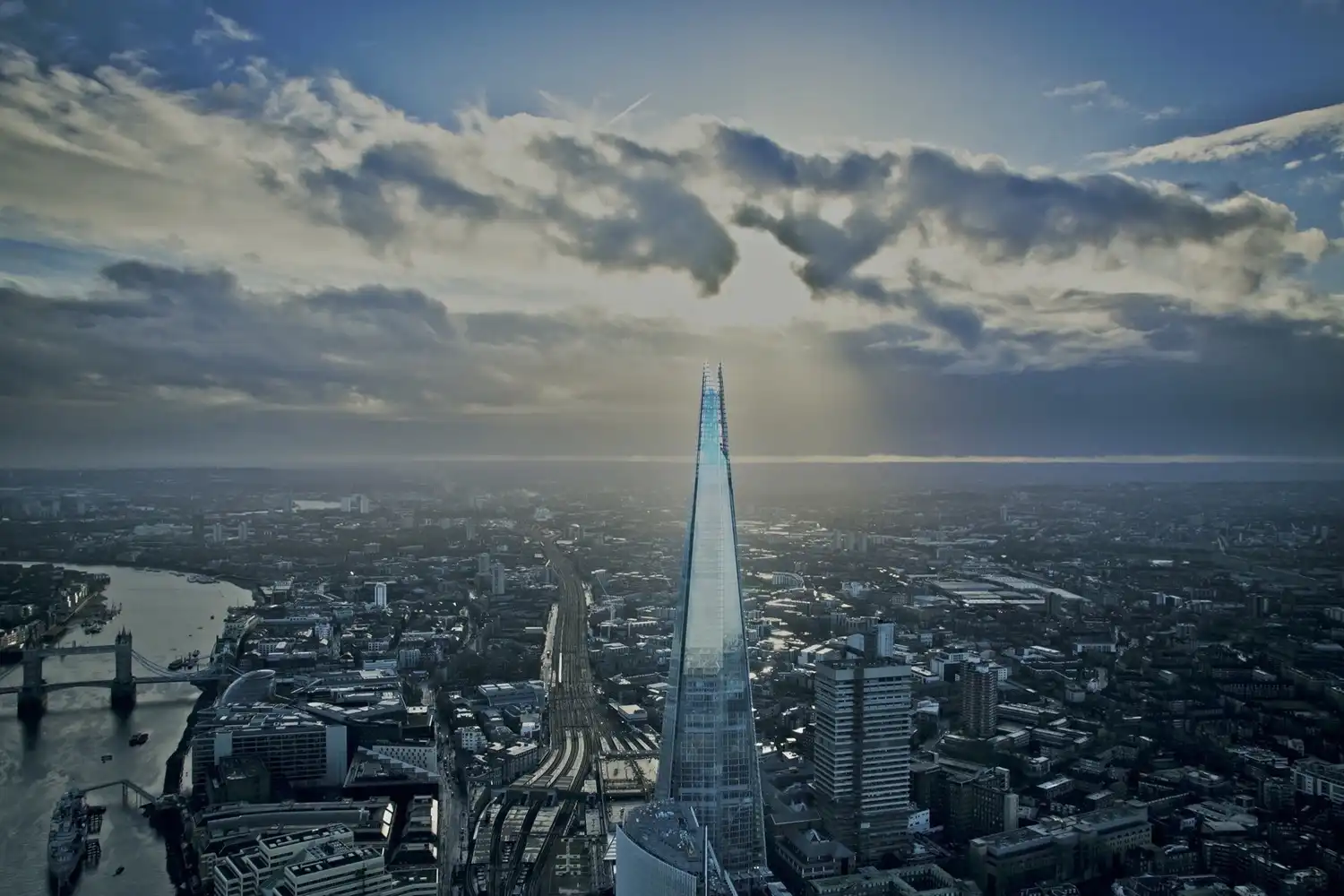
When it comes to sustainable architecture, the digital twin model can be used to increase energy efficiency and reduce environmental impact. At the design level, digital twins can be used to proactively predict resource utilization and systems operations, and the design can be adapted to best suit the usability of the space. By monitoring and optimizing energy consumption and material performance based on how the space would potentially be used, systems can be implemented to maximize sustainability. Additionally, digital twins can help to identify issues early, and adjustments can be made before they magnify. The benefits of using digital twins comprise of:
- Improved design and simulation – The creation of a digital twin allows all stakeholders to collaborate across borders and simulate and analyze the structure before construction. This includes evaluating environmental impact and energy consumption, whereby cost-effective techniques and energy-efficient systems can be employed to make the structure more sustainable.
- Material and waste management – Extracting materials for construction and construction waste contributes to a large amount of carbon and greenhouse gas emissions. Employing digital twin technology in the design development phase can aid in determining what materials to use and predict their performance, thereby managing resources efficiently, encouraging reuse and recycling, and reducing waste.
- Predictive maintenance – With the digital twin model in place, the maintenance and asset management of the structure is data-driven and can result in cost efficiency and improved structural integrity. Digital twins can predict issues before they occur, and this can reduce the downtime on the required repair work, leading to sustainable resource use and management.
- Enhanced safety measures – Digital twins can identify potential risks in the design by visualizing different scenarios and addressing them, which would improve structural strength and integrity. Identifying potential risks that may occur during the lifecycle of the structure will ensure the well-being of its occupants, enhancing the indoor environment quality and safety, which is an integral part of sustainable construction.
- Lifecycle assessment and optimization –Monitoring the performance of the built structure is one of the key uses of digital twin technology. With the model, energy consumption, water usage, and waste generation can be assessed and optimized to promote efficiency. This is applicable up to the demolition stage when resources from the site can still be analyzed for recycling and reuse in other projects.
Challenges of Using Digital Twins

- High initial cost – The initial setup of the digital twin platform is extensive and may not be economical for small to medium-sized practices.
- Technical knowledge and training – The technology requires experts who are proficient and well-trained, this can become time-consuming in the adoption process. It may also pose a threat to creating accurate models and maintaining cyber security.
- Resistance to change – Lack of awareness has always posed a hindrance in professionals changing to new technologies and this can delay the implementation and subsequent benefits of employing digital twins.
- Sustainable materials and technologies – As with digital twin technology, there is a lack of understanding and adopting the right materials and technology for sustainable architecture, especially in complex structures and large projects.
- Lack of standards – The process of data exchange and information security lacks standardized protocols, which complicates the process, and integrating digital twins into existing structures for maintenance and management also becomes a challenge.
Good Examples:
1. Morpheus Hotel, Macau – Zaha Hadid Architects
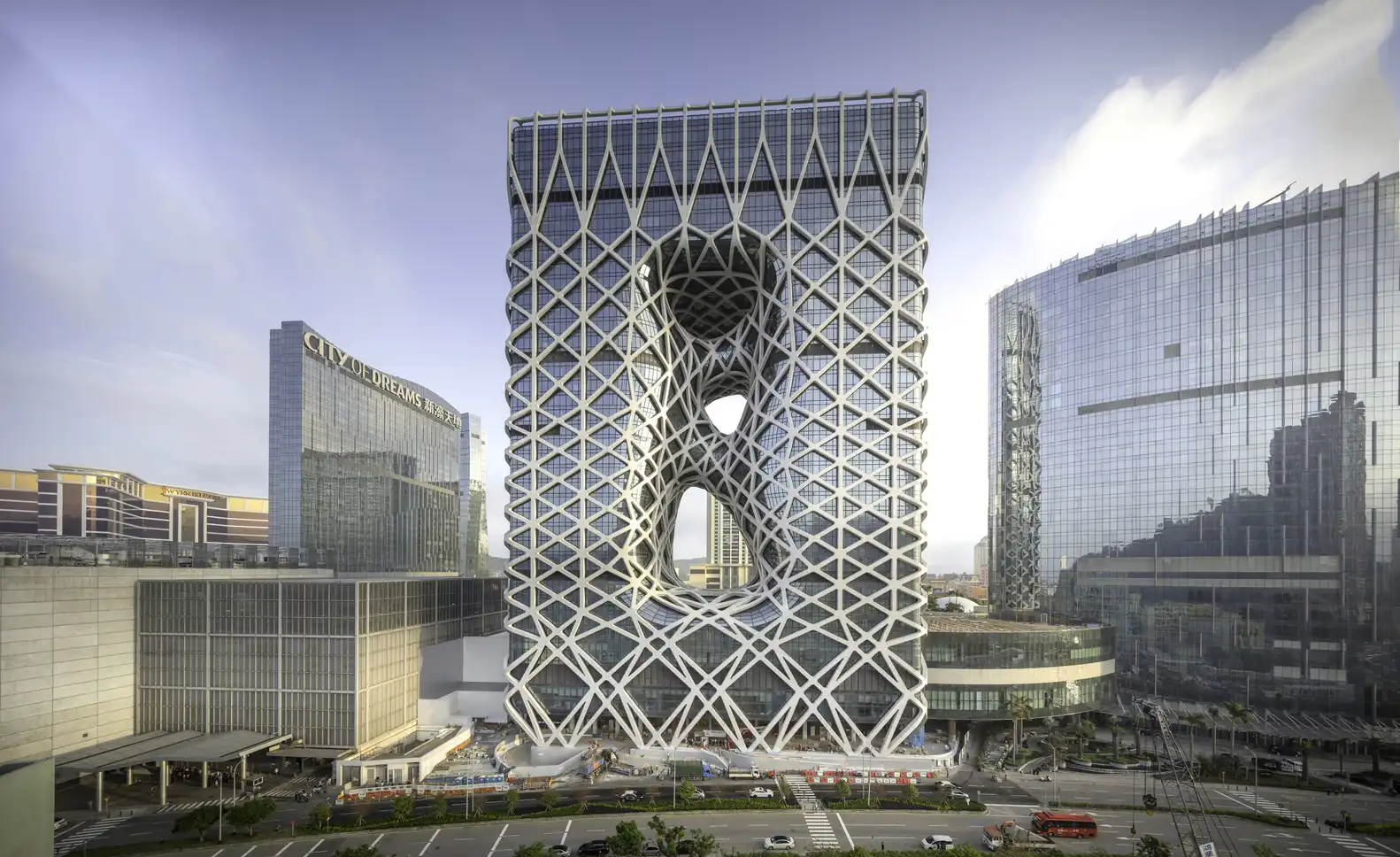
The design of the exoskeleton of the Morpheus Hotel in Macau is unique and was developed using Digital Twin Technology to reduce the amount of steel used, ensuring significant cost and resource savings. The engineers were able to test different scenarios in forming the exoskeleton and were able to produce the most efficient design.
2. Suzhou Centre, China – Benoy
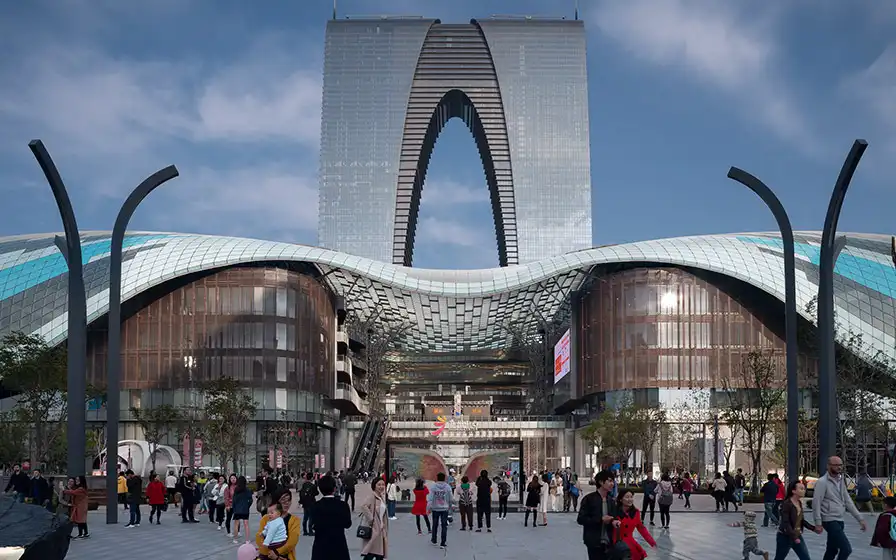
The Suzhou Centre is a mixed-use development that employs digital twin technology to predict the building and occupant behavior and design to optimize energy consumption. The design decisions of this building were all based on data obtained from the digital twin model that also enabled it to monitor environmental impact and empower social governance, advancing its sustainability journey.
Future of Digital Twin
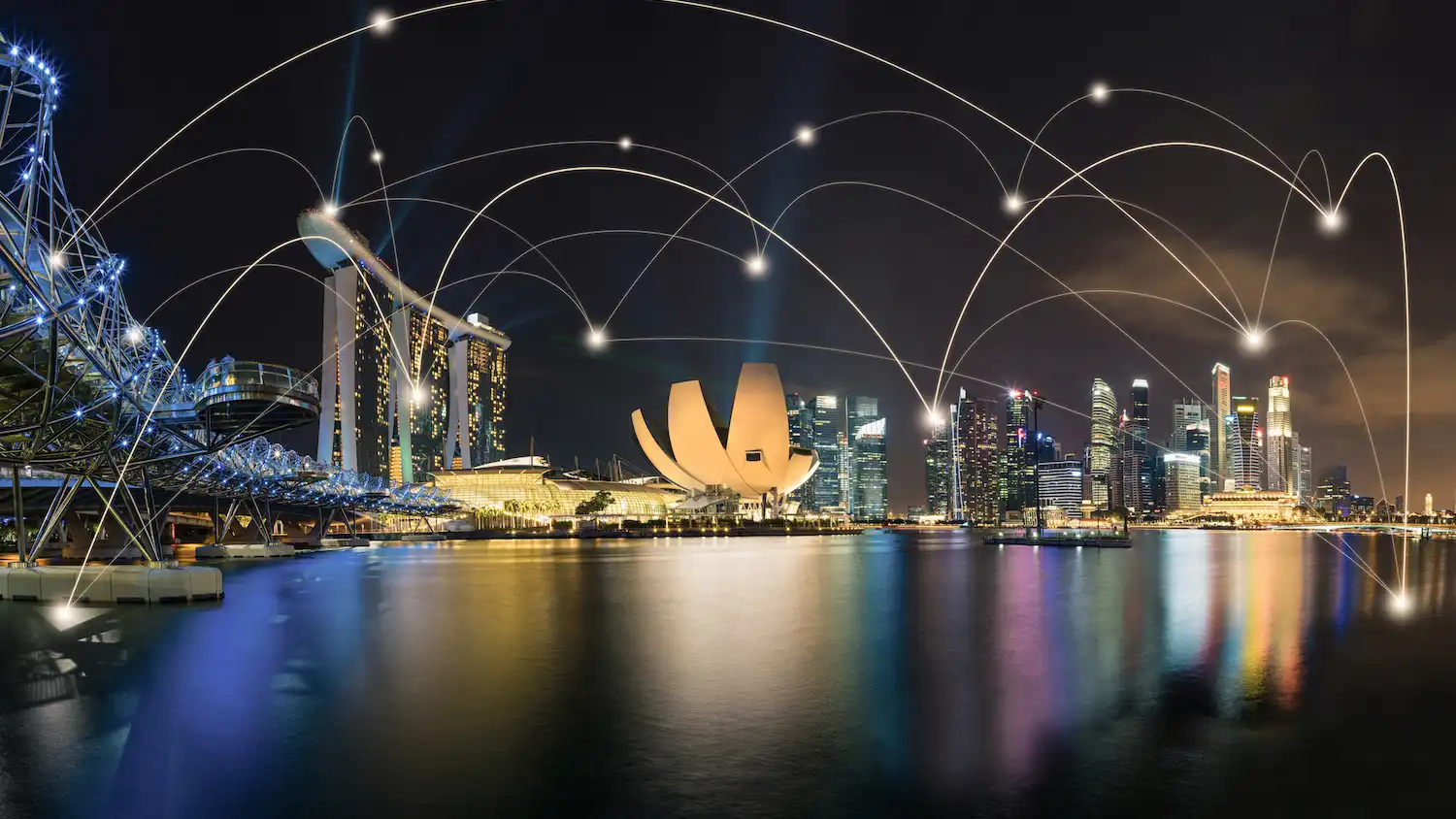
The digital twin technology is here to stay and makes revolutionary waves in the built environment. The future looks promising, both in terms of creating opportunities that would lead to economic growth and in terms of designing a sustainable built fabric. In applying the McKinsey Three Horizon Model of growth to the infiltration of digital twin in construction, there is a clarity to the evolution of the technology over three spans of time:
- Horizon one: Current Scenario – Digital twins are now used to solve specific cases and have proved their capability in adding value to creating a sustainable design. The reality is that better standards have to be developed and adopted on the fast track so the benefits of sustainability and circular economy are realized quickly.
- Horizon two: Evolution of connected digital twins – Digital twins need to be expanded to include connected systems of cities so the performance of asset operations is evaluated, maintained, and upgraded at a larger scale. Providing real-time insights, aiding maintenance decisions, and taking predictive or prescriptive actions at a large scale helps to make timely decisions, saving time, money, and resources.
- Horizon three: Future vision – The future for digital twins then would be to apply to an even larger area, like the whole city or national level, and this would make tackling climate change easier. With the circular economy as the objective, access to product and material data, recycling options, and sustainable systems should become available to city planners to make decisions favorable at a global level.
Despite the challenges, widespread and rapid adoption of digital twin technology can support tackling the challenges of climate change since it can address the reduction in waste generation, the decline in carbon emissions, and the optimization of energy consumption. Taking the small step of embracing digital twin technology in architectural practice can make a huge leap forward in creating a sustainable, circular, and greener global impact. Don’t you agree?
