


There are few things more depressing than walking into a building that has been completely misunderstood by its own interior. One encounters it all the time—a grand Victorian terrace filled with bland, off-the-peg furniture, a sleek, modernist flat smothered in floral chintz. It is not that either one is necessarily wrong. It is just that, in such cases, the interior and the building appear to be in an argument rather than in conversation.
When architecture and interior design are aligned, magic happens. A house becomes more than a series of rooms; it develops a sense of personality. Everything—whether brought forward from the past or introduced anew in the present—seems to belong. The space has a kind of quiet confidence, a knowingness that allows it to be at ease with itself. It is, in a word, a home that makes sense.
Listening to the Building
Prior to changing a single thing in a room—before one even measures for curtains or picks out new tiles—it is always worth stepping back and wondering what the building itself is trying to say. Some buildings are very talkative. A Georgian townhouse, with its high ceilings and symmetrical proportions, has a clear and set rhythm; one ignores it at one’s peril. A barn conversion, with its solid walls and wonderful, vacant space, retains the mark of its former life. Even a post-war semi-detached possesses a subtle logic and integrity in materials and conception.
Good interior design does not fight such features; it works with them. That does not need room to be slavish ‘period correct’—neither a Tudor cottage nor an Art Deco flat is more in need of wall tapestries and solid oak furniture than the latter does of geometric carpets and chromium lights. Rather, it is a question of an attitude that respectfully works with the bones of a building, shoring up its intrinsic strengths rather than steamrolling over them.
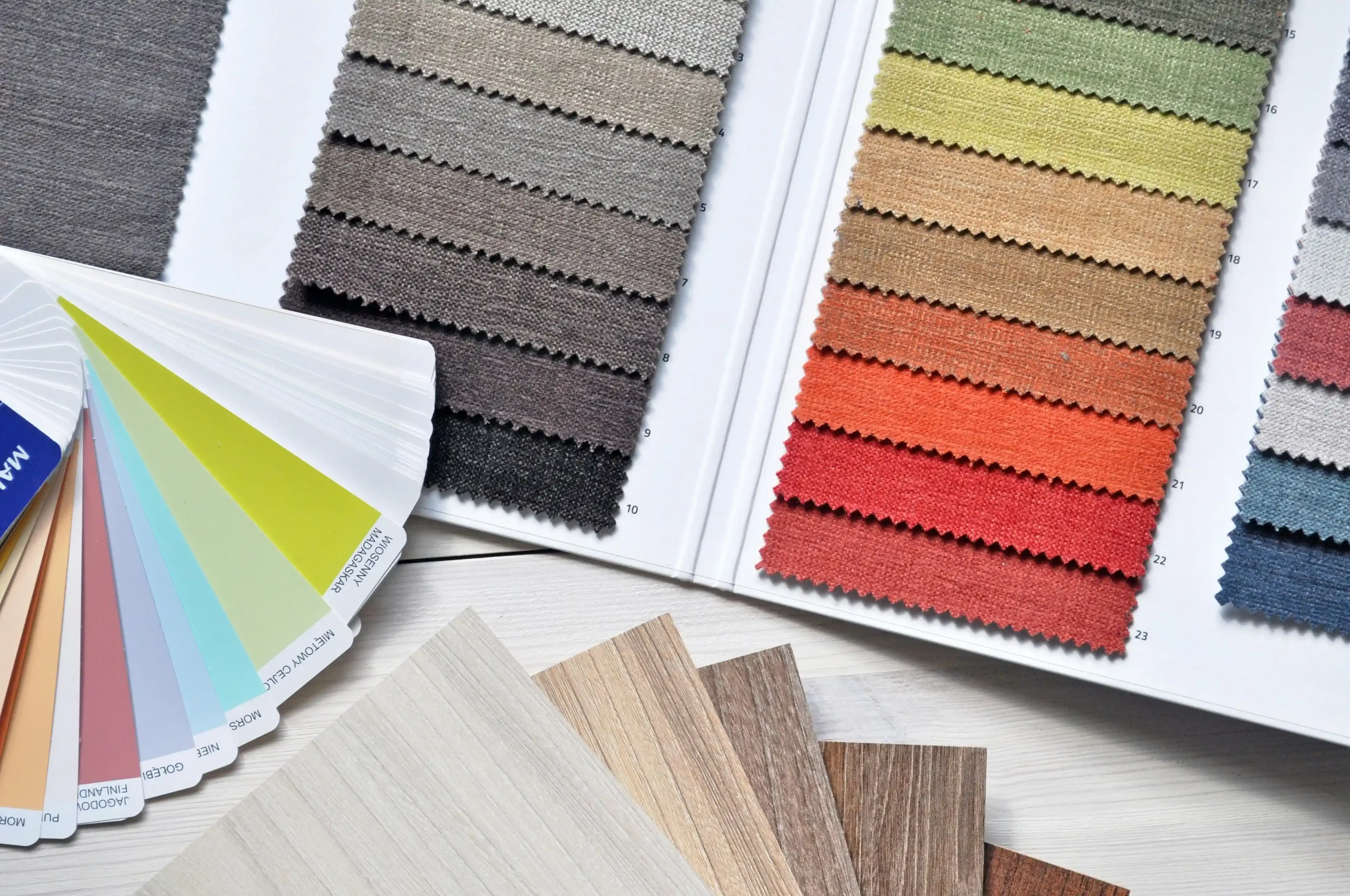
This is where material choice becomes particularly important. Take a house with a robust architectural personality, for instance. A unique wallpaper can do so much more than simply introduce pattern or color. A carefully chosen design—a discreet texture that complements period paneling, for example, or a striking print that juxtaposes with clean, modern lines—can anchor a room to its setting. Done properly, it does not have the feel of an add-on but rather an extension of the space itself, something that might have been there all along.
Proportions and Flow
Much of how a home can feel just right—for balance, for comfort—is a function of proportions. The architecture provides us with the plan, the foundation, but interior design is what fills in the blanks. And oftentimes, the two of them have to meet somewhere in the middle.
Think about furniture location, for instance. A great big double-height living room on open-plan, stunning on paper in an architect’s drawing, but without wise interior choices turns cold and unpleasant. Soft furniture, textured layers, and planning for zoning help to bring tactility to spaces like these and break them into smaller ‘moments’ out of the large entirety.
Conversely, in older, smaller, more intimate homes, the issue is one of optimizing space without burying it. In these circumstances, the key is frequently restraint—choosing furniture proportional to the size of the room, keeping clutter in check, allowing natural light to have its way. In these circumstances, creative interior design serves as an interpreter, turning a building’s proportions generous, not cramped.
And then there is the question of flow. A house needs to feel cohesive, its rooms talking to one another more than they exist as individual chapters. Not that each room must look precisely the same—goodness gracious—but there needs to be continuity. A thread that weaves through it, in terms of color palette, material use, or even the way that light moves through the house, makes a house feel considered rather than haphazard.
Old and New Balance
One of the hardest—and most rewarding—things about interior design is striking the balance between honoring a building’s history and allowing it to evolve. Homes, after all, are not stationary. They are occupied, adapted, and changed over time. A medieval cottage, heated originally by one fire, will one day need modern heating. A Victorian terrace, constructed for life very different from that of today, may require an open-plan kitchen. There is no reason to be embarrassed about such modernizations; the trick is in how they are done.
A considered approach will ensure that whatever new addition there is, it will be an organic part of the building’s history. Materials can be referenced or contrasted with sensitivity—modern steel-framed doors, for instance, can look very much at home in a period setting if their scale is sympathetic to their context. Likewise, a modern interior need not mean ripping out all traces of history; original details can coexist happily with sleek, modern looks if the conversation is carefully worked out.
Essentially, this is a question of respecting the integrity of a building and not its age. A house of integrity is one where old and new elements do not compete, but support each other, each one glowing because of the other.
Texture, Warmth, and the Human Element
A house might be well designed, its proportions perfect, its architectural details drawn in respect, but devoid of warmth, it may still feel strangely dead. The final veil of interior design—the soft furnishings, the carefully chosen objects, the manner in which a space is ‘dressed’—it is what transforms a space from house into home.
The texture is enormous here. A room that is too smooth, too polished can be cold and impersonal; one that is too cluttered, claustrophobic. The contrast provides the balance. A contemporary space benefits from the natural warmth of materials—linen drapes, wood furniture, the softness of a much-worn rug. A period house, however, can be surprisingly rejuvenated when paired with some crisp, clean lines to prevent it from becoming pastiche.
And then, naturally, there is the problem of personalization. A home, after all, is not a museum object d’art—it’s a home to inhabit. The best interiors are those that look like they belong to their occupants: not just chicly dressed-up but well-loved. A vase of fresh flowers on a windowsill, an open book from which one has read with great relish lying on a side table, some cushions scattered around to encourage one to sit and stay awhile—these are the things that truly make a room come alive.
