

The ‘A Healthy Planet for Healthy People’ concept has been prevalent for many years now, and it has become our prerogative to keep the planet safe to keep the present and future inhabitants healthy. With climate change taking a toll on the planet, sustainability is emerging as a tool to safeguard the planet, and subsequently its present and future inhabitants, from further damage. And built structures are no exception. With rapid urbanization comes the need to build more; the real question is whether we choose to build better, prioritizing the health of the planet and its inhabitants.
Why do we need sustainable built environments?
Right from the time of choosing the site to build on, the design, the materials, the construction process, and the occupying and using of the structure all contribute directly or indirectly to the surrounding environment, and not all of it is positive. The World Building Council stated in 2019 that the construction industry accounts for 30-40% of global carbon emissions and global energy consumption.
As professionals, it becomes our responsibility to make sure that statistics is on the decline through the methods and materials we use. Sustainability is the way forward and has been realized by many architects, contractors, manufacturers, and even consumers.
It should be an important consideration that should be factored into the process from the time of idea conception, not as an afterthought. Clients and consumers are already appreciating the need for sustainable design for a healthy and happy living environment.
According to a survey conducted as early as 2001 by NHAPS (National Health Activity Pattern Survey, USA), humans spend almost 90% of their time indoors, and with the recent pandemic and more than two decades later, the possibility of an increase in that statistic is high.
We live, work, play, study, and protect ourselves indoors. There are many studies that show that healthy built environments can help to increase the productivity of its occupants and reduce the absenteeism of workers in office spaces. Hence, it becomes even more imperative that buildings are designed keeping both the physical and mental well-being of the people using them at the forefront.
What constitutes sustainable construction?

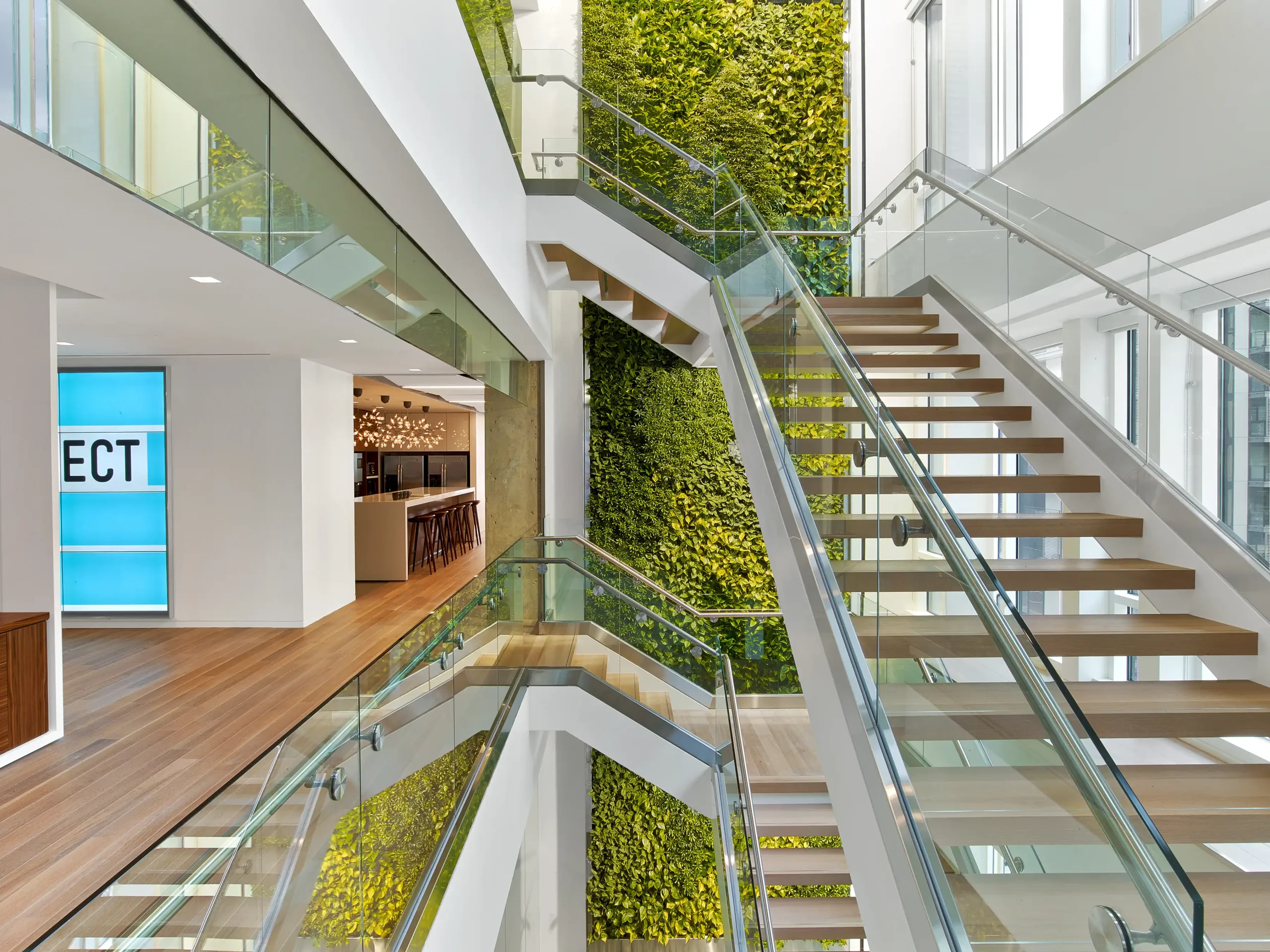
includes landscape into the design even to facilitate a natural purification system. Image © Rory
Gardiner
Sustainable construction means building with the notion of reducing the building’s negative impact on the environment during the whole life cycle of the structure – from the conceptual stage to the design phase, the construction phase, when the building is being utilized till the demolition stage.
It involves those practices and techniques that would help to reduce the dependence on natural resources, reduce greenhouse gas emissions, and help create healthy environments for the users so their well-being is not compromised and their productivity is increased.
This depends on using eco-friendly and recycled materials, reducing waste generation, incorporating energy-efficient systems, and implementing techniques to improve indoor air quality and natural ventilation within the built space.
What makes a building green and healthy?
A healthy building is a structure that not only minimizes the impact on the surrounding environment but is also designed holistically to optimize the mental and physical well-being of the occupants while fostering healthy social settings and enhancing productivity. There are four construction practices that can help to truly create a healthy building:

- Sustainable materials – It is the duty of the designer and the contractor to source and dispose of the construction materials responsibly so that it does not adversely affect the environment. Incorporating recycled or alternative materials can considerably decrease the dependence on finite natural resources and can reduce waste from demolition sites. Using locally sourced materials decreases the impact since transportation charges are significantly reduced. This could also be an opportunity for designers to experiment with their creative skills in using these materials innovatively. Using such materials should help in creating healthy indoors so users stay healthy and increase their productivity.
- Waste disposal – Another factor is the disposal of materials in a sustainable manner. Formulating waste management plans that effectively plan for recycling, reusing, and sustainably disposing of construction site materials is a big boost to the environment. With proper prior preparation, mistakes can be avoided, the environment can be protected, and costs can be reduced.
- Energy-efficient systems – Any building requires the use of systems that keep the building functional and well-maintained during its lifecycle. These include water and energy systems like plumbing, rainwater harvesting, electricity, ventilation, and daylighting. It is important that energy is efficiently used during the time of construction and the structure is designed well to minimise energy consumption by the users.
- Using natural resources – Natural light and ventilation are the most renewable resources available to us, they are free with the least amount of impact on the environment and the most sustainable in their integration. Design elements could also include landscaping within the building and on the facades which gives visual relief and helps to reduce stress. By just studying the surroundings and the climate, using renewable and sustainable materials, and incorporating biophilic designs, buildings can be designed with optimal amounts of ventilation, daylight, and temperature to ensure comfortable spaces that boost productivity and augment health and wellbeing.
Learn how technology supports sustainable design practices with PAACADEMY. Through live and recorded workshops, you can explore computational design and AI, developing efficient and healthier built environments while learning practical strategies to integrate these tools into your projects for a more sustainable future.
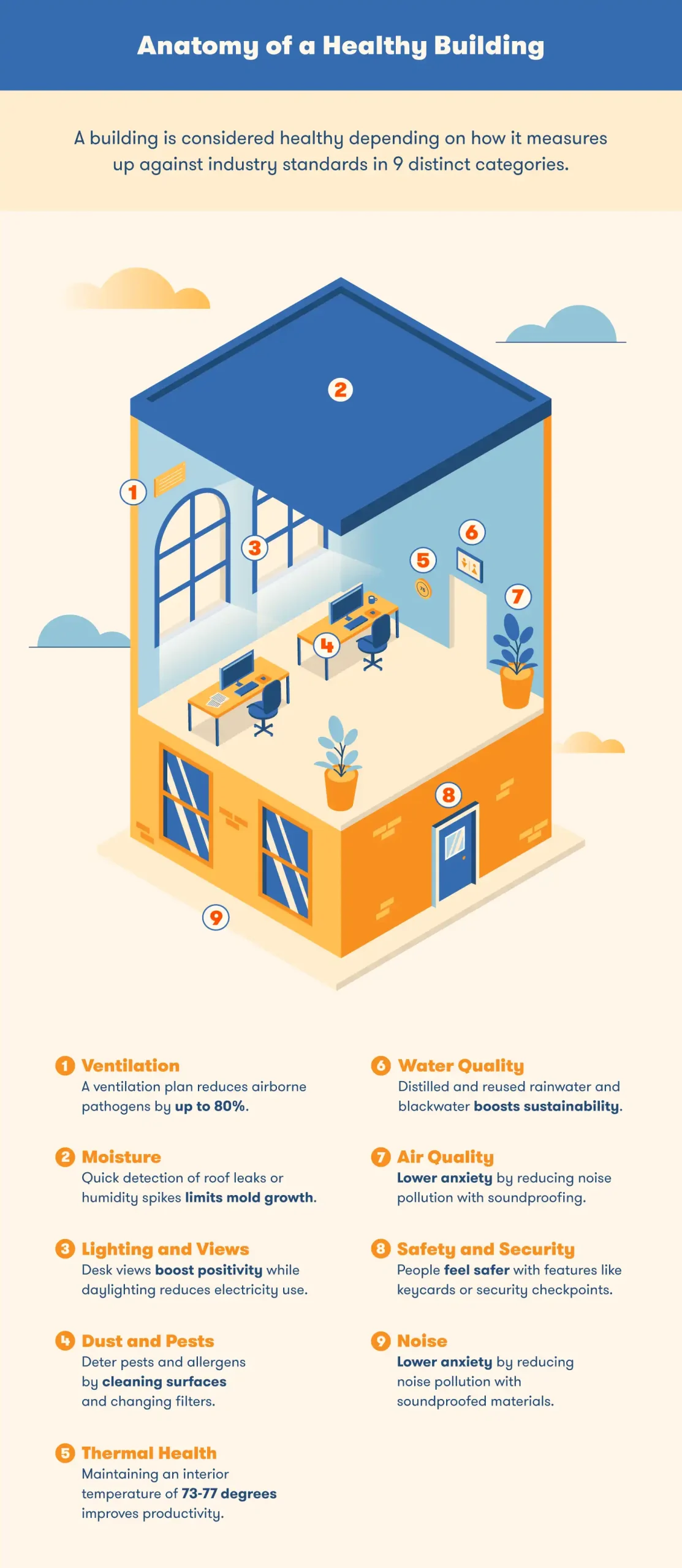
Image © BigRentz
Buildings can be evaluated and verified through various certifications like LEED (Leadership in Energy and Environmental Design), WELL Building Standard, and Fitwel for healthy ratings that assess not only the design but also its performance and sustainability.
The 9 foundations of a healthy building
This leads us to the distinct categories a healthy building can be measured by. In 2018, the Healthy Buildings Team from Harvard University’s School of Public Health published a report under Dr Joseph Allen on ‘The 9 foundations of a Healthy Building’. This is a comprehensive list of factors that is extremely useful to those aiming to design a truly healthy building:
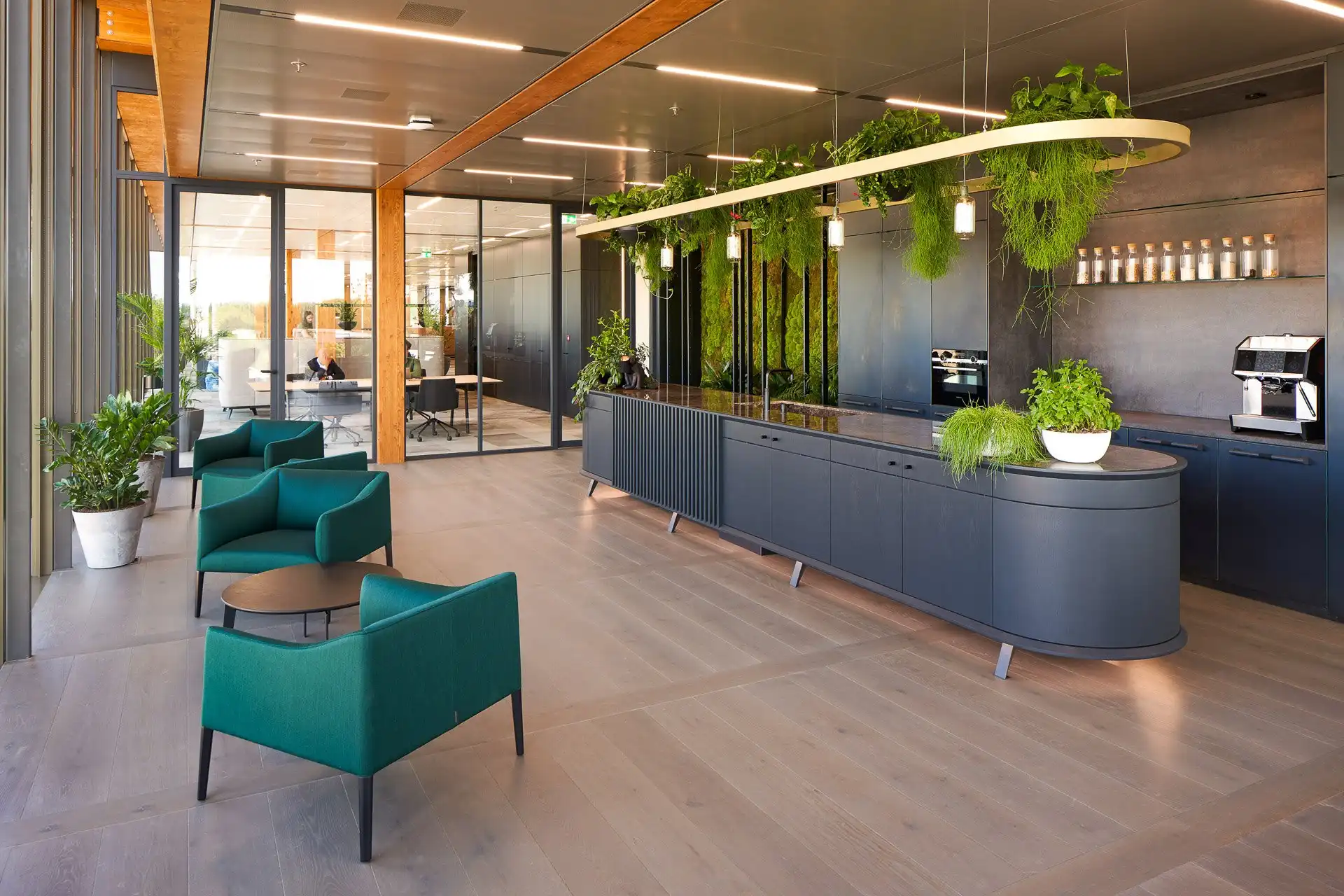
incorporated principles from nature to drive the ‘No office concept’ design. Image © Ronald Tilleman
- Ventilation – This constitutes allowing ease of flow of fresh air into the building while minimising the entry and accumulation of pollutants so that the indoor air quality is comfortable for occupancy. This will help to reduce many health issues like respiratory disorders and allergies. Buildings should be designed with carefully placed openings and adequate filtration tools so only clean air is delivered to the occupants.
- Air Quality – The quality of the air within the built space depends on ventilation but, more importantly on the materials present in the space. Architects should be careful when choosing the building and furniture materials so harmful chemicals do not pollute the air at the time of use of the building. Using sustainable and safe materials, avoiding volatile or semi-volatile materials, and designing proper filtration systems throughout all the spaces in the building will help to elevate issues that may arise because of poor indoor air quality.
- Moisture – Excessive moisture can cause mold, mildew, and water damage that can negatively affect the building first and then the health of its users. With the right design that accommodates enough ventilation, a good plumbing system, and proper maintenance, this can be avoided or rectified as and when issues arise.
- Thermal Health – Thermal health or thermal comfort is defined as the factors of thermal conditions that impact the comfort of the occupants and are influenced by the air temperature, air speed, and humidity in the designed space. This can be regulated by incorporating suitable structural systems into the design that will keep these factors in check. When the space becomes more or less humid, it can have adverse effects on the health and performance standards of the users.
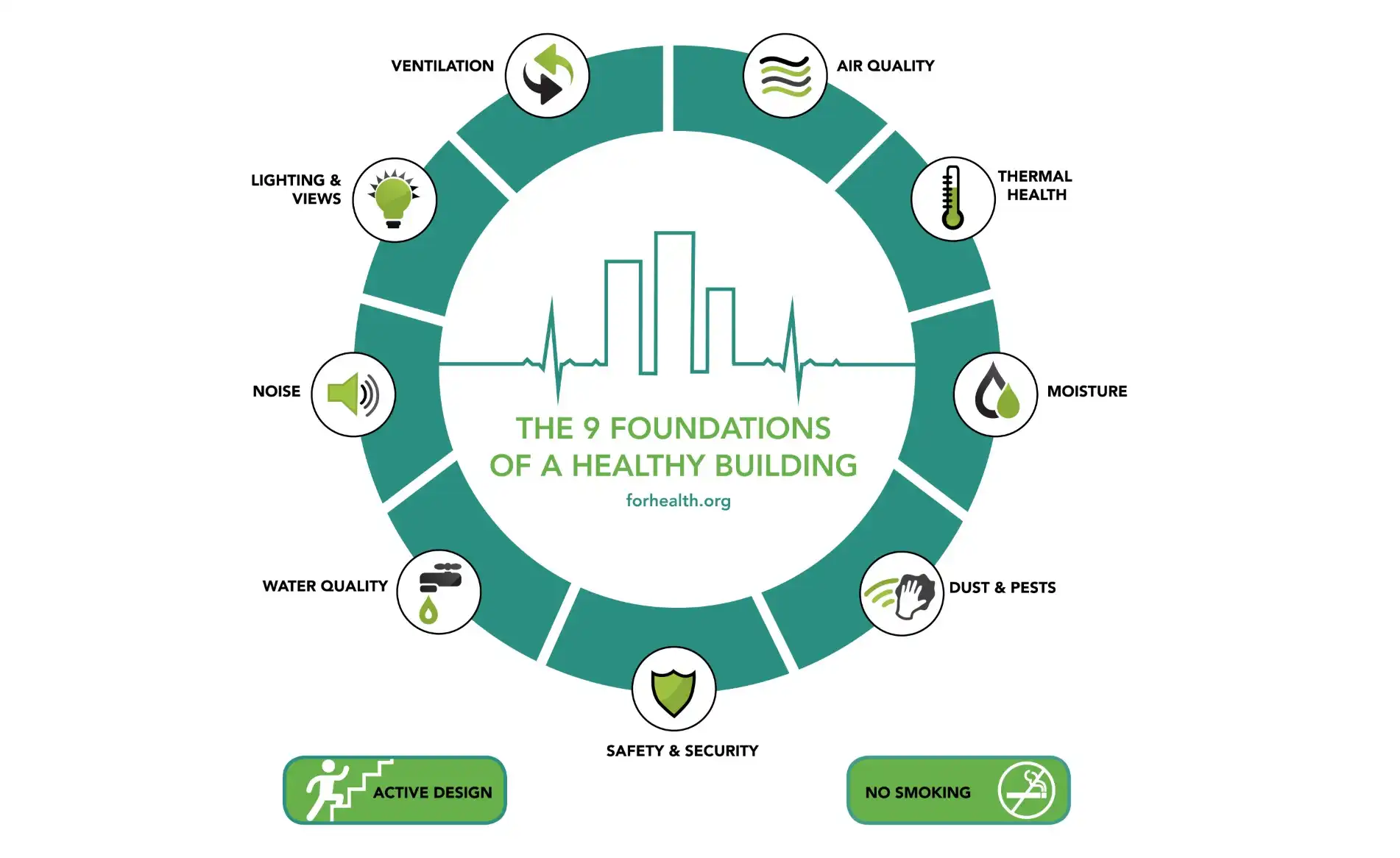
5. Dust and Pests – Buildings and building sites can be magnets for a lot of dust and pests and need to be cleaned regularly. With attention to detail on space orientation, aligning the structural systems well, and comprehensive maintenance plans in place, this can be minimized and dealt with promptly.
6. Lighting and Views – Integrating daylighting and optimal, energy-efficient lighting systems into the design helps to set the right atmosphere for people to live, work, and play. Along with placing openings for daylight to come in, they should allow for relaxing and scenic views that help to reduce stress and increase productivity, the concept of affinity between man and nature or biophilia as defined by E.O. Wilson. Creating biophilic designs and bringing nature and natural elements into the indoors can support the mental, physical, and emotional well-being of occupants.
7. Noise – There are many studies that prove excessive noise can cause negative effects ranging from irritability to hearing loss, to behavioral conduct problems, and even to aggravating cardiovascular and mental conditions. As much as buildings provide shelter from external factors, designers must consider providing shelter from excessive external and internal noise using thick walls and sound-proofing materials where needed. Incorporating landscape in relevant spaces in the design can also help to facilitate a reduction in noise pollution.
8. Water quality – Water is the most essential component for every living organism and providing clean and safe water is very crucial. Water systems in buildings need to be designed and maintained well to prevent it from getting contaminated because many diseases can be spread through water.
9. Safety and Security – The built structure’s most basic function is to provide shelter from outside factors, including natural calamities and crimes. When we use spaces that are designed to be safe and secure, our mental health is not compounded by worry which could lead to physical ailments too. This could ultimately lead to a healthier and more productive living.
These foundations may be design-based, but they adhere to the very principles that sustainable construction techniques pursue to achieve optimal health and wellness standards.
Case Study 1: Federal Center South
Benjamin Benschneider
Architects: ZGF Architects
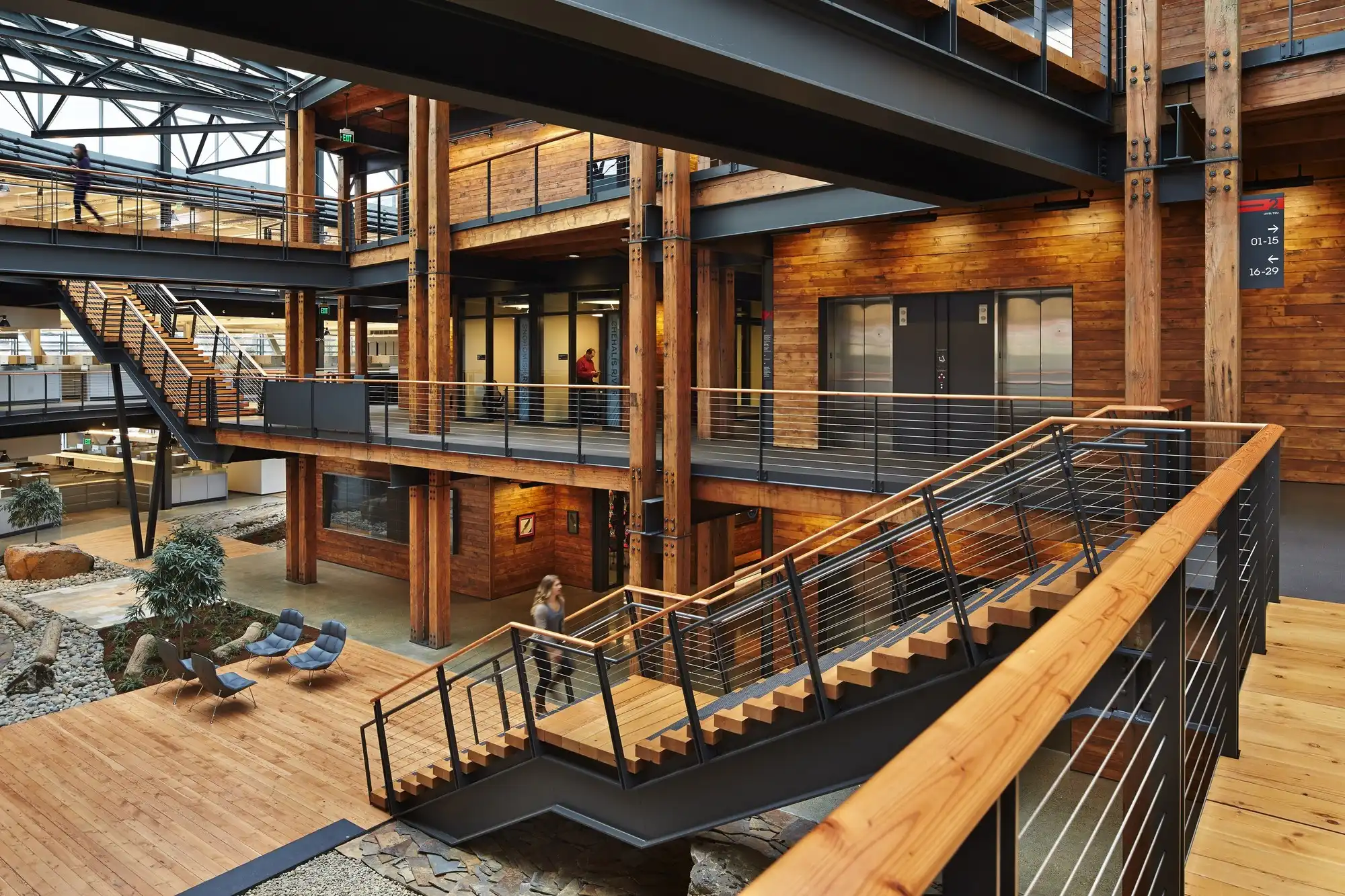
ZGF redeveloped a warehouse into this Centre, which is the regional headquarters for the US Army Corps of Engineers. The U-shaped design and orientation aid in incorporating natural daylight through the communal and workplaces and reducing exposure to heat, enhancing the energy performance of the building and increasing comfort for the occupants.
Moreover, the concept of biophilia is integrated into the communal space, allowing for community interaction in nature with scenic views. The design has been facilitated to strategize water and energy-saving techniques while also promoting comfort and using timber reclaimed from the same site, presenting a view in complete contrast to its exterior. The building was awarded the LEED Platinum certification.
Case Study 2: Phipps Centre for Sustainable Landscapes
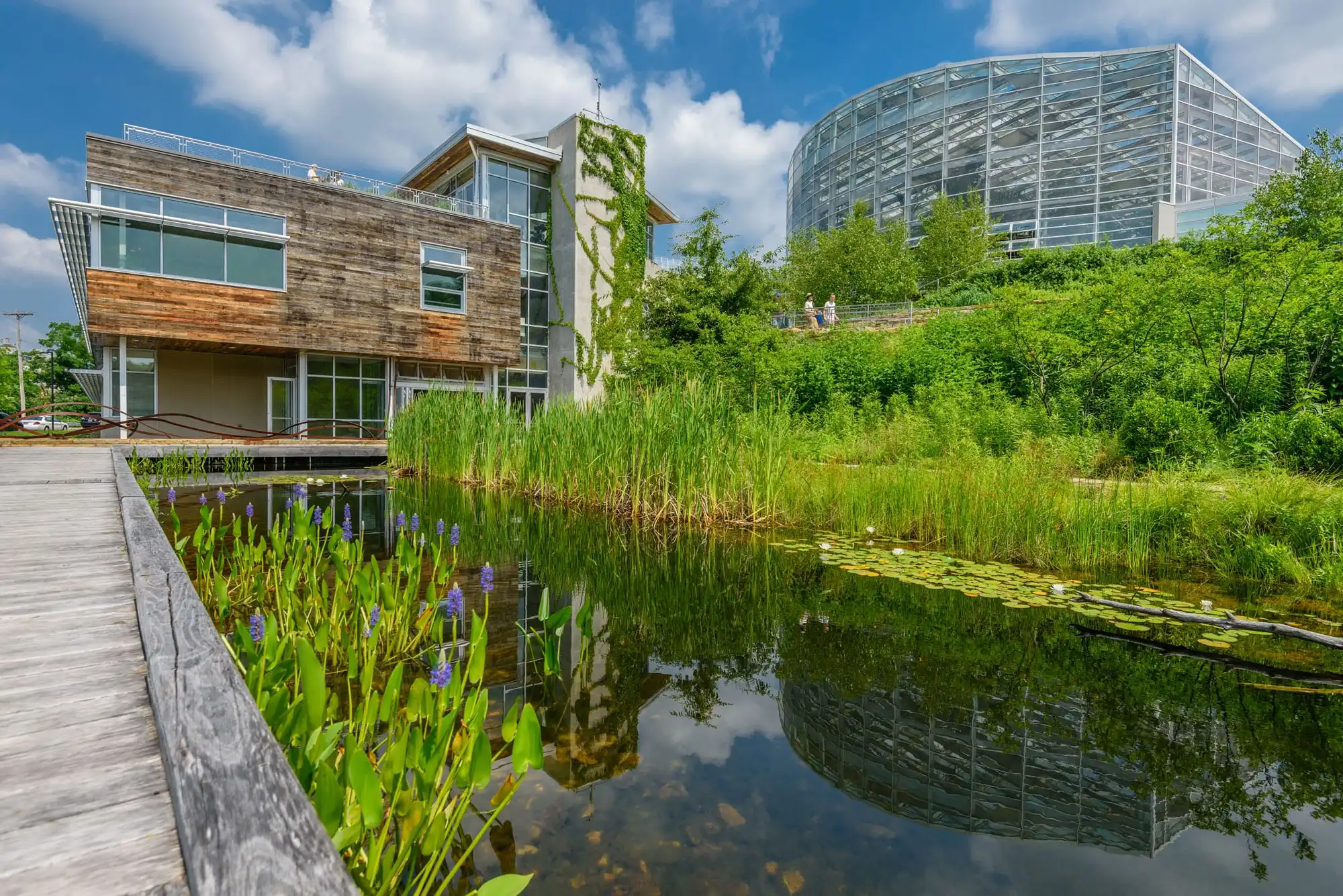
prime example for blending the built with the green. Image © Paul Wiegman
Architects: The Design Alliance Architects
This structure is one of the biggest inspirations for designers looking to address health and sustainability in their work. The building took the idea of interacting its spaces with the surroundings on a daily basis, effortlessly blending the built environment with the surrounding green.
Designed with locally sourced materials that are either reclaimed or renewable, the center produces all its renewable power on-site aimed at achieving net-zero energy consumption. The structure itself has already been awarded the WELL Platinum (Pilot), LEED Platinum, Living Building Challenge (LBC), SITES Platinum, and BREEAM Outstanding In-Use certifications, among other awards.
When sustainability is cohesively included with design elements, it crafts a structure that is sourced efficiently, is durable and uses energy-efficient systems, keeping climate change and circular economy at the forefront. This naturally creates environments that are healthy and safe for people to use.
